Downloaded 125 times

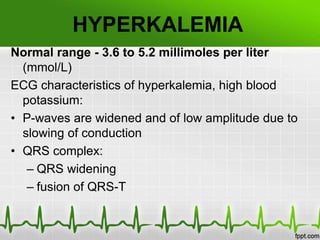
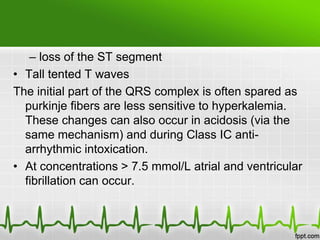
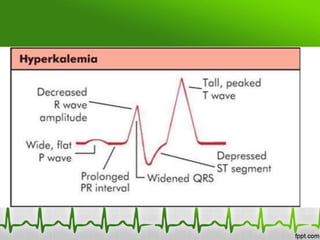
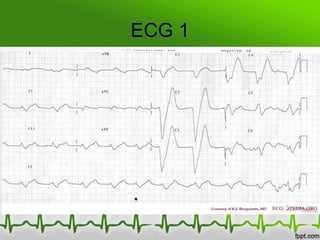
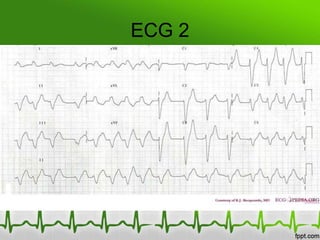
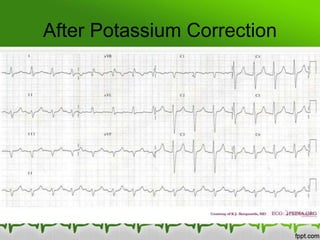
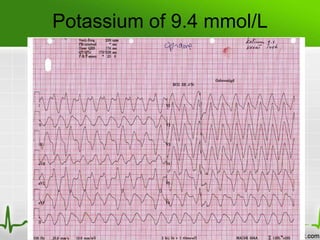
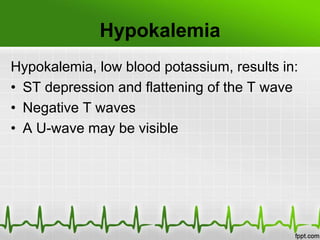
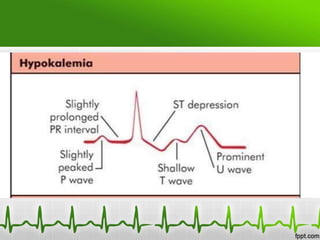
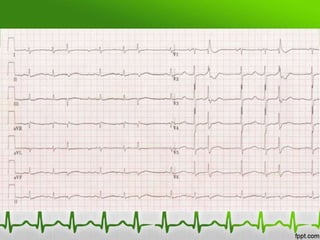
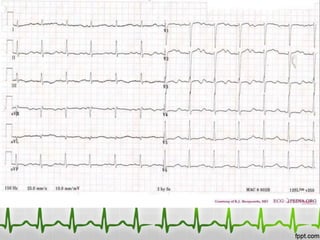
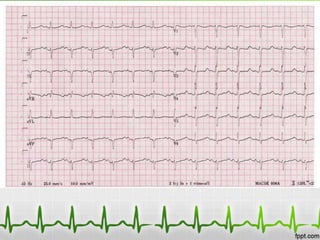
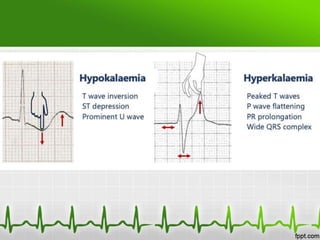
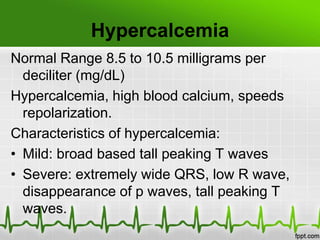
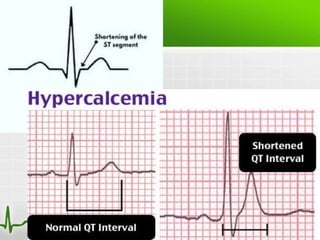
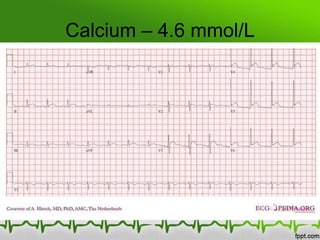
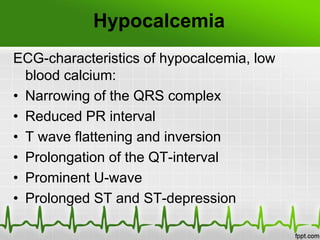
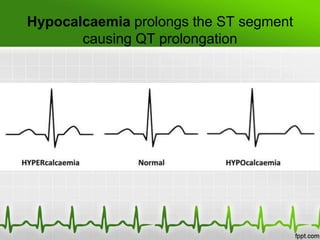

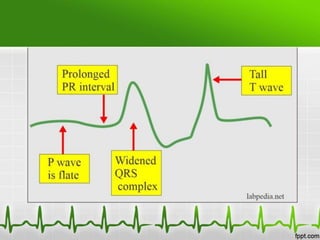
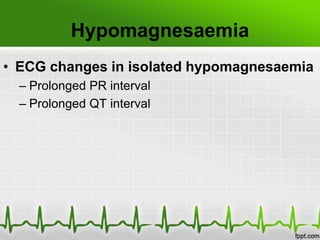
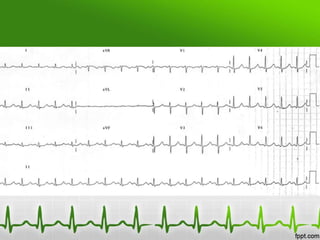
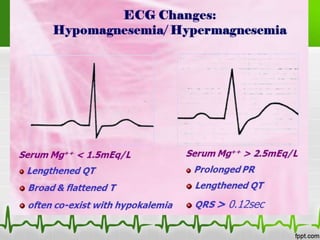
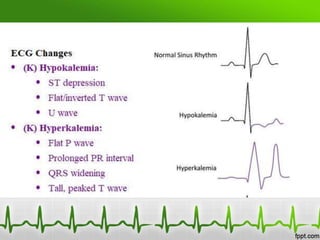
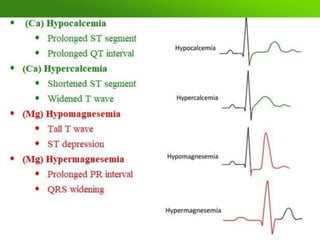


This document discusses various electrolyte abnormalities and their ECG manifestations. Hyperkalemia causes widened and low amplitude P-waves, widened QRS complex with potential fusion of the QRS-T segment and loss of the ST segment, and tall tented T-waves. Hypokalemia results in ST depression and flattened T-waves and possible negative T-waves. Hypercalcemia speeds repolarization, causing tall peaked T-waves at mild levels and extremely wide QRS complex with low R-waves and disappearance of P-waves at severe levels. Hypocalcemia causes a narrowed QRS complex, reduced PR interval, flattened and inverted T-waves, and prolonged QT and ST intervals. Hypomag


![PERI-PROSTHETIC FRACTURE NAIL-PLATE CONSTRUCT [NPC].pptx](https://cdn.slidesharecdn.com/ss_thumbnails/drarunkumardrmohamedashrafperiprostheticfrasturenail-plateconstructnpc-260209164459-7e9d15a1-thumbnail.jpg?width=640&height=640&fit=bounds)

![CTEV [ clubfoot] DR ARUN LAL ,DR MOHAMED ASHRAF travancore medical college k...](https://cdn.slidesharecdn.com/ss_thumbnails/ctevclubfootdrarunlaldrmohamedashraftravancoremedicalcollegekollamkeralaindia-260208063247-18fc466c-thumbnail.jpg?width=640&height=640&fit=bounds)

