E-BUSINESS APPLICATIONS
E-BUSINESS
 Deals with the buying and selling of information ,
products and services through the computer
network.
 Business activity which uses electronic medium.
 E Business (e-Business), or Electronic Business,
is the administration of conducting business via the
Internet. This would include the buying and selling
of goods and services, along with providing
technical or customer support through the Internet.
ORIGIN OF E-BUSINESS
 1950s : Computers were used to process and store
records of internal transactions. But information
between various business continued to be
exchanged on paper.
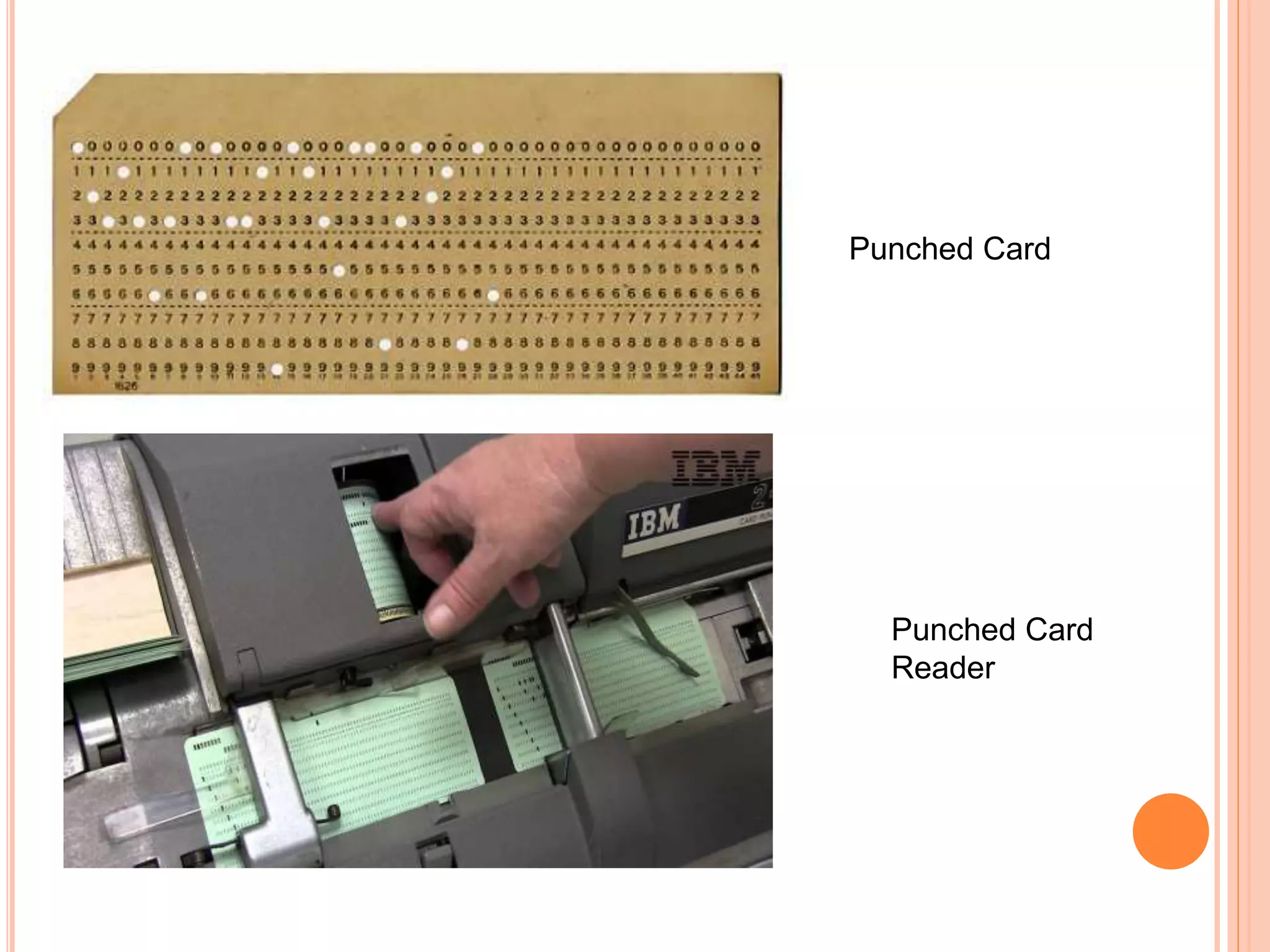
 1960s : exchanging transaction information on
punched cards or magnetic tapes . Later,
transferring data over telephones, instead of
shipping punched cards or magnetic tapes.
 1970s : Introduction of Electronic Data Interchange
(EDI) between the banks over a secured private
network changed the financial market.
 1972 : IBM used the term ‘e-business’. E-Business
became widespread within companies in the form of
electronic messaging technologies i.e.,EDI and E-
mail.
E-BUSINESS V/S TRADITIONAL BUSINESS
Basis E-Business Traditional
Reduction of data error Data goes directly from
one computer to
another without
involving human being.
Data was entered
manually . This creates
error
Paper Work Electronic form Re-entry of data at
every level
Cost Initial cost high .Over a
time , it is effective
Involves a lot of time
and if there is an error,
it may lead to wastage
of money.
Basis E-Business Traditional
Process Cycle Time E-Business reduces
the processing cycle
time as the data is
entered into the
system.
Orders are in paper
format , the data is re-
entered into the
seller’s computer.
ADVANTAGES OF E-BUSINESS
 All time processing
 Better service
 Removing mediators
 Time saving
 Enhanced speed and accuracy of a product
 Cost saving of the product
 Reduces paper work
 Fast dissipation of information
 Global reach
DISADVANTAGES OF E-BUSINESS
 Lack of customer awareness
 Small Businessmen do not want to take any extra
burden
 Legal formalities
 It is not free
 Security problems
 Customer satisfaction problems
 Data integrity problems
PREREQUISITES FOR E-BUSINESS PROCEDURE
 A Commercial website
 Products or services
 Shopping Carts or Purchase Order forms
 Current credit card account that will be accepted on
e-payment
 An online payment gateway
 A secure socket layer –secure the gateway
E-BUSINESS AREAS
 Tourism and Travel
 Banking sector
 Health care sector
 Stock sector
 Financial sector
DEFINITION OF E-COMMERCE
 e-commerce is an abbreviation used for electronic
commerce. It is the process through which the
buying, selling, dealing, ordering and paying for
the goods and services are done over the internet
is known as e-commerce. In this type of online
commercial transaction, the seller can
communicate with the buyer without having face to
face interaction.
 Some examples of real world application of e-
commerce are online banking, online shopping,
online ticket booking
KEY DIFFERENCES BETWEEN E-COMMERCE AND
E-BUSINESS
 Buying and Selling of goods and services through the internet is
known as e-commerce. Unlike e-business, which is an electronic
presence of a business, by which all the business activities are
conducted through the internet.
 e-commerce is a major component of e-business.
 e-commerce includes transactions which are related to money,
but e-business, includes monetary as well as allied activities.
 e-commerce has an extroverted approach that covers customers,
suppliers, distributors, etc. On the other hand, e-business has an
ambiverted approach that covers internal as well as external
processes.
 e-commerce requires a website that can represent the business.
Conversely, e-business requires a website, Customer
Relationship Management and Enterprise Resource Planning for
running business over the internet.
 e-commerce uses the internet to connect with the rest of the
world. In contrast to e-business, internet, intranet and extranet
are used for connecting with the parties .
EDI(ELECTRONIC DATA INTERCHANGE)
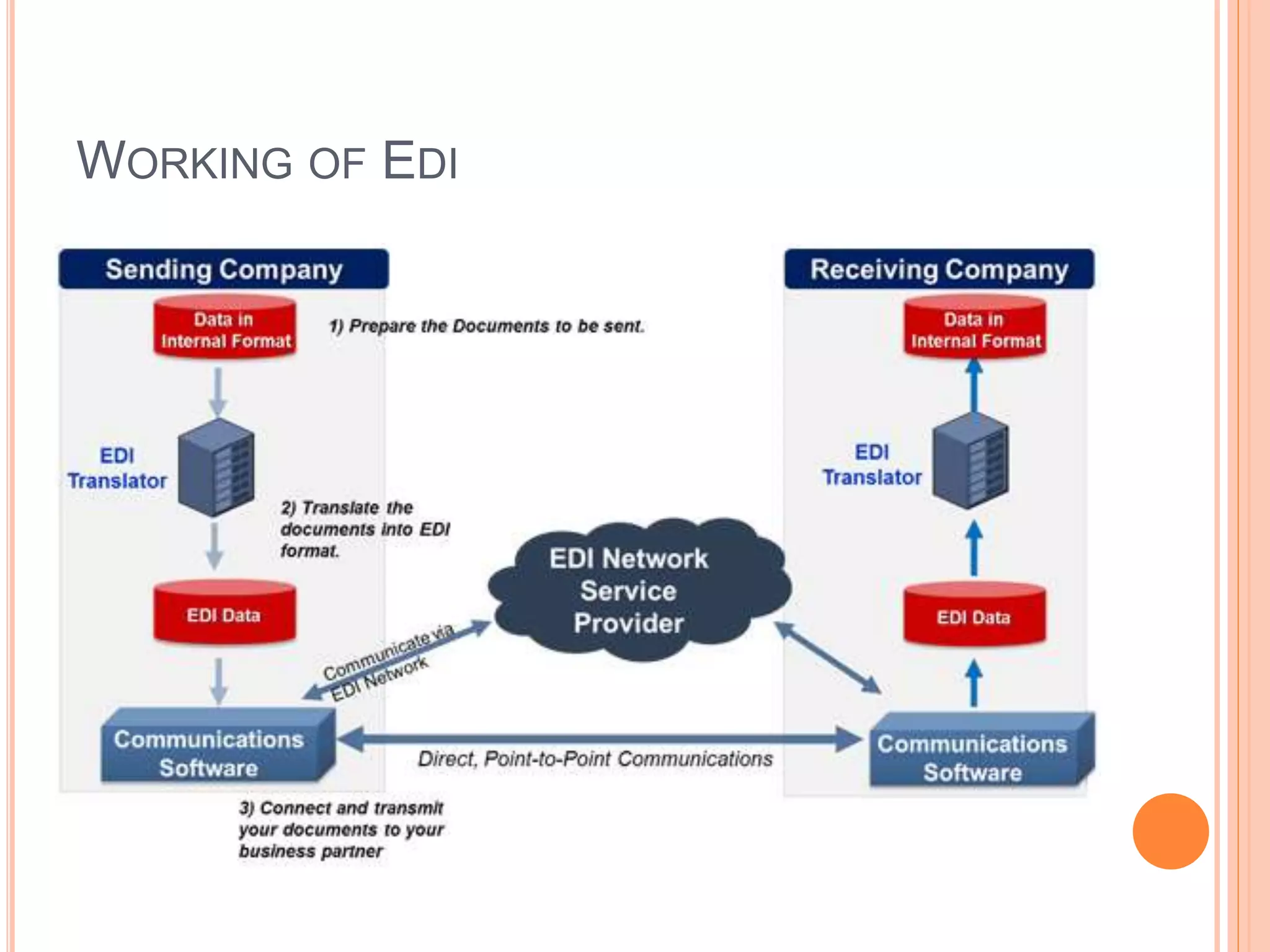
 EDI (Electronic Data Interchange) is the transfer of
data from one computer system to another by
standardized message formatting, without the need
for human intervention. EDI permits multiple
companies -- possibly in different countries -- to
exchange documents electronically.
WORKING OF EDI
ERP (ENTERPRISE RESOURCE PLANNING)
 Enterprise resource planning (ERP) is a category
of business-management software—typically a
suite of integrated applications—that an
organization can use to collect, store, manage and
interpret data from many business activities,
including:
 product planning, cost
 manufacturing or service delivery
 marketing and sales
 inventory management
 shipping and payment
Punched Card
Punched Card
Reader
E business

E business

  • 1.
  • 2.
    E-BUSINESS  Deals withthe buying and selling of information , products and services through the computer network.  Business activity which uses electronic medium.  E Business (e-Business), or Electronic Business, is the administration of conducting business via the Internet. This would include the buying and selling of goods and services, along with providing technical or customer support through the Internet.
  • 3.
    ORIGIN OF E-BUSINESS 1950s : Computers were used to process and store records of internal transactions. But information between various business continued to be exchanged on paper.  1960s : exchanging transaction information on punched cards or magnetic tapes . Later, transferring data over telephones, instead of shipping punched cards or magnetic tapes.  1970s : Introduction of Electronic Data Interchange (EDI) between the banks over a secured private network changed the financial market.
  • 4.
     1972 :IBM used the term ‘e-business’. E-Business became widespread within companies in the form of electronic messaging technologies i.e.,EDI and E- mail.
  • 5.
    E-BUSINESS V/S TRADITIONALBUSINESS Basis E-Business Traditional Reduction of data error Data goes directly from one computer to another without involving human being. Data was entered manually . This creates error Paper Work Electronic form Re-entry of data at every level Cost Initial cost high .Over a time , it is effective Involves a lot of time and if there is an error, it may lead to wastage of money.
  • 6.
    Basis E-Business Traditional ProcessCycle Time E-Business reduces the processing cycle time as the data is entered into the system. Orders are in paper format , the data is re- entered into the seller’s computer.
  • 7.
    ADVANTAGES OF E-BUSINESS All time processing  Better service  Removing mediators  Time saving  Enhanced speed and accuracy of a product  Cost saving of the product  Reduces paper work  Fast dissipation of information  Global reach
  • 8.
    DISADVANTAGES OF E-BUSINESS Lack of customer awareness  Small Businessmen do not want to take any extra burden  Legal formalities  It is not free  Security problems  Customer satisfaction problems  Data integrity problems
  • 9.
    PREREQUISITES FOR E-BUSINESSPROCEDURE  A Commercial website  Products or services  Shopping Carts or Purchase Order forms  Current credit card account that will be accepted on e-payment  An online payment gateway  A secure socket layer –secure the gateway
  • 10.
    E-BUSINESS AREAS  Tourismand Travel  Banking sector  Health care sector  Stock sector  Financial sector
  • 11.
    DEFINITION OF E-COMMERCE e-commerce is an abbreviation used for electronic commerce. It is the process through which the buying, selling, dealing, ordering and paying for the goods and services are done over the internet is known as e-commerce. In this type of online commercial transaction, the seller can communicate with the buyer without having face to face interaction.  Some examples of real world application of e- commerce are online banking, online shopping, online ticket booking
  • 12.
    KEY DIFFERENCES BETWEENE-COMMERCE AND E-BUSINESS  Buying and Selling of goods and services through the internet is known as e-commerce. Unlike e-business, which is an electronic presence of a business, by which all the business activities are conducted through the internet.  e-commerce is a major component of e-business.  e-commerce includes transactions which are related to money, but e-business, includes monetary as well as allied activities.  e-commerce has an extroverted approach that covers customers, suppliers, distributors, etc. On the other hand, e-business has an ambiverted approach that covers internal as well as external processes.  e-commerce requires a website that can represent the business. Conversely, e-business requires a website, Customer Relationship Management and Enterprise Resource Planning for running business over the internet.  e-commerce uses the internet to connect with the rest of the world. In contrast to e-business, internet, intranet and extranet are used for connecting with the parties .
  • 13.
    EDI(ELECTRONIC DATA INTERCHANGE) EDI (Electronic Data Interchange) is the transfer of data from one computer system to another by standardized message formatting, without the need for human intervention. EDI permits multiple companies -- possibly in different countries -- to exchange documents electronically.
  • 14.
  • 15.
    ERP (ENTERPRISE RESOURCEPLANNING)  Enterprise resource planning (ERP) is a category of business-management software—typically a suite of integrated applications—that an organization can use to collect, store, manage and interpret data from many business activities, including:  product planning, cost  manufacturing or service delivery  marketing and sales  inventory management  shipping and payment
  • 17.