UNIT:1
INTRODUCTION [7hrs]
Presented by
Er.Harendra Bikram Shah
[Lecturer]
Department of BBA
OUTLINES
 Concept of e-business
 Difference between e-business and e-commerce
 History and development of e-business
 Nature, scope, and impact of e-business technologies
 Advantages of e-business
 Business model for e-products and e-services;
 Contribution of e-business technologies to economic growth, market, competitiveness, and productivity.
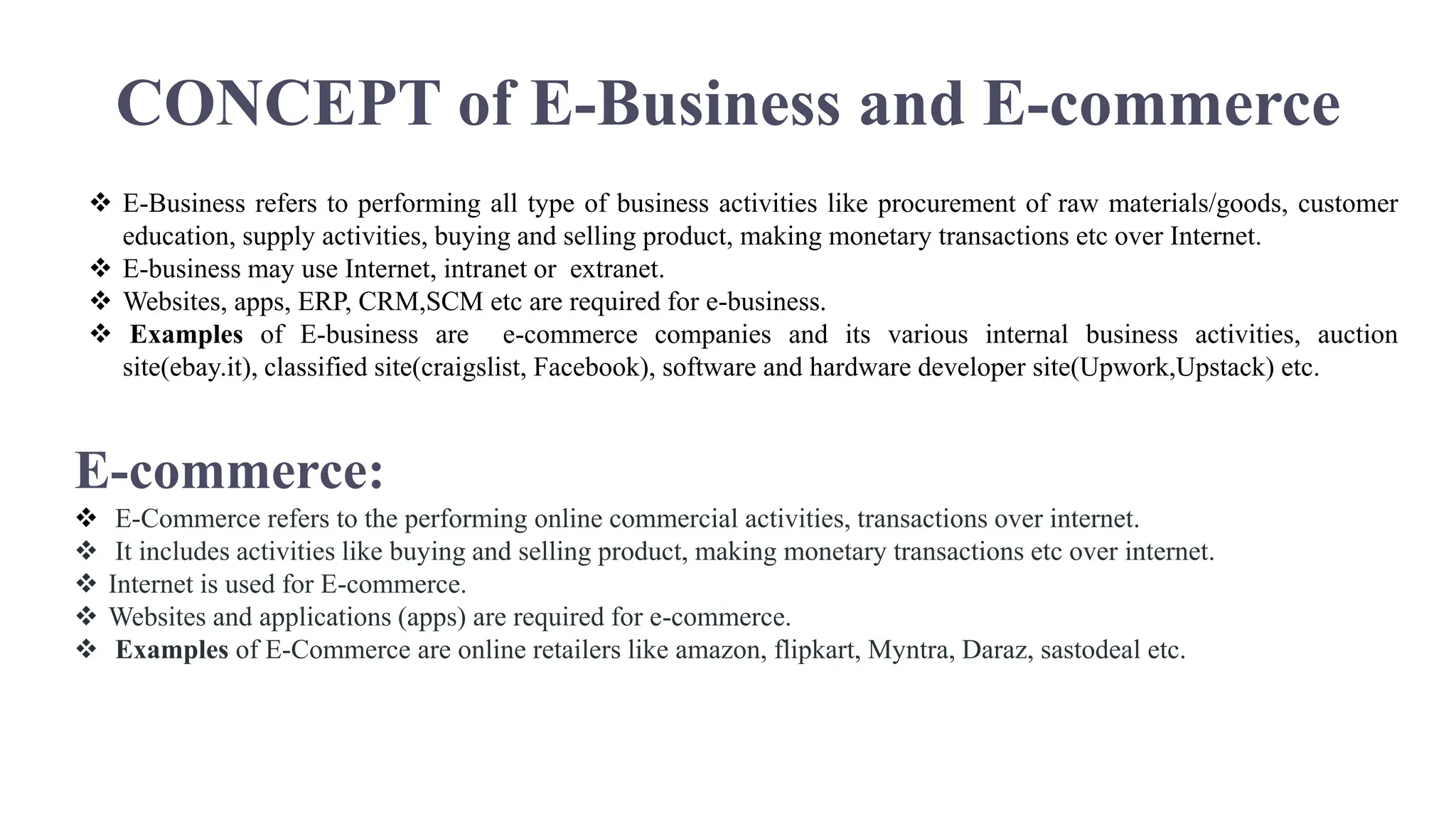
CONCEPT of E-Business and E-commerce
 E-Business refers to performing all type of business activities like procurement of raw materials/goods, customer
education, supply activities, buying and selling product, making monetary transactions etc over Internet.
 E-business may use Internet, intranet or extranet.
 Websites, apps, ERP, CRM,SCM etc are required for e-business.
 Examples of E-business are e-commerce companies and its various internal business activities, auction
site(ebay.it), classified site(craigslist, Facebook), software and hardware developer site(Upwork,Upstack) etc.
E-commerce:
 E-Commerce refers to the performing online commercial activities, transactions over internet.
 It includes activities like buying and selling product, making monetary transactions etc over internet.
 Internet is used for E-commerce.
 Websites and applications (apps) are required for e-commerce.
 Examples of E-Commerce are online retailers like amazon, flipkart, Myntra, Daraz, sastodeal etc.
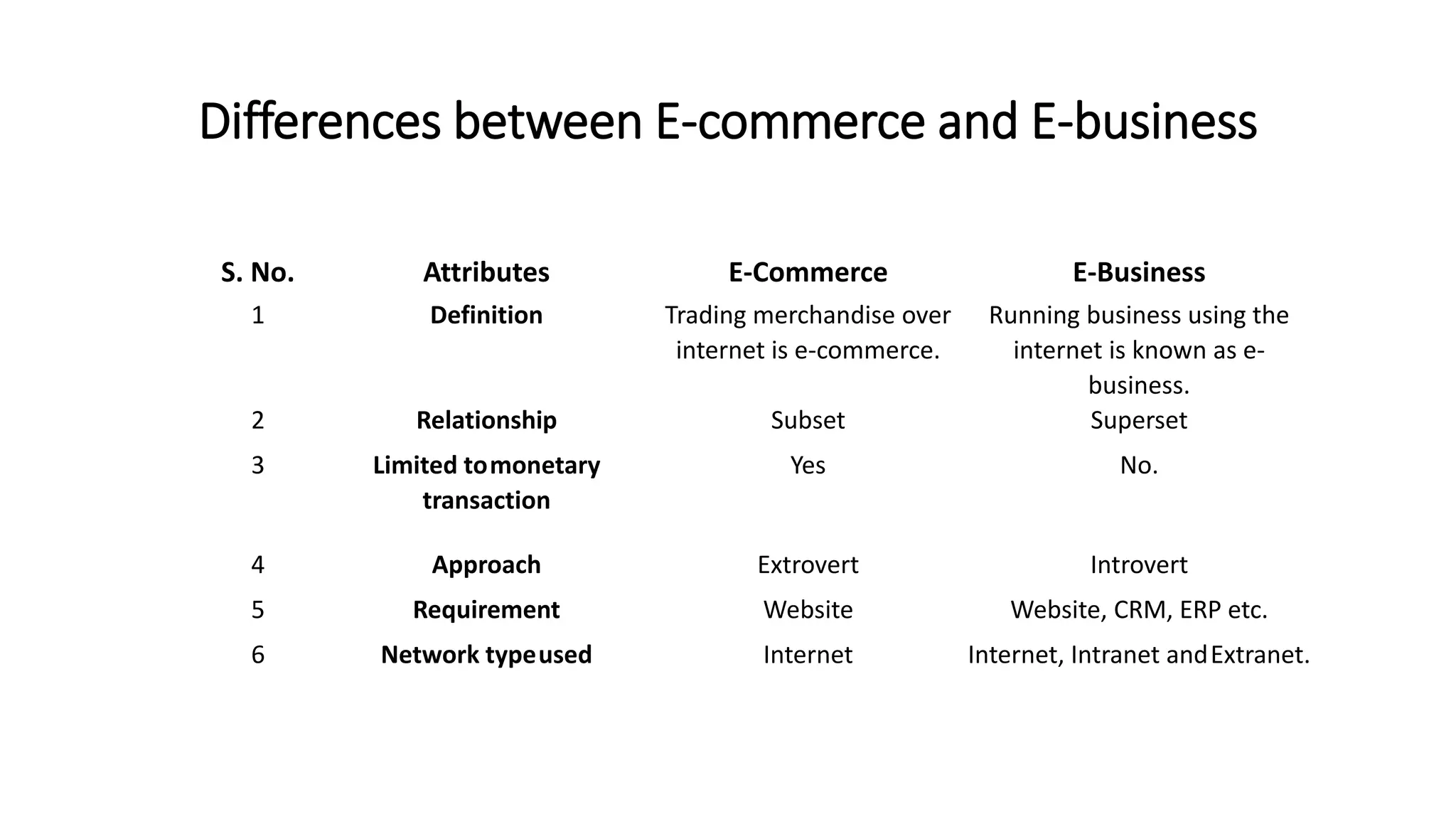
Differences between E-commerce and E-business
S. No. Attributes E-Commerce E-Business
1 Definition Trading merchandise over
internet is e-commerce.
Running business using the
internet is known as e-
business.
2 Relationship Subset Superset
3 Limited tomonetary
transaction
Yes No.
4 Approach Extrovert Introvert
5 Requirement Website Website, CRM, ERP etc.
6 Network typeused Internet Internet, Intranet andExtranet.
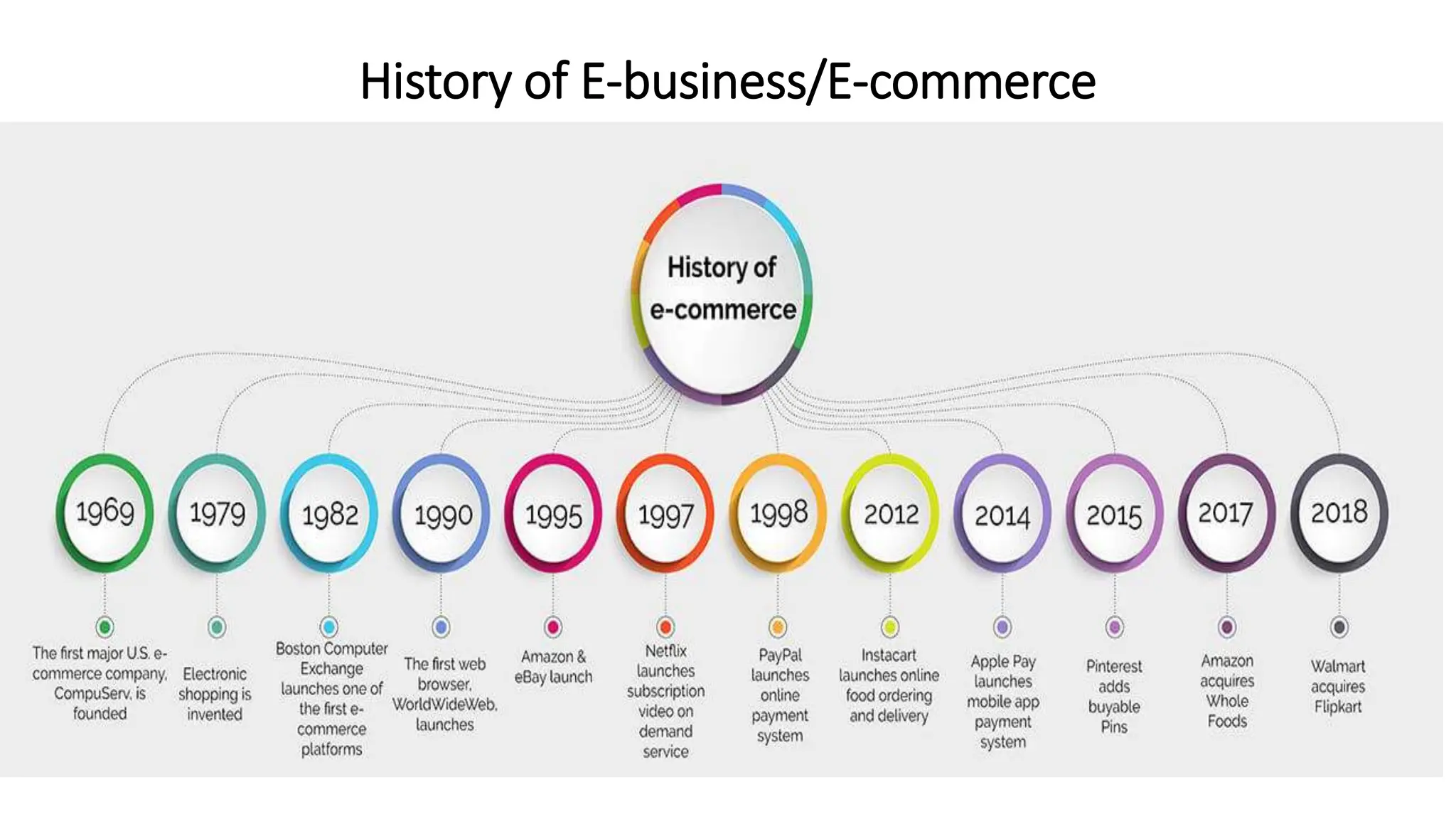
History of E-business/E-commerce
1960’s: CompuServe Founded/EDI is used
1972: Computers Facilitate the First Online Sale
1976: Online Transaction Processing Introduced
1979: Electronic Shopping Invented[Michael Aldrich ]
1983: Electronic Commerce Acknowledged[California's Electronic Commerce Act passed ]
1984: CompuServe Opens the Electronic Mall
1990: World Wide Web Launches
1994: The First Secure Online Transaction is Made
1995: Amazon, eBay, and the Online Marketplace Boom
1998: PayPal Launches
1999: Global eCommerce reaches $150 Billion
2000: The Dotcom Burst and Online Advertising
2005: eCommerce Makes a Comeback
2006: Online Shopping Platforms Increase
2010’s: E-commerce becomes Unstoppable
2020: COVID-19 boost
History of E-business/E-commerce
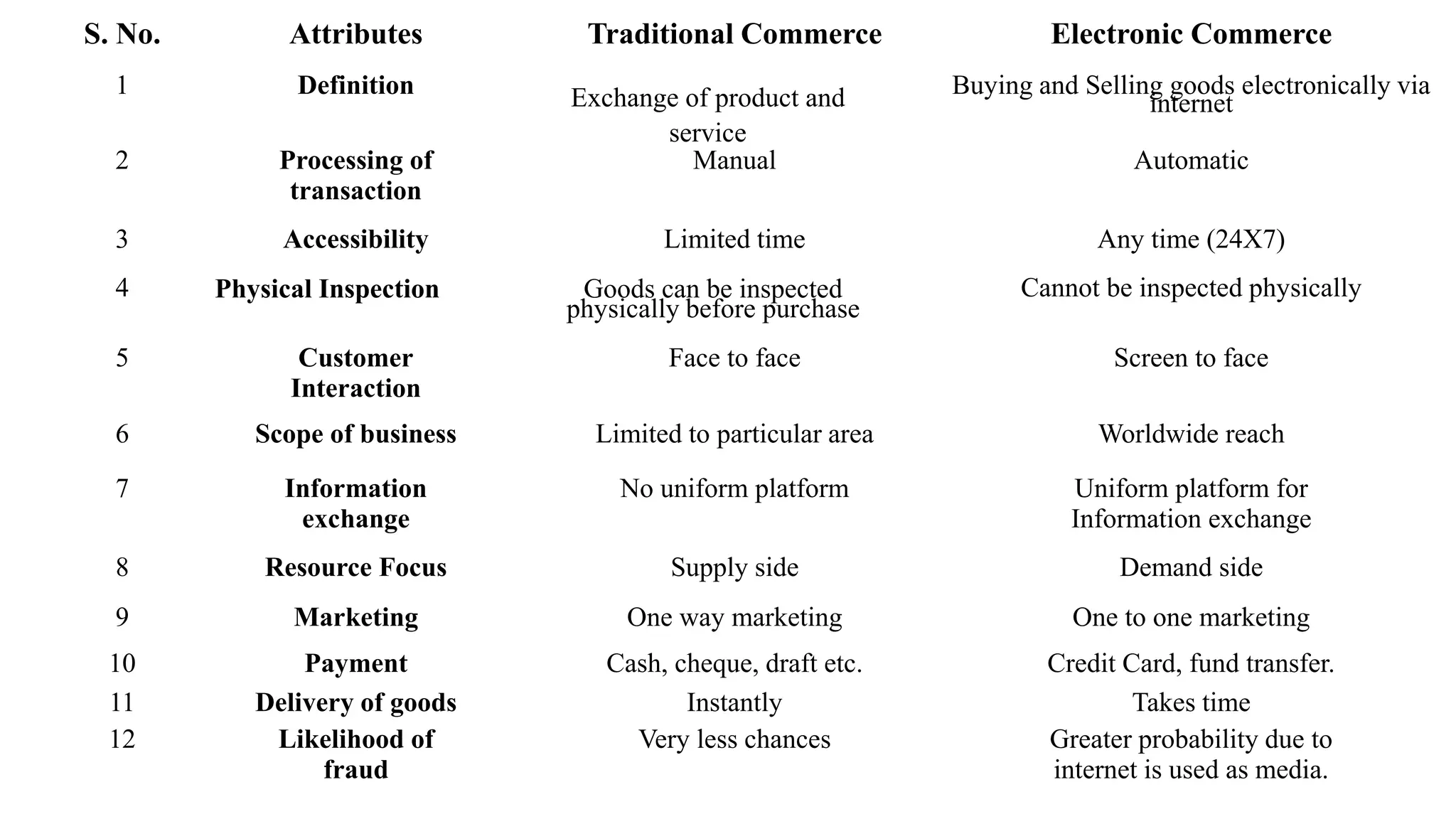
S. No. Attributes Traditional Commerce Electronic Commerce
1 Definition Exchange of product and
service
Buying and Selling goods electronically via
internet
2 Processing of
transaction
Manual Automatic
3 Accessibility Limited time Any time (24X7)
4 Physical Inspection Goods can be inspected
physically before purchase
Cannot be inspected physically
5 Customer
Interaction
Face to face Screen to face
6 Scope of business Limited to particular area Worldwide reach
7 Information
exchange
No uniform platform Uniform platform for
Information exchange
8 Resource Focus Supply side Demand side
9 Marketing One way marketing One to one marketing
10 Payment Cash, cheque, draft etc. Credit Card, fund transfer.
11 Delivery of goods Instantly Takes time
12 Likelihood of
fraud
Very less chances Greater probability due to
internet is used as media.
Features ,Advantages and Disadvantages of E-business
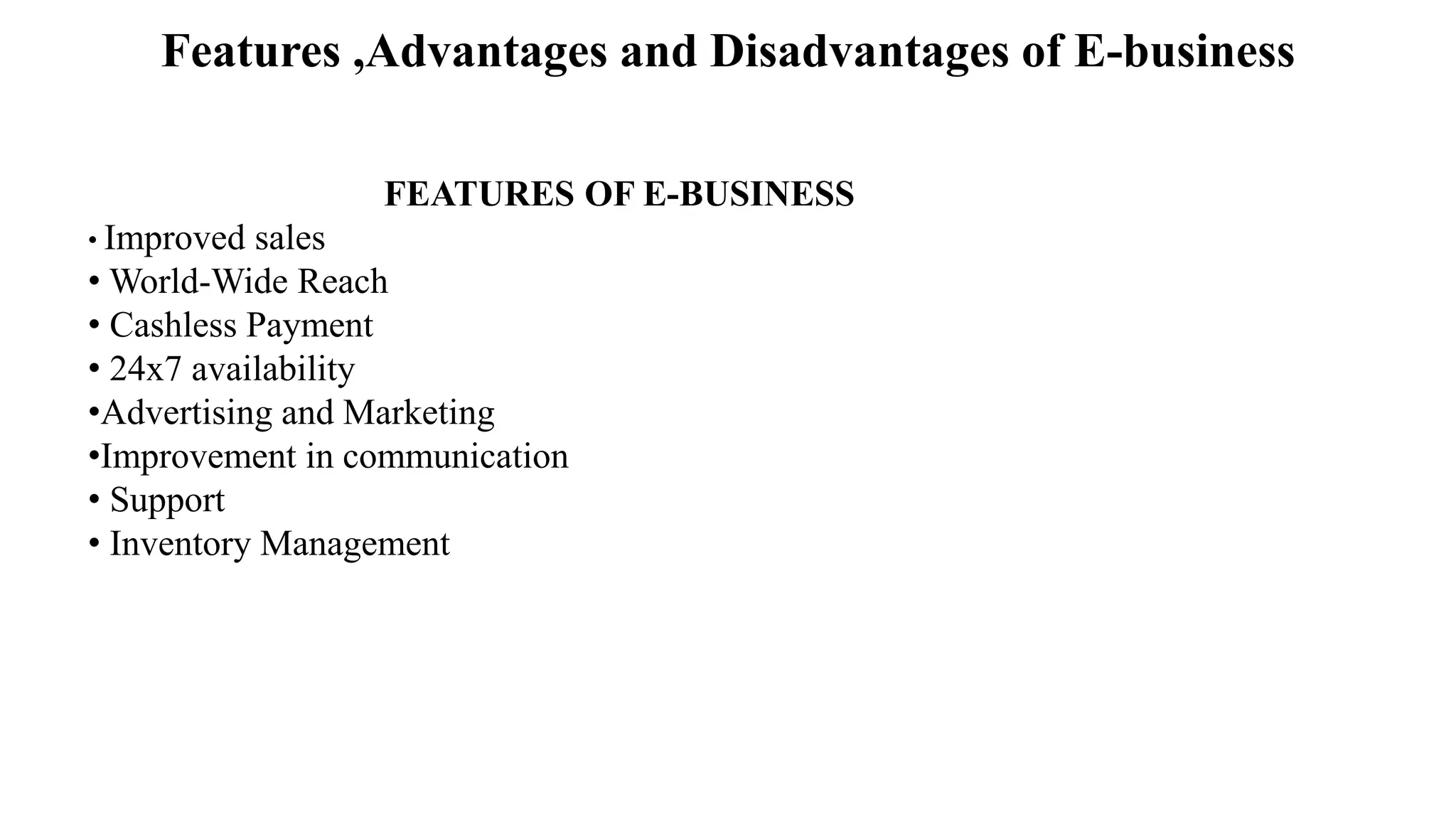
FEATURES OF E-BUSINESS
• Improved sales
• World-Wide Reach
• Cashless Payment
• 24x7 availability
•Advertising and Marketing
•Improvement in communication
• Support
• Inventory Management
Advantages of E-business
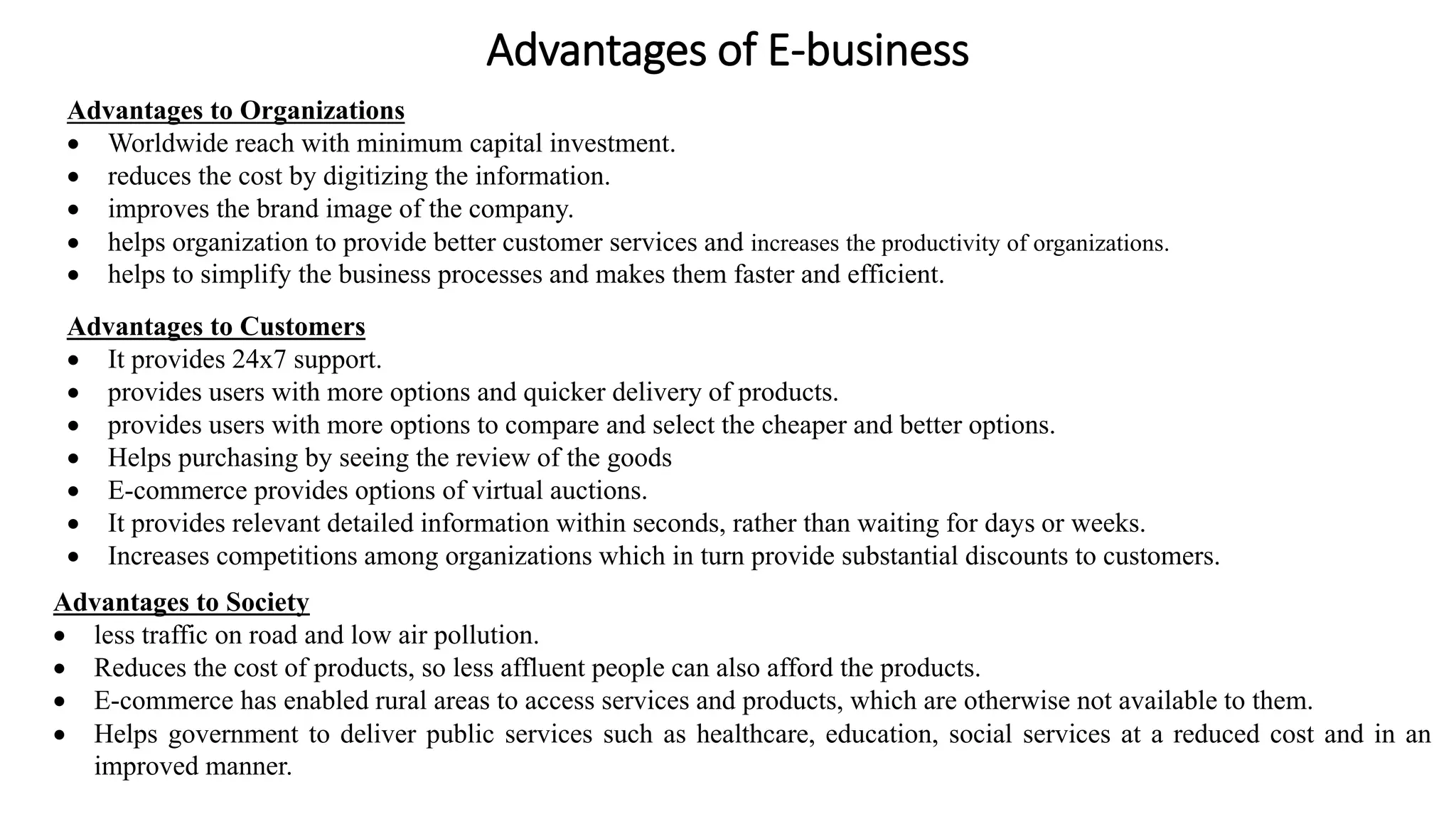
Advantages to Organizations
 Worldwide reach with minimum capital investment.
 reduces the cost by digitizing the information.
 improves the brand image of the company.
 helps organization to provide better customer services and increases the productivity of organizations.
 helps to simplify the business processes and makes them faster and efficient.
Advantages to Customers
 It provides 24x7 support.
 provides users with more options and quicker delivery of products.
 provides users with more options to compare and select the cheaper and better options.
 Helps purchasing by seeing the review of the goods
 E-commerce provides options of virtual auctions.
 It provides relevant detailed information within seconds, rather than waiting for days or weeks.
 Increases competitions among organizations which in turn provide substantial discounts to customers.
Advantages to Society
 less traffic on road and low air pollution.
 Reduces the cost of products, so less affluent people can also afford the products.
 E-commerce has enabled rural areas to access services and products, which are otherwise not available to them.
 Helps government to deliver public services such as healthcare, education, social services at a reduced cost and in an
improved manner.
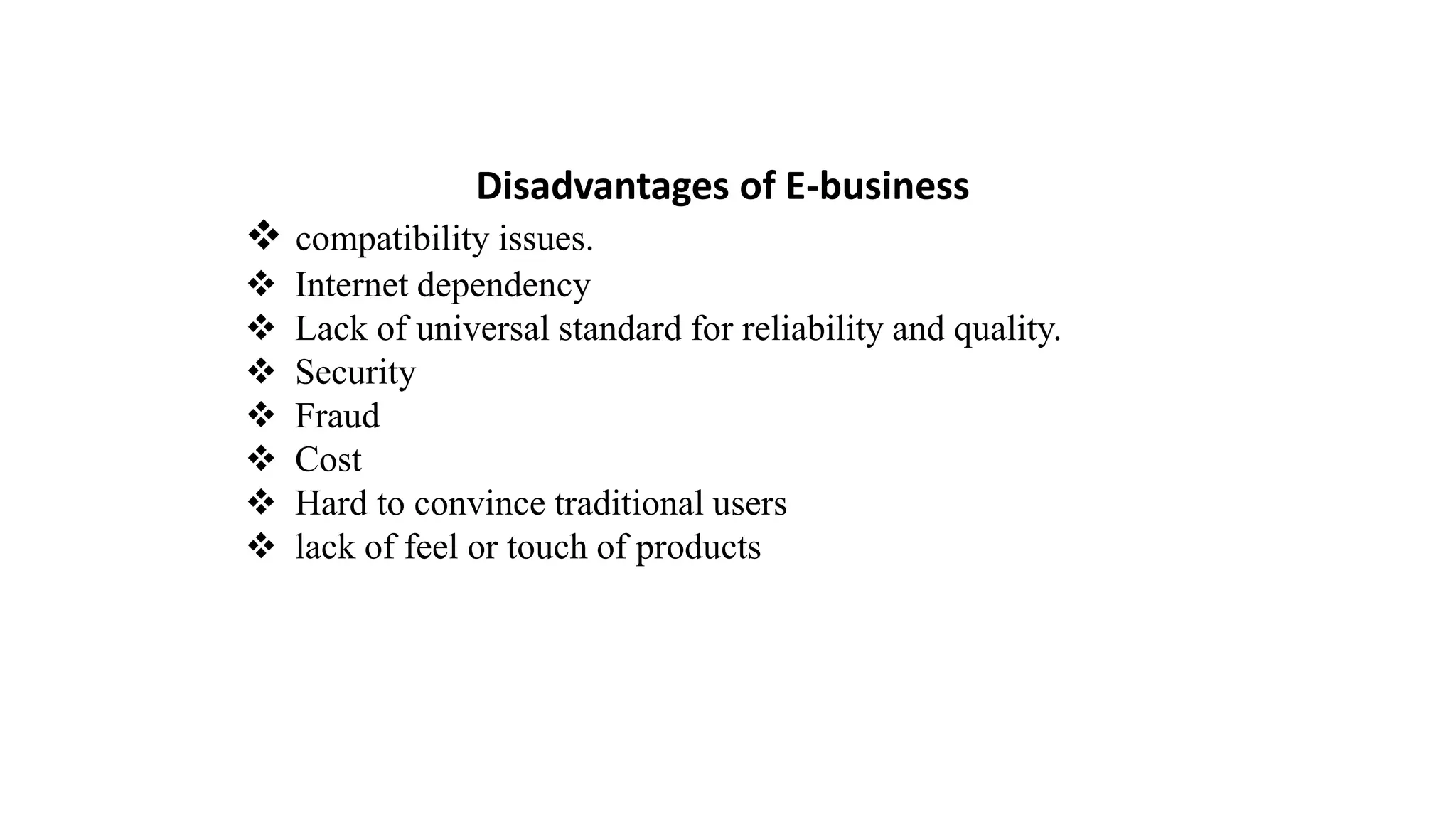
Disadvantages of E-business
 compatibility issues.
 Internet dependency
 Lack of universal standard for reliability and quality.
 Security
 Fraud
 Cost
 Hard to convince traditional users
 lack of feel or touch of products
Application of E-business =Assignment Work
Scope and Impact of E-Business Technologies
SCOPE OF E-BUSINESS
 Selling can be focused to the global customer
 Pre-sales, subcontracts, supply
 Financing and insurance
 Commercial transactions: ordering, delivery, payment
 Product service and maintenance
 Use of public and private services
 Transport and logistics
 Automatic trading of digital goods
 Accounting
Impact of E-Business Technologies
 Data collection
 Effective Sales Processes
 Marketing and Advertisement
 Customer Service
 New Competition
 Productivity
BUSINESS MODEL FOR E-PRODUCTS AND
E-SERVICES
•Business - to - Business (B2B)
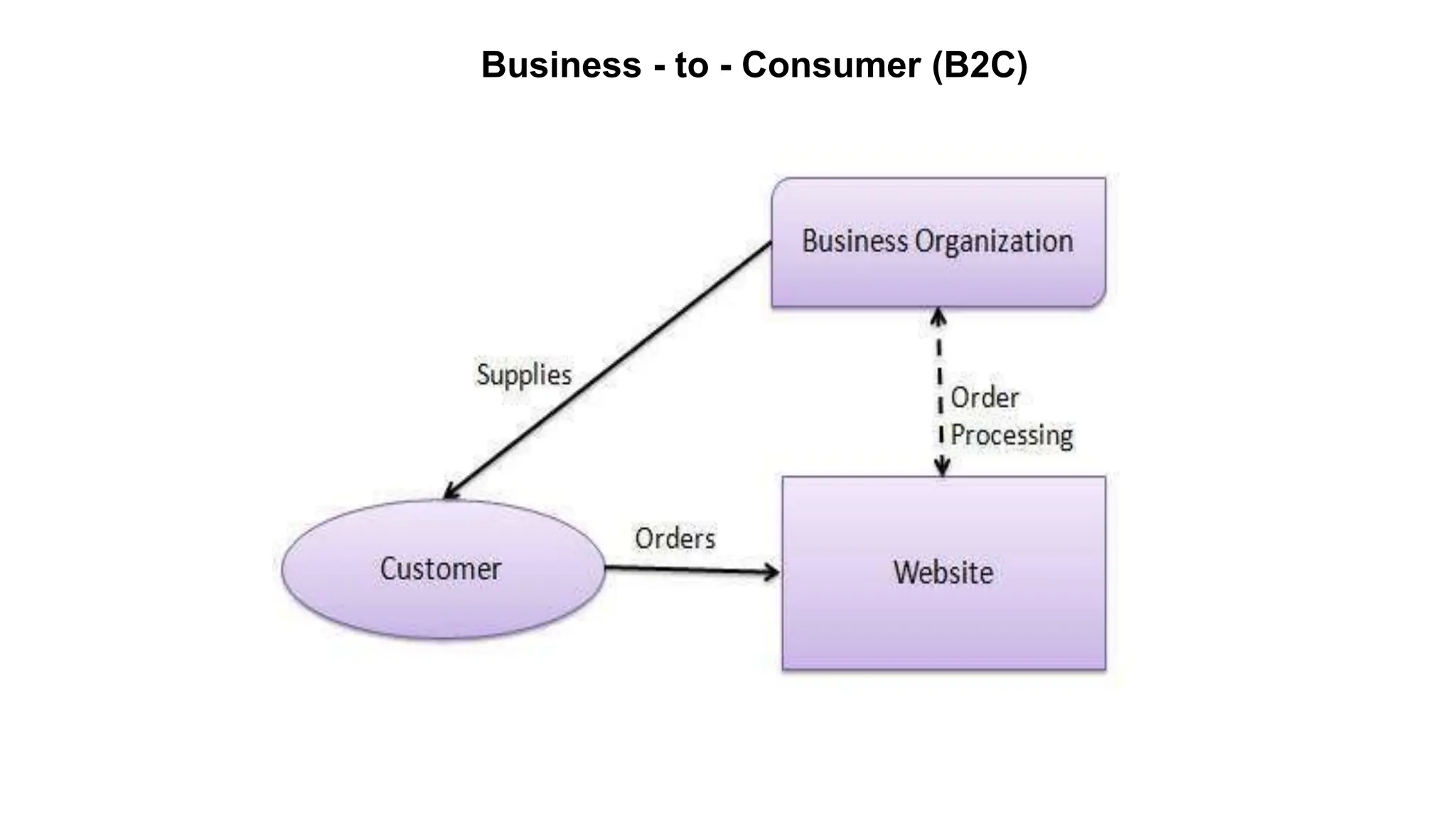
•Business - to - Consumer (B2C)
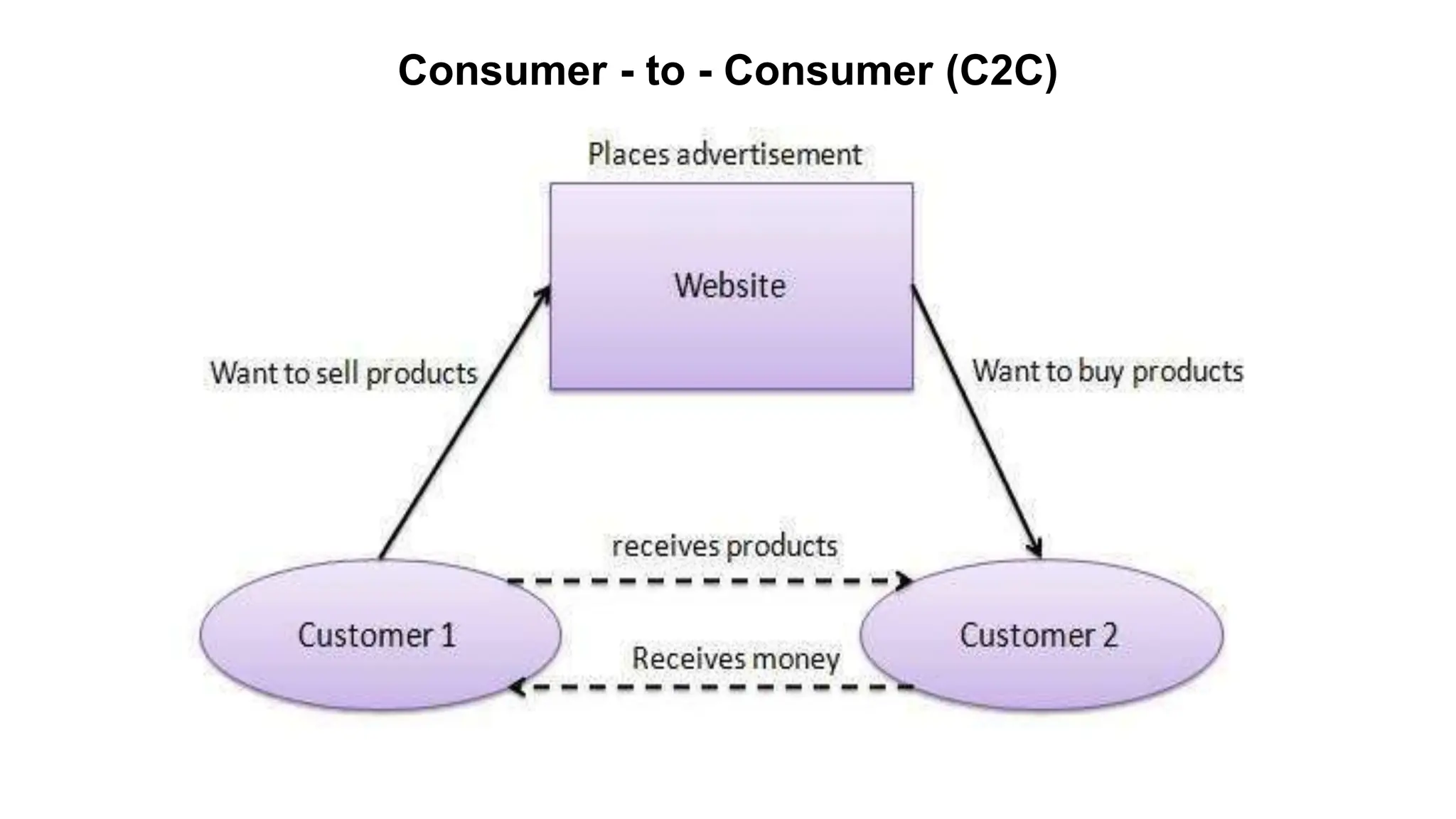
•Consumer - to - Consumer (C2C)
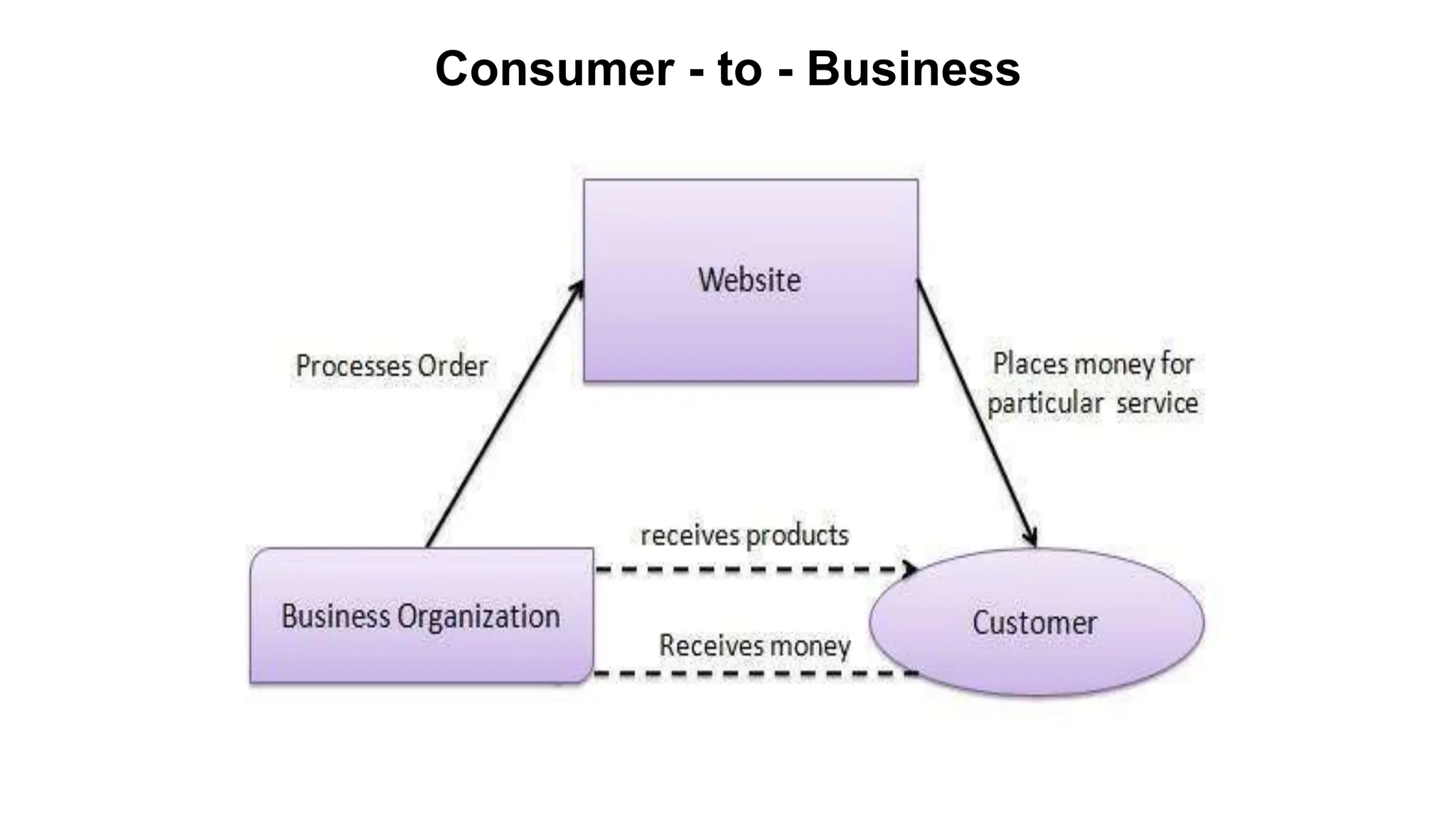
•Consumer - to - Business (C2B)
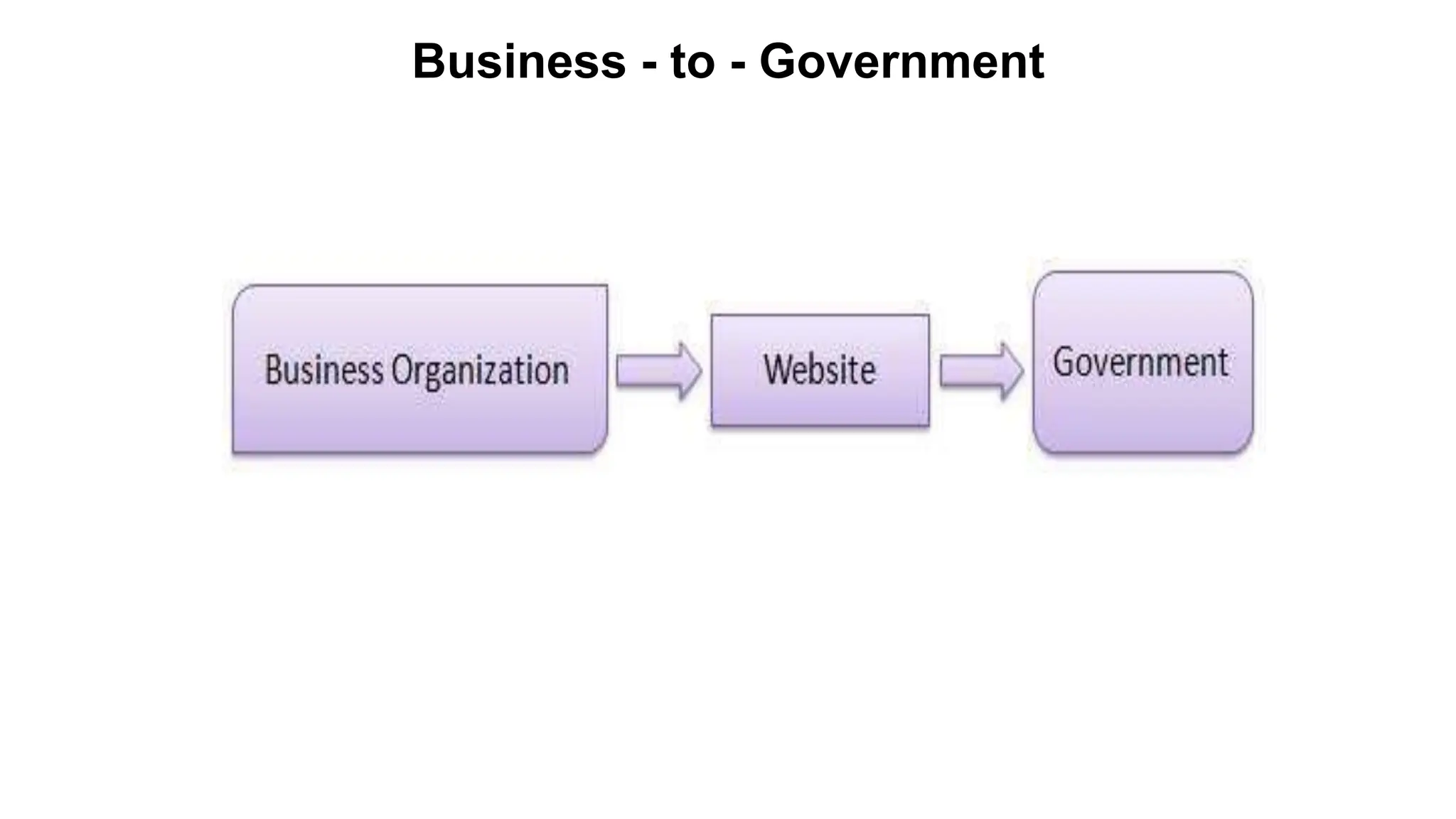
•Business - to - Government (B2G)
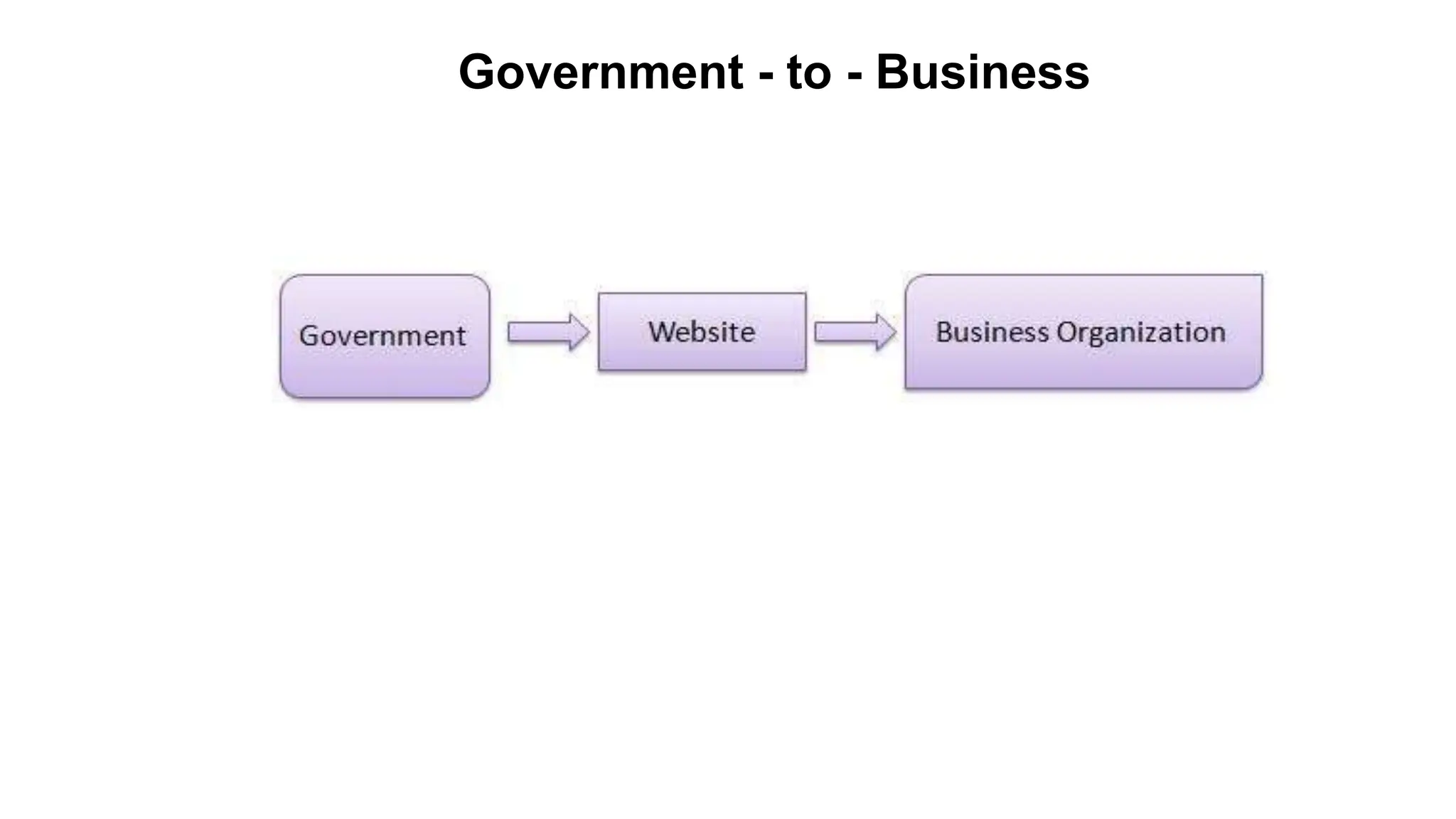
•Government - to - Business (G2B)
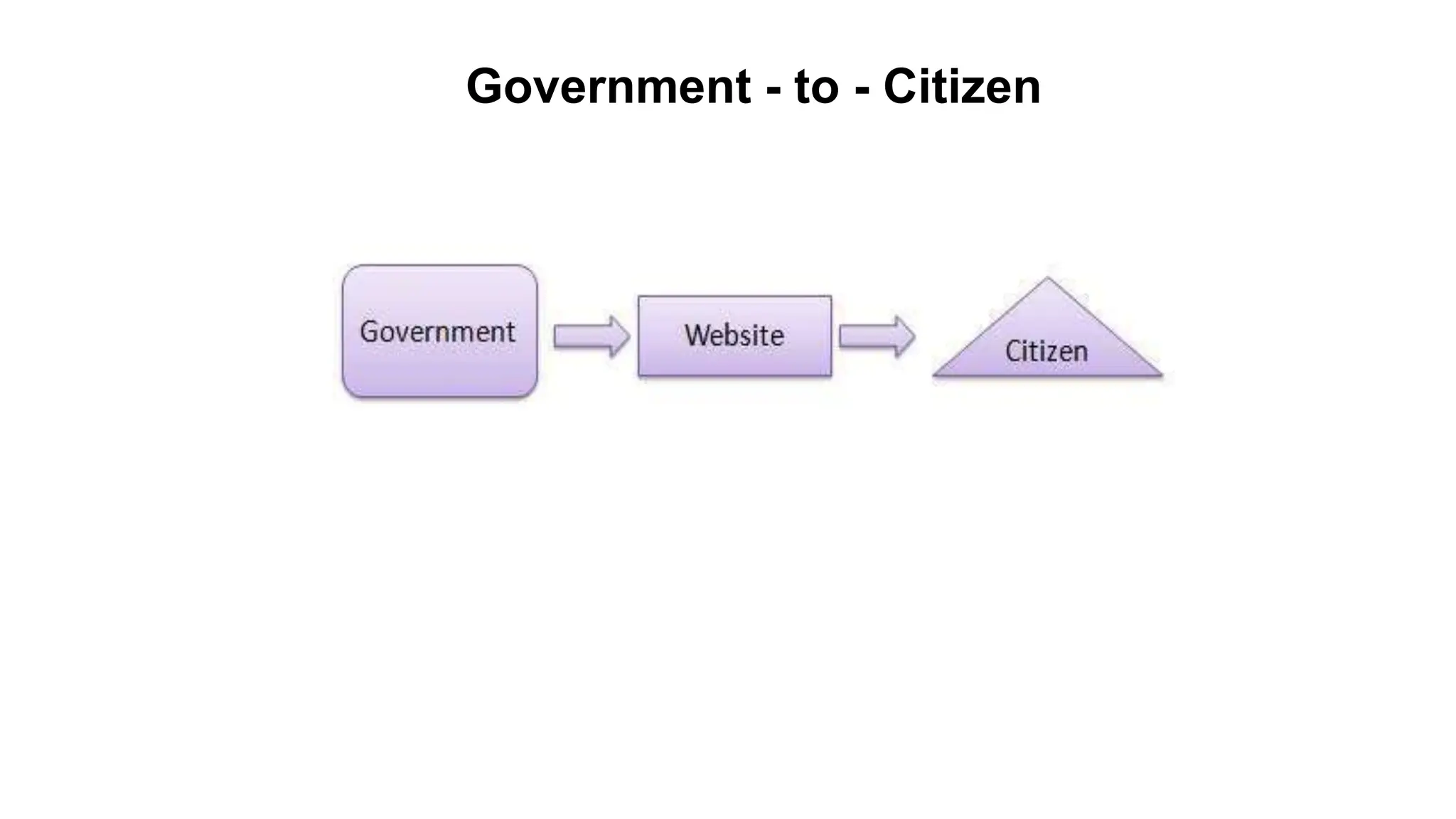
•Government - to - Citizen (G2C)
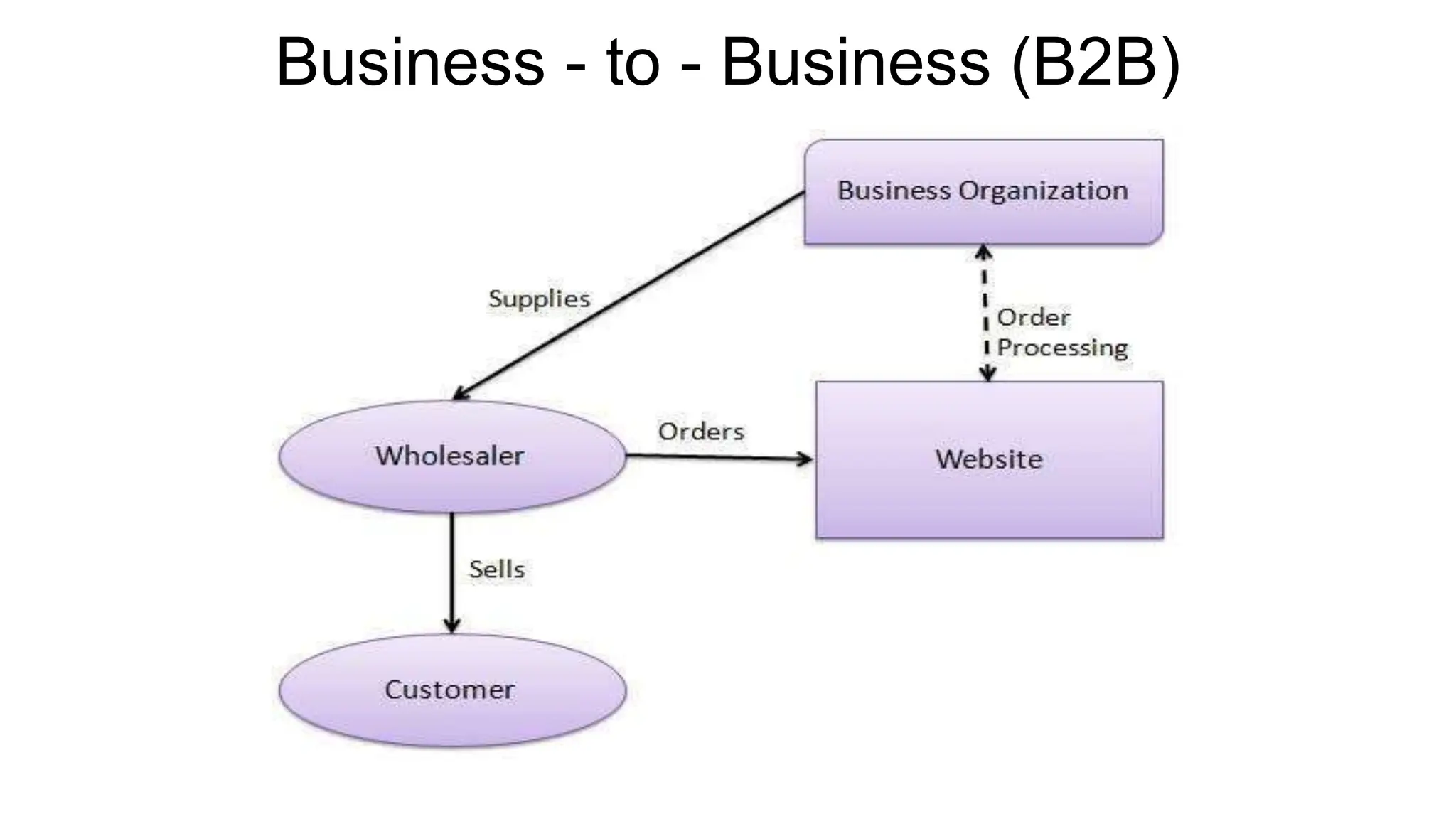
Business - to - Business (B2B)
Business - to - Consumer (B2C)
Consumer - to - Consumer (C2C)
Consumer - to - Business
Business - to - Government
Government - to - Business
Government - to - Citizen
Contribution of e-business technologies to economic
growth, market, competitiveness, and productivity.
 Increasing sales and exports and thus increasing production and growth rates.
 world wide reach
 Increase in competition
 higher wages
 higher standards of living for individuals
 structuring markets and expanding marketing
 Environment Concern
 Increment in productivity
 B2B projected to reach $1.8 trillion by 2023.
THANK YOU
End of the Unit

UNIT 1 Introduction EBUSINESS study about e business

  • 1.
    UNIT:1 INTRODUCTION [7hrs] Presented by Er.HarendraBikram Shah [Lecturer] Department of BBA
  • 2.
    OUTLINES  Concept ofe-business  Difference between e-business and e-commerce  History and development of e-business  Nature, scope, and impact of e-business technologies  Advantages of e-business  Business model for e-products and e-services;  Contribution of e-business technologies to economic growth, market, competitiveness, and productivity.
  • 3.
    CONCEPT of E-Businessand E-commerce  E-Business refers to performing all type of business activities like procurement of raw materials/goods, customer education, supply activities, buying and selling product, making monetary transactions etc over Internet.  E-business may use Internet, intranet or extranet.  Websites, apps, ERP, CRM,SCM etc are required for e-business.  Examples of E-business are e-commerce companies and its various internal business activities, auction site(ebay.it), classified site(craigslist, Facebook), software and hardware developer site(Upwork,Upstack) etc. E-commerce:  E-Commerce refers to the performing online commercial activities, transactions over internet.  It includes activities like buying and selling product, making monetary transactions etc over internet.  Internet is used for E-commerce.  Websites and applications (apps) are required for e-commerce.  Examples of E-Commerce are online retailers like amazon, flipkart, Myntra, Daraz, sastodeal etc.
  • 4.
    Differences between E-commerceand E-business S. No. Attributes E-Commerce E-Business 1 Definition Trading merchandise over internet is e-commerce. Running business using the internet is known as e- business. 2 Relationship Subset Superset 3 Limited tomonetary transaction Yes No. 4 Approach Extrovert Introvert 5 Requirement Website Website, CRM, ERP etc. 6 Network typeused Internet Internet, Intranet andExtranet.
  • 5.
    History of E-business/E-commerce 1960’s:CompuServe Founded/EDI is used 1972: Computers Facilitate the First Online Sale 1976: Online Transaction Processing Introduced 1979: Electronic Shopping Invented[Michael Aldrich ] 1983: Electronic Commerce Acknowledged[California's Electronic Commerce Act passed ] 1984: CompuServe Opens the Electronic Mall 1990: World Wide Web Launches 1994: The First Secure Online Transaction is Made 1995: Amazon, eBay, and the Online Marketplace Boom 1998: PayPal Launches 1999: Global eCommerce reaches $150 Billion 2000: The Dotcom Burst and Online Advertising 2005: eCommerce Makes a Comeback 2006: Online Shopping Platforms Increase 2010’s: E-commerce becomes Unstoppable 2020: COVID-19 boost
  • 6.
  • 7.
    S. No. AttributesTraditional Commerce Electronic Commerce 1 Definition Exchange of product and service Buying and Selling goods electronically via internet 2 Processing of transaction Manual Automatic 3 Accessibility Limited time Any time (24X7) 4 Physical Inspection Goods can be inspected physically before purchase Cannot be inspected physically 5 Customer Interaction Face to face Screen to face 6 Scope of business Limited to particular area Worldwide reach 7 Information exchange No uniform platform Uniform platform for Information exchange 8 Resource Focus Supply side Demand side 9 Marketing One way marketing One to one marketing 10 Payment Cash, cheque, draft etc. Credit Card, fund transfer. 11 Delivery of goods Instantly Takes time 12 Likelihood of fraud Very less chances Greater probability due to internet is used as media.
  • 8.
    Features ,Advantages andDisadvantages of E-business FEATURES OF E-BUSINESS • Improved sales • World-Wide Reach • Cashless Payment • 24x7 availability •Advertising and Marketing •Improvement in communication • Support • Inventory Management
  • 9.
    Advantages of E-business Advantagesto Organizations  Worldwide reach with minimum capital investment.  reduces the cost by digitizing the information.  improves the brand image of the company.  helps organization to provide better customer services and increases the productivity of organizations.  helps to simplify the business processes and makes them faster and efficient. Advantages to Customers  It provides 24x7 support.  provides users with more options and quicker delivery of products.  provides users with more options to compare and select the cheaper and better options.  Helps purchasing by seeing the review of the goods  E-commerce provides options of virtual auctions.  It provides relevant detailed information within seconds, rather than waiting for days or weeks.  Increases competitions among organizations which in turn provide substantial discounts to customers. Advantages to Society  less traffic on road and low air pollution.  Reduces the cost of products, so less affluent people can also afford the products.  E-commerce has enabled rural areas to access services and products, which are otherwise not available to them.  Helps government to deliver public services such as healthcare, education, social services at a reduced cost and in an improved manner.
  • 10.
    Disadvantages of E-business compatibility issues.  Internet dependency  Lack of universal standard for reliability and quality.  Security  Fraud  Cost  Hard to convince traditional users  lack of feel or touch of products
  • 11.
    Application of E-business=Assignment Work
  • 12.
    Scope and Impactof E-Business Technologies SCOPE OF E-BUSINESS  Selling can be focused to the global customer  Pre-sales, subcontracts, supply  Financing and insurance  Commercial transactions: ordering, delivery, payment  Product service and maintenance  Use of public and private services  Transport and logistics  Automatic trading of digital goods  Accounting Impact of E-Business Technologies  Data collection  Effective Sales Processes  Marketing and Advertisement  Customer Service  New Competition  Productivity
  • 13.
    BUSINESS MODEL FORE-PRODUCTS AND E-SERVICES •Business - to - Business (B2B) •Business - to - Consumer (B2C) •Consumer - to - Consumer (C2C) •Consumer - to - Business (C2B) •Business - to - Government (B2G) •Government - to - Business (G2B) •Government - to - Citizen (G2C)
  • 14.
    Business - to- Business (B2B)
  • 15.
    Business - to- Consumer (B2C)
  • 16.
    Consumer - to- Consumer (C2C)
  • 17.
    Consumer - to- Business
  • 18.
    Business - to- Government
  • 19.
    Government - to- Business
  • 20.
    Government - to- Citizen
  • 21.
    Contribution of e-businesstechnologies to economic growth, market, competitiveness, and productivity.  Increasing sales and exports and thus increasing production and growth rates.  world wide reach  Increase in competition  higher wages  higher standards of living for individuals  structuring markets and expanding marketing  Environment Concern  Increment in productivity  B2B projected to reach $1.8 trillion by 2023.
  • 22.
  • 23.