Duchenne Muscular Dystrophy (DMD)   By: Graham W
Causes of DMD Duchenne Muscular Dystrophy is a genetic disorder that is a recessive sex linked trait found on the X-gene. It causes muscle weakness because of a lack of protein in the muscles known as Dystrophin.
Symptoms of DMD Fatigue Mental retardation Muscle weakness Progressive difficulty walking Abnormal heartbeat Deformities of back and chest Enlarged calf muscles (eventually replaced by fatty tissue) Loss of muscle mass Muscle deformities Respiratory disorders
Treatment for DMD Currently there are no treatments for Duchenne Muscular Dystrophy, all medication aims to suppress symptoms and improve quality of life. There are several signs and tests that can be done to see if you have Duchenne Muscular Dystrophy early on. Electromyography Genetic testing Muscular Biopsy Serum CPK
Impact on daily life Duchenne mucular dystrophy impacts normal life in many ways. It requires the victims to go to physical therapy, and also limits them to having to use wheelchairs and other machanic devices to do other daily routines. Many kids will also have to have a spinal fusion because a severe scoliosis.    So far geneticists are looking into the genes that cause DMD and are looking for a possible cure. They are learning more and more about the genes behind DMD but are still far from a possible cure.
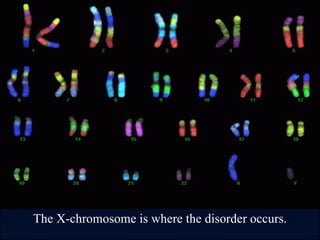
The X-chromosome is where the disorder occurs.
Bibliography http://www.ncbi.nlm.nih.gov/pubmedhealth/PMH0001724/ National center for Biotechnology information  U.S. National library of medicine     http://www.mdausa.org/disease/dmd.html Muscular Dystrophy Association   http://www.genome.gov/19518854 National Human Genome Research Institute    

Duchenne Muscular Dystrophy (DMD)

  • 1.
    Duchenne Muscular Dystrophy(DMD)   By: Graham W
  • 2.
    Causes of DMDDuchenne Muscular Dystrophy is a genetic disorder that is a recessive sex linked trait found on the X-gene. It causes muscle weakness because of a lack of protein in the muscles known as Dystrophin.
  • 3.
    Symptoms of DMDFatigue Mental retardation Muscle weakness Progressive difficulty walking Abnormal heartbeat Deformities of back and chest Enlarged calf muscles (eventually replaced by fatty tissue) Loss of muscle mass Muscle deformities Respiratory disorders
  • 4.
    Treatment for DMDCurrently there are no treatments for Duchenne Muscular Dystrophy, all medication aims to suppress symptoms and improve quality of life. There are several signs and tests that can be done to see if you have Duchenne Muscular Dystrophy early on. Electromyography Genetic testing Muscular Biopsy Serum CPK
  • 5.
    Impact on dailylife Duchenne mucular dystrophy impacts normal life in many ways. It requires the victims to go to physical therapy, and also limits them to having to use wheelchairs and other machanic devices to do other daily routines. Many kids will also have to have a spinal fusion because a severe scoliosis.   So far geneticists are looking into the genes that cause DMD and are looking for a possible cure. They are learning more and more about the genes behind DMD but are still far from a possible cure.
  • 6.
    The X-chromosome iswhere the disorder occurs.
  • 7.
    Bibliography http://www.ncbi.nlm.nih.gov/pubmedhealth/PMH0001724/ Nationalcenter for Biotechnology information U.S. National library of medicine     http://www.mdausa.org/disease/dmd.html Muscular Dystrophy Association   http://www.genome.gov/19518854 National Human Genome Research Institute