Spondylitis
Spondylitis
Spondylitis is one of the most common
causes of chronic back ache and pain in the
neck, making it very difficult for a patient to
live a normal, pain-free life.
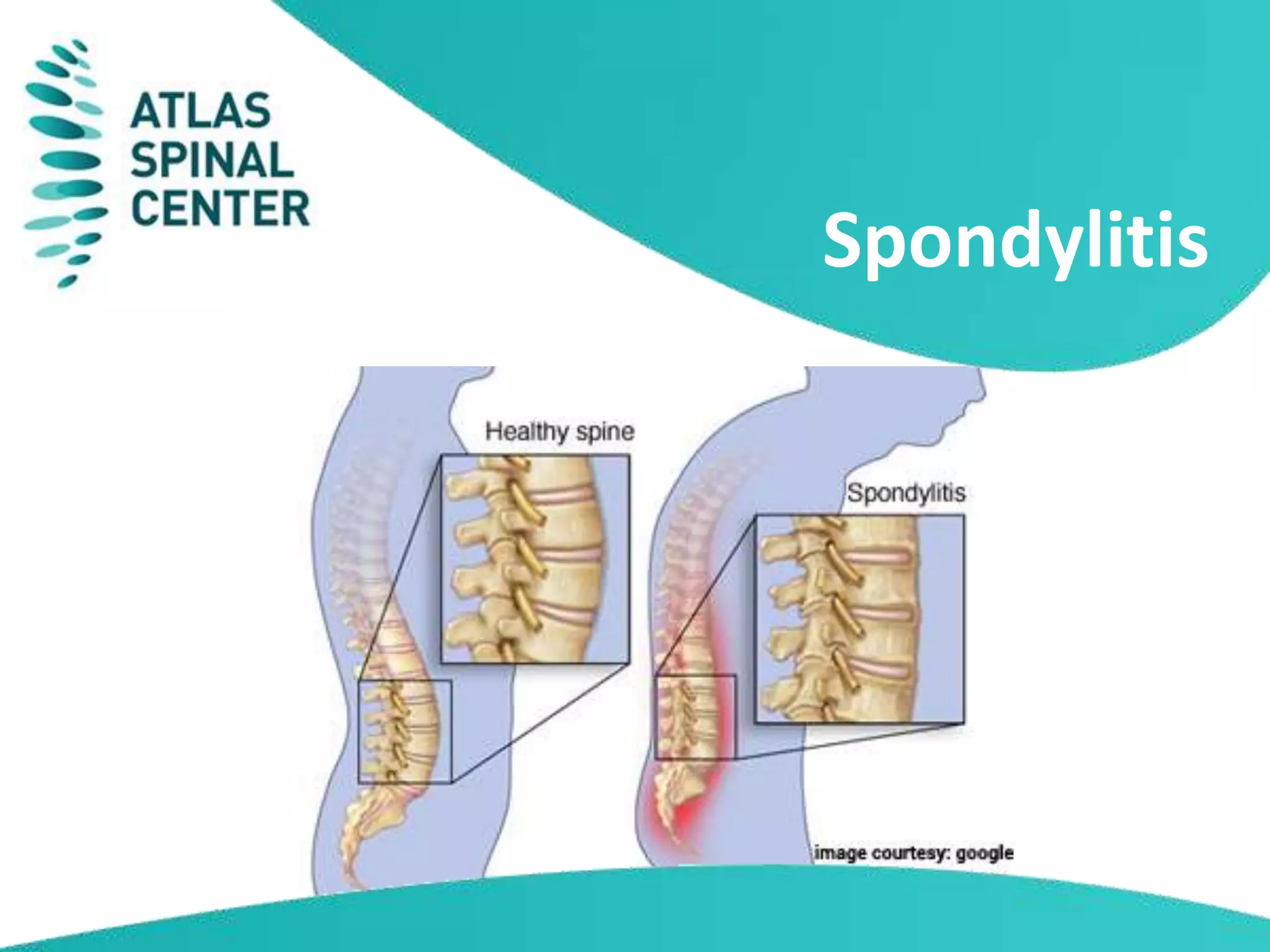
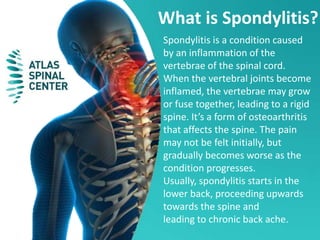
Spondylitis is a condition caused
by an inflammation of the
vertebrae of the spinal cord.
When the vertebral joints become
inflamed, the vertebrae may grow
or fuse together, leading to a rigid
spine. It’s a form of osteoarthritis
that affects the spine. The pain
may not be felt initially, but
gradually becomes worse as the
condition progresses.
Usually, spondylitis starts in the
lower back, proceeding upwards
towards the spine and
leading to chronic back ache.
What is Spondylitis?
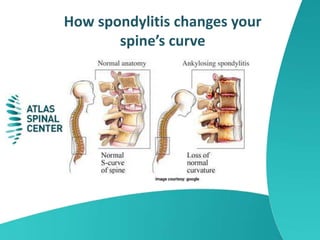
How spondylitis changes your
spine’s curve
What causes Spondylitis?
Genetics appear to be the most
common cause of this condition.
Research shows that over 90
percent of people with this
condition carry a particular gene
called the human leukocyte
antigen B27 (HLA-B27). That
explains why somebody with a
family history of spondylitis is more
likely to develop this condition
than someone who doesn’t.
What are the common
symptoms of spondylitis?
• Loss of coordination or
normal reflexes
• Stiff neck or back
• Tingling or numbness
in the affected area
• Difficulty walking and
moving around
Severe chronic pain and
discomfort are the most
obvious symptoms of
Spondylitis.
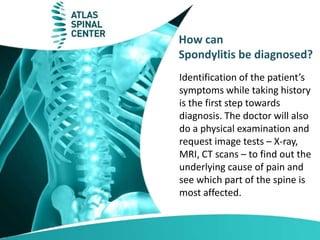
Identification of the patient’s
symptoms while taking history
is the first step towards
diagnosis. The doctor will also
do a physical examination and
request image tests – X-ray,
MRI, CT scans – to find out the
underlying cause of pain and
see which part of the spine is
most affected.
How can
Spondylitis be diagnosed?
What treatment options
are there for this condition?
The main aim of any treatment option for this disease is to reduce pain
and stiffness caused by the inflammation of the vertebrae.
AO treatment
Even if the process of degeneration has started or has
been ongoing for many of years, realignment of the
vertebrae to their proper position can slow or the stop
the process from continuing and allow for repair phase
and the best possible range of motion.
What lifestyle changes can help
provide relief from the
symptoms of spondylitis?
People with spondylitis can lead normal
lives with a few lifestyle changes using
pain management techniques advised by
their doctors. Smoking and tobacco are
believed to aggravate the condition,
therefore patients are recommended to
quit smoking to relieve them from pain.
Other measures that should be practiced
include:
Sleeping on a firm mattress with the back straight to avoid fusion of vertebrae
Not sleeping with a large pillow under the neck to avoid fusion of vertebrae near the neck
Not propping up legs as it may cause fusion of joints in the knee region
Maintaining a good posture without any slumping or slouching
Avoiding activities with sudden impacts such as jumping, etc.
Hot baths and showers also provide relief.
Get back to your best
www.atlasspinalcenter.com

What is spondylitis

  • 1.
  • 2.
    Spondylitis Spondylitis is oneof the most common causes of chronic back ache and pain in the neck, making it very difficult for a patient to live a normal, pain-free life.
  • 3.
    Spondylitis is acondition caused by an inflammation of the vertebrae of the spinal cord. When the vertebral joints become inflamed, the vertebrae may grow or fuse together, leading to a rigid spine. It’s a form of osteoarthritis that affects the spine. The pain may not be felt initially, but gradually becomes worse as the condition progresses. Usually, spondylitis starts in the lower back, proceeding upwards towards the spine and leading to chronic back ache. What is Spondylitis?
  • 4.
    How spondylitis changesyour spine’s curve
  • 5.
    What causes Spondylitis? Geneticsappear to be the most common cause of this condition. Research shows that over 90 percent of people with this condition carry a particular gene called the human leukocyte antigen B27 (HLA-B27). That explains why somebody with a family history of spondylitis is more likely to develop this condition than someone who doesn’t.
  • 6.
    What are thecommon symptoms of spondylitis? • Loss of coordination or normal reflexes • Stiff neck or back • Tingling or numbness in the affected area • Difficulty walking and moving around Severe chronic pain and discomfort are the most obvious symptoms of Spondylitis.
  • 7.
    Identification of thepatient’s symptoms while taking history is the first step towards diagnosis. The doctor will also do a physical examination and request image tests – X-ray, MRI, CT scans – to find out the underlying cause of pain and see which part of the spine is most affected. How can Spondylitis be diagnosed?
  • 8.
    What treatment options arethere for this condition? The main aim of any treatment option for this disease is to reduce pain and stiffness caused by the inflammation of the vertebrae. AO treatment Even if the process of degeneration has started or has been ongoing for many of years, realignment of the vertebrae to their proper position can slow or the stop the process from continuing and allow for repair phase and the best possible range of motion.
  • 9.
    What lifestyle changescan help provide relief from the symptoms of spondylitis? People with spondylitis can lead normal lives with a few lifestyle changes using pain management techniques advised by their doctors. Smoking and tobacco are believed to aggravate the condition, therefore patients are recommended to quit smoking to relieve them from pain. Other measures that should be practiced include: Sleeping on a firm mattress with the back straight to avoid fusion of vertebrae Not sleeping with a large pillow under the neck to avoid fusion of vertebrae near the neck Not propping up legs as it may cause fusion of joints in the knee region Maintaining a good posture without any slumping or slouching Avoiding activities with sudden impacts such as jumping, etc. Hot baths and showers also provide relief.
  • 10.
    Get back toyour best www.atlasspinalcenter.com