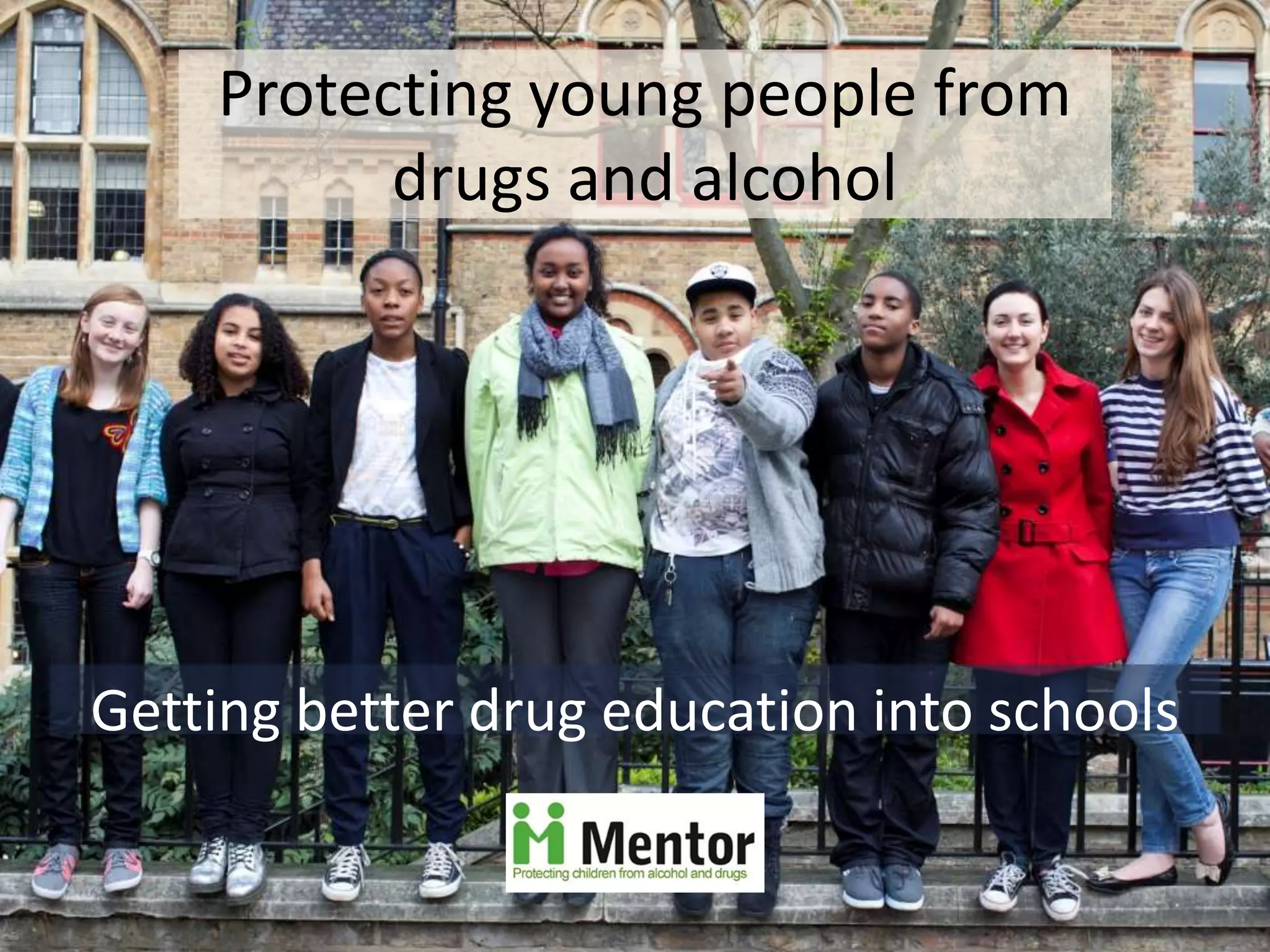
Protecting young people from
          drugs and alcohol


Getting better drug education into schools
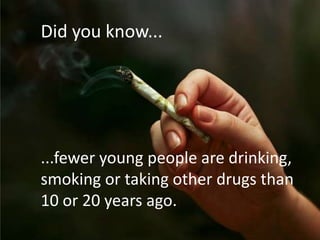
Did you know...


...fewer young people are drinking,
smoking or taking other drugs than
10 or 20 years ago.
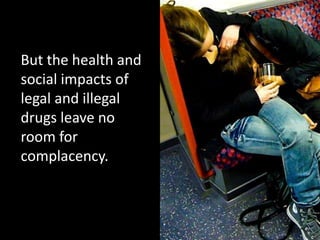
But the health and
social impacts of
legal and illegal
drugs leave no
room for
complacency.
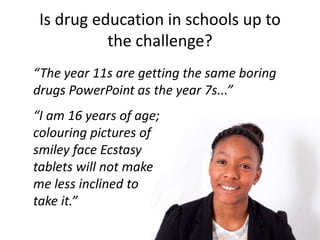
Is drug education in schools up to
           the challenge?
“The year 11s are getting the same boring
drugs PowerPoint as the year 7s...”
“I am 16 years of age;
colouring pictures of
smiley face Ecstasy
tablets will not make
me less inclined to
take it.”
Simply giving the facts about
alcohol, tobacco and other drugs...


       has little impact on
     young people’s decisions
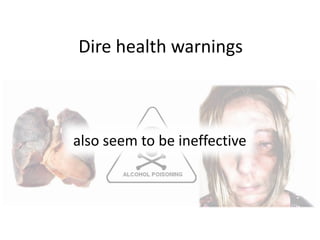
Dire health warnings


also seem to be ineffective
So what does work?
• Approaches based on ‘life skills’ or ‘social influences’
  are the most effective at changing young people’s
  behaviour.
• Programmes such as ‘Life Skills Training’ and
  ‘Unplugged’ have been tested in other countries and
  found to reduce alcohol, tobacco and cannabis use.
• Their approach has a lot in common with ‘good’
  PSHE teaching.
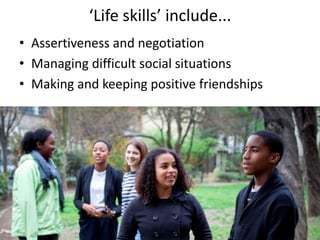
‘Life skills’ include...
• Assertiveness and negotiation
• Managing difficult social situations
• Making and keeping positive friendships
These relate to the different reasons why
young people may take drugs
                  • Experimenting out of
                    curiosity or boredom
                  • To look tough
                  • To deal with anxiety or stress
                  • Enjoyment or relaxation
                  • To fit in with a group
                  • To rebel
                  • Thrill-seeking
                  • “Everybody’s doing it”
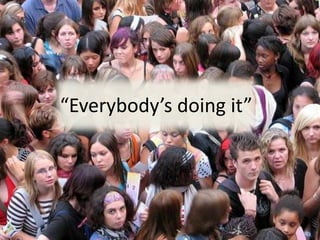
“Everybody’s doing it”
Or are they?
One element of life skills
approaches is to challenge
young people’s ideas about
what is normal and accepted.
For example, young smokers
think smoking is much more
common than it actually is.
Research suggests that
how drug education is
taught is as important
as what is taught.
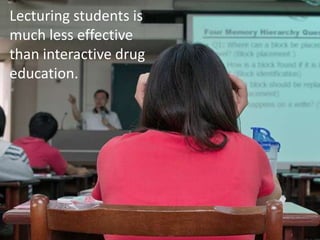
Lecturing students is
much less effective
than interactive drug
education.
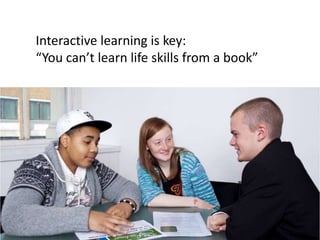
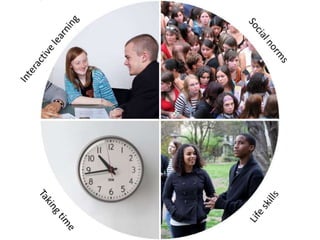
Interactive learning is key:
“You can’t learn life skills from a book”
• Successful drug prevention
  programmes demand time
  for reflection, review and
  building on knowledge

• In contrast, schools often
  teach drug education in
  one-off drop-down days.
Should teachers hand over
to ‘experts’ on drugs?
Police as drug educators
• Content and teaching skills (what and how) are
  more important than who is teaching.
• There is no evidence that police-led programmes
  are particularly effective in drug prevention.
• The most effective police contribution
  is probably to teach about drugs and
  the law within a school-led
  programme.
Are ex-addicts the answer?
• Those who have overcome addiction may want
  to help by sharing their own experiences.
• As speakers, they often capture young people’s
  imagination.
• But there is little evidence that their talks help
  young people avoid harmful drug use.
• One piece of research found that young
  people’s willingness to try drugs increased after
  the session.
Teachers can do a good job...

...but they need to be given
the right tools and support

Too often drugs education is
left to teachers who are trained
not in PSHE but in French or
Geography.
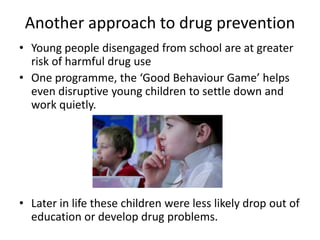
Another approach to drug prevention
• Young people disengaged from school are at greater
  risk of harmful drug use
• One programme, the ‘Good Behaviour Game’ helps
  even disruptive young children to settle down and
  work quietly.


• Later in life these children were less likely drop out of
  education or develop drug problems.
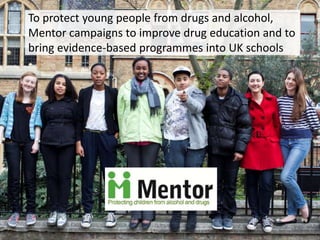
To protect young people from drugs and alcohol,
Mentor campaigns to improve drug education and to
bring evidence-based programmes into UK schools

Drug prevention in schools web version

  • 1.
    Protecting young peoplefrom drugs and alcohol Getting better drug education into schools
  • 2.
    Did you know... ...feweryoung people are drinking, smoking or taking other drugs than 10 or 20 years ago.
  • 3.
    But the healthand social impacts of legal and illegal drugs leave no room for complacency.
  • 4.
    Is drug educationin schools up to the challenge? “The year 11s are getting the same boring drugs PowerPoint as the year 7s...” “I am 16 years of age; colouring pictures of smiley face Ecstasy tablets will not make me less inclined to take it.”
  • 5.
    Simply giving thefacts about alcohol, tobacco and other drugs... has little impact on young people’s decisions
  • 6.
    Dire health warnings alsoseem to be ineffective
  • 7.
    So what doeswork? • Approaches based on ‘life skills’ or ‘social influences’ are the most effective at changing young people’s behaviour. • Programmes such as ‘Life Skills Training’ and ‘Unplugged’ have been tested in other countries and found to reduce alcohol, tobacco and cannabis use. • Their approach has a lot in common with ‘good’ PSHE teaching.
  • 8.
    ‘Life skills’ include... •Assertiveness and negotiation • Managing difficult social situations • Making and keeping positive friendships
  • 9.
    These relate tothe different reasons why young people may take drugs • Experimenting out of curiosity or boredom • To look tough • To deal with anxiety or stress • Enjoyment or relaxation • To fit in with a group • To rebel • Thrill-seeking • “Everybody’s doing it”
  • 10.
  • 11.
  • 12.
    One element oflife skills approaches is to challenge young people’s ideas about what is normal and accepted. For example, young smokers think smoking is much more common than it actually is.
  • 13.
    Research suggests that howdrug education is taught is as important as what is taught.
  • 14.
    Lecturing students is muchless effective than interactive drug education.
  • 15.
    Interactive learning iskey: “You can’t learn life skills from a book”
  • 16.
    • Successful drugprevention programmes demand time for reflection, review and building on knowledge • In contrast, schools often teach drug education in one-off drop-down days.
  • 18.
    Should teachers handover to ‘experts’ on drugs?
  • 19.
    Police as drugeducators • Content and teaching skills (what and how) are more important than who is teaching. • There is no evidence that police-led programmes are particularly effective in drug prevention. • The most effective police contribution is probably to teach about drugs and the law within a school-led programme.
  • 20.
    Are ex-addicts theanswer? • Those who have overcome addiction may want to help by sharing their own experiences. • As speakers, they often capture young people’s imagination. • But there is little evidence that their talks help young people avoid harmful drug use. • One piece of research found that young people’s willingness to try drugs increased after the session.
  • 21.
    Teachers can doa good job... ...but they need to be given the right tools and support Too often drugs education is left to teachers who are trained not in PSHE but in French or Geography.
  • 22.
    Another approach todrug prevention • Young people disengaged from school are at greater risk of harmful drug use • One programme, the ‘Good Behaviour Game’ helps even disruptive young children to settle down and work quietly. • Later in life these children were less likely drop out of education or develop drug problems.
  • 23.
    To protect youngpeople from drugs and alcohol, Mentor campaigns to improve drug education and to bring evidence-based programmes into UK schools