Alcohol & Substance Abuse
Sabu.VU,
sabuvayalarikil@gmail.com
MBA, DMS (HMA)
Its defined as patterns of drinking or using drugs
(prescription and illicit) that result in harm to a person’s health,
well-being, relationships, and productivity. A person who abuses
drugs and alcohol is not necessarily an addict. However, abuse of
these substances is a risk factor for developing an addiction
because continuous abuse can lead to physical and psychological
dependence.
Alcohol and drug abuse
Alcohol and drug abuse can lead to short-term
and long-term health complications. Men who drink
have an increased risk of developing cancer in the
mouth, esophagus, liver, and colon. Both men and
women may develop neurological problems including
dementia, neuropathy, and stroke from chronic alcohol
abuse. Psychiatric problems like depression and
anxiety are associated with long-term abuse of
alcohol.
What's happening…,?
65 percent of people addicted to drugs are able to
obtain them from friends and family members.
reference link in html
http://www.projectknow.com/research/alcohol-and-drugs/
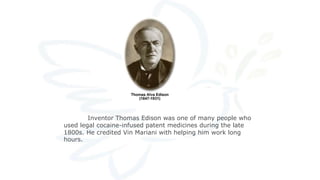
Inventor Thomas Edison was one of many people who
used legal cocaine-infused patent medicines during the late
1800s. He credited Vin Mariani with helping him work long
hours.
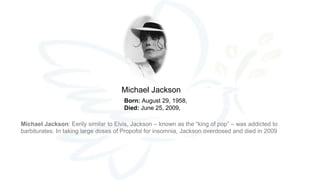
Born: August 29, 1958,
Died: June 25, 2009,
Michael Jackson
Michael Jackson: Eerily similar to Elvis, Jackson – known as the “king of pop” – was addicted to
barbiturates. In taking large doses of Propofol for insomnia, Jackson overdosed and died in 2009
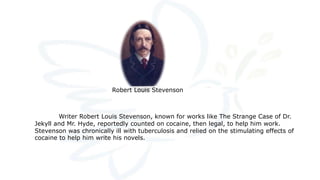
Writer Robert Louis Stevenson, known for works like The Strange Case of Dr.
Jekyll and Mr. Hyde, reportedly counted on cocaine, then legal, to help him work.
Stevenson was chronically ill with tuberculosis and relied on the stimulating effects of
cocaine to help him write his novels.
Robert Louis Stevenson
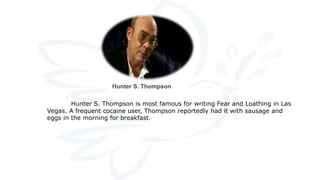
Hunter S. Thompson
Hunter S. Thompson is most famous for writing Fear and Loathing in Las
Vegas. A frequent cocaine user, Thompson reportedly had it with sausage and
eggs in the morning for breakfast.
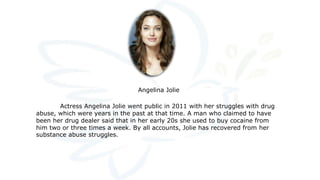
Actress Angelina Jolie went public in 2011 with her struggles with drug
abuse, which were years in the past at that time. A man who claimed to have
been her drug dealer said that in her early 20s she used to buy cocaine from
him two or three times a week. By all accounts, Jolie has recovered from her
substance abuse struggles.
Angelina Jolie
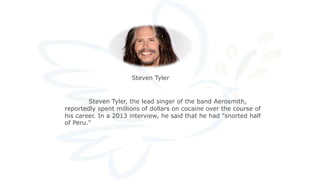
Steven Tyler, the lead singer of the band Aerosmith,
reportedly spent millions of dollars on cocaine over the course of
his career. In a 2013 interview, he said that he had "snorted half
of Peru."
Steven Tyler
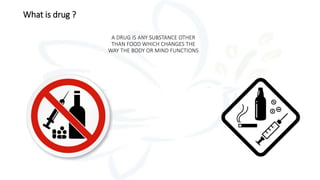
A DRUG IS ANY SUBSTANCE OTHER
THAN FOOD WHICH CHANGES THE
WAY THE BODY OR MIND FUNCTIONS
What is drug ?
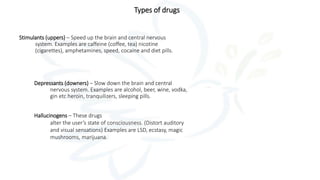
Types of drugs
Stimulants (uppers) – Speed up the brain and central nervous
system. Examples are caffeine (coffee, tea) nicotine
(cigarettes), amphetamines, speed, cocaine and diet pills.
Depressants (downers) – Slow down the brain and central
nervous system. Examples are alcohol, beer, wine, vodka,
gin etc heroin, tranquilizers, sleeping pills.
Hallucinogens – These drugs
alter the user’s state of consciousness. (Distort auditory
and visual sensations) Examples are LSD, ecstasy, magic
mushrooms, marijuana.
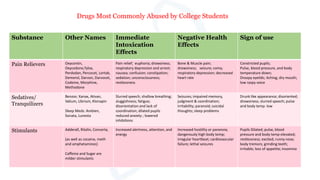
Substance Other Names Immediate
Intoxication
Effects
Negative Health
Effects
Sign of use
Pain Relievers Oxycontin,
Oxycodone,Tylox,
Perdodan, Percocet, Lortab,
Demerol, Darvon, Darvocet,
Codeine, Morphine,
Methodone
Pain relief; euphoria; drowsiness;
respiratory depression and arrest;
nausea; confusion; constipation;
sedation; unconsciousness;
restlessness
Bone & Muscle pain;
drowsiness; seizure; coma;
respiratory depression; decreased
heart rate
Constricted pupils;
Pulse, blood pressure, and body
temperature down;
Droopy eyelids; itching; dry mouth;
low raspy voice
Sedatives/
Tranquilizers
Benzos: Xanax, Ativan,
Valium, Librium, Klonapin
Sleep Meds: Ambien,
Sonata, Lunesta
Slurred speech; shallow breathing;
sluggishness; fatigue;
disorientation and lack of
coordination; dilated pupils
reduced anxiety ; lowered
inhibitions
Seizures; impaired memory,
judgment & coordination;
irritability; paranoid; suicidal
thoughts; sleep problems
Drunk like appearance; disoriented;
drowsiness; slurred speech; pulse
and body temp. low
Stimulants Adderall, Ritalin, Concerta,
(as well as cocaine, meth
and amphetamines)
Caffeine and Sugar are
milder stimulants
Increased alertness, attention, and
energy
Increased hostility or paranoia;
dangerously high body temp;
irregular heartbeat; cardiovascular
failure; lethal seizures
Pupils Dilated; pulse, blood
pressure and body temp elevated;
restlessness; excited; runny nose;
body tremors; grinding teeth;
irritable; loss of appetite; insomnia
Drugs Most Commonly Abused by College Students
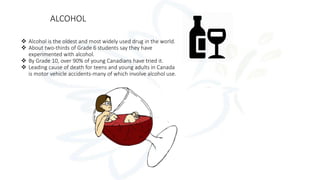
ALCOHOL
 Alcohol is the oldest and most widely used drug in the world.
 About two-thirds of Grade 6 students say they have
experimented with alcohol.
 By Grade 10, over 90% of young Canadians have tried it.
 Leading cause of death for teens and young adults in Canada
is motor vehicle accidents-many of which involve alcohol use.
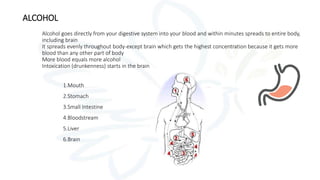
ALCOHOL
Alcohol goes directly from your digestive system into your blood and within minutes spreads to entire body,
including brain
It spreads evenly throughout body-except brain which gets the highest concentration because it gets more
blood than any other part of body
More blood equals more alcohol
Intoxication (drunkenness) starts in the brain
1.Mouth
2.Stomach
3.Small Intestine
4.Bloodstream
5.Liver
6.Brain
1. Unconscious or Semi-consciousness
2. Difficult to awaken
3. Mental confusion or stupor
4. Inability to stand or walk, or can do so only with difficulty
5. Slow Breathing
1. Eight breaths or less per minute
6. Irregular Breathing
1. Eight seconds or more between breaths
7. Irregular heartbeat
8. Cold, clammy, pale or bluish skin
9. Repeated, uncontrolled vomiting
10. Loss of control of bodily functions (i.e. urinate or defecate on self)
11. Fever or chills
12. Difficulty speaking
13. Paranoid, confused, or disoriented
14. Seizures
15. Absent reflexes
16. Snoring or gasping for air
Signs of Alcohol Poisoning
Physical Effects
 Co-ordination is impaired, clumsiness, slower reflexes
 High blood pressure, damage to the heart
 Liver damage
 If drinking when pregnant, FASD
 Life threatening when mixed with other drugs
Mental and Emotional
 Behave in ways that you normally wouldn’t
 Increase in aggressive and violent behaviour
 Problems with school and learning
ALCOHOL and the LIVER
The liver removes poisons – include alcohol from the body
People who drink regularly can have serious liver damage and may even get liver cancer
If the liver is damaged badly enough, it can stop working, causing the person to die.
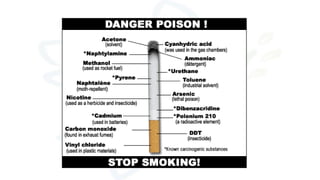
NICOTINE
Most addictive drug
 Causes more long term health problems than any other drug
 Adults are smoking less, younger people under 18 smoke more
 When someone stops smoking they have:
strong cravings
irritability (everything gets on nerves)thoughts of it-can’t stop thinking about it
What it does to your body, brain and behavior
 Depression
 Lung cancer
 Lung diseases
 Heart disease
 Skin becomes thinner and wrinkled
MARIJUANA
 Marijuana is the most common illegal drug around
 Comes from a plant called “cannabis”
 Some people call it pot, weed, grass, hash, smoke or ganja
 Cannabis has the chemical “tetrahydrocannabinol” or THC
 When you smoke a joint the THC goes into the lungs, then into the heart which pumps into the bloodstream
which takes it directly to brain
 Only takes few minutes for THC to get to brain when you smoke marijuana
 Eating takes longer to get to brain-passes through digestive system first
 In brain, activates “receptors” gives you the feeling of being high
 Marijuana changes physical and chemical balance in your brain
Long Term Effects:
 Breathing problems
 Lung cancer
 Damage cells and tissues in the body that fight disease
 Lack of motivation
 Difficulty processing new information
Short Term Effects:
 Increase in heart rate, lead to anxiety and paranoia
 Distorted concept of time and space
 Decrease in concentration skills, short-term memory capacity
 Feeling tired after the “high” wears off
 Increase in appetite, weight gain
1. Decrease reaction time
2. Difficulty listening and speaking
3. Impaired or reduced short-term memory
4. Impaired or reduced comprehension
5. Impairments of learning & memory perception, problem solving and judgment
6. Altered sense of time
7. Reduced ability to perform tasks requiring concentration and coordination such as driving
8. Altered motivation and cognition making acquisition of new information difficult
9. Paranoia
10. Intense anxiety or panic attacks
11. Psychological dependence and some experience physical withdrawal symptoms
Signs of Marijuana Poisoning
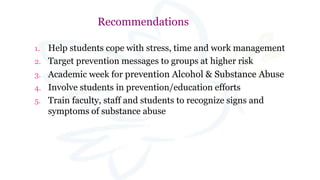
Recommendations
1. Help students cope with stress, time and work management
2. Target prevention messages to groups at higher risk
3. Academic week for prevention Alcohol & Substance Abuse
4. Involve students in prevention/education efforts
5. Train faculty, staff and students to recognize signs and
symptoms of substance abuse
Alcohol & substance abuse

Alcohol & substance abuse

  • 1.
    Alcohol & SubstanceAbuse Sabu.VU, sabuvayalarikil@gmail.com MBA, DMS (HMA)
  • 2.
    Its defined aspatterns of drinking or using drugs (prescription and illicit) that result in harm to a person’s health, well-being, relationships, and productivity. A person who abuses drugs and alcohol is not necessarily an addict. However, abuse of these substances is a risk factor for developing an addiction because continuous abuse can lead to physical and psychological dependence. Alcohol and drug abuse
  • 3.
    Alcohol and drugabuse can lead to short-term and long-term health complications. Men who drink have an increased risk of developing cancer in the mouth, esophagus, liver, and colon. Both men and women may develop neurological problems including dementia, neuropathy, and stroke from chronic alcohol abuse. Psychiatric problems like depression and anxiety are associated with long-term abuse of alcohol. What's happening…,?
  • 4.
    65 percent ofpeople addicted to drugs are able to obtain them from friends and family members. reference link in html http://www.projectknow.com/research/alcohol-and-drugs/
  • 5.
    Inventor Thomas Edisonwas one of many people who used legal cocaine-infused patent medicines during the late 1800s. He credited Vin Mariani with helping him work long hours.
  • 6.
    Born: August 29,1958, Died: June 25, 2009, Michael Jackson Michael Jackson: Eerily similar to Elvis, Jackson – known as the “king of pop” – was addicted to barbiturates. In taking large doses of Propofol for insomnia, Jackson overdosed and died in 2009
  • 7.
    Writer Robert LouisStevenson, known for works like The Strange Case of Dr. Jekyll and Mr. Hyde, reportedly counted on cocaine, then legal, to help him work. Stevenson was chronically ill with tuberculosis and relied on the stimulating effects of cocaine to help him write his novels. Robert Louis Stevenson
  • 8.
    Hunter S. Thompson HunterS. Thompson is most famous for writing Fear and Loathing in Las Vegas. A frequent cocaine user, Thompson reportedly had it with sausage and eggs in the morning for breakfast.
  • 9.
    Actress Angelina Joliewent public in 2011 with her struggles with drug abuse, which were years in the past at that time. A man who claimed to have been her drug dealer said that in her early 20s she used to buy cocaine from him two or three times a week. By all accounts, Jolie has recovered from her substance abuse struggles. Angelina Jolie
  • 10.
    Steven Tyler, thelead singer of the band Aerosmith, reportedly spent millions of dollars on cocaine over the course of his career. In a 2013 interview, he said that he had "snorted half of Peru." Steven Tyler
  • 11.
    A DRUG ISANY SUBSTANCE OTHER THAN FOOD WHICH CHANGES THE WAY THE BODY OR MIND FUNCTIONS What is drug ?
  • 12.
    Types of drugs Stimulants(uppers) – Speed up the brain and central nervous system. Examples are caffeine (coffee, tea) nicotine (cigarettes), amphetamines, speed, cocaine and diet pills. Depressants (downers) – Slow down the brain and central nervous system. Examples are alcohol, beer, wine, vodka, gin etc heroin, tranquilizers, sleeping pills. Hallucinogens – These drugs alter the user’s state of consciousness. (Distort auditory and visual sensations) Examples are LSD, ecstasy, magic mushrooms, marijuana.
  • 13.
    Substance Other NamesImmediate Intoxication Effects Negative Health Effects Sign of use Pain Relievers Oxycontin, Oxycodone,Tylox, Perdodan, Percocet, Lortab, Demerol, Darvon, Darvocet, Codeine, Morphine, Methodone Pain relief; euphoria; drowsiness; respiratory depression and arrest; nausea; confusion; constipation; sedation; unconsciousness; restlessness Bone & Muscle pain; drowsiness; seizure; coma; respiratory depression; decreased heart rate Constricted pupils; Pulse, blood pressure, and body temperature down; Droopy eyelids; itching; dry mouth; low raspy voice Sedatives/ Tranquilizers Benzos: Xanax, Ativan, Valium, Librium, Klonapin Sleep Meds: Ambien, Sonata, Lunesta Slurred speech; shallow breathing; sluggishness; fatigue; disorientation and lack of coordination; dilated pupils reduced anxiety ; lowered inhibitions Seizures; impaired memory, judgment & coordination; irritability; paranoid; suicidal thoughts; sleep problems Drunk like appearance; disoriented; drowsiness; slurred speech; pulse and body temp. low Stimulants Adderall, Ritalin, Concerta, (as well as cocaine, meth and amphetamines) Caffeine and Sugar are milder stimulants Increased alertness, attention, and energy Increased hostility or paranoia; dangerously high body temp; irregular heartbeat; cardiovascular failure; lethal seizures Pupils Dilated; pulse, blood pressure and body temp elevated; restlessness; excited; runny nose; body tremors; grinding teeth; irritable; loss of appetite; insomnia Drugs Most Commonly Abused by College Students
  • 14.
    ALCOHOL  Alcohol isthe oldest and most widely used drug in the world.  About two-thirds of Grade 6 students say they have experimented with alcohol.  By Grade 10, over 90% of young Canadians have tried it.  Leading cause of death for teens and young adults in Canada is motor vehicle accidents-many of which involve alcohol use.
  • 15.
    ALCOHOL Alcohol goes directlyfrom your digestive system into your blood and within minutes spreads to entire body, including brain It spreads evenly throughout body-except brain which gets the highest concentration because it gets more blood than any other part of body More blood equals more alcohol Intoxication (drunkenness) starts in the brain 1.Mouth 2.Stomach 3.Small Intestine 4.Bloodstream 5.Liver 6.Brain
  • 16.
    1. Unconscious orSemi-consciousness 2. Difficult to awaken 3. Mental confusion or stupor 4. Inability to stand or walk, or can do so only with difficulty 5. Slow Breathing 1. Eight breaths or less per minute 6. Irregular Breathing 1. Eight seconds or more between breaths 7. Irregular heartbeat 8. Cold, clammy, pale or bluish skin 9. Repeated, uncontrolled vomiting 10. Loss of control of bodily functions (i.e. urinate or defecate on self) 11. Fever or chills 12. Difficulty speaking 13. Paranoid, confused, or disoriented 14. Seizures 15. Absent reflexes 16. Snoring or gasping for air Signs of Alcohol Poisoning
  • 17.
    Physical Effects  Co-ordinationis impaired, clumsiness, slower reflexes  High blood pressure, damage to the heart  Liver damage  If drinking when pregnant, FASD  Life threatening when mixed with other drugs Mental and Emotional  Behave in ways that you normally wouldn’t  Increase in aggressive and violent behaviour  Problems with school and learning ALCOHOL and the LIVER The liver removes poisons – include alcohol from the body People who drink regularly can have serious liver damage and may even get liver cancer If the liver is damaged badly enough, it can stop working, causing the person to die.
  • 18.
    NICOTINE Most addictive drug Causes more long term health problems than any other drug  Adults are smoking less, younger people under 18 smoke more  When someone stops smoking they have: strong cravings irritability (everything gets on nerves)thoughts of it-can’t stop thinking about it What it does to your body, brain and behavior  Depression  Lung cancer  Lung diseases  Heart disease  Skin becomes thinner and wrinkled
  • 21.
    MARIJUANA  Marijuana isthe most common illegal drug around  Comes from a plant called “cannabis”  Some people call it pot, weed, grass, hash, smoke or ganja  Cannabis has the chemical “tetrahydrocannabinol” or THC  When you smoke a joint the THC goes into the lungs, then into the heart which pumps into the bloodstream which takes it directly to brain  Only takes few minutes for THC to get to brain when you smoke marijuana  Eating takes longer to get to brain-passes through digestive system first  In brain, activates “receptors” gives you the feeling of being high  Marijuana changes physical and chemical balance in your brain
  • 22.
    Long Term Effects: Breathing problems  Lung cancer  Damage cells and tissues in the body that fight disease  Lack of motivation  Difficulty processing new information Short Term Effects:  Increase in heart rate, lead to anxiety and paranoia  Distorted concept of time and space  Decrease in concentration skills, short-term memory capacity  Feeling tired after the “high” wears off  Increase in appetite, weight gain
  • 23.
    1. Decrease reactiontime 2. Difficulty listening and speaking 3. Impaired or reduced short-term memory 4. Impaired or reduced comprehension 5. Impairments of learning & memory perception, problem solving and judgment 6. Altered sense of time 7. Reduced ability to perform tasks requiring concentration and coordination such as driving 8. Altered motivation and cognition making acquisition of new information difficult 9. Paranoia 10. Intense anxiety or panic attacks 11. Psychological dependence and some experience physical withdrawal symptoms Signs of Marijuana Poisoning
  • 24.
    Recommendations 1. Help studentscope with stress, time and work management 2. Target prevention messages to groups at higher risk 3. Academic week for prevention Alcohol & Substance Abuse 4. Involve students in prevention/education efforts 5. Train faculty, staff and students to recognize signs and symptoms of substance abuse