cfchildren.org
Overview
cfchildren.org
Welcome!
Bridgid Normand
Program Development Manager
206-438-6333 desk
bnormand@cfchildren.org
Overview
▪ Foundations of SEL:
What and Why?
▪ What is the Second Step
Program?
▪ Supporting
Implementation
cfchildren.org
Safe children thriving in a peaceful world
Non-profit serving: 25,000 schools - 70 countries - 10 million children
Our Vision
cfchildren.org
Foundations of SEL
cfchildren.org
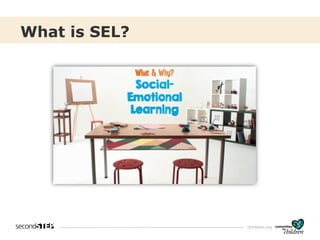
What is SEL?
cfchildren.org
Why SEL in Schools?
cfchildren.org
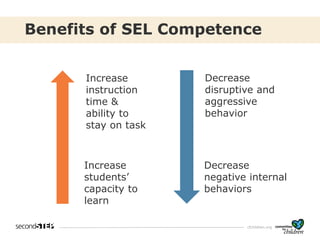
Benefits of SEL Competence
Increase
instruction
time &
ability to
stay on task
Decrease
disruptive and
aggressive
behavior
Increase
students’
capacity to
learn
Decrease
negative internal
behaviors
cfchildren.org
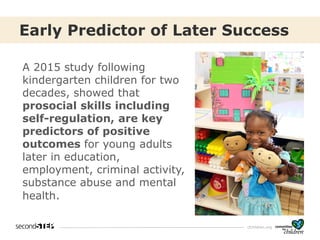
Early Predictor of Later Success
A 2015 study following
kindergarten children for two
decades, showed that
prosocial skills including
self-regulation, are key
predictors of positive
outcomes for young adults
later in education,
employment, criminal activity,
substance abuse and mental
health.
cfchildren.org
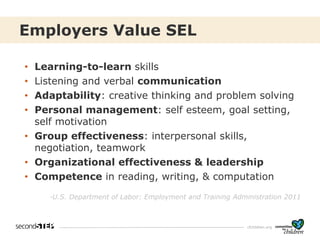
• Learning-to-learn skills
• Listening and verbal communication
• Adaptability: creative thinking and problem solving
• Personal management: self esteem, goal setting,
self motivation
• Group effectiveness: interpersonal skills,
negotiation, teamwork
• Organizational effectiveness & leadership
• Competence in reading, writing, & computation
-U.S. Department of Labor: Employment and Training Administration 2011
Employers Value SEL
cfchildren.org
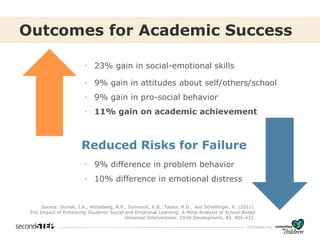
Outcomes for Academic Success
Source: Durlak, J.A., Weissberg, R.P., Dymnicki, A.B., Taylor, R.D., and Schellinger, K. (2011).
The Impact of Enhancing Students’ Social and Emotional Learning: A Meta-Analysis of School-Based
Universal Interventions. Child Development, 82, 405-432.
• 23% gain in social-emotional skills
• 9% gain in attitudes about self/others/school
• 9% gain in pro-social behavior
• 11% gain on academic achievement
• 9% difference in problem behavior
• 10% difference in emotional distress
Reduced Risks for Failure
cfchildren.org
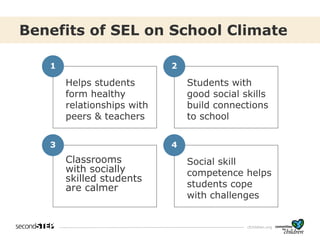
1 2
43
Benefits of SEL on School Climate
Helps students
form healthy
relationships with
peers & teachers
Students with
good social skills
build connections
to school
Classrooms
with socially
skilled students
are calmer
Social skill
competence helps
students cope
with challenges
cfchildren.org
Teaching SEL
cfchildren.org
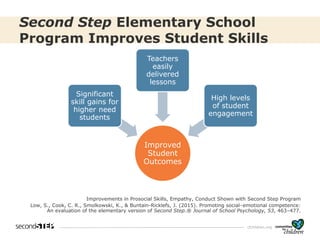
Second Step Elementary School
Program Improves Student Skills
Improvements in Prosocial Skills, Empathy, Conduct Shown with Second Step Program
Low, S., Cook, C. R., Smolkowski, K., & Buntain-Ricklefs, J. (2015). Promoting social–emotional competence:
An evaluation of the elementary version of Second Step.® Journal of School Psychology, 53, 463–477.
Improved
Student
Outcomes
Significant
skill gains for
higher need
students
Teachers
easily
delivered
lessons
High levels
of student
engagement
cfchildren.org
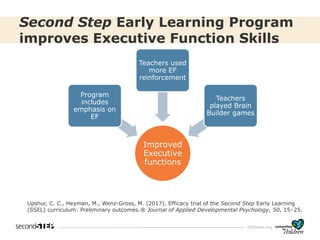
Second Step Early Learning Program
improves Executive Function Skills
Upshur, C. C., Heyman, M., Wenz-Gross, M. (2017). Efficacy trial of the Second Step Early Learning
(SSEL) curriculum: Preliminary outcomes.® Journal of Applied Developmental Psychology, 50, 15–25.
Improved
Executive
functions
Program
includes
emphasis on
EF
Teachers used
more EF
reinforcement
Teachers
played Brain
Builder games
cfchildren.org
What is
Second Step?
cfchildren.org
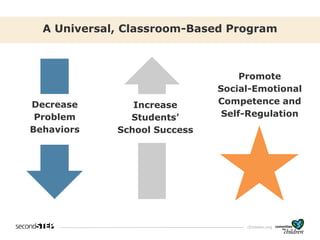
Decrease
Problem
Behaviors
Increase
Students’
School Success
Promote
Social-Emotional
Competence and
Self-Regulation
A Universal, Classroom-Based Program
cfchildren.org
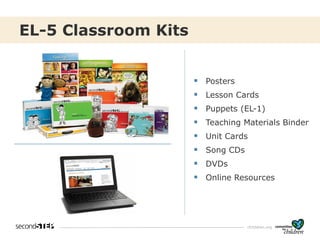
EL-5 Classroom Kits
▪ Posters
▪ Lesson Cards
▪ Puppets (EL-1)
▪ Teaching Materials Binder
▪ Unit Cards
▪ Song CDs
▪ DVDs
▪ Online Resources
cfchildren.org
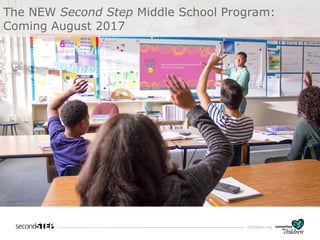
The NEW Second Step Middle School Program:
Coming August 2017
cfchildren.org
K - 5
• Skills for learning
• Empathy
• Emotion
management
• Problem solving
• Friendship skills
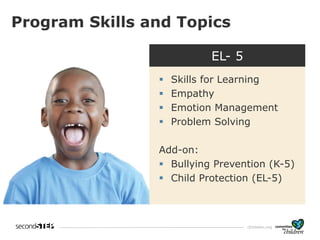
Program Skills and Topics
EL- 5
▪ Skills for Learning
▪ Empathy
▪ Emotion Management
▪ Problem Solving
Add-on:
▪ Bullying Prevention (K-5)
▪ Child Protection (EL-5)
cfchildren.org
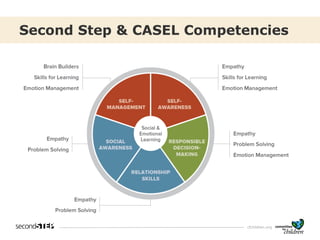
Second Step & CASEL Competencies
cfchildren.org
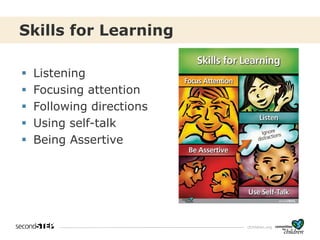
Skills for Learning
▪ Listening
▪ Focusing attention
▪ Following directions
▪ Using self-talk
▪ Being Assertive
cfchildren.org
Brain Builder Games
▪ Overall message: Your brain can get stronger and
smarter with practice and effort – growth mindset
▪ Develops Executive Function skills
Working Memory, Impulse Control, and Focusing
Attention
▪ Short games with rules
▪ Played several times per week, K-3
▪ Lessons in grades 4 and 5 also begin with an
activity
cfchildren.org
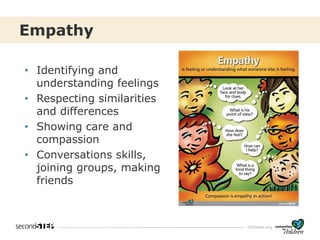
Empathy
• Identifying and
understanding feelings
• Respecting similarities
and differences
• Showing care and
compassion
• Conversations skills,
joining groups, making
friends
cfchildren.org
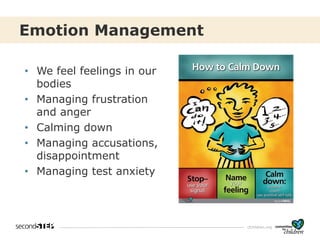
Emotion Management
• We feel feelings in our
bodies
• Managing frustration
and anger
• Calming down
• Managing accusations,
disappointment
• Managing test anxiety
cfchildren.org
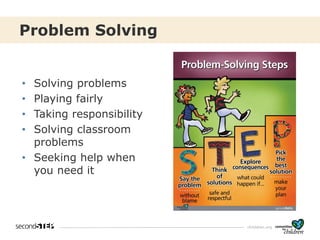
Problem Solving
• Solving problems
• Playing fairly
• Taking responsibility
• Solving classroom
problems
• Seeking help when
you need it
cfchildren.org
How do you teach
the program
successfully?
How do you teach the
program successfully?
cfchildren.org
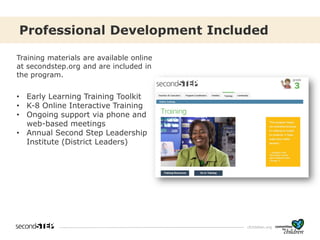
Training materials are available online
at secondstep.org and are included in
the program.
• Early Learning Training Toolkit
• K-8 Online Interactive Training
• Ongoing support via phone and
web-based meetings
• Annual Second Step Leadership
Institute (District Leaders)
Professional Development Included
cfchildren.org
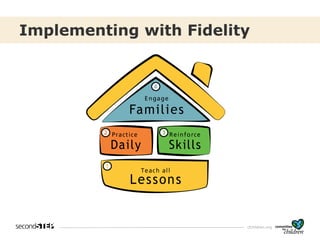
Implementing with Fidelity
cfchildren.org
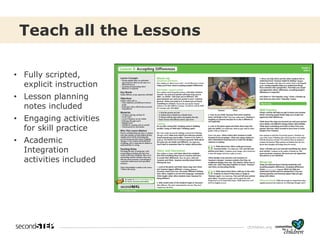
• Fully scripted,
explicit instruction
• Lesson planning
notes included
• Engaging activities
for skill practice
• Academic
Integration
activities included
Teach all the Lessons
cfchildren.org
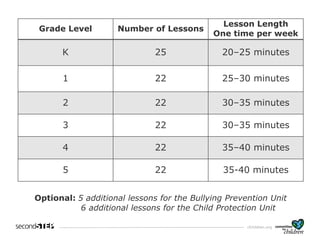
Grade Level Number of Lessons
Lesson Length
One time per week
K 25 20–25 minutes
1 22 25–30 minutes
2 22 30–35 minutes
3 22 30–35 minutes
4 22 35–40 minutes
5 22 35-40 minutes
Optional: 5 additional lessons for the Bullying Prevention Unit
6 additional lessons for the Child Protection Unit
cfchildren.org
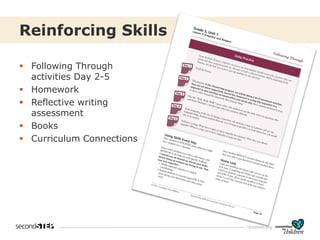
Reinforcing Skills
▪ Following Through
activities Day 2-5
▪ Homework
▪ Reflective writing
assessment
▪ Books
▪ Curriculum Connections
cfchildren.org
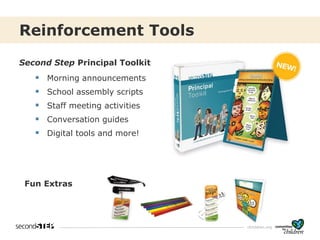
Reinforcement Tools
Second Step Principal Toolkit
▪ Morning announcements
▪ School assembly scripts
▪ Staff meeting activities
▪ Conversation guides
▪ Digital tools and more!
Fun Extras
cfchildren.org
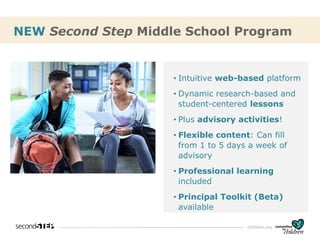
• Intuitive web-based platform
• Dynamic research-based and
student-centered lessons
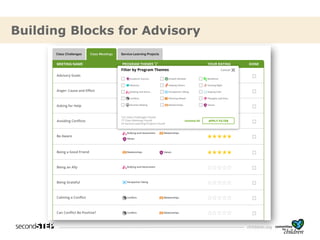
• Plus advisory activities!
• Flexible content: Can fill
from 1 to 5 days a week of
advisory
• Professional learning
included
• Principal Toolkit (Beta)
available
NEW Second Step Middle School Program
cfchildren.org
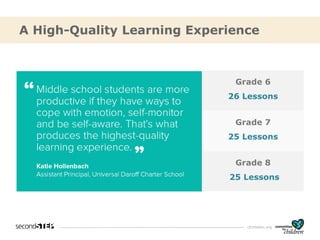
A High-Quality Learning Experience
Grade 6
26 Lessons
Grade 7
25 Lessons
Grade 8
25 Lessons
cfchildren.org
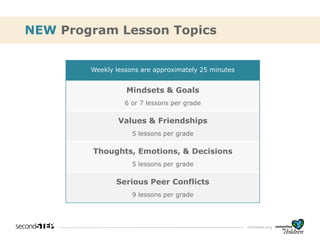
NEW Program Lesson Topics
Weekly lessons are approximately 25 minutes
Mindsets & Goals
6 or 7 lessons per grade
Values & Friendships
5 lessons per grade
Thoughts, Emotions, & Decisions
5 lessons per grade
Serious Peer Conflicts
9 lessons per grade
cfchildren.org
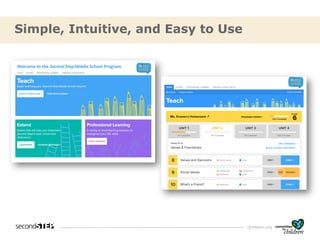
Simple, Intuitive, and Easy to Use
cfchildren.org
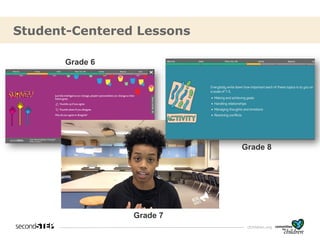
Student-Centered Lessons
Grade 6
Grade 8
Grade 7
cfchildren.org
Building Blocks for Advisory
cfchildren.org
What resources
are available?Additional Units
for K-5
cfchildren.org
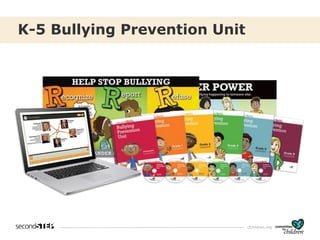
K-5 Bullying Prevention Unit
cfchildren.org
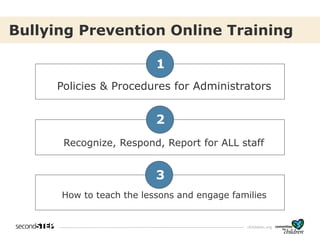
Policies & Procedures for Administrators
Bullying Prevention Online Training
Recognize, Respond, Report for ALL staff
How to teach the lessons and engage families
1
2
3
cfchildren.org
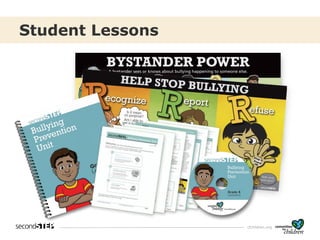
Student Lessons
cfchildren.org
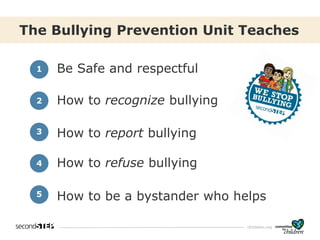
Be Safe and respectful
The Bullying Prevention Unit Teaches
How to recognize bullying
How to report bullying
How to be a bystander who helps
How to refuse bullying
1
2
3
4
5
cfchildren.org
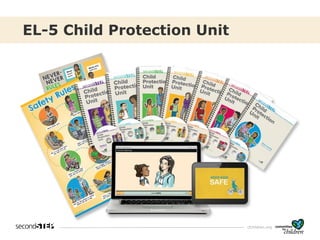
EL-5 Child Protection Unit
cfchildren.org
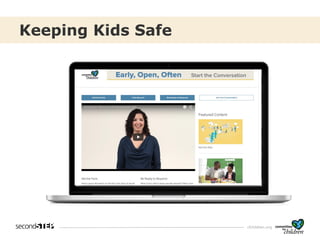
Keeping Kids Safe
cfchildren.org
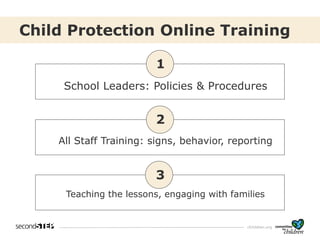
School Leaders: Policies & Procedures
Child Protection Online Training
All Staff Training: signs, behavior, reporting
Teaching the lessons, engaging with families
1
2
3
cfchildren.org
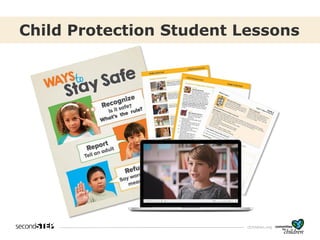
Child Protection Student Lessons
cfchildren.org
What resources
are available?
Resources
cfchildren.org
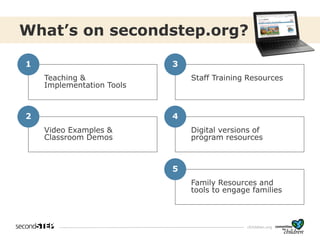
Teaching &
Implementation Tools
What’s on secondstep.org?
Staff Training Resources
Video Examples &
Classroom Demos
Digital versions of
program resources
Family Resources and
tools to engage families
1 3
2 4
5
cfchildren.org
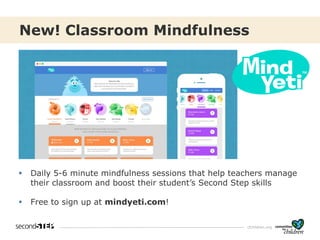
New! Classroom Mindfulness
▪ Daily 5-6 minute mindfulness sessions that help teachers manage
their classroom and boost their student’s Second Step skills
▪ Free to sign up at mindyeti.com!
cfchildren.org
www.secondstep.org
Resources
1
2
3
www.cfchildren.org
www.casel.org
cfchildren.org
Questions

Mentor-ADEPIS: Second Step programme overview (Bridgid Normand)