Suicide PreventionMike Koplin, MSW, PhDSuicide Prevention Coordinator
Objectives1. Identify some demographics and mental health, medical, and psychosocial factors that place individuals, especially veterans, at risk for suicidal ideation and behavior. 2. Identify warning signs and appropriate responses to suicidal ideation to ensure safe intervention and treatment. Questions????
DefinitionsSuicide – Death from intentional self-inflicted injury with evidence of intent to kill oneself.Suicide Attempt - Intentional self-injurious behavior with a nonfatal outcome with evidence of intent to kill oneself.
Definitions…Suicide Threat - A verbal or nonverbal interpersonal interaction communicating a desire to die or kill oneself. (Plan & Intent)Suicide Ideation - Self-reported thoughts of self-injurious behavior which could lead to death. (Thoughts)
Why are we discussing suicide?Suicide is the 11th leading cause of death in America and substantially outnumbers homicides.  There are typically about 32,000 suicides each year in relation to 24,000 murders.The surgeon general issued a call to action in 1999 stating the nation must address suicide as a significant public health problem. 1 suicide occurs every 16 minutes.
Suicide is Not AnEqual Opportunity Destroyer80% of suicide deaths in the US are white menHighest rates are among older adult malesMales die at a rate 3x higher than women; women attempt 4x higher than menHigh rates for soldiers/veterans (current military is 85% male)6
StatisticsVeterans have >2x greater risk & account for 1 in 5 suicides in the US.Access to firearms- a major factor (guns are used in approximately 58% of completed suicides).
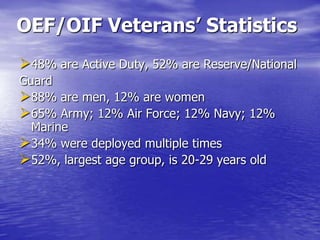
OEF/OIF Veterans’ Statistics48% are Active Duty, 52% are Reserve/NationalGuard88% are men, 12% are women
65% Army; 12% Air Force; 12% Navy; 12% Marine
34% were deployed multiple times
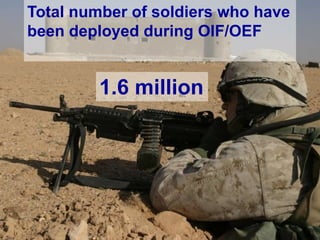
52%, largest age group, is 20-29 years oldTotal number of soldiers who have been deployed during OIF/OEF1.6 million
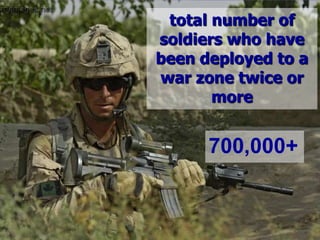
total number of soldiers who have been deployed to a war zone twice or more700,000+
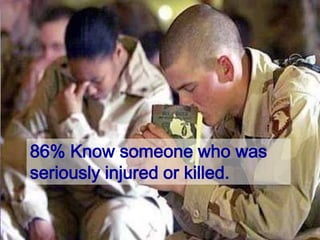
86% Know someone who was seriously injured or killed.
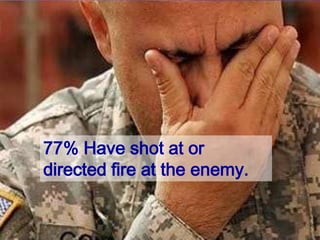
77% Have shot at ordirected fire at the enemy.
Relevant Statistics34% individuals who think about suicide (ideation) transition to planning a suicide.72% of planners attempt suicide.60% of planned and 90% of unplanned (impulsive) attempts occur within one year of ideation onset. 16% repeat attempt within one year.90% of people who commit suicide have a diagnosable mental health or substance abuse problem.
Factors of Provider Concern:1.  Significant association between suicide attempts and diagnosis of depression, alcohol misuse, and generalized anxiety.2.  A diagnosis of depression, alcohol misuse, and anxiety disorder combined with age < 30 may be associated with increased risk for suicide.3.  Female veterans with a history of MST are six times more likely to attempt suicide than those who report no MST.
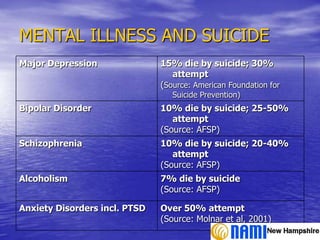
MENTAL ILLNESS AND SUICIDE
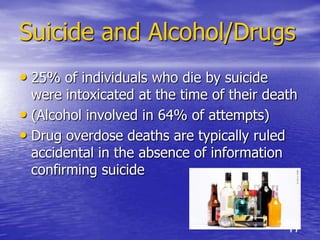
25% of individuals who die by suicide were intoxicated at the time of their death(Alcohol involved in 64% of attempts)Drug overdose deaths are typically ruled accidental in the absence of information confirming suicideSuicide and Alcohol/Drugs17
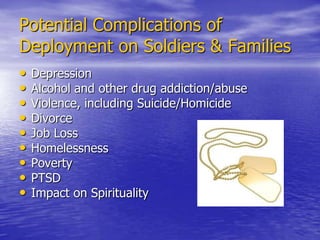
Potential Complications of Deployment on Soldiers & FamiliesDepressionAlcohol and other drug addiction/abuseViolence, including Suicide/HomicideDivorceJob LossHomelessnessPovertyPTSDImpact on Spirituality
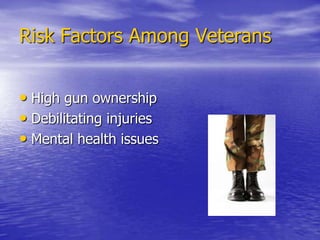
Risk Factors Among VeteransHigh gun ownershipDebilitating injuriesMental health issues
Risk FactorsReality Check: Who’s at Risk for Suicide?Anyone! (Don’t assume the statistical information applies to everyone.)
Highest Risk Factors…Suicidal ideation reportedSuicidal intention reportedSuicidal plan with means reported
First Responders/IntervenersInvoluntary admissionPolice should be considered as important first line responders by other early interveners, such as firefighters or emergency personnel, because they can facilitate access to medical and psychiatric evaluation and treatment.
First Responders/IntervenersHELPING SOMEONE WHO IS SUICIDALPeople who feel suicidal often express hopelessness and depression. They see suicide as the only way to solve their problems and eliminate their suffering. Although suicide is difficult to predict, a large proportion of those who eventually kill themselves will give more or less clear warning signs of their suicidal intentions in the weeks or months prior to their death.   These are not harmless bids for attention, but important cries for help that should be taken seriously.
First Responders/IntervenersHELPING SOMEONE WHO IS SUICIDALWarning signs include both behavioral and verbal cluesBeing withdrawn and unable to relate to friends and coworkers;  Talking about feeling isolated and lonely  Expressing feelings of uselessness, lack of hope or loss of self-esteem
First Responders/IntervenersHELPING SOMEONE WHO IS SUICIDALConstantly dwelling on problems for which there seem to be no solutions;Expressing a lack of support or belief in the system;Speaking about tidying up affairs;Giving some other indication of a suicide plan.
First Responders/IntervenersHELPING SOMEONE WHO IS SUICIDALSuicidal people who are demonstrating  warning signs are at greater risk if there has been: A recent loss of a close relationship;A change (or anticipated change) in work circumstances, such as a lay off, early retirement, demotion, or other workplace change
First Responders/IntervenersHELPING SOMEONE WHO IS SUICIDALA change in health;Increased misuse of alcohol or other drugs;A history of suicidal behavior or history of suicideattempts in the family;Current depression
First Responders/IntervenersHELPING SOMEONE WHO IS SUICIDALApproach all situations involving someone who is suicidal as a psychiatric emergency and act accordingly. Never assume that suicidal ideas or gestures are harmless bids for attention or an attempt to manipulate others.Clear the scene and keep yourself and others who may be present safe.
First Responders/IntervenersHELPING SOMEONE WHO IS SUICIDALGive physical space. Don’t get too close to the person too soon. Sudden movements, attempts to touch the person, or the introduction of others into the scene, may be misunderstood.Express acceptance and concern. Avoid sermonizing, arguing, problem-solving, giving advice, or telling someone to “forget about it”. It is important to convey an attitude of concern and understanding.
First Responders/IntervenersHELPING SOMEONE WHO IS SUICIDALEngage the individual. Encourage the person to talk. Most suicidal people are ambivalent about dying. Asking someone if they are suicidal or otherwise talking about suicide will not tip them over the edge, but will provide a sense of relief and a starting point for a solution. To assess intent, ask if the individual has a plan, access to lethal means, or has decided when to act.
First Responders/IntervenersHELPING SOMEONE WHO IS SUICIDALNever leave a potentially suicidal individual alone based on their promise to visit their mental health worker or the hospital. Ensure that family members or significant others are on the scene and accept responsibility for seeking help.
First Responders/IntervenersHELPING SOMEONE WHO IS SUICIDALWhen a suicide attempt occurs, police officers, firefighters and other responders are usually requested to deal with the   crisis, provide basic help, and arrange for the person to be transferred to a health center if necessary. First responders must   also deal with family members and significant others.
First Responders/Interveners        FOLLOWING A SUICIDE ATTEMPT First, it is necessary to establish caring relationship with the person who attempted suicide. The relationship must be relaxed, non-threatening, empathic,  and friendly.
First Responders/IntervenersFOLLOWING A SUICIDE ATTEMPT Second, after having established the relationship, communication needs to be on-going. The person should feel free to say what she or he feels. Open-ended  questions should be asked, such as “How do you feel?”
First Responders/Interveners     FOLLOWING A SUICIDE ATTEMPT Third, if transfer to a medical facility is not warranted, then every effort should be made to remove further lethal means and ensure that the individual has a family member or close friend to oversee their recovery and manage treatment referrals.
First Responders/Interveners    FOLLOWING A SUICIDE ATTEMPT Fourth, the suicidal individual must be connected to mental health and addiction services to ensure appropriate treatment and follow-up. Referrals to mental health agencies should be done independently of any medical treatment that is required.
First Responders/IntervenersWHEN A SUICIDE ATTEMPT OCCURSFinally, whensignificant others are aware, they may be emotionally distraught, confused, angry, or overwhelmed by the circumstances. First responders need to exercise tact, compassion, sensitivity, and support to all to everyone. Those who are aware can also be a valuable source of information (such as the drugs ingested or past history of substance abuse or suicide attempts).
Ways to be helpful…Know how to respondBe direct & refuse secrecyListen; Be non-judgmental Offer hope about resources including Hotline and make mental health referral as needed Remove weapons/ means
Suicide HotlineNational Number:  1-800-273-TALK (8225)Prompt #1 for Veteran or family of veteran Veteran prompt connects to VA mental health staff 24hrs. a day.If emergent situation hotline staff assist with immediate referral to community resourcesIf non-emergent needing additional assistance,   Veteran to be referred to closest VA within 24hrs.
Myths about SuicideA person that talks or threatens to commit suicide will never hurt themselves.Mentioning suicide may give a person the idea.Once people are suicidal, they are beyond help.People who make unsuccessful suicide attempts just want attention.
42The Implications of Not Addressing SuicideSurvivors feel isolated, blamed.People who were impacted may not seek help and counseling that would be beneficial.People who are vulnerable, such as youth, may be at greater risk.Facts may be replaced by rumor and innuendoThe stigma of suicide reinforces the silence around suicide.
43WHY?????For Survivors of Suicide, the grief is often combined with a relentless search for an explanation or answer.Grieving a suicide can include intense feelings of:Shame
Anger
Guilt
Regret
Self-BlameWar may be hell… but home ain’t exactly heaven, either.When a Service Member comes home from war, He/She  finds it hard…
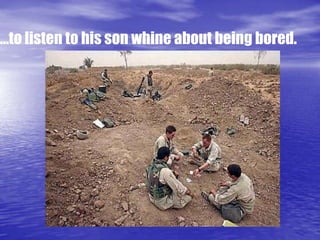
…to listen to his son whine about being bored.
…to keep a straight face when people complain about potholes
…to be tolerant of people who complain about the hassle of getting ready for work
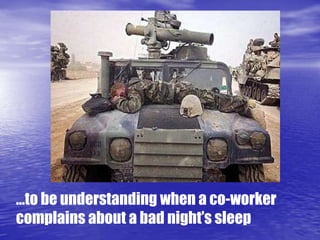
…to be understanding when a co-worker complains about a bad night’s sleep
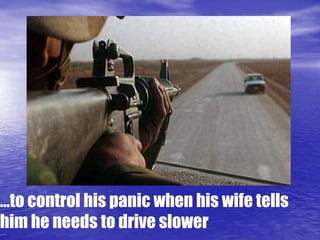
…to control his panic when his wife tells him he needs to drive slower
…to be grateful that he fights for the freedom of speech.
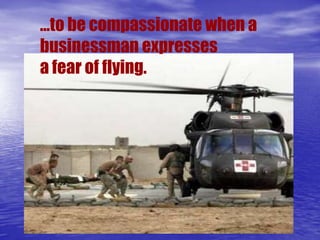
…to be compassionate when a businessman expresses a fear of flying.
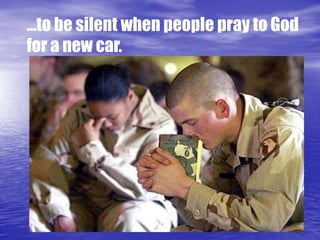
…to be silent when people pray to God for a new car.
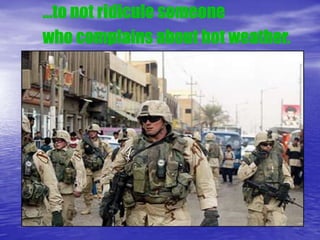
…to not ridicule someonewho complains about hot weather.
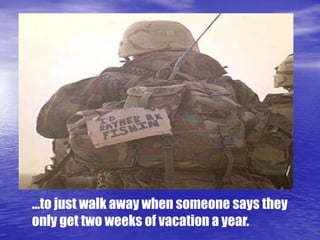
…to just walk away when someone says they only get two weeks of vacation a year.
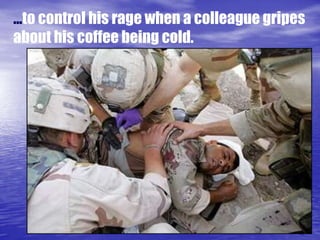
…to control his rage when a colleague gripes about his coffee being cold.
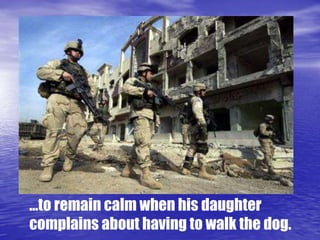
…to remain calm when his daughter complains about having to walk the dog.
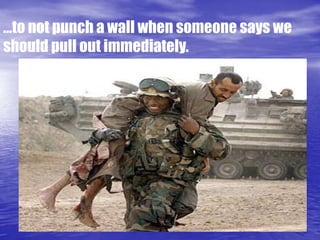
…to be civil to people who complain about their jobs.
…to be happy for a friend’s new hot tub
…to be forgiving when someone says how hard it is to have a new baby in the house.

Chaplain's Suicide Prevention Presentation

  • 1.
    Suicide PreventionMike Koplin,MSW, PhDSuicide Prevention Coordinator
  • 2.
    Objectives1. Identify somedemographics and mental health, medical, and psychosocial factors that place individuals, especially veterans, at risk for suicidal ideation and behavior. 2. Identify warning signs and appropriate responses to suicidal ideation to ensure safe intervention and treatment. Questions????
  • 3.
    DefinitionsSuicide – Deathfrom intentional self-inflicted injury with evidence of intent to kill oneself.Suicide Attempt - Intentional self-injurious behavior with a nonfatal outcome with evidence of intent to kill oneself.
  • 4.
    Definitions…Suicide Threat -A verbal or nonverbal interpersonal interaction communicating a desire to die or kill oneself. (Plan & Intent)Suicide Ideation - Self-reported thoughts of self-injurious behavior which could lead to death. (Thoughts)
  • 5.
    Why are wediscussing suicide?Suicide is the 11th leading cause of death in America and substantially outnumbers homicides. There are typically about 32,000 suicides each year in relation to 24,000 murders.The surgeon general issued a call to action in 1999 stating the nation must address suicide as a significant public health problem. 1 suicide occurs every 16 minutes.
  • 6.
    Suicide is NotAnEqual Opportunity Destroyer80% of suicide deaths in the US are white menHighest rates are among older adult malesMales die at a rate 3x higher than women; women attempt 4x higher than menHigh rates for soldiers/veterans (current military is 85% male)6
  • 8.
    StatisticsVeterans have >2xgreater risk & account for 1 in 5 suicides in the US.Access to firearms- a major factor (guns are used in approximately 58% of completed suicides).
  • 9.
    OEF/OIF Veterans’ Statistics48%are Active Duty, 52% are Reserve/NationalGuard88% are men, 12% are women
  • 10.
    65% Army; 12%Air Force; 12% Navy; 12% Marine
  • 11.
    34% were deployedmultiple times
  • 12.
    52%, largest agegroup, is 20-29 years oldTotal number of soldiers who have been deployed during OIF/OEF1.6 million
  • 13.
    total number ofsoldiers who have been deployed to a war zone twice or more700,000+
  • 14.
    86% Know someonewho was seriously injured or killed.
  • 15.
    77% Have shotat ordirected fire at the enemy.
  • 16.
    Relevant Statistics34% individualswho think about suicide (ideation) transition to planning a suicide.72% of planners attempt suicide.60% of planned and 90% of unplanned (impulsive) attempts occur within one year of ideation onset. 16% repeat attempt within one year.90% of people who commit suicide have a diagnosable mental health or substance abuse problem.
  • 17.
    Factors of ProviderConcern:1. Significant association between suicide attempts and diagnosis of depression, alcohol misuse, and generalized anxiety.2. A diagnosis of depression, alcohol misuse, and anxiety disorder combined with age < 30 may be associated with increased risk for suicide.3. Female veterans with a history of MST are six times more likely to attempt suicide than those who report no MST.
  • 18.
  • 19.
    25% of individualswho die by suicide were intoxicated at the time of their death(Alcohol involved in 64% of attempts)Drug overdose deaths are typically ruled accidental in the absence of information confirming suicideSuicide and Alcohol/Drugs17
  • 20.
    Potential Complications ofDeployment on Soldiers & FamiliesDepressionAlcohol and other drug addiction/abuseViolence, including Suicide/HomicideDivorceJob LossHomelessnessPovertyPTSDImpact on Spirituality
  • 21.
    Risk Factors AmongVeteransHigh gun ownershipDebilitating injuriesMental health issues
  • 22.
    Risk FactorsReality Check:Who’s at Risk for Suicide?Anyone! (Don’t assume the statistical information applies to everyone.)
  • 23.
    Highest Risk Factors…Suicidalideation reportedSuicidal intention reportedSuicidal plan with means reported
  • 24.
    First Responders/IntervenersInvoluntary admissionPoliceshould be considered as important first line responders by other early interveners, such as firefighters or emergency personnel, because they can facilitate access to medical and psychiatric evaluation and treatment.
  • 25.
    First Responders/IntervenersHELPING SOMEONEWHO IS SUICIDALPeople who feel suicidal often express hopelessness and depression. They see suicide as the only way to solve their problems and eliminate their suffering. Although suicide is difficult to predict, a large proportion of those who eventually kill themselves will give more or less clear warning signs of their suicidal intentions in the weeks or months prior to their death. These are not harmless bids for attention, but important cries for help that should be taken seriously.
  • 26.
    First Responders/IntervenersHELPING SOMEONEWHO IS SUICIDALWarning signs include both behavioral and verbal cluesBeing withdrawn and unable to relate to friends and coworkers; Talking about feeling isolated and lonely Expressing feelings of uselessness, lack of hope or loss of self-esteem
  • 27.
    First Responders/IntervenersHELPING SOMEONEWHO IS SUICIDALConstantly dwelling on problems for which there seem to be no solutions;Expressing a lack of support or belief in the system;Speaking about tidying up affairs;Giving some other indication of a suicide plan.
  • 28.
    First Responders/IntervenersHELPING SOMEONEWHO IS SUICIDALSuicidal people who are demonstrating warning signs are at greater risk if there has been: A recent loss of a close relationship;A change (or anticipated change) in work circumstances, such as a lay off, early retirement, demotion, or other workplace change
  • 29.
    First Responders/IntervenersHELPING SOMEONEWHO IS SUICIDALA change in health;Increased misuse of alcohol or other drugs;A history of suicidal behavior or history of suicideattempts in the family;Current depression
  • 30.
    First Responders/IntervenersHELPING SOMEONEWHO IS SUICIDALApproach all situations involving someone who is suicidal as a psychiatric emergency and act accordingly. Never assume that suicidal ideas or gestures are harmless bids for attention or an attempt to manipulate others.Clear the scene and keep yourself and others who may be present safe.
  • 31.
    First Responders/IntervenersHELPING SOMEONEWHO IS SUICIDALGive physical space. Don’t get too close to the person too soon. Sudden movements, attempts to touch the person, or the introduction of others into the scene, may be misunderstood.Express acceptance and concern. Avoid sermonizing, arguing, problem-solving, giving advice, or telling someone to “forget about it”. It is important to convey an attitude of concern and understanding.
  • 32.
    First Responders/IntervenersHELPING SOMEONEWHO IS SUICIDALEngage the individual. Encourage the person to talk. Most suicidal people are ambivalent about dying. Asking someone if they are suicidal or otherwise talking about suicide will not tip them over the edge, but will provide a sense of relief and a starting point for a solution. To assess intent, ask if the individual has a plan, access to lethal means, or has decided when to act.
  • 33.
    First Responders/IntervenersHELPING SOMEONEWHO IS SUICIDALNever leave a potentially suicidal individual alone based on their promise to visit their mental health worker or the hospital. Ensure that family members or significant others are on the scene and accept responsibility for seeking help.
  • 34.
    First Responders/IntervenersHELPING SOMEONEWHO IS SUICIDALWhen a suicide attempt occurs, police officers, firefighters and other responders are usually requested to deal with the crisis, provide basic help, and arrange for the person to be transferred to a health center if necessary. First responders must also deal with family members and significant others.
  • 35.
    First Responders/Interveners FOLLOWING A SUICIDE ATTEMPT First, it is necessary to establish caring relationship with the person who attempted suicide. The relationship must be relaxed, non-threatening, empathic, and friendly.
  • 36.
    First Responders/IntervenersFOLLOWING ASUICIDE ATTEMPT Second, after having established the relationship, communication needs to be on-going. The person should feel free to say what she or he feels. Open-ended questions should be asked, such as “How do you feel?”
  • 37.
    First Responders/Interveners FOLLOWING A SUICIDE ATTEMPT Third, if transfer to a medical facility is not warranted, then every effort should be made to remove further lethal means and ensure that the individual has a family member or close friend to oversee their recovery and manage treatment referrals.
  • 38.
    First Responders/Interveners FOLLOWING A SUICIDE ATTEMPT Fourth, the suicidal individual must be connected to mental health and addiction services to ensure appropriate treatment and follow-up. Referrals to mental health agencies should be done independently of any medical treatment that is required.
  • 39.
    First Responders/IntervenersWHEN ASUICIDE ATTEMPT OCCURSFinally, whensignificant others are aware, they may be emotionally distraught, confused, angry, or overwhelmed by the circumstances. First responders need to exercise tact, compassion, sensitivity, and support to all to everyone. Those who are aware can also be a valuable source of information (such as the drugs ingested or past history of substance abuse or suicide attempts).
  • 40.
    Ways to behelpful…Know how to respondBe direct & refuse secrecyListen; Be non-judgmental Offer hope about resources including Hotline and make mental health referral as needed Remove weapons/ means
  • 41.
    Suicide HotlineNational Number: 1-800-273-TALK (8225)Prompt #1 for Veteran or family of veteran Veteran prompt connects to VA mental health staff 24hrs. a day.If emergent situation hotline staff assist with immediate referral to community resourcesIf non-emergent needing additional assistance, Veteran to be referred to closest VA within 24hrs.
  • 43.
    Myths about SuicideAperson that talks or threatens to commit suicide will never hurt themselves.Mentioning suicide may give a person the idea.Once people are suicidal, they are beyond help.People who make unsuccessful suicide attempts just want attention.
  • 44.
    42The Implications ofNot Addressing SuicideSurvivors feel isolated, blamed.People who were impacted may not seek help and counseling that would be beneficial.People who are vulnerable, such as youth, may be at greater risk.Facts may be replaced by rumor and innuendoThe stigma of suicide reinforces the silence around suicide.
  • 45.
    43WHY?????For Survivors ofSuicide, the grief is often combined with a relentless search for an explanation or answer.Grieving a suicide can include intense feelings of:Shame
  • 46.
  • 47.
  • 48.
  • 49.
    Self-BlameWar may behell… but home ain’t exactly heaven, either.When a Service Member comes home from war, He/She finds it hard…
  • 50.
    …to listen tohis son whine about being bored.
  • 51.
    …to keep astraight face when people complain about potholes
  • 52.
    …to be tolerantof people who complain about the hassle of getting ready for work
  • 53.
    …to be understandingwhen a co-worker complains about a bad night’s sleep
  • 54.
    …to control hispanic when his wife tells him he needs to drive slower
  • 55.
    …to be gratefulthat he fights for the freedom of speech.
  • 56.
    …to be compassionatewhen a businessman expresses a fear of flying.
  • 57.
    …to be silentwhen people pray to God for a new car.
  • 58.
    …to not ridiculesomeonewho complains about hot weather.
  • 59.
    …to just walkaway when someone says they only get two weeks of vacation a year.
  • 60.
    …to control hisrage when a colleague gripes about his coffee being cold.
  • 61.
    …to remain calmwhen his daughter complains about having to walk the dog.
  • 62.
    …to be civilto people who complain about their jobs.
  • 63.
    …to be happyfor a friend’s new hot tub
  • 64.
    …to be forgivingwhen someone says how hard it is to have a new baby in the house.