SOC 204 Drugs & 
Society 
Goldberg Chapter 16 
Drug Prevention 
and Education
Approaches to 
Prevent Drug Abuse 
What should be the goals of drug education and 
prevention? 
When should drug education and prevention 
efforts be initiated? 
What education and prevention efforts are 
effective? 
Who should be responsible for drug education 
and prevention?
Funding Drug Prevention 
In the US, most funds for drug prevention 
come from the federal government 
2012 National Drug Control Budget: $1.7 
billion was allocated to drug prevention out of 
a budget of $26.2 billion 
Most community leaders favor spending a 
larger portion on reducing demand rather 
than supply of drugs
Agencies 
Substance Abuse and Mental Health 
Services Administration (SAMHSA) is 
responsible for: 
Center for Substance Abuse Prevention 
(CSAP) 
National Institute on Alcohol Abuse and 
Alcoholism (NIAAA), 
National Institute on Drug Abuse (NIDA) 
Office of Treatment Improvement 
National Institute of Mental Health (NIMH)
Drug Prevention in Retrospect 
1970s: Primary focus was to reduce the supply 
of drugs by stopping their importation, sale, and 
manufacture 
Interdiction remains a popular strategy but now 
is complemented by other measures 
1980s: Some drug experts began to contend 
that prevention should be directed toward the 
underlying factors that contribute to drug abuse
Drug Prevention in Retrospect 
Society was concerned primarily with hard 
drugs such as heroin, LSD, cocaine, crack, 
and PCP 
Soft drugs such as alcohol, tobacco, and 
marijuana are known as gateway drugs 
The primary strategy of CSAP is to keep 
young people from experimenting with drugs 
at all
Effectiveness of 
Prevention Programs 
Problems in assessing effectiveness of 
programs: 
Absence of control groups 
Poor data collection 
Groups that are too small 
Inappropriate statistics 
Lack of follow-up to determine how long any 
change in drug use persisted
School-Based Programs 
Five essential criteria: 
1. Adequate hours of curricula, over at least 
three years 
2. Peer involvement 
3. Emphasis on social influences, life skills, 
and peer resistance 
4. Change in perceived norms 
5. Involvement of parents, peers, and the 
community in changing norms
Goals of Drug Prevention 
To prevent the individual from beginning 
drug use 
To minimize the risks of drugs to the user 
To reduce the risks of drug use to society 
To prevent drug dependency 
To teach responsible drug use 
To stop drug use after patterns have been 
established 
To delay the onset of drug use
Levels of Drug Prevention 
Primary prevention: 
Strives to reach people before they start using 
alcohol, tobacco, or other drugs 
Should be initiated at a young age because 
most children already have tried drugs, 
especially alcohol, by the time they get to high 
school 
Includes drug education, mass media 
campaigns, community-oriented programs, drug 
testing, and legislation
Levels of Drug Prevention 
Secondary prevention: 
Attempts to minimize potential damage resulting 
from drug use by targeting people who have 
experience with drugs. 
Considered an early intervention stage 
Tertiary prevention: 
Geared to heavy drug users and those whose 
patterns of drug use are well established 
Basically refers to drug treatment
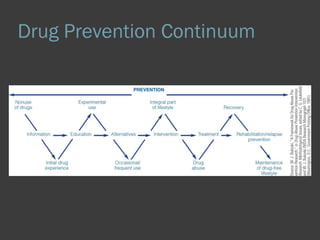
Drug Prevention Continuum
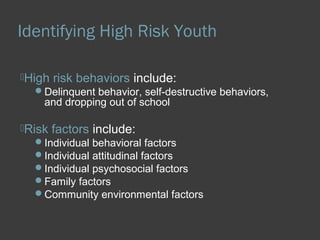
Identifying High Risk Youth 
High risk behaviors include: 
Delinquent behavior, self-destructive behaviors, 
and dropping out of school 
Risk factors include: 
Individual behavioral factors 
Individual attitudinal factors 
Individual psychosocial factors 
Family factors 
Community environmental factors
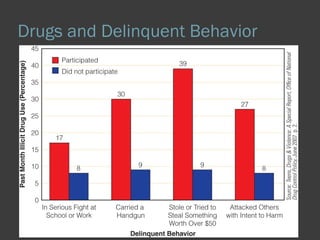
Drugs and Delinquent Behavior
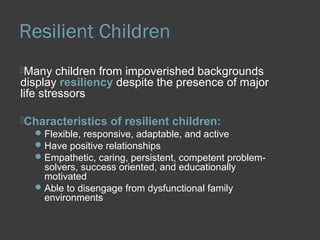
Resilient Children 
Many children from impoverished backgrounds 
display resiliency despite the presence of major 
life stressors 
Characteristics of resilient children: 
Flexible, responsive, adaptable, and active 
Have positive relationships 
Empathetic, caring, persistent, competent problem-solvers, 
success oriented, and educationally 
motivated 
Able to disengage from dysfunctional family 
environments
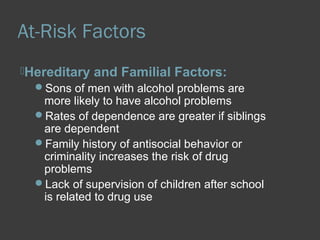
At-Risk Factors 
Hereditary and Familial Factors: 
Sons of men with alcohol problems are 
more likely to have alcohol problems 
Rates of dependence are greater if siblings 
are dependent 
Family history of antisocial behavior or 
criminality increases the risk of drug 
problems 
Lack of supervision of children after school 
is related to drug use
At-Risk Factors 
Psychosocial Factors: 
Peer pressure 
Low self-esteem 
Low self-efficacy 
Sensation seeking 
Lack of social skills 
Rebelliousness against authority 
Lack of commitment to school 
Attraction to deviance 
Unfavorable attitudes toward adult behavior
At-Risk Factors 
Biological Factors: 
Different amounts of pleasure derived from 
drugs 
Different amounts of self-control 
Community Factors: 
Communities where people move often 
Extreme poverty and deprivation 
Communities that lack social support and 
controls regulating behaviors, including drug use
Preventing High-Risk 
Behavior 
Education: 
Poor school performance and low expectations 
for school are strong predictors of drug use 
School alternative programs focusing on 
community and recreational activities, physical 
activities, and job training help youths at risk to 
stay off drugs 
Teachers may be role models for helping 
children to develop resilience
Head Start 
 Preschool programs 
such as Head Start 
help at-risk children
Preventing High-Risk 
Behavior 
Role of parents: 
Parental drug use greatly increases the 
likelihood of children’s drug use 
Parents who have high expectations for their 
children foster academic success and resilience 
Community efforts: 
Drug use is prevalent in impoverished, urban 
neighborhoods 
Jobs have been shown to help curb drug use
Preventing High-Risk 
Behavior 
Barriers to community prevention efforts: 
Leaders’ lack of perceived empowerment to 
continue prevention work 
Insufficient preparation for adopting successful 
programs 
Public resistance to spending more money on 
drug prevention programs after ineffective 
programs 
Idea that programs that are effective in one 
community will not necessarily work in other 
communities
Drug Education 
Evolution in Drug Education: 
1970s: Information about the dangers of drugs 
Mid 1970s: Values clarification focused on the 
underlying values contributing to drug use 
Alternatives approach substitutes a positive 
addiction for the negative addiction 
More emphasis on health in general and less 
emphasis on the pharmacology of drugs 
Current education emphasizes developing 
resilience skills, learning peer-refusal 
techniques, and gaining life skills
Limitations of Drug Education 
Problems with Drug Education: 
Teachers often do not keep up with latest 
information 
Students sometimes know more about 
drugs than teachers do 
Some teachers are judgmental or moralistic 
Goals of drug education are often unclear 
Goals of drug education are often unrealistic
Goals of Drug Education 
Possible goals: 
To impart knowledge 
Reducing drug abuse or dependency 
Preventing or delaying first-time drug use 
Curtailing students’ drug use 
Teaching responsible drug use
One-Size-Fits-All Drug Education 
What Works: Schools Without Drugs 
Objectives 
1. Valuing and maintaining sound personal health 
and understanding the effects of drugs on 
health 
2. Respecting laws and rules that prohibit drug 
use 
3. Recognizing and resisting pressure to engage 
in drug-taking behavior 
4. Promoting activities that reinforce a positive, 
drug-free lifestyle
Current Approaches to 
Drug Education 
Personal and Social Skills Training: 
Young people who rate high in self-efficacy are 
more likely to avoid harmful patterns of drug use 
Skills training: A drug prevention program in 
which one learns skills to prevent drug use 
○ Includes skills for resisting media and 
interpersonal influences, problem-solving and 
decision-making, relieving stress and anxiety, 
relaxation, self-control, self-esteem, interpersonal 
relations, and assertiveness
Current Approaches to 
Drug Education 
Social Norms Approach: 
Goal is to correct misperceptions of students 
and reduce alcohol use 
Resistance Skills Training: 
Involves recognizing, managing, and 
avoiding situations that may encourage drug 
use
Current Approaches to 
Drug Education 
Drug Prevention Programs: 
Project ALERT has been shown to reduce 
weekly alcohol and marijuana use, at-risk 
drinking, and alcohol use resulting in negative 
consequences, as well as attitudes and 
perceptions conducive to drug use 
Life Skills Training (LST): students are taught 
how to avoid being persuaded by others, to 
manage anxiety, to communicate more 
accurately, to be assertive, and to enhance their 
self-esteem
Current Approaches to 
Drug Education 
Drug Abuse Resistance Education 
(DARE): 
Police officers go to classrooms and teach 
elementary students about drugs and personal 
safety 
Had little impact on drug use 
Just Say No! 
Adequate for some students, but not for others 
Some students do not recognize peer pressure 
or have the skills to refuse drugs
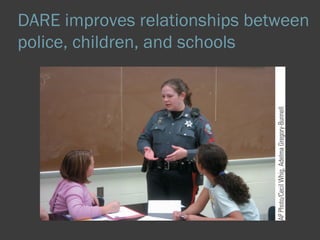
DARE improves relationships between 
police, children, and schools
Effectiveness of Drug Education 
 Components of Effective Programs: 
Based on an understanding of theory and research 
Information is developmentally appropriate; short-term, 
negative social consequences are emphasized 
Emphasize social resistance skills training 
Includes normative education 
Teachers use interactive teaching techniques 
Teachers receive training and support 
Time devoted is sufficient and continued 
Programs are culturally sensitive. 
School programs include family, community, and 
media 
Evaluation is necessary to determine effectiveness
Health Education 
Drug education at the secondary level typically is 
taught in health education classes 
Sequential health education from K through 12th 
grade had a positive effect on knowledge, 
attitudes, and behaviors 
Administrative support and teacher training are 
important to the success of health education
Peer Programs 
In some, older students teach younger students about 
drugs 
In other programs, peers facilitate discussions about 
drugs with others of the same age, or peers counsel 
peers 
Besides acting as role models, peer leaders have to be 
able to communicate effectively 
Peer programs were most effective with the average 
student; for at-risk students, alternative programs were 
most effective

SOC 204 Goldberg Chapter 16 Prevention

  • 1.
    SOC 204 Drugs& Society Goldberg Chapter 16 Drug Prevention and Education
  • 2.
    Approaches to PreventDrug Abuse What should be the goals of drug education and prevention? When should drug education and prevention efforts be initiated? What education and prevention efforts are effective? Who should be responsible for drug education and prevention?
  • 3.
    Funding Drug Prevention In the US, most funds for drug prevention come from the federal government 2012 National Drug Control Budget: $1.7 billion was allocated to drug prevention out of a budget of $26.2 billion Most community leaders favor spending a larger portion on reducing demand rather than supply of drugs
  • 4.
    Agencies Substance Abuseand Mental Health Services Administration (SAMHSA) is responsible for: Center for Substance Abuse Prevention (CSAP) National Institute on Alcohol Abuse and Alcoholism (NIAAA), National Institute on Drug Abuse (NIDA) Office of Treatment Improvement National Institute of Mental Health (NIMH)
  • 5.
    Drug Prevention inRetrospect 1970s: Primary focus was to reduce the supply of drugs by stopping their importation, sale, and manufacture Interdiction remains a popular strategy but now is complemented by other measures 1980s: Some drug experts began to contend that prevention should be directed toward the underlying factors that contribute to drug abuse
  • 6.
    Drug Prevention inRetrospect Society was concerned primarily with hard drugs such as heroin, LSD, cocaine, crack, and PCP Soft drugs such as alcohol, tobacco, and marijuana are known as gateway drugs The primary strategy of CSAP is to keep young people from experimenting with drugs at all
  • 7.
    Effectiveness of PreventionPrograms Problems in assessing effectiveness of programs: Absence of control groups Poor data collection Groups that are too small Inappropriate statistics Lack of follow-up to determine how long any change in drug use persisted
  • 8.
    School-Based Programs Fiveessential criteria: 1. Adequate hours of curricula, over at least three years 2. Peer involvement 3. Emphasis on social influences, life skills, and peer resistance 4. Change in perceived norms 5. Involvement of parents, peers, and the community in changing norms
  • 9.
    Goals of DrugPrevention To prevent the individual from beginning drug use To minimize the risks of drugs to the user To reduce the risks of drug use to society To prevent drug dependency To teach responsible drug use To stop drug use after patterns have been established To delay the onset of drug use
  • 10.
    Levels of DrugPrevention Primary prevention: Strives to reach people before they start using alcohol, tobacco, or other drugs Should be initiated at a young age because most children already have tried drugs, especially alcohol, by the time they get to high school Includes drug education, mass media campaigns, community-oriented programs, drug testing, and legislation
  • 11.
    Levels of DrugPrevention Secondary prevention: Attempts to minimize potential damage resulting from drug use by targeting people who have experience with drugs. Considered an early intervention stage Tertiary prevention: Geared to heavy drug users and those whose patterns of drug use are well established Basically refers to drug treatment
  • 12.
  • 13.
    Identifying High RiskYouth High risk behaviors include: Delinquent behavior, self-destructive behaviors, and dropping out of school Risk factors include: Individual behavioral factors Individual attitudinal factors Individual psychosocial factors Family factors Community environmental factors
  • 14.
  • 15.
    Resilient Children Manychildren from impoverished backgrounds display resiliency despite the presence of major life stressors Characteristics of resilient children: Flexible, responsive, adaptable, and active Have positive relationships Empathetic, caring, persistent, competent problem-solvers, success oriented, and educationally motivated Able to disengage from dysfunctional family environments
  • 16.
    At-Risk Factors Hereditaryand Familial Factors: Sons of men with alcohol problems are more likely to have alcohol problems Rates of dependence are greater if siblings are dependent Family history of antisocial behavior or criminality increases the risk of drug problems Lack of supervision of children after school is related to drug use
  • 17.
    At-Risk Factors PsychosocialFactors: Peer pressure Low self-esteem Low self-efficacy Sensation seeking Lack of social skills Rebelliousness against authority Lack of commitment to school Attraction to deviance Unfavorable attitudes toward adult behavior
  • 18.
    At-Risk Factors BiologicalFactors: Different amounts of pleasure derived from drugs Different amounts of self-control Community Factors: Communities where people move often Extreme poverty and deprivation Communities that lack social support and controls regulating behaviors, including drug use
  • 19.
    Preventing High-Risk Behavior Education: Poor school performance and low expectations for school are strong predictors of drug use School alternative programs focusing on community and recreational activities, physical activities, and job training help youths at risk to stay off drugs Teachers may be role models for helping children to develop resilience
  • 20.
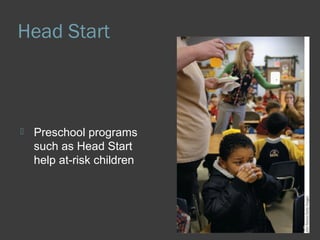
    Head Start Preschool programs such as Head Start help at-risk children
  • 21.
    Preventing High-Risk Behavior Role of parents: Parental drug use greatly increases the likelihood of children’s drug use Parents who have high expectations for their children foster academic success and resilience Community efforts: Drug use is prevalent in impoverished, urban neighborhoods Jobs have been shown to help curb drug use
  • 22.
    Preventing High-Risk Behavior Barriers to community prevention efforts: Leaders’ lack of perceived empowerment to continue prevention work Insufficient preparation for adopting successful programs Public resistance to spending more money on drug prevention programs after ineffective programs Idea that programs that are effective in one community will not necessarily work in other communities
  • 23.
    Drug Education Evolutionin Drug Education: 1970s: Information about the dangers of drugs Mid 1970s: Values clarification focused on the underlying values contributing to drug use Alternatives approach substitutes a positive addiction for the negative addiction More emphasis on health in general and less emphasis on the pharmacology of drugs Current education emphasizes developing resilience skills, learning peer-refusal techniques, and gaining life skills
  • 24.
    Limitations of DrugEducation Problems with Drug Education: Teachers often do not keep up with latest information Students sometimes know more about drugs than teachers do Some teachers are judgmental or moralistic Goals of drug education are often unclear Goals of drug education are often unrealistic
  • 25.
    Goals of DrugEducation Possible goals: To impart knowledge Reducing drug abuse or dependency Preventing or delaying first-time drug use Curtailing students’ drug use Teaching responsible drug use
  • 26.
    One-Size-Fits-All Drug Education What Works: Schools Without Drugs Objectives 1. Valuing and maintaining sound personal health and understanding the effects of drugs on health 2. Respecting laws and rules that prohibit drug use 3. Recognizing and resisting pressure to engage in drug-taking behavior 4. Promoting activities that reinforce a positive, drug-free lifestyle
  • 27.
    Current Approaches to Drug Education Personal and Social Skills Training: Young people who rate high in self-efficacy are more likely to avoid harmful patterns of drug use Skills training: A drug prevention program in which one learns skills to prevent drug use ○ Includes skills for resisting media and interpersonal influences, problem-solving and decision-making, relieving stress and anxiety, relaxation, self-control, self-esteem, interpersonal relations, and assertiveness
  • 28.
    Current Approaches to Drug Education Social Norms Approach: Goal is to correct misperceptions of students and reduce alcohol use Resistance Skills Training: Involves recognizing, managing, and avoiding situations that may encourage drug use
  • 29.
    Current Approaches to Drug Education Drug Prevention Programs: Project ALERT has been shown to reduce weekly alcohol and marijuana use, at-risk drinking, and alcohol use resulting in negative consequences, as well as attitudes and perceptions conducive to drug use Life Skills Training (LST): students are taught how to avoid being persuaded by others, to manage anxiety, to communicate more accurately, to be assertive, and to enhance their self-esteem
  • 30.
    Current Approaches to Drug Education Drug Abuse Resistance Education (DARE): Police officers go to classrooms and teach elementary students about drugs and personal safety Had little impact on drug use Just Say No! Adequate for some students, but not for others Some students do not recognize peer pressure or have the skills to refuse drugs
  • 31.
    DARE improves relationshipsbetween police, children, and schools
  • 32.
    Effectiveness of DrugEducation  Components of Effective Programs: Based on an understanding of theory and research Information is developmentally appropriate; short-term, negative social consequences are emphasized Emphasize social resistance skills training Includes normative education Teachers use interactive teaching techniques Teachers receive training and support Time devoted is sufficient and continued Programs are culturally sensitive. School programs include family, community, and media Evaluation is necessary to determine effectiveness
  • 33.
    Health Education Drugeducation at the secondary level typically is taught in health education classes Sequential health education from K through 12th grade had a positive effect on knowledge, attitudes, and behaviors Administrative support and teacher training are important to the success of health education
  • 34.
    Peer Programs Insome, older students teach younger students about drugs In other programs, peers facilitate discussions about drugs with others of the same age, or peers counsel peers Besides acting as role models, peer leaders have to be able to communicate effectively Peer programs were most effective with the average student; for at-risk students, alternative programs were most effective

Editor's Notes

  • #13 Figure 16.1 Drug Prevention Continuum
  • #15 Figure 16.2 Past Month Illicit Drug Use among Youths (12–17) by Participation in Fighting and Delinquent Behavior
  • #21 Head Start is a successful program of preschool education. Health screening and nutrition education are provided for at-risk children in this government-sponsored program.