DEPARTMENT OF DAIRY SCIENCE AND FOOD
TECHNOLOGY
PAVAN H M
1st yr M.Sc Food technology
Topic : Control atmospheric and Modified
atmospheric
INTRODUCTION
• Controlled atmosphere (CA) and modified
atmosphere (MA) storage are technologies for
extending the shelf life of foods, especially fruits and
vegetables; and for eliminating pests in stored grains
and oilseeds.
• MA can extend the shelf life of meat, fish, poultry,
fresh pasta, sandwiches, eggs, and bakery products.
• CA and MA are used primarily for disinfestation
rather than for increasing the shelf life
Principle
The principle behind controlled and modified
atmosphere technologies is to reduce the rate of
respiration, reduce microbial growth, and retard
enzymatic spoilage by changing the gaseous
environment surrounding the food product. This is
achieved by reducing the concentration of oxygen (O2),
which is required in respiration, or by adding an
inhibitory gas such as carbon dioxide (CO2) or carbon
monoxide (CO). And nitrogen (N2) as inert gas
Physiological basis of CA Storage
Air contains about 20.9% O2 ,78.1 % N2, 0.003 % CO2
and trace amount of other gases including Ne, He,
CH4 and water vapour. In CA storage, oxygen is
reduced and CO2 is increased and ripening and
respiration rates are slowed down.
In CA O2 levels are reduced and CO2 levels are
increased
Essential features of CA Storage
1. Mechanical refrigeration is used to maintain temperature
of -1 to 3°C.
2. The CA storage room is constructed gas tight.
3. Reduction on O2 - Nitrogen gas is introduced into the
storage by cylinder to reduce the oxygen level after room is
filled and sealed. CO2 is added into storage from CO2 gas
cylinder.
4. Excess CO2 is removed by dry hydrated lime,
Ethanolamine, Aluminium calcium silicate, Activated
carbon, Magnesium oxide, activated carbon are other
CO2 scrubbers.
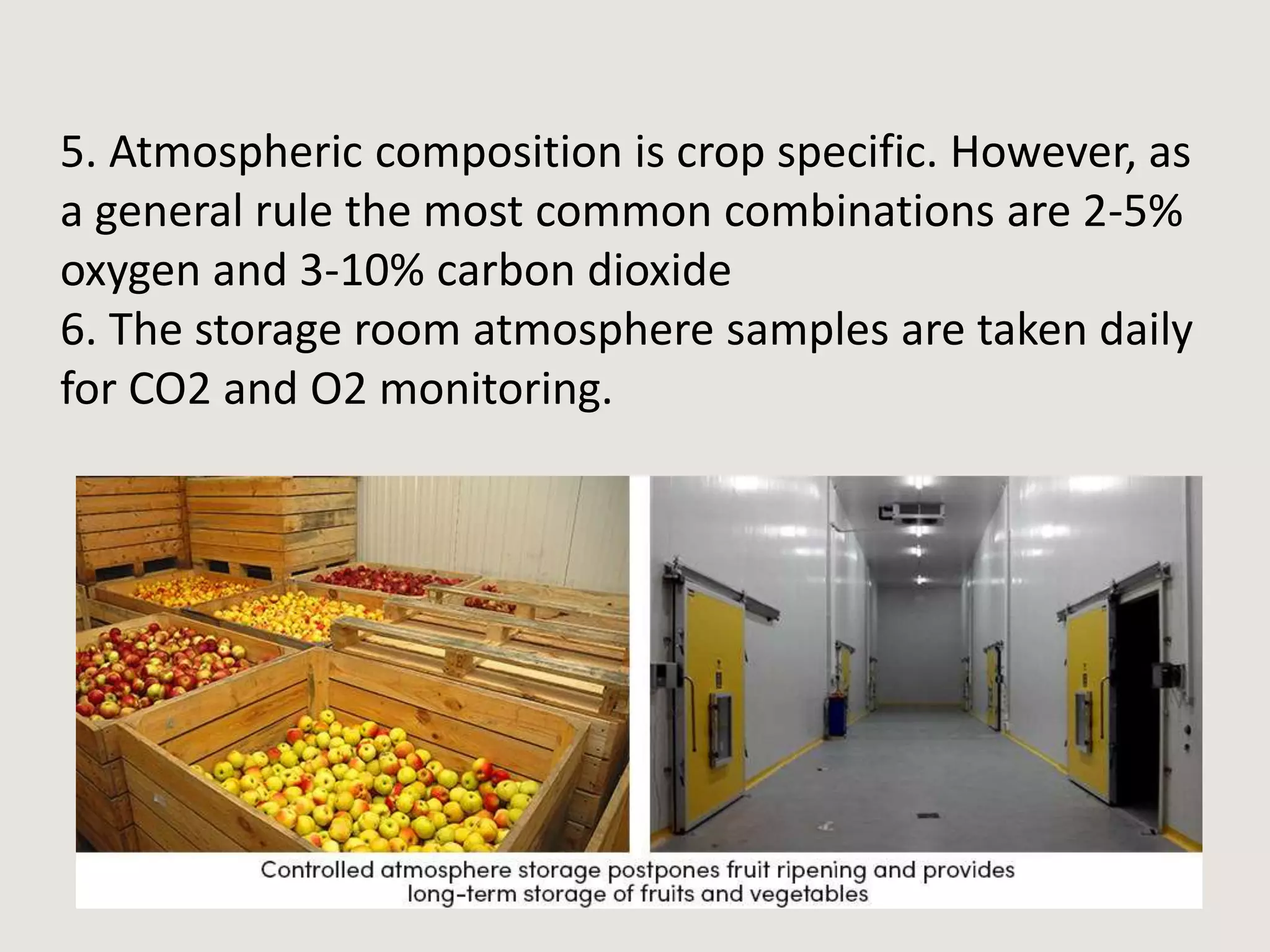
5. Atmospheric composition is crop specific. However, as
a general rule the most common combinations are 2-5%
oxygen and 3-10% carbon dioxide
6. The storage room atmosphere samples are taken daily
for CO2 and O2 monitoring.
Benefits of CA storage
1. Retardation of senescence and associated
biochemical and physiological changes
2. Reduction of produce sensitivity to ethylene action
at O2 levels below 8% and/ or CO2 levels above 1 %.
3. Useful tool for insect control in some commodities.
Limitations of CA storage
1. Causes certain physiological disorders such as
black heart in potatoes, brown stain of lettuce.
2. Irregular ripening of produce such as banana, pear,
tomato etc.
3. Development of off flavours and off odours at very
low O2 concentrations.
4. Timely non availability of gas
5. Costly and technical knowhow is required
MAP
Displacement of( O2) oxygen to delay oxidation and
growth of aerobic spoilage microbes by replacing
corbon dioxide ( CO2) which act as preservative and
nitrogen (N2) which is innert gas ,which provides
cushion to commodity inside the packaging and
replace the O2 in the packaging environment
Vacuum packing machine
Main part of MAP in which
the gas are inserted to
package and sealed,
Mix = N2/X
Nitrogen known and X is
obtained by setting value
in mixer
• Active modified atmosphere packaging
• Displaces gases in the package, replacing them with
a desired mixture of gases.
•
• Passive modified atmosphere packaging
• Involves using a selected film type when packaging
a product. The desired atmosphere develops
naturally due to the products' respiration and the
diffusion of gasses through the film
Advantage and Disadvantage of MA
• The advantages of MAP packaging include:
•
• MAP packages increase the shelf life of meat from 3 to 21 days,
cheese from 7 to 180 days, and fresh pasta from 3 to 60 days.
•
• For food producers, shelf life extension often lowers the cost of
a product by reducing spoilage, as well as providing long-
distance export options.
•
• For growers and consumers, it can extend the seasons of certain
fruits and vegetables.
•
• Because MAP packaging enables processors to extend shelf life
without using chemicals, it is also ideal for the packaging of
organic produce.
Disadvantages
Although MAP limits the growth of spoilage microbes, it
does not slow the growth of some harmful bacteria. For
this reason, MAP is usually used in conjunction with
other preservation techniques such as refrigeration.
Once these food packages are open, the food has a
normal shelf life.
Shelf life extension often lowers the cost of a product by
reducing spoilage, as well as providing long-distance
export options
Thank you…

Controle atmosphere and modified atmosphere store and packaging

  • 1.
    DEPARTMENT OF DAIRYSCIENCE AND FOOD TECHNOLOGY PAVAN H M 1st yr M.Sc Food technology Topic : Control atmospheric and Modified atmospheric
  • 2.
    INTRODUCTION • Controlled atmosphere(CA) and modified atmosphere (MA) storage are technologies for extending the shelf life of foods, especially fruits and vegetables; and for eliminating pests in stored grains and oilseeds. • MA can extend the shelf life of meat, fish, poultry, fresh pasta, sandwiches, eggs, and bakery products. • CA and MA are used primarily for disinfestation rather than for increasing the shelf life
  • 3.
    Principle The principle behindcontrolled and modified atmosphere technologies is to reduce the rate of respiration, reduce microbial growth, and retard enzymatic spoilage by changing the gaseous environment surrounding the food product. This is achieved by reducing the concentration of oxygen (O2), which is required in respiration, or by adding an inhibitory gas such as carbon dioxide (CO2) or carbon monoxide (CO). And nitrogen (N2) as inert gas
  • 4.
    Physiological basis ofCA Storage Air contains about 20.9% O2 ,78.1 % N2, 0.003 % CO2 and trace amount of other gases including Ne, He, CH4 and water vapour. In CA storage, oxygen is reduced and CO2 is increased and ripening and respiration rates are slowed down. In CA O2 levels are reduced and CO2 levels are increased
  • 6.
    Essential features ofCA Storage 1. Mechanical refrigeration is used to maintain temperature of -1 to 3°C. 2. The CA storage room is constructed gas tight. 3. Reduction on O2 - Nitrogen gas is introduced into the storage by cylinder to reduce the oxygen level after room is filled and sealed. CO2 is added into storage from CO2 gas cylinder. 4. Excess CO2 is removed by dry hydrated lime, Ethanolamine, Aluminium calcium silicate, Activated carbon, Magnesium oxide, activated carbon are other CO2 scrubbers.
  • 7.
    5. Atmospheric compositionis crop specific. However, as a general rule the most common combinations are 2-5% oxygen and 3-10% carbon dioxide 6. The storage room atmosphere samples are taken daily for CO2 and O2 monitoring.
  • 8.
    Benefits of CAstorage 1. Retardation of senescence and associated biochemical and physiological changes 2. Reduction of produce sensitivity to ethylene action at O2 levels below 8% and/ or CO2 levels above 1 %. 3. Useful tool for insect control in some commodities.
  • 9.
    Limitations of CAstorage 1. Causes certain physiological disorders such as black heart in potatoes, brown stain of lettuce. 2. Irregular ripening of produce such as banana, pear, tomato etc. 3. Development of off flavours and off odours at very low O2 concentrations. 4. Timely non availability of gas 5. Costly and technical knowhow is required
  • 11.
    MAP Displacement of( O2)oxygen to delay oxidation and growth of aerobic spoilage microbes by replacing corbon dioxide ( CO2) which act as preservative and nitrogen (N2) which is innert gas ,which provides cushion to commodity inside the packaging and replace the O2 in the packaging environment
  • 13.
    Vacuum packing machine Mainpart of MAP in which the gas are inserted to package and sealed, Mix = N2/X Nitrogen known and X is obtained by setting value in mixer
  • 14.
    • Active modifiedatmosphere packaging • Displaces gases in the package, replacing them with a desired mixture of gases. • • Passive modified atmosphere packaging • Involves using a selected film type when packaging a product. The desired atmosphere develops naturally due to the products' respiration and the diffusion of gasses through the film
  • 15.
    Advantage and Disadvantageof MA • The advantages of MAP packaging include: • • MAP packages increase the shelf life of meat from 3 to 21 days, cheese from 7 to 180 days, and fresh pasta from 3 to 60 days. • • For food producers, shelf life extension often lowers the cost of a product by reducing spoilage, as well as providing long- distance export options. • • For growers and consumers, it can extend the seasons of certain fruits and vegetables. • • Because MAP packaging enables processors to extend shelf life without using chemicals, it is also ideal for the packaging of organic produce.
  • 16.
    Disadvantages Although MAP limitsthe growth of spoilage microbes, it does not slow the growth of some harmful bacteria. For this reason, MAP is usually used in conjunction with other preservation techniques such as refrigeration. Once these food packages are open, the food has a normal shelf life. Shelf life extension often lowers the cost of a product by reducing spoilage, as well as providing long-distance export options
  • 17.