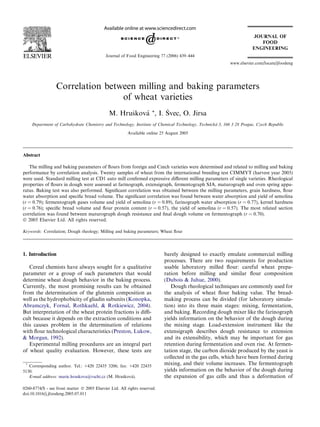
Correlation between milling and baking parameters
of wheat varieties
M. Hrusˇkova´ *, I. Sˇvec, O. Jirsa
Department of Carbohydrate Chemistry and Technology, Institute of Chemical Technology, Technicka´ 3, 166 3 28 Prague, Czech Republic
Available online 25 August 2005
Abstract
The milling and baking parameters of flours from foreign and Czech varieties were determined and related to milling and baking
performance by correlation analysis. Twenty samples of wheat from the international breeding test CIMMYT (harvest year 2003)
were used. Standard milling test at CD1 auto mill confirmed expressive different milling parameters of single varieties. Rheological
properties of flours in dough were assessed at farinograph, extensigraph, fermentograph SJA, maturograph and oven spring appa-
ratus. Baking test was also performed. Significant correlation was obtained between the milling parameters, grain hardness, flour
water absorption and specific bread volume. The significant correlation was found between water absorption and yield of semolina
(r = 0.79); fermentograph gases volume and yield of semolina (r = 0.89), farinograph water absorption (r = 0.77), kernel hardness
(r = 0.76); specific bread volume and flour protein content (r = 0.57), the yield of semolina (r = 0.57). The most related section
correlation was found between maturograph dough resistance and final dough volume on fermentograph (r = 0.70).
Ó 2005 Elsevier Ltd. All rights reserved.
Keywords: Correlation; Dough rheology; Milling and baking parameters; Wheat flour
1. Introduction
Cereal chemists have always sought for a qualitative
parameter or a group of such parameters that would
determine wheat dough behavior in the baking process.
Currently, the most promising results can be obtained
from the determination of the glutenin composition as
well as the hydrophobicity of gliadin subunits (Konopka,
Abramczyk, Fornal, Rothkaehl, & Rotkiewicz, 2004).
But interpretation of the wheat protein fractions is diffi-
cult because it depends on the extraction conditions and
this causes problem in the determination of relations
with flour technological characteristics (Preston, Lukow,
& Morgan, 1992).
Experimental milling procedures are an integral part
of wheat quality evaluation. However, these tests are
barely designed to exactly emulate commercial milling
processes. There are two requirements for production
usable laboratory milled flour: careful wheat prepa-
ration before milling and similar flour composition
(Dubois & Juhue, 2000).
Dough rheological techniques are commonly used for
the analysis of wheat flour baking value. The bread-
making process can be divided (for laboratory simula-
tion) into its three main stages: mixing, fermentation,
and baking. Recording dough mixer like the farinograph
yields information on the behavior of the dough during
the mixing stage. Load-extension instrument like the
extensigraph describes dough resistance to extension
and its extensibility, which may be important for gas
retention during fermentation and oven rise. At fermen-
tation stage, the carbon dioxide produced by the yeast is
collected in the gas cells, which have been formed during
mixing, and their volume increases. The fermentograph
yields information on the behavior of the dough during
the expansion of gas cells and thus a deformation of
0260-8774/$ - see front matter Ó 2005 Elsevier Ltd. All rights reserved.
doi:10.1016/j.jfoodeng.2005.07.011
*
Corresponding author. Tel.: +420 22435 3206; fax: +420 22435
5130.
E-mail address: marie.hruskova@vscht.cz (M. Hrusˇkova´).
www.elsevier.com/locate/jfoodeng
Journal of Food Engineering 77 (2006) 439–444
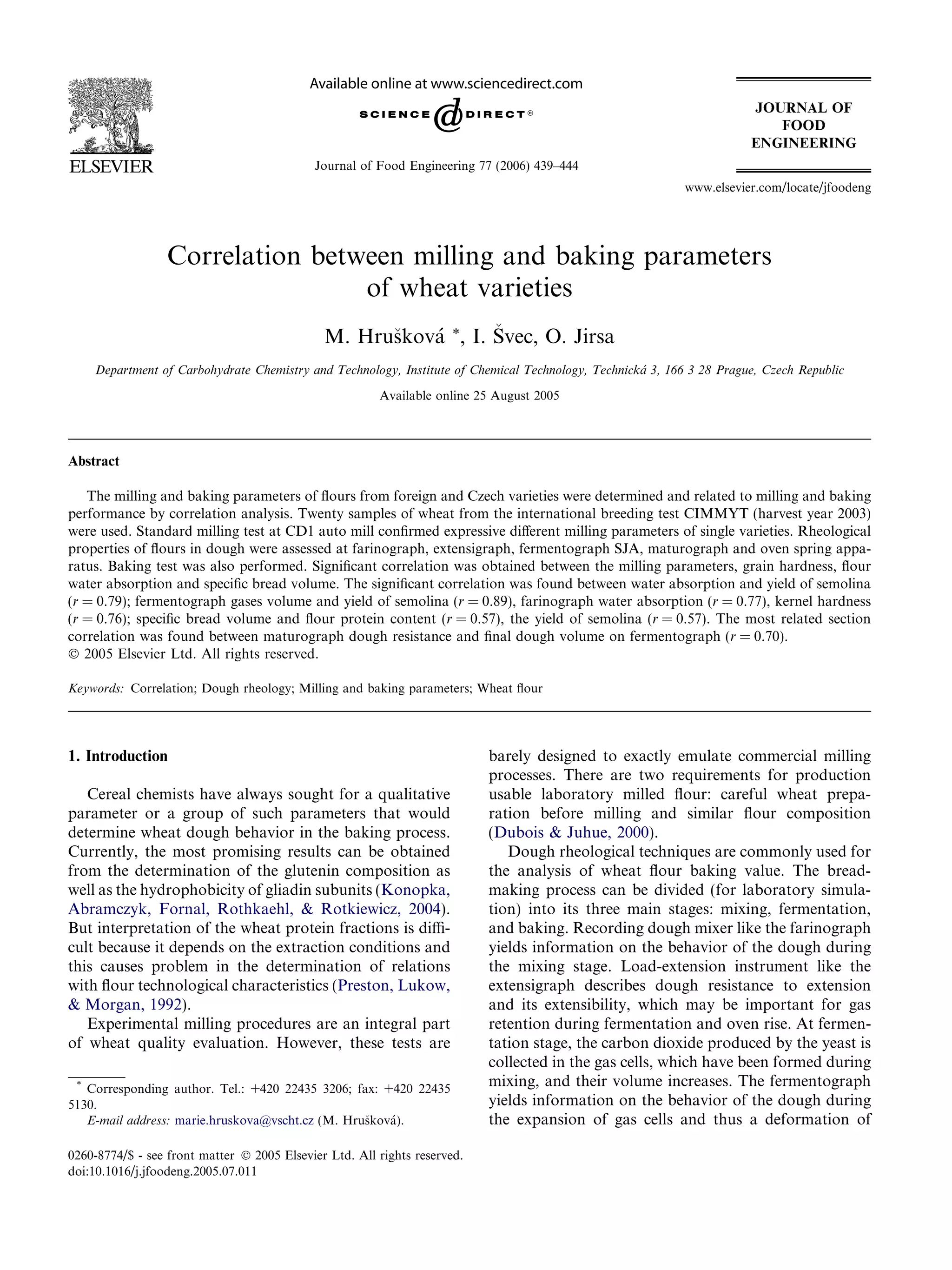
the dough phase. Rupture of dough membranes in the
course of fermentation process, and particular at the
oven rise, restricts the loaf volume (Daniels & Fisher,
1976). The time when these stages occurred can be pre-
dicted from fermentograph and oven spring apparatus
curve. Rheological dough characteristics, exactly the
recover after loading deformation that is applied during
final proof, can be described by the maturograph (Shuey,
1975). Usual physical dough tests do not appear to mea-
sure properties that are directly important for bread-
making performance. The success of these tests, which
measure dough rheological properties, may result in cor-
relation with parameters that directly influence wheat
and flour behavior in the mill (flour yield) and the bakery
(bread volume) (Jansen, Van Vliet, & Vereijken, 1996).
The technological quality of wheat for milling and
baking use varies in wide range. Variety composition is
one of the most important factors and it caused protein
and starch quality changes in the harvest year and the
location of planting (Muchova´, 2001; Petr, 2001). The
breeding aims to specific requirements of wheat process-
ing characterized by flour and dough parameters, the
number of which can even exceed several tens. For correct
choice of the most important ones statistical methods of
results description can be used as same as for prediction
of dough behavior at technological stages of bread-
making (Cressey, Campbell, Griffin, & Wrigley, 1987).
The aim of the present study was to compare the mill-
ing and baking parameters of flours from foreign and
Czech varieties and these results relate to milling and
baking performance by correlation analysis.
2. Material and methods
Twenty samples of wheat (Table 1) from the interna-
tional breeding test CIMMYT—harvest year 2003 were
used at the study. Wheat samples originating from 12
countries and growing at the same agricultural regime
were milled under standard conditions on laboratory
mill CD1 auto (Chopin, France). Analytical flour analy-
ses (moisture, ash, protein and wet gluten content) were
evaluated through the use of Inframatic 8600 (Perten
Instruments, Sweden) with the calibration for the
smooth light flour. The Falling Number (ISO 3039)
and Zeleny sedimentation test (ISO 5529) values were
determined by the standard methods.
Rheological properties of flours in non-fermented
dough (flour–water system) were measured at farino-
graph (ISO 5530-1) and extensigraph (ISO 5530-2)
(Brabender, SRN). Rheological properties of fermented
dough were assessed according to the internal procedures
at fermentograph SJA (Sweden), maturograph and oven
spring apparatus (Brabender, SRN). Baking test based
on fermented dough recipe (internal procedure) was used
to assess baking flour qualities. The recipe was as follows:
flour—100%, yeast—4%, salt—1.7%, sugar—1.5%, fat—
1% (amount of ingredients in reference to flour) and
water needed for preparation of dough with farinograph
consistency of 600 ± 20 BU. Commercial French-type
yeast ‘‘Fala’’ and commercial fat ‘‘Perla’’ were used.
Dough maturation took 50 min, then the pieces of dough
with the weight of 70 g were shaped manually. Dough
proofing took 45 min followed by 14 min of baking at
240 °C. After 2 h cooling specific volume and shape
(height and diameter) was assessed. Specific volume was
measured with the use of rapeseed displacement method.
For data processing and evaluation of dependence
was used Microsoft Excel by program Statistica CZ.
3. Results and discussion
3.1. Describing of samples technological quality
Twenty samples of wheat (list of varieties and their
origin in Table 1) contained varieties of different baking
Nomenclature
A ash content, percentage dry-basis
AEXT extensigraph energy, cm2
d extensigraph extensibility
DS farinograph degree of softening, ‘‘BU’’
ED maturograph elasticity of dough, ‘‘BU’’
FN falling number, s
h/d ratio height/diameter, decimal
Pr protein, percentage dry-basis
R50/d extensigraph ratio, decimal
RD maturograph resistency of dough, ‘‘BU’’
Rmax extensigraph max. resistency, ‘‘BU’’
SD farinograph dough stability, min
Smat maturograph stability of leavening
Tdev farinograph development time, min
Tfer fermentograph time of fermentation, min
Tmat maturograph time of leavening, min
V0 oven spring dough volume, ‘‘BU’’
V11 oven spring bread volume (11 min), ‘‘BU’’
V22 oven spring bread volume, ‘‘BU’’
Vbread specific bread volume, cm3
100 gÀ1
VD fermentograph final dough volume, ‘‘FeU’’
VG fermentograph fermentation gases volume,
‘‘FeU’’
Wabs farinograph water absorption, %
Wg wet gluten, percentage dry-basis
Zv Zeleny sedimentation value, ml
440 M. Hrusˇkova´ et al. / Journal of Food Engineering 77 (2006) 439–444
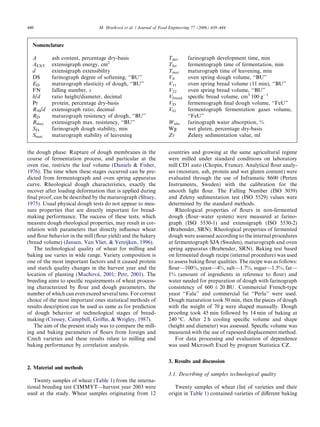
quality according to the results of analytical and rheo-
logical analyses (data not shown). Some varieties with
lower protein content (e.g. Czech SG-S1515-99) showed
better results of the baking test than it might be expected
while other varieties with higher protein content (e.g.
Lutescens 503-99) achieved worse results at the baking
test.
From kernel quality parameters only for three wheat
lower bulk density than Czech standard required was
measured. Hardness significantly correlated with all
milling characteristics but no important relation to bulk
density was found. Grain ash content varied with the
wide range (1.57–1.95%). Czech varieties can be de-
scribed with lower protein and wet gluten content. As
Zeleny value shows, its quality is only average with com-
parison to foreign samples. Falling number has the
greatest variability from all kernel parameters.
Standard milling test at CD1 auto mill confirmed
expressive different milling parameters of single varieties
and all of them (yields of break and reduction flour,
bran and midlings) varied in wide range.
Flours produced from 20 wheat varieties belong
(according to the ash content—0.48–0.58%, average
0.54%) to Czech sort of the smooth light flours (max
ash content 0.60%). Protein content was determined in
a wide range from 10.8% (the Samanta variety) to
14.2% (OK97908). Falling number values were mainly
higher than the Czech optimum value (250 s)—an aver-
age value was 370 s, which shows evidence of lower
amylolytic activity. Zeleny sedimentation test values
ranged from 31 ml (Tubbs) to 72 ml (Lutescens 503-99).
Water absorption of variety flours was rather higher,
average water absorption found at the farinograph test
was 58.1%. Vlasta variety had the lowest water absorp-
tion (48.2%) while the highest water absorption (66.4%)
was detected at Hungarian variety Prijma. Time of the
dough development of nine varieties from this set did
not exceed the average value of 6.0 min. Average value
of degree of softening of 30 BU shows evidence of the
predominant representation of strong flours.
Interpretation of the extensigraph parameters was
carried out after 45, 90 and 135 min of dough maturing.
Average maximum extensigraph resistance of the dough
was 705 BU. The lowest maximum extensigraph resis-
tance (207 BU) was measured at variety Akinci 84 while
the highest (965 BU) at American variety OK97908.
Extensigraph extensibility ranged from 124 mm (Maria)
to 219 mm (OK97908). Extensigraph energy values ex-
pressed as an area under the extensigraph curve consid-
erably ranged from 61 to 269 cm2
.
Values of fermentograph traits show evidence of
average baking quality of most of the flours in the set.
Dough volumes at the end of the fermentograph test
varied, maximum final dough volume found at variety
Ebi (95 fermentograph units—FeU) is nearly double of
that of the lowest final dough volume (55 FeU, variety
Table1
Listofwinterwheatvarieties(harvest2003)
Sample1234567891011121314151617181920
Variety
name
EbiSamantaVlastaSarkaSG-S
1511-99
Bezostaja
1
VolnyskaPrijmaVeneraIntradaJaggerOK97908TubbsFlamalbWA476Lutescens
503-99
MvEmeseAkinci
84
Oktjabrina
70
Maria
CountryGreat
Britain
Czech
Republic
Czech
Republic
Czech
Republic
Czech
Republic
RussiaUkraineHungaryYugo-
slavia
United
States
United
States
United
States
United
States
RomaniaTurkeyUkraineHungaryAzer-
baijan
KazakhstanBulgaria
M. Hrusˇkova´ et al. / Journal of Food Engineering 77 (2006) 439–444 441
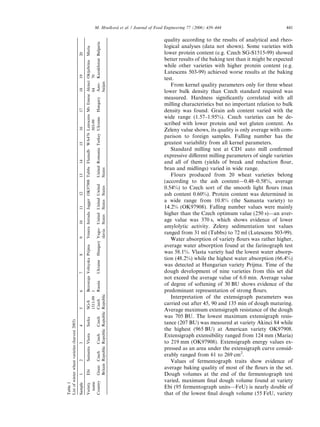
Samanta). The shortest fermentation time was measured
for the variety Maria (36 min), the longest time (75 min)
for the variety Ebi. Higher representation of strong
flours, revealed during the farinograph test, became also
evident in the average fermentation time—56 min. Fer-
mentograph SJA also analyses the volume of fermenta-
tion gases produced. Increase of the gas volume is
practically linear and volume of fermentation gases at
the end of the test (160 min) is evaluated. Final volume
of fermentation gases in this set ranged from 81
(Samanta) to 135 FeU (SG-S1511-99).
Maturograph behavior of flours corresponds to fer-
mentograph behavior, which is confirmed by the corre-
lation analysis between these traits. Technologically
most significant maturograph traits are optimal time
of final stage of proofing and proofing stability. Average
proofing time in this set was 39 min, nine varieties
showed longer time of final proofing (e.g. Ebi, SG-
S1511-99, Flamalb), while nine varieties showed shorter
time of final proofing, which is more suitable for techno-
logical purposes (e.g. Czech varieties Samanta, Vlasta
and Sarka). Proofing stability implies how the dough
is tolerant of overproofing—average tolerance was
7 min. Dough resistance, i.e. level of unloaded sample,
correlates with specific bread volume. It is possible to as-
sume that the higher the dough resistance at the maturo-
graph test, the higher bread volume at the baking test.
Values of maturograph dough resistance in the test
ranged from 612 (Tubbs) to 835 BU (Flamalb). Variety
with the lowest protein content in the set (Samanta) had
technologically optimal time of final proofing (34 min),
low dough resistance (700 BU) and good proofing
stability (6 min).
Oven spring test simulates initial baking phase, so-
called baking-in, during which a dough sample increases
its volume due to the effect of air chambers expanse.
Baking test is carried out as a direct examination of bak-
ing quality of the flour. Initial volumes of the dough
samples with optimally finished proofing stage (V0)
varied in the space of 150 BU. The final bread volumes
(V22) varied in the space of 185 BU, from 425 BU
(Volnyska) to 610 BU (Lutescens 503-99). Dough sam-
ples at the beginning of oven spring test had average vol-
ume of 375 BU, the bread volumes at the end of the test
were at average 507 BU, thus average volume increase
of the samples was 132 BU.
Baking test according to the internal procedure
showed evidential differences in the technological quality
of the flour proteins. Average value of specific volume
was 381 cm3
100 gÀ1
and average product vaulting (the
ratio of height and diameter) of 0.58. The lowest specific
bread volume (311 cm3
100 gÀ1
) was measured at variety
Maria (shape h/d = 0.58) and the lowest ratio
(h/d = 0.46) at variety Tubbs (specific volume 342 cm3
100 gÀ1
). Czech variety SG-1511-99 reached the highest
specific bread volume (438 cm3
100 gÀ1
) with nearly
standard shape (h/d = 0.53).
Relations between technological quality of tested
varieties according to measured parameters (40 data
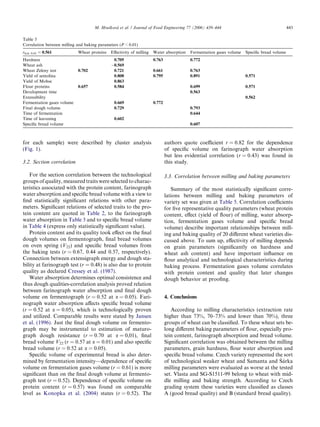
Fig. 1. Cluster analysis of wheat varieties.
Table 4
Significant correlations between specific bread volume and the others
features
Vbread V22 RD VG AEXT
Vbread 1
V22 1
RD 0.569 1
VG 0.608 0.525 1
AEXT 1
Critical correlation coefficients: r = 0.561, for a = 0.01; r = 0.444, for
a = 0.05.
Table 3
Significant correlations between water absorption and the others
features
Wabs SD AEXT VD RD V22 Vbread
Wabs 1
SD 1
AEXT 0.475 1
VD 0.517 1
RD 0.699 1
V22 0.550 0.569 1
Vbread 0.518 1
Table 2
Significant correlations between protein content and the others
features
Pr SD AEXT VD RD V22 Vbread
Pr 1
SD 1
AEXT 0.475 1
VD 0.669 1
RD 0.699 1
V22 0.550 0.569 1
Vbread 0.572 0.518 1
442 M. Hrusˇkova´ et al. / Journal of Food Engineering 77 (2006) 439–444
for each sample) were described by cluster analysis
(Fig. 1).
3.2. Section correlation
For the section correlation between the technological
groups of quality, measured traits were selected to charac-
teristics associated with the protein content, farinograph
water absorption and specific bread volume with a view to
find statistically significant relations with other para-
meters. Significant relations of selected traits to the pro-
tein content are quoted in Table 2, to the farinograph
water absorption in Table 3 and to specific bread volume
in Table 4 (express only statistically significant value).
Protein content and its quality took effect on the final
dough volumes on fermentograph, final bread volumes
on oven spring (V22) and specific bread volumes from
the baking tests (r = 0.67, 0.44 and 0.57, respectively).
Connection between extensigraph energy and dough sta-
bility at farinograph test (r = 0.48) is also due to protein
quality as declared Cressey et al. (1987).
Water absorption determines optimal consistence and
thus dough qualities-correlation analysis proved relation
between farinograph water absorption and final dough
volume on fermentograph (r = 0.52 at a = 0.05). Fari-
nograph water absorption affects specific bread volume
(r = 0.52 at a = 0.05), which is technologically proven
and utilized. Comparable results were stated by Jansen
et al. (1996). Just the final dough volume on fermento-
graph may be instrumental to estimation of maturo-
graph dough resistance (r = 0.70 at a = 0,01), final
bread volume V22 (r = 0.57 at a = 0.01) and also specific
bread volume (r = 0.52 at a = 0.05).
Specific volume of experimental bread is also deter-
mined by fermentation intensity—dependence of specific
volume on fermentation gases volume (r = 0.61) is more
significant than on the final dough volume at fermento-
graph test (r = 0.52). Dependence of specific volume on
protein content (r = 0.57) was found on comparable
level as Konopka et al. (2004) states (r = 0.52). The
authors quote coefficient r = 0.82 for the dependence
of specific volume on farinograph water absorption
but less evidential correlation (r = 0.43) was found in
this study.
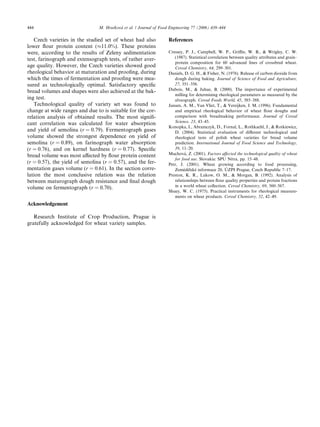
3.3. Correlation between milling and baking parameters
Summary of the most statistically significant corre-
lations between milling and baking parameters of
variety set was given at Table 5. Correlation coefficients
for five representative quality parameters (wheat protein
content, effect (yield of flour) of milling, water absorp-
tion, fermentation gases volume and specific bread
volume) describe important relationships between mill-
ing and baking quality of 20 different wheat varieties dis-
cussed above. To sum up, effectivity of milling depends
on grain parameters (significantly on hardness and
wheat ash content) and have important influence on
flour analytical and technological characteristics during
baking process. Fermentation gases volume correlates
with protein content and quality that later changes
dough behavior at proofing.
4. Conclusions
According to milling characteristics (extraction rate
higher than 73%, 70–73% and lower than 70%), three
groups of wheat can be classified. To these wheat sets be-
long different baking parameters of flour, especially pro-
tein content, farinograph absorption and bread volume.
Significant correlation was obtained between the milling
parameters, grain hardness, flour water absorption and
specific bread volume. Czech variety represented the sort
of technological weaker wheat and Samanta and Sˇa´rka
milling parameters were evaluated as worse at the tested
set. Vlasta and SG-S1511-99 belong to wheat with mid-
dle milling and baking strength. According to Czech
grading system these varieties were classified as classes
A (good bread quality) and B (standard bread quality).
Table 5
Correlation between milling and baking parameters (P < 0.01)
rkrit 0.01 = 0.561 Wheat proteins Effectivity of milling Water absorption Fermentation gases volume Specific bread volume
Hardness 0.705 0.763 0.772
Wheat ash À0.569
Wheat Zeleny test 0.702 0.721 0.661 0.763
Yield of semolina 0.808 0.795 0.891 0.571
Yield of Mohse 0.863
Flour proteins 0.657 0.584 0.699 0.571
Development time 0.563
Extensibility 0.562
Fermentation gases volume 0.669 0.772
Final dough volume 0.729 0.793
Time of fermentation 0.644
Time of leavening 0.602
Specific bread volume 0.607
M. Hrusˇkova´ et al. / Journal of Food Engineering 77 (2006) 439–444 443
Czech varieties in the studied set of wheat had also
lower flour protein content (%11.0%). These proteins
were, according to the results of Zeleny sedimentation
test, farinograph and extensograph tests, of rather aver-
age quality. However, the Czech varieties showed good
rheological behavior at maturation and proofing, during
which the times of fermentation and proofing were mea-
sured as technologically optimal. Satisfactory specific
bread volumes and shapes were also achieved at the bak-
ing test.
Technological quality of variety set was found to
change at wide ranges and due to is suitable for the cor-
relation analysis of obtained results. The most signifi-
cant correlation was calculated for water absorption
and yield of semolina (r = 0.79). Fermentograph gases
volume showed the strongest dependence on yield of
semolina (r = 0.89), on farinograph water absorption
(r = 0.76), and on kernel hardness (r = 0.77). Specific
bread volume was most affected by flour protein content
(r = 0.57), the yield of semolina (r = 0.57), and the fer-
mentation gases volume (r = 0.61). In the section corre-
lation the most conclusive relation was the relation
between maturograph dough resistance and final dough
volume on fermentograph (r = 0.70).
Acknowledgement
Research Institute of Crop Production, Prague is
gratefully acknowledged for wheat variety samples.
References
Cressey, P. J., Campbell, W. P., Griffin, W. B., & Wrigley, C. W.
(1987). Statistical correlation between quality attributes and grain–
protein composition for 60 advanced lines of crossbred wheat.
Cereal Chemistry, 64, 299–301.
Daniels, D. G. H., & Fisher, N. (1976). Release of carbon dioxide from
dough during baking. Journal of Science of Food and Agriculture,
27, 351–356.
Dubois, M., & Juhue, B. (2000). The importance of experimental
milling for determining rheological parameters as measured by the
alveograph. Cereal Foods World, 45, 385–388.
Jansen, A. M., Van Vliet, T., & Vereijken, J. M. (1996). Fundamental
and empirical rheological behavior of wheat flour doughs and
comparison with breadmaking performance. Journal of Cereal
Science, 23, 43–45.
Konopka, I., Abramczyk, D., Fornal, L., Rothkaehl, J., & Rotkiewicz,
D. (2004). Statistical evaluation of different technological and
rheological tests of polish wheat varieties for bread volume
prediction. International Journal of Food Science and Technology,
39, 11–20.
Muchova´, Z. (2001). Factors affected the technological quality of wheat
for food use. Slovakia: SPU Nitra, pp. 15–48.
Petr, J. (2001). Wheat growing according to food processing,
Zeme˘de˘lske´ informace 20, U´ ZPI Prague, Czech Republic 7–17.
Preston, K. R., Lukow, O. M., & Morgan, B. (1992). Analysis of
relationships between flour quality properties and protein fractions
in a world wheat collection. Cereal Chemistry, 69, 560–567.
Shuey, W. C. (1975). Practical instruments for rheological measure-
ments on wheat products. Cereal Chemistry, 52, 42–49.
444 M. Hrusˇkova´ et al. / Journal of Food Engineering 77 (2006) 439–444

Correlation between milling and baking parameters

  • 1.
    Correlation between millingand baking parameters of wheat varieties M. Hrusˇkova´ *, I. Sˇvec, O. Jirsa Department of Carbohydrate Chemistry and Technology, Institute of Chemical Technology, Technicka´ 3, 166 3 28 Prague, Czech Republic Available online 25 August 2005 Abstract The milling and baking parameters of flours from foreign and Czech varieties were determined and related to milling and baking performance by correlation analysis. Twenty samples of wheat from the international breeding test CIMMYT (harvest year 2003) were used. Standard milling test at CD1 auto mill confirmed expressive different milling parameters of single varieties. Rheological properties of flours in dough were assessed at farinograph, extensigraph, fermentograph SJA, maturograph and oven spring appa- ratus. Baking test was also performed. Significant correlation was obtained between the milling parameters, grain hardness, flour water absorption and specific bread volume. The significant correlation was found between water absorption and yield of semolina (r = 0.79); fermentograph gases volume and yield of semolina (r = 0.89), farinograph water absorption (r = 0.77), kernel hardness (r = 0.76); specific bread volume and flour protein content (r = 0.57), the yield of semolina (r = 0.57). The most related section correlation was found between maturograph dough resistance and final dough volume on fermentograph (r = 0.70). Ó 2005 Elsevier Ltd. All rights reserved. Keywords: Correlation; Dough rheology; Milling and baking parameters; Wheat flour 1. Introduction Cereal chemists have always sought for a qualitative parameter or a group of such parameters that would determine wheat dough behavior in the baking process. Currently, the most promising results can be obtained from the determination of the glutenin composition as well as the hydrophobicity of gliadin subunits (Konopka, Abramczyk, Fornal, Rothkaehl, & Rotkiewicz, 2004). But interpretation of the wheat protein fractions is diffi- cult because it depends on the extraction conditions and this causes problem in the determination of relations with flour technological characteristics (Preston, Lukow, & Morgan, 1992). Experimental milling procedures are an integral part of wheat quality evaluation. However, these tests are barely designed to exactly emulate commercial milling processes. There are two requirements for production usable laboratory milled flour: careful wheat prepa- ration before milling and similar flour composition (Dubois & Juhue, 2000). Dough rheological techniques are commonly used for the analysis of wheat flour baking value. The bread- making process can be divided (for laboratory simula- tion) into its three main stages: mixing, fermentation, and baking. Recording dough mixer like the farinograph yields information on the behavior of the dough during the mixing stage. Load-extension instrument like the extensigraph describes dough resistance to extension and its extensibility, which may be important for gas retention during fermentation and oven rise. At fermen- tation stage, the carbon dioxide produced by the yeast is collected in the gas cells, which have been formed during mixing, and their volume increases. The fermentograph yields information on the behavior of the dough during the expansion of gas cells and thus a deformation of 0260-8774/$ - see front matter Ó 2005 Elsevier Ltd. All rights reserved. doi:10.1016/j.jfoodeng.2005.07.011 * Corresponding author. Tel.: +420 22435 3206; fax: +420 22435 5130. E-mail address: marie.hruskova@vscht.cz (M. Hrusˇkova´). www.elsevier.com/locate/jfoodeng Journal of Food Engineering 77 (2006) 439–444
  • 2.
    the dough phase.Rupture of dough membranes in the course of fermentation process, and particular at the oven rise, restricts the loaf volume (Daniels & Fisher, 1976). The time when these stages occurred can be pre- dicted from fermentograph and oven spring apparatus curve. Rheological dough characteristics, exactly the recover after loading deformation that is applied during final proof, can be described by the maturograph (Shuey, 1975). Usual physical dough tests do not appear to mea- sure properties that are directly important for bread- making performance. The success of these tests, which measure dough rheological properties, may result in cor- relation with parameters that directly influence wheat and flour behavior in the mill (flour yield) and the bakery (bread volume) (Jansen, Van Vliet, & Vereijken, 1996). The technological quality of wheat for milling and baking use varies in wide range. Variety composition is one of the most important factors and it caused protein and starch quality changes in the harvest year and the location of planting (Muchova´, 2001; Petr, 2001). The breeding aims to specific requirements of wheat process- ing characterized by flour and dough parameters, the number of which can even exceed several tens. For correct choice of the most important ones statistical methods of results description can be used as same as for prediction of dough behavior at technological stages of bread- making (Cressey, Campbell, Griffin, & Wrigley, 1987). The aim of the present study was to compare the mill- ing and baking parameters of flours from foreign and Czech varieties and these results relate to milling and baking performance by correlation analysis. 2. Material and methods Twenty samples of wheat (Table 1) from the interna- tional breeding test CIMMYT—harvest year 2003 were used at the study. Wheat samples originating from 12 countries and growing at the same agricultural regime were milled under standard conditions on laboratory mill CD1 auto (Chopin, France). Analytical flour analy- ses (moisture, ash, protein and wet gluten content) were evaluated through the use of Inframatic 8600 (Perten Instruments, Sweden) with the calibration for the smooth light flour. The Falling Number (ISO 3039) and Zeleny sedimentation test (ISO 5529) values were determined by the standard methods. Rheological properties of flours in non-fermented dough (flour–water system) were measured at farino- graph (ISO 5530-1) and extensigraph (ISO 5530-2) (Brabender, SRN). Rheological properties of fermented dough were assessed according to the internal procedures at fermentograph SJA (Sweden), maturograph and oven spring apparatus (Brabender, SRN). Baking test based on fermented dough recipe (internal procedure) was used to assess baking flour qualities. The recipe was as follows: flour—100%, yeast—4%, salt—1.7%, sugar—1.5%, fat— 1% (amount of ingredients in reference to flour) and water needed for preparation of dough with farinograph consistency of 600 ± 20 BU. Commercial French-type yeast ‘‘Fala’’ and commercial fat ‘‘Perla’’ were used. Dough maturation took 50 min, then the pieces of dough with the weight of 70 g were shaped manually. Dough proofing took 45 min followed by 14 min of baking at 240 °C. After 2 h cooling specific volume and shape (height and diameter) was assessed. Specific volume was measured with the use of rapeseed displacement method. For data processing and evaluation of dependence was used Microsoft Excel by program Statistica CZ. 3. Results and discussion 3.1. Describing of samples technological quality Twenty samples of wheat (list of varieties and their origin in Table 1) contained varieties of different baking Nomenclature A ash content, percentage dry-basis AEXT extensigraph energy, cm2 d extensigraph extensibility DS farinograph degree of softening, ‘‘BU’’ ED maturograph elasticity of dough, ‘‘BU’’ FN falling number, s h/d ratio height/diameter, decimal Pr protein, percentage dry-basis R50/d extensigraph ratio, decimal RD maturograph resistency of dough, ‘‘BU’’ Rmax extensigraph max. resistency, ‘‘BU’’ SD farinograph dough stability, min Smat maturograph stability of leavening Tdev farinograph development time, min Tfer fermentograph time of fermentation, min Tmat maturograph time of leavening, min V0 oven spring dough volume, ‘‘BU’’ V11 oven spring bread volume (11 min), ‘‘BU’’ V22 oven spring bread volume, ‘‘BU’’ Vbread specific bread volume, cm3 100 gÀ1 VD fermentograph final dough volume, ‘‘FeU’’ VG fermentograph fermentation gases volume, ‘‘FeU’’ Wabs farinograph water absorption, % Wg wet gluten, percentage dry-basis Zv Zeleny sedimentation value, ml 440 M. Hrusˇkova´ et al. / Journal of Food Engineering 77 (2006) 439–444
  • 3.
    quality according tothe results of analytical and rheo- logical analyses (data not shown). Some varieties with lower protein content (e.g. Czech SG-S1515-99) showed better results of the baking test than it might be expected while other varieties with higher protein content (e.g. Lutescens 503-99) achieved worse results at the baking test. From kernel quality parameters only for three wheat lower bulk density than Czech standard required was measured. Hardness significantly correlated with all milling characteristics but no important relation to bulk density was found. Grain ash content varied with the wide range (1.57–1.95%). Czech varieties can be de- scribed with lower protein and wet gluten content. As Zeleny value shows, its quality is only average with com- parison to foreign samples. Falling number has the greatest variability from all kernel parameters. Standard milling test at CD1 auto mill confirmed expressive different milling parameters of single varieties and all of them (yields of break and reduction flour, bran and midlings) varied in wide range. Flours produced from 20 wheat varieties belong (according to the ash content—0.48–0.58%, average 0.54%) to Czech sort of the smooth light flours (max ash content 0.60%). Protein content was determined in a wide range from 10.8% (the Samanta variety) to 14.2% (OK97908). Falling number values were mainly higher than the Czech optimum value (250 s)—an aver- age value was 370 s, which shows evidence of lower amylolytic activity. Zeleny sedimentation test values ranged from 31 ml (Tubbs) to 72 ml (Lutescens 503-99). Water absorption of variety flours was rather higher, average water absorption found at the farinograph test was 58.1%. Vlasta variety had the lowest water absorp- tion (48.2%) while the highest water absorption (66.4%) was detected at Hungarian variety Prijma. Time of the dough development of nine varieties from this set did not exceed the average value of 6.0 min. Average value of degree of softening of 30 BU shows evidence of the predominant representation of strong flours. Interpretation of the extensigraph parameters was carried out after 45, 90 and 135 min of dough maturing. Average maximum extensigraph resistance of the dough was 705 BU. The lowest maximum extensigraph resis- tance (207 BU) was measured at variety Akinci 84 while the highest (965 BU) at American variety OK97908. Extensigraph extensibility ranged from 124 mm (Maria) to 219 mm (OK97908). Extensigraph energy values ex- pressed as an area under the extensigraph curve consid- erably ranged from 61 to 269 cm2 . Values of fermentograph traits show evidence of average baking quality of most of the flours in the set. Dough volumes at the end of the fermentograph test varied, maximum final dough volume found at variety Ebi (95 fermentograph units—FeU) is nearly double of that of the lowest final dough volume (55 FeU, variety Table1 Listofwinterwheatvarieties(harvest2003) Sample1234567891011121314151617181920 Variety name EbiSamantaVlastaSarkaSG-S 1511-99 Bezostaja 1 VolnyskaPrijmaVeneraIntradaJaggerOK97908TubbsFlamalbWA476Lutescens 503-99 MvEmeseAkinci 84 Oktjabrina 70 Maria CountryGreat Britain Czech Republic Czech Republic Czech Republic Czech Republic RussiaUkraineHungaryYugo- slavia United States United States United States United States RomaniaTurkeyUkraineHungaryAzer- baijan KazakhstanBulgaria M. Hrusˇkova´ et al. / Journal of Food Engineering 77 (2006) 439–444 441
  • 4.
    Samanta). The shortestfermentation time was measured for the variety Maria (36 min), the longest time (75 min) for the variety Ebi. Higher representation of strong flours, revealed during the farinograph test, became also evident in the average fermentation time—56 min. Fer- mentograph SJA also analyses the volume of fermenta- tion gases produced. Increase of the gas volume is practically linear and volume of fermentation gases at the end of the test (160 min) is evaluated. Final volume of fermentation gases in this set ranged from 81 (Samanta) to 135 FeU (SG-S1511-99). Maturograph behavior of flours corresponds to fer- mentograph behavior, which is confirmed by the corre- lation analysis between these traits. Technologically most significant maturograph traits are optimal time of final stage of proofing and proofing stability. Average proofing time in this set was 39 min, nine varieties showed longer time of final proofing (e.g. Ebi, SG- S1511-99, Flamalb), while nine varieties showed shorter time of final proofing, which is more suitable for techno- logical purposes (e.g. Czech varieties Samanta, Vlasta and Sarka). Proofing stability implies how the dough is tolerant of overproofing—average tolerance was 7 min. Dough resistance, i.e. level of unloaded sample, correlates with specific bread volume. It is possible to as- sume that the higher the dough resistance at the maturo- graph test, the higher bread volume at the baking test. Values of maturograph dough resistance in the test ranged from 612 (Tubbs) to 835 BU (Flamalb). Variety with the lowest protein content in the set (Samanta) had technologically optimal time of final proofing (34 min), low dough resistance (700 BU) and good proofing stability (6 min). Oven spring test simulates initial baking phase, so- called baking-in, during which a dough sample increases its volume due to the effect of air chambers expanse. Baking test is carried out as a direct examination of bak- ing quality of the flour. Initial volumes of the dough samples with optimally finished proofing stage (V0) varied in the space of 150 BU. The final bread volumes (V22) varied in the space of 185 BU, from 425 BU (Volnyska) to 610 BU (Lutescens 503-99). Dough sam- ples at the beginning of oven spring test had average vol- ume of 375 BU, the bread volumes at the end of the test were at average 507 BU, thus average volume increase of the samples was 132 BU. Baking test according to the internal procedure showed evidential differences in the technological quality of the flour proteins. Average value of specific volume was 381 cm3 100 gÀ1 and average product vaulting (the ratio of height and diameter) of 0.58. The lowest specific bread volume (311 cm3 100 gÀ1 ) was measured at variety Maria (shape h/d = 0.58) and the lowest ratio (h/d = 0.46) at variety Tubbs (specific volume 342 cm3 100 gÀ1 ). Czech variety SG-1511-99 reached the highest specific bread volume (438 cm3 100 gÀ1 ) with nearly standard shape (h/d = 0.53). Relations between technological quality of tested varieties according to measured parameters (40 data Fig. 1. Cluster analysis of wheat varieties. Table 4 Significant correlations between specific bread volume and the others features Vbread V22 RD VG AEXT Vbread 1 V22 1 RD 0.569 1 VG 0.608 0.525 1 AEXT 1 Critical correlation coefficients: r = 0.561, for a = 0.01; r = 0.444, for a = 0.05. Table 3 Significant correlations between water absorption and the others features Wabs SD AEXT VD RD V22 Vbread Wabs 1 SD 1 AEXT 0.475 1 VD 0.517 1 RD 0.699 1 V22 0.550 0.569 1 Vbread 0.518 1 Table 2 Significant correlations between protein content and the others features Pr SD AEXT VD RD V22 Vbread Pr 1 SD 1 AEXT 0.475 1 VD 0.669 1 RD 0.699 1 V22 0.550 0.569 1 Vbread 0.572 0.518 1 442 M. Hrusˇkova´ et al. / Journal of Food Engineering 77 (2006) 439–444
  • 5.
    for each sample)were described by cluster analysis (Fig. 1). 3.2. Section correlation For the section correlation between the technological groups of quality, measured traits were selected to charac- teristics associated with the protein content, farinograph water absorption and specific bread volume with a view to find statistically significant relations with other para- meters. Significant relations of selected traits to the pro- tein content are quoted in Table 2, to the farinograph water absorption in Table 3 and to specific bread volume in Table 4 (express only statistically significant value). Protein content and its quality took effect on the final dough volumes on fermentograph, final bread volumes on oven spring (V22) and specific bread volumes from the baking tests (r = 0.67, 0.44 and 0.57, respectively). Connection between extensigraph energy and dough sta- bility at farinograph test (r = 0.48) is also due to protein quality as declared Cressey et al. (1987). Water absorption determines optimal consistence and thus dough qualities-correlation analysis proved relation between farinograph water absorption and final dough volume on fermentograph (r = 0.52 at a = 0.05). Fari- nograph water absorption affects specific bread volume (r = 0.52 at a = 0.05), which is technologically proven and utilized. Comparable results were stated by Jansen et al. (1996). Just the final dough volume on fermento- graph may be instrumental to estimation of maturo- graph dough resistance (r = 0.70 at a = 0,01), final bread volume V22 (r = 0.57 at a = 0.01) and also specific bread volume (r = 0.52 at a = 0.05). Specific volume of experimental bread is also deter- mined by fermentation intensity—dependence of specific volume on fermentation gases volume (r = 0.61) is more significant than on the final dough volume at fermento- graph test (r = 0.52). Dependence of specific volume on protein content (r = 0.57) was found on comparable level as Konopka et al. (2004) states (r = 0.52). The authors quote coefficient r = 0.82 for the dependence of specific volume on farinograph water absorption but less evidential correlation (r = 0.43) was found in this study. 3.3. Correlation between milling and baking parameters Summary of the most statistically significant corre- lations between milling and baking parameters of variety set was given at Table 5. Correlation coefficients for five representative quality parameters (wheat protein content, effect (yield of flour) of milling, water absorp- tion, fermentation gases volume and specific bread volume) describe important relationships between mill- ing and baking quality of 20 different wheat varieties dis- cussed above. To sum up, effectivity of milling depends on grain parameters (significantly on hardness and wheat ash content) and have important influence on flour analytical and technological characteristics during baking process. Fermentation gases volume correlates with protein content and quality that later changes dough behavior at proofing. 4. Conclusions According to milling characteristics (extraction rate higher than 73%, 70–73% and lower than 70%), three groups of wheat can be classified. To these wheat sets be- long different baking parameters of flour, especially pro- tein content, farinograph absorption and bread volume. Significant correlation was obtained between the milling parameters, grain hardness, flour water absorption and specific bread volume. Czech variety represented the sort of technological weaker wheat and Samanta and Sˇa´rka milling parameters were evaluated as worse at the tested set. Vlasta and SG-S1511-99 belong to wheat with mid- dle milling and baking strength. According to Czech grading system these varieties were classified as classes A (good bread quality) and B (standard bread quality). Table 5 Correlation between milling and baking parameters (P < 0.01) rkrit 0.01 = 0.561 Wheat proteins Effectivity of milling Water absorption Fermentation gases volume Specific bread volume Hardness 0.705 0.763 0.772 Wheat ash À0.569 Wheat Zeleny test 0.702 0.721 0.661 0.763 Yield of semolina 0.808 0.795 0.891 0.571 Yield of Mohse 0.863 Flour proteins 0.657 0.584 0.699 0.571 Development time 0.563 Extensibility 0.562 Fermentation gases volume 0.669 0.772 Final dough volume 0.729 0.793 Time of fermentation 0.644 Time of leavening 0.602 Specific bread volume 0.607 M. Hrusˇkova´ et al. / Journal of Food Engineering 77 (2006) 439–444 443
  • 6.
    Czech varieties inthe studied set of wheat had also lower flour protein content (%11.0%). These proteins were, according to the results of Zeleny sedimentation test, farinograph and extensograph tests, of rather aver- age quality. However, the Czech varieties showed good rheological behavior at maturation and proofing, during which the times of fermentation and proofing were mea- sured as technologically optimal. Satisfactory specific bread volumes and shapes were also achieved at the bak- ing test. Technological quality of variety set was found to change at wide ranges and due to is suitable for the cor- relation analysis of obtained results. The most signifi- cant correlation was calculated for water absorption and yield of semolina (r = 0.79). Fermentograph gases volume showed the strongest dependence on yield of semolina (r = 0.89), on farinograph water absorption (r = 0.76), and on kernel hardness (r = 0.77). Specific bread volume was most affected by flour protein content (r = 0.57), the yield of semolina (r = 0.57), and the fer- mentation gases volume (r = 0.61). In the section corre- lation the most conclusive relation was the relation between maturograph dough resistance and final dough volume on fermentograph (r = 0.70). Acknowledgement Research Institute of Crop Production, Prague is gratefully acknowledged for wheat variety samples. References Cressey, P. J., Campbell, W. P., Griffin, W. B., & Wrigley, C. W. (1987). Statistical correlation between quality attributes and grain– protein composition for 60 advanced lines of crossbred wheat. Cereal Chemistry, 64, 299–301. Daniels, D. G. H., & Fisher, N. (1976). Release of carbon dioxide from dough during baking. Journal of Science of Food and Agriculture, 27, 351–356. Dubois, M., & Juhue, B. (2000). The importance of experimental milling for determining rheological parameters as measured by the alveograph. Cereal Foods World, 45, 385–388. Jansen, A. M., Van Vliet, T., & Vereijken, J. M. (1996). Fundamental and empirical rheological behavior of wheat flour doughs and comparison with breadmaking performance. Journal of Cereal Science, 23, 43–45. Konopka, I., Abramczyk, D., Fornal, L., Rothkaehl, J., & Rotkiewicz, D. (2004). Statistical evaluation of different technological and rheological tests of polish wheat varieties for bread volume prediction. International Journal of Food Science and Technology, 39, 11–20. Muchova´, Z. (2001). Factors affected the technological quality of wheat for food use. Slovakia: SPU Nitra, pp. 15–48. Petr, J. (2001). Wheat growing according to food processing, Zeme˘de˘lske´ informace 20, U´ ZPI Prague, Czech Republic 7–17. Preston, K. R., Lukow, O. M., & Morgan, B. (1992). Analysis of relationships between flour quality properties and protein fractions in a world wheat collection. Cereal Chemistry, 69, 560–567. Shuey, W. C. (1975). Practical instruments for rheological measure- ments on wheat products. Cereal Chemistry, 52, 42–49. 444 M. Hrusˇkova´ et al. / Journal of Food Engineering 77 (2006) 439–444