What Are Acidulants?
→ A type of food additive
→ Also known as Acidity Regulators
84 Acidulants
Acetic Acid
Citric Acid
Phosphoric Acid
Adipic Acid
Tartaric Acid
Tricalcium citrate
Produced by either:
1. Reducing phosphate rock to elementary phosphorus in blast furnace
2. Treating phosphate rock with sulphuric acid
Phosphoric Acid (E338)
Acetic Acid (E260)
2. Anti-browning agent
 Used as a preservative
1. Sterilizing Acid
Prevent /retard growth of microorganism by reducing pH
Inhibit oxidation reactions which lead to enzymatic and
non-enzymatic browning reactions
Tricalcium Citrate (E333iii)
2. Antioxidant Synergist
 Used as a chelating agent & antioxidant synergist
1. Chelating Agent
Useful in retarding enzymatic browning of fruits and vegetables
Used as synergists when combined with antioxidants (e.g.
ascorbates, BHA, BHT
 Partly due to the lowering of redox potential but more so on
sequestering of metal ions
Tartaric Acid (E334)
 Used as a flavouring agent
 Most water-soluble of the solid acidulants
 Has a strong tart taste
 Add the tartness required to balance the excessive sweetness in products
 Ability to augment flavour of fruits
 Commonly used in grape- and lime-flavoured beverages
 Manufactured from the waste products of wine industry
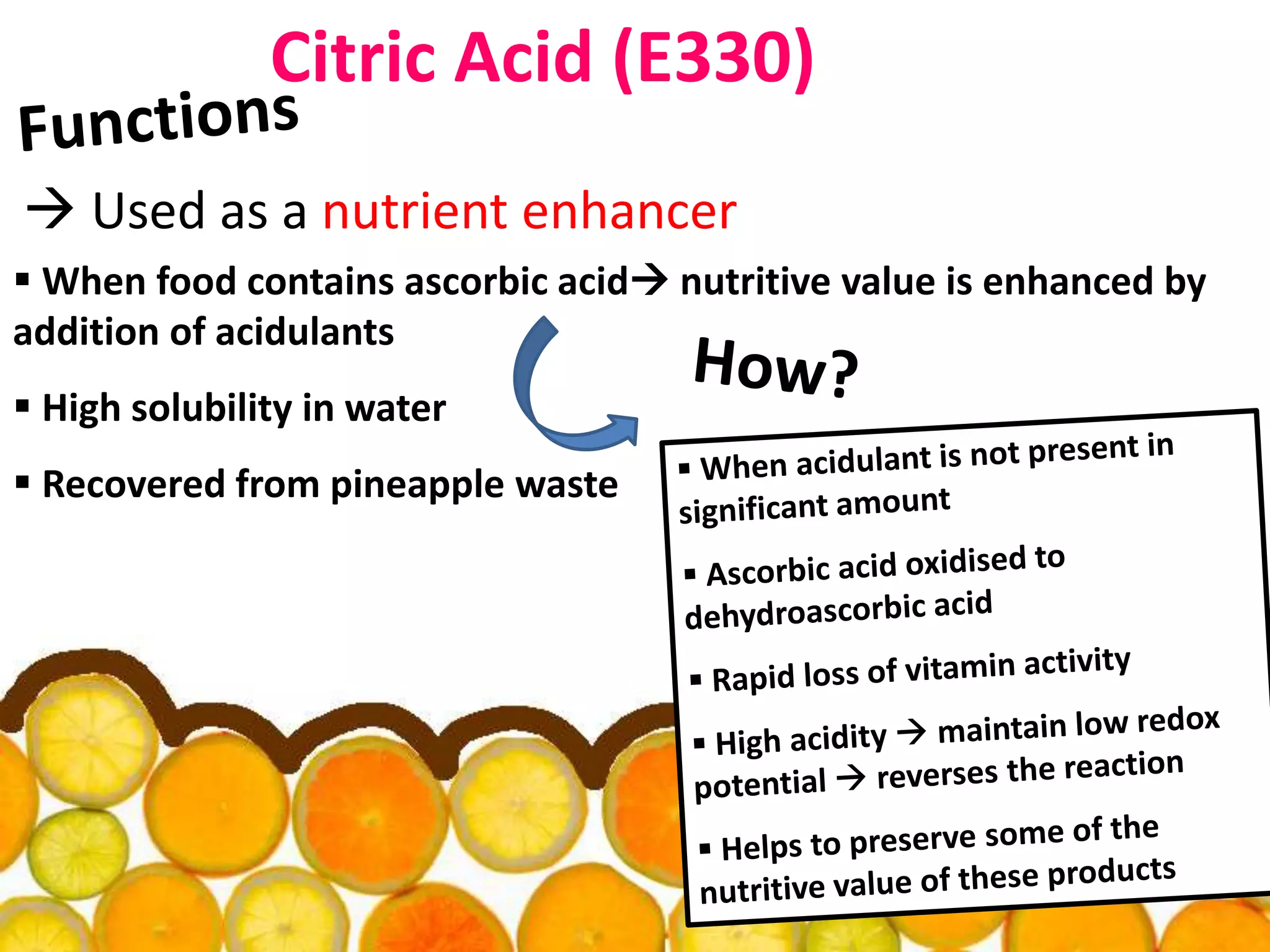
Citric Acid (E330)
 Used as a nutrient enhancer
 When food contains ascorbic acid nutritive value is enhanced by
addition of acidulants
 High solubility in water
 Recovered from pineapple waste
Adipic Acid (E355)
 Used as viscosity and melting modifier
 Used as a leavening acidulant in baking powder
 Also used to improve the melting characteristics and
texture of cheese spread
 Produced commercially by nitric acid oxidation of
cyclohexanol
 Used as a viscosity & melting modifier
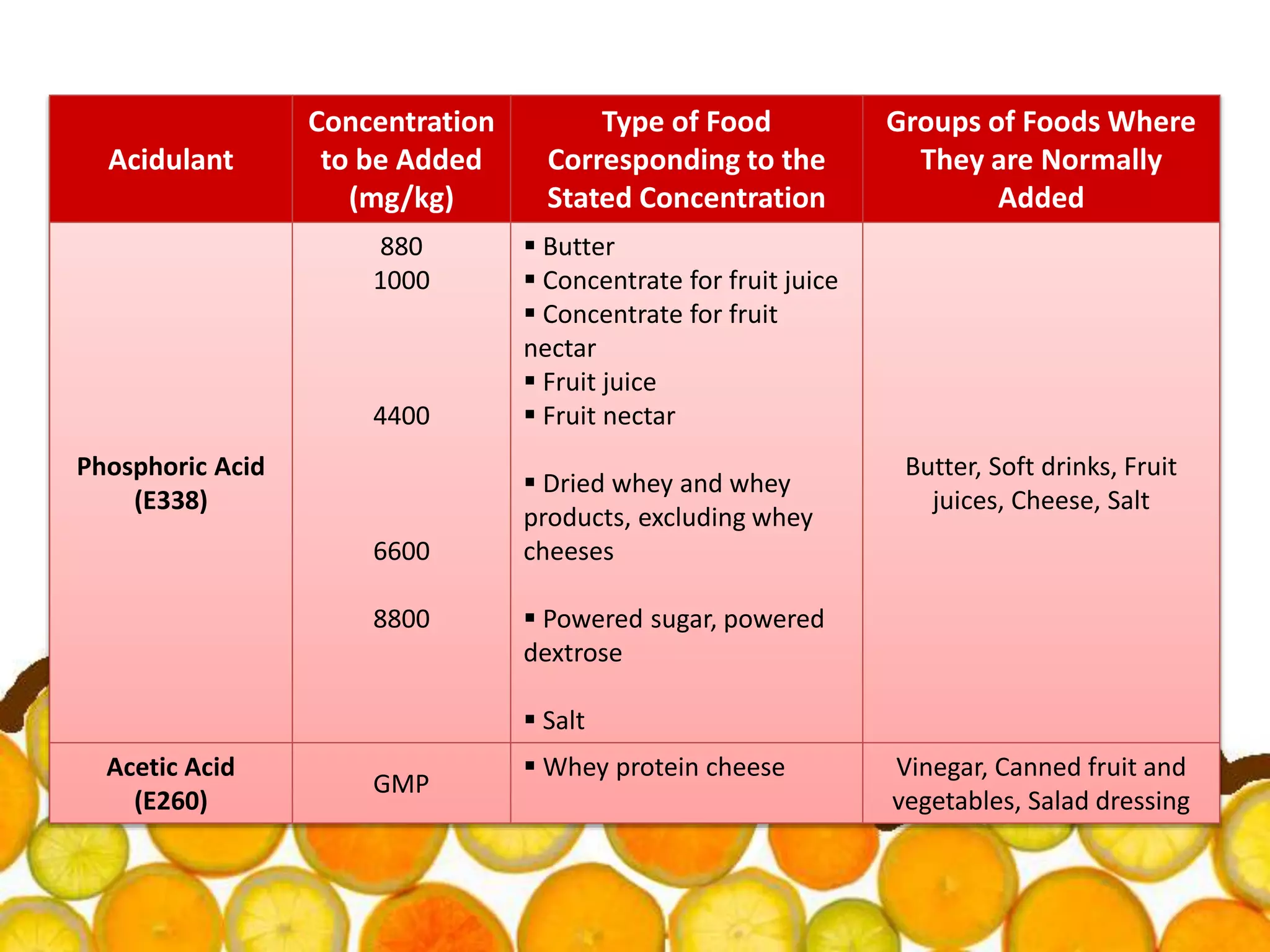
Acidulant
Concentration
to be Added
(mg/kg)
Type of Food
Corresponding to the
Stated Concentration
Groups of Foods Where
They are Normally
Added
Phosphoric Acid
(E338)
880
1000
4400
6600
8800
 Butter
 Concentrate for fruit juice
 Concentrate for fruit
nectar
 Fruit juice
 Fruit nectar
 Dried whey and whey
products, excluding whey
cheeses
 Powered sugar, powered
dextrose
 Salt
Butter, Soft drinks, Fruit
juices, Cheese, Salt
Acetic Acid
(E260)
GMP
 Whey protein cheese Vinegar, Canned fruit and
vegetables, Salad dressing
Acidulant
Concentration
to be Added
(mg/kg)
Type of Food
Corresponding to the
Stated Concentration
Groups of Foods Where
They are Normally
Added
Tricalcium citrate
(E333(ii))
GMP
Ice cream, wine, Jams,
Evaporated and condensed
milk, Milk powder,
Processed cheese
Tartaric acid
(E334)
4000
 Concentrate for fruit juice
 Concentrate for fruit
nectar
 Fruit juice
 Fruit nectar
Wine, Chocolate products,
Jams, Fruit nectar, Fruit juice
Citric Acid
(E330)
3000
5000
 Concentrate for fruit juice
 Fruit juice
 Concentrate for fruit
nectar
Fruit nectar
Fruit juice, Jam, Candy
Adipic acid
(E355)
* No provisions
found
Processed cheese, Baking
powder, Edible oil, Meringue
Good Manufacturing Practices (GMP)
Good Manufacturing Practices (GMP) for food additives are described in Section
3.3 of the Preamble of the Codex General Standard for Food Additives as follows:
"All food additives subject to the provisions of this Standard shall be used under
conditions of good manufacturing practice, which include the following:
1. The quantity of the additive added to food shall be limited to the lowest possible
level necessary to accomplish its desired effect;
2. The quantity of the additive that becomes a component of food as a result of its
use in the manufacturing, processing or packaging of a food and which is not
intended to accomplish any physical, or other technical effect in the food itself, is
reduced to the extent reasonably possible; and,
3. The additive is prepared and handled in the same way as a food ingredient.“
(Adapted from Codex Alimentarius)
Interaction between
Acidulants and Food
Constituents
Protein
 Alters the net charge and isoelectric point
 Possible alterations of protein-solvent and protein-protein
balance and associated properties
 Ascorbate or isoascorbate reduces nitrite, forming
hydroascorbic acid and nitric oxide
 Hydroascorbic acid and nitric oxide + myoglobin 
nitrosomyoglobin (under reducing conditions)
Protein
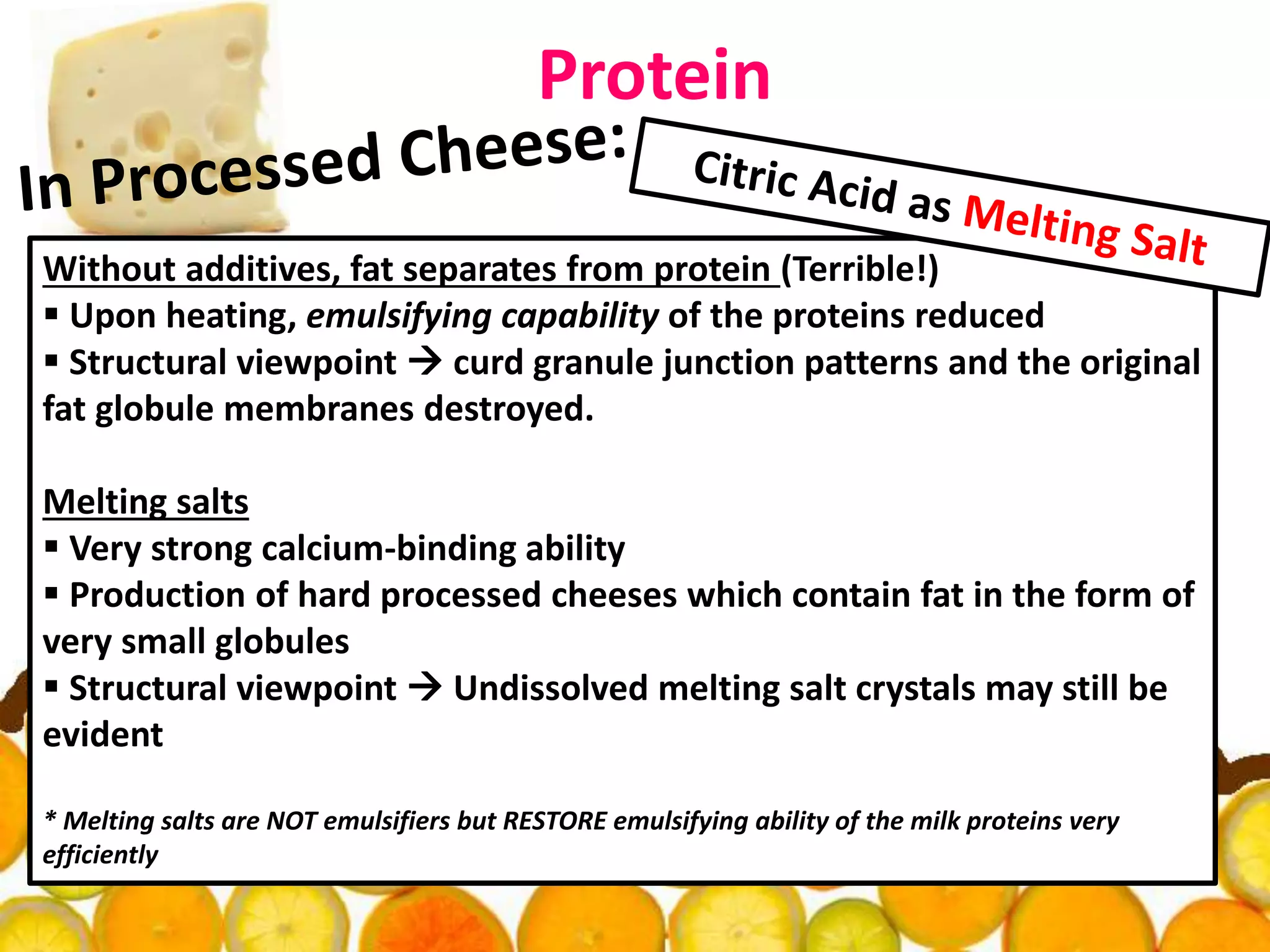
Without additives, fat separates from protein (Terrible!)
 Upon heating, emulsifying capability of the proteins reduced
 Structural viewpoint  curd granule junction patterns and the original
fat globule membranes destroyed.
Melting salts
 Very strong calcium-binding ability
 Production of hard processed cheeses which contain fat in the form of
very small globules
 Structural viewpoint  Undissolved melting salt crystals may still be
evident
* Melting salts are NOT emulsifiers but RESTORE emulsifying ability of the milk proteins very
efficiently
Lipids
 Synergist with antioxidants and oxygen scavengers
 Arrest oxidation by chain termination or serve as oxygen scavengers
 Phenolic antioxidant synergists since they remove metal ions and that
catalyze oxidation
 Acidic salts (sodium or potassium phosphates) + acidulant  aids in
regeneration of antioxidants
Lipids
Reactions of antioxidant
to prevent lipid
oxidation
Carbohydrates
 Alteration of the structure of foods including gels made from gums
(pectin, carrageenan), and proteins
 Tartaric acid
 Provides the hydrogen ion which is required by pectin in order to gel
 Buffers the pH in order to prevent premature set of the jelly
 Resulting system is highly pH stable and not readily affected by
processing conditions and slight variations of other ingredients.
 Modification of sugar crystallization in hard candy manufacturing.
 Citric acid
 Serves as a catalyst for inducing sucrose inversion which is a critical
factor in the shelf life of the finished product
Vitamins
 Retains vitamin activity and reduces vitamin loss
D isomer of ascorbic acid, isoascorbate or erythrobate, is
incorporated with ascorbic acid
 More rapidly oxidized than ascorbic acid thus protects Vitamin C
 Citric and malic acid also inhibits oxidation of vitamin C and
reduces vitamin loss
 In multi-vitamin preparations, nicotinamide-ascorbic acid complex
serves as a source of both niacin and vitamin C
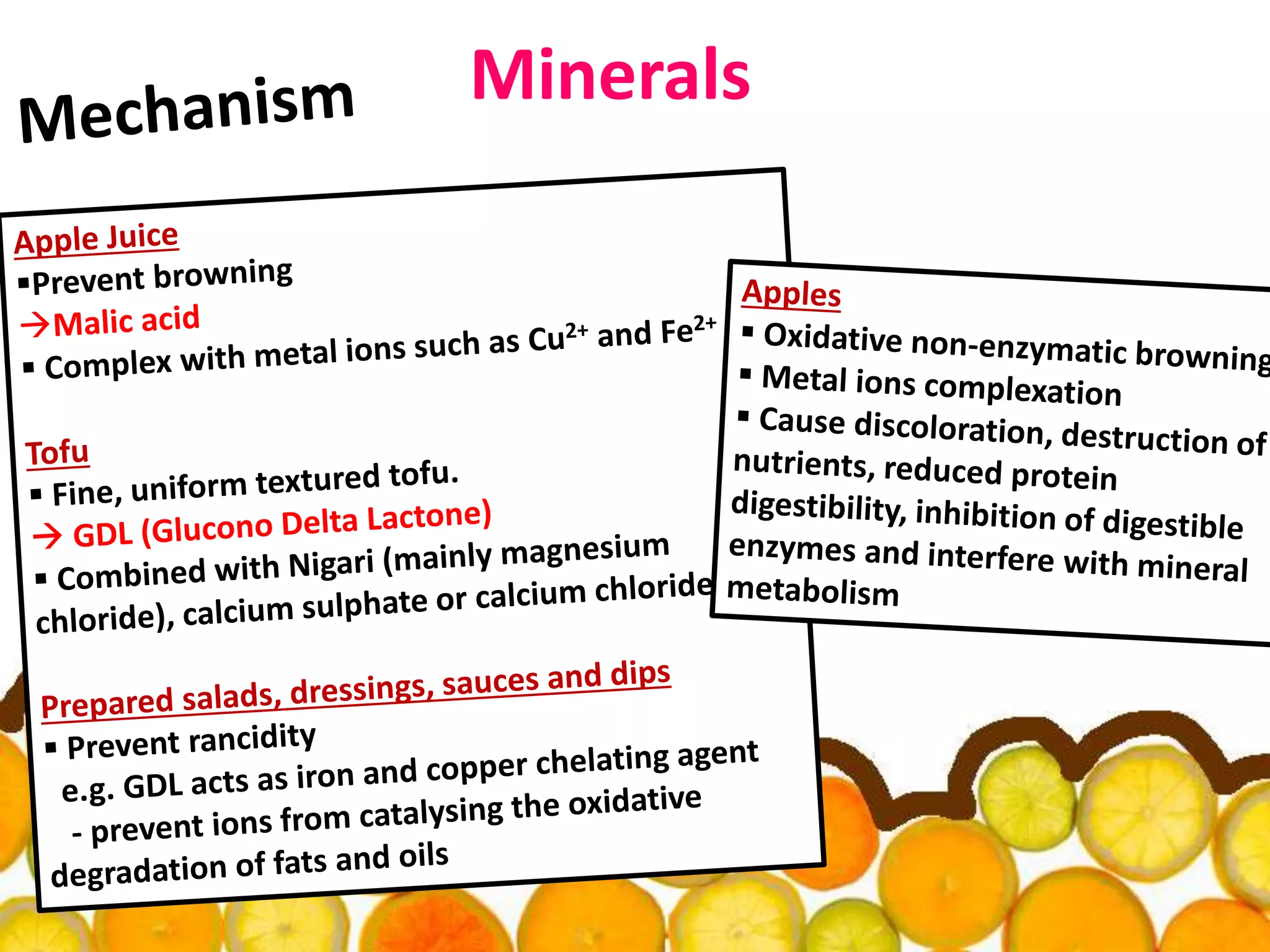
Minerals
Hey! Can you do me
a favour and find
me an acidulant?
Why not?
You’re so mean!
Look
behind
you lah!
Don’t
want.
How Do I Select the Right Acidulant?
1.What is the major function
required in the food product?
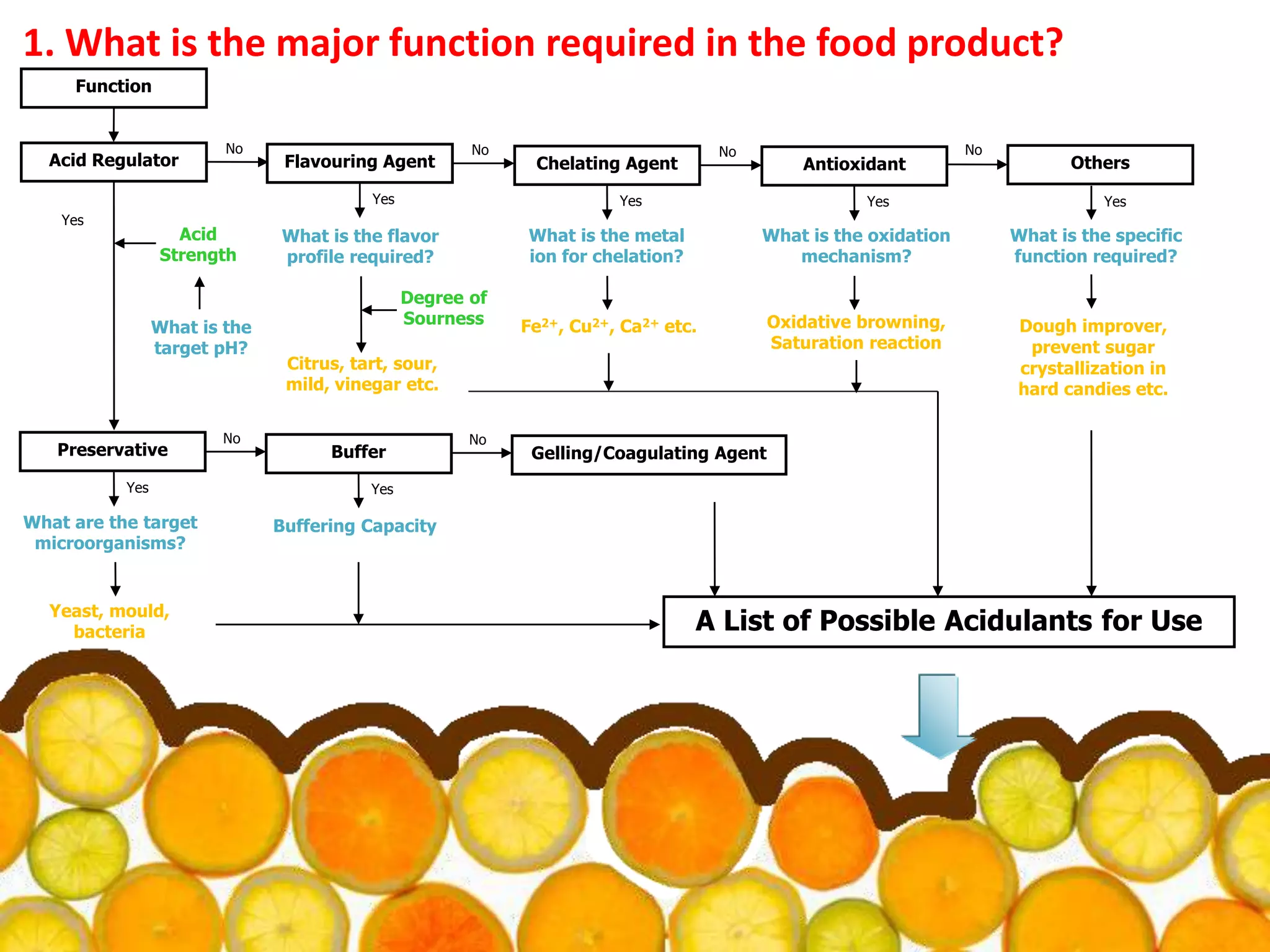
1. What is the major function required in the food product?
Function
No
Gelling/Coagulating Agent
Acid Regulator
Yes
What is the
target pH?
Acid
Strength
No
Chelating Agent
Yes
What is the metal
ion for chelation?
Fe2+, Cu2+, Ca2+ etc.
No
Flavouring Agent
Yes
What is the flavor
profile required?
Citrus, tart, sour,
mild, vinegar etc.
Degree of
Sourness
No
Yes
Antioxidant
What is the oxidation
mechanism?
Oxidative browning,
Saturation reaction
No
Others
Yes
What is the specific
function required?
Dough improver,
prevent sugar
crystallization in
hard candies etc.
Preservative
Yes
What are the target
microorganisms?
Yeast, mould,
bacteria
No
Buffer
Yes
Buffering Capacity
A List of Possible Acidulants for Use
2. Which Acidulant is Compatible with the Food System?
Physical Form of Food
Powder, Granular, Crystals
Physical Form of
Acidulant
Solid/Powder
Hygroscopicity
of Acidulant
Yes
Solvent Type
No
Liquid
Water, Ethanol, Oil etc.
Solubility of
Acidulant
3. What are the Processing Considerations for the Manufacturers?
Cost
Quality, Grade,
Purity &
Availability of
Acidulant
Imported or
Produced
Locally
Availability
Processing
Line
Physical Form,
Hygroscopicity
of Acidulant
Storage & Handling
Not forgetting
the consumers
too!
4. Does the Selected Acidulant Meet Legal Requirements?
Permitted Additive
Food Legislations,
Sale of Food Act
Amounts of Acidulant Used to
Achieve Desired Function
Permitted Levels
Selection of
Acidulants in
Hard Candies
Main Ingredients for Making Hard Candies
Sugar Corn Syrup Flavouring/
Colouring
Water
 Ratio of water to
sucrose, 1:2
 99% sugar
concentration
Primary
Functions
Flavouring
Agent
Impart Fruity
Flavours
Citrus and
Berries
Specific
Function
Prevent Sugar
Crystallization
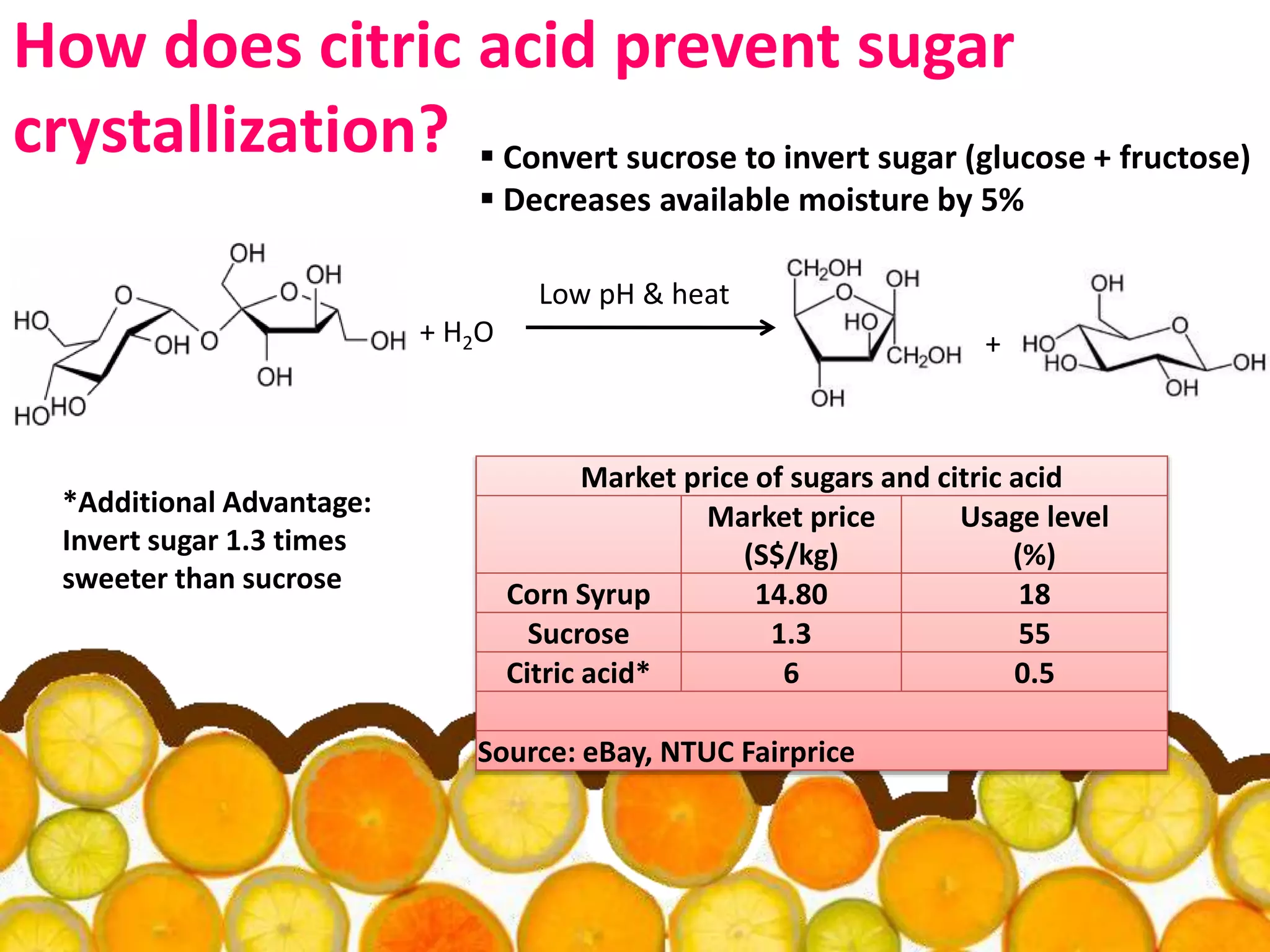
How does citric acid prevent sugar
crystallization?  Convert sucrose to invert sugar (glucose + fructose)
 Decreases available moisture by 5%
Low pH & heat
++ H2O
Market price of sugars and citric acid
Market price
(S$/kg)
Usage level
(%)
Corn Syrup 14.80 18
Sucrose 1.3 55
Citric acid* 6 0.5
Source: eBay, NTUC Fairprice
*Additional Advantage:
Invert sugar 1.3 times
sweeter than sucrose
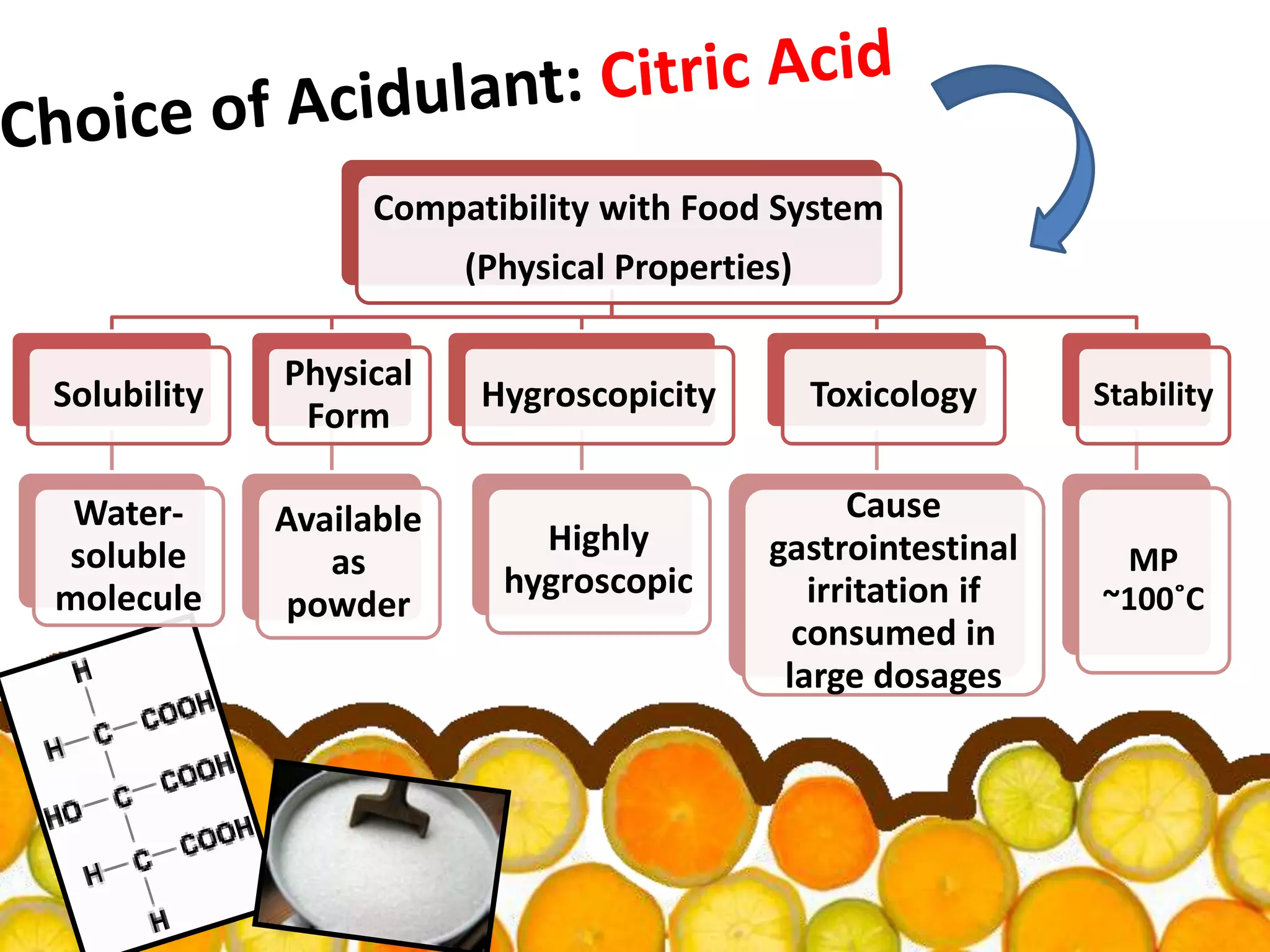
Compatibility with Food System
(Physical Properties)
Solubility
Water-
soluble
molecule
Physical
Form
Available
as
powder
Hygroscopicity
Highly
hygroscopic
Toxicology
Cause
gastrointestinal
irritation if
consumed in
large dosages
Stability
MP
~100˚C
Legislative
Concerns
Permitted
Acidulants
Permitted EU
Food
Additives
(E330)
GRAS by FDA
standards
Permitted
General Purpose
Food Additives
by AVA
standards
Permitted
levels
“May be used
without
limitation”
according to
GMP
Typical usage
level in
candies: 0.5%
Processing
Considerations
Cost
S$6/kg for Food
Grade Pure
Citric Acid
Powder
Availability
Fermentation
of molasses
with Aspergillus
niger
Storage and
Handling
Tight containers
in a cool, dry,
well-ventilated
area
Selection of Acidulants in
Primary
Functions
Flavouring
Agent
Impart
sourness
Vinegar
pH Control
Agent
Buffer
(in sodium acetate
form)
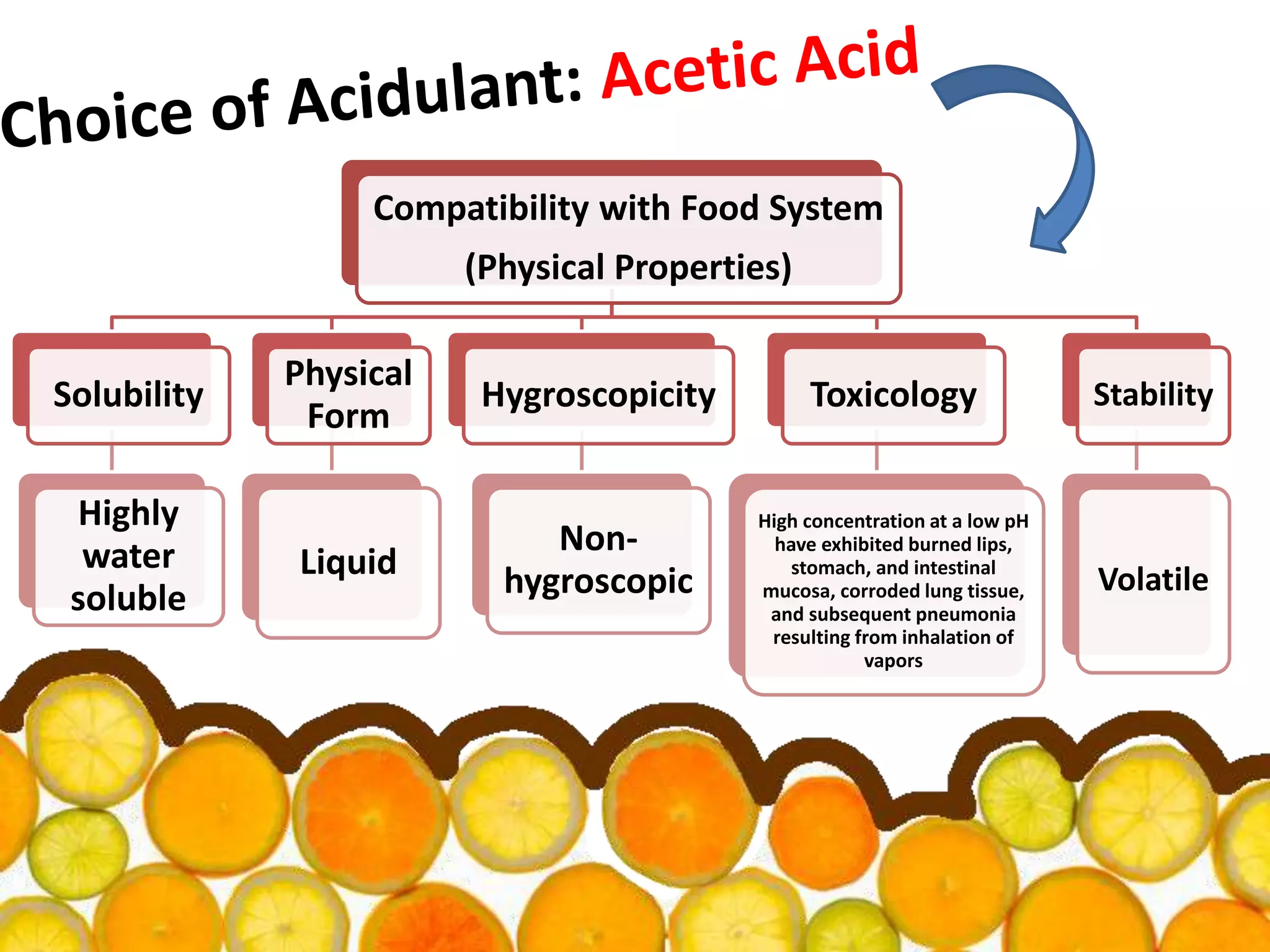
Compatibility with Food System
(Physical Properties)
Solubility
Highly
water
soluble
Physical
Form
Liquid
Hygroscopicity
Non-
hygroscopic
Toxicology
High concentration at a low pH
have exhibited burned lips,
stomach, and intestinal
mucosa, corroded lung tissue,
and subsequent pneumonia
resulting from inhalation of
vapors
Stability
Volatile
Legislative
Concerns
Permitted
Acidulants
Permitted EU
Food
Additives
(E260)
GRAS by FDA
standards
Permitted
General Purpose
Food Additives
by AVA
standards
Permitted
levels
“May be used
without
limitation”
according to
GMP
Typical usage
level: < 0.15%
Processing
considerations
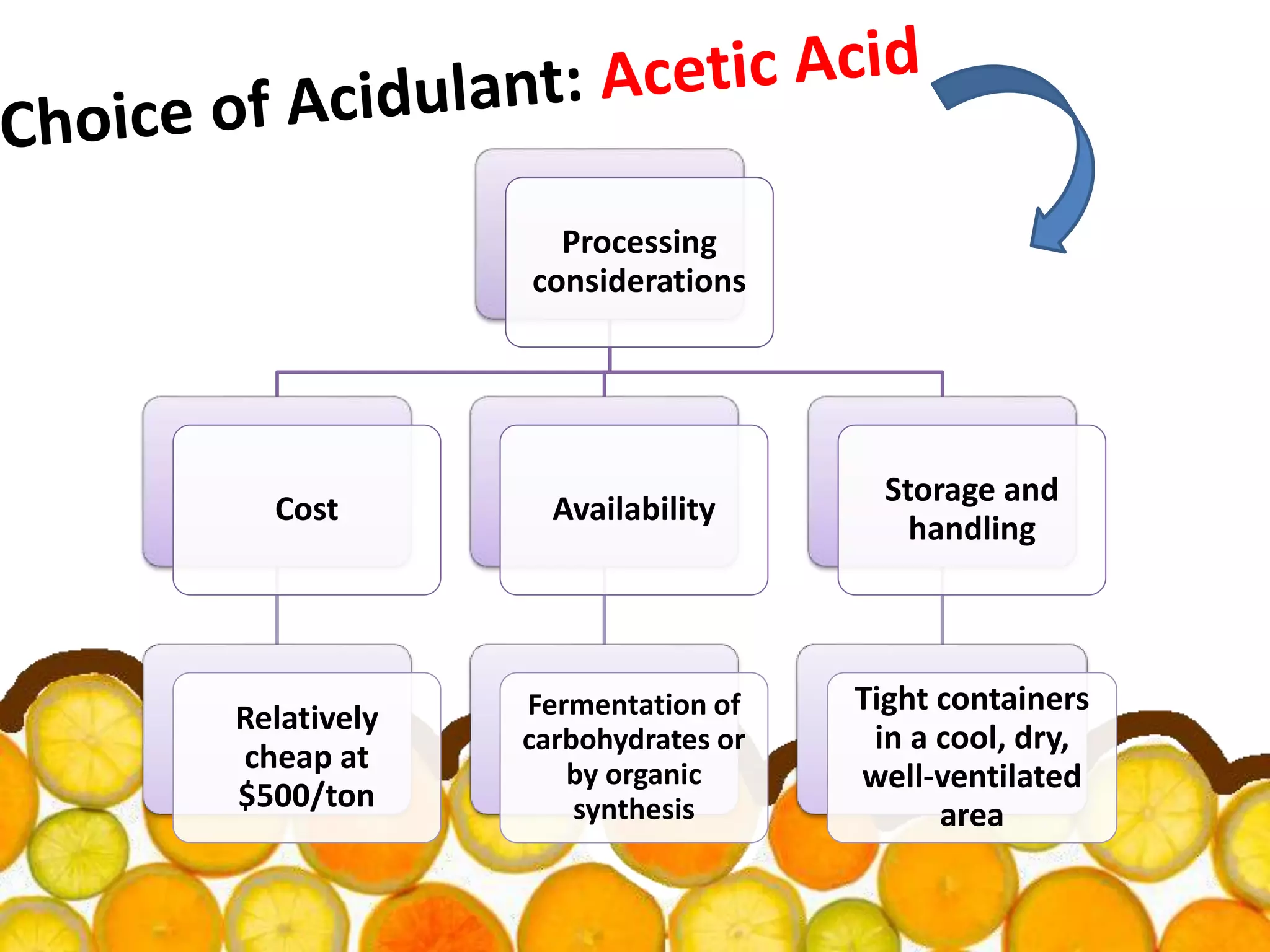
Cost
Relatively
cheap at
$500/ton
Availability
Fermentation of
carbohydrates or
by organic
synthesis
Storage and
handling
Tight containers
in a cool, dry,
well-ventilated
area
Rationale:
Food Acidulants

Food Acidulants

  • 2.
    What Are Acidulants? →A type of food additive → Also known as Acidity Regulators
  • 3.
    84 Acidulants Acetic Acid CitricAcid Phosphoric Acid Adipic Acid Tartaric Acid Tricalcium citrate
  • 4.
    Produced by either: 1.Reducing phosphate rock to elementary phosphorus in blast furnace 2. Treating phosphate rock with sulphuric acid Phosphoric Acid (E338)
  • 5.
    Acetic Acid (E260) 2.Anti-browning agent  Used as a preservative 1. Sterilizing Acid Prevent /retard growth of microorganism by reducing pH Inhibit oxidation reactions which lead to enzymatic and non-enzymatic browning reactions
  • 6.
    Tricalcium Citrate (E333iii) 2.Antioxidant Synergist  Used as a chelating agent & antioxidant synergist 1. Chelating Agent Useful in retarding enzymatic browning of fruits and vegetables Used as synergists when combined with antioxidants (e.g. ascorbates, BHA, BHT  Partly due to the lowering of redox potential but more so on sequestering of metal ions
  • 7.
    Tartaric Acid (E334) Used as a flavouring agent  Most water-soluble of the solid acidulants  Has a strong tart taste  Add the tartness required to balance the excessive sweetness in products  Ability to augment flavour of fruits  Commonly used in grape- and lime-flavoured beverages  Manufactured from the waste products of wine industry
  • 8.
    Citric Acid (E330) Used as a nutrient enhancer  When food contains ascorbic acid nutritive value is enhanced by addition of acidulants  High solubility in water  Recovered from pineapple waste
  • 9.
    Adipic Acid (E355) Used as viscosity and melting modifier  Used as a leavening acidulant in baking powder  Also used to improve the melting characteristics and texture of cheese spread  Produced commercially by nitric acid oxidation of cyclohexanol  Used as a viscosity & melting modifier
  • 10.
    Acidulant Concentration to be Added (mg/kg) Typeof Food Corresponding to the Stated Concentration Groups of Foods Where They are Normally Added Phosphoric Acid (E338) 880 1000 4400 6600 8800  Butter  Concentrate for fruit juice  Concentrate for fruit nectar  Fruit juice  Fruit nectar  Dried whey and whey products, excluding whey cheeses  Powered sugar, powered dextrose  Salt Butter, Soft drinks, Fruit juices, Cheese, Salt Acetic Acid (E260) GMP  Whey protein cheese Vinegar, Canned fruit and vegetables, Salad dressing
  • 11.
    Acidulant Concentration to be Added (mg/kg) Typeof Food Corresponding to the Stated Concentration Groups of Foods Where They are Normally Added Tricalcium citrate (E333(ii)) GMP Ice cream, wine, Jams, Evaporated and condensed milk, Milk powder, Processed cheese Tartaric acid (E334) 4000  Concentrate for fruit juice  Concentrate for fruit nectar  Fruit juice  Fruit nectar Wine, Chocolate products, Jams, Fruit nectar, Fruit juice Citric Acid (E330) 3000 5000  Concentrate for fruit juice  Fruit juice  Concentrate for fruit nectar Fruit nectar Fruit juice, Jam, Candy Adipic acid (E355) * No provisions found Processed cheese, Baking powder, Edible oil, Meringue
  • 12.
    Good Manufacturing Practices(GMP) Good Manufacturing Practices (GMP) for food additives are described in Section 3.3 of the Preamble of the Codex General Standard for Food Additives as follows: "All food additives subject to the provisions of this Standard shall be used under conditions of good manufacturing practice, which include the following: 1. The quantity of the additive added to food shall be limited to the lowest possible level necessary to accomplish its desired effect; 2. The quantity of the additive that becomes a component of food as a result of its use in the manufacturing, processing or packaging of a food and which is not intended to accomplish any physical, or other technical effect in the food itself, is reduced to the extent reasonably possible; and, 3. The additive is prepared and handled in the same way as a food ingredient.“ (Adapted from Codex Alimentarius)
  • 13.
  • 14.
    Protein  Alters thenet charge and isoelectric point  Possible alterations of protein-solvent and protein-protein balance and associated properties  Ascorbate or isoascorbate reduces nitrite, forming hydroascorbic acid and nitric oxide  Hydroascorbic acid and nitric oxide + myoglobin  nitrosomyoglobin (under reducing conditions)
  • 15.
    Protein Without additives, fatseparates from protein (Terrible!)  Upon heating, emulsifying capability of the proteins reduced  Structural viewpoint  curd granule junction patterns and the original fat globule membranes destroyed. Melting salts  Very strong calcium-binding ability  Production of hard processed cheeses which contain fat in the form of very small globules  Structural viewpoint  Undissolved melting salt crystals may still be evident * Melting salts are NOT emulsifiers but RESTORE emulsifying ability of the milk proteins very efficiently
  • 16.
    Lipids  Synergist withantioxidants and oxygen scavengers  Arrest oxidation by chain termination or serve as oxygen scavengers  Phenolic antioxidant synergists since they remove metal ions and that catalyze oxidation  Acidic salts (sodium or potassium phosphates) + acidulant  aids in regeneration of antioxidants
  • 17.
    Lipids Reactions of antioxidant toprevent lipid oxidation
  • 18.
    Carbohydrates  Alteration ofthe structure of foods including gels made from gums (pectin, carrageenan), and proteins  Tartaric acid  Provides the hydrogen ion which is required by pectin in order to gel  Buffers the pH in order to prevent premature set of the jelly  Resulting system is highly pH stable and not readily affected by processing conditions and slight variations of other ingredients.  Modification of sugar crystallization in hard candy manufacturing.  Citric acid  Serves as a catalyst for inducing sucrose inversion which is a critical factor in the shelf life of the finished product
  • 19.
    Vitamins  Retains vitaminactivity and reduces vitamin loss D isomer of ascorbic acid, isoascorbate or erythrobate, is incorporated with ascorbic acid  More rapidly oxidized than ascorbic acid thus protects Vitamin C  Citric and malic acid also inhibits oxidation of vitamin C and reduces vitamin loss  In multi-vitamin preparations, nicotinamide-ascorbic acid complex serves as a source of both niacin and vitamin C
  • 20.
  • 21.
    Hey! Can youdo me a favour and find me an acidulant? Why not? You’re so mean! Look behind you lah! Don’t want.
  • 22.
    How Do ISelect the Right Acidulant? 1.What is the major function required in the food product?
  • 23.
    1. What isthe major function required in the food product? Function No Gelling/Coagulating Agent Acid Regulator Yes What is the target pH? Acid Strength No Chelating Agent Yes What is the metal ion for chelation? Fe2+, Cu2+, Ca2+ etc. No Flavouring Agent Yes What is the flavor profile required? Citrus, tart, sour, mild, vinegar etc. Degree of Sourness No Yes Antioxidant What is the oxidation mechanism? Oxidative browning, Saturation reaction No Others Yes What is the specific function required? Dough improver, prevent sugar crystallization in hard candies etc. Preservative Yes What are the target microorganisms? Yeast, mould, bacteria No Buffer Yes Buffering Capacity A List of Possible Acidulants for Use
  • 24.
    2. Which Acidulantis Compatible with the Food System? Physical Form of Food Powder, Granular, Crystals Physical Form of Acidulant Solid/Powder Hygroscopicity of Acidulant Yes Solvent Type No Liquid Water, Ethanol, Oil etc. Solubility of Acidulant
  • 25.
    3. What arethe Processing Considerations for the Manufacturers? Cost Quality, Grade, Purity & Availability of Acidulant Imported or Produced Locally Availability Processing Line Physical Form, Hygroscopicity of Acidulant Storage & Handling Not forgetting the consumers too!
  • 26.
    4. Does theSelected Acidulant Meet Legal Requirements? Permitted Additive Food Legislations, Sale of Food Act Amounts of Acidulant Used to Achieve Desired Function Permitted Levels
  • 27.
  • 28.
    Main Ingredients forMaking Hard Candies Sugar Corn Syrup Flavouring/ Colouring Water  Ratio of water to sucrose, 1:2  99% sugar concentration
  • 29.
  • 30.
    How does citricacid prevent sugar crystallization?  Convert sucrose to invert sugar (glucose + fructose)  Decreases available moisture by 5% Low pH & heat ++ H2O Market price of sugars and citric acid Market price (S$/kg) Usage level (%) Corn Syrup 14.80 18 Sucrose 1.3 55 Citric acid* 6 0.5 Source: eBay, NTUC Fairprice *Additional Advantage: Invert sugar 1.3 times sweeter than sucrose
  • 31.
    Compatibility with FoodSystem (Physical Properties) Solubility Water- soluble molecule Physical Form Available as powder Hygroscopicity Highly hygroscopic Toxicology Cause gastrointestinal irritation if consumed in large dosages Stability MP ~100˚C
  • 32.
    Legislative Concerns Permitted Acidulants Permitted EU Food Additives (E330) GRAS byFDA standards Permitted General Purpose Food Additives by AVA standards Permitted levels “May be used without limitation” according to GMP Typical usage level in candies: 0.5%
  • 33.
    Processing Considerations Cost S$6/kg for Food GradePure Citric Acid Powder Availability Fermentation of molasses with Aspergillus niger Storage and Handling Tight containers in a cool, dry, well-ventilated area
  • 34.
  • 35.
  • 36.
    Compatibility with FoodSystem (Physical Properties) Solubility Highly water soluble Physical Form Liquid Hygroscopicity Non- hygroscopic Toxicology High concentration at a low pH have exhibited burned lips, stomach, and intestinal mucosa, corroded lung tissue, and subsequent pneumonia resulting from inhalation of vapors Stability Volatile
  • 37.
    Legislative Concerns Permitted Acidulants Permitted EU Food Additives (E260) GRAS byFDA standards Permitted General Purpose Food Additives by AVA standards Permitted levels “May be used without limitation” according to GMP Typical usage level: < 0.15%
  • 38.
    Processing considerations Cost Relatively cheap at $500/ton Availability Fermentation of carbohydratesor by organic synthesis Storage and handling Tight containers in a cool, dry, well-ventilated area
  • 39.