BARLEY MILLING
INTRODUCTION
 Barley is one of the world’s oldest domesticated
crops .
 BARLEY – HORDEUM VULGARE
 It is the world ‘s FOURTH most important cereal
after rice , wheat , and maize.
 Barley is one excellent source of B – COMPELX
VITAMINS and MINERALS.
 It is nutritionally poor due to low content of essential
amino acids like lysine and threonine
 Barley genotypes have been classified as
hull less and hulled ones.
 hulled barley contains 3-7 percent beta
glucans
 hull less contains 16 percent beta glucans
CLASSIFICATION
o order – Poales
o family -Poaceae
o genus –Hordeum
o species - vulgare
BARLEY STRUCTURE
 In India , production is largely confined
to utter pradesh,punjab ,and Haryana.
 In Haryana , barley crops cover 58000
hectares of land area and total yield is
160,000 tones.
Objectives of milling:
1.Absence of sprouting.
2.Absence of discoloration due to
weathering.
3.Freedom from fungal attack and insect
infestation and damage.
4.Soundness of appearance.
5.Absence of undesirable aroma or flavor.
• The harder types of barley is best for
milling purpose because the hull and bran
can easily be removed from endosperm by
superficial abrasion
• particle will retain the shape of the whole
grain.
• The softer grains are not better because
they would tend and fragments, leading to
a reduction in the yield of first quality
products.
1 •Preliminary cleaning
2
•Conditioning
3
•Blocking and pearling
4
•Aspiration
5 •Bleaching
1.CLEANING
• Machines similar to those used for wheat cleaning,
• The process of cleaning barley depends on the load of
foreign materials that it contains.
• This operation aims to remove foreign materiel (sand,
stones, metal, insects,.).
• If the impurities are not eliminated, the quality of the
product will be affected. It is to note that the metallic
particles can damage machines.
• magnetic device, separator classifier, destoner, indented
separator, scourer with an aspiration channel, dust
collectors as filters
2.CONDITIONING:
• Adjustment of moisture content to about
15%by drying or damping and resting for 24
hour.
BLOCKING AND PEARLING
 The hull of the barley is strongly attached to the
pericarp.
 Both are abrasive process differing in the degree of
removal of superficial layers.
 Blocking: Removal of the weakest part of the husk from
the grain.
 Pearling: Removal of remaining of the husk and the
separation of the endosperm.
• The hull and aleurone layer of the barley is removed by
rubbing with mill stone or emery.
• Dehusked barley is pearled .
• After third pearling bran is almost removed along with the
aleurone layer.
• This product is graded and sold as ‘pot barley’ or ‘blocked
barley’ .
• After 5-6 pearling the resulted pearl barley is small round
and white .
• Pearled barley is usually used in soup making.
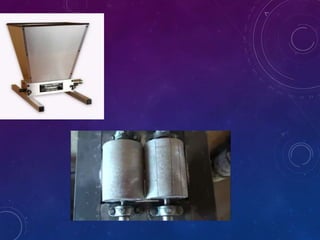
MIILING MACHINES
• Cylindrical mill stones. @450 rpm
• Abrasive disc with 6 -8 abrasives with carborendum or emery
rolls.
4.ASPIRATION
• Aspiration of the pearled grain to removes the abraded
portion and cutting of the blocked barley into grits.
• The blocked barley is first cut into grits and the grits are
graded by size and then rounded in pearling machines.
5.BLEACHING
• Removal of aleurone layer ,it gives bluish color.
• Bleached with moisture and Sulphur dioxide.
• Blocked barley is fed into a vertical earthenware
cylinder. Into which steam and Sulphur dioxide are
injected.
• The quantities used are 1-2%of moisture
and0.04% of Sulphur dioxide
• Solution of sulphurous acid ,sodium
disulphide
• Optimum time is 20-30min .
• Barley is binned for 12-24 hours for
effective bleaching .
• Excessive quantities of Sulphur residue in
the final product should be avoided.
6.POLISHING:
The pearl barley is polished on
machines similar to those used for pearling
but equipped with stones made of hard white
sandstone instead of emery composition. The
average yield of barley is 67% of the whole
barley.
Barley grits:
• Blocked barley cut into portions are called grits.
• They are rounded in pearling machines then polished.
Barley flour:
• Barley flour is milled from blocked and pearled barley.
• Machines same as that used for wheat mill.
BARLER TYPES
• PEARL BARLEY
• ORIGINAL WHOLE
GRAIN
• BLOCKED BARLEY
EXTRACTION
RATE
• 82%
• 55%
• 59%
USES OF BARLEY:
1.Lowering blood sugar, blood
pressure, and cholesterol.
2.Promoting weight loss.
3.Increasing strength and endurance.
THANK YOU
DONE BY:
EZHIL S
BTM18011

Barley processing

  • 1.
  • 2.
    INTRODUCTION  Barley isone of the world’s oldest domesticated crops .  BARLEY – HORDEUM VULGARE  It is the world ‘s FOURTH most important cereal after rice , wheat , and maize.  Barley is one excellent source of B – COMPELX VITAMINS and MINERALS.  It is nutritionally poor due to low content of essential amino acids like lysine and threonine
  • 3.
     Barley genotypeshave been classified as hull less and hulled ones.  hulled barley contains 3-7 percent beta glucans  hull less contains 16 percent beta glucans CLASSIFICATION o order – Poales o family -Poaceae o genus –Hordeum o species - vulgare
  • 4.
  • 5.
     In India, production is largely confined to utter pradesh,punjab ,and Haryana.  In Haryana , barley crops cover 58000 hectares of land area and total yield is 160,000 tones.
  • 6.
    Objectives of milling: 1.Absenceof sprouting. 2.Absence of discoloration due to weathering. 3.Freedom from fungal attack and insect infestation and damage. 4.Soundness of appearance. 5.Absence of undesirable aroma or flavor.
  • 7.
    • The hardertypes of barley is best for milling purpose because the hull and bran can easily be removed from endosperm by superficial abrasion • particle will retain the shape of the whole grain. • The softer grains are not better because they would tend and fragments, leading to a reduction in the yield of first quality products.
  • 8.
    1 •Preliminary cleaning 2 •Conditioning 3 •Blockingand pearling 4 •Aspiration 5 •Bleaching
  • 9.
    1.CLEANING • Machines similarto those used for wheat cleaning, • The process of cleaning barley depends on the load of foreign materials that it contains. • This operation aims to remove foreign materiel (sand, stones, metal, insects,.). • If the impurities are not eliminated, the quality of the product will be affected. It is to note that the metallic particles can damage machines. • magnetic device, separator classifier, destoner, indented separator, scourer with an aspiration channel, dust collectors as filters
  • 10.
    2.CONDITIONING: • Adjustment ofmoisture content to about 15%by drying or damping and resting for 24 hour.
  • 11.
    BLOCKING AND PEARLING The hull of the barley is strongly attached to the pericarp.  Both are abrasive process differing in the degree of removal of superficial layers.  Blocking: Removal of the weakest part of the husk from the grain.  Pearling: Removal of remaining of the husk and the separation of the endosperm.
  • 12.
    • The hulland aleurone layer of the barley is removed by rubbing with mill stone or emery. • Dehusked barley is pearled . • After third pearling bran is almost removed along with the aleurone layer. • This product is graded and sold as ‘pot barley’ or ‘blocked barley’ . • After 5-6 pearling the resulted pearl barley is small round and white . • Pearled barley is usually used in soup making.
  • 14.
    MIILING MACHINES • Cylindricalmill stones. @450 rpm • Abrasive disc with 6 -8 abrasives with carborendum or emery rolls.
  • 15.
    4.ASPIRATION • Aspiration ofthe pearled grain to removes the abraded portion and cutting of the blocked barley into grits. • The blocked barley is first cut into grits and the grits are graded by size and then rounded in pearling machines. 5.BLEACHING • Removal of aleurone layer ,it gives bluish color. • Bleached with moisture and Sulphur dioxide. • Blocked barley is fed into a vertical earthenware cylinder. Into which steam and Sulphur dioxide are injected.
  • 16.
    • The quantitiesused are 1-2%of moisture and0.04% of Sulphur dioxide • Solution of sulphurous acid ,sodium disulphide • Optimum time is 20-30min . • Barley is binned for 12-24 hours for effective bleaching . • Excessive quantities of Sulphur residue in the final product should be avoided.
  • 17.
    6.POLISHING: The pearl barleyis polished on machines similar to those used for pearling but equipped with stones made of hard white sandstone instead of emery composition. The average yield of barley is 67% of the whole barley.
  • 18.
    Barley grits: • Blockedbarley cut into portions are called grits. • They are rounded in pearling machines then polished. Barley flour: • Barley flour is milled from blocked and pearled barley. • Machines same as that used for wheat mill.
  • 20.
    BARLER TYPES • PEARLBARLEY • ORIGINAL WHOLE GRAIN • BLOCKED BARLEY EXTRACTION RATE • 82% • 55% • 59%
  • 21.
    USES OF BARLEY: 1.Loweringblood sugar, blood pressure, and cholesterol. 2.Promoting weight loss. 3.Increasing strength and endurance.
  • 22.