Divisional Structure
Divisional Structure 
Divisional structure is usually followed by big companies 
which manufacture more than one products or having 
operations in wide geographical area. 
The organization is classified into different autonomous 
units and Managers create a series of business units to 
produce a specific kind of product for a specific kind of 
customer
Types of Divisional Structures 
Product Divisionalisation 
Managers place each distinct product line or business in 
its own self-contained division 
 Divisional managers have the responsibility for devising 
an appropriate business-level strategy to allow the 
division to compete effectively in its industry 
Each division looks after production, sales, finance, 
Personnel of one product.
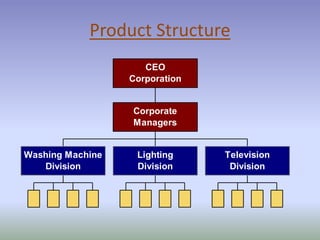
Product Structure 
Washing Machine 
Division 
CEO 
Corporation 
Lighting 
Division 
Television 
Division 
Corporate 
Managers
Territorial Divisionalisation 
This is a structure for huge companies functioning 
in different territories, such offices may have 
zonal offices and below them regional offices. this 
structure is followed by railways , Banks, 
Insurance companies , Transport companies etc.
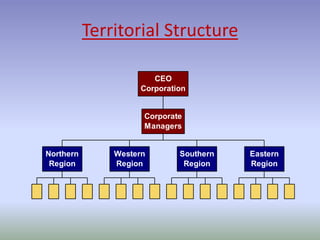
Territorial Structure 
Northern 
Region 
Corporation 
Western 
Region 
Southern 
Region 
Eastern 
Region 
CEO 
Corporate 
Managers
Advantages of Divisional Structure 
• Each division can work as an independent unit 
• Each division gets adequate freedom 
• Division managers become experts in their area 
• Removes need for direct supervision of division by 
corporate managers 
• Divisional management improves the use of 
resources 
• Timely and effective decisions can be taken
Disadvantages of Divisional structure 
• This structure is not suitable for small organization 
• Duplication of activities may happen in different 
divisions 
• When each division is engaged in independent 
service cost may increase 
• Head quarters find it difficult to control each division 
• When each Divisional manager safeguards his 
interest alone, he ignores the common goal of the 
organization
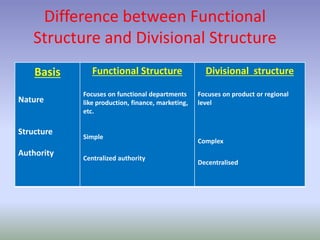
Difference between Functional 
Structure and Divisional Structure 
Basis 
Nature 
Structure 
Authority 
Functional Structure 
Focuses on functional departments 
like production, finance, marketing, 
etc. 
Simple 
Centralized authority 
Divisional structure 
Focuses on product or regional 
level 
Complex 
Decentralised
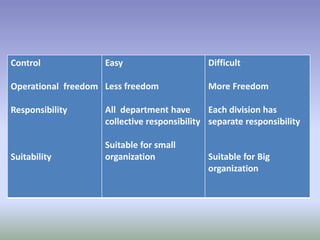
Control 
Operational freedom 
Responsibility 
Suitability 
Easy 
Less freedom 
All department have 
collective responsibility 
Suitable for small 
organization 
Difficult 
More Freedom 
Each division has 
separate responsibility 
Suitable for Big 
organization
THANK YOU

Divisional structures

  • 1.
  • 2.
    Divisional Structure Divisionalstructure is usually followed by big companies which manufacture more than one products or having operations in wide geographical area. The organization is classified into different autonomous units and Managers create a series of business units to produce a specific kind of product for a specific kind of customer
  • 4.
    Types of DivisionalStructures Product Divisionalisation Managers place each distinct product line or business in its own self-contained division  Divisional managers have the responsibility for devising an appropriate business-level strategy to allow the division to compete effectively in its industry Each division looks after production, sales, finance, Personnel of one product.
  • 5.
    Product Structure WashingMachine Division CEO Corporation Lighting Division Television Division Corporate Managers
  • 6.
    Territorial Divisionalisation Thisis a structure for huge companies functioning in different territories, such offices may have zonal offices and below them regional offices. this structure is followed by railways , Banks, Insurance companies , Transport companies etc.
  • 7.
    Territorial Structure Northern Region Corporation Western Region Southern Region Eastern Region CEO Corporate Managers
  • 8.
    Advantages of DivisionalStructure • Each division can work as an independent unit • Each division gets adequate freedom • Division managers become experts in their area • Removes need for direct supervision of division by corporate managers • Divisional management improves the use of resources • Timely and effective decisions can be taken
  • 9.
    Disadvantages of Divisionalstructure • This structure is not suitable for small organization • Duplication of activities may happen in different divisions • When each division is engaged in independent service cost may increase • Head quarters find it difficult to control each division • When each Divisional manager safeguards his interest alone, he ignores the common goal of the organization
  • 10.
    Difference between Functional Structure and Divisional Structure Basis Nature Structure Authority Functional Structure Focuses on functional departments like production, finance, marketing, etc. Simple Centralized authority Divisional structure Focuses on product or regional level Complex Decentralised
  • 11.
    Control Operational freedom Responsibility Suitability Easy Less freedom All department have collective responsibility Suitable for small organization Difficult More Freedom Each division has separate responsibility Suitable for Big organization
  • 12.