

DIURETICS
Basics of diuretic
 Diuretics can act only when they are secreted in to lumen by tubular
secretion
 Except aldosterone which is lipophilic
Basics of diuretics
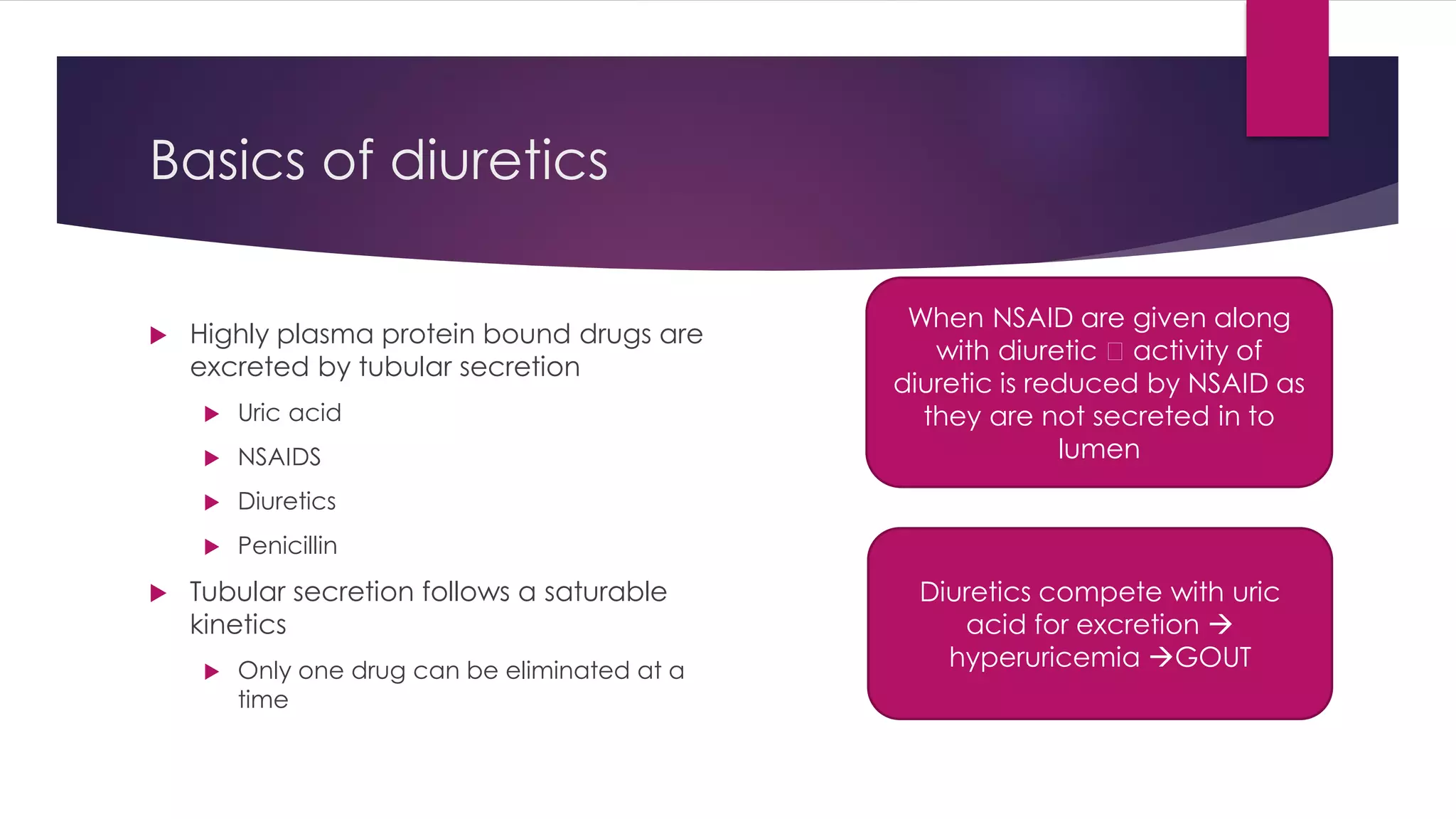
 Highly plasma protein bound drugs are
excreted by tubular secretion
 Uric acid
 NSAIDS
 Diuretics
 Penicillin
 Tubular secretion follows a saturable
kinetics
 Only one drug can be eliminated at a
time
When NSAID are given along
with diuretic activity of
diuretic is reduced by NSAID as
they are not secreted in to
lumen
Diuretics compete with uric
acid for excretion 
hyperuricemia GOUT
Drugs acting on PCT
65 -70 % SODIUM ABSORPTION IN PCT
Carbonic anhydrase
inhibitors
CARBONIC ANHYDRASE PRESENT IN
 GASTRIC MUCOSA
 RBC
 PCT
 EYE CILIARY BODY (CARBONIC ANHYDRASE TYPE II)
 BRAIN
 EXOCRINE PANCREAS
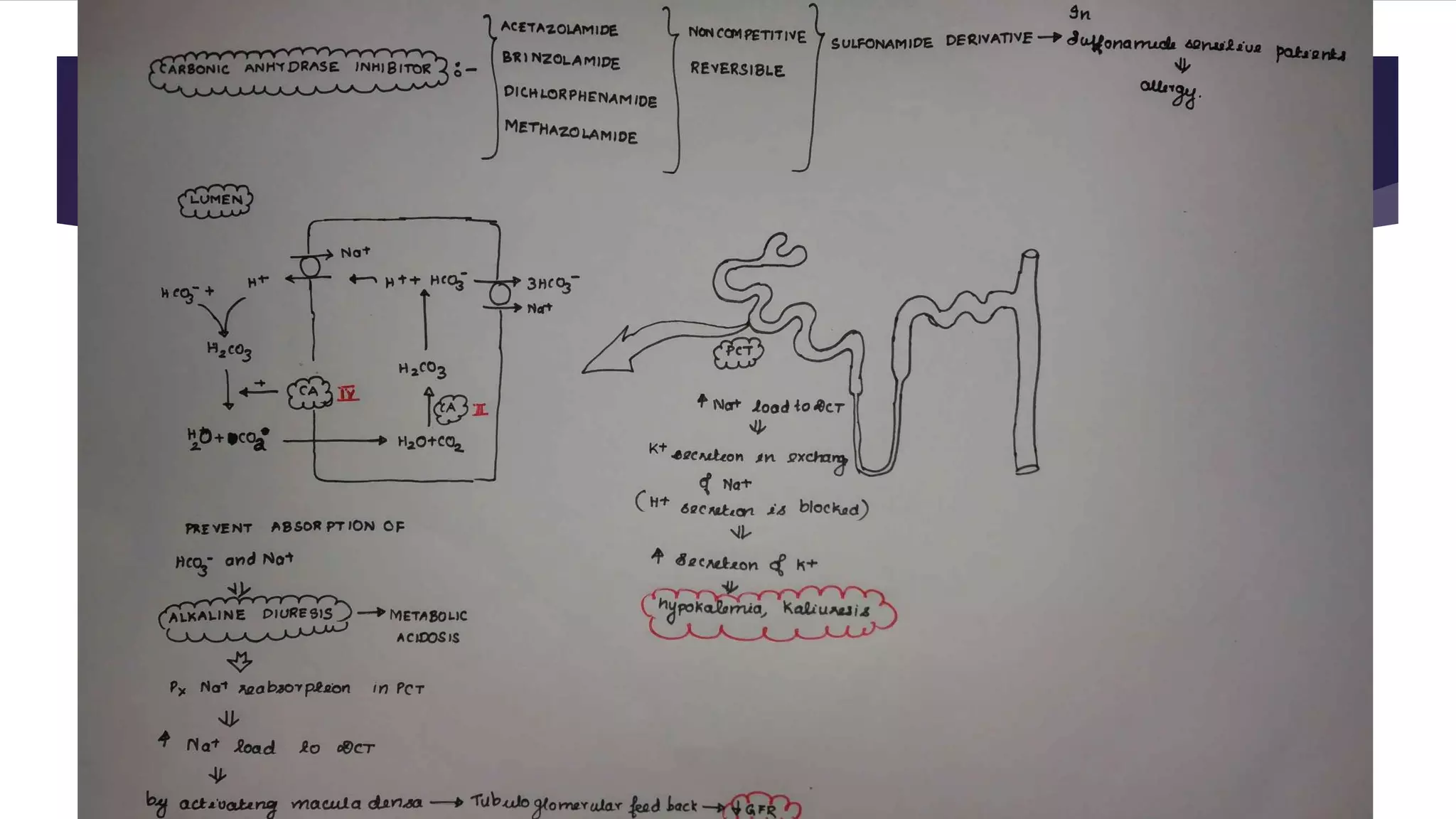
CARBONIC ANHYDRASE INHIBITORS
 NON COMPETITIVE
 REVERSIBLE
CARBONIC ANHYDRASE INHIBITORS
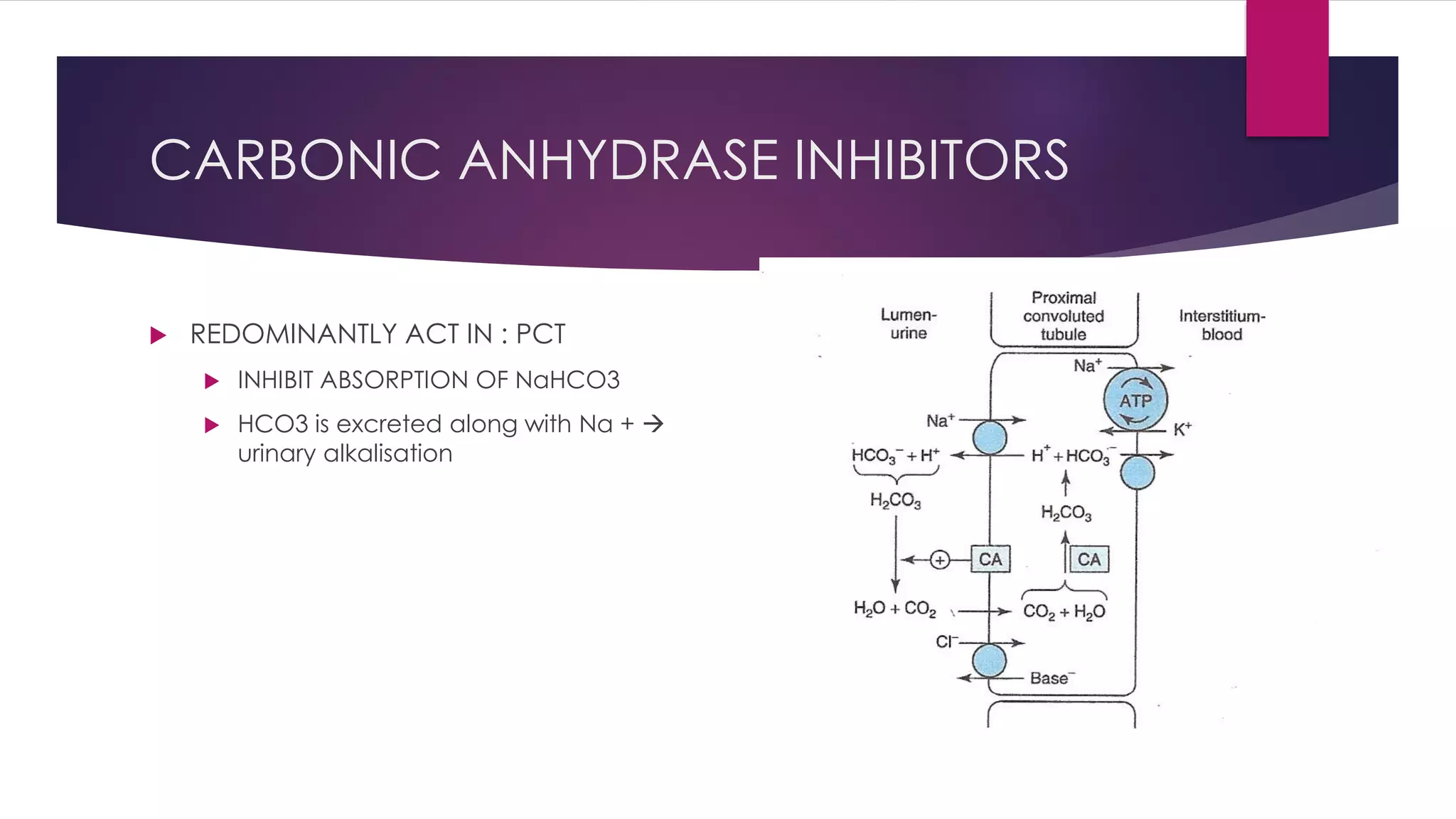
 REDOMINANTLY ACT IN : PCT
 INHIBIT ABSORPTION OF NaHCO3
 HCO3 is excreted along with Na + 
urinary alkalisation
 Inhibitors of this enzyme (acetazolamide, dichlorphenamide and
methazolamide) result in the excretion of sodium and bicarbonate in the
urine.
 Due to urinary excretion of bicarbonate, metabolic acidosis (and urinary
alkalosis) ensues that result in reduced fIltration of HCO3 – at the
glomerulus. Therefore, action of these diuretics is self limiting
Metabolic acidosisUrinary alkalinisation
• Renal calculi formation
• Aggravate hepatic
encephalopathy
• Alkaline urine increase
reabsorption of NH3
KALIURESIS (EXCRETION OF K+)
 At equally natriuretic doses, K+ excretion is maximum with CA inhibitors
because Na+ delivered to the distal tubules is exchanged only with K+
(excretion of H+ is inhibited by these drugs)
 HYPOKALEMIA
OTHER USES
 CA inhibitors also decrease aqueous humor formation (therefore used in
glaucoma)
 Dorzolamide and brinzolamide are topically acting CA inhibitors for use in glaucoma
as eye drops
 BRINZOLZMIDE IS SPECIFIC FOR CARBONIC ANAHYDRASE TYPE II OF EYE
 DECREASES CSF pH
 Raise seizure threshold (basis of their use in absence seizures).
 acute mountain sickness
 alkalinize urine (for excretion of acidic drugs).
 Prevents formation of cysteine stones
 But causes formation of ca2+ stones
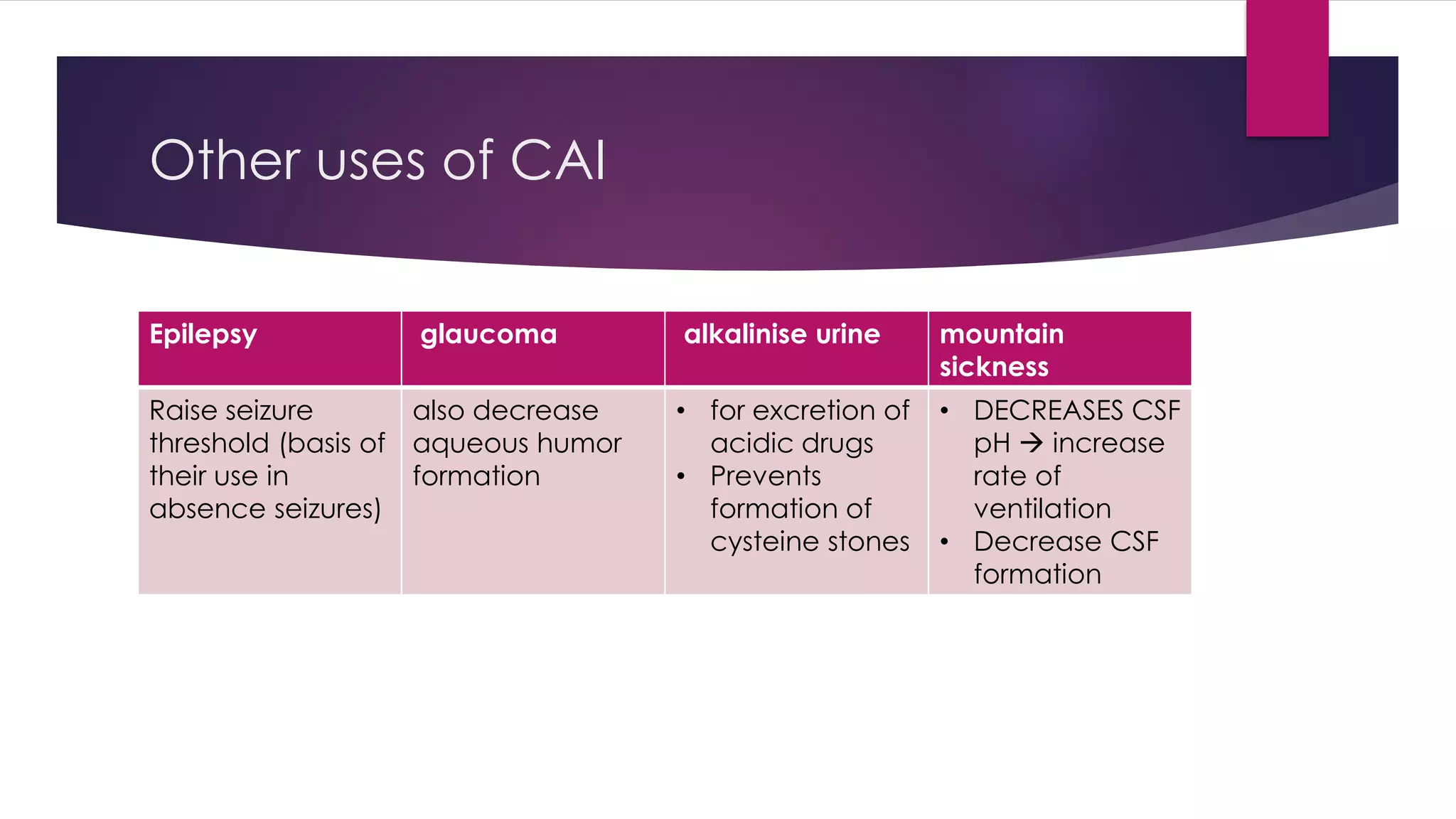
Other uses of CAI
Epilepsy glaucoma alkalinise urine mountain
sickness
Raise seizure
threshold (basis of
their use in
absence seizures)
also decrease
aqueous humor
formation
• for excretion of
acidic drugs
• Prevents
formation of
cysteine stones
• DECREASES CSF
pH  increase
rate of
ventilation
• Decrease CSF
formation
A/E
 HYPOKALEMIA
 METABOLIC ACIDOSIS
 HYPERSENSITIVITY IN PATIENTS WITH ALLERGY TO SULFA DRUGS
 Aplastic anemia
 Increase hair growth
 RENAL STONES
 IN ALKALINE URINE CA2+ SALTS ARE INSOLUBLE  CA2+ STONE FORMATION
C/I
 HEPATIC CIRRHOSIS
 PRECIPITATE HEPATIC COMA BY INTERFERING WITH ELIMINATION OF NH3
 COPD
 ALTERATION OF CO2 TRANSPORT IN LUNGS & TISSUES
 Metabolic acidosis
Loop diuretic
Loop diuretic
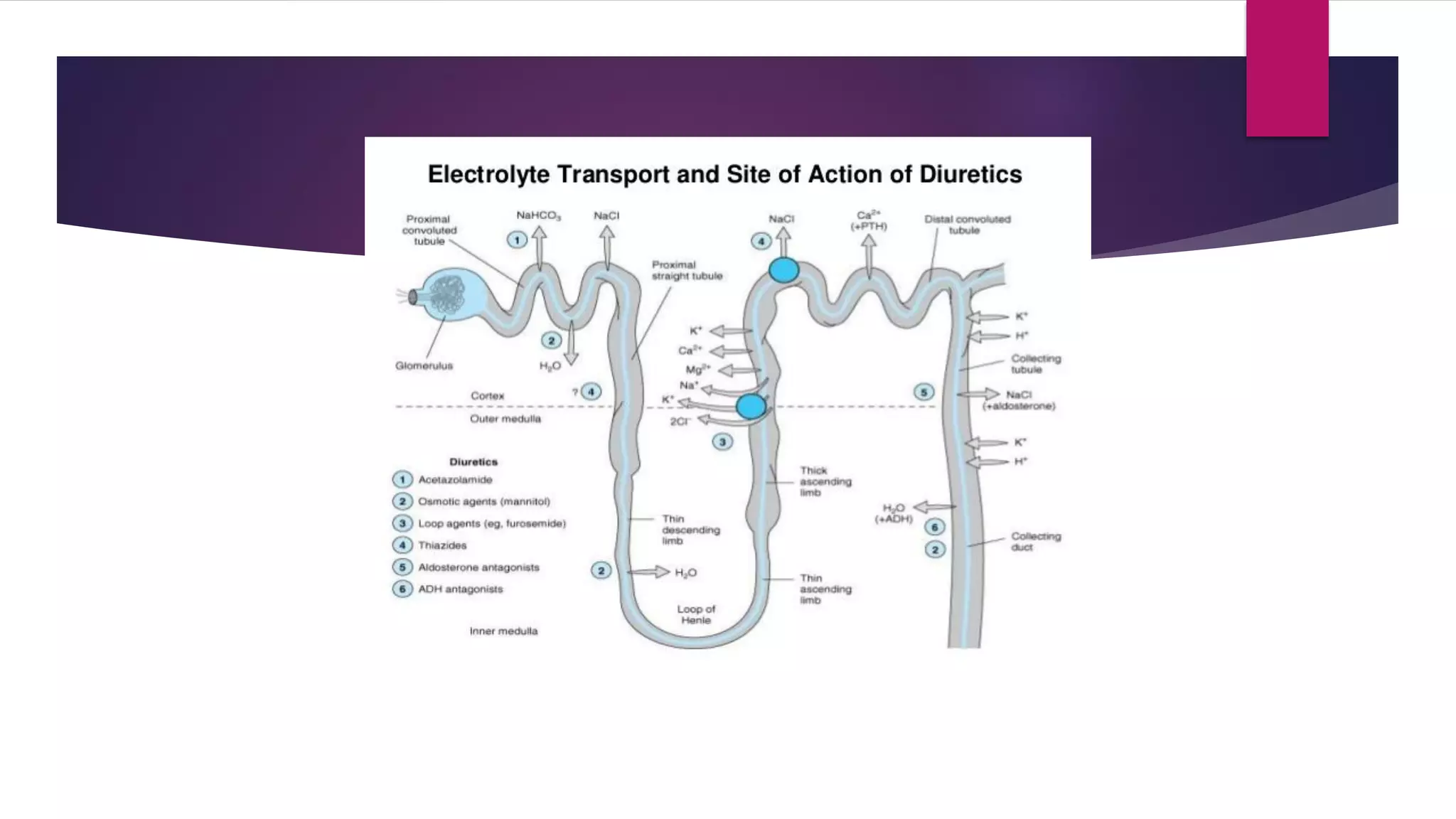
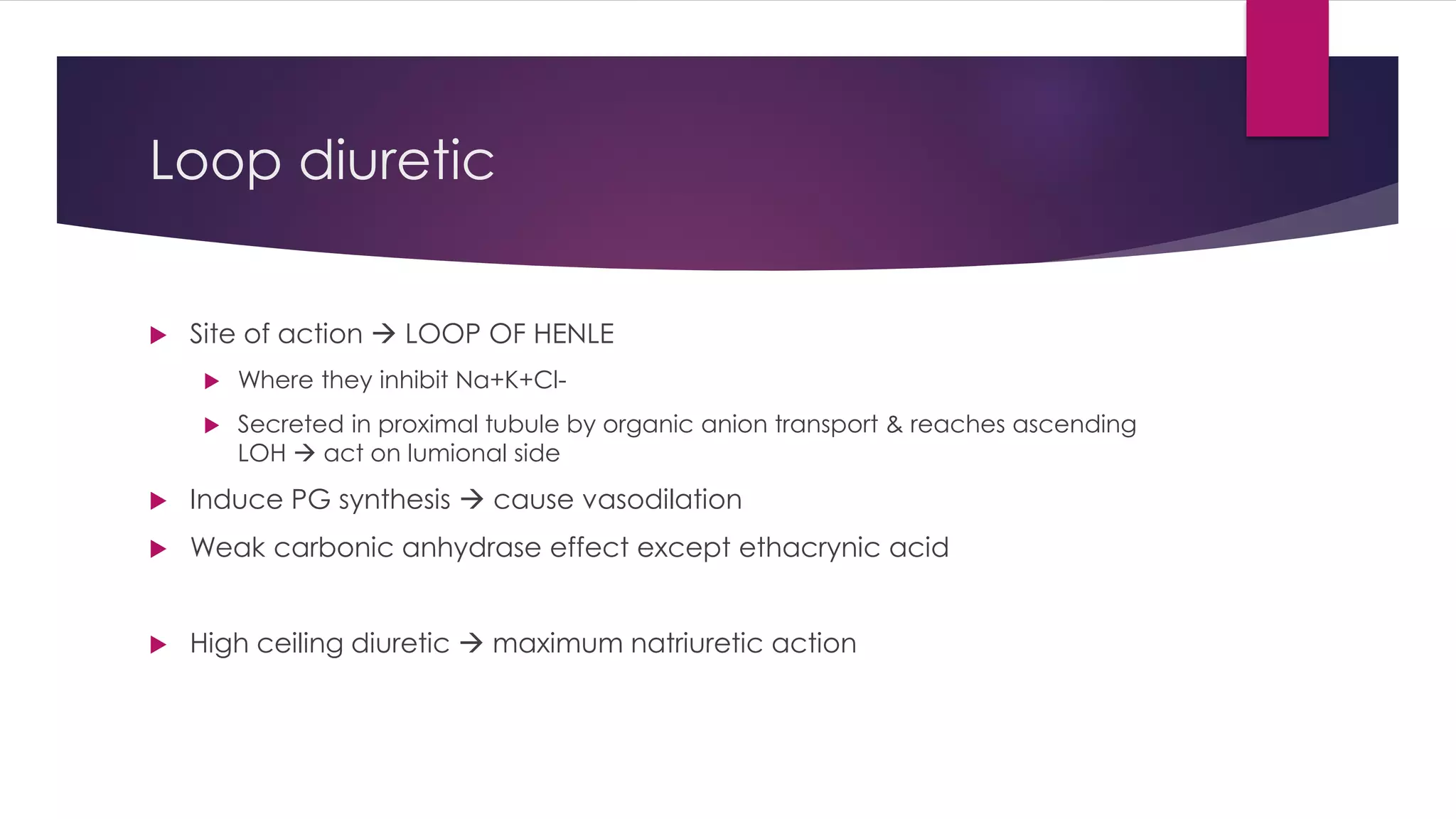
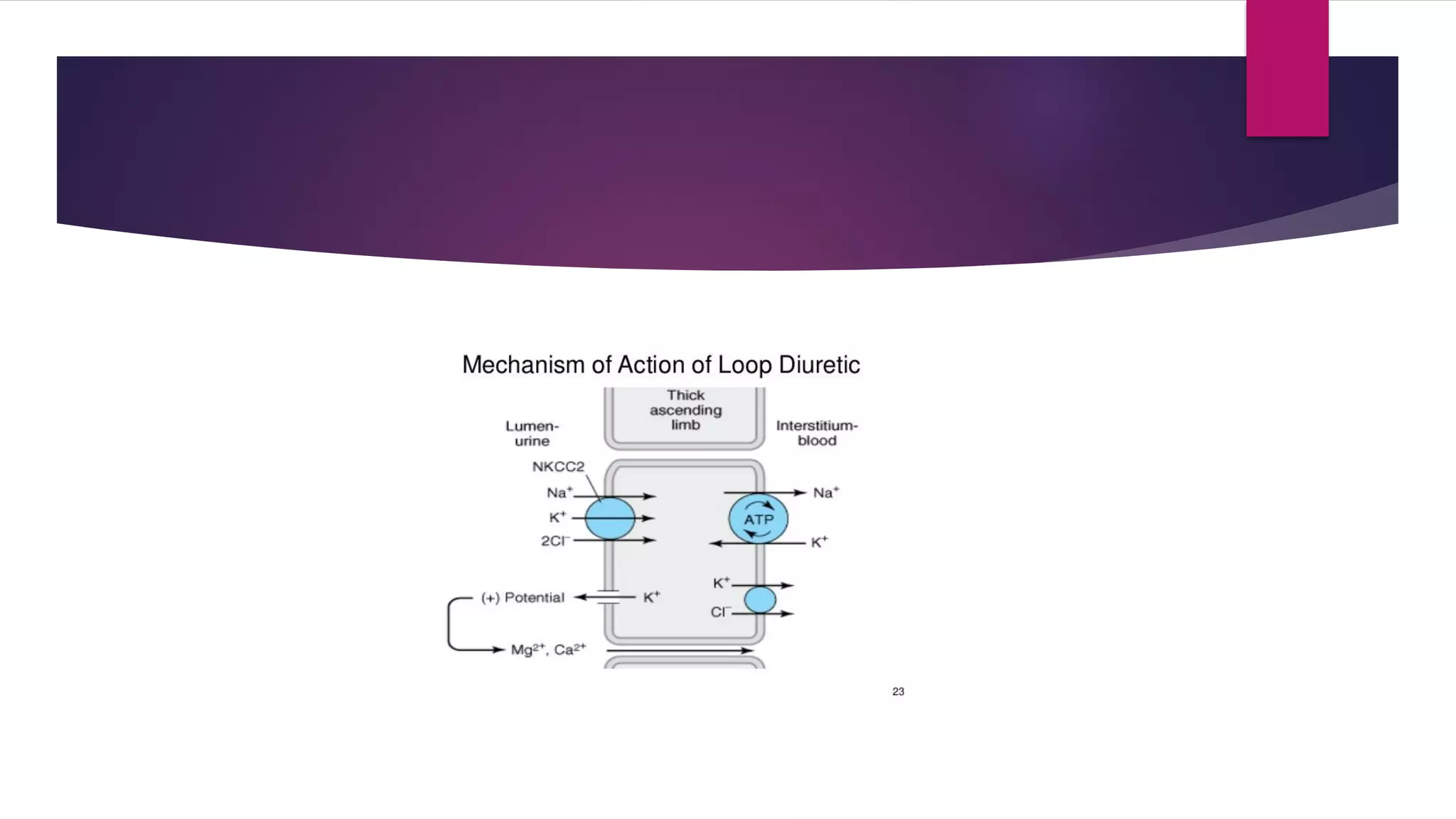
 Site of action  LOOP OF HENLE
 Where they inhibit Na+K+Cl-
 Secreted in proximal tubule by organic anion transport & reaches ascending
LOH  act on lumional side
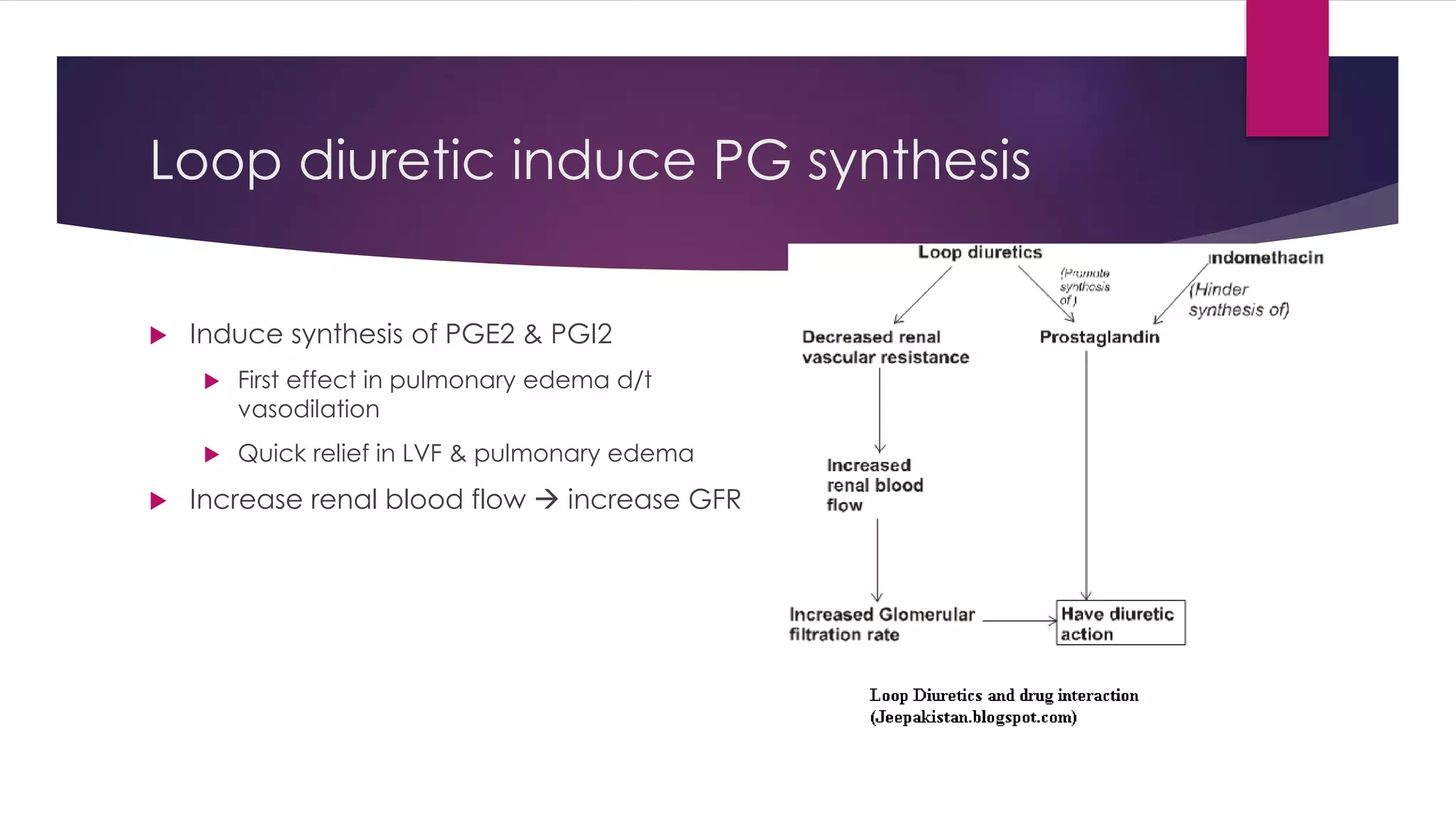
 Induce PG synthesis  cause vasodilation
 Weak carbonic anhydrase effect except ethacrynic acid
 High ceiling diuretic  maximum natriuretic action
• Hypomagnesemia
• Hypocalcemia
 Bumetanide is most potent
Loop diuretic induce PG synthesis
 Induce synthesis of PGE2 & PGI2
 First effect in pulmonary edema d/t
vasodilation
 Quick relief in LVF & pulmonary edema
 Increase renal blood flow  increase GFR
Loop diuretic
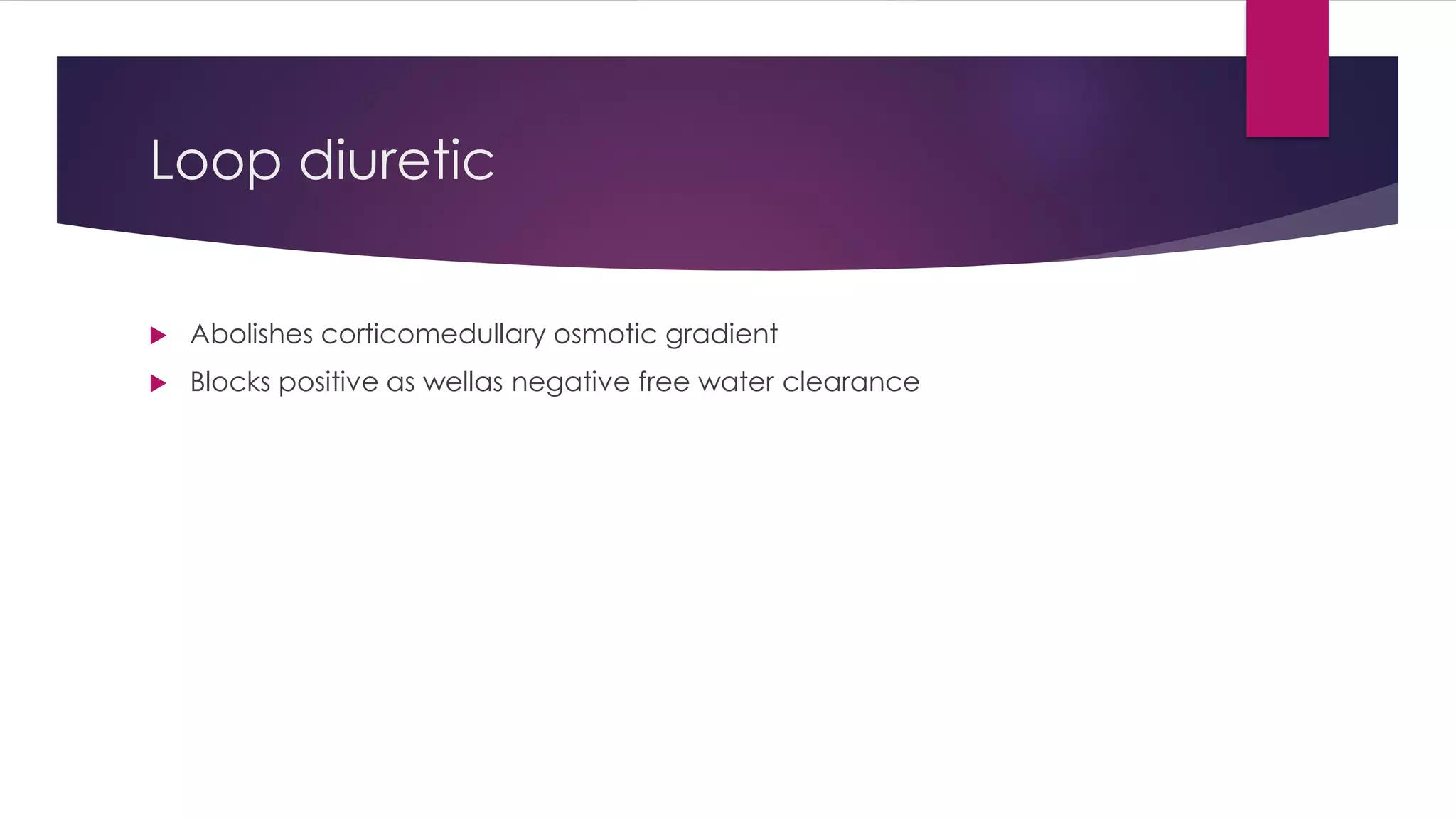
 Abolishes corticomedullary osmotic gradient
 Blocks positive as wellas negative free water clearance
Uses
 Pulmonary edema
 Cerebral edema
 Along with blood transfusion n
 Hypercalcemia
 Renal calcium stone
S/E
 Hypokalemia  most common
 Hyperureicemia 
 Hypocalcemia
 Metabolic alkalosis
 Hearing loss  ototoxicity maximum with ethacrynic acid
 Hyperglycemia
 Hypomagnsemia  increased excretion of Mg2+
THIAZIDES
Thiazide diuretics
Thiazide
 Chlorthiazide
 Hydrochlorthiazide
 Benzthiazide
 Hydroflumethiazide
Thiazide like diuretic
 Indapamide
 Metolazone
 Chlorthalidone
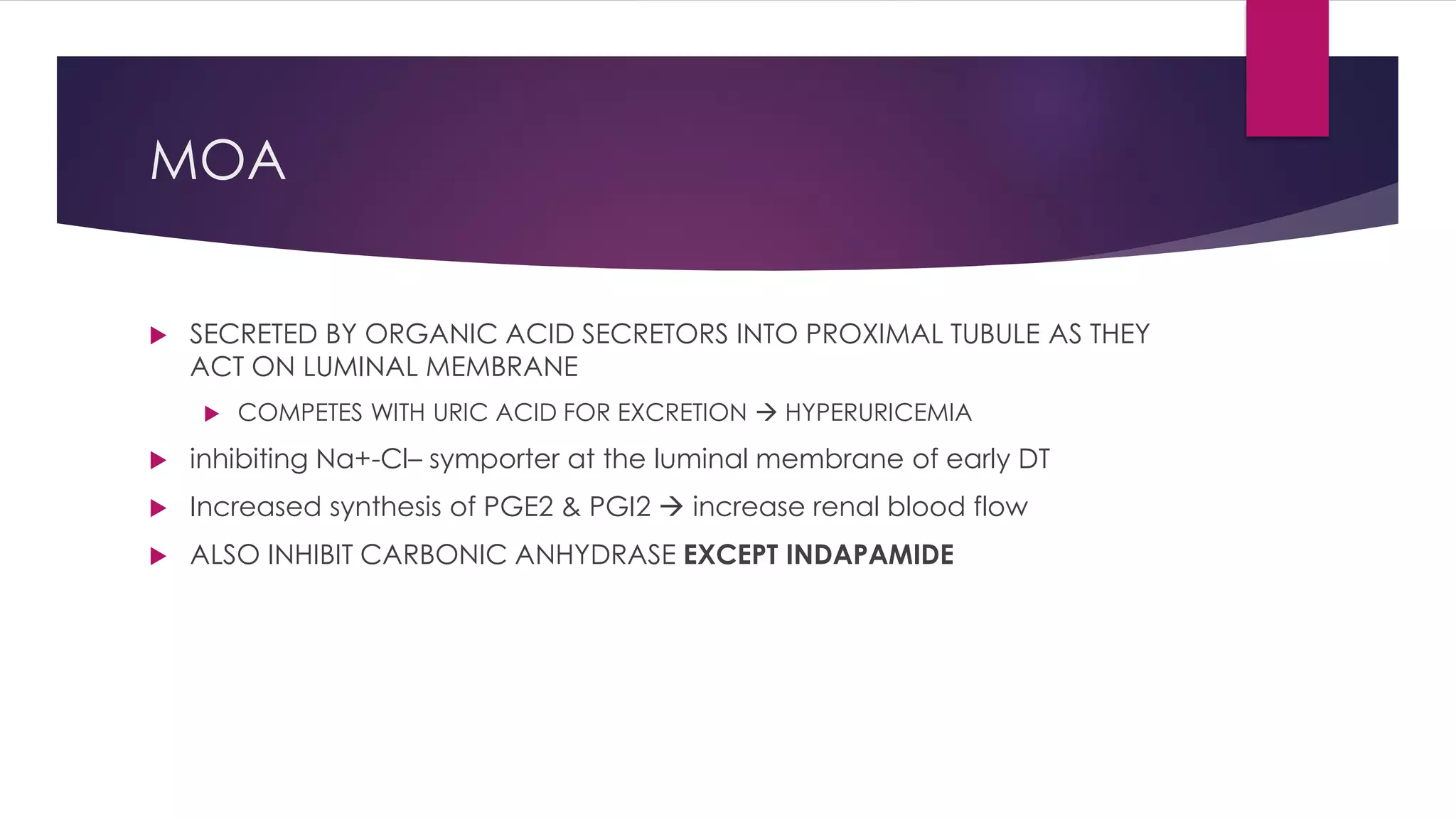
MOA
 SECRETED BY ORGANIC ACID SECRETORS INTO PROXIMAL TUBULE AS THEY
ACT ON LUMINAL MEMBRANE
 COMPETES WITH URIC ACID FOR EXCRETION  HYPERURICEMIA
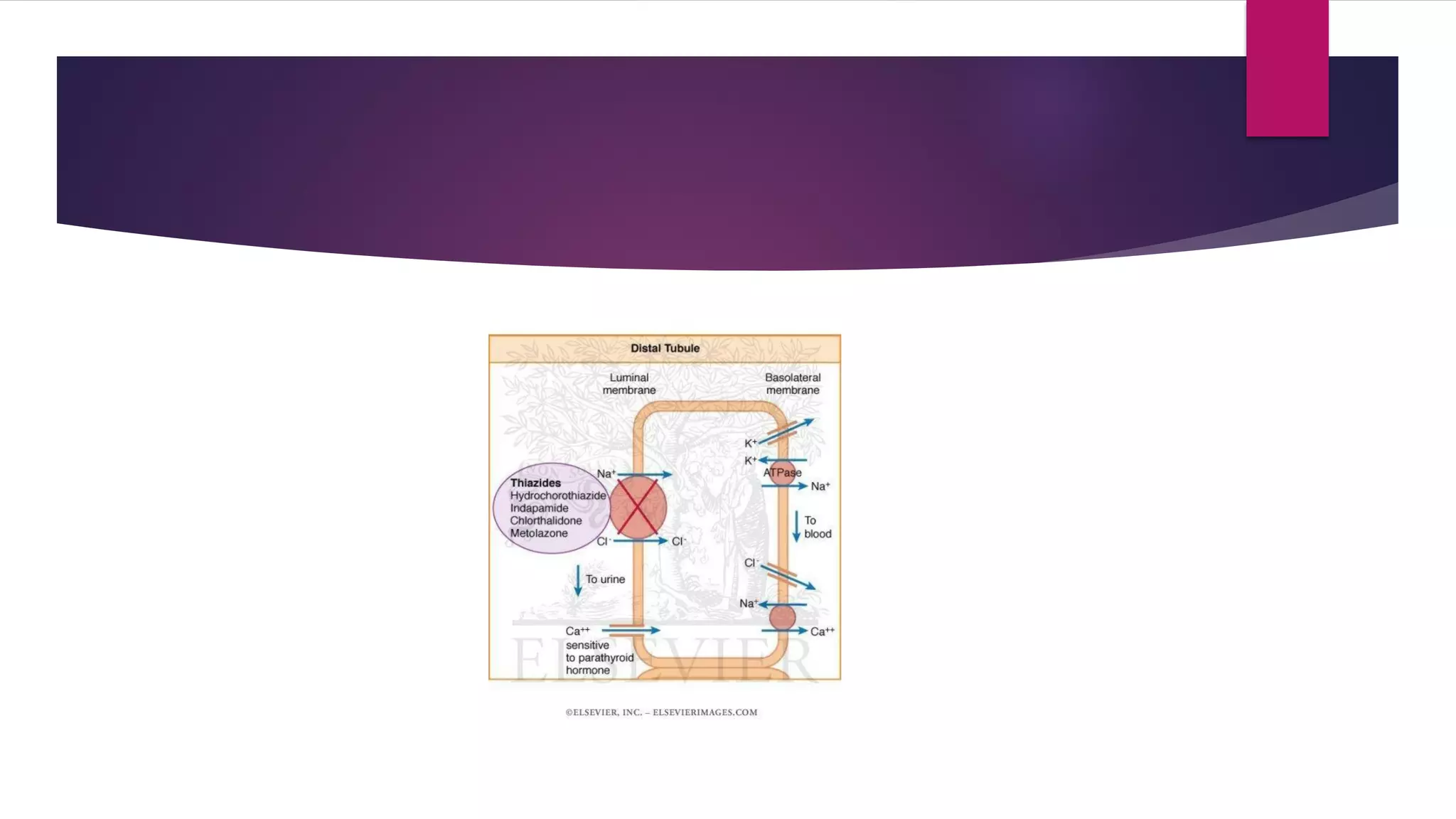
 inhibiting Na+-Cl– symporter at the luminal membrane of early DT
 Increased synthesis of PGE2 & PGI2  increase renal blood flow
 ALSO INHIBIT CARBONIC ANHYDRASE EXCEPT INDAPAMIDE
 Because the site of action of the thiazide derivatives is on the luminal
membrane, these drugs must be excreted into the tubular lumen to be
effective. Therefore, with decreased renal function, thiazide diuretics lose
efficacy except metolazone
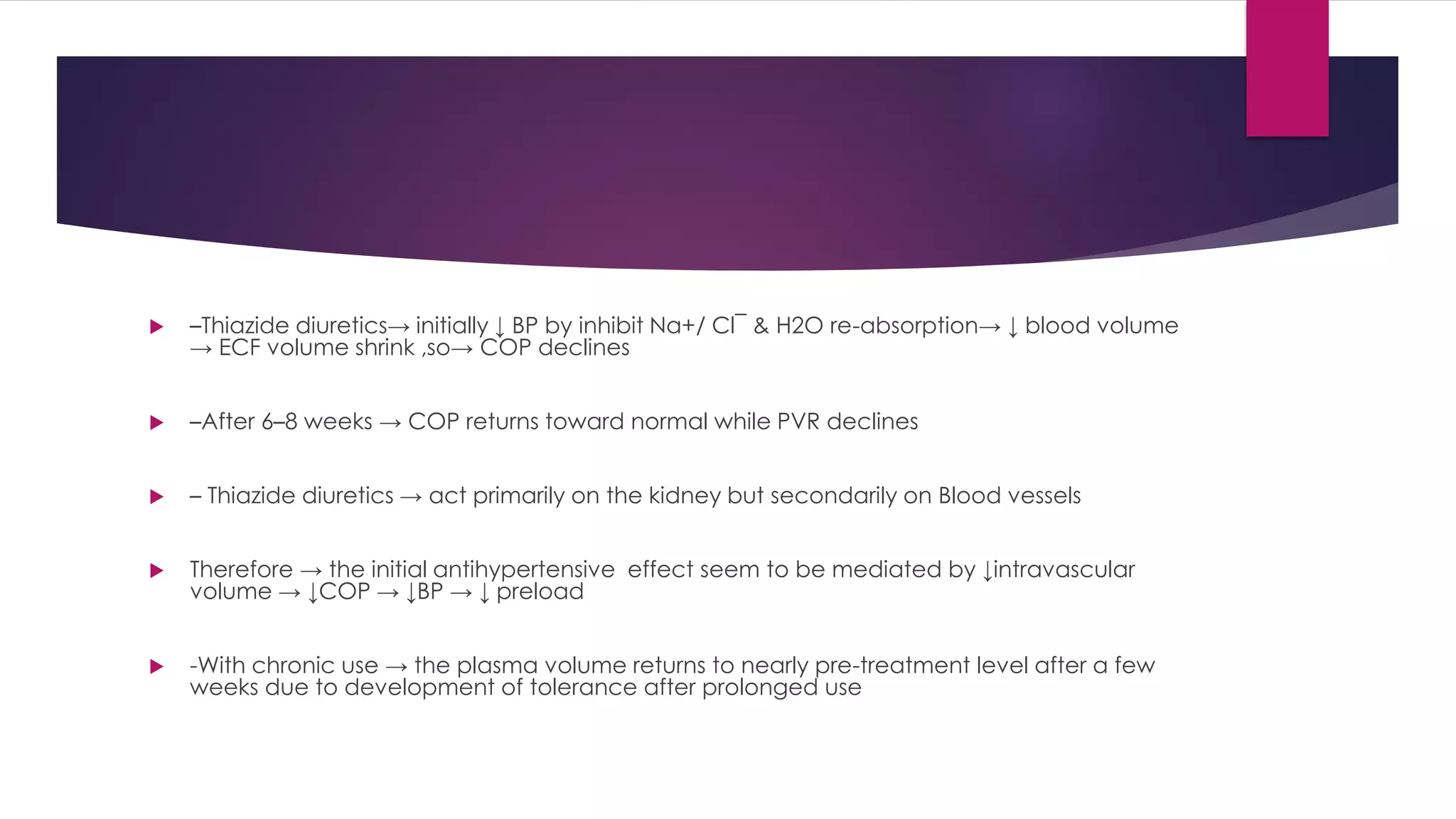
 –Thiazide diuretics→ initially ↓ BP by inhibit Na+/ Cl¯ & H2O re-absorption→ ↓ blood volume
→ ECF volume shrink ,so→ COP declines
 –After 6–8 weeks → COP returns toward normal while PVR declines
 – Thiazide diuretics → act primarily on the kidney but secondarily on Blood vessels
 Therefore → the initial antihypertensive effect seem to be mediated by ↓intravascular
volume → ↓COP → ↓BP → ↓ preload
 -With chronic use → the plasma volume returns to nearly pre-treatment level after a few
weeks due to development of tolerance after prolonged use
 Thiazides cause mild hypomagnesemia
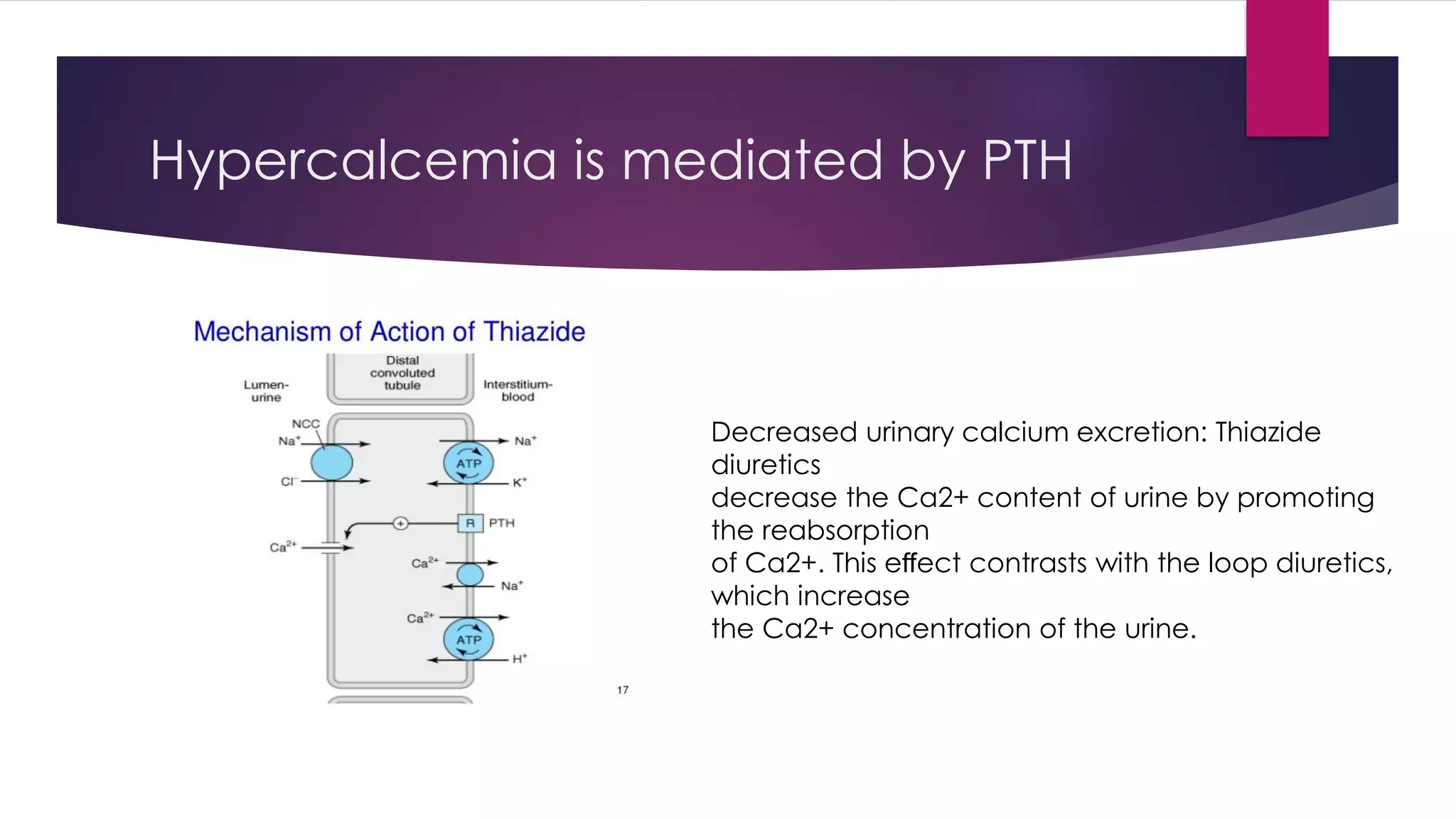
Hypercalcemia is mediated by PTH
Decreased urinary calcium excretion: Thiazide
diuretics
decrease the Ca2+ content of urine by promoting
the reabsorption
of Ca2+. This effect contrasts with the loop diuretics,
which increase
the Ca2+ concentration of the urine.
 Decreased absorption of Na+ results in its greater delivery to late DT and
CD that is responsible for hypokalemia (more than loop diuretics).
 Chlorthiazide has minimum potency and efficacy whereas other drugs
differ only in potency (effcacy is similar).
 Thiazides are moderate efficacy diuretics with low ceiling effect (flat DRC,
natriuretic effect does not increase appreciably with increase in dose).
These drugs tend to reduce GFR, therefore are not indicated in renal
failure patients.
 Decrease insulin release hyperglycemia
S/E of thiazide diuretics
 Hyperglycemia
 Sulfonamide  allergy
 Hyperlipidemia
 Thiazides causes impotence
 Greater incidence than other antihypertensives
 Indapamide
 Metolazone
• Excreted by bile (other
thiazides by tubular
secretion)
• Donot have carbonic
anhydrase inhibitory
activity
• Peripheral vasodilator
action
• Both are effective when
GFR <30 (but other
thiazides are ineffective
 • Polythiazide and trichloromethiazide are most potent thiazides.
 100 % bioavailability  polythiazide & bendrofluromethiazide
 • Chlorthalidone is the longest acting thiazide.
 Chlorothiazide is shortest acting
 • Metolazone is useful even in severe renal failure.
 • Indapamide has no CA inhibitory action. It has vasodilatory property
because of which, its antihypertensive effect precedes the natriuretic
effect.
Uses
 Essential hypertension
 Heart failure
 Nephrolithiasis
 Nephrogenic diabetes insipidus d/t Li
A/E
 Erectile dysfunction
 Hypercalcemia
 Hyperuricemia
 Hyperglycemia
 Hypokalemia metabolic alkalosis s
 Hypokalemia  increased risk of torsades pointes
osmotic Diuretics
Osmotic diuretic
 • It should exert osmotic effect.
 • It should be pharmacologically inert.
 • It should be freely fltered at the glomerulus.
 • It should not be reabsorbed.
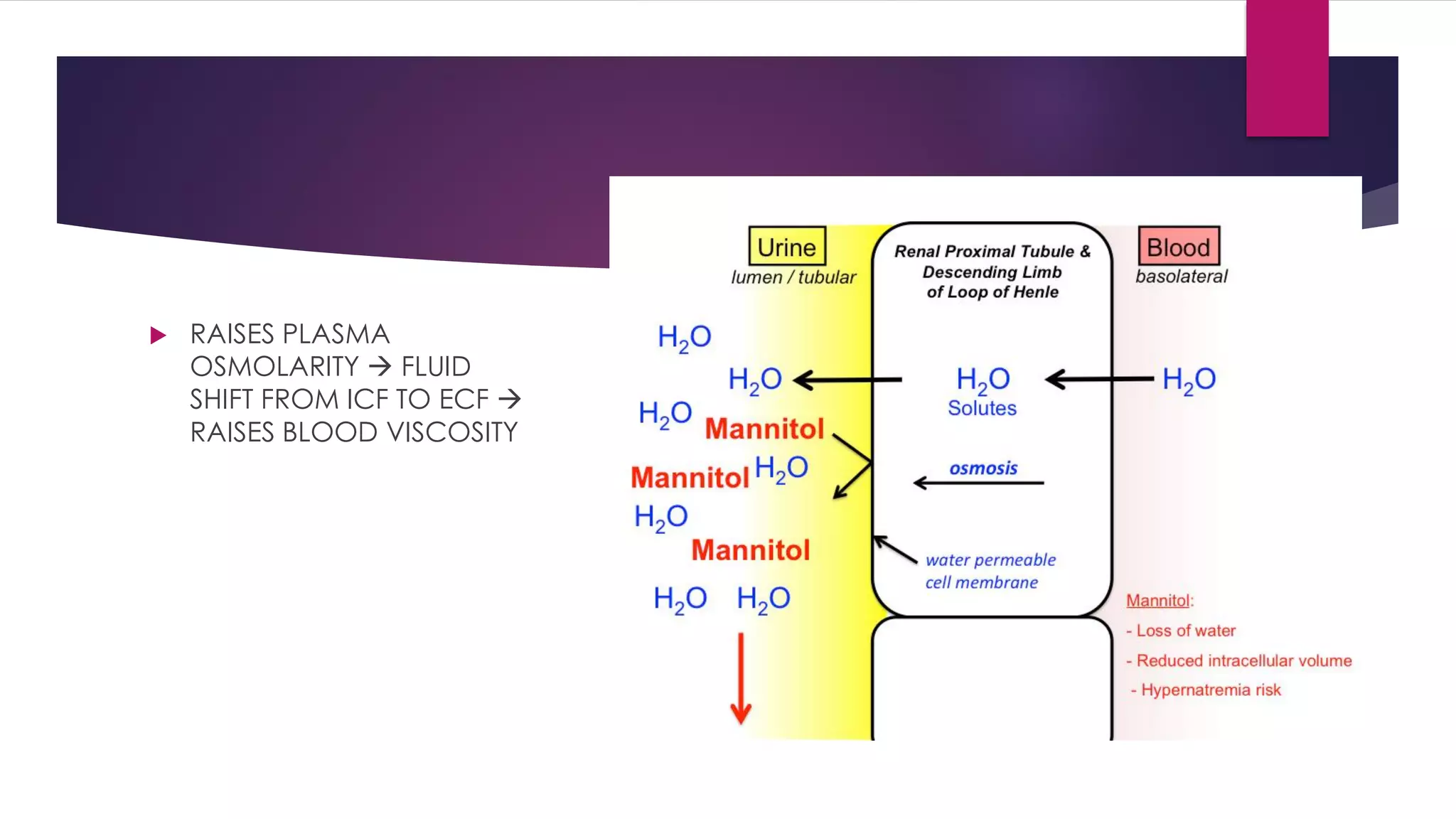
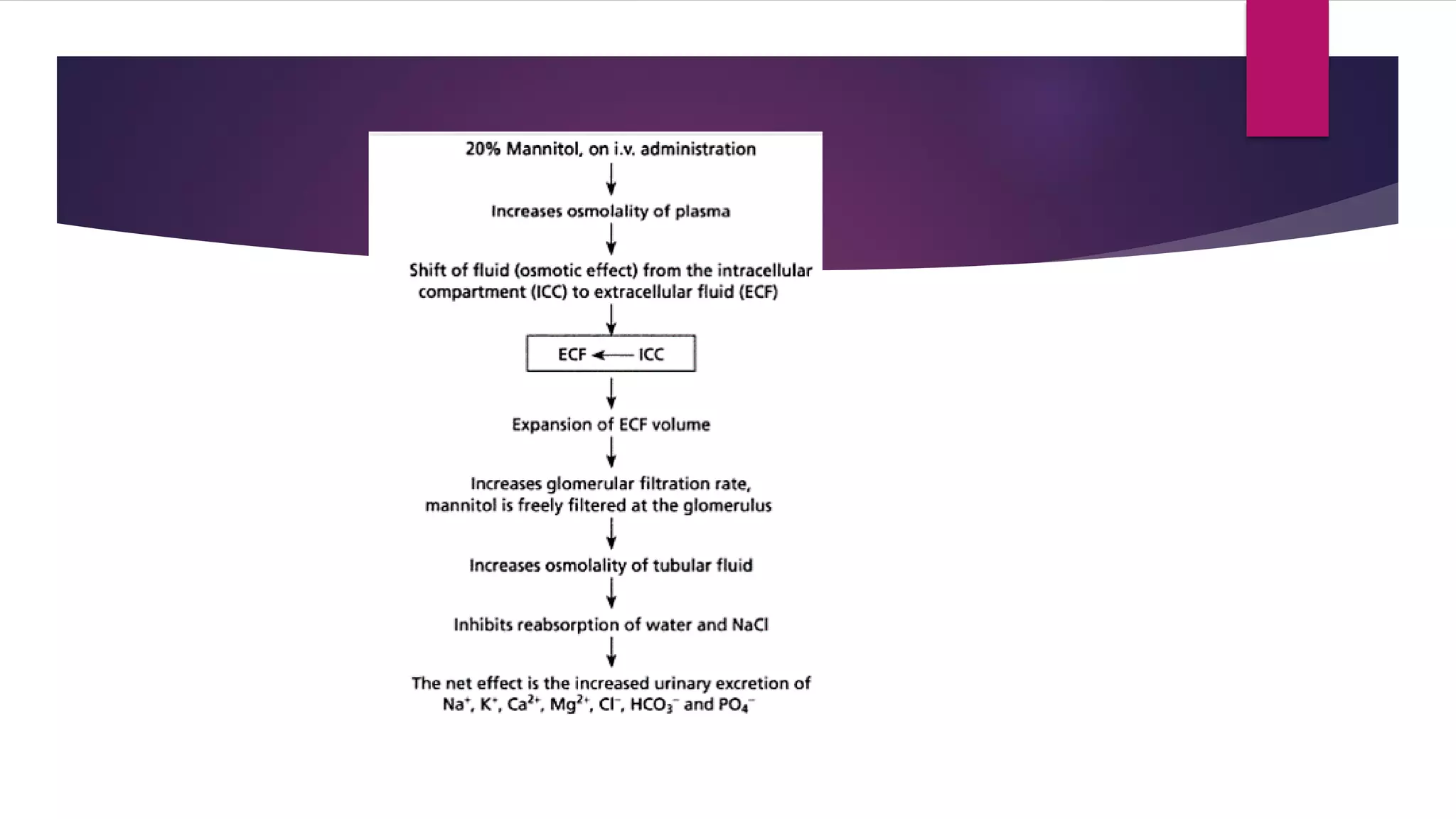
 RAISES PLASMA
OSMOLARITY  FLUID
SHIFT FROM ICF TO ECF 
RAISES BLOOD VISCOSITY
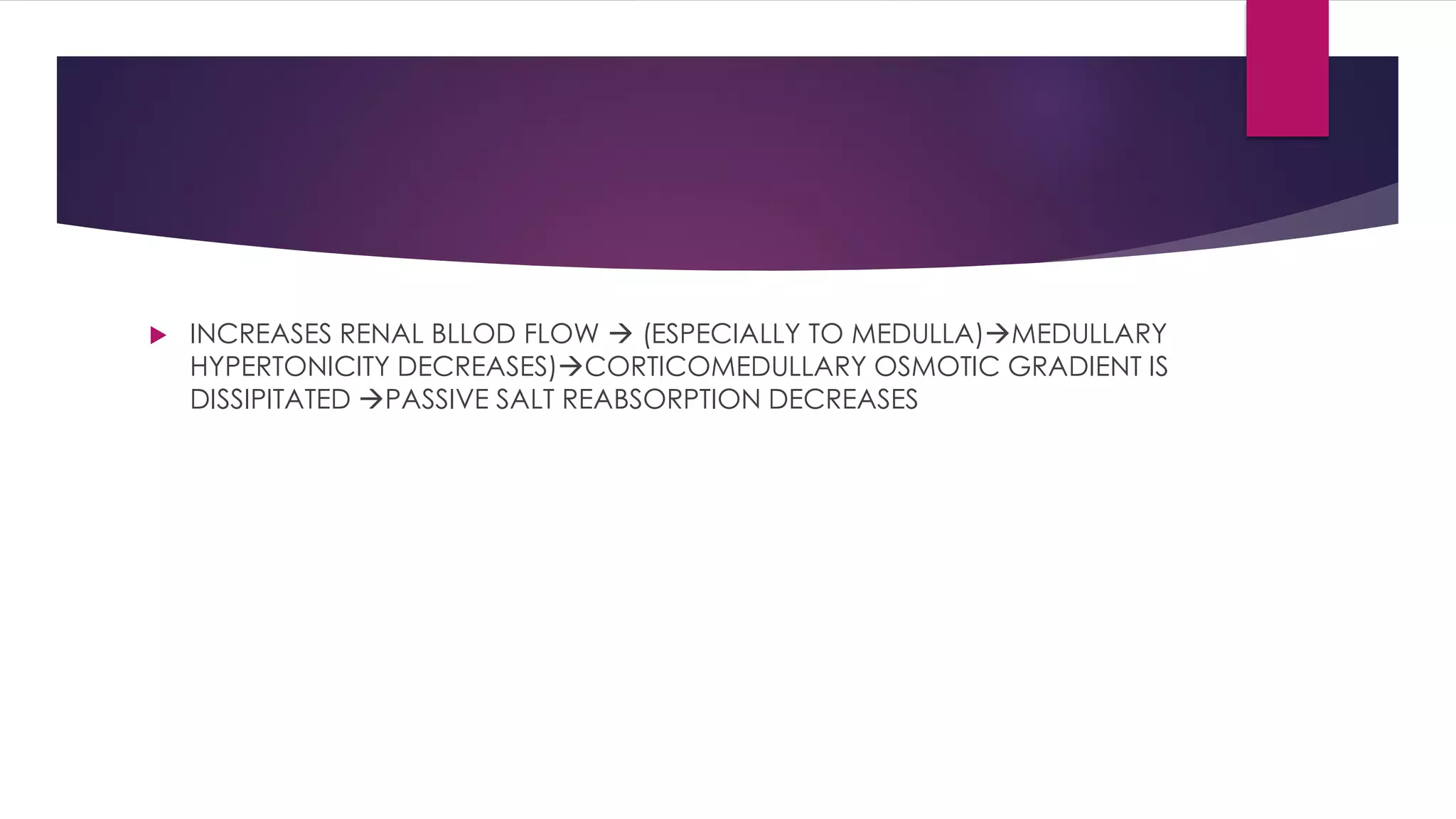
 INCREASES RENAL BLLOD FLOW  (ESPECIALLY TO MEDULLA)MEDULLARY
HYPERTONICITY DECREASES)CORTICOMEDULLARY OSMOTIC GRADIENT IS
DISSIPITATED PASSIVE SALT REABSORPTION DECREASES
 Mannitol, glycerol, urea and isosorbide are inert drugs that can cause
osmotic diuresis
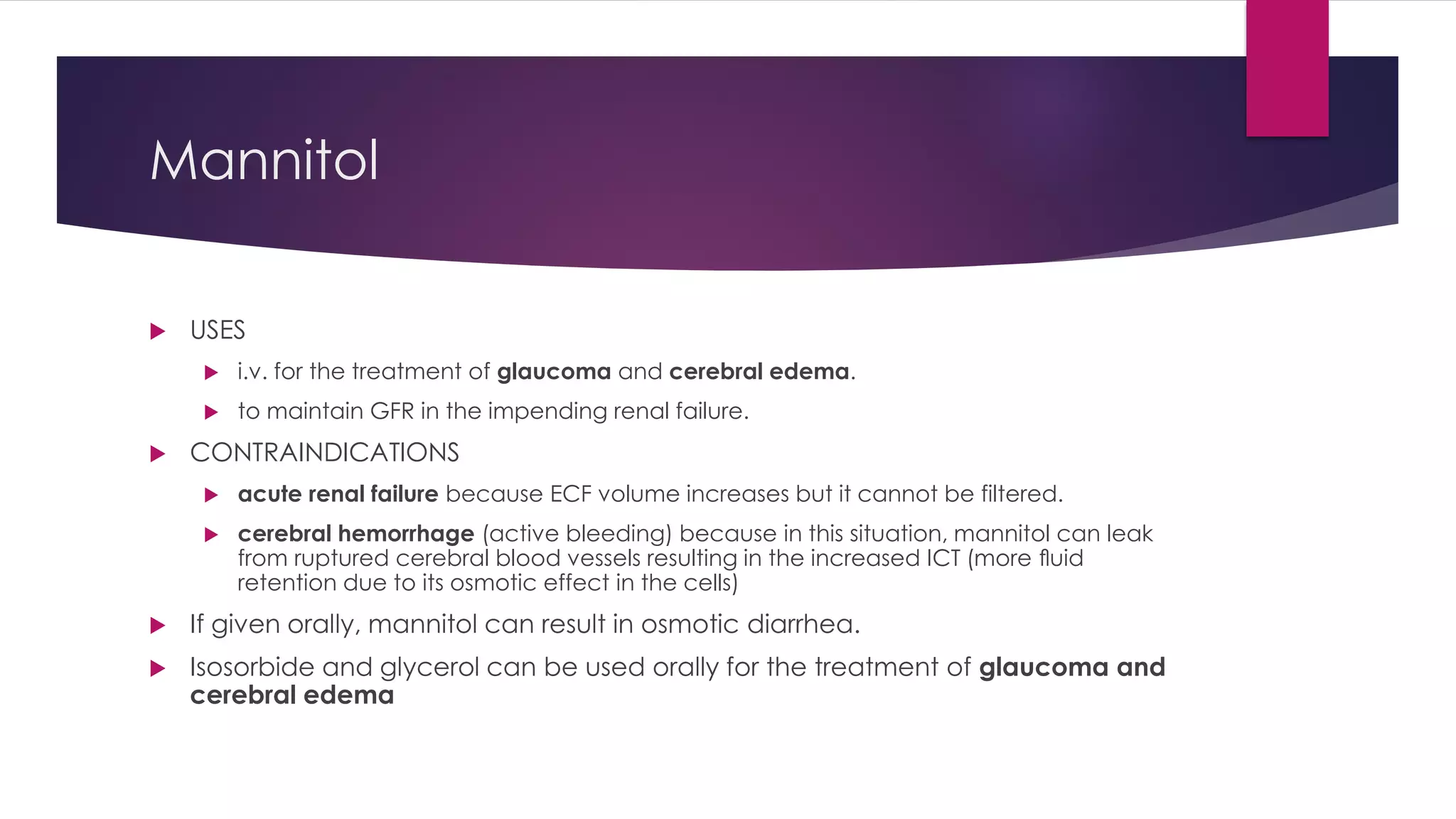
Mannitol
 USES
 i.v. for the treatment of glaucoma and cerebral edema.
 to maintain GFR in the impending renal failure.
 CONTRAINDICATIONS
 acute renal failure because ECF volume increases but it cannot be filtered.
 cerebral hemorrhage (active bleeding) because in this situation, mannitol can leak
from ruptured cerebral blood vessels resulting in the increased ICT (more fluid
retention due to its osmotic effect in the cells)
 If given orally, mannitol can result in osmotic diarrhea.
 Isosorbide and glycerol can be used orally for the treatment of glaucoma and
cerebral edema
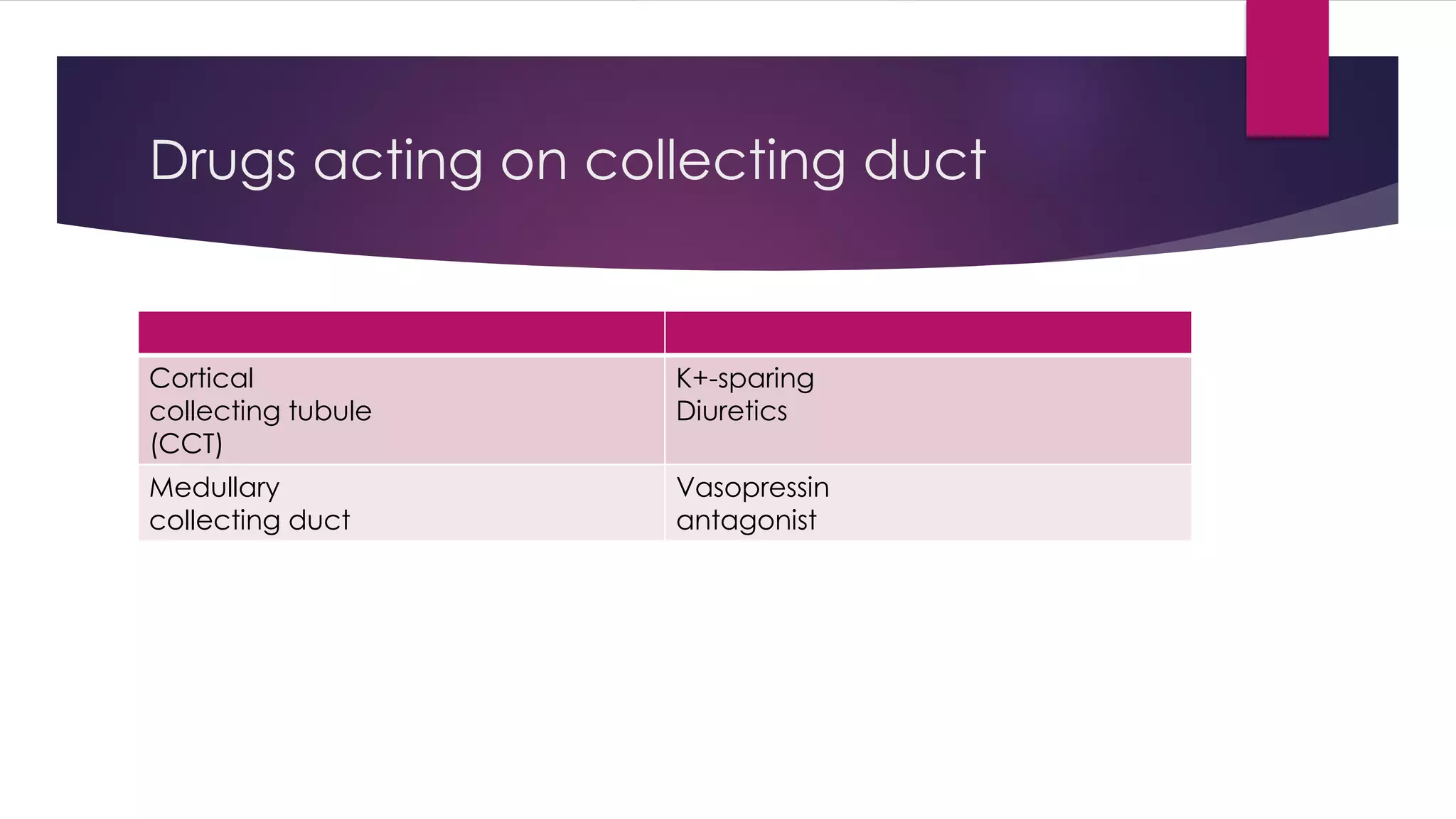
Drugs acting on
collecting duct
Drugs acting on collecting duct
Cortical
collecting tubule
(CCT)
K+-sparing
Diuretics
Medullary
collecting duct
Vasopressin
antagonist
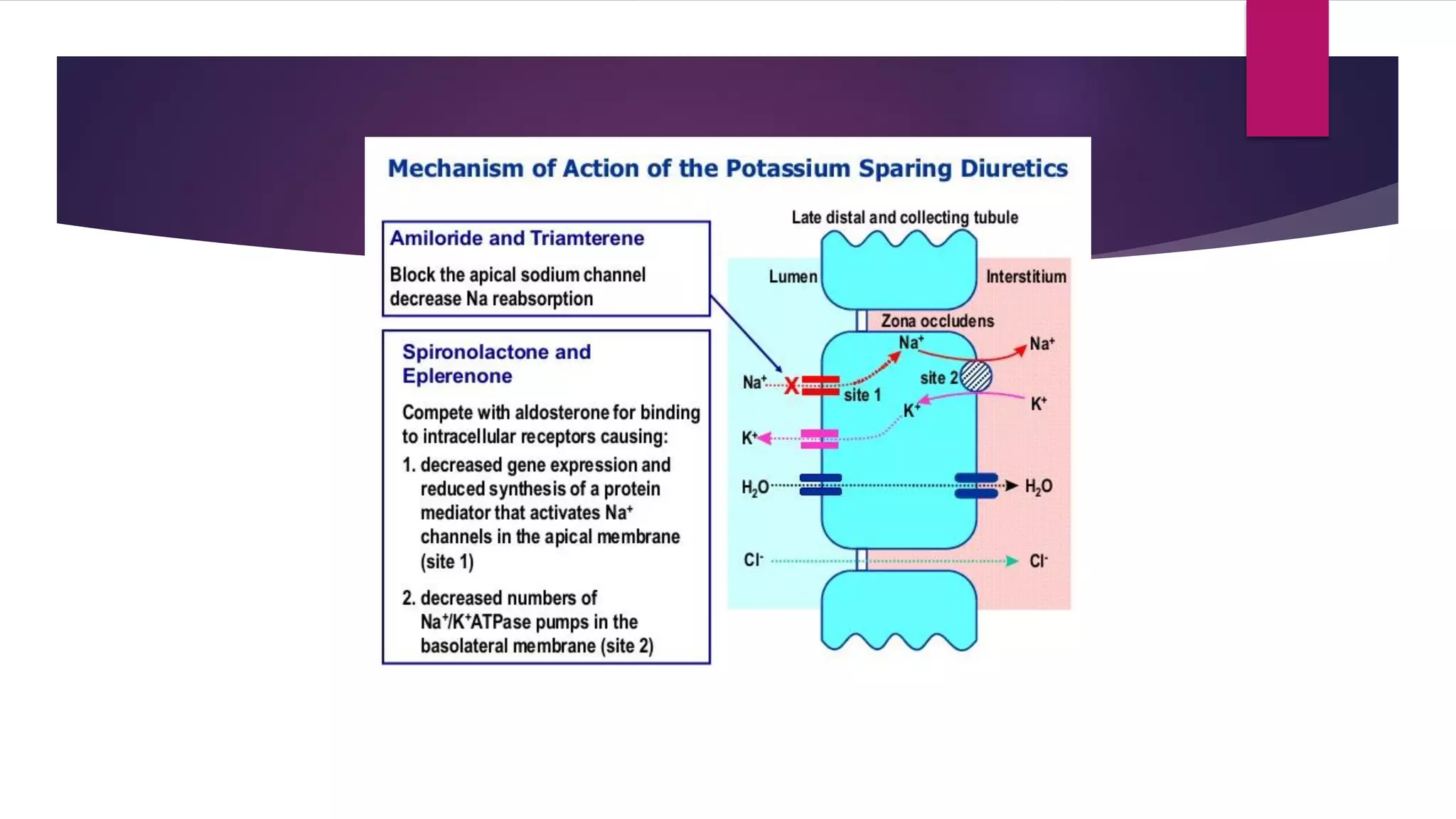
Potassium sparing diuretic
 Aldosterone antagonist
 Spiironolactone
 Eplerenone
 Renal epithelial Na+ channel inhibitor
 Amiloride
 Triameterene
Spironolactone
 Antagonise mineralocorticoid receptor
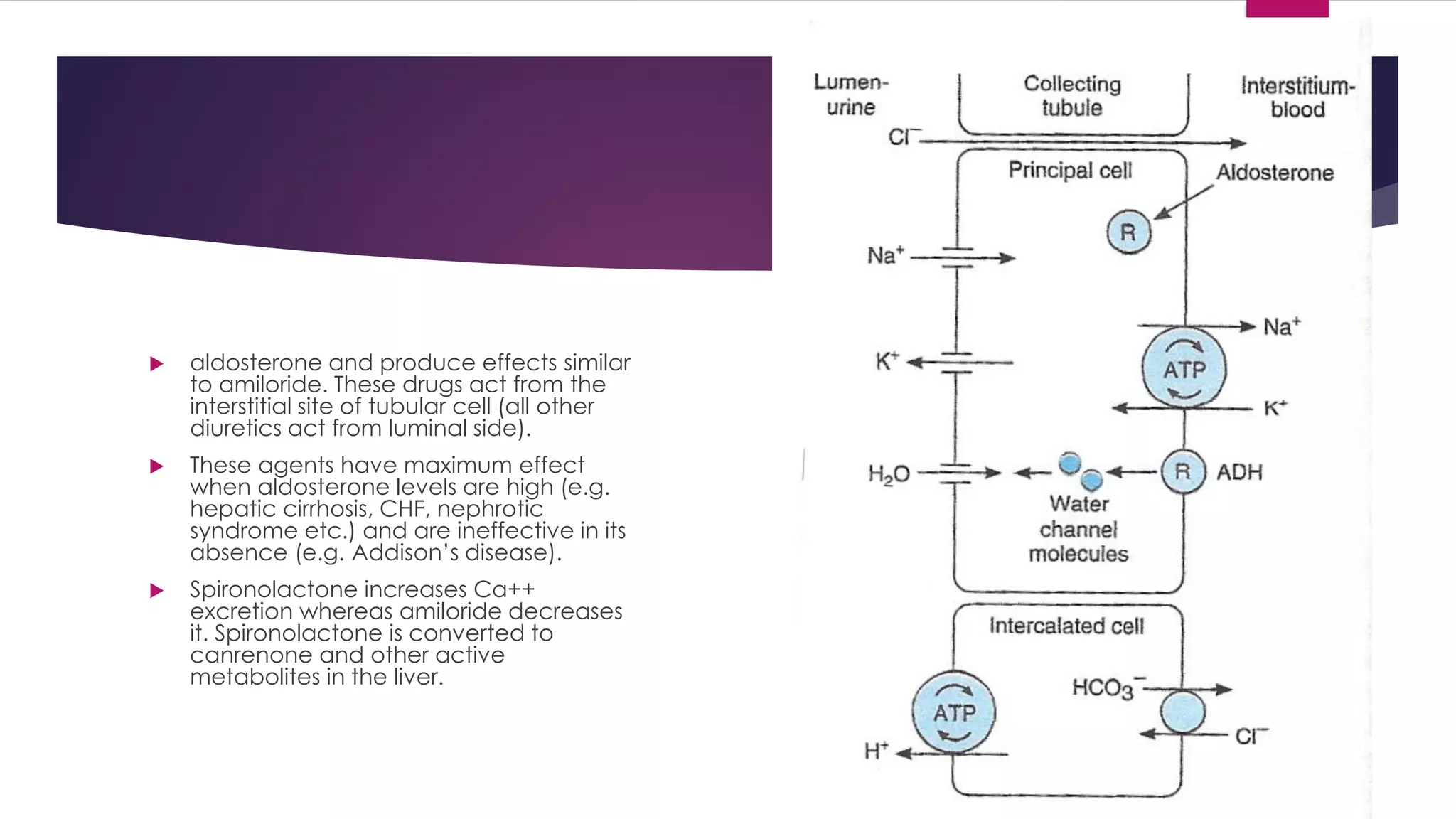
 aldosterone and produce effects similar
to amiloride. These drugs act from the
interstitial site of tubular cell (all other
diuretics act from luminal side).
 These agents have maximum effect
when aldosterone levels are high (e.g.
hepatic cirrhosis, CHF, nephrotic
syndrome etc.) and are ineffective in its
absence (e.g. Addison’s disease).
 Spironolactone increases Ca++
excretion whereas amiloride decreases
it. Spironolactone is converted to
canrenone and other active
metabolites in the liver.
 Uses:
 These are weak diuretics and are used only in combination with thiazides or
loop diuretics to counteract K+ loss.
 CHF (decrease mortality),
 hypertension and
 Conns syndrome
 cirrhotic edema (diuretic of choice is spironolactone)
 the treatment of hirsutism because of its anti-androgenic action. (Its structure is similar
to testosterone and thus it acts as a competitive antagonist at testosterone
receptors.
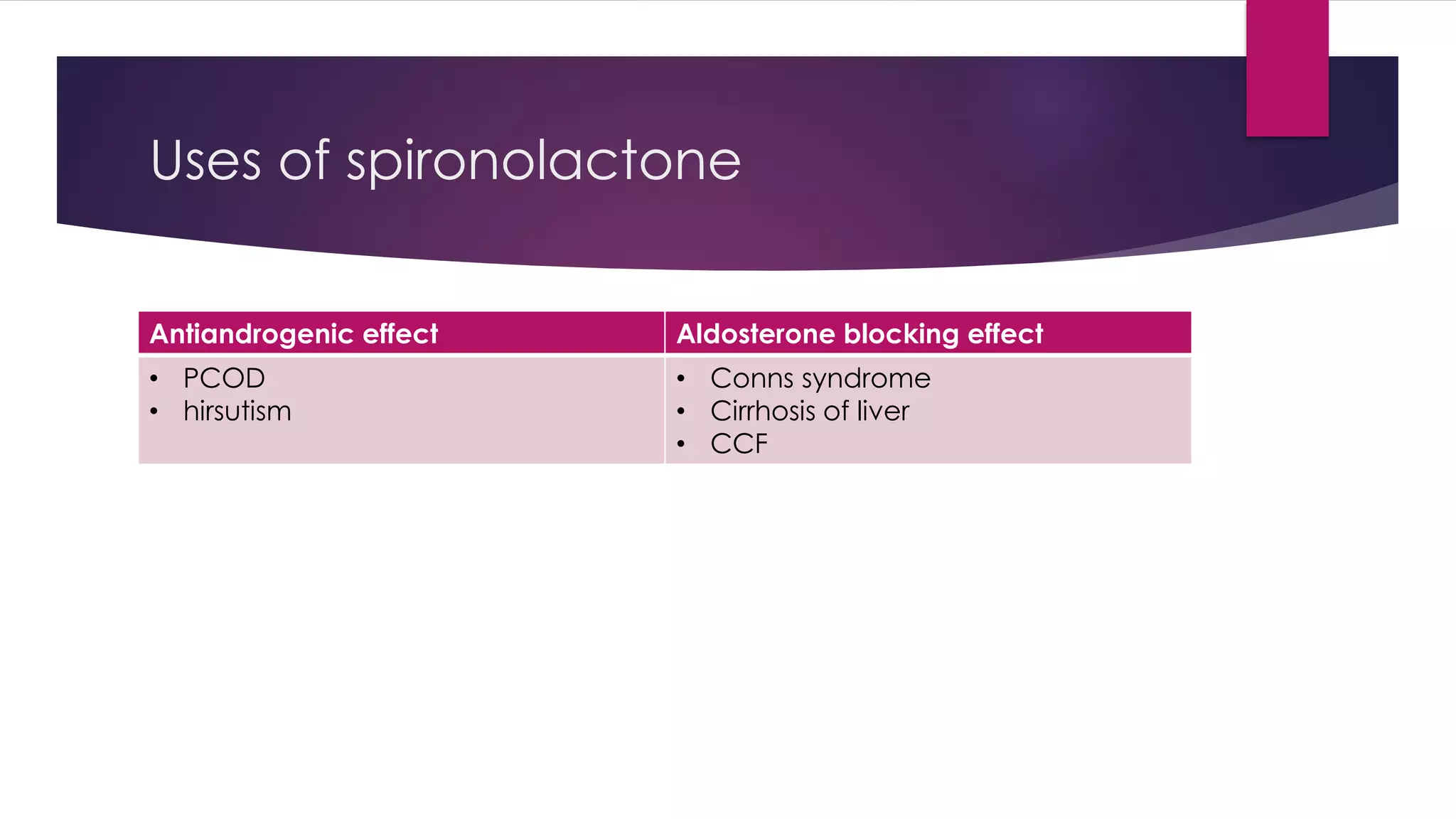
Uses of spironolactone
Antiandrogenic effect Aldosterone blocking effect
• PCOD
• hirsutism
• Conns syndrome
• Cirrhosis of liver
• CCF
S/E
 Hyperkalemia
 Gynaecomastia
 Impotence
 Menustral irregularities
 Metabolic acidosis d/t H+ retentionn
Renal ENaC inhibitors
 Inhibit luminal ENaC inhibitors
 Amiloride blocks entry of Li through ENaC  Li induced diabetes insipidus
 Aerosol amiloride in cystic fibrosis increases fluidity of respiratory
secretions
 Amiloride decreases excretion of ca2+ & mg2+ & increases excretion of
uric acid
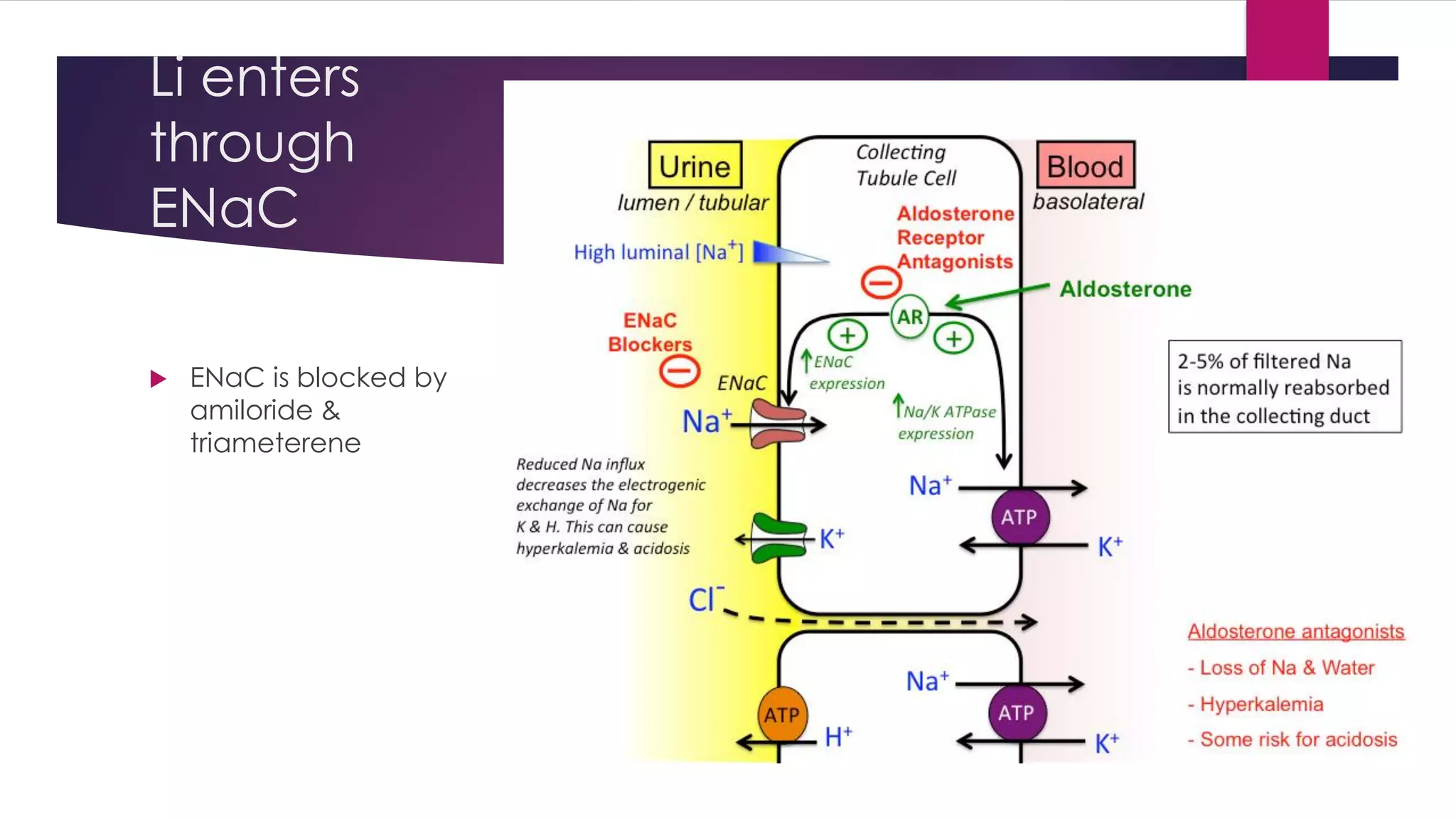
Li enters
through
ENaC
 ENaC is blocked by
amiloride &
triameterene
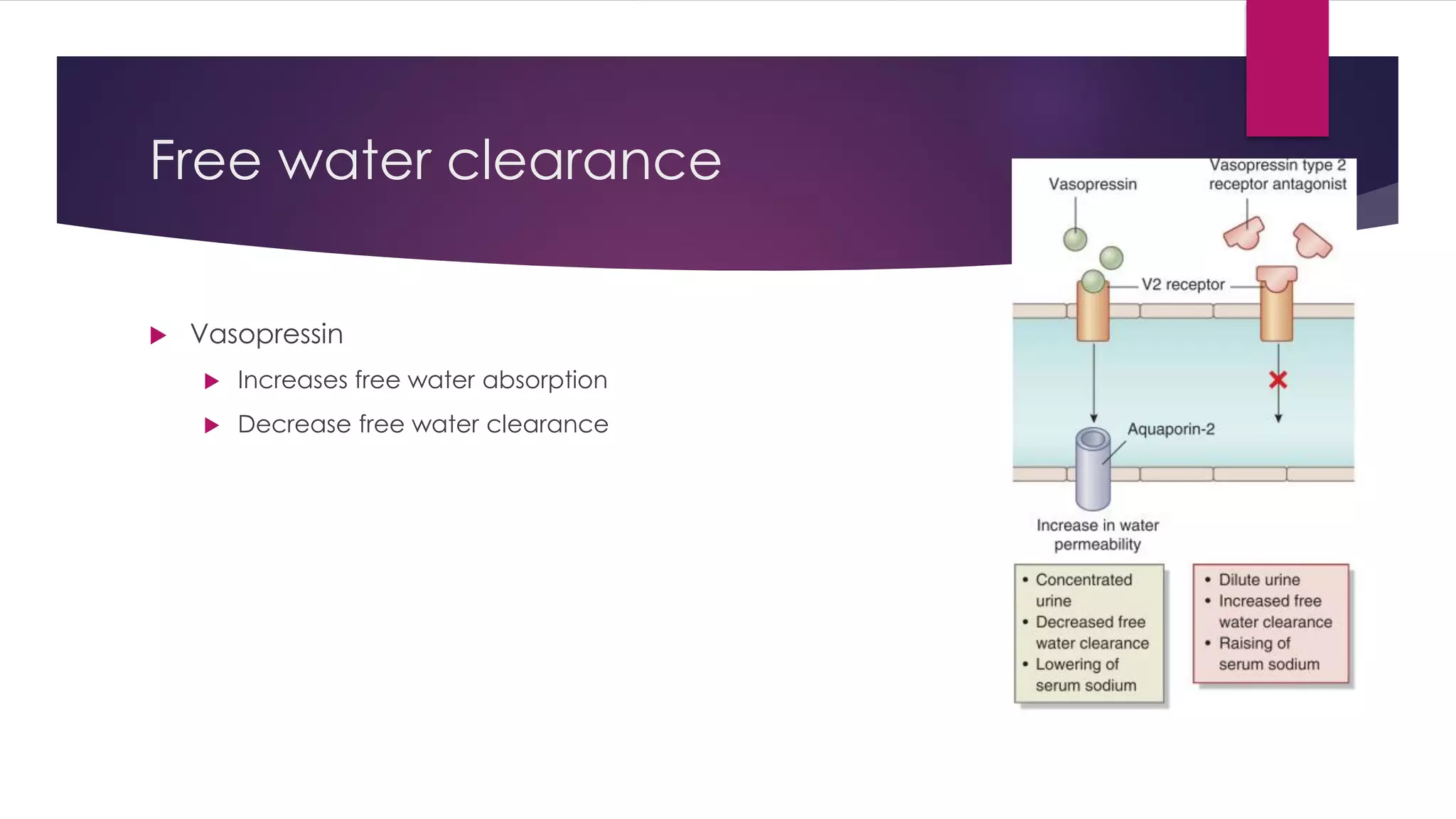
Free water clearance
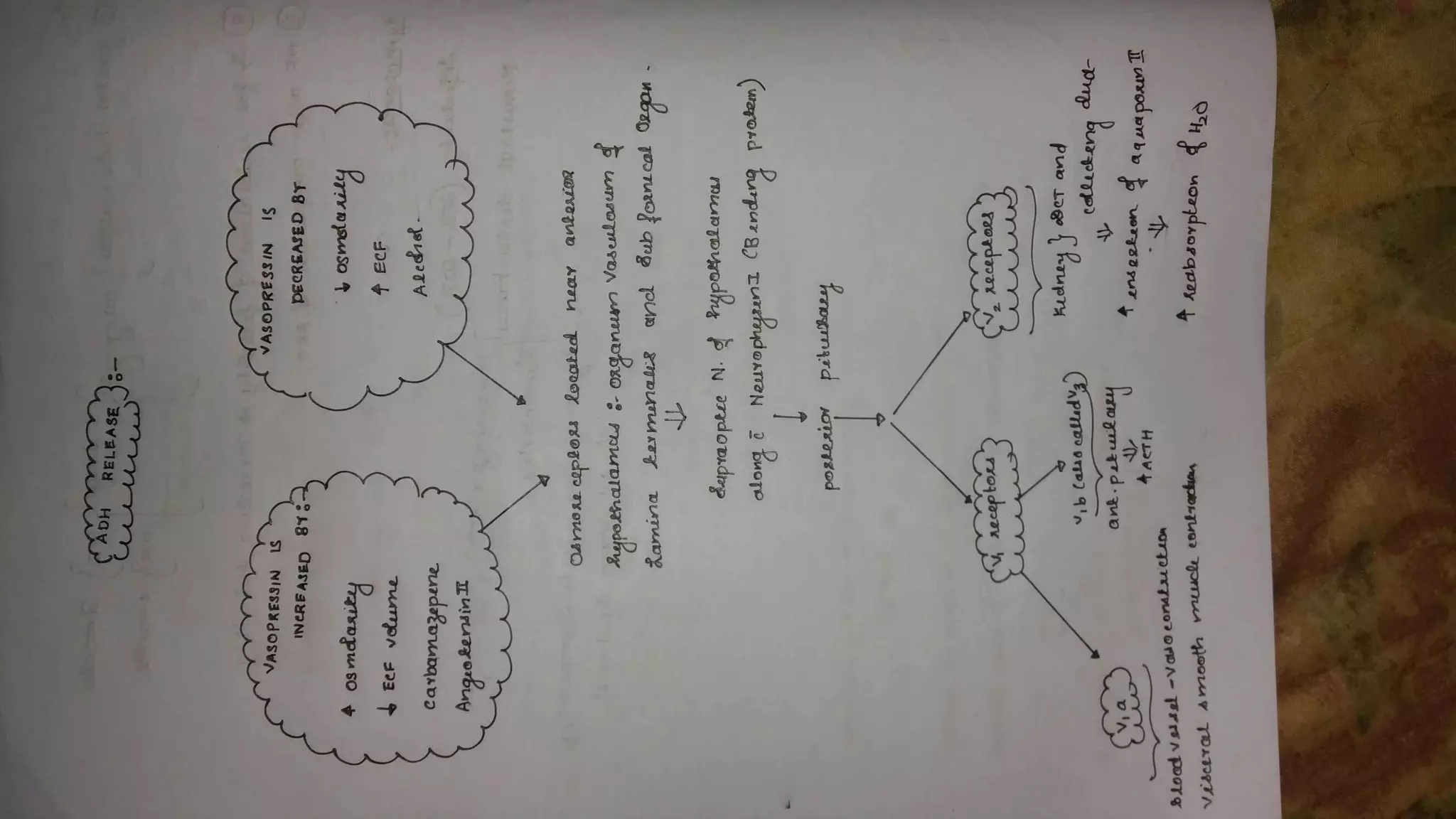
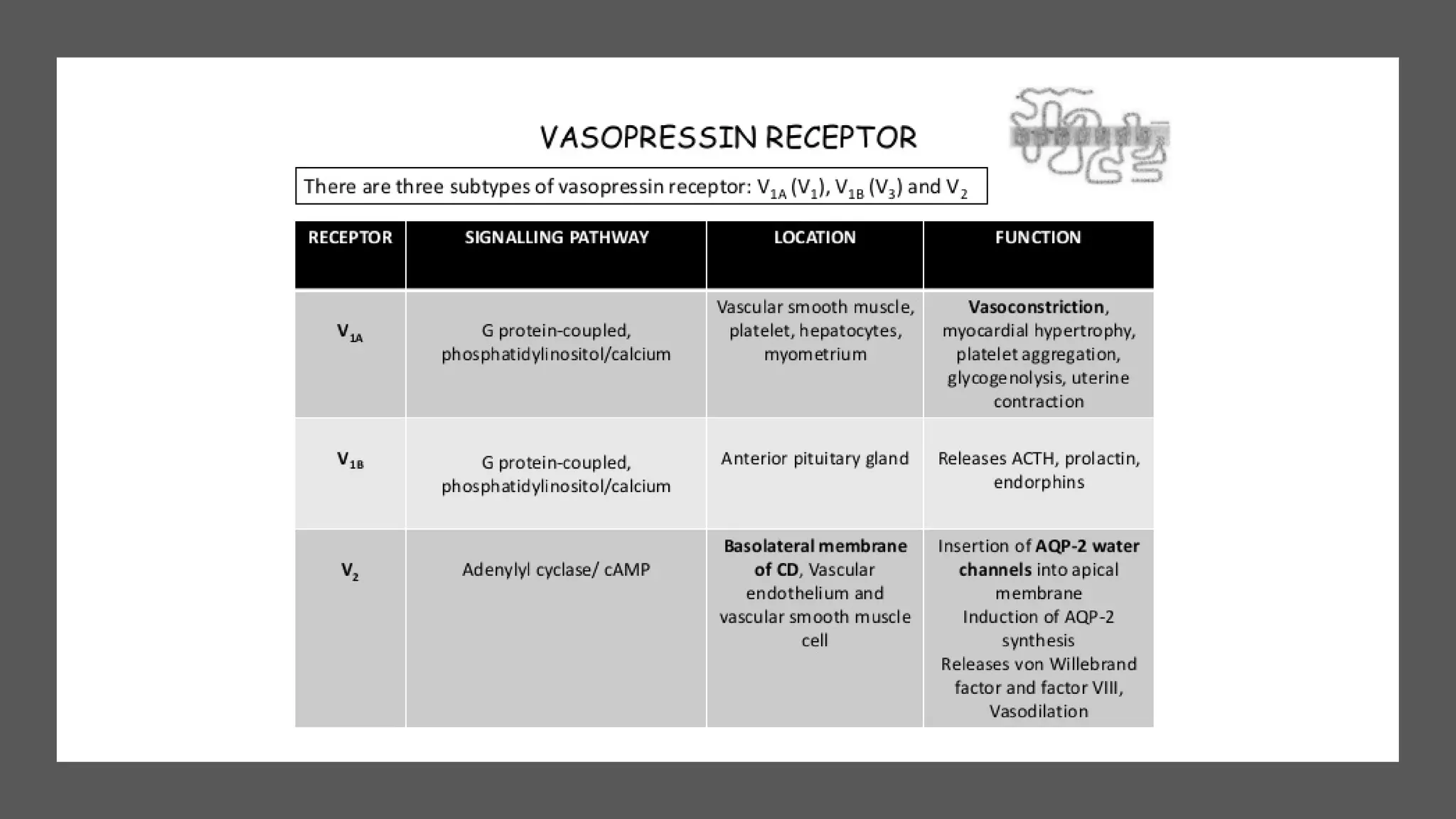
 Vasopressin
 Increases free water absorption
 Decrease free water clearance
diuretics
↑ Na + excretion ↓ECF volume
↑ vasopressin
Hyponatremia
↓ free water clearance
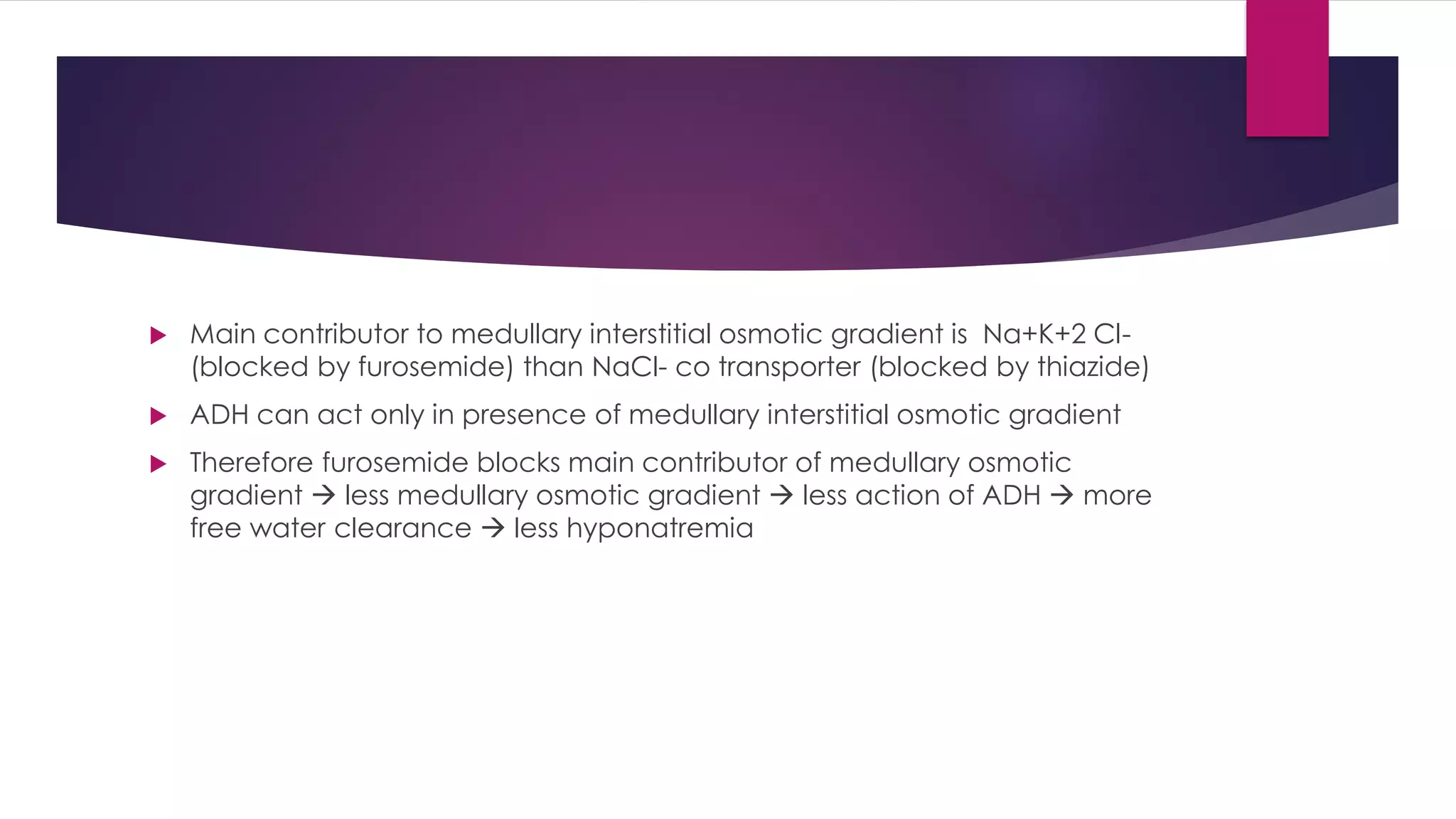
 Main contributor to medullary interstitial osmotic gradient is Na+K+2 Cl-
(blocked by furosemide) than NaCl- co transporter (blocked by thiazide)
 ADH can act only in presence of medullary interstitial osmotic gradient
 Therefore furosemide blocks main contributor of medullary osmotic
gradient  less medullary osmotic gradient  less action of ADH  more
free water clearance  less hyponatremia
Loop diuretic Thiazide
↑Na + excretion  ↓ AVP ↑ free water
clearance  less hyponatremia
↑Na + excretion  ↑ AVP  ↓free water
clearance  more
hyponatremia
Carbonic anhydrase
inhibitor
Carbonic anhydrase
inhibition
↑HCO3alkalinise urine
Metabolic acidosis
Loop & thiazides Na + exchanged with
H+ & K+
Metabolic alkalosis
K+ sparing diuretic Block mineralocorticoid
receptor  block
excretion of H+& K+
Metabolic alkalosis
Osmotic diuretic Loop & thiazide diuretic
↑ vascular volume
Decrease renin
Decreased vascular
volume
Increase renin
Na + Cl- K+ Ca2+ Mg2+
CAI ↑ ↑ ↑
Osmotic ↑ ↑ ↑ ↑ ↑
Loop ↑ ↑ ↑ ↑ ↑
Thiazides ↑ ↑ ↑ ↓ ↑
K +
sparing
diuretic
↑ ↑ ↓ ↓ ↓
Urinary excretion of ions
Antidiuretics
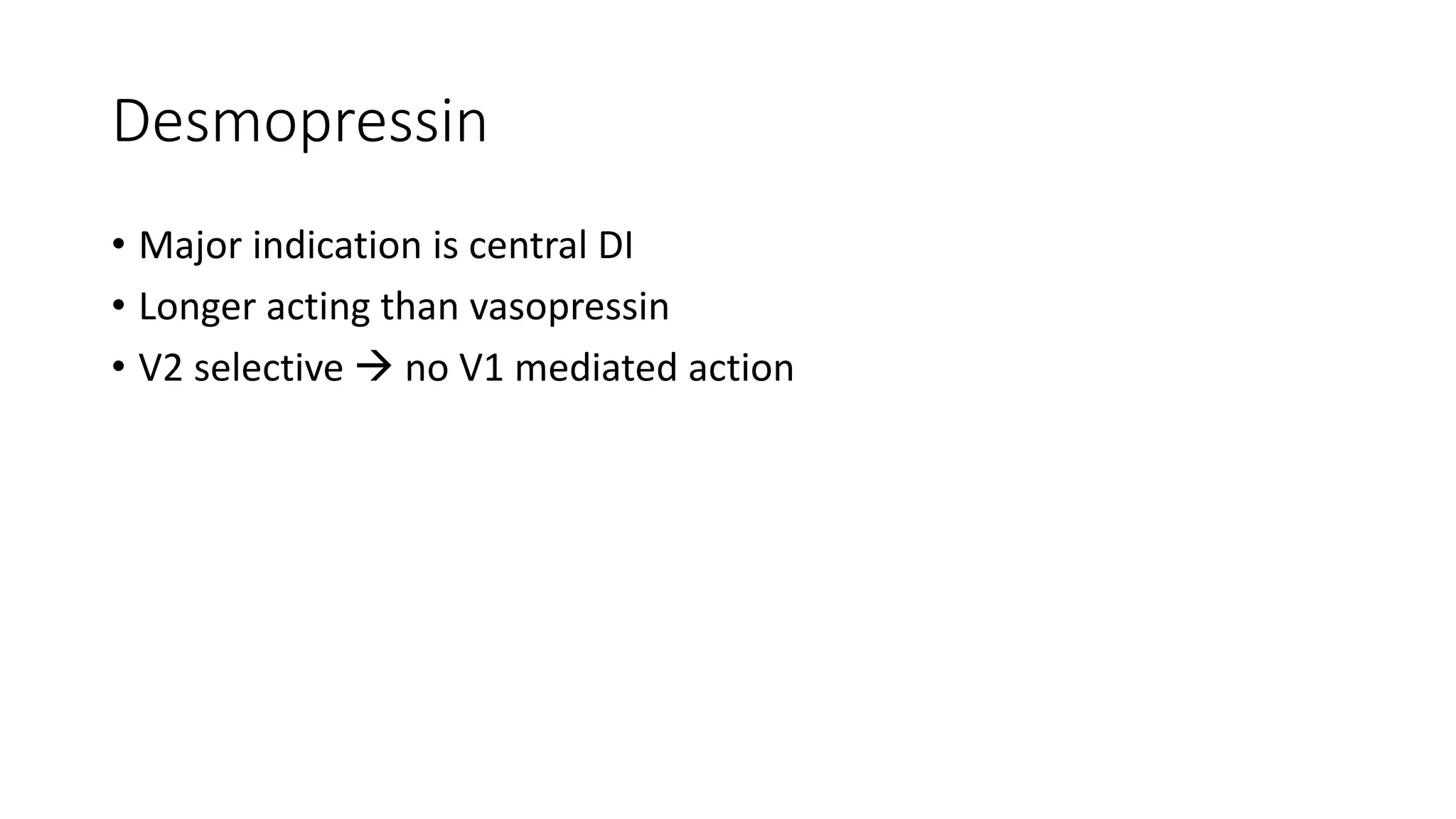
Desmopressin
• Major indication is central DI
• Longer acting than vasopressin
• V2 selective  no V1 mediated action
Terlipressin
• DOC for esophageal varices
Drugs used in DI
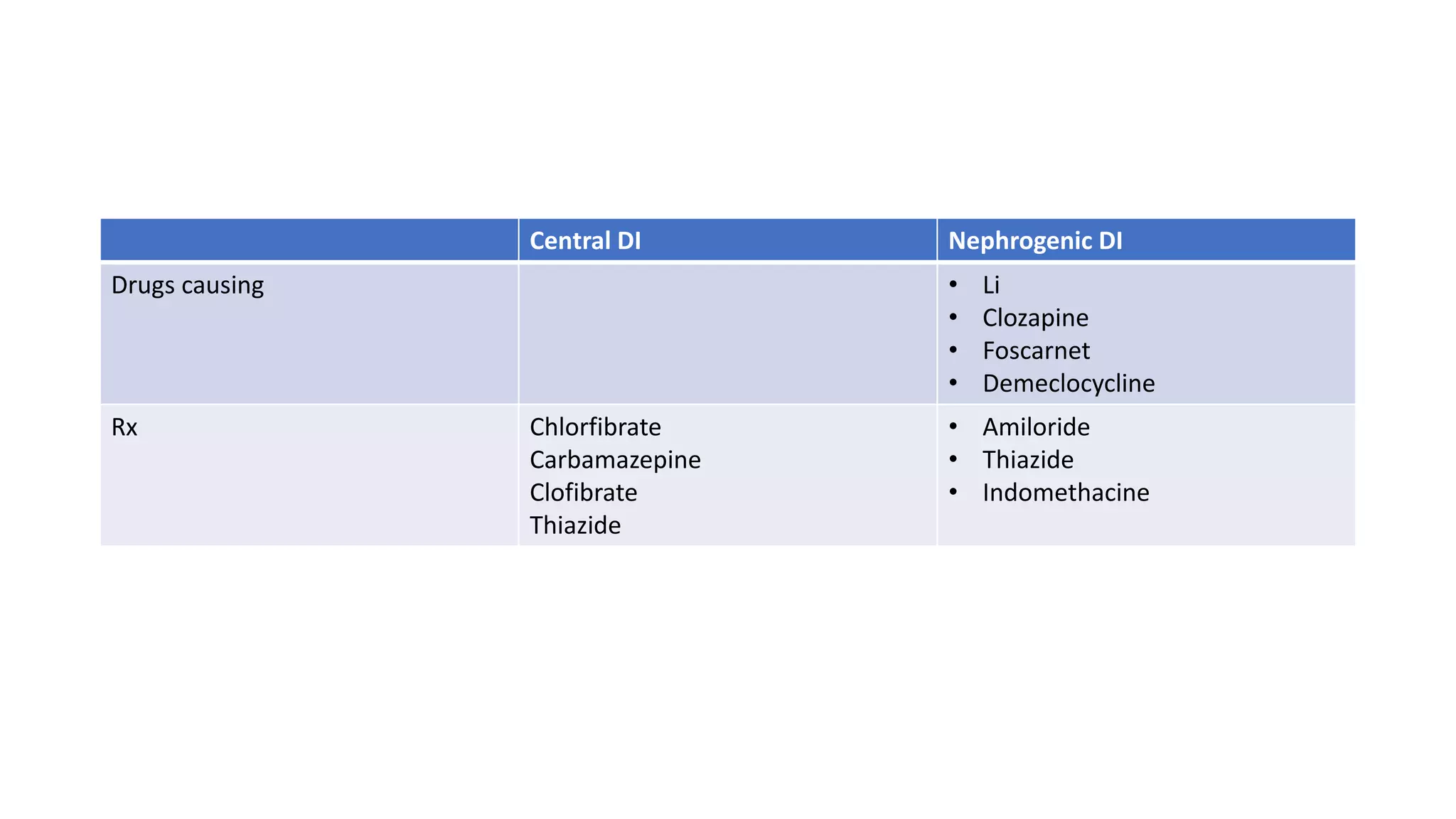
Central DI Nephrogenic DI
Drugs causing • Li
• Clozapine
• Foscarnet
• Demeclocycline
Rx Chlorfibrate
Carbamazepine
Clofibrate
Thiazide
• Amiloride
• Thiazide
• Indomethacine
Drugs used in DI
• Vasopressin (ADH) & its analogue  only in central DI
• Other antidiuretics
• chlorpo
Vasopressin antagonist
Drugs causing SIADH
Drugs stimulating ADH Direct renal
• Nicotine
• Phenothiazine
• TCA
• SSRI
• Desmopressin
• Oxytocin
• Clofibrate
• Chlorpropamid e
• Cyclophosphamid e
• Thiazide
• Vincristine

Diuretics REVISION NOTES

  • 1.
  • 7.
    Basics of diuretic Diuretics can act only when they are secreted in to lumen by tubular secretion  Except aldosterone which is lipophilic
  • 8.
    Basics of diuretics Highly plasma protein bound drugs are excreted by tubular secretion  Uric acid  NSAIDS  Diuretics  Penicillin  Tubular secretion follows a saturable kinetics  Only one drug can be eliminated at a time When NSAID are given along with diuretic activity of diuretic is reduced by NSAID as they are not secreted in to lumen Diuretics compete with uric acid for excretion  hyperuricemia GOUT
  • 10.
    Drugs acting onPCT 65 -70 % SODIUM ABSORPTION IN PCT
  • 11.
  • 12.
    CARBONIC ANHYDRASE PRESENTIN  GASTRIC MUCOSA  RBC  PCT  EYE CILIARY BODY (CARBONIC ANHYDRASE TYPE II)  BRAIN  EXOCRINE PANCREAS
  • 15.
    CARBONIC ANHYDRASE INHIBITORS NON COMPETITIVE  REVERSIBLE
  • 16.
    CARBONIC ANHYDRASE INHIBITORS REDOMINANTLY ACT IN : PCT  INHIBIT ABSORPTION OF NaHCO3  HCO3 is excreted along with Na +  urinary alkalisation
  • 17.
     Inhibitors ofthis enzyme (acetazolamide, dichlorphenamide and methazolamide) result in the excretion of sodium and bicarbonate in the urine.  Due to urinary excretion of bicarbonate, metabolic acidosis (and urinary alkalosis) ensues that result in reduced fIltration of HCO3 – at the glomerulus. Therefore, action of these diuretics is self limiting
  • 18.
    Metabolic acidosisUrinary alkalinisation •Renal calculi formation • Aggravate hepatic encephalopathy • Alkaline urine increase reabsorption of NH3
  • 19.
    KALIURESIS (EXCRETION OFK+)  At equally natriuretic doses, K+ excretion is maximum with CA inhibitors because Na+ delivered to the distal tubules is exchanged only with K+ (excretion of H+ is inhibited by these drugs)  HYPOKALEMIA
  • 20.
    OTHER USES  CAinhibitors also decrease aqueous humor formation (therefore used in glaucoma)  Dorzolamide and brinzolamide are topically acting CA inhibitors for use in glaucoma as eye drops  BRINZOLZMIDE IS SPECIFIC FOR CARBONIC ANAHYDRASE TYPE II OF EYE  DECREASES CSF pH  Raise seizure threshold (basis of their use in absence seizures).  acute mountain sickness  alkalinize urine (for excretion of acidic drugs).  Prevents formation of cysteine stones  But causes formation of ca2+ stones
  • 21.
    Other uses ofCAI Epilepsy glaucoma alkalinise urine mountain sickness Raise seizure threshold (basis of their use in absence seizures) also decrease aqueous humor formation • for excretion of acidic drugs • Prevents formation of cysteine stones • DECREASES CSF pH  increase rate of ventilation • Decrease CSF formation
  • 23.
    A/E  HYPOKALEMIA  METABOLICACIDOSIS  HYPERSENSITIVITY IN PATIENTS WITH ALLERGY TO SULFA DRUGS  Aplastic anemia  Increase hair growth  RENAL STONES  IN ALKALINE URINE CA2+ SALTS ARE INSOLUBLE  CA2+ STONE FORMATION
  • 24.
    C/I  HEPATIC CIRRHOSIS PRECIPITATE HEPATIC COMA BY INTERFERING WITH ELIMINATION OF NH3  COPD  ALTERATION OF CO2 TRANSPORT IN LUNGS & TISSUES  Metabolic acidosis
  • 25.
  • 26.
    Loop diuretic  Siteof action  LOOP OF HENLE  Where they inhibit Na+K+Cl-  Secreted in proximal tubule by organic anion transport & reaches ascending LOH  act on lumional side  Induce PG synthesis  cause vasodilation  Weak carbonic anhydrase effect except ethacrynic acid  High ceiling diuretic  maximum natriuretic action
  • 27.
  • 29.
     Bumetanide ismost potent
  • 30.
    Loop diuretic inducePG synthesis  Induce synthesis of PGE2 & PGI2  First effect in pulmonary edema d/t vasodilation  Quick relief in LVF & pulmonary edema  Increase renal blood flow  increase GFR
  • 31.
    Loop diuretic  Abolishescorticomedullary osmotic gradient  Blocks positive as wellas negative free water clearance
  • 32.
    Uses  Pulmonary edema Cerebral edema  Along with blood transfusion n  Hypercalcemia  Renal calcium stone
  • 33.
    S/E  Hypokalemia most common  Hyperureicemia  Hypocalcemia  Metabolic alkalosis  Hearing loss  ototoxicity maximum with ethacrynic acid  Hyperglycemia  Hypomagnsemia  increased excretion of Mg2+
  • 34.
  • 35.
    Thiazide diuretics Thiazide  Chlorthiazide Hydrochlorthiazide  Benzthiazide  Hydroflumethiazide Thiazide like diuretic  Indapamide  Metolazone  Chlorthalidone
  • 36.
    MOA  SECRETED BYORGANIC ACID SECRETORS INTO PROXIMAL TUBULE AS THEY ACT ON LUMINAL MEMBRANE  COMPETES WITH URIC ACID FOR EXCRETION  HYPERURICEMIA  inhibiting Na+-Cl– symporter at the luminal membrane of early DT  Increased synthesis of PGE2 & PGI2  increase renal blood flow  ALSO INHIBIT CARBONIC ANHYDRASE EXCEPT INDAPAMIDE
  • 37.
     Because thesite of action of the thiazide derivatives is on the luminal membrane, these drugs must be excreted into the tubular lumen to be effective. Therefore, with decreased renal function, thiazide diuretics lose efficacy except metolazone
  • 38.
     –Thiazide diuretics→initially ↓ BP by inhibit Na+/ Cl¯ & H2O re-absorption→ ↓ blood volume → ECF volume shrink ,so→ COP declines  –After 6–8 weeks → COP returns toward normal while PVR declines  – Thiazide diuretics → act primarily on the kidney but secondarily on Blood vessels  Therefore → the initial antihypertensive effect seem to be mediated by ↓intravascular volume → ↓COP → ↓BP → ↓ preload  -With chronic use → the plasma volume returns to nearly pre-treatment level after a few weeks due to development of tolerance after prolonged use
  • 42.
     Thiazides causemild hypomagnesemia
  • 43.
    Hypercalcemia is mediatedby PTH Decreased urinary calcium excretion: Thiazide diuretics decrease the Ca2+ content of urine by promoting the reabsorption of Ca2+. This effect contrasts with the loop diuretics, which increase the Ca2+ concentration of the urine.
  • 45.
     Decreased absorptionof Na+ results in its greater delivery to late DT and CD that is responsible for hypokalemia (more than loop diuretics).  Chlorthiazide has minimum potency and efficacy whereas other drugs differ only in potency (effcacy is similar).  Thiazides are moderate efficacy diuretics with low ceiling effect (flat DRC, natriuretic effect does not increase appreciably with increase in dose). These drugs tend to reduce GFR, therefore are not indicated in renal failure patients.
  • 46.
     Decrease insulinrelease hyperglycemia
  • 48.
    S/E of thiazidediuretics  Hyperglycemia  Sulfonamide  allergy  Hyperlipidemia  Thiazides causes impotence  Greater incidence than other antihypertensives
  • 49.
     Indapamide  Metolazone •Excreted by bile (other thiazides by tubular secretion) • Donot have carbonic anhydrase inhibitory activity • Peripheral vasodilator action • Both are effective when GFR <30 (but other thiazides are ineffective
  • 50.
     • Polythiazideand trichloromethiazide are most potent thiazides.  100 % bioavailability  polythiazide & bendrofluromethiazide  • Chlorthalidone is the longest acting thiazide.  Chlorothiazide is shortest acting  • Metolazone is useful even in severe renal failure.  • Indapamide has no CA inhibitory action. It has vasodilatory property because of which, its antihypertensive effect precedes the natriuretic effect.
  • 51.
    Uses  Essential hypertension Heart failure  Nephrolithiasis  Nephrogenic diabetes insipidus d/t Li
  • 52.
    A/E  Erectile dysfunction Hypercalcemia  Hyperuricemia  Hyperglycemia  Hypokalemia metabolic alkalosis s  Hypokalemia  increased risk of torsades pointes
  • 53.
  • 54.
    Osmotic diuretic  •It should exert osmotic effect.  • It should be pharmacologically inert.  • It should be freely fltered at the glomerulus.  • It should not be reabsorbed.
  • 55.
     RAISES PLASMA OSMOLARITY FLUID SHIFT FROM ICF TO ECF  RAISES BLOOD VISCOSITY
  • 57.
     INCREASES RENALBLLOD FLOW  (ESPECIALLY TO MEDULLA)MEDULLARY HYPERTONICITY DECREASES)CORTICOMEDULLARY OSMOTIC GRADIENT IS DISSIPITATED PASSIVE SALT REABSORPTION DECREASES
  • 58.
     Mannitol, glycerol,urea and isosorbide are inert drugs that can cause osmotic diuresis
  • 59.
    Mannitol  USES  i.v.for the treatment of glaucoma and cerebral edema.  to maintain GFR in the impending renal failure.  CONTRAINDICATIONS  acute renal failure because ECF volume increases but it cannot be filtered.  cerebral hemorrhage (active bleeding) because in this situation, mannitol can leak from ruptured cerebral blood vessels resulting in the increased ICT (more fluid retention due to its osmotic effect in the cells)  If given orally, mannitol can result in osmotic diarrhea.  Isosorbide and glycerol can be used orally for the treatment of glaucoma and cerebral edema
  • 61.
  • 62.
    Drugs acting oncollecting duct Cortical collecting tubule (CCT) K+-sparing Diuretics Medullary collecting duct Vasopressin antagonist
  • 63.
  • 64.
    Potassium sparing diuretic Aldosterone antagonist  Spiironolactone  Eplerenone  Renal epithelial Na+ channel inhibitor  Amiloride  Triameterene
  • 66.
  • 67.
     aldosterone andproduce effects similar to amiloride. These drugs act from the interstitial site of tubular cell (all other diuretics act from luminal side).  These agents have maximum effect when aldosterone levels are high (e.g. hepatic cirrhosis, CHF, nephrotic syndrome etc.) and are ineffective in its absence (e.g. Addison’s disease).  Spironolactone increases Ca++ excretion whereas amiloride decreases it. Spironolactone is converted to canrenone and other active metabolites in the liver.
  • 68.
     Uses:  Theseare weak diuretics and are used only in combination with thiazides or loop diuretics to counteract K+ loss.  CHF (decrease mortality),  hypertension and  Conns syndrome  cirrhotic edema (diuretic of choice is spironolactone)  the treatment of hirsutism because of its anti-androgenic action. (Its structure is similar to testosterone and thus it acts as a competitive antagonist at testosterone receptors.
  • 69.
    Uses of spironolactone Antiandrogeniceffect Aldosterone blocking effect • PCOD • hirsutism • Conns syndrome • Cirrhosis of liver • CCF
  • 70.
    S/E  Hyperkalemia  Gynaecomastia Impotence  Menustral irregularities  Metabolic acidosis d/t H+ retentionn
  • 71.
    Renal ENaC inhibitors Inhibit luminal ENaC inhibitors  Amiloride blocks entry of Li through ENaC  Li induced diabetes insipidus  Aerosol amiloride in cystic fibrosis increases fluidity of respiratory secretions  Amiloride decreases excretion of ca2+ & mg2+ & increases excretion of uric acid
  • 72.
    Li enters through ENaC  ENaCis blocked by amiloride & triameterene
  • 73.
    Free water clearance Vasopressin  Increases free water absorption  Decrease free water clearance
  • 74.
    diuretics ↑ Na +excretion ↓ECF volume ↑ vasopressin Hyponatremia ↓ free water clearance
  • 75.
     Main contributorto medullary interstitial osmotic gradient is Na+K+2 Cl- (blocked by furosemide) than NaCl- co transporter (blocked by thiazide)  ADH can act only in presence of medullary interstitial osmotic gradient  Therefore furosemide blocks main contributor of medullary osmotic gradient  less medullary osmotic gradient  less action of ADH  more free water clearance  less hyponatremia
  • 76.
    Loop diuretic Thiazide ↑Na+ excretion  ↓ AVP ↑ free water clearance  less hyponatremia ↑Na + excretion  ↑ AVP  ↓free water clearance  more hyponatremia
  • 77.
    Carbonic anhydrase inhibitor Carbonic anhydrase inhibition ↑HCO3alkaliniseurine Metabolic acidosis Loop & thiazides Na + exchanged with H+ & K+ Metabolic alkalosis K+ sparing diuretic Block mineralocorticoid receptor  block excretion of H+& K+ Metabolic alkalosis
  • 78.
    Osmotic diuretic Loop& thiazide diuretic ↑ vascular volume Decrease renin Decreased vascular volume Increase renin
  • 79.
    Na + Cl-K+ Ca2+ Mg2+ CAI ↑ ↑ ↑ Osmotic ↑ ↑ ↑ ↑ ↑ Loop ↑ ↑ ↑ ↑ ↑ Thiazides ↑ ↑ ↑ ↓ ↑ K + sparing diuretic ↑ ↑ ↓ ↓ ↓ Urinary excretion of ions
  • 80.
  • 85.
    Desmopressin • Major indicationis central DI • Longer acting than vasopressin • V2 selective  no V1 mediated action
  • 86.
    Terlipressin • DOC foresophageal varices
  • 88.
  • 89.
    Central DI NephrogenicDI Drugs causing • Li • Clozapine • Foscarnet • Demeclocycline Rx Chlorfibrate Carbamazepine Clofibrate Thiazide • Amiloride • Thiazide • Indomethacine
  • 90.
    Drugs used inDI • Vasopressin (ADH) & its analogue  only in central DI • Other antidiuretics • chlorpo
  • 91.
  • 93.
    Drugs causing SIADH Drugsstimulating ADH Direct renal • Nicotine • Phenothiazine • TCA • SSRI • Desmopressin • Oxytocin • Clofibrate • Chlorpropamid e • Cyclophosphamid e • Thiazide • Vincristine