Diuretics & antidiuretics
NITTAL VEKARIA (m.pharm sem 1 )roll no. 48
dept of pharmacology,
K B Institute of Pharmaceutical Education and research
TERMINOLOGY:
Natriuretic- Increasing renal Sodium excretion
Kaliuretic - Increasing renal POTASSIUM excretion
Calciuretic - Enhanced calcium excretion
Saluretic - Enhanced sodium chloride excretion
Diuretics (WATER PILLS)- Increasing loss of Na+ and water in urine.
INTRODUCTION AND DEFINATION
• Diuretics (natriuretics) are drugs which cause a net loss of Na+ and
water in urine and hence increase the urine output or urine volume.
• The primary action of most diuretics is the direct inhibition of Na+
reabsorption (increased excretion) at one or more of the four major
sites along the nephron.
• An increased Na+ excretion is accompanied by anion like Cl Since NaCI
is the maior determinant of extracellular fluid volume; Diuretics
reduce extracellular fluid volume (decrease in oedema) by decreasing
total body NaCl content.
DIURETICS ARE VERY EFFECTIVE IN THE TREATMENT OF CONDITION LIKE
 chronic heart failure
 nephrotic syndrome
 chronic hepatic diseases
 hypertension
 pregnancy associated oedema
 cirrhosis of the liver
 renal insufficiency
 hypercalcemia
 nephrogenic diabetes insipidus
 glaucoma
 cerebral edema
 hyperaldosteronism
 polycystic ovarian syndrome
 syndrome of inappropriate adh secretion (siadh)
Relevant Physiology of Urine Formation
• Kidneys are the organs responsible for urine formation.
------> Two important functions of the kidney are:
o To maintain a homeostatis balance of electrolytes and water.
o To excrete water soluble end products of metabolites.
• Each kidney contains approximately one million nephrons and is capable of forming urine independently.
• Urine formation starts from glomerular filtration (g.f.) in a prodigal way.
• Normally, about 180 L of fluid is filtered everyday all soluble constituents of blood minus the plasma proteins
(along with substances bound to them) and lipids, are filtered at the glomerulus.
• More than 99% of the glomerular filtrate is reabsorbed in the tubules ; about 1.5 L urine is produced in 24 hours.
o lons such as sodium, chloride, calcium are reabsorbed.
o Total amount of glucose, amino acids, vitamins, proteins are reabsorbed. (If the urine contains these ions, it
represents the disorders. For example proteins such as albumin in higher amounts causes albuminuria).
• The diuretics act primarily by inhibiting tubular reabsorption: just 1% decrease in tubular reabsorption would more
than double urine output.
Process of urine formation
~ Ultrafiltration
~ Tubular reabsorption
Kidney:
- Weight- 0.5% of total Body, Rk 81-160g Lk 83-176g.
- Cardiac Output- 25% of total (50 times)
Functions (BASE )
- Balance of Electrolytes, Volume, pH, BP
- Activation of Vitamin D
-Synthesis of Erythropoietin
-Excretion of Toxins, metabolites
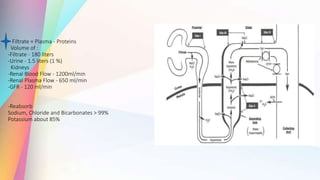
Filtrate = Plasma - Proteins
Volume of :
-Filtrate - 180 liters
-Urine - 1.5 liters (1 %)
Kidneys
-Renal Blood Flow - 1200ml/min
-Renal Plasma Flow - 650 ml/min
-GFR - 120 ml/min
-Reabsorb
Sodium, Chloride and Bicarbonates > 99%
Potassium about 85%
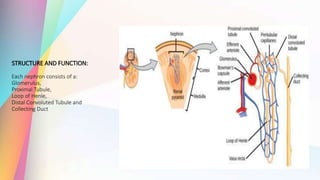
STRUCTURE AND FUNCTION:
Each nephron consists of a:
Glomerulus,
Proximal Tubule,
Loop of Henle,
Distal Convoluted Tubule and
Collecting Duct
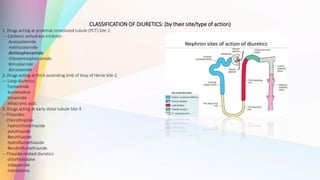
CLASSIFICATION OF DIURETICS: (by their site/type of action)
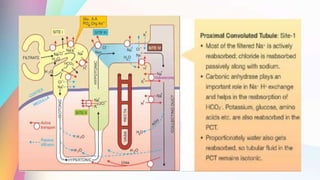
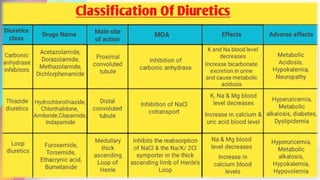
1. Drugs acting at proximal convoluted tubule (PCT) Site-1
--- Carbonic anhydrase inhibitor:
Acetazolamide
methazolamide
dichlorphenamide
chloraminophenamide.
Brinzolamide
dorzolamide
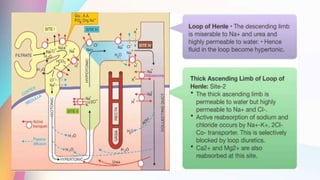
2. Drugs acting at thick ascending limb of loop of Henle Site-2
--- Loop diuretics:
furosemide
bumetadine
torsemide
ethacrynic acid.
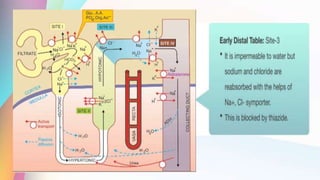
3. Drugs acting at early distal tubule Site-3
---Thiazides:
chlorothiazide
hydrochlorothiazide
polythiazide
Benzthiazide
hydroflumethiazide
Bendroflumethiazide.
---Thiazide related diuretics:
chlorthalidone
indapamide
metolazone.
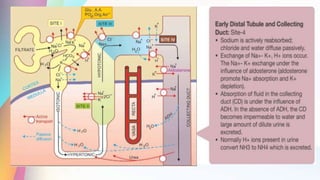
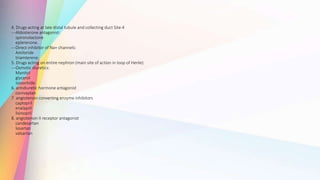
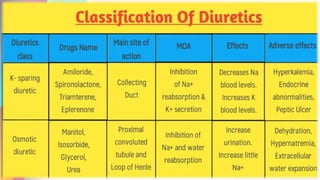
4. Drugs acting at late distal tubule and collecting duct Site-4
---Aldosterone antagonist:
spironolactone
eplerenone.
---Direct inhibitor of Na+ channels:
Amiloride
triamterene.
5. Drugs acting on entire nephron (main site of action in loop of Henle)
---Osmotic diuretics:
Manitol
glycerol
isosorbide.
6. antidiuretic hormone antagonist
conivaptan
7. angiotensin converting enzyme inhibitors
captopril
enalapril
lisinopril
8. angiotensin II receptor antagonist
candesartan
losartan
valsartan
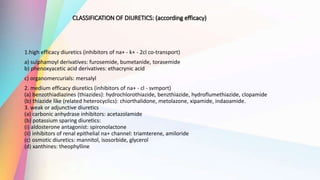
CLASSIFICATION OF DIURETICS: (according efficacy)
1.high efficacy diuretics (inhibitors of na+ - k+ - 2cl co-transport)
a) sulphamoyl derivatives: furosemide, bumetanide, torasemide
b) phenoxyacetic acid derivatives: ethacrynic acid
c) organomercurials: mersalyl
2. medium efficacy diuretics (inhibitors of na+ - cl - svmport)
(a) benzothiadiazines (thiazides): hydrochlorothiazide, benzthiazide, hydroflumethiazide, clopamide
(b) thiazide like (related heterocyclics): chiorthalidone, metolazone, xipamide, indaoamide.
3. weak or adjunctive diuretics
(a) carbonic anhydrase inhibitors: acetazolamide
(b) potassium sparing diuretics:
(i) aldosterone antagonist: spironolactone
(ii) inhibitors of renal epithelial na+ channel: triamterene, amiloride
(c) osmotic diuretics: mannitol, isosorbide, glycerol
(d) xanthines: theophylline
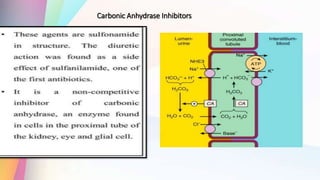
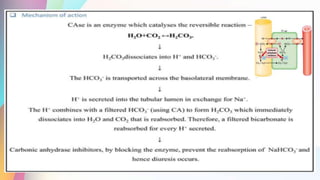
Carbonic Anhydrase Inhibitors
Pharmacokinetics:
-The carbonic anhydrase inhibitors are well absorbed after oral administration.
-An increase in urine pH from the HCO
apparent within 30 minutes
maximal at 2 hours
persists for 12 hours after a single dose
Excretion of the drug is by secretion in the proximal tubule S2 segment: dosing must be reduced in renal insufficiency.
Pharmacodynamics:
Inhibition of carbonic anhydrase activity profoundly depresses HCO; reabsorption in the PCT.
At its maximal safe dosage, 85% of the HCO; reabsorptive capacity of the superficial PCT is inhibited.
Some HCO; can still be absorbed at other nephron sites so the overall effect is about 45% inhibition of whole kidney
HCO3-reabsorption.
Therapeutic Uses:
-Used to treat chronic open-angle glaucoma
-High aqueous humor [HCO3-] acute mountain sickness
- Prevention and treatment metabolic alkalosis
-Mostly used in combination with other diuretics in resistant patients.
Side Effects:
-Rapid tolerance
-Increased HCO3- excretion causes metabolic acidosis
-Drowsiness
-Fatigue
-CNS depression
-Paresthesia (pins and needles under skin)
-Nephrolithiasis (renal stones) K+ wasting
-hypersensitivity reaction
-skin rashes
-fever
-headache
Contraindication:
- Liver cirrhosis (CA-I inhibits conversion of NH to NH4) -> NH3 increased encephalopathy
-copd: worsening of metabolic acidosis is seen in patient with chronic obstructive pulmonary disease.
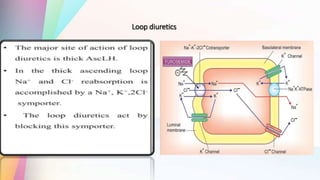
Loop diuretics
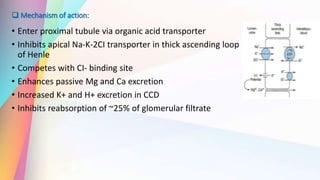
 Mechanism of action:
• Enter proximal tubule via organic acid transporter
• Inhibits apical Na-K-2CI transporter in thick ascending loop
of Henle
• Competes with CI- binding site
• Enhances passive Mg and Ca excretion
• Increased K+ and H+ excretion in CCD
• Inhibits reabsorption of ~25% of glomerular filtrate
Pharmacokinetics:
 Oral administration (quite good absorption, torasemide is absorbed faster than furosemide)
 I.V. in urgent cases
 High plasma protein binding
 Renal elimination - GF (limited) + tubular secretion
 Effect duration - quite short (2-3 h furosemide), torasemide is longer (4-6h) and it has an active metabolite
 Tubular secretion can be decreased by the competition
due to the competition with other drugs (e.g., NSAD)
Therapeutic use:
• Useful for rapid reduction of edematous fluid.
• May be used to treat hypertension.
• The increase in Ca2+ excretion caused by these agents makes them useful in the treatment of hypercalcemia.
• used in the mild hyperkalemia.
Side effects:
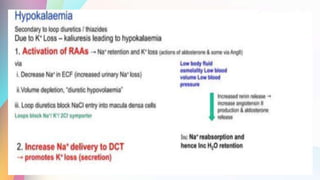
• Hyponatremia, hypokalemia, hypochloremia, hypocalcemia and hypomagnesemia.
•Ototoxcity, especially with ethacrynic acid
• Hypotension.
• Osteophoresis.
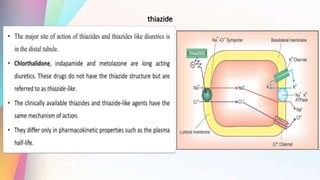
thiazide
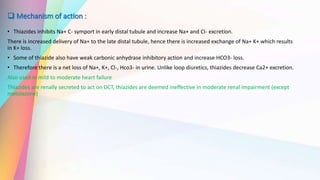
 Mechanism of action :
• Thiazides inhibits Na+ C- symport in early distal tubule and increase Na+ and CI- excretion.
There is increased delivery of Na+ to the late distal tubule, hence there is increased exchange of Na+ K+ which results
in K+ loss.
• Some of thiazide also have weak carbonic anhydrase inhibitory action and increase HCO3- loss.
• Therefore there is a net loss of Na+, K+, Cl-, Hco3- in urine. Unlike loop diuretics, thiazides decrease Ca2+ excretion.
Also used ni mild to moderate heart failure
Thiazides are renally secreted to act on DCT, thiazides are deemed ineffective in moderate renal impairment (except
metolazone)
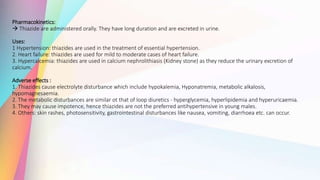
Pharmacokinetics:
 Thiazide are administered orally. They have long duration and are excreted in urine.
Uses:
1 Hypertension: thiazides are used in the treatment of essential hypertension.
2. Heart failure: thiazides are used for mild to moderate cases of heart failure.
3. Hypercalcemia: thiazides are used in calcium nephrolithiasis (Kidney stone) as they reduce the urinary excretion of
calcium.
Adverse effects :
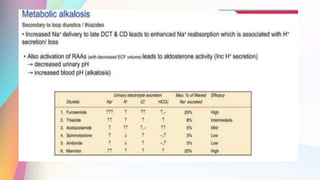
1. Thiazides cause electrolyte disturbance which include hypokalemia, Hyponatremia, metabolic alkalosis,
hypomagnesaemia.
2. The metabolic disturbances are similar ot that of loop diuretics - hyperglycemia, hyperlipidemia and hyperuricaemia.
3. They may cause impotence, hence thiazides are not the preferred antihypertensive in young males.
4. Others: skin rashes, photosensitivity, gastrointestinal disturbances like nausea, vomiting, diarrhoea etc. can occur.
Potassium spairing diuretics
Aldosterone Antagonist
Spironolactone:
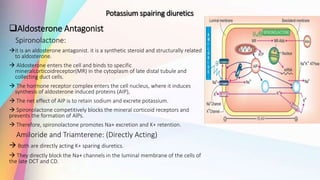
it is an aldosterone antagonist. it is a synthetic steroid and structurally related
to aldosterone.
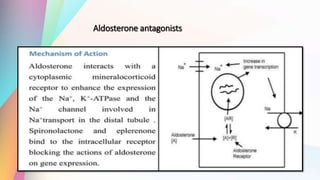
 Aldosterone enters the cell and binds to specific
mineralcorticoidreceptor(MR) in the cytoplasm of late distal tubule and
collecting duct cells.
 The hormone receptor complex enters the cell nucleus, where it induces
synthesis of aldosterone induced proteins (AIP),
 The net effect of AIP is to retain sodium and excrete potassium.
 Spironolactone competitively blocks the mineral corticoid receptors and
prevents the formation of AlPs.
 Therefore, spironolactone promotes Na+ excretion and K+ retention.
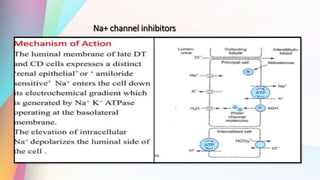
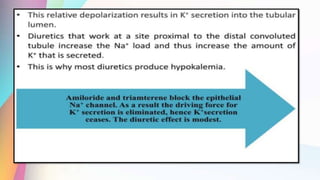
Amiloride and Triamterene: (Directly Acting)
 Both are directly acting K+ sparing diuretics.
 They directly block the Na+ channels in the luminal membrane of the cells of
the late DCT and CD.
Aldosterone antagonists
Na+ channel inhibitors
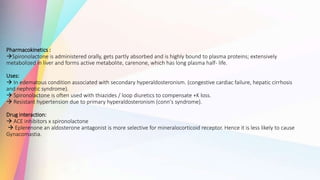
Pharmacokinetics :
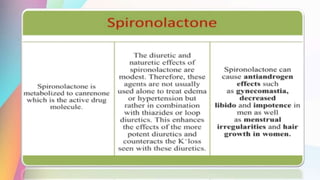
Spironolactone is administered orally, gets partly absorbed and is highly bound to plasma proteins; extensively
metabolized in liver and forms active metabolite, carenone, which has long plasma half- life.
Uses:
 In edematous condition associated with secondary hyperaldosteronism. (congestive cardiac failure, hepatic cirrhosis
and nephrotic syndrome).
 Spironolactone is often used with thiazides / loop diuretics to compensate +K loss.
 Resistant hypertension due to primary hyperaldosteronism (conn's syndrome).
Drug interaction:
 ACE inhibitors x spironolactone
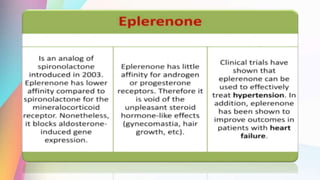
 Eplerenone an aldosterone antagonist is more selective for mineralocorticoid receptor. Hence it is less likely to cause
Gynacomastia.
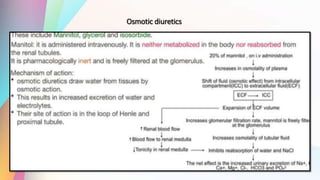
Osmotic diuretics
Anti diuretics
introduction
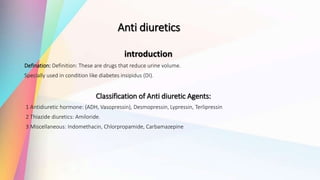
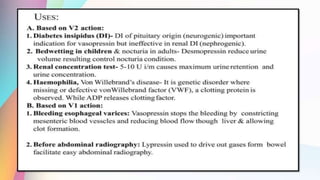
Defination: Definition: These are drugs that reduce urine volume.
Specially used in condition like diabetes insipidus (DI).
Classification of Anti diuretic Agents:
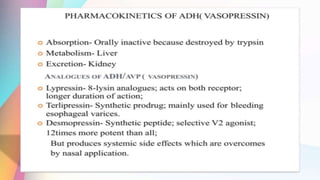
1 Antidiuretic hormone: (ADH, Vasopressin), Desmopressin, Lypressin, Terlipressin
2 Thiazide diuretics: Amiloride.
3 Miscellaneous: Indomethacin, Chlorpropamide, Carbamazepine
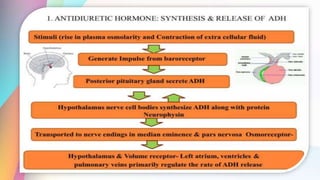
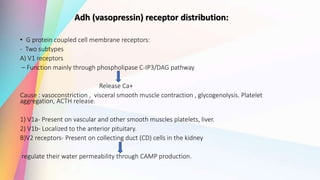
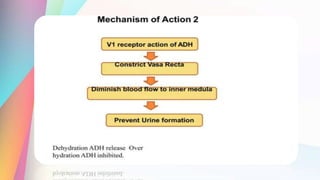
Adh (vasopressin) receptor distribution:
• G protein coupled cell membrane receptors:
- Two subtypes
A) V1 receptors
– Function mainly through phospholipase C-IP3/DAG pathway
Release Ca+
Cause : vasoconstriction , visceral smooth muscle contraction , glycogenolysis. Platelet
aggregation, ACTH release.
1) V1a- Present on vascular and other smooth muscles platelets, liver.
2) V1b- Localized to the anterior pituitary.
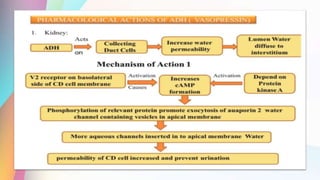
B)V2 receptors- Present on collecting duct (CD) cells in the kidney
regulate their water permeability through CAMP production.
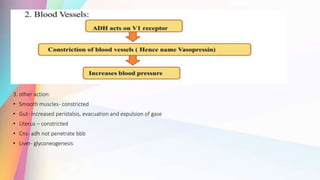
3. other action:
• Smooth muscles- constricted
• Gut- increased peristalsis, evacuation and expulsion of gase
• Uterus – constricted
• Cns- adh not penetrate bbb
• Liver- glyconeogenesis
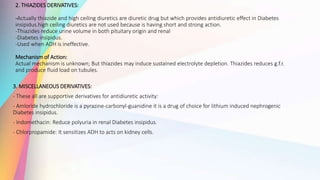
2. THIAZIDES DERIVATIVES:
-Actually thiazide and high ceiling diuretics are diuretic drug but which provides antidiuretic effect in Diabetes
insipidus.high ceiling diuretics are not used because is having short and strong action.
-Thiazides reduce urine volume in both pituitary origin and renal
-Diabetes insipidus.
-Used when ADH is ineffective.
Mechanism of Action:
Actual mechanism is unknown; But thiazides may induce sustained electrolyte depletion. Thiazides reduces g.f.r.
and produce fluid load on tubules.
3. MISCELLANEOUS DERIVATIVES:
- These all are supportive derivatives for antidiuretic activity:
- Amloride hydrochloride is a pyrazine-carbonyl-guanidine it is a drug of choice for lithium induced nephrogenic
Diabetes insipidus.
- Indomethacin: Reduce polyuria in renal Diabetes insipidus.
- Chlorpropamide: It sensitizes ADH to acts on kidney cells.
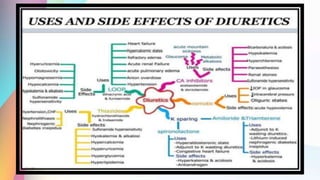
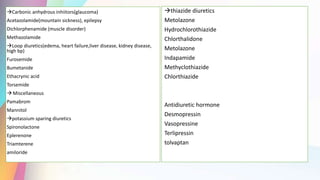
Carbonic anhydrous inhiitors(glaucoma)
Acetazolamide(mountain sickness), epilepsy
Dichlorphenamide (muscle disorder)
Methazolamide
Loop diuretics(edema, heart failure,liver disease, kidney disease,
high bp)
Furosemide
Bumetanide
Ethacrynic acid
Torsemide
Miscellaneous
Pamabrom
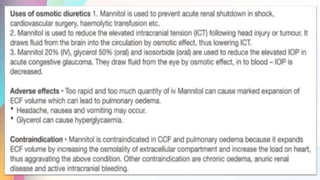
Mannitol
potassium sparing diuretics
Spironolactone
Eplerenone
Triamterene
amiloride
thiazide diuretics
Metolazone
Hydrochlorothiazide
Chlorthalidone
Metolazone
Indapamide
Methyclothiazide
Chlorthiazide
Antidiuretic hormone
Desmopressin
Vasopressine
Terlipressin
tolvaptan
Refrence:
• Essentials of Medical Pharmacology [7th Edition] by KD Tripathi
•Rang and Dale 8th Edition By H.P.Rang, J.M. Ritter
• Katzung B.G.: Basic and Clinical Pharmacology, Lange Medical
Publications, California.
• Pharmacology for medical graduates Third edition by Tara V
Shanbhag.
•Goodman & Gilman's The Pharmacological Basis of THERAPEUTICS
Diuretics and antidiuretics detail STUDY

Diuretics and antidiuretics detail STUDY

  • 1.
    Diuretics & antidiuretics NITTALVEKARIA (m.pharm sem 1 )roll no. 48 dept of pharmacology, K B Institute of Pharmaceutical Education and research
  • 2.
    TERMINOLOGY: Natriuretic- Increasing renalSodium excretion Kaliuretic - Increasing renal POTASSIUM excretion Calciuretic - Enhanced calcium excretion Saluretic - Enhanced sodium chloride excretion Diuretics (WATER PILLS)- Increasing loss of Na+ and water in urine.
  • 3.
    INTRODUCTION AND DEFINATION •Diuretics (natriuretics) are drugs which cause a net loss of Na+ and water in urine and hence increase the urine output or urine volume. • The primary action of most diuretics is the direct inhibition of Na+ reabsorption (increased excretion) at one or more of the four major sites along the nephron. • An increased Na+ excretion is accompanied by anion like Cl Since NaCI is the maior determinant of extracellular fluid volume; Diuretics reduce extracellular fluid volume (decrease in oedema) by decreasing total body NaCl content.
  • 4.
    DIURETICS ARE VERYEFFECTIVE IN THE TREATMENT OF CONDITION LIKE  chronic heart failure  nephrotic syndrome  chronic hepatic diseases  hypertension  pregnancy associated oedema  cirrhosis of the liver  renal insufficiency  hypercalcemia  nephrogenic diabetes insipidus  glaucoma  cerebral edema  hyperaldosteronism  polycystic ovarian syndrome  syndrome of inappropriate adh secretion (siadh)
  • 5.
    Relevant Physiology ofUrine Formation • Kidneys are the organs responsible for urine formation. ------> Two important functions of the kidney are: o To maintain a homeostatis balance of electrolytes and water. o To excrete water soluble end products of metabolites. • Each kidney contains approximately one million nephrons and is capable of forming urine independently. • Urine formation starts from glomerular filtration (g.f.) in a prodigal way. • Normally, about 180 L of fluid is filtered everyday all soluble constituents of blood minus the plasma proteins (along with substances bound to them) and lipids, are filtered at the glomerulus. • More than 99% of the glomerular filtrate is reabsorbed in the tubules ; about 1.5 L urine is produced in 24 hours. o lons such as sodium, chloride, calcium are reabsorbed. o Total amount of glucose, amino acids, vitamins, proteins are reabsorbed. (If the urine contains these ions, it represents the disorders. For example proteins such as albumin in higher amounts causes albuminuria). • The diuretics act primarily by inhibiting tubular reabsorption: just 1% decrease in tubular reabsorption would more than double urine output. Process of urine formation ~ Ultrafiltration ~ Tubular reabsorption
  • 6.
    Kidney: - Weight- 0.5%of total Body, Rk 81-160g Lk 83-176g. - Cardiac Output- 25% of total (50 times) Functions (BASE ) - Balance of Electrolytes, Volume, pH, BP - Activation of Vitamin D -Synthesis of Erythropoietin -Excretion of Toxins, metabolites
  • 7.
    Filtrate = Plasma- Proteins Volume of : -Filtrate - 180 liters -Urine - 1.5 liters (1 %) Kidneys -Renal Blood Flow - 1200ml/min -Renal Plasma Flow - 650 ml/min -GFR - 120 ml/min -Reabsorb Sodium, Chloride and Bicarbonates > 99% Potassium about 85%
  • 8.
    STRUCTURE AND FUNCTION: Eachnephron consists of a: Glomerulus, Proximal Tubule, Loop of Henle, Distal Convoluted Tubule and Collecting Duct
  • 13.
    CLASSIFICATION OF DIURETICS:(by their site/type of action) 1. Drugs acting at proximal convoluted tubule (PCT) Site-1 --- Carbonic anhydrase inhibitor: Acetazolamide methazolamide dichlorphenamide chloraminophenamide. Brinzolamide dorzolamide 2. Drugs acting at thick ascending limb of loop of Henle Site-2 --- Loop diuretics: furosemide bumetadine torsemide ethacrynic acid. 3. Drugs acting at early distal tubule Site-3 ---Thiazides: chlorothiazide hydrochlorothiazide polythiazide Benzthiazide hydroflumethiazide Bendroflumethiazide. ---Thiazide related diuretics: chlorthalidone indapamide metolazone.
  • 14.
    4. Drugs actingat late distal tubule and collecting duct Site-4 ---Aldosterone antagonist: spironolactone eplerenone. ---Direct inhibitor of Na+ channels: Amiloride triamterene. 5. Drugs acting on entire nephron (main site of action in loop of Henle) ---Osmotic diuretics: Manitol glycerol isosorbide. 6. antidiuretic hormone antagonist conivaptan 7. angiotensin converting enzyme inhibitors captopril enalapril lisinopril 8. angiotensin II receptor antagonist candesartan losartan valsartan
  • 15.
    CLASSIFICATION OF DIURETICS:(according efficacy) 1.high efficacy diuretics (inhibitors of na+ - k+ - 2cl co-transport) a) sulphamoyl derivatives: furosemide, bumetanide, torasemide b) phenoxyacetic acid derivatives: ethacrynic acid c) organomercurials: mersalyl 2. medium efficacy diuretics (inhibitors of na+ - cl - svmport) (a) benzothiadiazines (thiazides): hydrochlorothiazide, benzthiazide, hydroflumethiazide, clopamide (b) thiazide like (related heterocyclics): chiorthalidone, metolazone, xipamide, indaoamide. 3. weak or adjunctive diuretics (a) carbonic anhydrase inhibitors: acetazolamide (b) potassium sparing diuretics: (i) aldosterone antagonist: spironolactone (ii) inhibitors of renal epithelial na+ channel: triamterene, amiloride (c) osmotic diuretics: mannitol, isosorbide, glycerol (d) xanthines: theophylline
  • 17.
  • 19.
    Pharmacokinetics: -The carbonic anhydraseinhibitors are well absorbed after oral administration. -An increase in urine pH from the HCO apparent within 30 minutes maximal at 2 hours persists for 12 hours after a single dose Excretion of the drug is by secretion in the proximal tubule S2 segment: dosing must be reduced in renal insufficiency. Pharmacodynamics: Inhibition of carbonic anhydrase activity profoundly depresses HCO; reabsorption in the PCT. At its maximal safe dosage, 85% of the HCO; reabsorptive capacity of the superficial PCT is inhibited. Some HCO; can still be absorbed at other nephron sites so the overall effect is about 45% inhibition of whole kidney HCO3-reabsorption.
  • 20.
    Therapeutic Uses: -Used totreat chronic open-angle glaucoma -High aqueous humor [HCO3-] acute mountain sickness - Prevention and treatment metabolic alkalosis -Mostly used in combination with other diuretics in resistant patients. Side Effects: -Rapid tolerance -Increased HCO3- excretion causes metabolic acidosis -Drowsiness -Fatigue -CNS depression -Paresthesia (pins and needles under skin) -Nephrolithiasis (renal stones) K+ wasting -hypersensitivity reaction -skin rashes -fever -headache Contraindication: - Liver cirrhosis (CA-I inhibits conversion of NH to NH4) -> NH3 increased encephalopathy -copd: worsening of metabolic acidosis is seen in patient with chronic obstructive pulmonary disease.
  • 21.
  • 22.
     Mechanism ofaction: • Enter proximal tubule via organic acid transporter • Inhibits apical Na-K-2CI transporter in thick ascending loop of Henle • Competes with CI- binding site • Enhances passive Mg and Ca excretion • Increased K+ and H+ excretion in CCD • Inhibits reabsorption of ~25% of glomerular filtrate
  • 23.
    Pharmacokinetics:  Oral administration(quite good absorption, torasemide is absorbed faster than furosemide)  I.V. in urgent cases  High plasma protein binding  Renal elimination - GF (limited) + tubular secretion  Effect duration - quite short (2-3 h furosemide), torasemide is longer (4-6h) and it has an active metabolite  Tubular secretion can be decreased by the competition due to the competition with other drugs (e.g., NSAD)
  • 24.
    Therapeutic use: • Usefulfor rapid reduction of edematous fluid. • May be used to treat hypertension. • The increase in Ca2+ excretion caused by these agents makes them useful in the treatment of hypercalcemia. • used in the mild hyperkalemia. Side effects: • Hyponatremia, hypokalemia, hypochloremia, hypocalcemia and hypomagnesemia. •Ototoxcity, especially with ethacrynic acid • Hypotension. • Osteophoresis.
  • 25.
  • 26.
     Mechanism ofaction : • Thiazides inhibits Na+ C- symport in early distal tubule and increase Na+ and CI- excretion. There is increased delivery of Na+ to the late distal tubule, hence there is increased exchange of Na+ K+ which results in K+ loss. • Some of thiazide also have weak carbonic anhydrase inhibitory action and increase HCO3- loss. • Therefore there is a net loss of Na+, K+, Cl-, Hco3- in urine. Unlike loop diuretics, thiazides decrease Ca2+ excretion. Also used ni mild to moderate heart failure Thiazides are renally secreted to act on DCT, thiazides are deemed ineffective in moderate renal impairment (except metolazone)
  • 27.
    Pharmacokinetics:  Thiazide areadministered orally. They have long duration and are excreted in urine. Uses: 1 Hypertension: thiazides are used in the treatment of essential hypertension. 2. Heart failure: thiazides are used for mild to moderate cases of heart failure. 3. Hypercalcemia: thiazides are used in calcium nephrolithiasis (Kidney stone) as they reduce the urinary excretion of calcium. Adverse effects : 1. Thiazides cause electrolyte disturbance which include hypokalemia, Hyponatremia, metabolic alkalosis, hypomagnesaemia. 2. The metabolic disturbances are similar ot that of loop diuretics - hyperglycemia, hyperlipidemia and hyperuricaemia. 3. They may cause impotence, hence thiazides are not the preferred antihypertensive in young males. 4. Others: skin rashes, photosensitivity, gastrointestinal disturbances like nausea, vomiting, diarrhoea etc. can occur.
  • 30.
    Potassium spairing diuretics AldosteroneAntagonist Spironolactone: it is an aldosterone antagonist. it is a synthetic steroid and structurally related to aldosterone.  Aldosterone enters the cell and binds to specific mineralcorticoidreceptor(MR) in the cytoplasm of late distal tubule and collecting duct cells.  The hormone receptor complex enters the cell nucleus, where it induces synthesis of aldosterone induced proteins (AIP),  The net effect of AIP is to retain sodium and excrete potassium.  Spironolactone competitively blocks the mineral corticoid receptors and prevents the formation of AlPs.  Therefore, spironolactone promotes Na+ excretion and K+ retention. Amiloride and Triamterene: (Directly Acting)  Both are directly acting K+ sparing diuretics.  They directly block the Na+ channels in the luminal membrane of the cells of the late DCT and CD.
  • 31.
  • 34.
  • 36.
    Pharmacokinetics : Spironolactone isadministered orally, gets partly absorbed and is highly bound to plasma proteins; extensively metabolized in liver and forms active metabolite, carenone, which has long plasma half- life. Uses:  In edematous condition associated with secondary hyperaldosteronism. (congestive cardiac failure, hepatic cirrhosis and nephrotic syndrome).  Spironolactone is often used with thiazides / loop diuretics to compensate +K loss.  Resistant hypertension due to primary hyperaldosteronism (conn's syndrome). Drug interaction:  ACE inhibitors x spironolactone  Eplerenone an aldosterone antagonist is more selective for mineralocorticoid receptor. Hence it is less likely to cause Gynacomastia.
  • 37.
  • 43.
    Anti diuretics introduction Defination: Definition:These are drugs that reduce urine volume. Specially used in condition like diabetes insipidus (DI). Classification of Anti diuretic Agents: 1 Antidiuretic hormone: (ADH, Vasopressin), Desmopressin, Lypressin, Terlipressin 2 Thiazide diuretics: Amiloride. 3 Miscellaneous: Indomethacin, Chlorpropamide, Carbamazepine
  • 45.
    Adh (vasopressin) receptordistribution: • G protein coupled cell membrane receptors: - Two subtypes A) V1 receptors – Function mainly through phospholipase C-IP3/DAG pathway Release Ca+ Cause : vasoconstriction , visceral smooth muscle contraction , glycogenolysis. Platelet aggregation, ACTH release. 1) V1a- Present on vascular and other smooth muscles platelets, liver. 2) V1b- Localized to the anterior pituitary. B)V2 receptors- Present on collecting duct (CD) cells in the kidney regulate their water permeability through CAMP production.
  • 48.
    3. other action: •Smooth muscles- constricted • Gut- increased peristalsis, evacuation and expulsion of gase • Uterus – constricted • Cns- adh not penetrate bbb • Liver- glyconeogenesis
  • 52.
    2. THIAZIDES DERIVATIVES: -Actuallythiazide and high ceiling diuretics are diuretic drug but which provides antidiuretic effect in Diabetes insipidus.high ceiling diuretics are not used because is having short and strong action. -Thiazides reduce urine volume in both pituitary origin and renal -Diabetes insipidus. -Used when ADH is ineffective. Mechanism of Action: Actual mechanism is unknown; But thiazides may induce sustained electrolyte depletion. Thiazides reduces g.f.r. and produce fluid load on tubules. 3. MISCELLANEOUS DERIVATIVES: - These all are supportive derivatives for antidiuretic activity: - Amloride hydrochloride is a pyrazine-carbonyl-guanidine it is a drug of choice for lithium induced nephrogenic Diabetes insipidus. - Indomethacin: Reduce polyuria in renal Diabetes insipidus. - Chlorpropamide: It sensitizes ADH to acts on kidney cells.
  • 53.
    Carbonic anhydrous inhiitors(glaucoma) Acetazolamide(mountainsickness), epilepsy Dichlorphenamide (muscle disorder) Methazolamide Loop diuretics(edema, heart failure,liver disease, kidney disease, high bp) Furosemide Bumetanide Ethacrynic acid Torsemide Miscellaneous Pamabrom Mannitol potassium sparing diuretics Spironolactone Eplerenone Triamterene amiloride thiazide diuretics Metolazone Hydrochlorothiazide Chlorthalidone Metolazone Indapamide Methyclothiazide Chlorthiazide Antidiuretic hormone Desmopressin Vasopressine Terlipressin tolvaptan
  • 54.
    Refrence: • Essentials ofMedical Pharmacology [7th Edition] by KD Tripathi •Rang and Dale 8th Edition By H.P.Rang, J.M. Ritter • Katzung B.G.: Basic and Clinical Pharmacology, Lange Medical Publications, California. • Pharmacology for medical graduates Third edition by Tara V Shanbhag. •Goodman & Gilman's The Pharmacological Basis of THERAPEUTICS