Diuretics (2/2)
Dr. C.Adithan
Professor of Pharmacology
Overview of 2nd
lecture
• Pharmacology of
– Potassium sparing diuretics: (a) Aldosterone antagonists
(b) Na+
Channel Blockers
– Osmotic diuretics
– Carbonic anhydrase inhibitors
• Mechanism of action
• Indications
• Dose
• Side effects
• Drug interactions
• Few MCQs
Classifications of Diuretics
• Thiazide Diuretics:
a) Thiazides: Hydrochlorothiazide, Benzthiazide
b) Thiazide like: Chlorthalidone, Metolazone, Xipamide, Indapamide, Clopamide
• Loop Diuretics : Frusemide, Bumetanide, Torasemide, Ethacrynic acid
• Potassium Sparing Diuretics :
– Aldosterone Antagonist: Spironolactone, Canrenone, Eplerenone
– Directly Acting (Inhibition of Na+
channel): Triamterene, Amiloride
• Carbonic anhydrase inhibitors : Acetazolamide, Brinzolamide,
Dorzolamide
• Osmotic Diuretics : Mannitol, Glycerine, Urea, Isosorbide
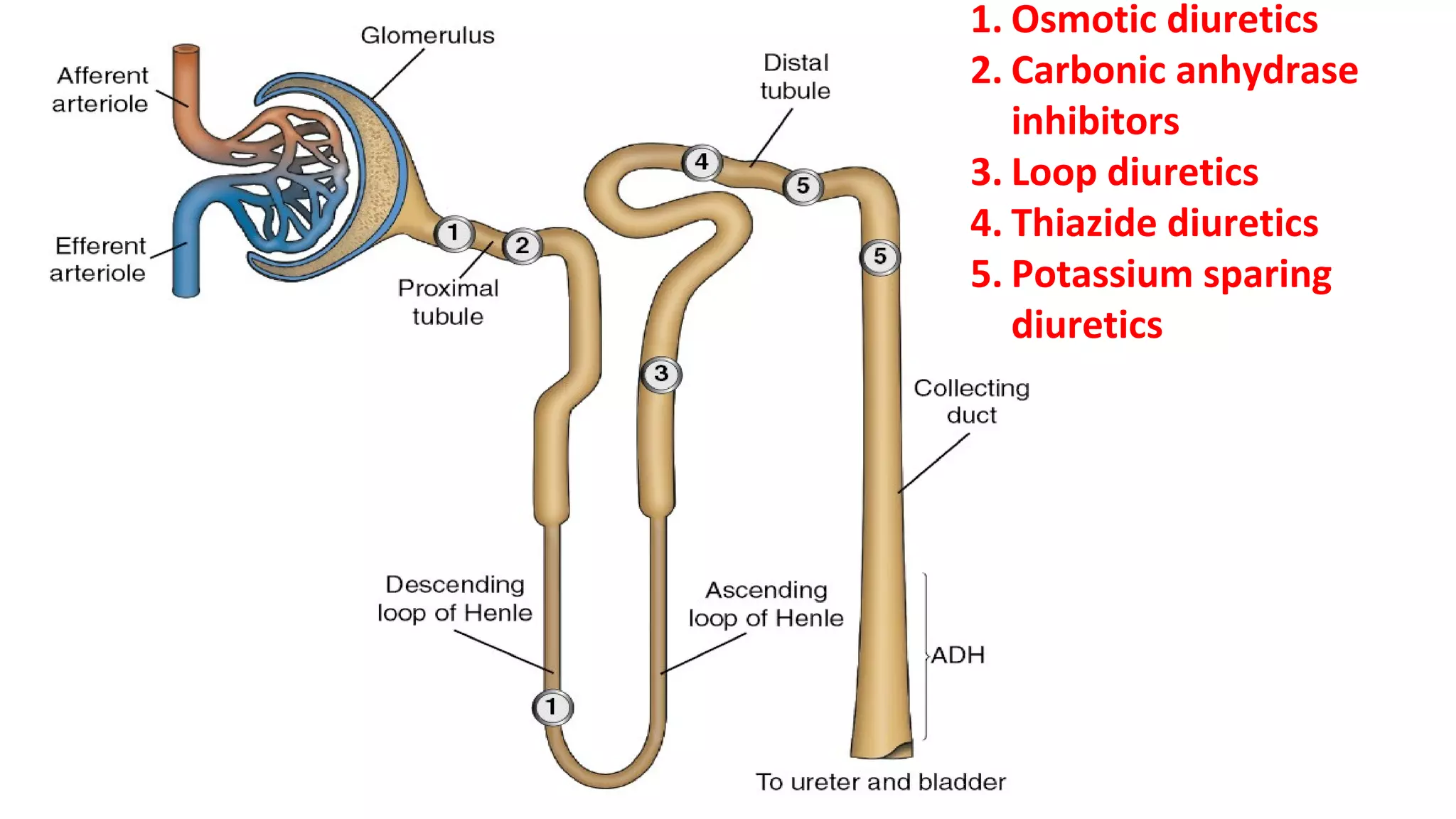
1. Osmotic diuretics
2. Carbonic anhydrase inhibitors
3. Loop Diuretics (High ceiling)
4. Thiazide diuretics
5. Potassium sparing diuretics
1. Osmotic diuretics
2. Carbonic anhydrase
inhibitors
3. Loop diuretics
4. Thiazide diuretics
5. Potassium sparing
diuretics
Potassium Sparing Diuretics
– Aldosterone Antagonist: Spironolactone, Canrenone, Eplerenone
– Directly Acting (Inhibition of Na+
channel): Triamterene, Amiloride
»Mechanism of action
»Individual drugs
»Pharmacokinetics
»Indications
»Dose
»Side effects and Precautions
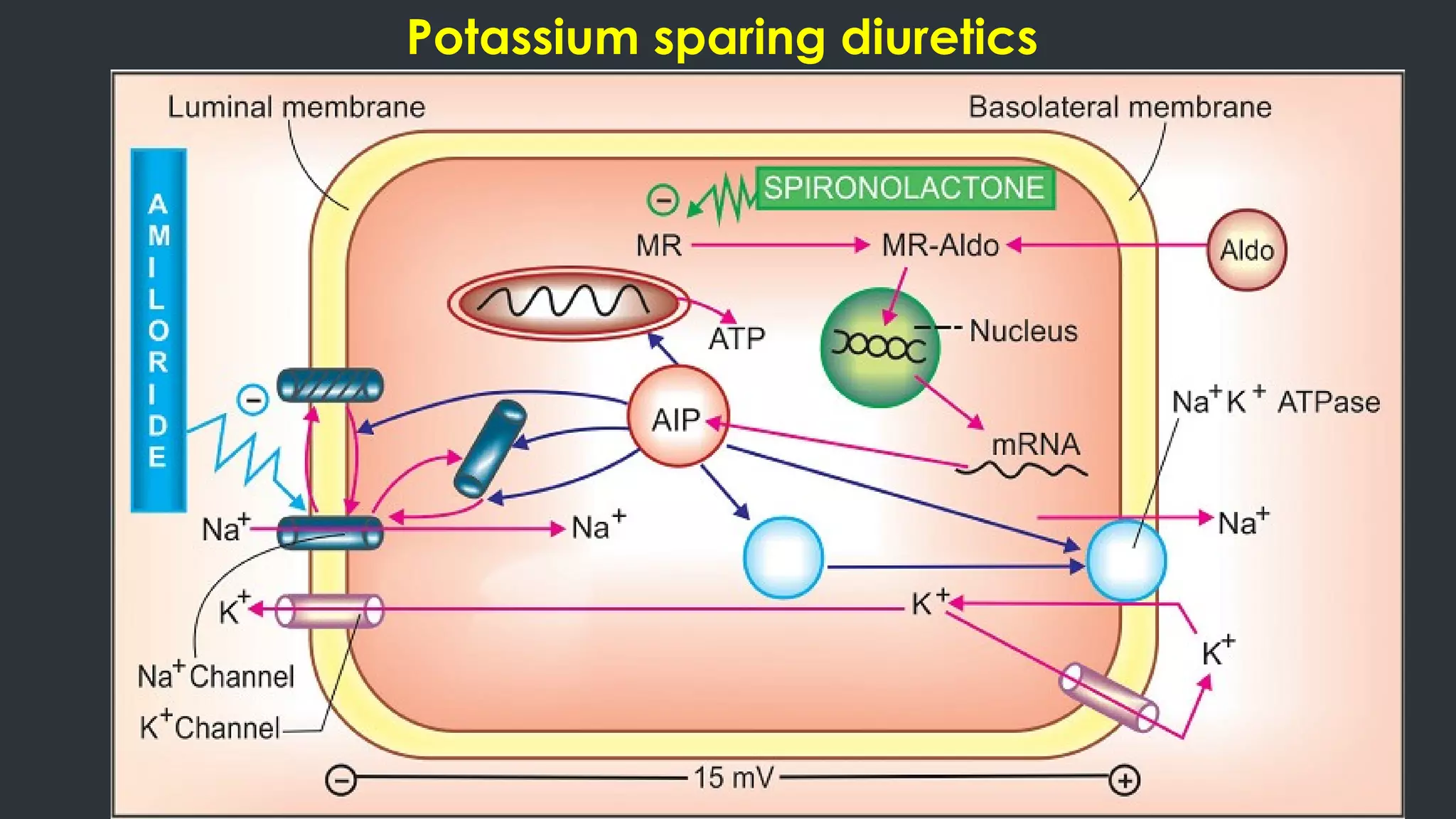
Potassium sparing diuretics
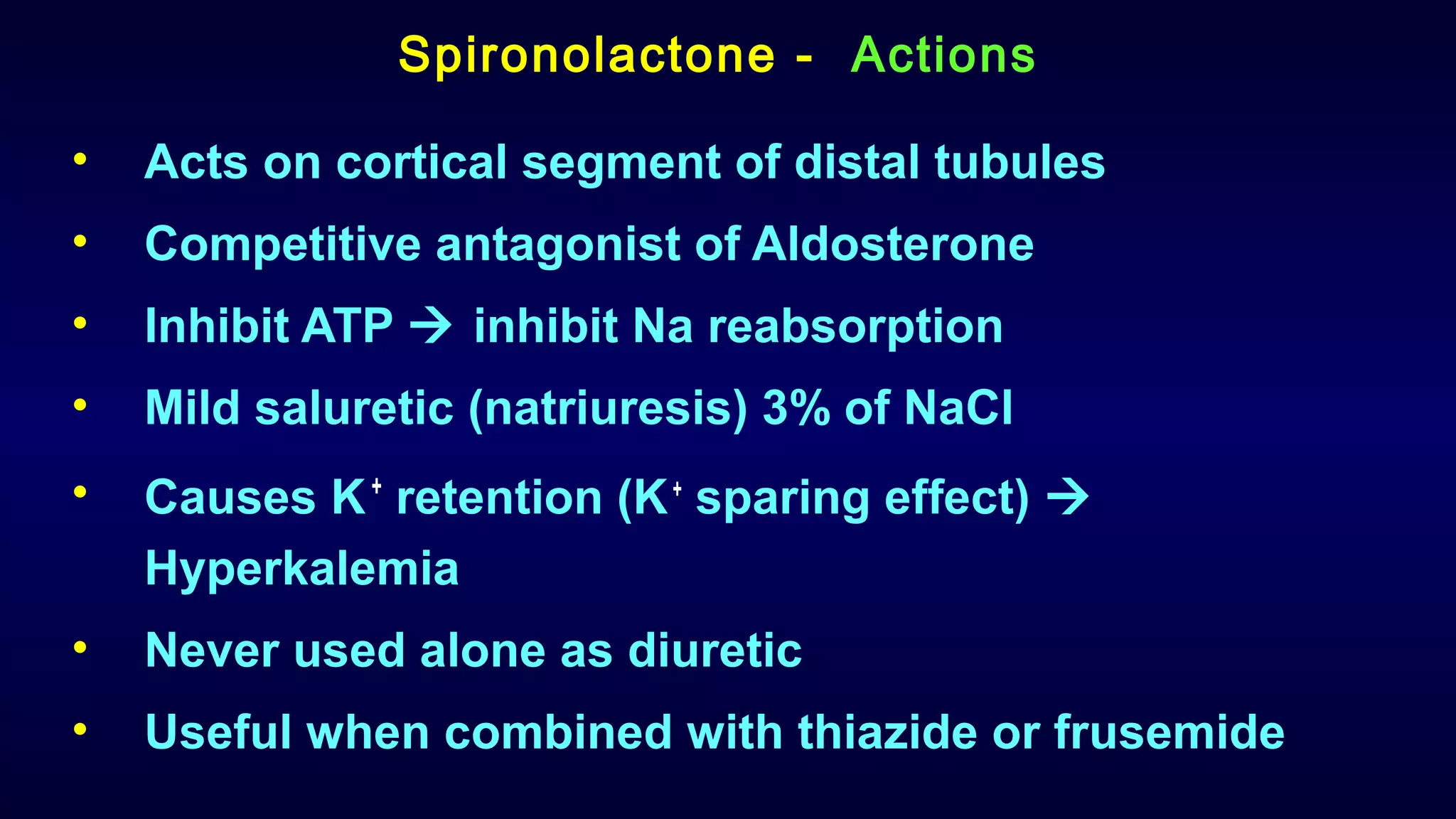
Spironolactone - Actions
• Acts on cortical segment of distal tubules
• Competitive antagonist of Aldosterone
• Inhibit ATP  inhibit Na reabsorption
• Mild saluretic (natriuresis) 3% of NaCl
• Causes K+
retention (K+
sparing effect) 
Hyperkalemia
• Never used alone as diuretic
• Useful when combined with thiazide or frusemide
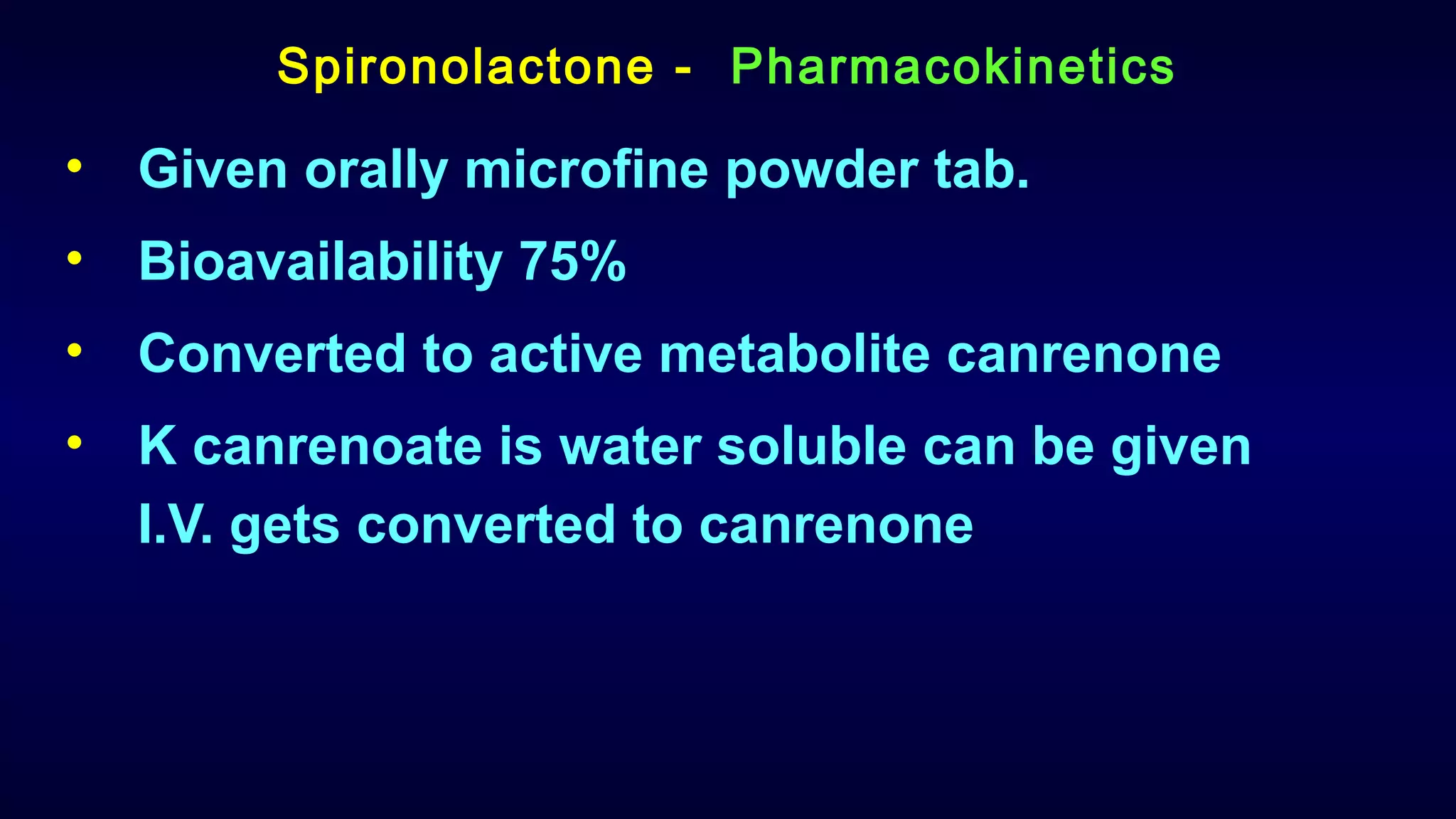
Spironolactone - Pharmacokinetics
• Given orally microfine powder tab.
• Bioavailability 75%
• Converted to active metabolite canrenone
• K canrenoate is water soluble can be given
I.V. gets converted to canrenone
Spironolactone - uses
1) Oedema: Useful in cirrhotic and nephrotic syndrome
 breaks resistance to thiazides or frusemide in refractory
edema
1) To counteract K+
loss due to thiazides, frusemide
2) Hypertension: combined with thiazide
4) CHF: as an adjunctive therapy, it retards disease progression
and reduces mortality
5) Primary Hyperaldosteronism (Conn’s syndrome)
Spironolactone – Adverse Effects
1) Hyperkalemia risk
• In CRF patients
• Patients taking ACEI (Enalapril) or ATRA (Losartan)
• KCl supplement
1) Related to steroid structure
• Gynaecomastia, Impotence in males
• Hirsutism, menstrual irregualarities in females
3) Misc: drowsiness, abdominal upset
Drug Interactions
• may increase digoxin levels in CHF
• NSAIDs (Aspirin) decreases its effect
Potassium sparing diuretics
Eplerenone
More selective aldosterone antagonist
Less hormonal adverse effects
Hyperkalaemia risk similar to spironolactone
Use
Moderate to severe CHF
Post MI Left Ventricular dysfunction
Amiloride & Triamterene - Actions
• Directly inhibits pumps in distal tubules and collecting
ducts therefore independent of aldosterone
 Amiloride sensitive or renal epithelial Na channels are
blocked
 Weak diuretic, never used alone
 Indirectly inhibit K+
secretion
 Also inhibit H+
secretion
 Amiloride in aerosol form  cystic fibrosis
 ADRs: Relatively fewer than spironolactone, does not cause
sexual dysfunction
Triamterene & Amiloride
Onset of action much faster than spironolactone
Reduce loss of potassium in urine
Predispose to acidosis (conserve K+
and H+
)
Hyperkalaemia with K+
supplements, ARBs, ACEIs
Amiloride: 10 times more potent than triamterene
Used along with thiazides to prevent hypokalaemia
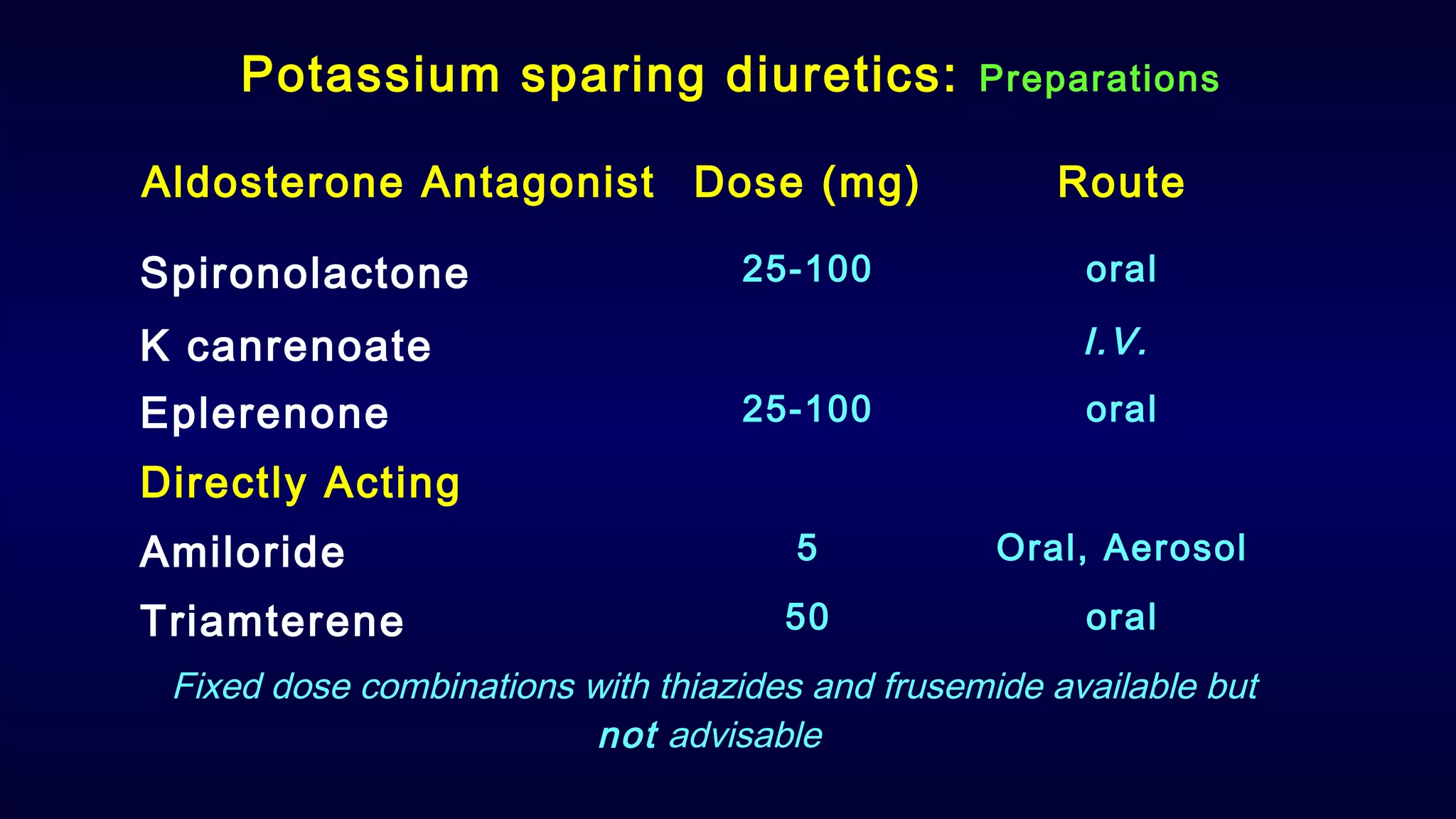
Potassium sparing diuretics: Preparations
Aldosterone Antagonist Dose (mg) Route
Spironolactone 25-100 oral
K canrenoate I.V.
Eplerenone 25-100 oral
Directly Acting
Amiloride 5 Oral, Aerosol
Triamterene 50 oral
Fixed dose combinations with thiazides and frusemide available but
not advisable
• Acetazolamide
• Methazolamide
Carbonic Anhydrase Inhibitors (CAIs)Carbonic Anhydrase Inhibitors (CAIs)
CARBONIC ANHYDRASE INHIBITORSCARBONIC ANHYDRASE INHIBITORS
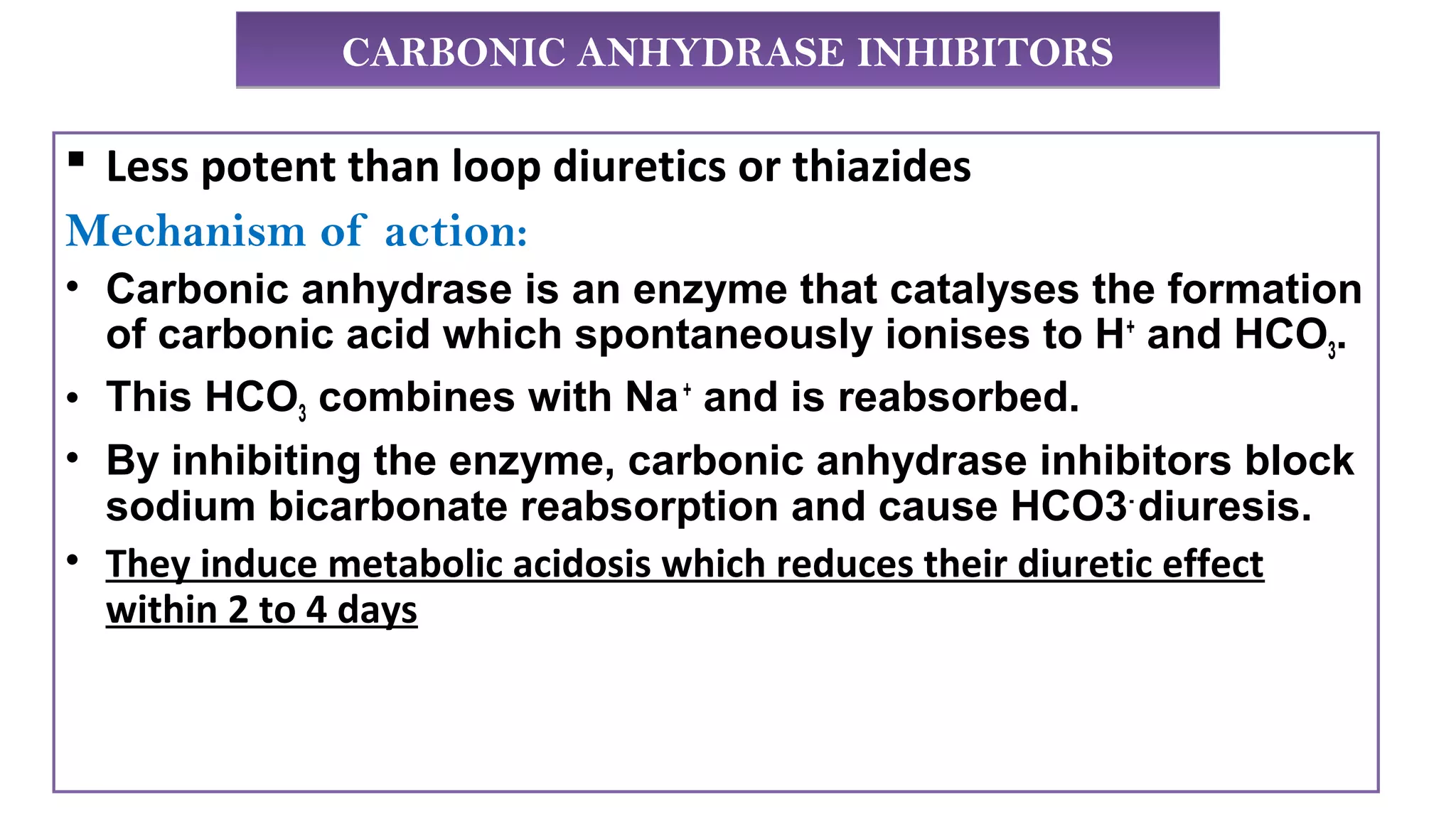
 Less potent than loop diuretics or thiazides
Mechanism of action:
• Carbonic anhydrase is an enzyme that catalyses the formation
of carbonic acid which spontaneously ionises to H+
and HCO3.
• This HCO3 combines with Na+
and is reabsorbed.
• By inhibiting the enzyme, carbonic anhydrase inhibitors block
sodium bicarbonate reabsorption and cause HCO3-
diuresis.
• They induce metabolic acidosis which reduces their diuretic effect
within 2 to 4 days
CARBONIC ANHYDRASE INHIBITORSCARBONIC ANHYDRASE INHIBITORS
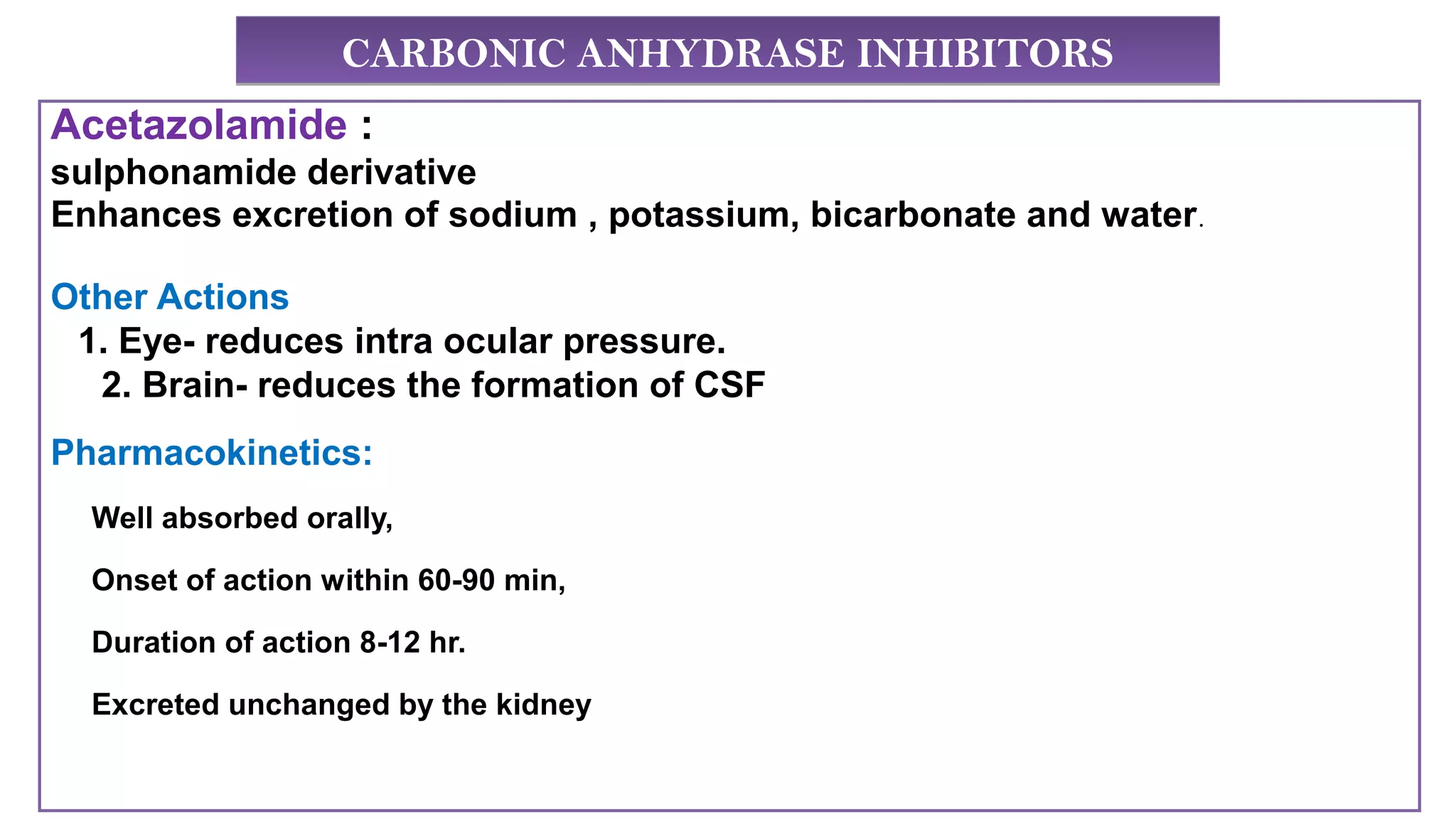
Acetazolamide :
sulphonamide derivative
Enhances excretion of sodium , potassium, bicarbonate and water.
Other Actions
1. Eye- reduces intra ocular pressure.
2. Brain- reduces the formation of CSF
Pharmacokinetics:
Well absorbed orally,
Onset of action within 60-90 min,
Duration of action 8-12 hr.
Excreted unchanged by the kidney
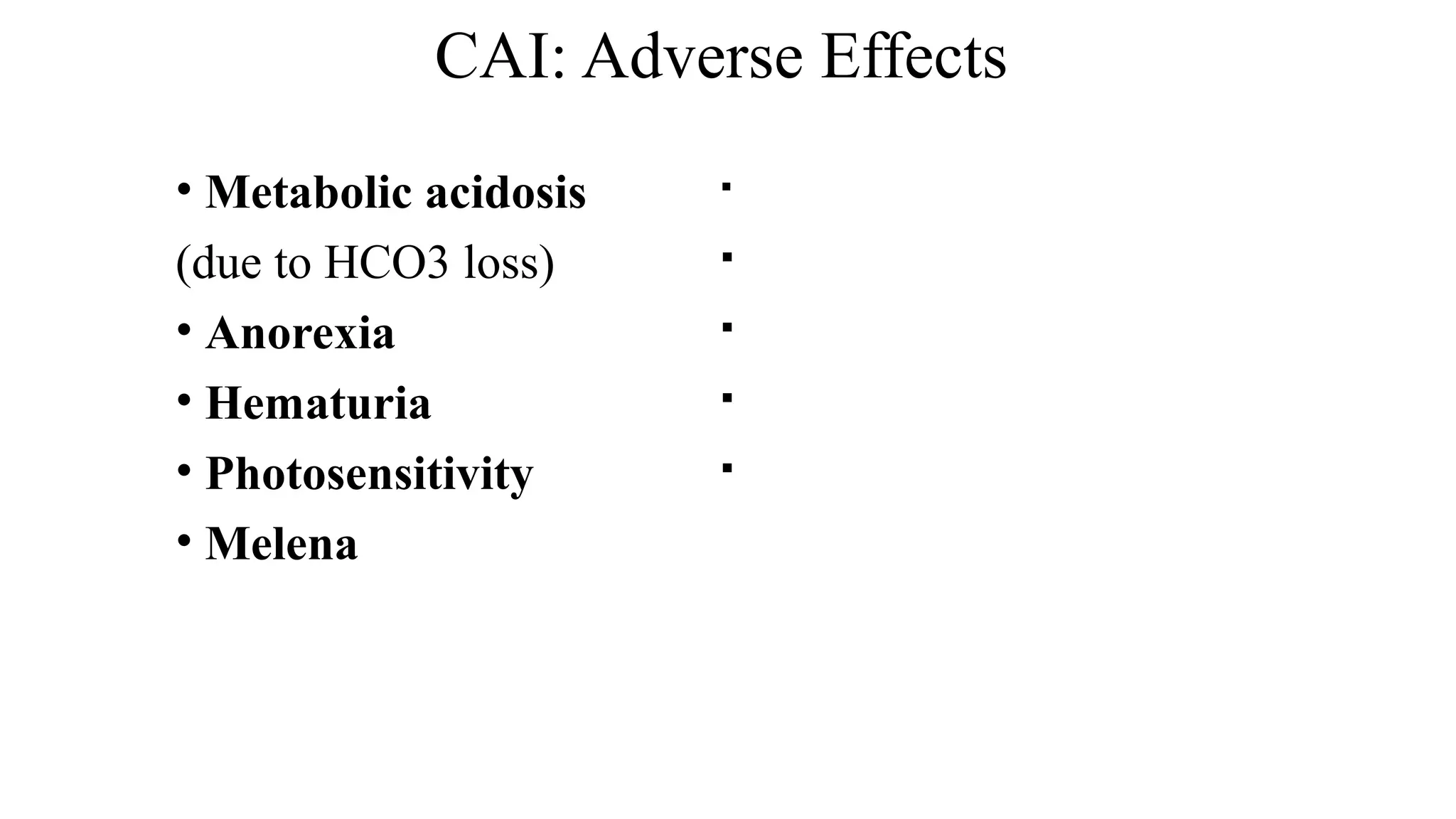
CAI: Adverse Effects
• Metabolic acidosis
(due to HCO3 loss)
• Anorexia
• Hematuria
• Photosensitivity
• Melena
 Hypokalemia
 Drowsiness
 Paresthesias
 Urticaria
 Renal stones : Ca++ is
lost with HCO3 resulting
in
hypercalciuria.
CARBONIC ANHYDRASE INHIBITORSCARBONIC ANHYDRASE INHIBITORS
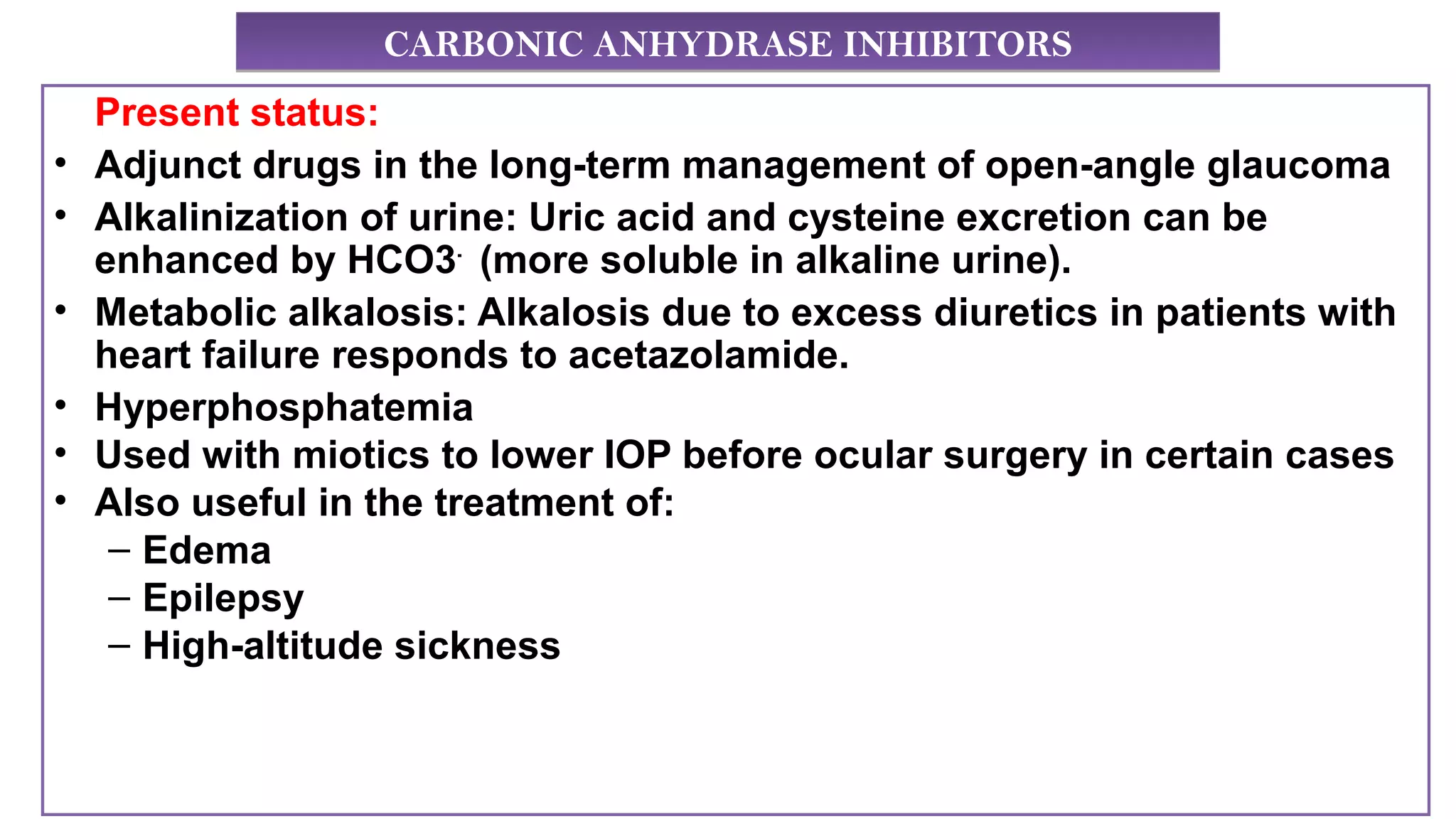
Present status:
• Adjunct drugs in the long-term management of open-angle glaucoma
• Alkalinization of urine: Uric acid and cysteine excretion can be
enhanced by HCO3-
(more soluble in alkaline urine).
• Metabolic alkalosis: Alkalosis due to excess diuretics in patients with
heart failure responds to acetazolamide.
• Hyperphosphatemia
• Used with miotics to lower IOP before ocular surgery in certain cases
• Also useful in the treatment of:
– Edema
– Epilepsy
– High-altitude sickness
OSMOTIC DIURETICSOSMOTIC DIURETICS
Mannitol is a pharmacologically inert substance.
• Mannitol gets filtered by the glomerulus but is reabsorbed.
• It causes water retention in the proximal tubule and
descending limb of Henle’s loop by osmotic effect
resulting in water diuresis.
• There is also some loss of sodium.
Adverse effects are dehydration, ECF volume expansion,
hyoponatraemia, headache, nausea, vomiting and allergic
reactions.
Uses
• To maintain urine volume and prevent oliguria in conditions like
massive haemolysis, rhabdomyolysis, shock and severe trauma.
In such situations mannitol prevents renal failure.
• To reduce intracranial and intraocular pressure.
• Contraindicated in patients who have already gone into renal
failure, mannitol can be dangerous since it can cause pulmonary
edema and may precipitate heart failure due to volume expansion.
• Glycerol is effective orally – reduces Intraocular and
intracranial pressure.
• Methylxanthines like theophylline have mild diuretic effect.
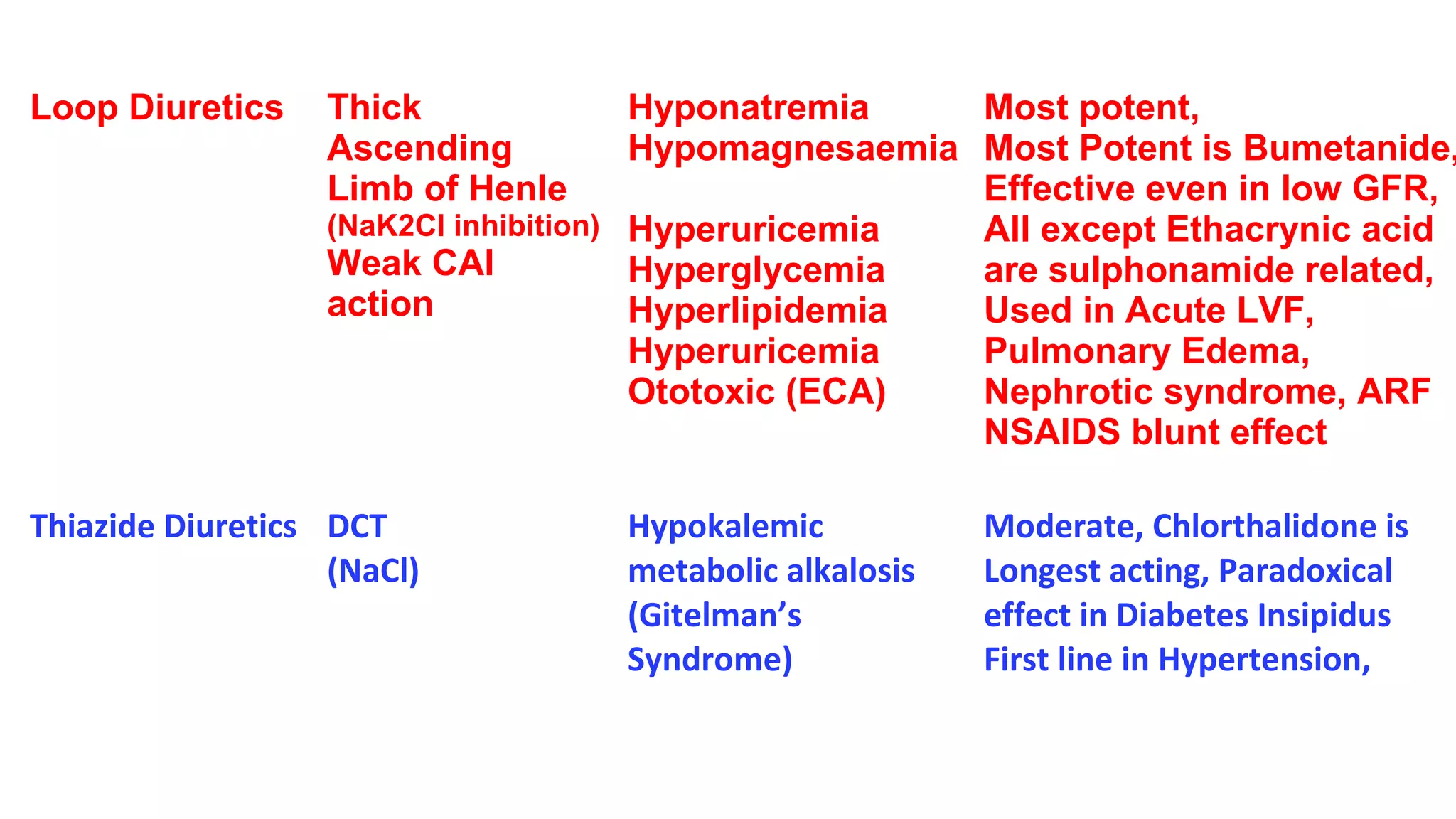
Diuretic Site of Action Adverse Effects Special points
Loop Diuretics Thick
Ascending
Limb of Henle
(NaK2Cl inhibition)
Weak CAI
action
Hyponatremia
Hypomagnesaemia
Hypocalcaemia
Hyperuricemia
Hyperglycemia
Hyperlipidemia
Hyperuricemia
Ototoxic (ECA)
Most potent,
Most Potent is Bumetanide,
Effective even in low GFR,
All except Ethacrynic acid
are sulphonamide related,
Used in Acute LVF,
Pulmonary Edema,
Nephrotic syndrome, ARF
NSAIDS blunt effect
Thiazide Diuretics DCT
(NaCl)
Hypokalemic
metabolic alkalosis
(Gitelman’s
Syndrome)
Hypercalcemia
Moderate, Chlorthalidone is
Longest acting, Paradoxical
effect in Diabetes Insipidus
First line in Hypertension,
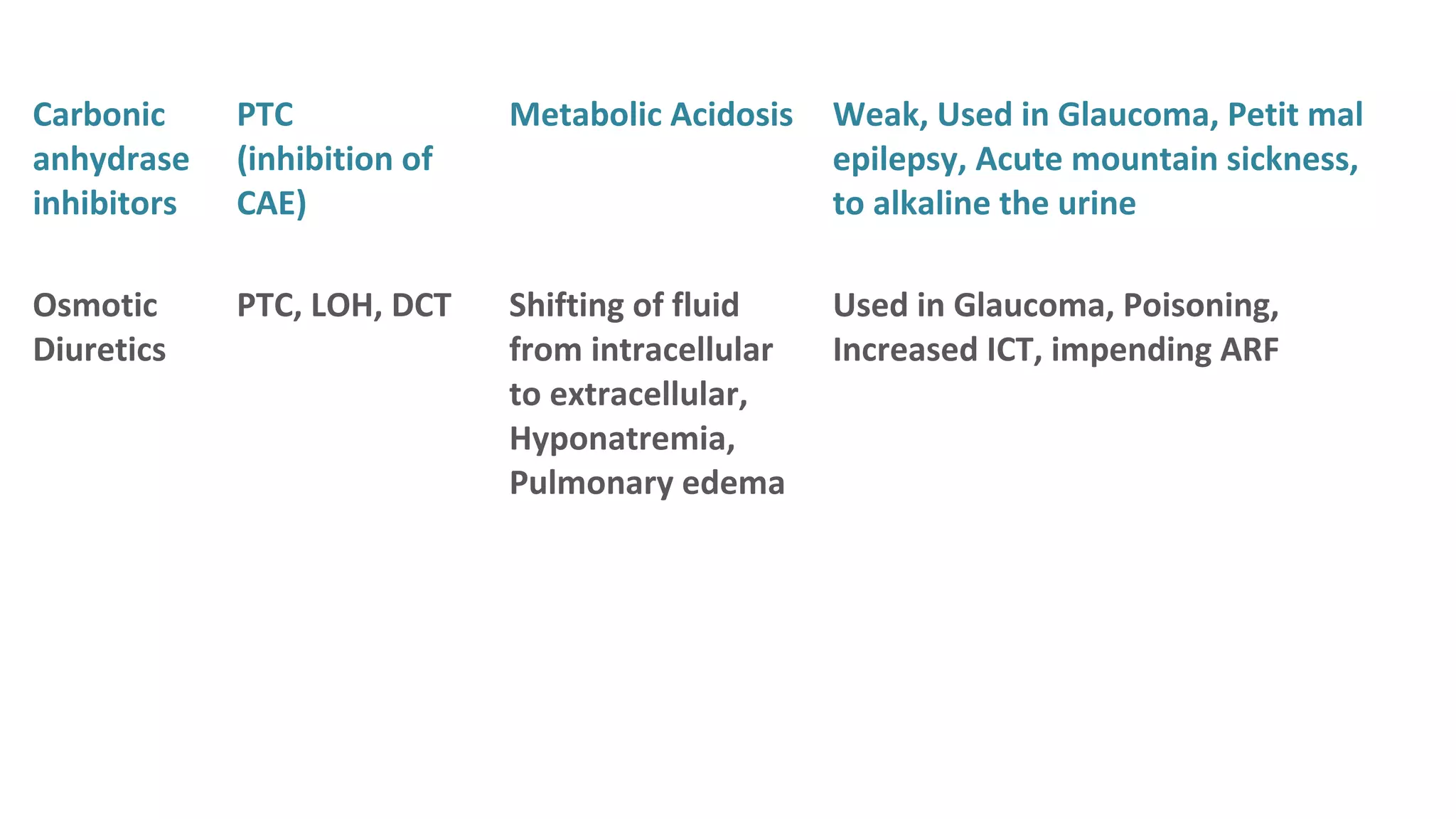
Diuretic Site of Action Adverse Effects Special points
Carbonic
anhydrase
inhibitors
PTC
(inhibition of
CAE)
Metabolic Acidosis Weak, Used in Glaucoma, Petit mal
epilepsy, Acute mountain sickness,
to alkaline the urine
Osmotic
Diuretics
PTC, LOH, DCT Shifting of fluid
from intracellular
to extracellular,
Hyponatremia,
Pulmonary edema
Used in Glaucoma, Poisoning,
Increased ICT, impending ARF
Potassium
Sparing
Diuretics
CD Hyperkalemia
Antiandrogenic
effect
Weak, As supplement to other to
counter the hypokalemia, Canrenone
is active metabolite, used in Conn’s
syndrome (Primary
Hyperaldosteronism), cirrhotic
edema
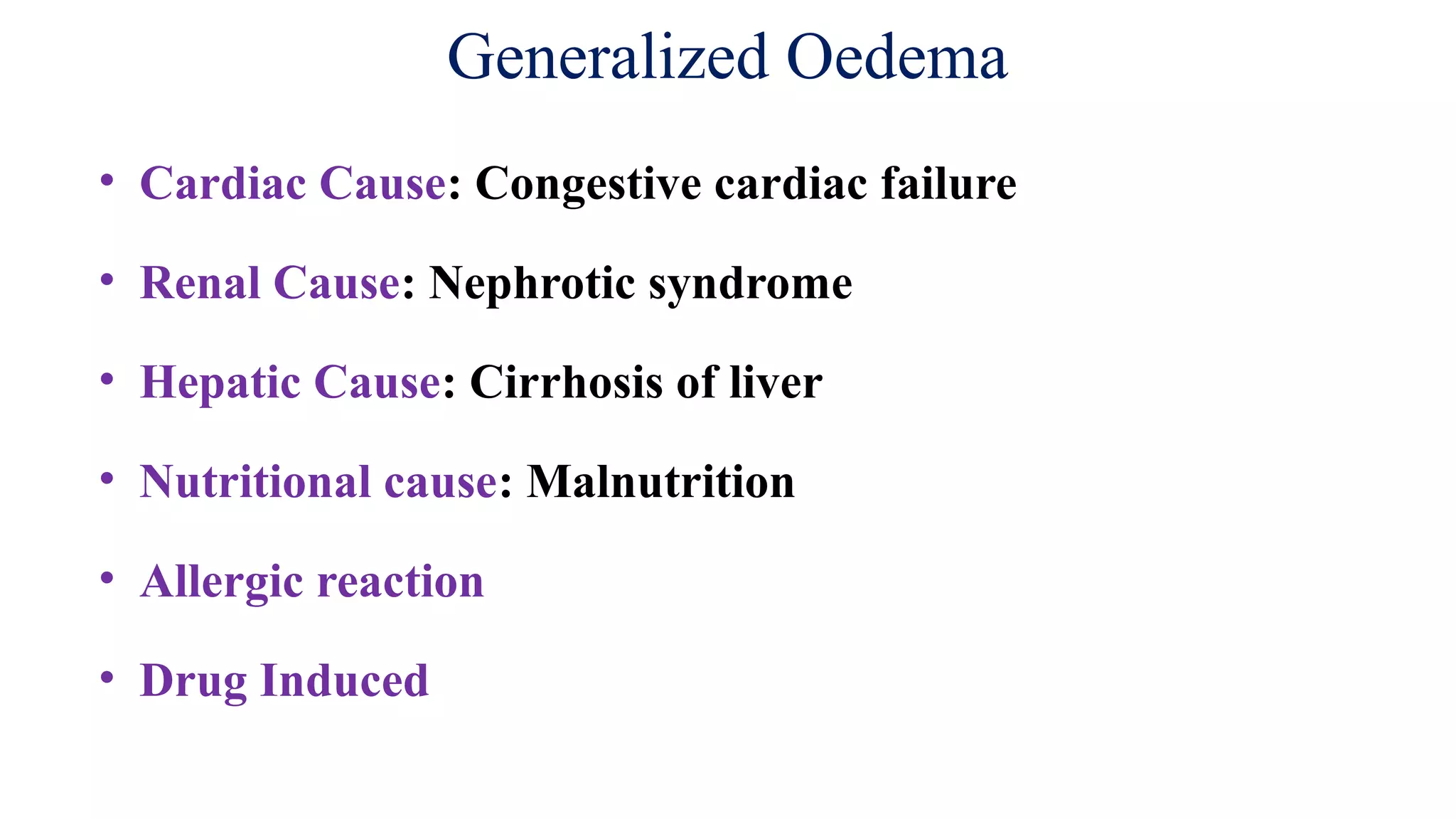
Generalized Oedema
• Cardiac Cause: Congestive cardiac failure
• Renal Cause: Nephrotic syndrome
• Hepatic Cause: Cirrhosis of liver
• Nutritional cause: Malnutrition
• Allergic reaction
• Drug Induced
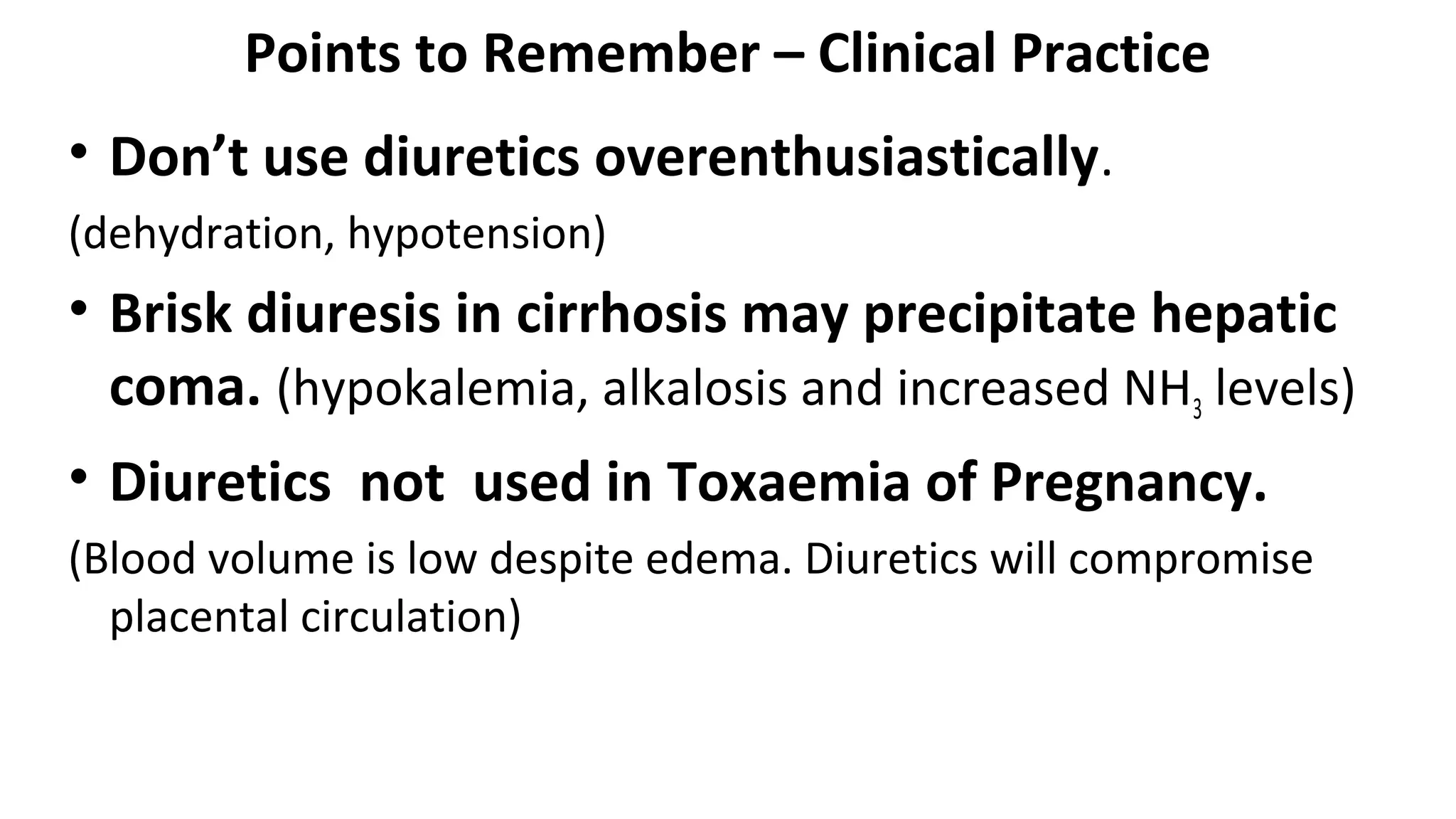
Points to Remember – Clinical Practice
• Don’t use diuretics overenthusiastically.
(dehydration, hypotension)
• Brisk diuresis in cirrhosis may precipitate hepatic
coma. (hypokalemia, alkalosis and increased NH3 levels)
• Diuretics not used in Toxaemia of Pregnancy.
(Blood volume is low despite edema. Diuretics will compromise
placental circulation)
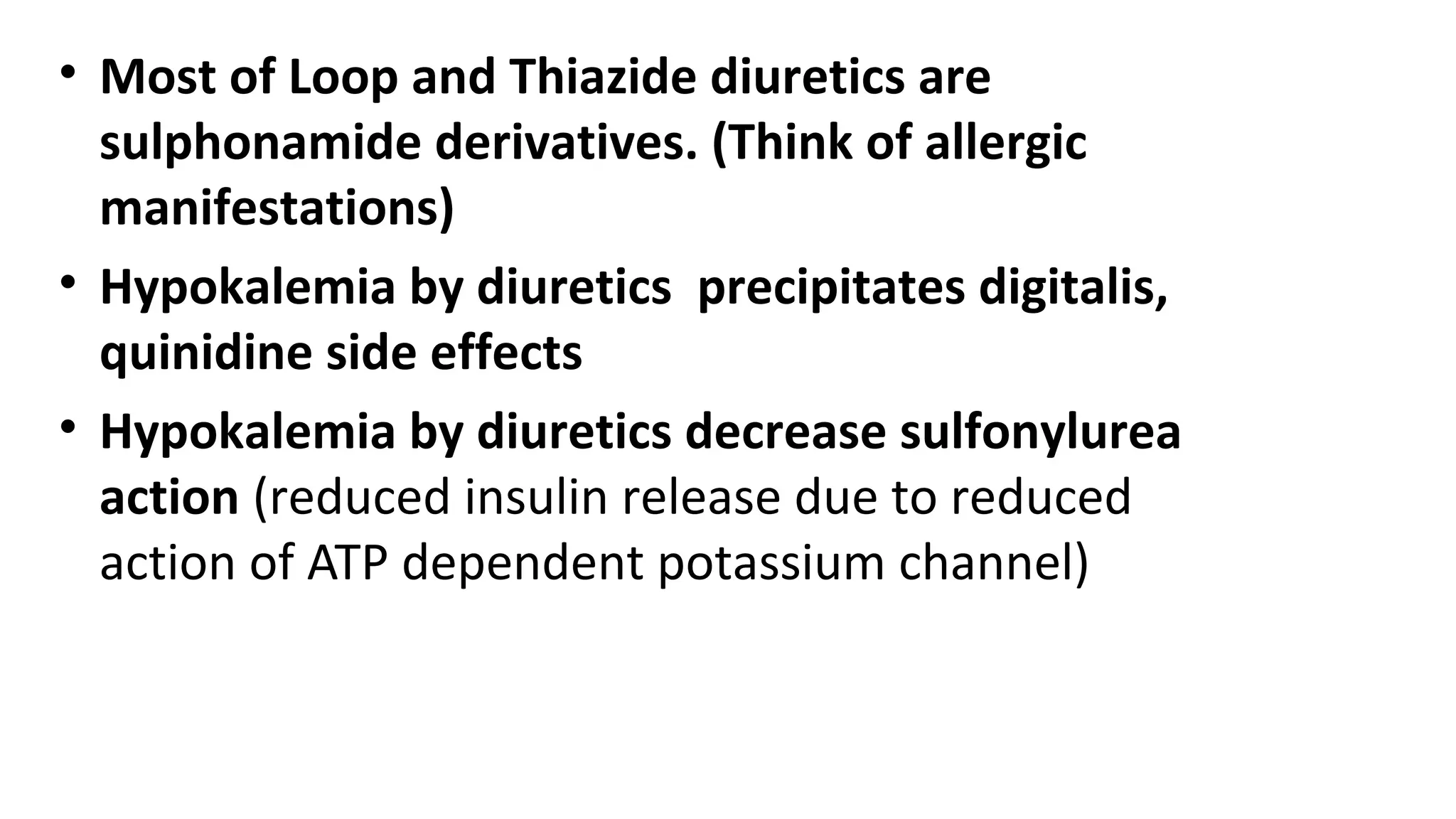
• Most of Loop and Thiazide diuretics are
sulphonamide derivatives. (Think of allergic
manifestations)
• Hypokalemia by diuretics precipitates digitalis,
quinidine side effects
• Hypokalemia by diuretics decrease sulfonylurea
action (reduced insulin release due to reduced
action of ATP dependent potassium channel)
• High ceiling not given with Amino-glycosides
• ACE inhibitors with Thiazides reduce the chances of
hypokalemia (FDC)
• Probenecid inhibits tubular secretion of Frusemide and
Thiazides and reduce action
• Potency of producing hypokalaemia
CAsI>Thiazides>Loop
• NSAIDS reduce diuretic action due to PG inhibition and
affecting glomerular blood flow
• Acetazolamide action is self limiting
• Spironolactone breaks the Thiazide resistance
• Aspirin blocks Spironolactone action by inhibiting tubular
secretion of canrenone
• Spironolactone can produce dangerous hyperkalaemia when
used along with ACEI and ARBs
• Spironolactone has antiandrogenic side effects
• Eplirenone is new potassium sparing diuretics with less
antiandrogenic effects
• Osmotic diuretics indicated in impending ARF.
(Don’t use if ARF has set in)
MCQs
MCQ 1
1. The principal renal site of action of
a) Triamterene: Ascending limb of the loop of Henle
b) Spironolactone: Descending limb of the loop of Henle
c) Frusemide: Proximal tubule
d) Osmotic diuretics: Distal tubule
e) Thiazides: Cortical diluting segment
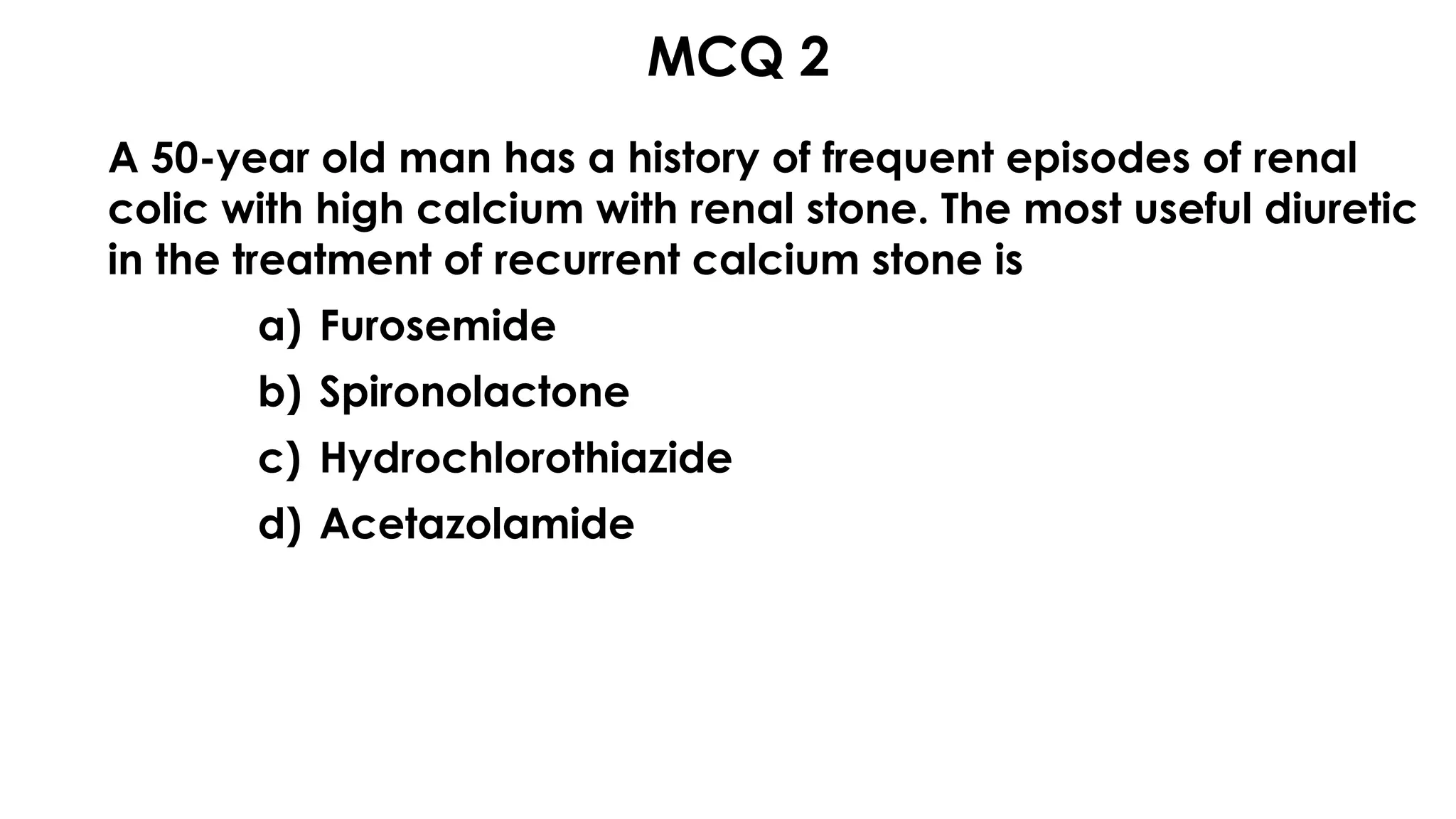
MCQ 2s
A 50-year old man has a history of frequent episodes of renal
colic with high calcium with renal stone. The most useful diuretic
in the treatment of recurrent calcium stone is
a) Furosemide
b) Spironolactone
c) Hydrochlorothiazide
d) Acetazolamide
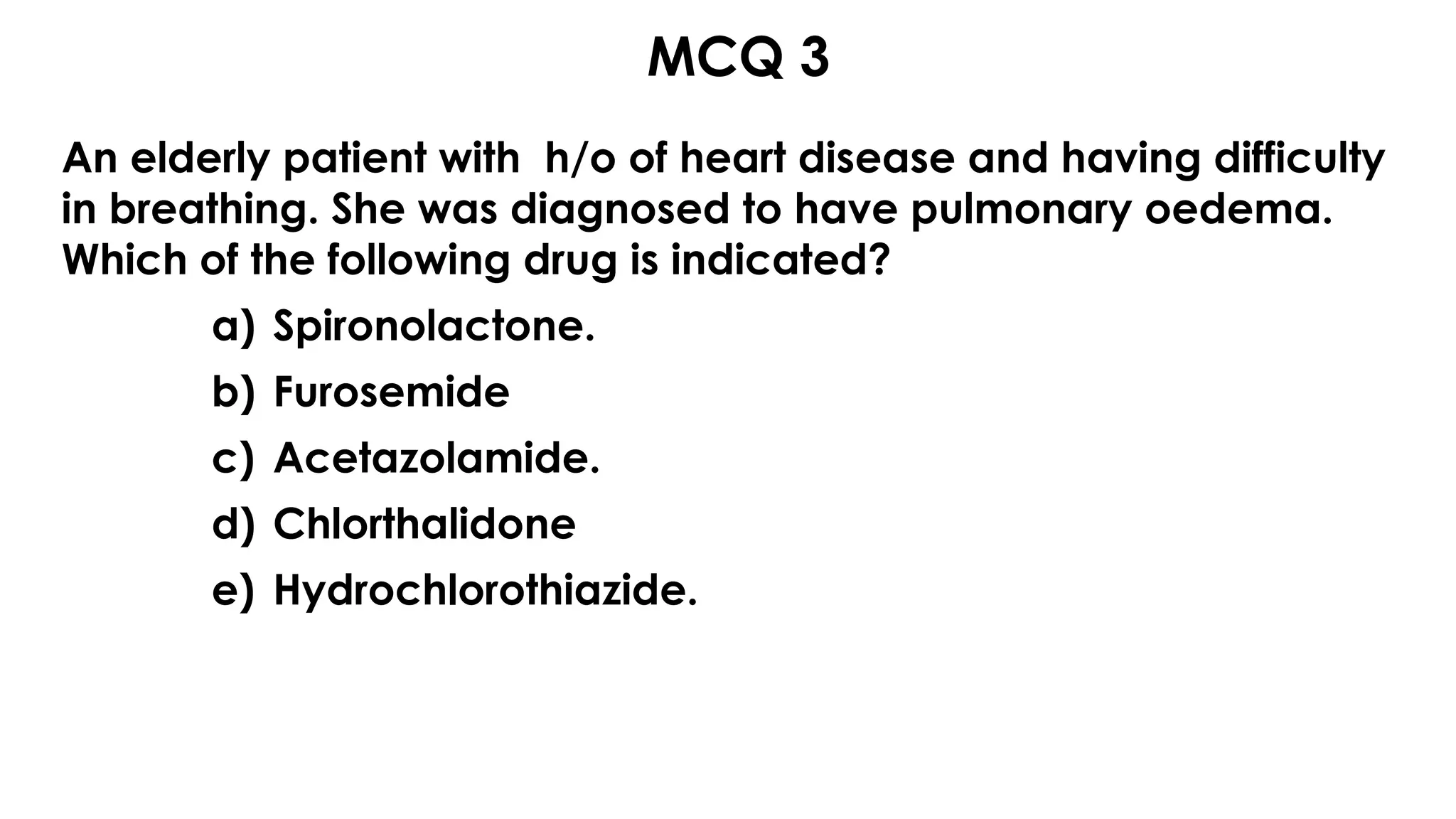
MCQ 3s
An elderly patient with h/o of heart disease and having difficulty
in breathing. She was diagnosed to have pulmonary oedema.
Which of the following drug is indicated?
a) Spironolactone.
b) Furosemide
c) Acetazolamide.
d) Chlorthalidone
e) Hydrochlorothiazide.
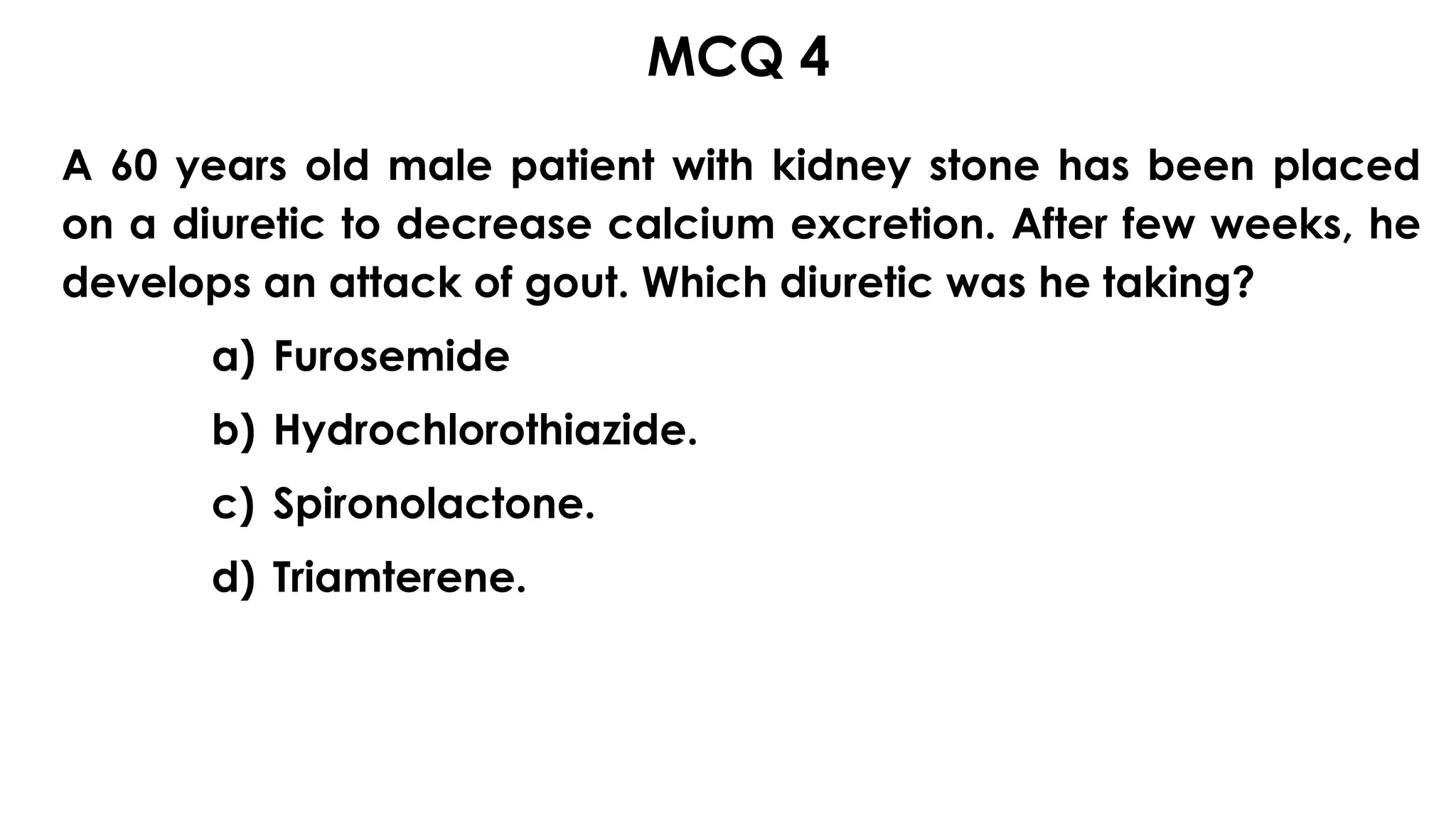
MCQ 4s
A 60 years old male patient with kidney stone has been placed
on a diuretic to decrease calcium excretion. After few weeks, he
develops an attack of gout. Which diuretic was he taking?
a) Furosemide
b) Hydrochlorothiazide.
c) Spironolactone.
d) Triamterene.
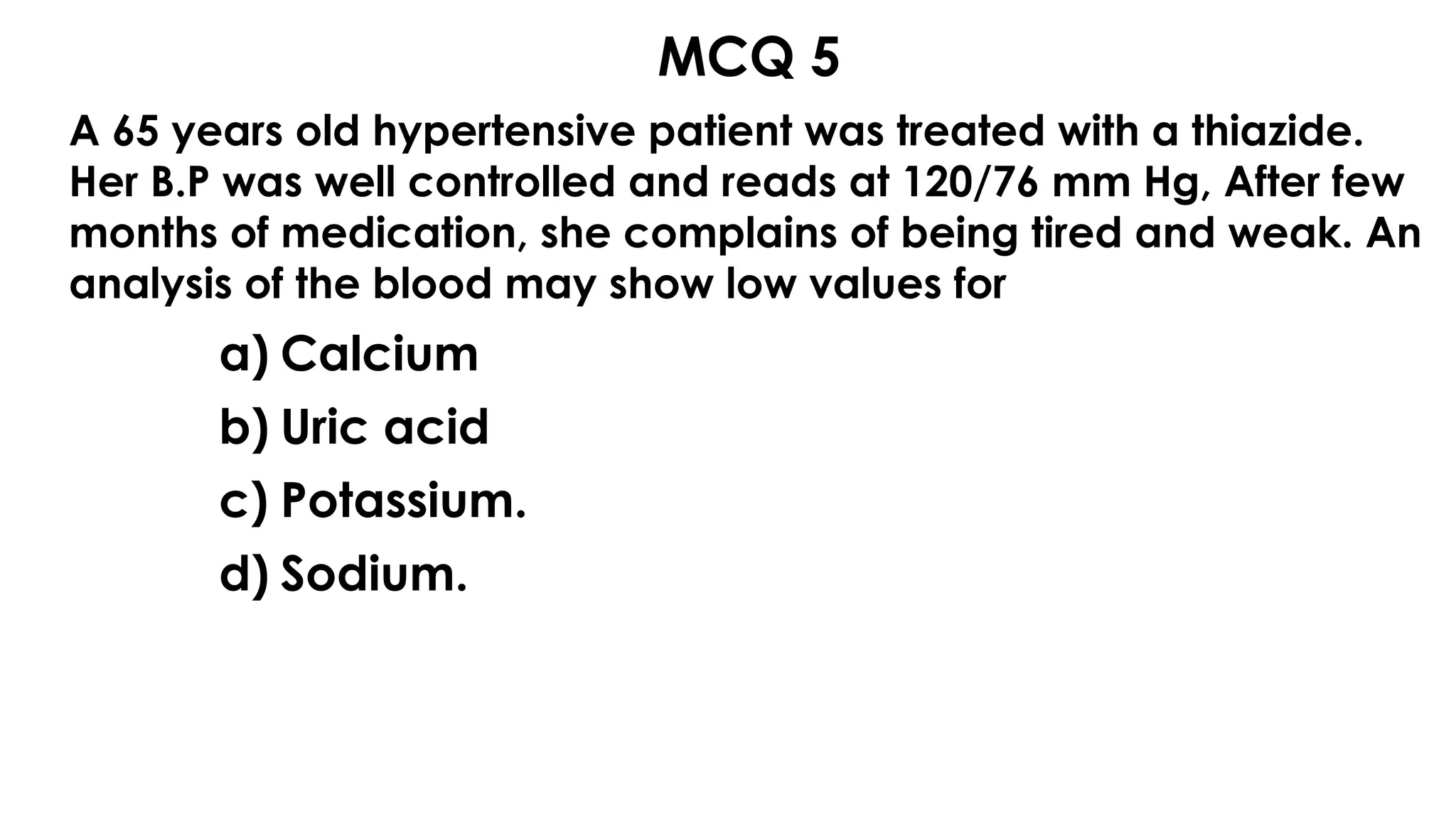
MCQ 5
A 65 years old hypertensive patient was treated with a thiazide.
Her B.P was well controlled and reads at 120/76 mm Hg, After few
months of medication, she complains of being tired and weak. An
analysis of the blood may show low values for
a) Calcium
b) Uric acid
c) Potassium.
d) Sodium.
MCQ 6
Indomethacin can antagonize the diuretic action of furosemide by 
a) Blocking the ascending limb of loop of Henle
b) Enhancing salt and water reabsorption in distal tubules
c) Increasing aldosterone secretion
d) Preventing prostaglandin mediated intrarenal
hemodynamic action
MCQ 7
One of the following statements about Spironolactone are
NOT correct:
a) has low therapeutic efficacy when used alone
b) may cause gynaecomastia
c) may cause hyperkalaemia in patients whose renal
function is impaired
d) may be combined with triamterene
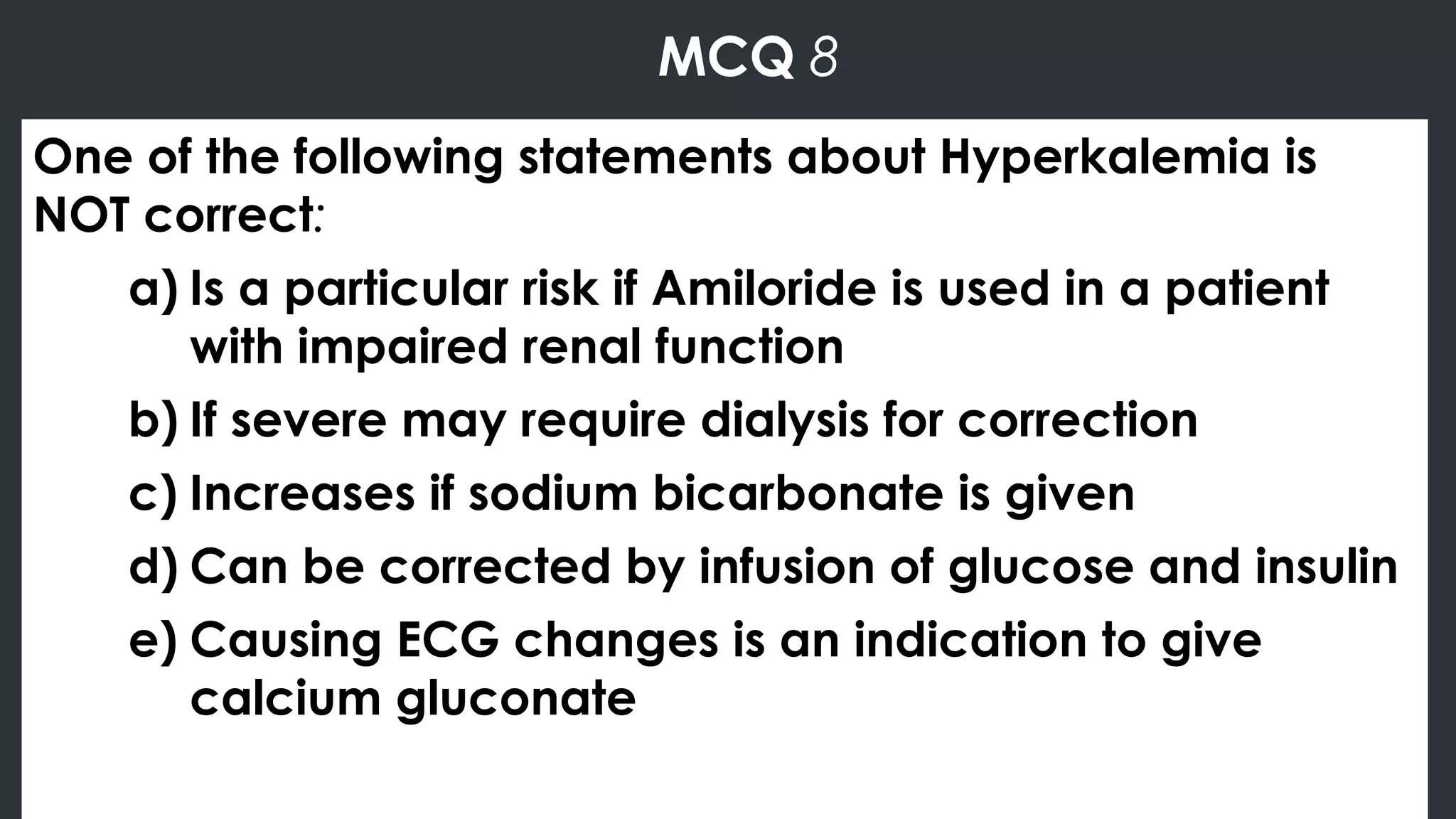
MCQ 8
One of the following statements about Hyperkalemia is
NOT correct:
a) Is a particular risk if Amiloride is used in a patient
with impaired renal function
b) If severe may require dialysis for correction
c) Increases if sodium bicarbonate is given
d) Can be corrected by infusion of glucose and insulin
e) Causing ECG changes is an indication to give
calcium gluconate
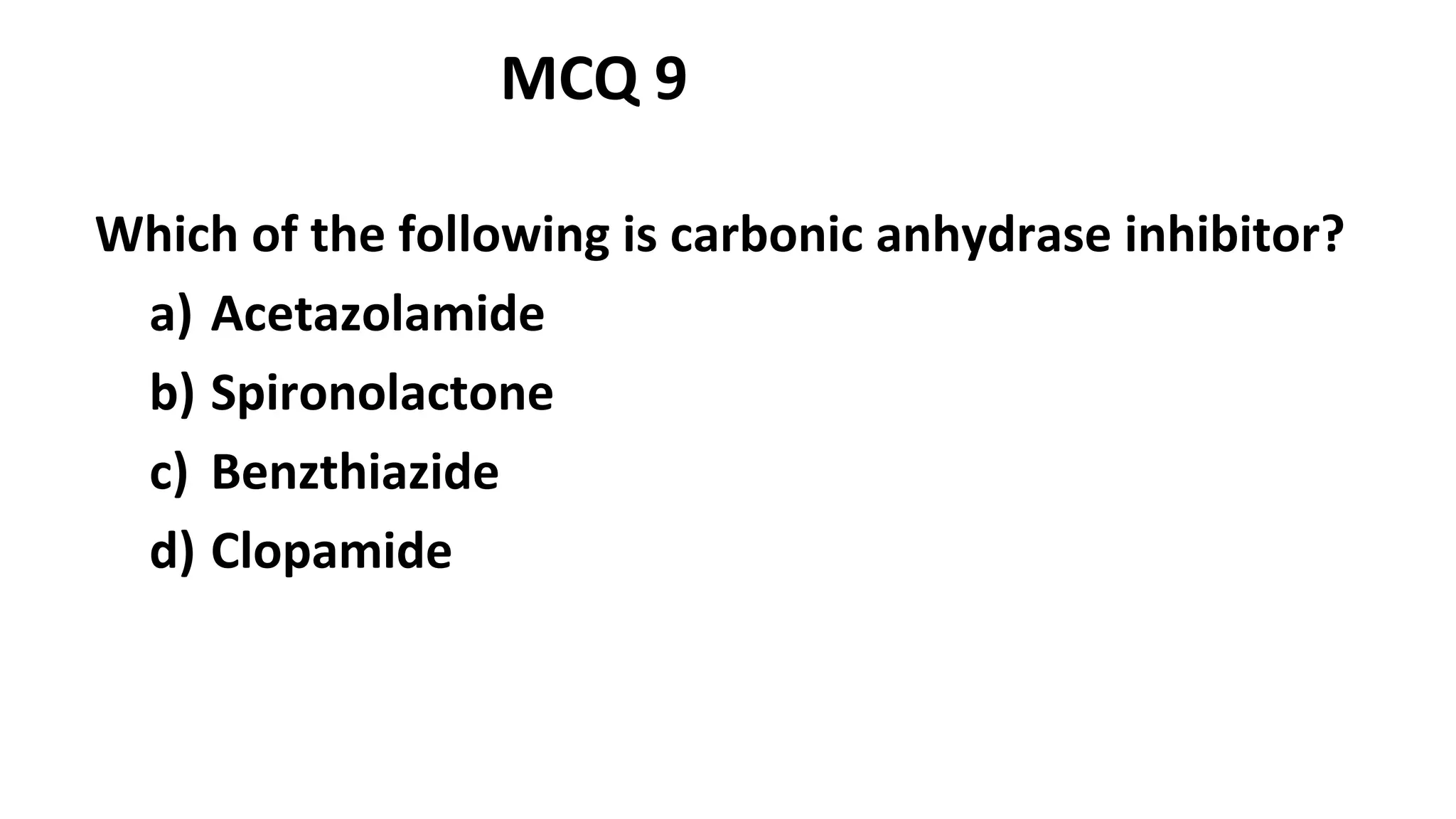
Which of the following is carbonic anhydrase inhibitor?
a) Acetazolamide
b) Spironolactone
c) Benzthiazide
d) Clopamide
MCQ 9
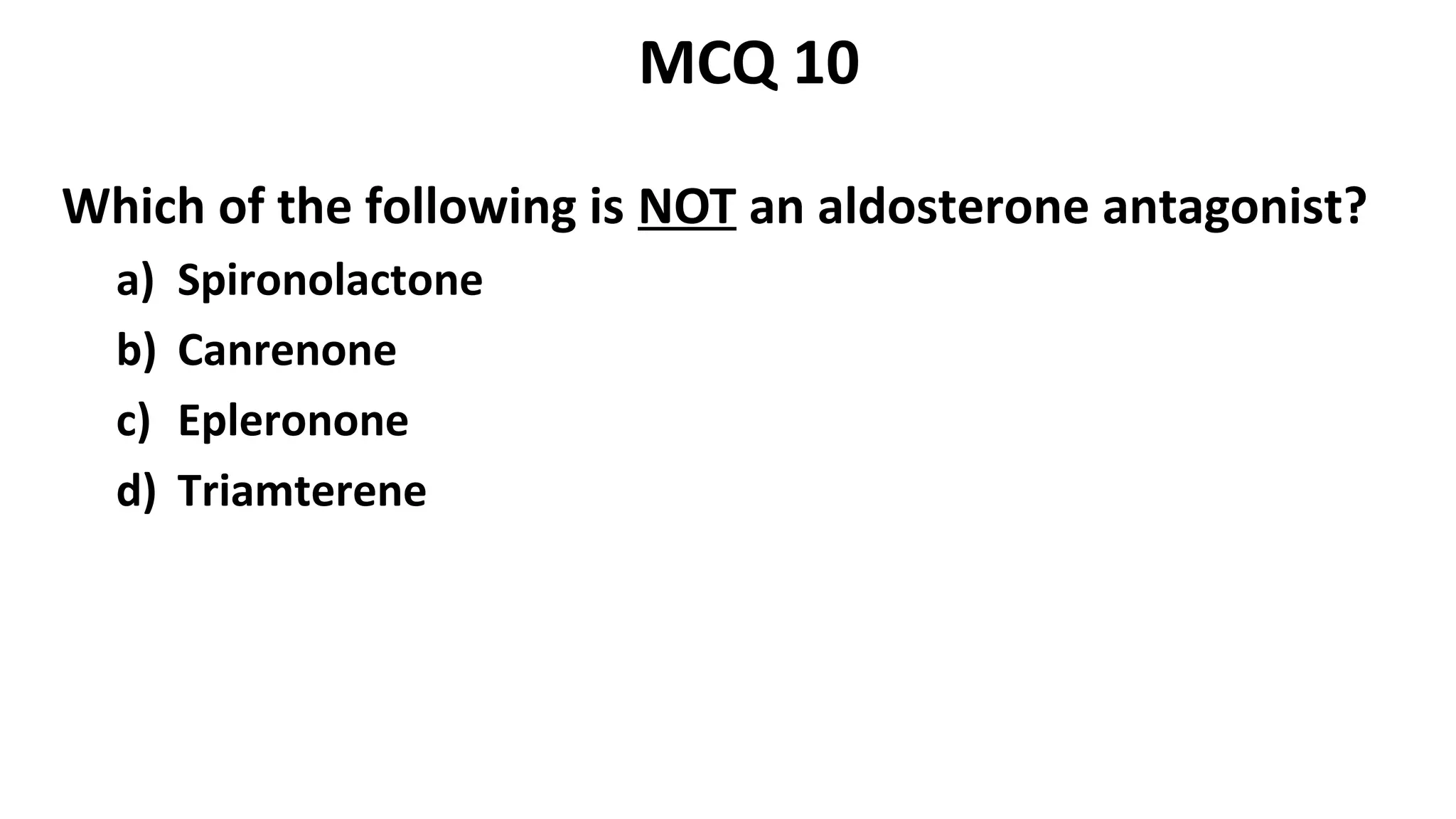
Which of the following is NOT an aldosterone antagonist?
a) Spironolactone
b) Canrenone
c) Epleronone
d) Triamterene
MCQ 10
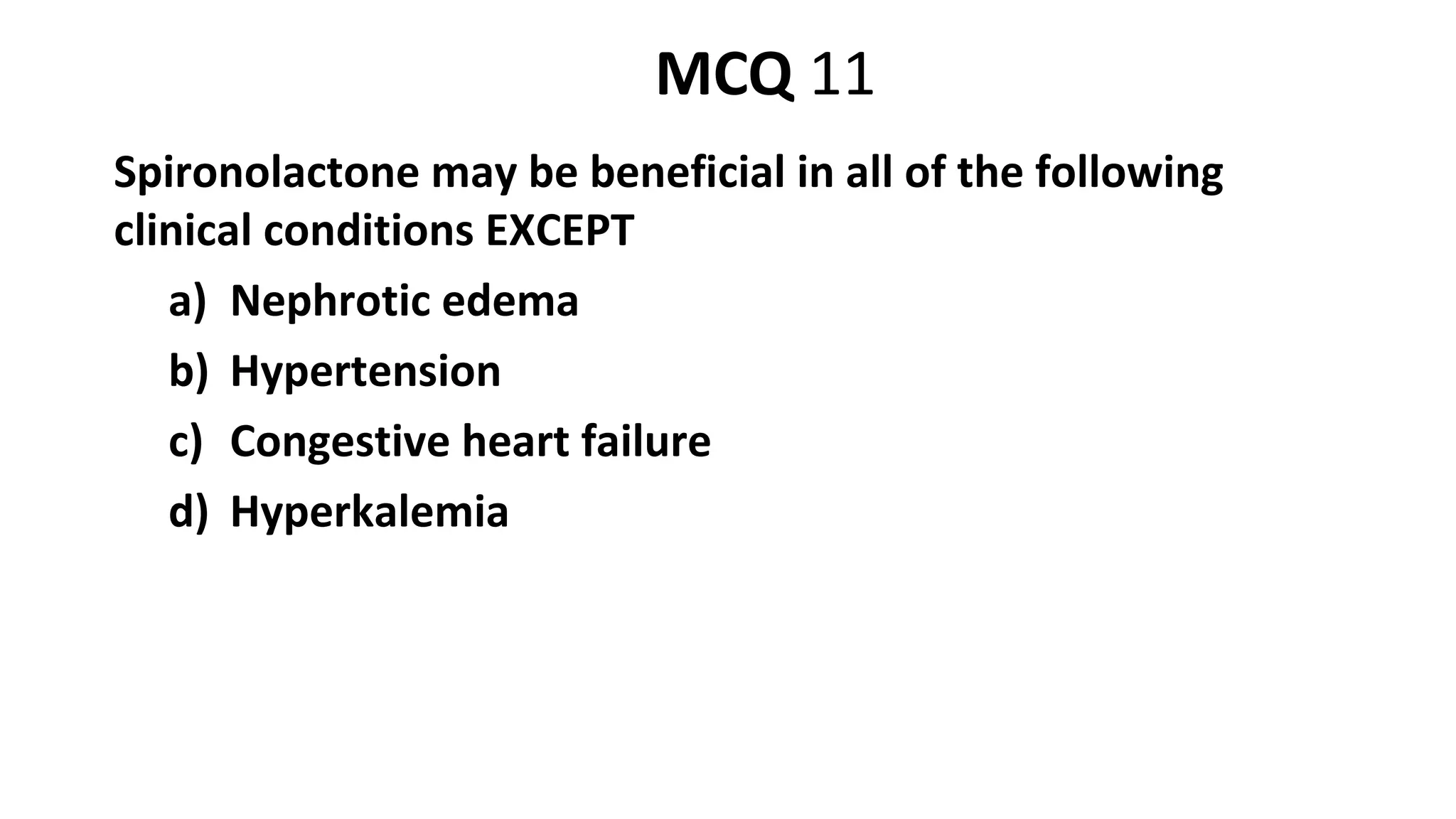
Spironolactone may be beneficial in all of the following
clinical conditions EXCEPT
a) Nephrotic edema
b) Hypertension
c) Congestive heart failure
d) Hyperkalemia
MCQ 11
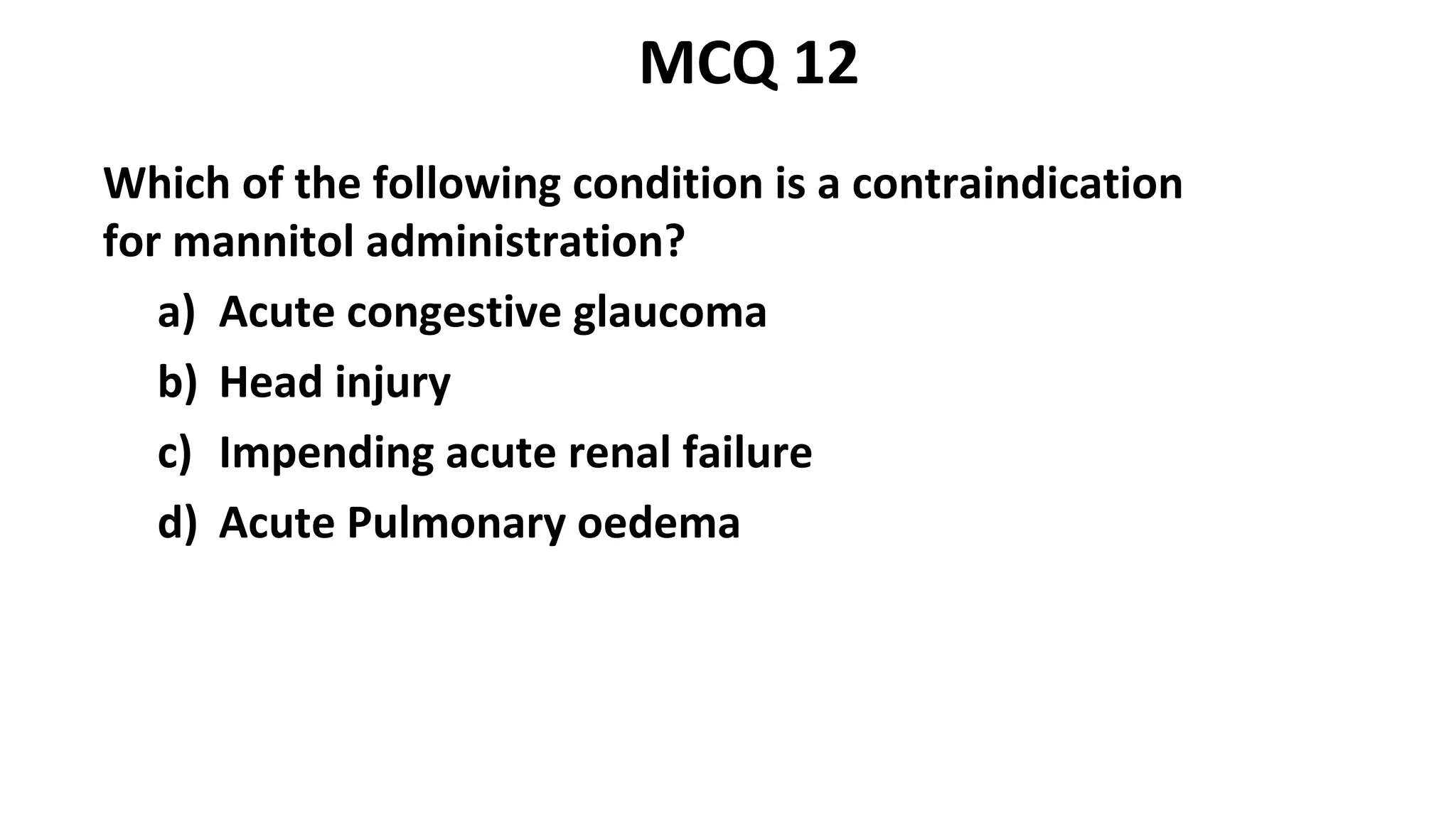
Which of the following condition is a contraindication
for mannitol administration?
a) Acute congestive glaucoma
b) Head injury
c) Impending acute renal failure
d) Acute Pulmonary oedema
MCQ 12
Which of the following is most appropriate mechanism of
action of Triamterene
a) Inhibition of Mineralocorticoid receptors
b) Inhibition of Na+
K+
2Cl–
channels
c) Inhibition of Na+
Cl–
channels of DCT
d) Inhibition of renal epithelial Na+
channels
MCQ 13
Site of action of spironolactone is
a) Proximal Convoluted Tubule
b) Descending limb of Loop of Henle
c) Collecting Duct
d) Ascending limb of loop of Henle
MCQ 14
Thank you

Lecture 2 adithan diuretics july 29, 2016 mgmcri

  • 1.
  • 2.
    Overview of 2nd lecture •Pharmacology of – Potassium sparing diuretics: (a) Aldosterone antagonists (b) Na+ Channel Blockers – Osmotic diuretics – Carbonic anhydrase inhibitors • Mechanism of action • Indications • Dose • Side effects • Drug interactions • Few MCQs
  • 3.
    Classifications of Diuretics •Thiazide Diuretics: a) Thiazides: Hydrochlorothiazide, Benzthiazide b) Thiazide like: Chlorthalidone, Metolazone, Xipamide, Indapamide, Clopamide • Loop Diuretics : Frusemide, Bumetanide, Torasemide, Ethacrynic acid • Potassium Sparing Diuretics : – Aldosterone Antagonist: Spironolactone, Canrenone, Eplerenone – Directly Acting (Inhibition of Na+ channel): Triamterene, Amiloride • Carbonic anhydrase inhibitors : Acetazolamide, Brinzolamide, Dorzolamide • Osmotic Diuretics : Mannitol, Glycerine, Urea, Isosorbide
  • 4.
    1. Osmotic diuretics 2.Carbonic anhydrase inhibitors 3. Loop Diuretics (High ceiling) 4. Thiazide diuretics 5. Potassium sparing diuretics 1. Osmotic diuretics 2. Carbonic anhydrase inhibitors 3. Loop diuretics 4. Thiazide diuretics 5. Potassium sparing diuretics
  • 5.
    Potassium Sparing Diuretics –Aldosterone Antagonist: Spironolactone, Canrenone, Eplerenone – Directly Acting (Inhibition of Na+ channel): Triamterene, Amiloride »Mechanism of action »Individual drugs »Pharmacokinetics »Indications »Dose »Side effects and Precautions
  • 6.
  • 7.
    Spironolactone - Actions •Acts on cortical segment of distal tubules • Competitive antagonist of Aldosterone • Inhibit ATP  inhibit Na reabsorption • Mild saluretic (natriuresis) 3% of NaCl • Causes K+ retention (K+ sparing effect)  Hyperkalemia • Never used alone as diuretic • Useful when combined with thiazide or frusemide
  • 8.
    Spironolactone - Pharmacokinetics •Given orally microfine powder tab. • Bioavailability 75% • Converted to active metabolite canrenone • K canrenoate is water soluble can be given I.V. gets converted to canrenone
  • 9.
    Spironolactone - uses 1)Oedema: Useful in cirrhotic and nephrotic syndrome  breaks resistance to thiazides or frusemide in refractory edema 1) To counteract K+ loss due to thiazides, frusemide 2) Hypertension: combined with thiazide 4) CHF: as an adjunctive therapy, it retards disease progression and reduces mortality 5) Primary Hyperaldosteronism (Conn’s syndrome)
  • 10.
    Spironolactone – AdverseEffects 1) Hyperkalemia risk • In CRF patients • Patients taking ACEI (Enalapril) or ATRA (Losartan) • KCl supplement 1) Related to steroid structure • Gynaecomastia, Impotence in males • Hirsutism, menstrual irregualarities in females 3) Misc: drowsiness, abdominal upset
  • 11.
    Drug Interactions • mayincrease digoxin levels in CHF • NSAIDs (Aspirin) decreases its effect
  • 12.
    Potassium sparing diuretics Eplerenone Moreselective aldosterone antagonist Less hormonal adverse effects Hyperkalaemia risk similar to spironolactone Use Moderate to severe CHF Post MI Left Ventricular dysfunction
  • 13.
    Amiloride & Triamterene- Actions • Directly inhibits pumps in distal tubules and collecting ducts therefore independent of aldosterone  Amiloride sensitive or renal epithelial Na channels are blocked  Weak diuretic, never used alone  Indirectly inhibit K+ secretion  Also inhibit H+ secretion  Amiloride in aerosol form  cystic fibrosis  ADRs: Relatively fewer than spironolactone, does not cause sexual dysfunction
  • 14.
    Triamterene & Amiloride Onsetof action much faster than spironolactone Reduce loss of potassium in urine Predispose to acidosis (conserve K+ and H+ ) Hyperkalaemia with K+ supplements, ARBs, ACEIs Amiloride: 10 times more potent than triamterene Used along with thiazides to prevent hypokalaemia
  • 15.
    Potassium sparing diuretics:Preparations Aldosterone Antagonist Dose (mg) Route Spironolactone 25-100 oral K canrenoate I.V. Eplerenone 25-100 oral Directly Acting Amiloride 5 Oral, Aerosol Triamterene 50 oral Fixed dose combinations with thiazides and frusemide available but not advisable
  • 16.
    • Acetazolamide • Methazolamide CarbonicAnhydrase Inhibitors (CAIs)Carbonic Anhydrase Inhibitors (CAIs)
  • 17.
    CARBONIC ANHYDRASE INHIBITORSCARBONICANHYDRASE INHIBITORS  Less potent than loop diuretics or thiazides Mechanism of action: • Carbonic anhydrase is an enzyme that catalyses the formation of carbonic acid which spontaneously ionises to H+ and HCO3. • This HCO3 combines with Na+ and is reabsorbed. • By inhibiting the enzyme, carbonic anhydrase inhibitors block sodium bicarbonate reabsorption and cause HCO3- diuresis. • They induce metabolic acidosis which reduces their diuretic effect within 2 to 4 days
  • 18.
    CARBONIC ANHYDRASE INHIBITORSCARBONICANHYDRASE INHIBITORS Acetazolamide : sulphonamide derivative Enhances excretion of sodium , potassium, bicarbonate and water. Other Actions 1. Eye- reduces intra ocular pressure. 2. Brain- reduces the formation of CSF Pharmacokinetics: Well absorbed orally, Onset of action within 60-90 min, Duration of action 8-12 hr. Excreted unchanged by the kidney
  • 19.
    CAI: Adverse Effects •Metabolic acidosis (due to HCO3 loss) • Anorexia • Hematuria • Photosensitivity • Melena  Hypokalemia  Drowsiness  Paresthesias  Urticaria  Renal stones : Ca++ is lost with HCO3 resulting in hypercalciuria.
  • 20.
    CARBONIC ANHYDRASE INHIBITORSCARBONICANHYDRASE INHIBITORS Present status: • Adjunct drugs in the long-term management of open-angle glaucoma • Alkalinization of urine: Uric acid and cysteine excretion can be enhanced by HCO3- (more soluble in alkaline urine). • Metabolic alkalosis: Alkalosis due to excess diuretics in patients with heart failure responds to acetazolamide. • Hyperphosphatemia • Used with miotics to lower IOP before ocular surgery in certain cases • Also useful in the treatment of: – Edema – Epilepsy – High-altitude sickness
  • 21.
  • 22.
    OSMOTIC DIURETICSOSMOTIC DIURETICS Mannitolis a pharmacologically inert substance. • Mannitol gets filtered by the glomerulus but is reabsorbed. • It causes water retention in the proximal tubule and descending limb of Henle’s loop by osmotic effect resulting in water diuresis. • There is also some loss of sodium. Adverse effects are dehydration, ECF volume expansion, hyoponatraemia, headache, nausea, vomiting and allergic reactions.
  • 23.
    Uses • To maintainurine volume and prevent oliguria in conditions like massive haemolysis, rhabdomyolysis, shock and severe trauma. In such situations mannitol prevents renal failure. • To reduce intracranial and intraocular pressure. • Contraindicated in patients who have already gone into renal failure, mannitol can be dangerous since it can cause pulmonary edema and may precipitate heart failure due to volume expansion. • Glycerol is effective orally – reduces Intraocular and intracranial pressure. • Methylxanthines like theophylline have mild diuretic effect.
  • 24.
    Diuretic Site ofAction Adverse Effects Special points Loop Diuretics Thick Ascending Limb of Henle (NaK2Cl inhibition) Weak CAI action Hyponatremia Hypomagnesaemia Hypocalcaemia Hyperuricemia Hyperglycemia Hyperlipidemia Hyperuricemia Ototoxic (ECA) Most potent, Most Potent is Bumetanide, Effective even in low GFR, All except Ethacrynic acid are sulphonamide related, Used in Acute LVF, Pulmonary Edema, Nephrotic syndrome, ARF NSAIDS blunt effect Thiazide Diuretics DCT (NaCl) Hypokalemic metabolic alkalosis (Gitelman’s Syndrome) Hypercalcemia Moderate, Chlorthalidone is Longest acting, Paradoxical effect in Diabetes Insipidus First line in Hypertension,
  • 25.
    Diuretic Site ofAction Adverse Effects Special points Carbonic anhydrase inhibitors PTC (inhibition of CAE) Metabolic Acidosis Weak, Used in Glaucoma, Petit mal epilepsy, Acute mountain sickness, to alkaline the urine Osmotic Diuretics PTC, LOH, DCT Shifting of fluid from intracellular to extracellular, Hyponatremia, Pulmonary edema Used in Glaucoma, Poisoning, Increased ICT, impending ARF Potassium Sparing Diuretics CD Hyperkalemia Antiandrogenic effect Weak, As supplement to other to counter the hypokalemia, Canrenone is active metabolite, used in Conn’s syndrome (Primary Hyperaldosteronism), cirrhotic edema
  • 26.
    Generalized Oedema • CardiacCause: Congestive cardiac failure • Renal Cause: Nephrotic syndrome • Hepatic Cause: Cirrhosis of liver • Nutritional cause: Malnutrition • Allergic reaction • Drug Induced
  • 27.
    Points to Remember– Clinical Practice • Don’t use diuretics overenthusiastically. (dehydration, hypotension) • Brisk diuresis in cirrhosis may precipitate hepatic coma. (hypokalemia, alkalosis and increased NH3 levels) • Diuretics not used in Toxaemia of Pregnancy. (Blood volume is low despite edema. Diuretics will compromise placental circulation)
  • 28.
    • Most ofLoop and Thiazide diuretics are sulphonamide derivatives. (Think of allergic manifestations) • Hypokalemia by diuretics precipitates digitalis, quinidine side effects • Hypokalemia by diuretics decrease sulfonylurea action (reduced insulin release due to reduced action of ATP dependent potassium channel)
  • 29.
    • High ceilingnot given with Amino-glycosides • ACE inhibitors with Thiazides reduce the chances of hypokalemia (FDC) • Probenecid inhibits tubular secretion of Frusemide and Thiazides and reduce action • Potency of producing hypokalaemia CAsI>Thiazides>Loop • NSAIDS reduce diuretic action due to PG inhibition and affecting glomerular blood flow
  • 30.
    • Acetazolamide actionis self limiting • Spironolactone breaks the Thiazide resistance • Aspirin blocks Spironolactone action by inhibiting tubular secretion of canrenone • Spironolactone can produce dangerous hyperkalaemia when used along with ACEI and ARBs • Spironolactone has antiandrogenic side effects • Eplirenone is new potassium sparing diuretics with less antiandrogenic effects • Osmotic diuretics indicated in impending ARF. (Don’t use if ARF has set in)
  • 31.
  • 32.
    MCQ 1 1. Theprincipal renal site of action of a) Triamterene: Ascending limb of the loop of Henle b) Spironolactone: Descending limb of the loop of Henle c) Frusemide: Proximal tubule d) Osmotic diuretics: Distal tubule e) Thiazides: Cortical diluting segment
  • 33.
    MCQ 2s A 50-yearold man has a history of frequent episodes of renal colic with high calcium with renal stone. The most useful diuretic in the treatment of recurrent calcium stone is a) Furosemide b) Spironolactone c) Hydrochlorothiazide d) Acetazolamide
  • 34.
    MCQ 3s An elderlypatient with h/o of heart disease and having difficulty in breathing. She was diagnosed to have pulmonary oedema. Which of the following drug is indicated? a) Spironolactone. b) Furosemide c) Acetazolamide. d) Chlorthalidone e) Hydrochlorothiazide.
  • 35.
    MCQ 4s A 60years old male patient with kidney stone has been placed on a diuretic to decrease calcium excretion. After few weeks, he develops an attack of gout. Which diuretic was he taking? a) Furosemide b) Hydrochlorothiazide. c) Spironolactone. d) Triamterene.
  • 36.
    MCQ 5 A 65years old hypertensive patient was treated with a thiazide. Her B.P was well controlled and reads at 120/76 mm Hg, After few months of medication, she complains of being tired and weak. An analysis of the blood may show low values for a) Calcium b) Uric acid c) Potassium. d) Sodium.
  • 37.
    MCQ 6 Indomethacin canantagonize the diuretic action of furosemide by  a) Blocking the ascending limb of loop of Henle b) Enhancing salt and water reabsorption in distal tubules c) Increasing aldosterone secretion d) Preventing prostaglandin mediated intrarenal hemodynamic action
  • 38.
    MCQ 7 One ofthe following statements about Spironolactone are NOT correct: a) has low therapeutic efficacy when used alone b) may cause gynaecomastia c) may cause hyperkalaemia in patients whose renal function is impaired d) may be combined with triamterene
  • 39.
    MCQ 8 One ofthe following statements about Hyperkalemia is NOT correct: a) Is a particular risk if Amiloride is used in a patient with impaired renal function b) If severe may require dialysis for correction c) Increases if sodium bicarbonate is given d) Can be corrected by infusion of glucose and insulin e) Causing ECG changes is an indication to give calcium gluconate
  • 40.
    Which of thefollowing is carbonic anhydrase inhibitor? a) Acetazolamide b) Spironolactone c) Benzthiazide d) Clopamide MCQ 9
  • 41.
    Which of thefollowing is NOT an aldosterone antagonist? a) Spironolactone b) Canrenone c) Epleronone d) Triamterene MCQ 10
  • 42.
    Spironolactone may bebeneficial in all of the following clinical conditions EXCEPT a) Nephrotic edema b) Hypertension c) Congestive heart failure d) Hyperkalemia MCQ 11
  • 43.
    Which of thefollowing condition is a contraindication for mannitol administration? a) Acute congestive glaucoma b) Head injury c) Impending acute renal failure d) Acute Pulmonary oedema MCQ 12
  • 44.
    Which of thefollowing is most appropriate mechanism of action of Triamterene a) Inhibition of Mineralocorticoid receptors b) Inhibition of Na+ K+ 2Cl– channels c) Inhibition of Na+ Cl– channels of DCT d) Inhibition of renal epithelial Na+ channels MCQ 13
  • 45.
    Site of actionof spironolactone is a) Proximal Convoluted Tubule b) Descending limb of Loop of Henle c) Collecting Duct d) Ascending limb of loop of Henle MCQ 14
  • 46.