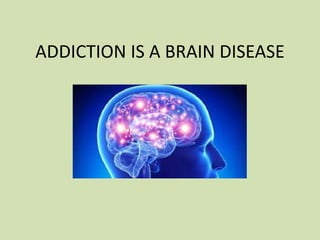
ADDICTION IS A BRAIN DISEASE
DEFINITION Per American Society of
Addiction Medicine
• A primary, chronic disease of brain reward,
motivation , memory and related circuitry.
• This leads to biological, psychological, social,
and spiritual manifestations.
Definition
• This is reflected in an individual pathologically
pursuing reward and/or relief by use of
substances and/or other behaviors.
• Continued use will cause negative
consequences, yet is continued at all cost
• Becomes a primary or only mechanism for
perceived pleasure.
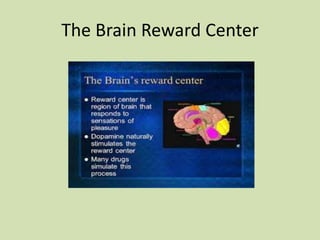
The Brain Reward Center
Reward Center
• Exists for our survival
• Activates strongly for food and sex
• Activates any time “well being’ is felt
• THIS IS THE BRAIN SAYING----”This activity is
good and enjoyable. Recommend repeating
as soon as possible.”
Dysfunction in this brain mechanism
• Driving behaviors found to stimulate the
pleasure center despite negative
consequences.
• Genetic to some extent
• Social and past experiences to a large extent
The Key Is This
• Addicted folks are not getting stimulation of
the pleasure center normally in their lives.
• We must therefore find something else to
trigger this pleasure center response. We
must!
• When something is tried or taken and
euphoria follows, this sets the trap.
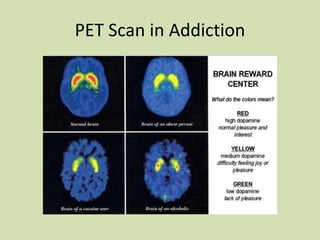
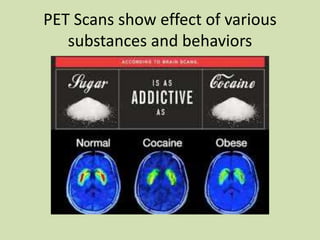
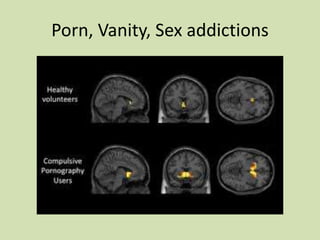
PET Scan in Addiction
PET Scans show effect of various
substances and behaviors
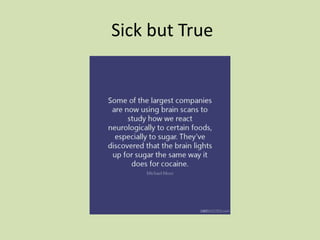
Sick but True
Porn, Vanity, Sex addictions
Back to definition
• Dysfunction in pleasure center circuitry causes
problems:
– Biologically
– Behavior (psychologically)
– Socially
– Spiritually
Biological Manifestations
• How quickly can someone become addicted?
• ANSWER: Very QUICKLY
• You can see it in the practice of Emergency
Medicine with Opioids-
– 10 kidney stone patients
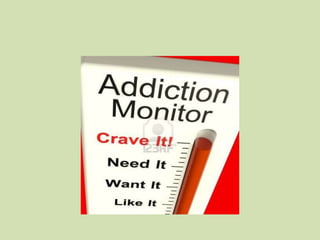
CRAVINGS
• Find what pleases. It is the first priority.
• We need it now.
• Nothing will deter us as our survival depends
on it.
THIS IS WHY YOU CAN NOT LEGISLATE
ADDICTIVE BEHAVIOR.
Continued behavior despite negative
consequences
• Drug use—overdoses and repeated law
enforcement interactions
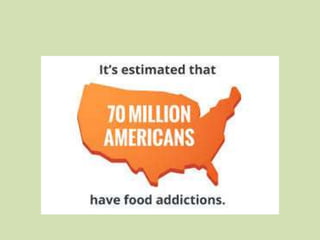
• Food- early type 1 and 2 diabetes. Childhood
diabetes highest rate ever and climbing. Early
death coming for 70 million people
• Nicotine- cancer, heart disease, stroke, COPD
So now what does the addict do?
• Continues behaving the same or using
• Isolates, lies. Uses more or intensifies
behaviors due to tolerance
• Breaks the law if needed to fulfill the reward
center. Gains 10 more pounds, gambles away
last of paycheck.
Prevention
• Close family and friends
• Stop unhealthy behaviors quickly
• Open communication with loved ones
• Encourage healthy activities with family,
friends
• Do not take narcotic pain meds
• Limit social media
• Dispose of all unused medications promptly
Prevention
• Decide today how you and your children will
cope with hardship that is sure to come.
• Avoid risky behaviors-
– Teen drinking
– Marijuana use
– Unsupervised social media
– Lax rules, curfew, etc.
– Promote spirituality of your choice in the home
TREATMENT
• Addiction requires treatment like any chronic
disease
• Confront, offering help but not being co-
dependent (Hard Love)
• IOP, In-patient treatment, meetings, sponsor
• Use law enforcement as last resort
• Sometimes legal enforcement is life-saving

Addiction Is A Brain Disease

  • 1.
    ADDICTION IS ABRAIN DISEASE
  • 2.
    DEFINITION Per AmericanSociety of Addiction Medicine • A primary, chronic disease of brain reward, motivation , memory and related circuitry. • This leads to biological, psychological, social, and spiritual manifestations.
  • 3.
    Definition • This isreflected in an individual pathologically pursuing reward and/or relief by use of substances and/or other behaviors. • Continued use will cause negative consequences, yet is continued at all cost • Becomes a primary or only mechanism for perceived pleasure.
  • 4.
  • 5.
    Reward Center • Existsfor our survival • Activates strongly for food and sex • Activates any time “well being’ is felt • THIS IS THE BRAIN SAYING----”This activity is good and enjoyable. Recommend repeating as soon as possible.”
  • 6.
    Dysfunction in thisbrain mechanism • Driving behaviors found to stimulate the pleasure center despite negative consequences. • Genetic to some extent • Social and past experiences to a large extent
  • 7.
    The Key IsThis • Addicted folks are not getting stimulation of the pleasure center normally in their lives. • We must therefore find something else to trigger this pleasure center response. We must! • When something is tried or taken and euphoria follows, this sets the trap.
  • 8.
    PET Scan inAddiction
  • 9.
    PET Scans showeffect of various substances and behaviors
  • 10.
  • 17.
  • 18.
    Back to definition •Dysfunction in pleasure center circuitry causes problems: – Biologically – Behavior (psychologically) – Socially – Spiritually
  • 19.
    Biological Manifestations • Howquickly can someone become addicted? • ANSWER: Very QUICKLY • You can see it in the practice of Emergency Medicine with Opioids- – 10 kidney stone patients
  • 21.
    CRAVINGS • Find whatpleases. It is the first priority. • We need it now. • Nothing will deter us as our survival depends on it. THIS IS WHY YOU CAN NOT LEGISLATE ADDICTIVE BEHAVIOR.
  • 22.
    Continued behavior despitenegative consequences • Drug use—overdoses and repeated law enforcement interactions • Food- early type 1 and 2 diabetes. Childhood diabetes highest rate ever and climbing. Early death coming for 70 million people • Nicotine- cancer, heart disease, stroke, COPD
  • 23.
    So now whatdoes the addict do? • Continues behaving the same or using • Isolates, lies. Uses more or intensifies behaviors due to tolerance • Breaks the law if needed to fulfill the reward center. Gains 10 more pounds, gambles away last of paycheck.
  • 26.
    Prevention • Close familyand friends • Stop unhealthy behaviors quickly • Open communication with loved ones • Encourage healthy activities with family, friends • Do not take narcotic pain meds • Limit social media • Dispose of all unused medications promptly
  • 27.
    Prevention • Decide todayhow you and your children will cope with hardship that is sure to come. • Avoid risky behaviors- – Teen drinking – Marijuana use – Unsupervised social media – Lax rules, curfew, etc. – Promote spirituality of your choice in the home
  • 28.
    TREATMENT • Addiction requirestreatment like any chronic disease • Confront, offering help but not being co- dependent (Hard Love) • IOP, In-patient treatment, meetings, sponsor • Use law enforcement as last resort • Sometimes legal enforcement is life-saving