Presentation by shivani
 A disaster is a situation in which the
community is incapable of coping. It is a
natural or human-caused event which causes
intense negative impacts on people, goods,
services and/or the environment, exceeding
the affected community’s capability to
respond; therefore the community seeks the
assistance of government and international
agencies
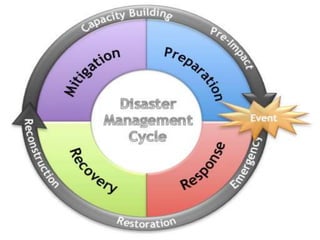
 Mitigation: Measures put in place to minimize the
results from a disaster. Examples: building codes and
zoning; vulnerability analyses; public education.
 Preparedness: Planning how to respond. Examples:
preparedness plans; emergency exercises/training;
warning systems.
 Response: Initial actions taken as the event takes
place. It involves efforts to minimize the hazards
created by a disaster. Examples: evacuation; search
and rescue; emergency relief.
 Recovery: Returning the community to normal.
Ideally, the affected area should be put in a condition
equal to or better than it was before the disaster took
place. Examples: temporary housing; grants; medical
care.
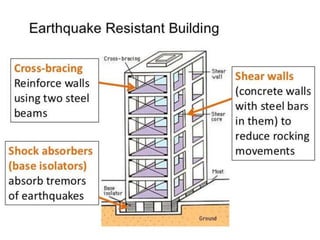
 Structural mitigation – construction projects
which reduce economic and social impacts
i.e. dams, windbreaks, terracing and hazard
resistant buildings.
 Non-structural activities – policies and
practices which raise awareness of hazards or
encourage developments to reduce the
impact of disasters
 Reviewing building codes.
 Vulnerability analysis updates.
 Zoning and land-use management and
planning.
 Reviewing of building use regulations and
safety codes.
 Implementing preventative health measures
 Political intervention and commitment
 Public awareness .
 Hazard identification and vulnerability
analysis.
 Various mitigation strategies or measures-
For instance, varieties of crops that are more
wind, flood or drought resistant can often be
introduced in areas prone to floods, drought
and cyclones, Economic diversification.
 Investment in infrastructure to support
sustainable socioeconomic development
 Investment in infrastructure for reconstruction
and recovery.
i. A backup generator is available in case of power
failure and that a battery-operated radio .
ii. A backup copy of all critical information
iii. The preliminary design should take into
consideration the prevalent hazards and
methods to avoid or to minimize the effects of
the extreme natural events.
iv. Strengthening vulnerable areas such as roofs,
exterior doors, windows, and garage doors
 Disasters set back development
programming, destroying years of
development initiatives.
 Rebuilding after a disaster provides
significant opportunities to initiate
development programmes
 Development programmes can increase an
area’s susceptibility to disasters
 Development programmes can be designed
to decrease the susceptibility to disasters and
their negative consequences
 Partnership-close collaboration among donors,
governments, communities, nongovernmental
organizations, the private sector, and universities
 Flexibility-. Development agencies must be
efficient and flexible; adaptable to local
environments and capable of adjusting to
changing conditions and seizing opportunities
when they arise.
 Selectivity-resources are the public asset that
must be invested prudently to achieve maximum
impact.
 Preparedness measures include:
I. Preparedness plans ƒ
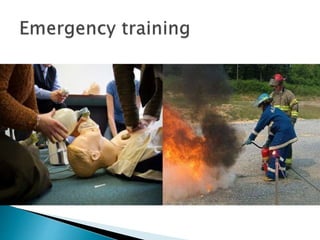
II. Emergency exercises/training
III. ƒWarning systems
IV. ƒEmergency communications systems ƒ
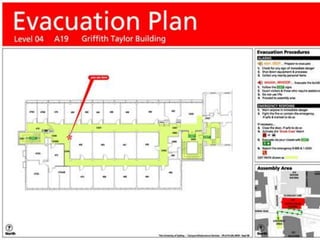
V. Evacuations plans and training ƒ
VI. Resource inventories ƒEmergency
VII. personnel/contact list.
VIII. ƒMutual aid agreements
IX. ƒPublic information/education
 Develop and test warning systems regularly and
plan measures to be taken during a disaster alert
period to minimize potential loss of life and
physical damage.
 ƒEducate and train officials and the population at
risk to respond to the disaster.
 ƒTrain first-aid and emergency response teams.
 ƒEstablish emergency response policies,
standards, organizational arrangements and
operational plans to be followed by emergency
workers and other response entities after a
disaster.
 It forms the action plan to be implemented
before, during and after disasters.
 The IFRCRCS( International Federation of Red
Cross and Red Crescent Societies) defines risk
reduction as physical measures to reduce the
vulnerability and exposure of infrastructure
to natural hazards as well and to provide
coping and adaptive infrastructure in case of
a disaster event.
 ƒPolicy, planning and capacity building in
disaster management
 ƒPhysical prevention; example, building sea-
walls against storm surge or flood shelters
during flood events
 ƒCapacity building at institutional and
systemic level in disaster preparedness .
 continued provision of food, potable water
and health care.
 EOP allows the community to respond to
threats.
 engages responders in the short-term
recovery
 must be flexible to be valuable in real and
potential emergencies.
 It doesn’t include the administrative plan , the
mitigation strategy, the long term recovery or
the Standard Operational procedures.
 Structure of EOP consists of
promulgation/broadcast statement signed by
the Chief Executive Officer authorizing the
Plan; description of the planning process,
abstract of contents, implementation; table of
contents; instructions about the use of the
Plan; purpose of its sections, and its
distribution
 Functional Annexes- provide specific information
and direction on operations and the roles and
responsibilities to be performed by responders.
 Exercising the EOP- by having response agencies
exercise them. The exercises carried out involve
preparatory training that helps orient staff to the
procedures that they may be required to know, to
function during a disaster.
 Publicizing the Plan- Completed EOPs are
published and made public to communities and
through the use of public awareness
programmes.
 Involving women in mitigation planning and
taking final decisions by involving women
decision.
 Offering children the opportunity to
participate more fully in disaster situations.
 http://www.col.org/sitecollectiondocuments/
disaster_management_version_1.0.pdf
Disaster management cycle, mitigation and preparedness

Disaster management cycle, mitigation and preparedness

  • 1.
  • 3.
     A disasteris a situation in which the community is incapable of coping. It is a natural or human-caused event which causes intense negative impacts on people, goods, services and/or the environment, exceeding the affected community’s capability to respond; therefore the community seeks the assistance of government and international agencies
  • 5.
     Mitigation: Measuresput in place to minimize the results from a disaster. Examples: building codes and zoning; vulnerability analyses; public education.  Preparedness: Planning how to respond. Examples: preparedness plans; emergency exercises/training; warning systems.  Response: Initial actions taken as the event takes place. It involves efforts to minimize the hazards created by a disaster. Examples: evacuation; search and rescue; emergency relief.  Recovery: Returning the community to normal. Ideally, the affected area should be put in a condition equal to or better than it was before the disaster took place. Examples: temporary housing; grants; medical care.
  • 8.
     Structural mitigation– construction projects which reduce economic and social impacts i.e. dams, windbreaks, terracing and hazard resistant buildings.  Non-structural activities – policies and practices which raise awareness of hazards or encourage developments to reduce the impact of disasters
  • 10.
     Reviewing buildingcodes.  Vulnerability analysis updates.  Zoning and land-use management and planning.  Reviewing of building use regulations and safety codes.  Implementing preventative health measures  Political intervention and commitment  Public awareness .
  • 11.
     Hazard identificationand vulnerability analysis.  Various mitigation strategies or measures- For instance, varieties of crops that are more wind, flood or drought resistant can often be introduced in areas prone to floods, drought and cyclones, Economic diversification.
  • 14.
     Investment ininfrastructure to support sustainable socioeconomic development  Investment in infrastructure for reconstruction and recovery. i. A backup generator is available in case of power failure and that a battery-operated radio . ii. A backup copy of all critical information iii. The preliminary design should take into consideration the prevalent hazards and methods to avoid or to minimize the effects of the extreme natural events. iv. Strengthening vulnerable areas such as roofs, exterior doors, windows, and garage doors
  • 15.
     Disasters setback development programming, destroying years of development initiatives.  Rebuilding after a disaster provides significant opportunities to initiate development programmes  Development programmes can increase an area’s susceptibility to disasters  Development programmes can be designed to decrease the susceptibility to disasters and their negative consequences
  • 16.
     Partnership-close collaborationamong donors, governments, communities, nongovernmental organizations, the private sector, and universities  Flexibility-. Development agencies must be efficient and flexible; adaptable to local environments and capable of adjusting to changing conditions and seizing opportunities when they arise.  Selectivity-resources are the public asset that must be invested prudently to achieve maximum impact.
  • 18.
     Preparedness measuresinclude: I. Preparedness plans ƒ II. Emergency exercises/training III. ƒWarning systems IV. ƒEmergency communications systems ƒ V. Evacuations plans and training ƒ VI. Resource inventories ƒEmergency VII. personnel/contact list. VIII. ƒMutual aid agreements IX. ƒPublic information/education
  • 21.
     Develop andtest warning systems regularly and plan measures to be taken during a disaster alert period to minimize potential loss of life and physical damage.  ƒEducate and train officials and the population at risk to respond to the disaster.  ƒTrain first-aid and emergency response teams.  ƒEstablish emergency response policies, standards, organizational arrangements and operational plans to be followed by emergency workers and other response entities after a disaster.
  • 22.
     It formsthe action plan to be implemented before, during and after disasters.  The IFRCRCS( International Federation of Red Cross and Red Crescent Societies) defines risk reduction as physical measures to reduce the vulnerability and exposure of infrastructure to natural hazards as well and to provide coping and adaptive infrastructure in case of a disaster event.
  • 24.
     ƒPolicy, planningand capacity building in disaster management  ƒPhysical prevention; example, building sea- walls against storm surge or flood shelters during flood events  ƒCapacity building at institutional and systemic level in disaster preparedness .  continued provision of food, potable water and health care.
  • 25.
     EOP allowsthe community to respond to threats.  engages responders in the short-term recovery  must be flexible to be valuable in real and potential emergencies.  It doesn’t include the administrative plan , the mitigation strategy, the long term recovery or the Standard Operational procedures.
  • 26.
     Structure ofEOP consists of promulgation/broadcast statement signed by the Chief Executive Officer authorizing the Plan; description of the planning process, abstract of contents, implementation; table of contents; instructions about the use of the Plan; purpose of its sections, and its distribution
  • 27.
     Functional Annexes-provide specific information and direction on operations and the roles and responsibilities to be performed by responders.  Exercising the EOP- by having response agencies exercise them. The exercises carried out involve preparatory training that helps orient staff to the procedures that they may be required to know, to function during a disaster.  Publicizing the Plan- Completed EOPs are published and made public to communities and through the use of public awareness programmes.
  • 28.
     Involving womenin mitigation planning and taking final decisions by involving women decision.  Offering children the opportunity to participate more fully in disaster situations.
  • 29.