
DISASTER
MANAGEMENT
Disaster
A disaster is a sudden, calamitous event that
seriously disrupts the functioning of a community
or society and causes human, material, and
economic or environmental losses which is more
than the ability of the community or society to use
its resources.
Types of disasters
■ Natural disasters
■ Man made disasters
Natural disaster
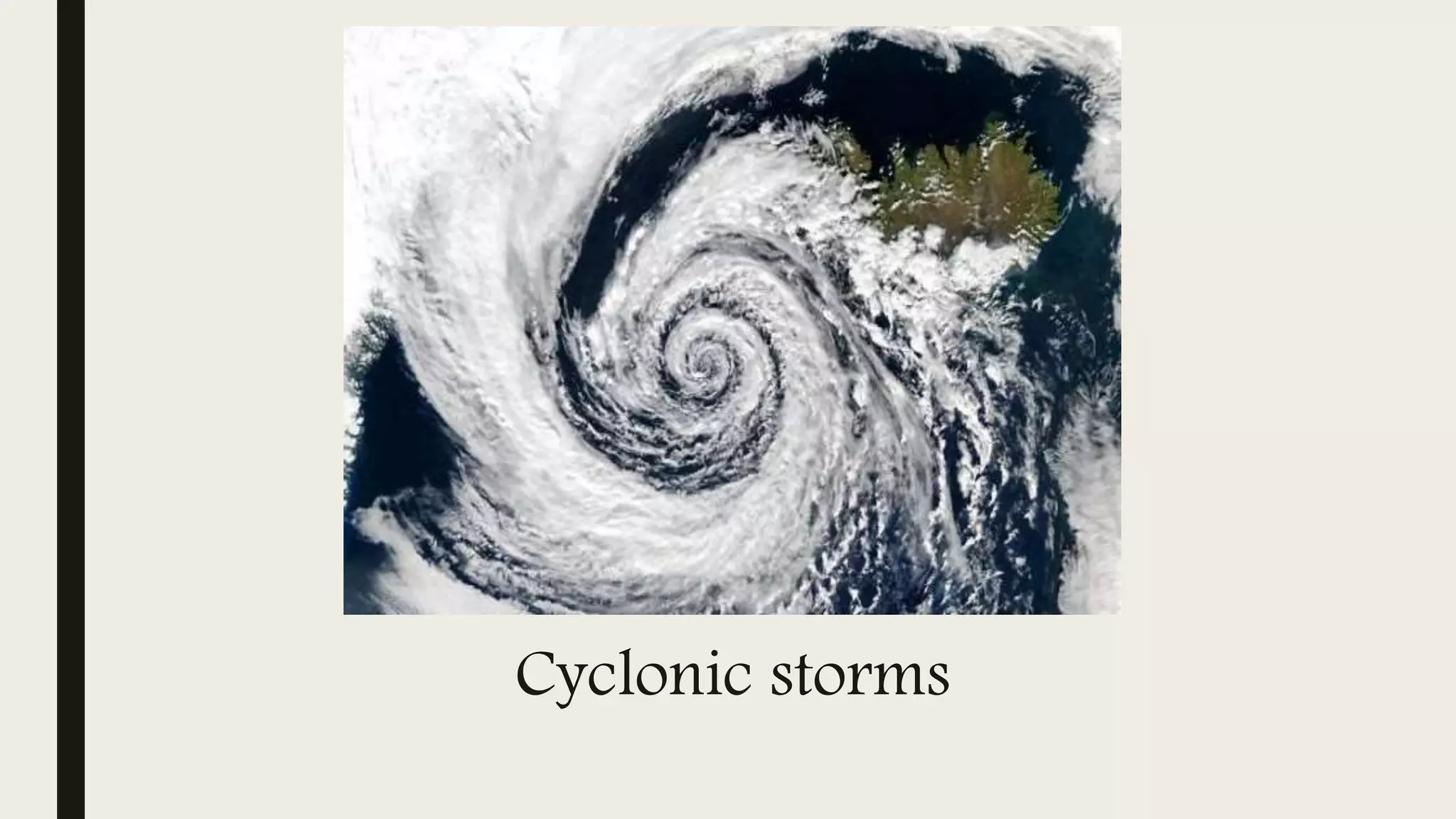
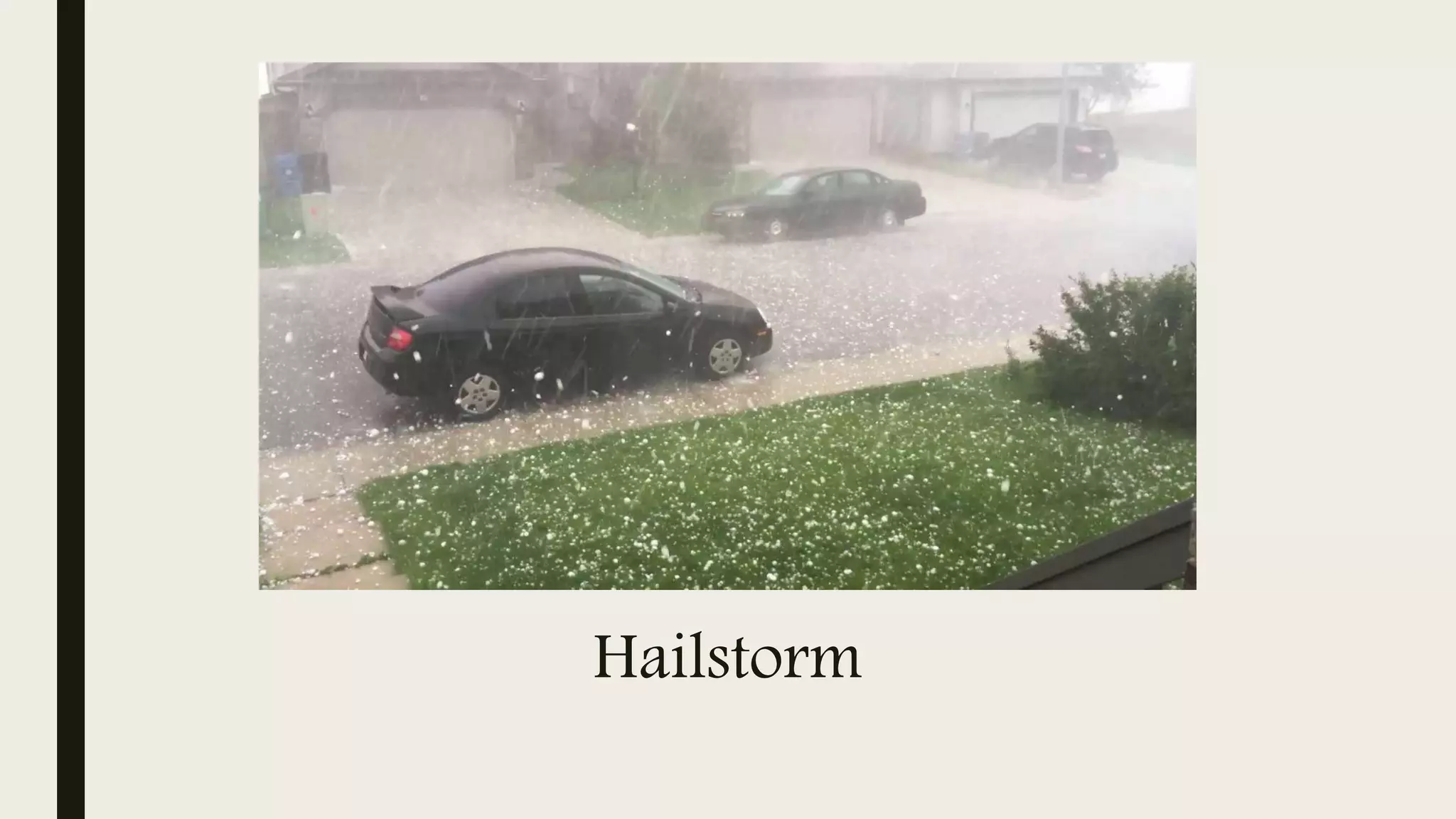
• Weather disasters: Cyclonic storms, Heat waves, Hailstorms,
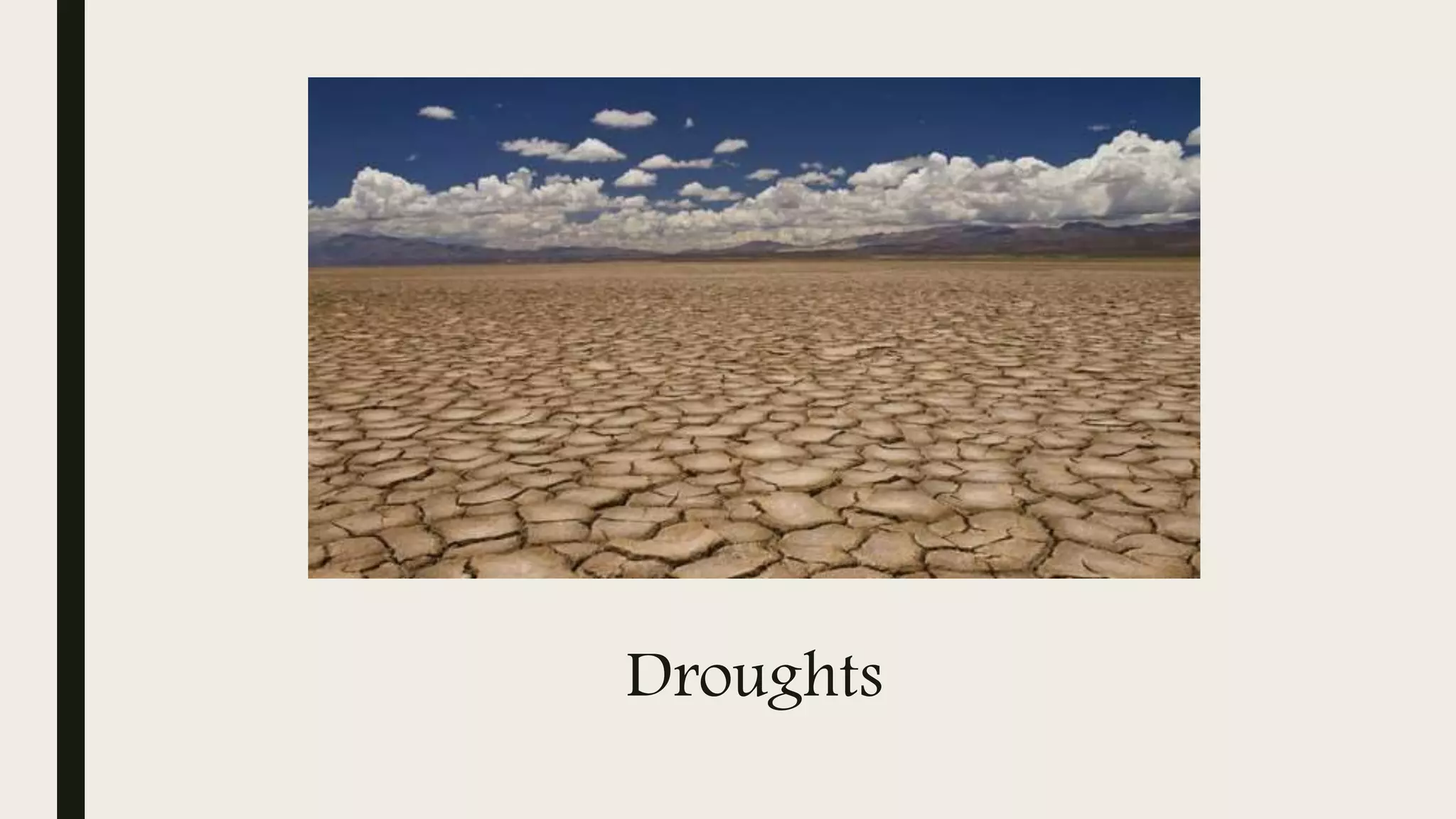
Droughts.
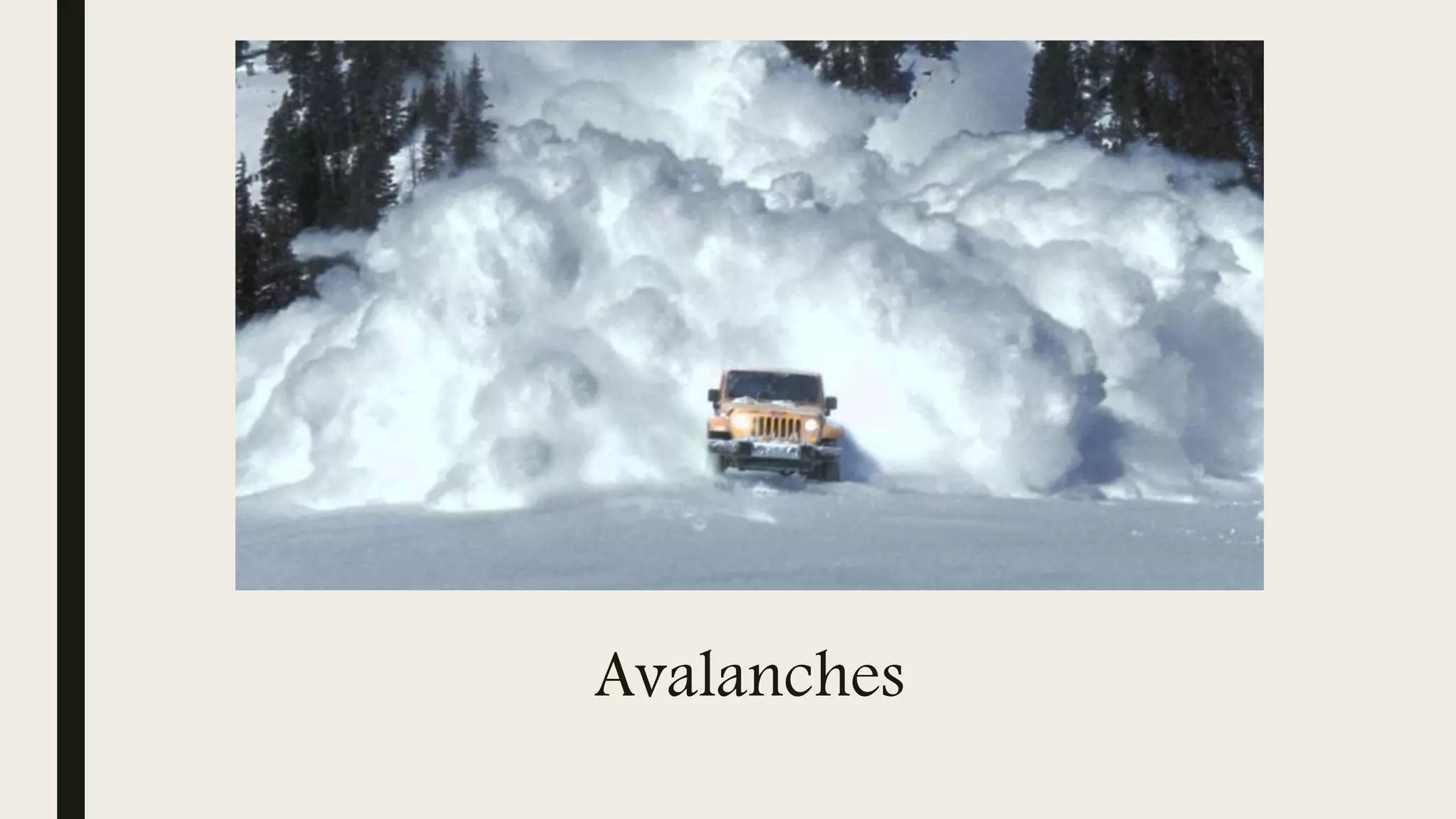
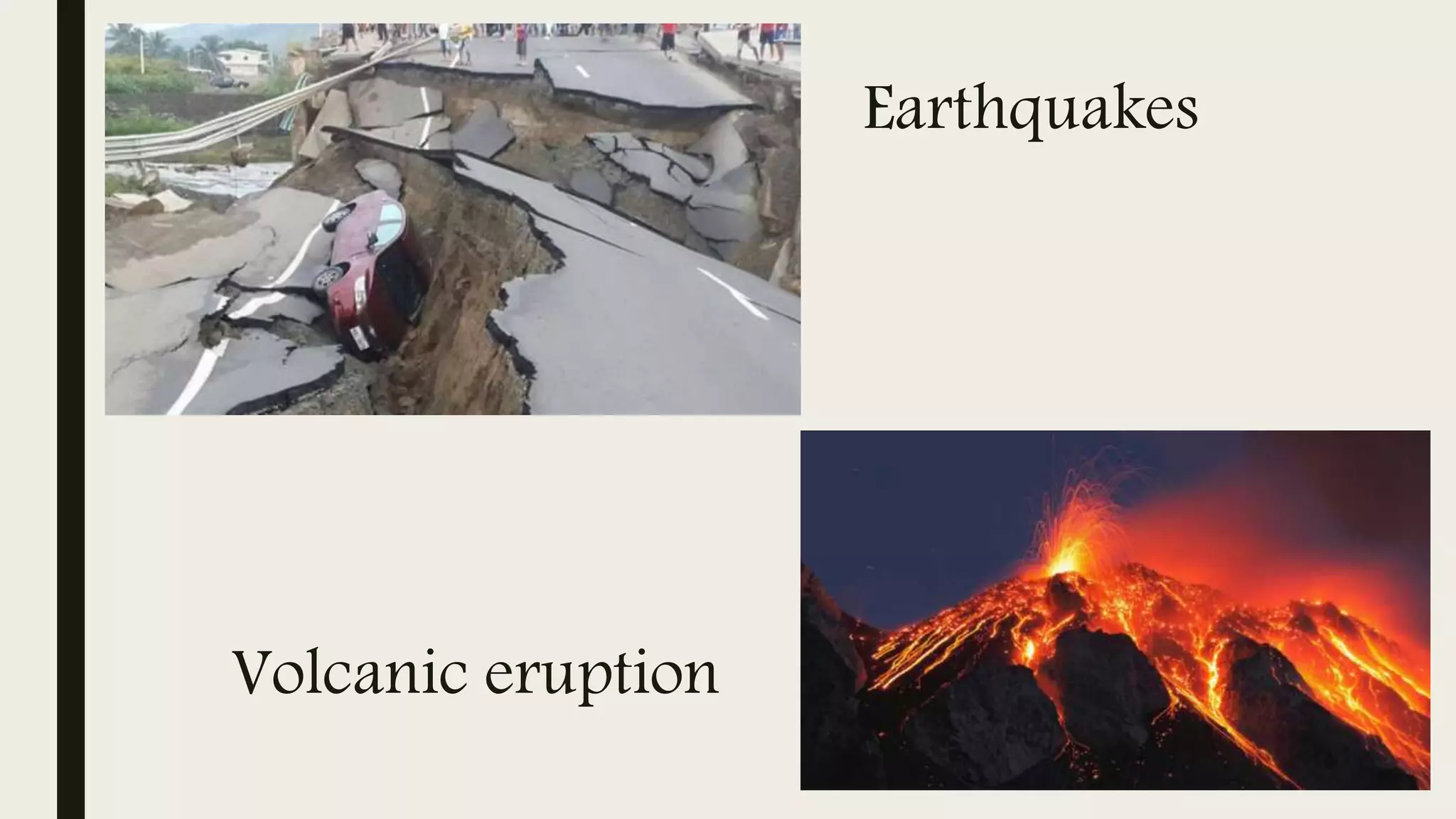
• Land disasters: Avalanches, Earthquakes, Volcanic eruptions.
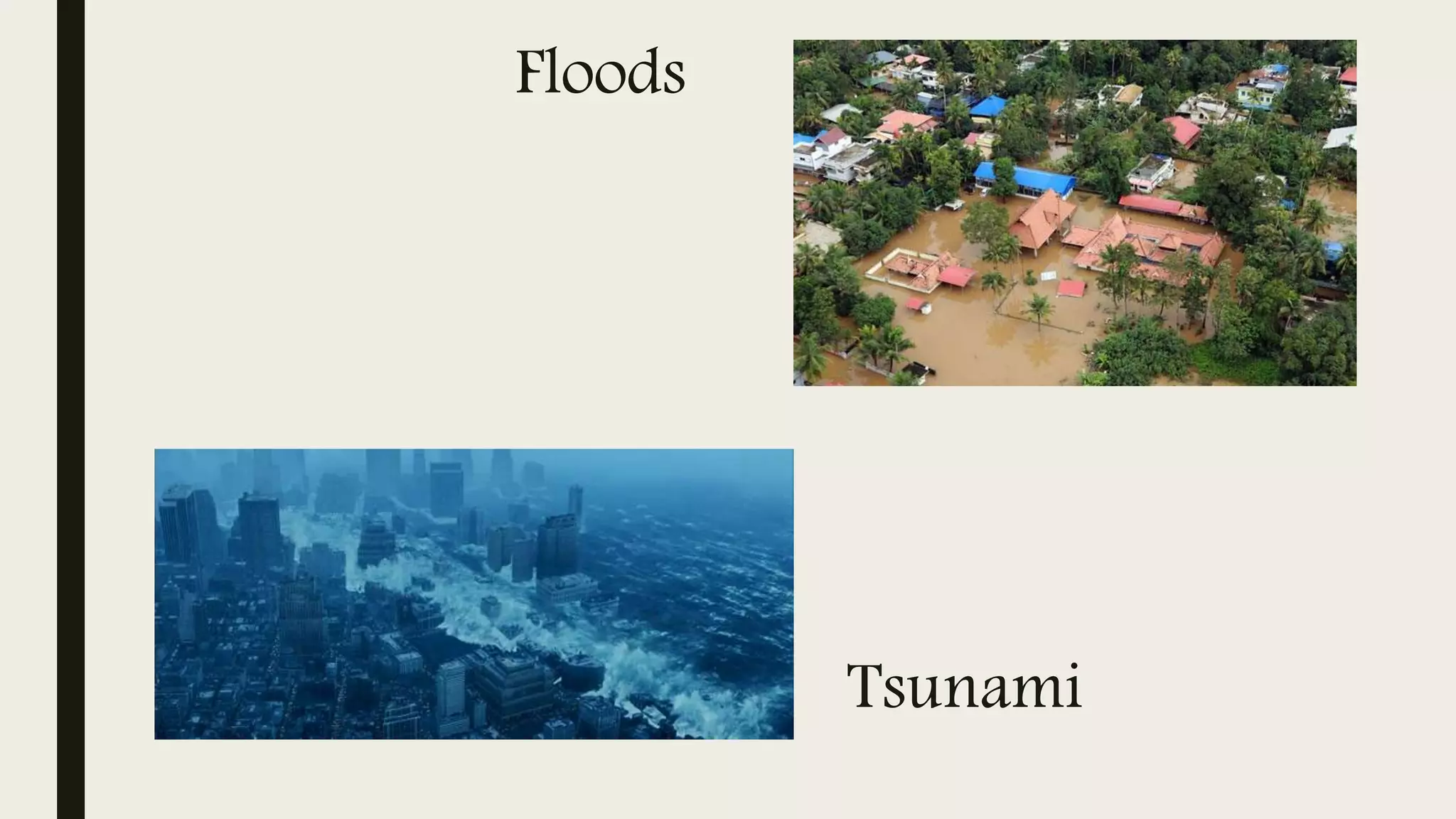
• Water disasters: Floods, Eruptions, Tsunami.
Man made disaster
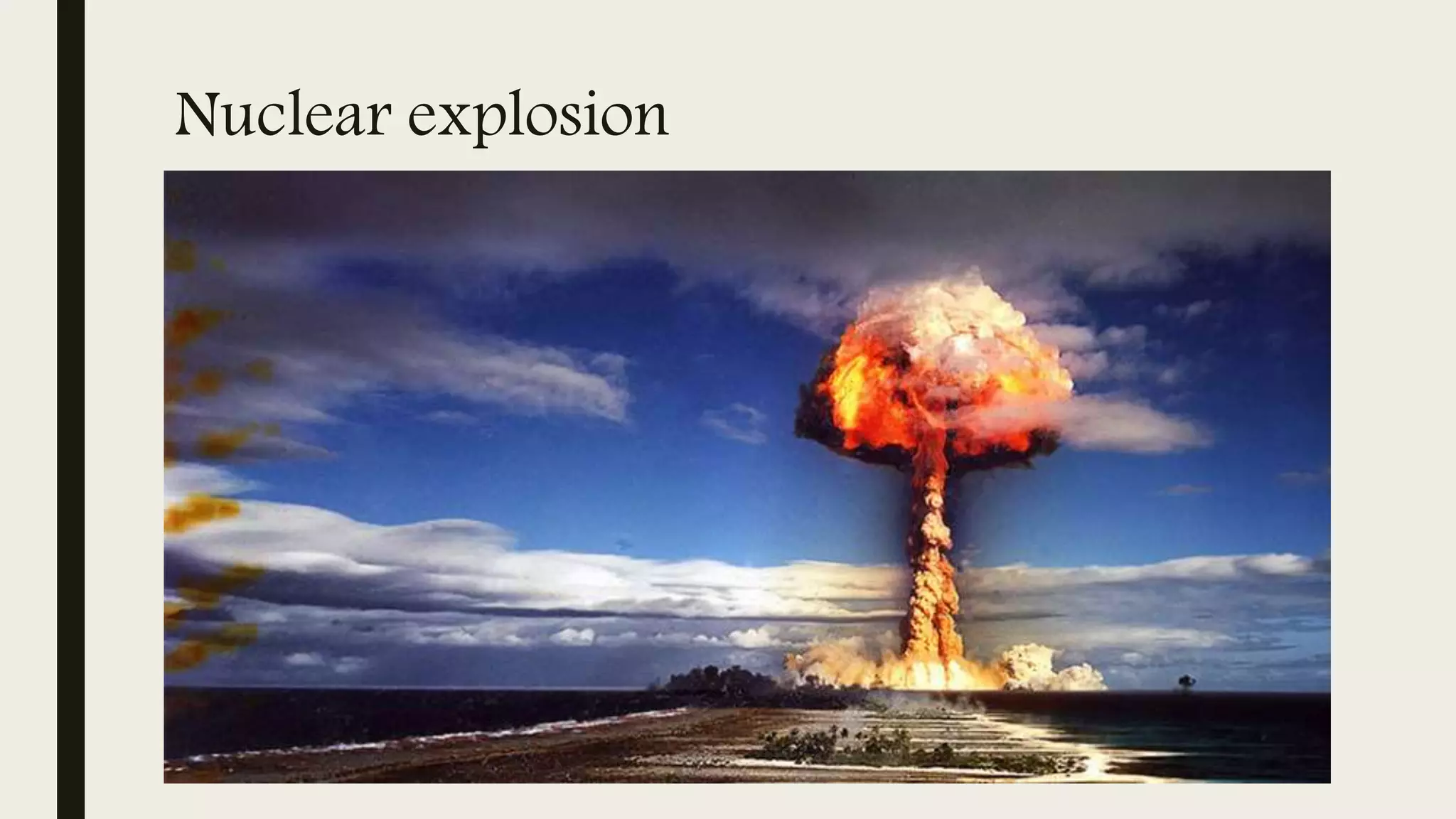
• Nuclear disasters.
• Biological disasters.
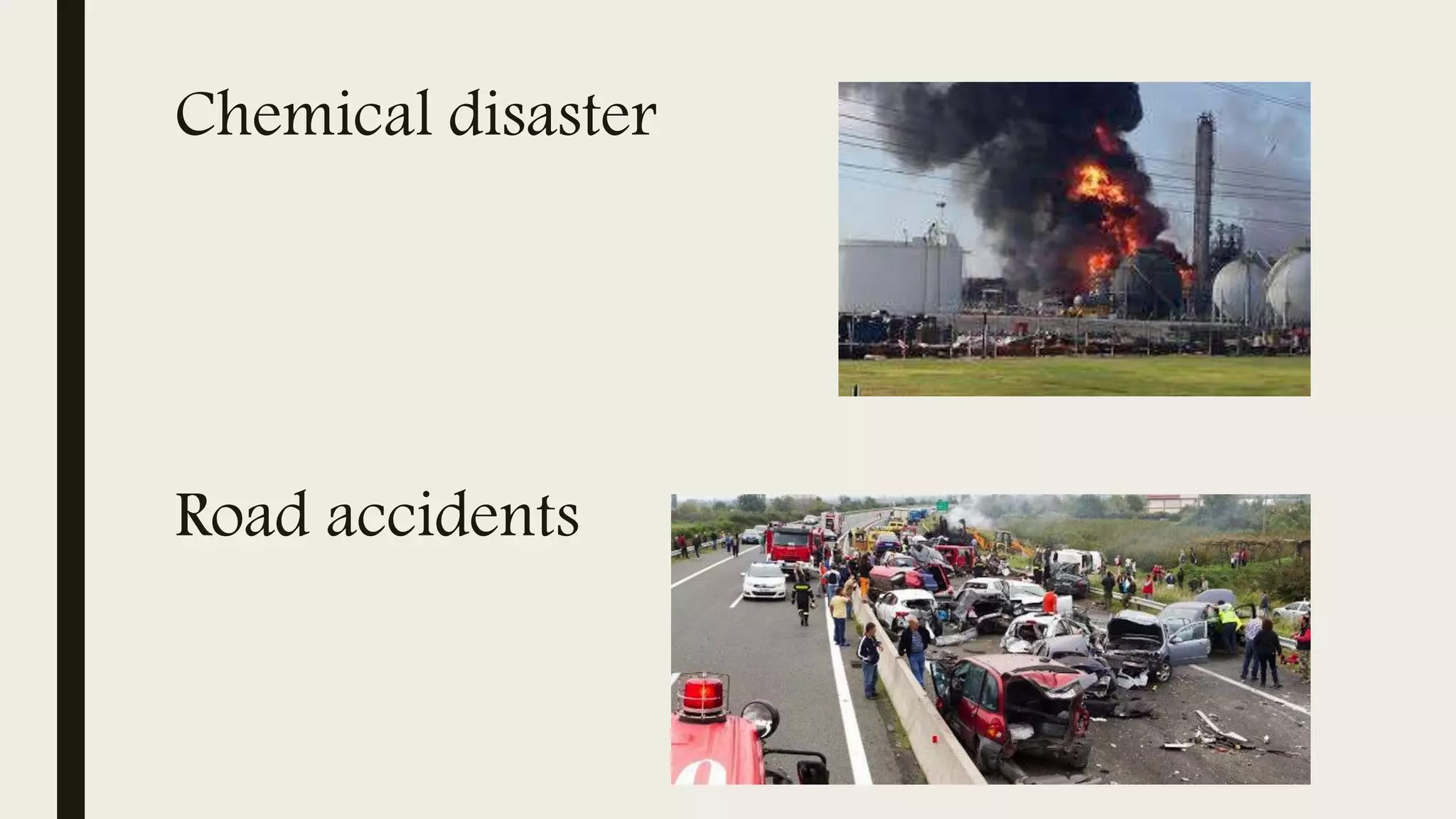
• Chemical disasters.
• Fire and Road accidents.
• Terrorism.
Cyclonic storms
Hailstorm
Droughts
Avalanches
Earthquakes
Volcanic eruption
Floods
Tsunami
Nuclear explosion
Chemical disaster
Road accidents
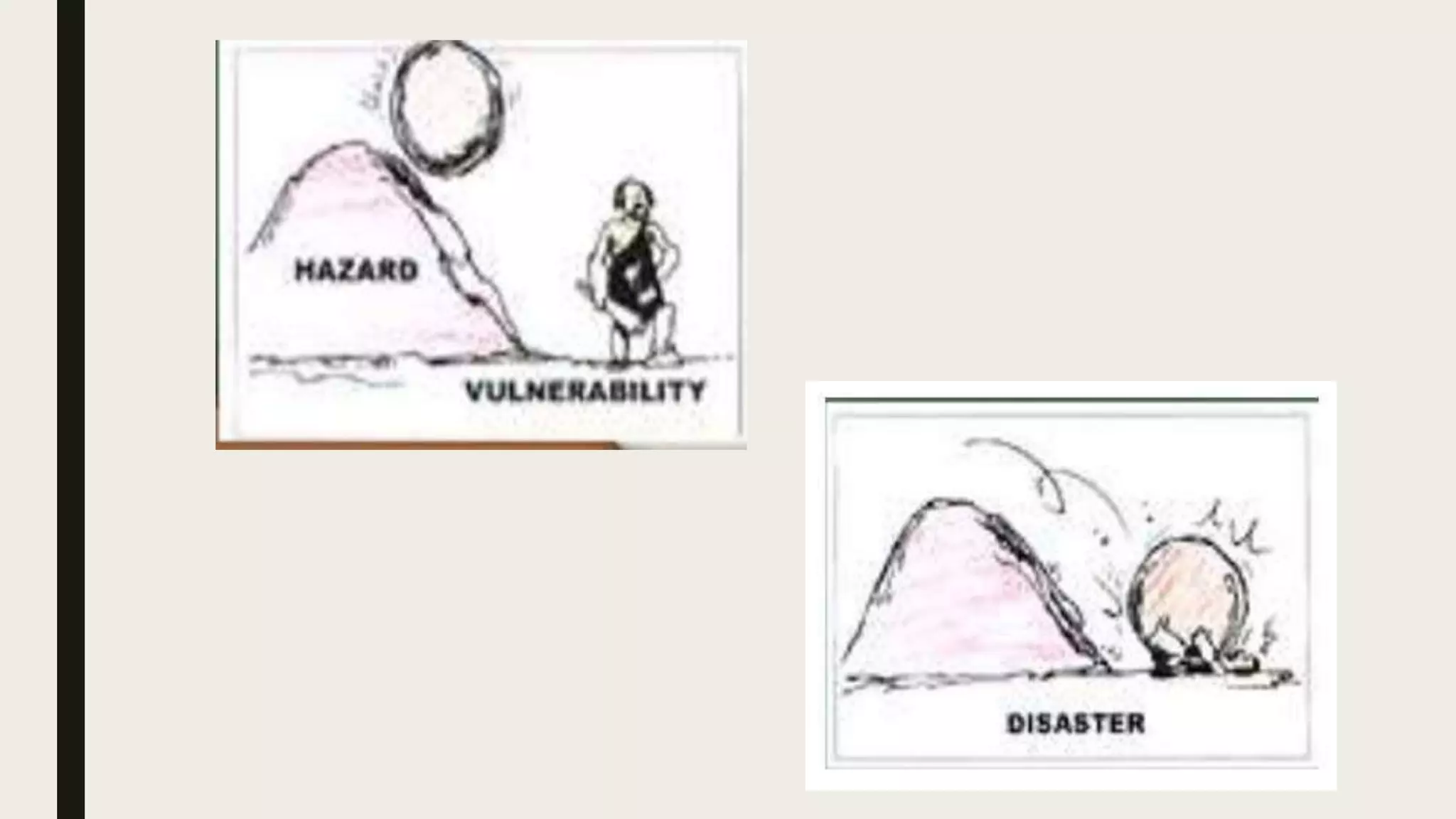
Hazard
A hazard is any object, situation, or behavior that
has the potential to cause injury, ill health, or
damage to property or the environment.
Emergency
An emergency is a situation that poses an
immediate risk to health, life, property, or
environment. Most emergencies require urgent
actions to prevent a worsening of the situation,
although in some situations, mitigation may not
be possible and agencies may only be able to offer
palliative care for the aftermath.
Risk
Risk is the potential of gaining or losing
something of value. Values (such as physical
health, social status, emotional well-being, or
financial wealth) can be gained or lost when
taking risk resulting from a given action or
inaction, foreseen or unforeseen (planned or not
planned).
Vulnerability
Vulnerability describes the characteristic and
circumstances of a community, system or asset
that makes it susceptible to the damaging effects
of a hazard. There are many aspects of
Vulnerability , arising from various physical,
social, economic, and environmental factors.
Disaster
management
Disaster management aims to reduce, or avoid, the
potential losses from hazards and appropriate
assistance to victims of disaster, and achieve rapid
and effective recovery.
Principles of disaster
management
Disaster management is the responsibility of all
spheres of government.
Disaster management should use resources that
exist for a day-to-day purpose.
Organizations should function as an extension
of their core business.
Individuals are responsible for their own
safety.
Disaster management planning should
focus on large-scale events.
Disaster management
cycle
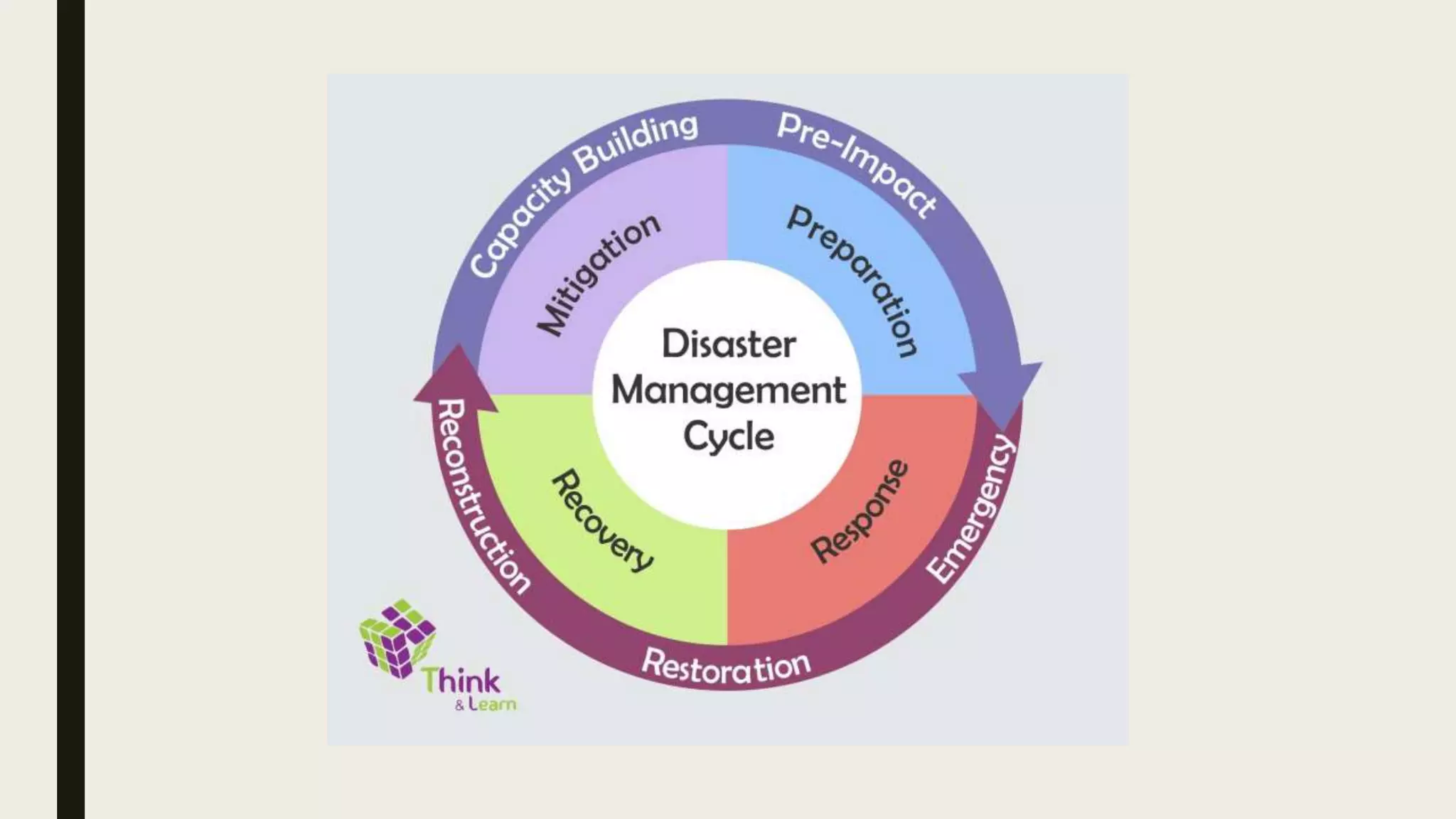
The Disaster management cycle illustrates the
ongoing process by which governments,
businesses, and civil society plan for and reduce
the impact of disasters, react during and
immediately following a disaster, and take steps to
recover after a disaster has occurred.
Phases of disaster
management cycle
Mitigation - Minimizing the effects of disaster.
Examples: building codes and zoning;
vulnerability analyses; public education.
Preparedness - Planning how to respond.
Examples: preparedness plans; emergency
exercises/training; warning systems.
Response - Efforts to minimize the hazards
created by a disaster.
Examples: search and rescue; emergency relief .
Recovery - Returning the community to normal.
Examples: temporary housing; grants; medical care.
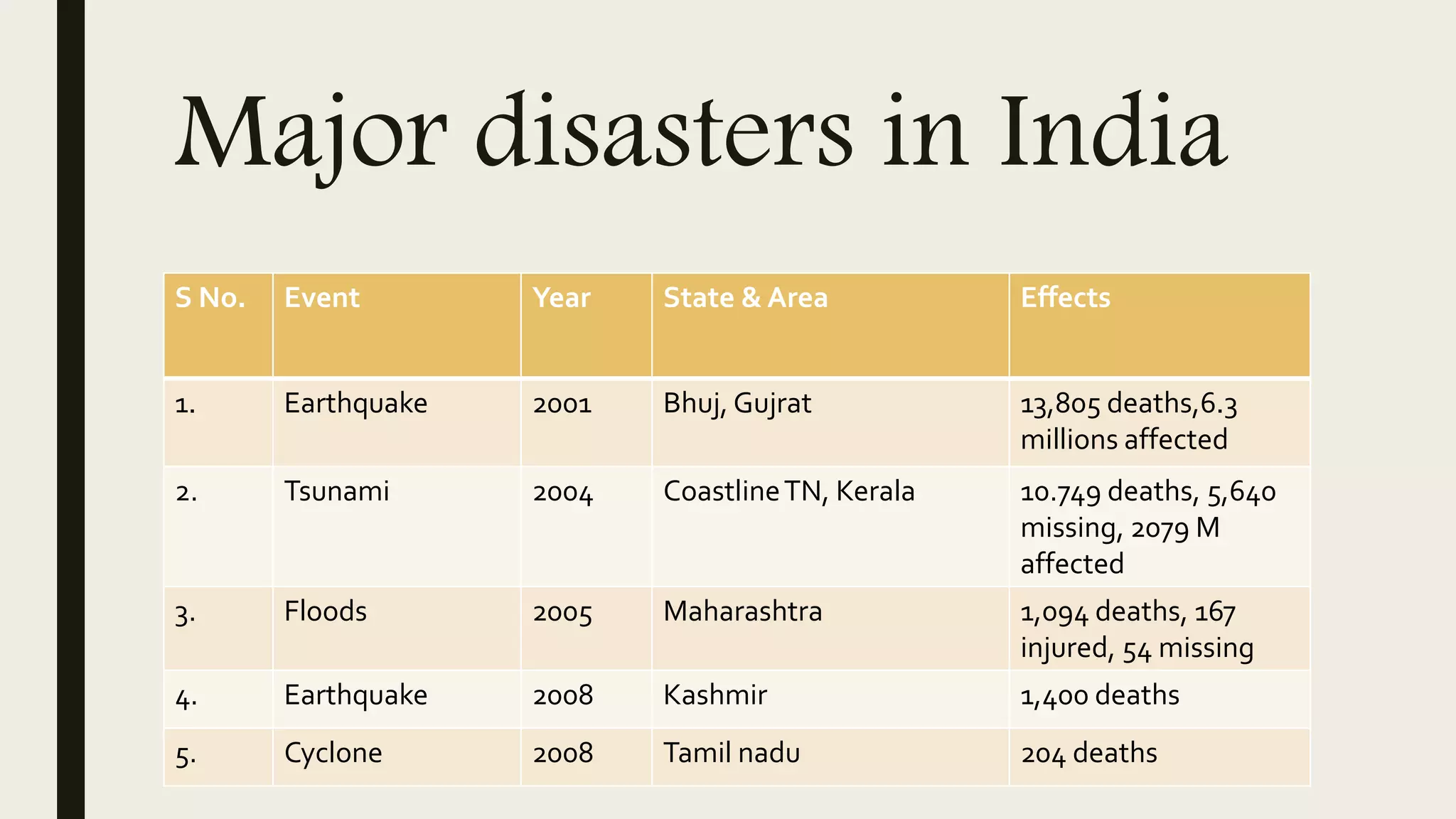
Major disasters in India
S No. Event Year State & Area Effects
1. Earthquake 2001 Bhuj, Gujrat 13,805 deaths,6.3
millions affected
2. Tsunami 2004 CoastlineTN, Kerala 10.749 deaths, 5,640
missing, 2079 M
affected
3. Floods 2005 Maharashtra 1,094 deaths, 167
injured, 54 missing
4. Earthquake 2008 Kashmir 1,400 deaths
5. Cyclone 2008 Tamil nadu 204 deaths
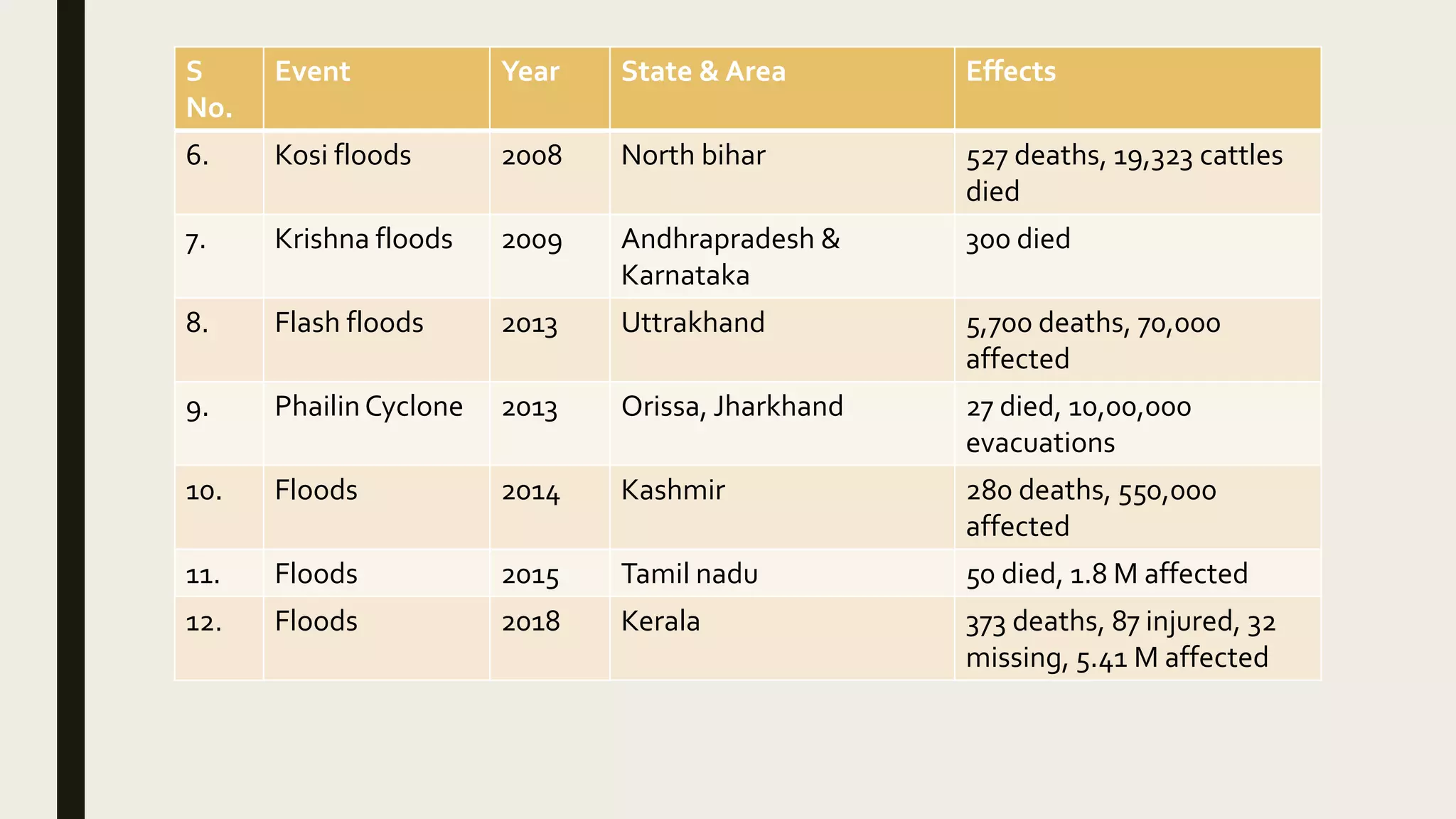
S
No.
Event Year State & Area Effects
6. Kosi floods 2008 North bihar 527 deaths, 19,323 cattles
died
7. Krishna floods 2009 Andhrapradesh &
Karnataka
300 died
8. Flash floods 2013 Uttrakhand 5,700 deaths, 70,000
affected
9. PhailinCyclone 2013 Orissa, Jharkhand 27 died, 10,00,000
evacuations
10. Floods 2014 Kashmir 280 deaths, 550,000
affected
11. Floods 2015 Tamil nadu 50 died, 1.8 M affected
12. Floods 2018 Kerala 373 deaths, 87 injured, 32
missing, 5.41 M affected
Thank you

Introduction to disaster management

  • 1.
  • 2.
    Disaster A disaster isa sudden, calamitous event that seriously disrupts the functioning of a community or society and causes human, material, and economic or environmental losses which is more than the ability of the community or society to use its resources.
  • 3.
    Types of disasters ■Natural disasters ■ Man made disasters
  • 4.
    Natural disaster • Weatherdisasters: Cyclonic storms, Heat waves, Hailstorms, Droughts. • Land disasters: Avalanches, Earthquakes, Volcanic eruptions. • Water disasters: Floods, Eruptions, Tsunami. Man made disaster • Nuclear disasters. • Biological disasters. • Chemical disasters. • Fire and Road accidents. • Terrorism.
  • 5.
  • 6.
  • 7.
  • 8.
  • 9.
  • 10.
  • 11.
  • 12.
  • 13.
    Hazard A hazard isany object, situation, or behavior that has the potential to cause injury, ill health, or damage to property or the environment.
  • 14.
    Emergency An emergency isa situation that poses an immediate risk to health, life, property, or environment. Most emergencies require urgent actions to prevent a worsening of the situation, although in some situations, mitigation may not be possible and agencies may only be able to offer palliative care for the aftermath.
  • 15.
    Risk Risk is thepotential of gaining or losing something of value. Values (such as physical health, social status, emotional well-being, or financial wealth) can be gained or lost when taking risk resulting from a given action or inaction, foreseen or unforeseen (planned or not planned).
  • 16.
    Vulnerability Vulnerability describes thecharacteristic and circumstances of a community, system or asset that makes it susceptible to the damaging effects of a hazard. There are many aspects of Vulnerability , arising from various physical, social, economic, and environmental factors.
  • 18.
    Disaster management Disaster management aimsto reduce, or avoid, the potential losses from hazards and appropriate assistance to victims of disaster, and achieve rapid and effective recovery.
  • 19.
    Principles of disaster management Disastermanagement is the responsibility of all spheres of government. Disaster management should use resources that exist for a day-to-day purpose. Organizations should function as an extension of their core business.
  • 20.
    Individuals are responsiblefor their own safety. Disaster management planning should focus on large-scale events.
  • 21.
    Disaster management cycle The Disastermanagement cycle illustrates the ongoing process by which governments, businesses, and civil society plan for and reduce the impact of disasters, react during and immediately following a disaster, and take steps to recover after a disaster has occurred.
  • 23.
    Phases of disaster managementcycle Mitigation - Minimizing the effects of disaster. Examples: building codes and zoning; vulnerability analyses; public education. Preparedness - Planning how to respond. Examples: preparedness plans; emergency exercises/training; warning systems.
  • 24.
    Response - Effortsto minimize the hazards created by a disaster. Examples: search and rescue; emergency relief . Recovery - Returning the community to normal. Examples: temporary housing; grants; medical care.
  • 25.
    Major disasters inIndia S No. Event Year State & Area Effects 1. Earthquake 2001 Bhuj, Gujrat 13,805 deaths,6.3 millions affected 2. Tsunami 2004 CoastlineTN, Kerala 10.749 deaths, 5,640 missing, 2079 M affected 3. Floods 2005 Maharashtra 1,094 deaths, 167 injured, 54 missing 4. Earthquake 2008 Kashmir 1,400 deaths 5. Cyclone 2008 Tamil nadu 204 deaths
  • 26.
    S No. Event Year State& Area Effects 6. Kosi floods 2008 North bihar 527 deaths, 19,323 cattles died 7. Krishna floods 2009 Andhrapradesh & Karnataka 300 died 8. Flash floods 2013 Uttrakhand 5,700 deaths, 70,000 affected 9. PhailinCyclone 2013 Orissa, Jharkhand 27 died, 10,00,000 evacuations 10. Floods 2014 Kashmir 280 deaths, 550,000 affected 11. Floods 2015 Tamil nadu 50 died, 1.8 M affected 12. Floods 2018 Kerala 373 deaths, 87 injured, 32 missing, 5.41 M affected
  • 27.