DISASTER MANAGEMENT
A.Arulpriya
M.Ed Second year
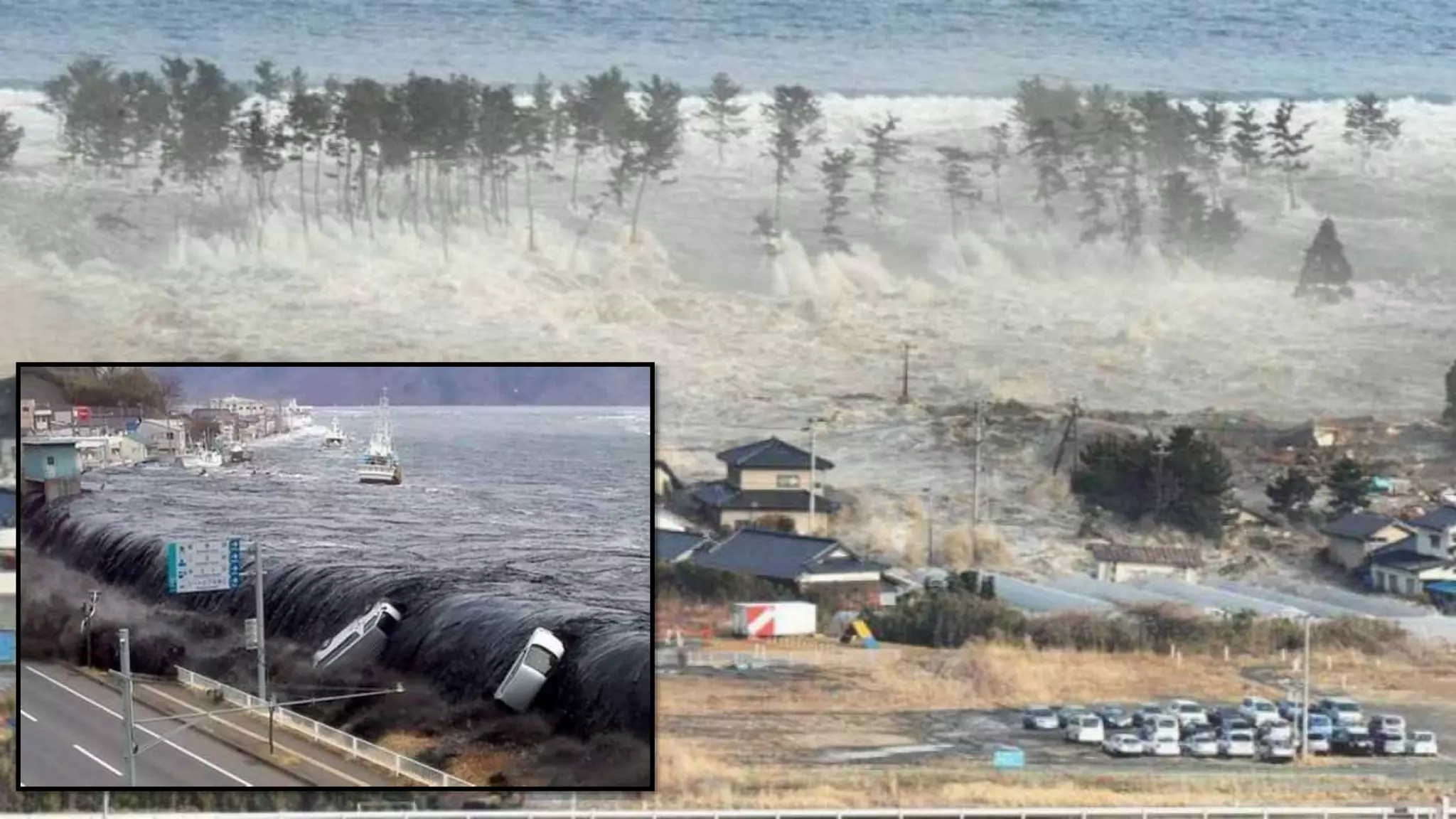
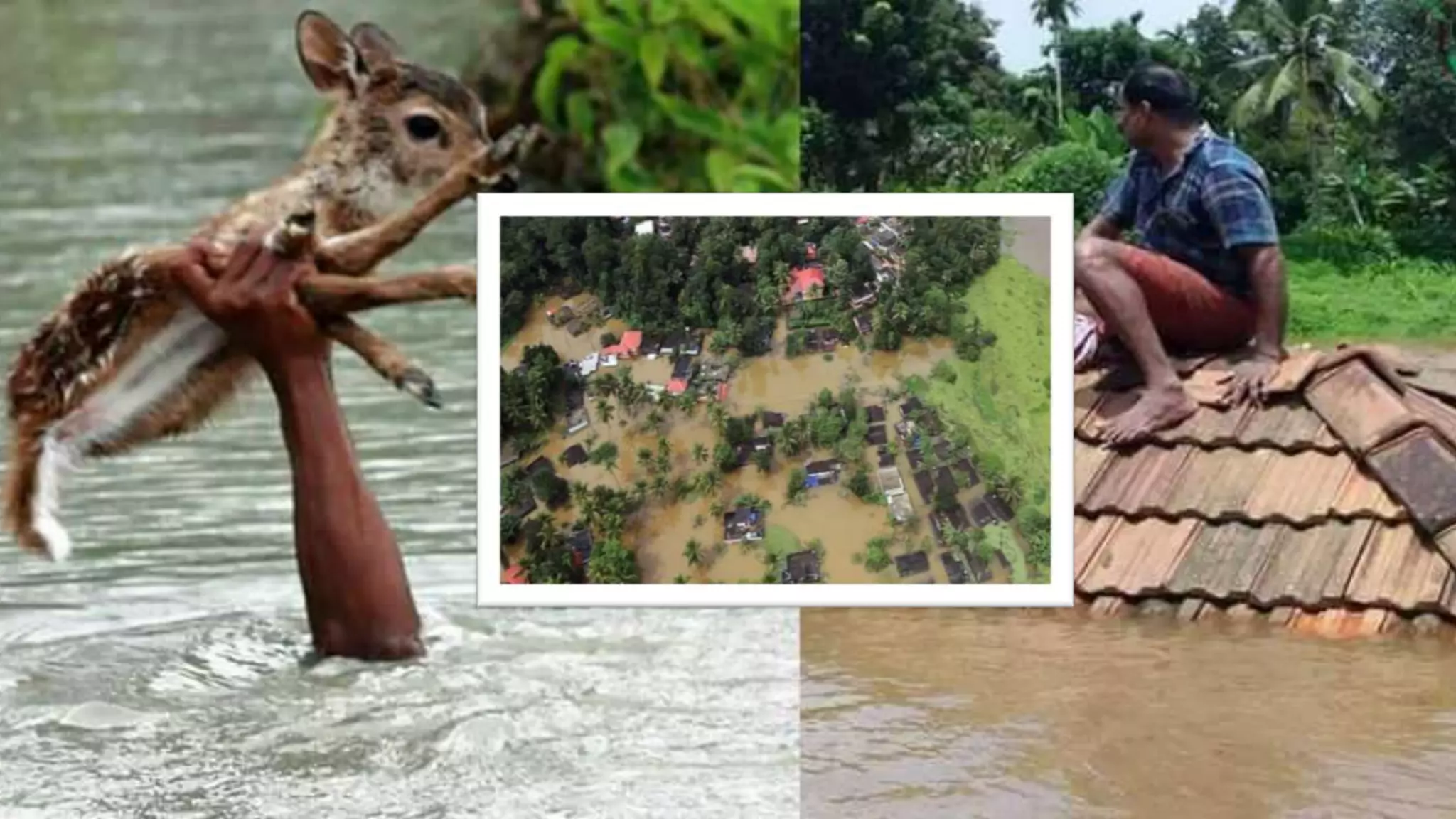
LOOK AT SOME OF THESE PICTURES OF
RECENT DISASTERS
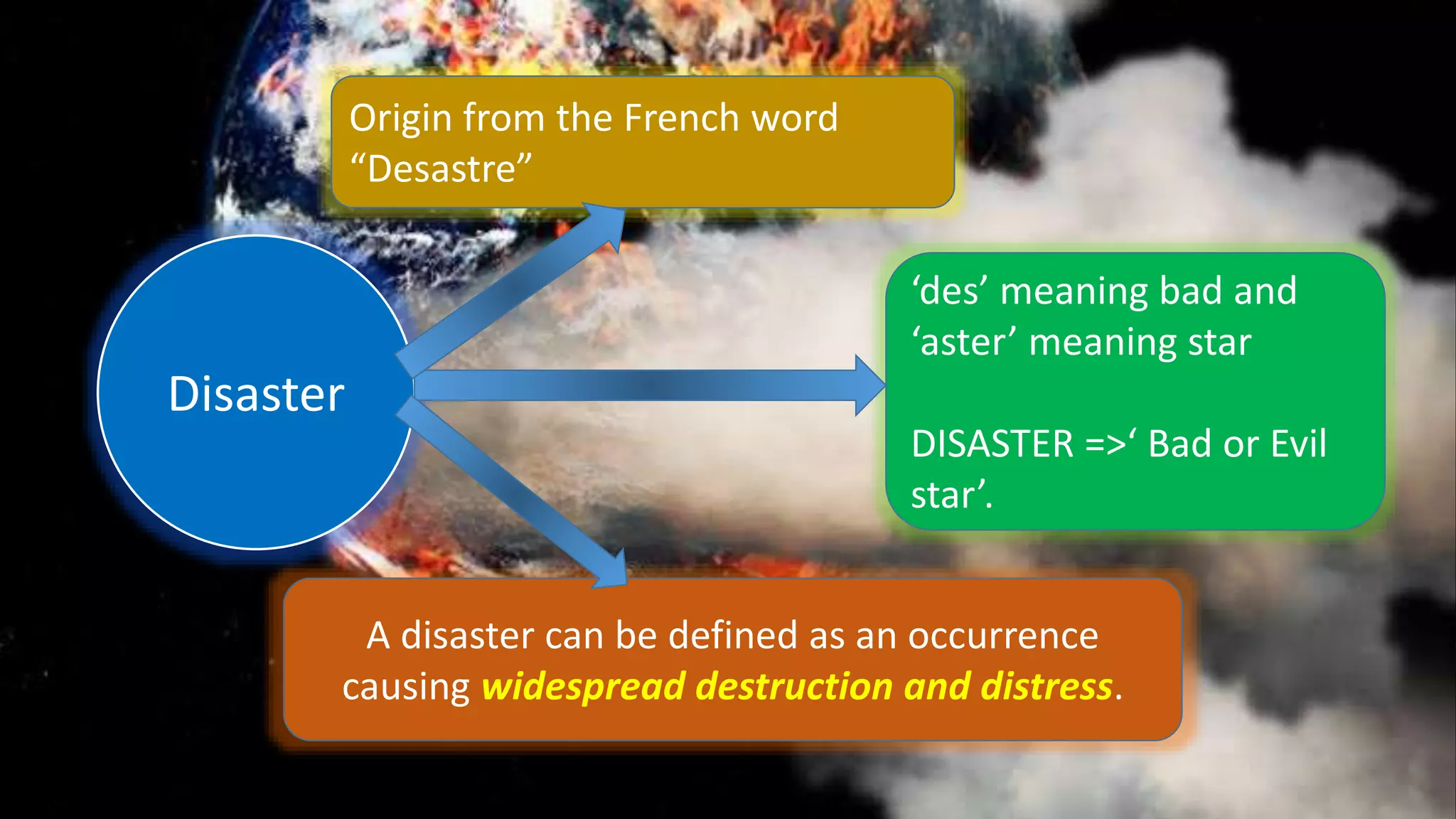
Origin from the French word
“Desastre”
‘des’ meaning bad and
‘aster’ meaning star
DISASTER =>‘ Bad or Evil
star’.
A disaster can be defined as an occurrence
causing widespread destruction and distress.
Disaster
A disaster is a result
from the combination
of hazard,
vulnerability and
insufficient capacity
or measures to reduce
the potential chances
of risk.
Any phenomenon that has the
potential to cause disruption or
damage to people and their
environment
A hazard is a natural event while the disaster
is its consequence.
A hazard is perceived natural event which
threatens both life and property A disaster is a
realization of this hazard.”
-John Whittow
The extent to which a community,
structure, service or geographic area is
likely to be damaged or disrupted by the
impact of particular disaster hazard
E.g.
• People
• Property
• Essential services
• Environment
• economy
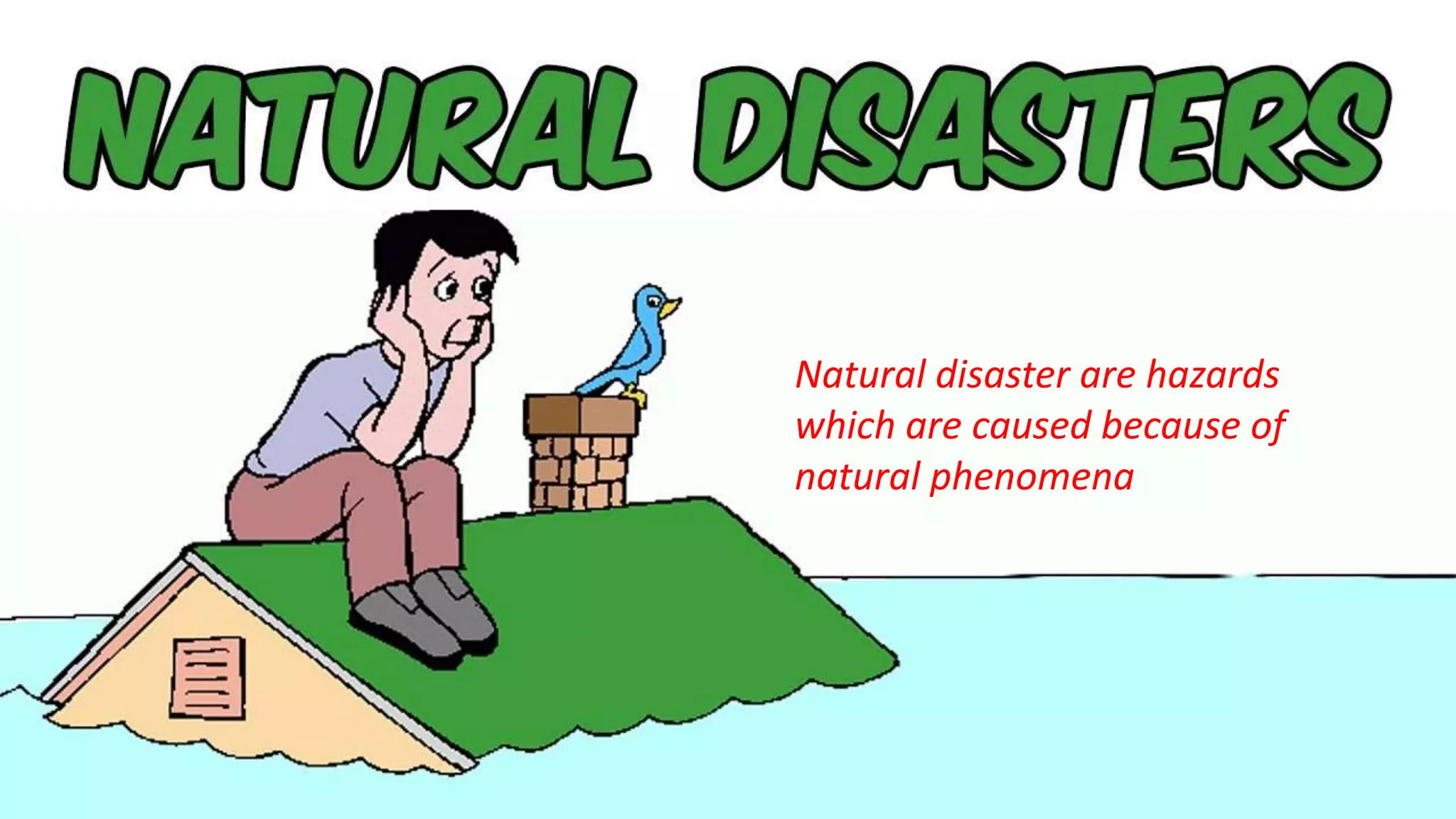
Natural disaster are hazards
which are caused because of
natural phenomena
Types of Natural Disasters
Drought
Volcanic eruption
Tornadoes/
Hurricanes/ Typhoons
Tsunamis
Floods
Earthquakes
Caused by the release of built up pressure caused by the shifting
of tectonic plates
It occurs at the area where tectonic plates meet
Magnitude of earthquake is measured using Richter scale
Recorded by a device called seismograph
It is a temporary overflow of water onto land that is normally dry
Caused by the heavy rainfall and overflowing water bodies
An extreme shortage of rainfall or water in a
particular area
It is directly affects the crops and results in the
shortage of food for animals and humans
A Volcanic eruption occurs when hot material (lava) from the
earth’s interior (magma chamber) are thrown out of a volcano.
Lava, steam, broken rocks pieces , dust and gaseous
sulphur compounds are some of these “ejecta”
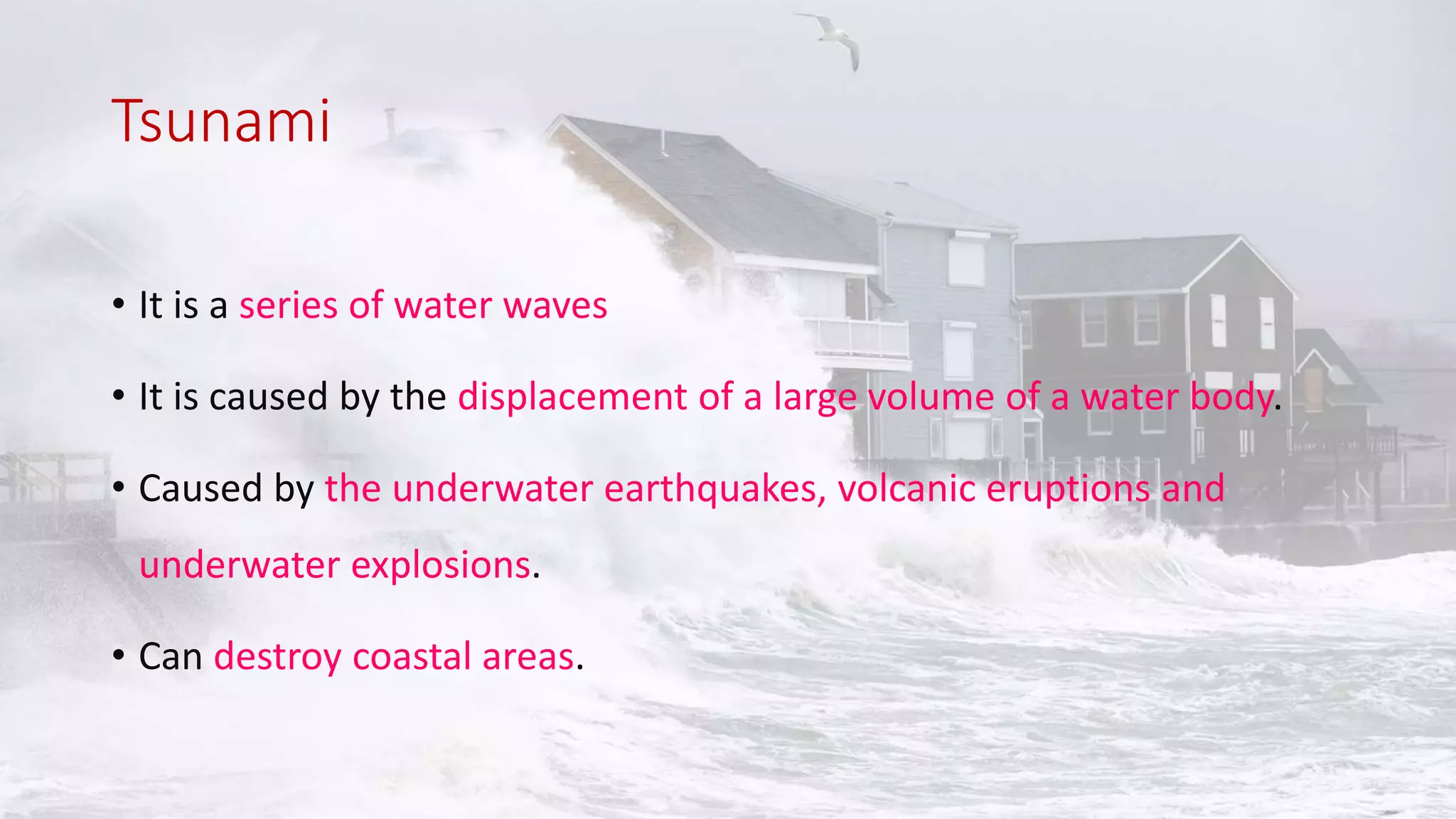
Tsunami
• It is a series of water waves
• It is caused by the displacement of a large volume of a water body.
• Caused by the underwater earthquakes, volcanic eruptions and
underwater explosions.
• Can destroy coastal areas.
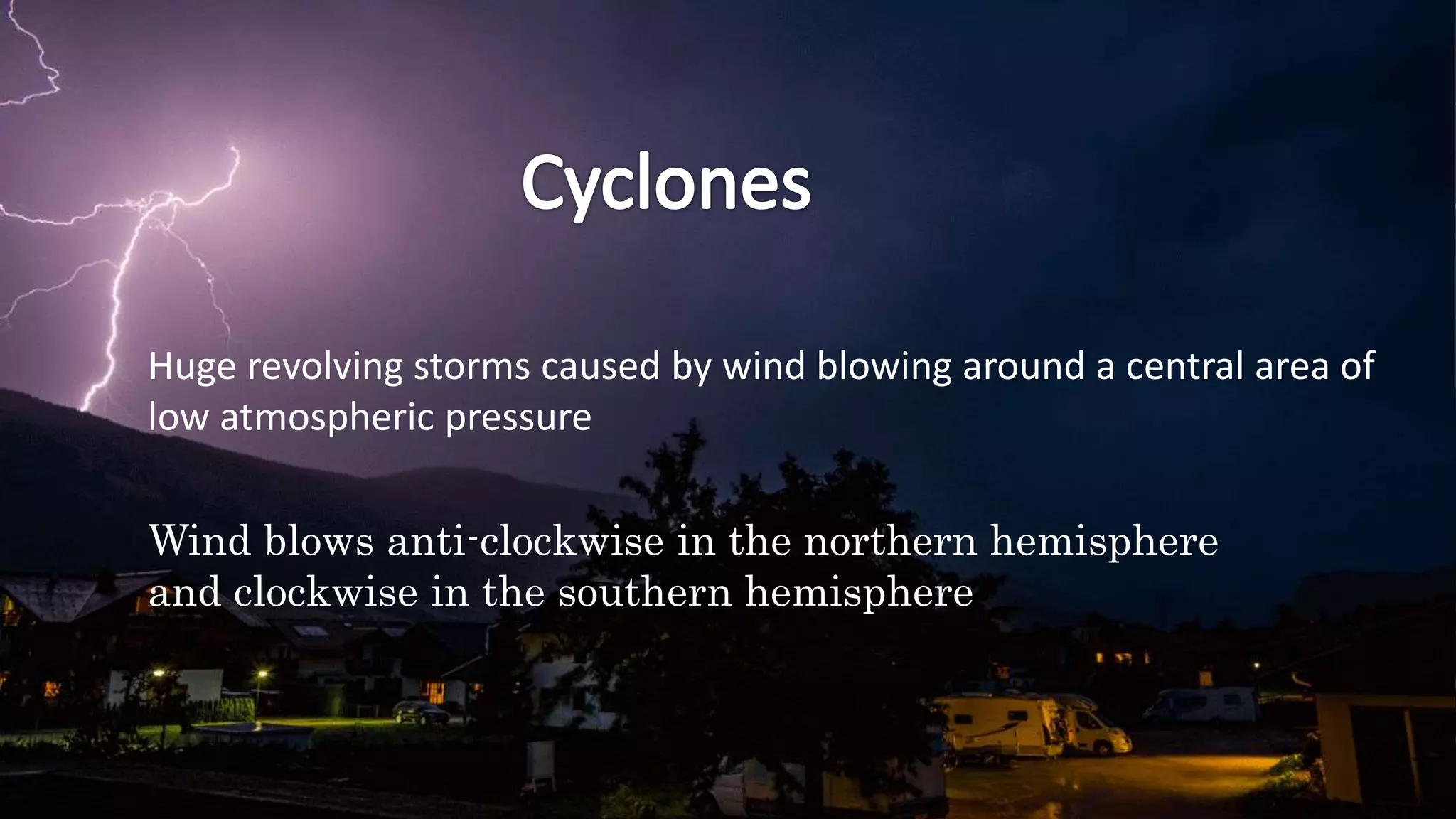
Huge revolving storms caused by wind blowing around a central area of
low atmospheric pressure
Wind blows anti-clockwise in the northern hemisphere
and clockwise in the southern hemisphere
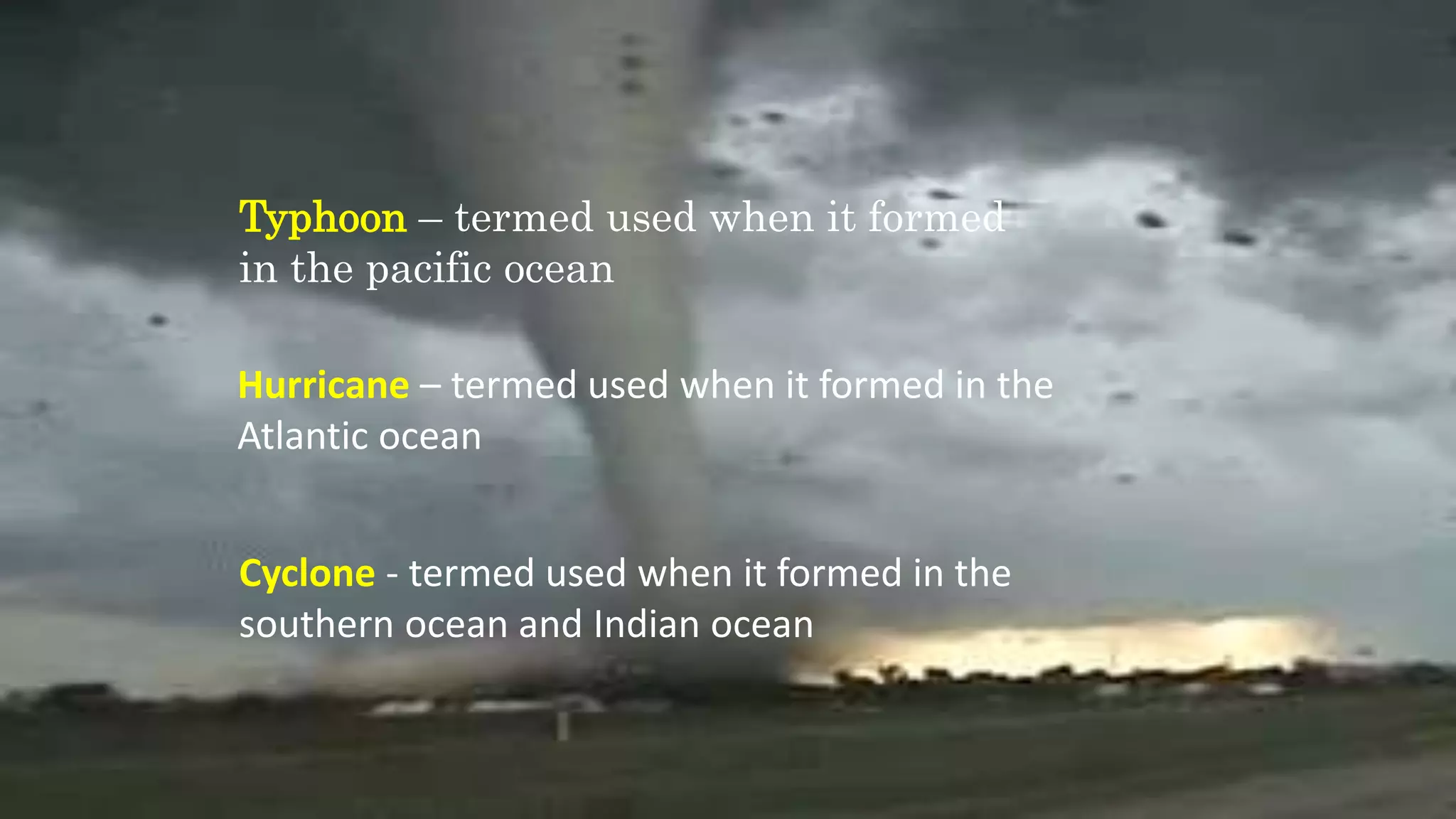
Typhoon – termed used when it formed
in the pacific ocean
Hurricane – termed used when it formed in the
Atlantic ocean
Cyclone - termed used when it formed in the
southern ocean and Indian ocean
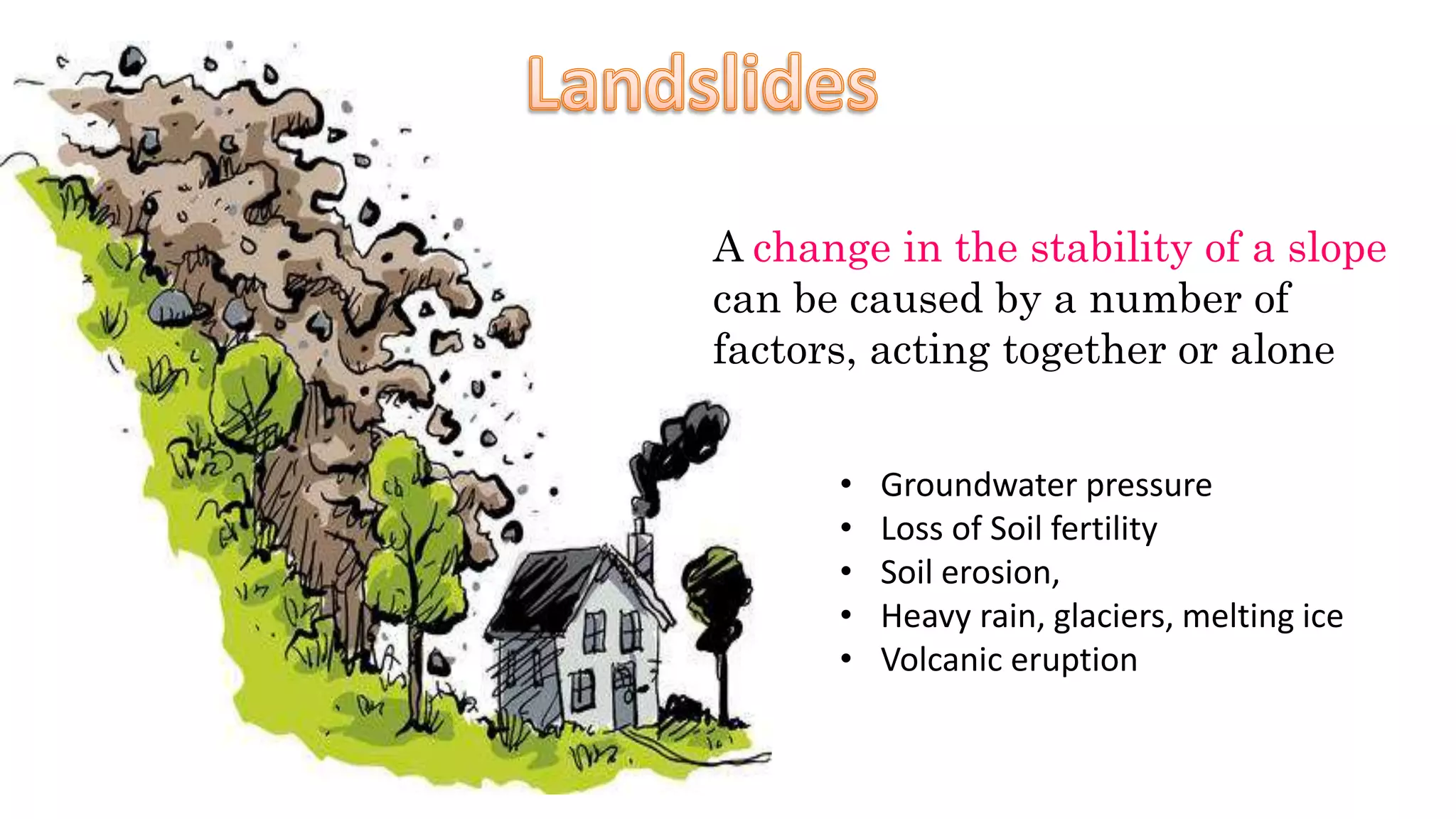
A change in the stability of a slope
can be caused by a number of
factors, acting together or alone
• Groundwater pressure
• Loss of Soil fertility
• Soil erosion,
• Heavy rain, glaciers, melting ice
• Volcanic eruption
The disaster which are caused as a result of human
activities
Phases of DM:
• Preparedness
• Response
• Recovery
• mitigation
It refers to how we can protect or preserve
maximum of lives and property during a
disaster.
Preparedness Response Recovery Mitigation
Activities prior to
a disaster
e.g.
Preparedness
plans,
Emergency
exercises,
Training,
Warning systems
Activities during
a disaster
e.g.
Public warning
systems,
Emergency
operations,
Search and
rescue
Activities
following a
disaster
e.g.
Temporary
housing,
Claims processing
and grants,
Long term
medical care and
counseling
Activities that
reduce the
effects of
disasters
e.g.
Building codes
and zoning,
Vulnerability
analysis,
Public education
Principles of Disaster Management
• It is the responsibility of all spheres of government
• It should use resources that exist for a day to day purposes
• Individuals are responsible for their own safety
• Its planning should focus on large scale events
• It should recognize the difference between incidents and disasters
• It must take account of the type of physical environment and the
structure of the population
• It must recognize the involvement and potential role of non
government agencies
Importance of Disaster Management
• To avert a disaster
• To undertake the rescue operations
• To provide relief measures
• To undertake the rehabilitation programs
• To reduce trauma and tension
• To control death rate
• To protect the environment
• To minimize the loss
Role of Educational Institution in DM
• Act as a safe shelter
• Health Centre for the locality
• Disaster management information center should keep database of
population, health, institution.
• A Centre for learning and counseling
• The school can be a feeding Centre
• Training for DRM volunteers, village council members, teachers,
government officials and even students and parents.
Role of a Teacher in training DM:
• Generate Awareness of hazards and preparedness measures
• Prepare contingency plan for school in case of a fire and disaster
• Teacher should be told about primary escape route in school
• Train the children on first aid and rescue operation
• Initiate the process of plantation in the school and giving knowledge
on the types of trees to be grown.
• Generate awareness on water and sanitation among the children
• The teacher should be demonstrated the action to be taken when
trapped in a fire or any hazard.
“We, as teachers as responsible citizens of our
country should be a part and parcel of the
disaster preparedness drive taken up in”

Disaster management final

  • 1.
  • 2.
    LOOK AT SOMEOF THESE PICTURES OF RECENT DISASTERS
  • 7.
    Origin from theFrench word “Desastre” ‘des’ meaning bad and ‘aster’ meaning star DISASTER =>‘ Bad or Evil star’. A disaster can be defined as an occurrence causing widespread destruction and distress. Disaster
  • 8.
    A disaster isa result from the combination of hazard, vulnerability and insufficient capacity or measures to reduce the potential chances of risk.
  • 9.
    Any phenomenon thathas the potential to cause disruption or damage to people and their environment A hazard is a natural event while the disaster is its consequence. A hazard is perceived natural event which threatens both life and property A disaster is a realization of this hazard.” -John Whittow
  • 10.
    The extent towhich a community, structure, service or geographic area is likely to be damaged or disrupted by the impact of particular disaster hazard E.g. • People • Property • Essential services • Environment • economy
  • 11.
    Natural disaster arehazards which are caused because of natural phenomena
  • 12.
    Types of NaturalDisasters Drought Volcanic eruption Tornadoes/ Hurricanes/ Typhoons Tsunamis Floods Earthquakes
  • 13.
    Caused by therelease of built up pressure caused by the shifting of tectonic plates It occurs at the area where tectonic plates meet Magnitude of earthquake is measured using Richter scale Recorded by a device called seismograph
  • 14.
    It is atemporary overflow of water onto land that is normally dry Caused by the heavy rainfall and overflowing water bodies
  • 15.
    An extreme shortageof rainfall or water in a particular area It is directly affects the crops and results in the shortage of food for animals and humans
  • 16.
    A Volcanic eruptionoccurs when hot material (lava) from the earth’s interior (magma chamber) are thrown out of a volcano. Lava, steam, broken rocks pieces , dust and gaseous sulphur compounds are some of these “ejecta”
  • 18.
    Tsunami • It isa series of water waves • It is caused by the displacement of a large volume of a water body. • Caused by the underwater earthquakes, volcanic eruptions and underwater explosions. • Can destroy coastal areas.
  • 19.
    Huge revolving stormscaused by wind blowing around a central area of low atmospheric pressure Wind blows anti-clockwise in the northern hemisphere and clockwise in the southern hemisphere
  • 20.
    Typhoon – termedused when it formed in the pacific ocean Hurricane – termed used when it formed in the Atlantic ocean Cyclone - termed used when it formed in the southern ocean and Indian ocean
  • 21.
    A change inthe stability of a slope can be caused by a number of factors, acting together or alone • Groundwater pressure • Loss of Soil fertility • Soil erosion, • Heavy rain, glaciers, melting ice • Volcanic eruption
  • 22.
    The disaster whichare caused as a result of human activities
  • 26.
    Phases of DM: •Preparedness • Response • Recovery • mitigation It refers to how we can protect or preserve maximum of lives and property during a disaster.
  • 27.
    Preparedness Response RecoveryMitigation Activities prior to a disaster e.g. Preparedness plans, Emergency exercises, Training, Warning systems Activities during a disaster e.g. Public warning systems, Emergency operations, Search and rescue Activities following a disaster e.g. Temporary housing, Claims processing and grants, Long term medical care and counseling Activities that reduce the effects of disasters e.g. Building codes and zoning, Vulnerability analysis, Public education
  • 28.
    Principles of DisasterManagement • It is the responsibility of all spheres of government • It should use resources that exist for a day to day purposes • Individuals are responsible for their own safety • Its planning should focus on large scale events • It should recognize the difference between incidents and disasters • It must take account of the type of physical environment and the structure of the population • It must recognize the involvement and potential role of non government agencies
  • 29.
    Importance of DisasterManagement • To avert a disaster • To undertake the rescue operations • To provide relief measures • To undertake the rehabilitation programs • To reduce trauma and tension • To control death rate • To protect the environment • To minimize the loss
  • 30.
    Role of EducationalInstitution in DM • Act as a safe shelter • Health Centre for the locality • Disaster management information center should keep database of population, health, institution. • A Centre for learning and counseling • The school can be a feeding Centre • Training for DRM volunteers, village council members, teachers, government officials and even students and parents.
  • 31.
    Role of aTeacher in training DM: • Generate Awareness of hazards and preparedness measures • Prepare contingency plan for school in case of a fire and disaster • Teacher should be told about primary escape route in school • Train the children on first aid and rescue operation • Initiate the process of plantation in the school and giving knowledge on the types of trees to be grown. • Generate awareness on water and sanitation among the children • The teacher should be demonstrated the action to be taken when trapped in a fire or any hazard.
  • 32.
    “We, as teachersas responsible citizens of our country should be a part and parcel of the disaster preparedness drive taken up in”