 What are dioxins
 Example
 Types of dioxins
 Source of dioxins
 Health risks
 Exposure
 Reducing exposure
 Prevention and control of dioxin exposure
 conclusion
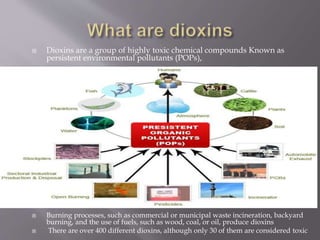
 Dioxins are a group of highly toxic chemical compounds Known as
persistent environmental pollutants (POPs),
 Burning processes, such as commercial or municipal waste incineration, backyard
burning, and the use of fuels, such as wood, coal, or oil, produce dioxins
 There are over 400 different dioxins, although only 30 of them are considered toxic
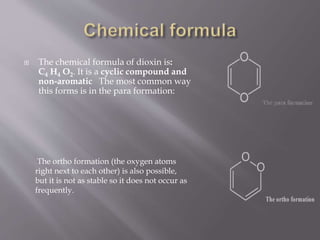
 The chemical formula of dioxin is:
C4 H4 O2. It is a cyclic compound and
non-aromatic The most common way
this forms is in the para formation:
The ortho formation (the oxygen atoms
right next to each other) is also possible,
but it is not as stable so it does not occur as
frequently.
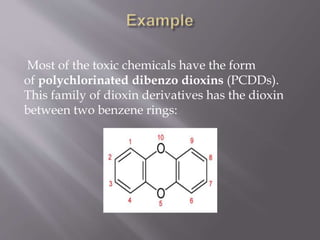
Most of the toxic chemicals have the form
of polychlorinated dibenzo dioxins (PCDDs).
This family of dioxin derivatives has the dioxin
between two benzene rings:
 chlorinated dibenzo-p-dioxins (CDDs)
 chlorinated dibenzo furans (CDFs)
 some polychlorinated biphenyls (PCBs)
 to 2,3,7,8-tetrachlorodibenzo-p-dioxin (TCDD), one of the
most toxic dioxins.
Exposure
 Higher exposure is possible through soils and sediments. Plants,
water, and air all contain low levels of dioxins.
When dioxins enter the food chain, they are stored in animal fats. Over
90 percent Trusted Source of human exposure to dioxins comes through
food, mainly animal products, such as dairy, meat, fish, and shellfish.
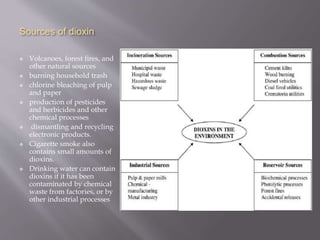
Sources of dioxin
 Volcanoes, forest fires, and
other natural sources
 burning household trash
 chlorine bleaching of pulp
and paper
 production of pesticides
and herbicides and other
chemical processes
 dismantling and recycling
electronic products.
 Cigarette smoke also
contains small amounts of
dioxins.
 Drinking water can contain
dioxins if it has been
contaminated by chemical
waste from factories, or by
other industrial processes
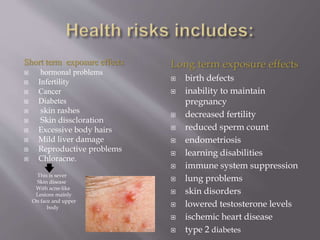
Short term exposure effects
 hormonal problems
 Infertility
 Cancer
 Diabetes
 skin rashes
 Skin disscloration
 Excessive body hairs
 Mild liver damage
 Reproductive problems
 Chloracne.
This is sever
Skin disease
With acne-like
Lesions mainly
On face and upper
body
Long term exposure effects
 birth defects
 inability to maintain
pregnancy
 decreased fertility
 reduced sperm count
 endometriosis
 learning disabilities
 immune system suppression
 lung problems
 skin disorders
 lowered testosterone levels
 ischemic heart disease
 type 2 diabetes
 by choosing clean meats and fish
 and cutting off any fat when preparing meat
 Eating a balanced diet with plenty of fruit and
vegetables
 The EPA advises people to follow best
practices when carrying backyard burning and
other process
 In the last 30 years, the Environmental
Protection Agency (EPA) and other bodies
have reduced the production of dioxin levels in
the U.S. by 90 percent.
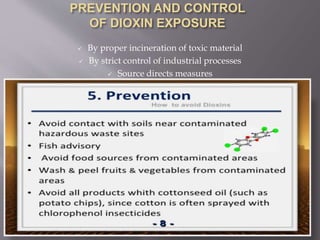
 By proper incineration of toxic material
 By strict control of industrial processes
 Source directs measures
dioxins
dioxins

dioxins

  • 2.
     What aredioxins  Example  Types of dioxins  Source of dioxins  Health risks  Exposure  Reducing exposure  Prevention and control of dioxin exposure  conclusion
  • 3.
     Dioxins area group of highly toxic chemical compounds Known as persistent environmental pollutants (POPs),  Burning processes, such as commercial or municipal waste incineration, backyard burning, and the use of fuels, such as wood, coal, or oil, produce dioxins  There are over 400 different dioxins, although only 30 of them are considered toxic
  • 4.
     The chemicalformula of dioxin is: C4 H4 O2. It is a cyclic compound and non-aromatic The most common way this forms is in the para formation: The ortho formation (the oxygen atoms right next to each other) is also possible, but it is not as stable so it does not occur as frequently.
  • 5.
    Most of thetoxic chemicals have the form of polychlorinated dibenzo dioxins (PCDDs). This family of dioxin derivatives has the dioxin between two benzene rings:
  • 6.
     chlorinated dibenzo-p-dioxins(CDDs)  chlorinated dibenzo furans (CDFs)  some polychlorinated biphenyls (PCBs)  to 2,3,7,8-tetrachlorodibenzo-p-dioxin (TCDD), one of the most toxic dioxins. Exposure  Higher exposure is possible through soils and sediments. Plants, water, and air all contain low levels of dioxins. When dioxins enter the food chain, they are stored in animal fats. Over 90 percent Trusted Source of human exposure to dioxins comes through food, mainly animal products, such as dairy, meat, fish, and shellfish.
  • 7.
    Sources of dioxin Volcanoes, forest fires, and other natural sources  burning household trash  chlorine bleaching of pulp and paper  production of pesticides and herbicides and other chemical processes  dismantling and recycling electronic products.  Cigarette smoke also contains small amounts of dioxins.  Drinking water can contain dioxins if it has been contaminated by chemical waste from factories, or by other industrial processes
  • 8.
    Short term exposureeffects  hormonal problems  Infertility  Cancer  Diabetes  skin rashes  Skin disscloration  Excessive body hairs  Mild liver damage  Reproductive problems  Chloracne. This is sever Skin disease With acne-like Lesions mainly On face and upper body Long term exposure effects  birth defects  inability to maintain pregnancy  decreased fertility  reduced sperm count  endometriosis  learning disabilities  immune system suppression  lung problems  skin disorders  lowered testosterone levels  ischemic heart disease  type 2 diabetes
  • 9.
     by choosingclean meats and fish  and cutting off any fat when preparing meat  Eating a balanced diet with plenty of fruit and vegetables  The EPA advises people to follow best practices when carrying backyard burning and other process  In the last 30 years, the Environmental Protection Agency (EPA) and other bodies have reduced the production of dioxin levels in the U.S. by 90 percent.
  • 10.
     By properincineration of toxic material  By strict control of industrial processes  Source directs measures