DDT

      The Life and Times of
dichlorodiphenyltrichloroethane
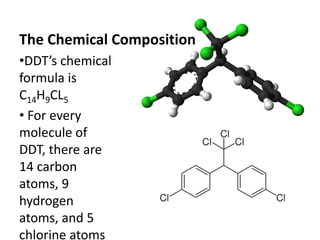
The Chemical Composition
•DDT’s chemical
formula is
C14H9CL5
• For every
molecule of
DDT, there are
14 carbon
atoms, 9
hydrogen
atoms, and 5
chlorine atoms
Reactivity
• DDT may react with
  iron, aluminum,
  aluminum and iron
  salts, and alkalis
• DDT can also react
  with strong oxidizing
  materials


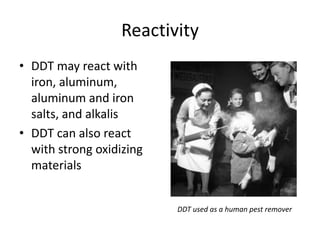
                          DDT used as a human pest remover
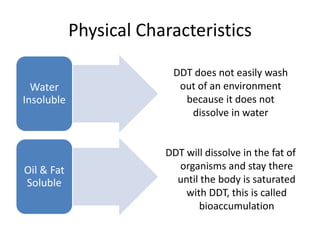
Physical Characteristics

                         DDT does not easily wash
  Water                   out of an environment
Insoluble                  because it does not
                            dissolve in water


                        DDT will dissolve in the fat of
Oil & Fat                 organisms and stay there
Soluble                   until the body is saturated
                            with DDT, this is called
                               bioaccumulation
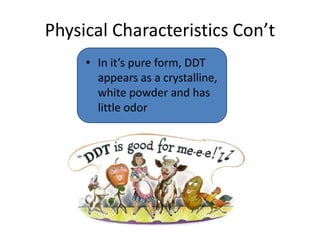
Physical Characteristics Con’t
     • In it’s pure form, DDT
       appears as a crystalline,
       white powder and has
       little odor
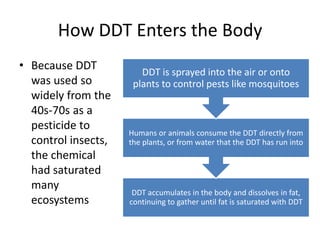
How DDT Enters the Body
• Because DDT           DDT is sprayed into the air or onto
  was used so         plants to control pests like mosquitoes
  widely from the
  40s-70s as a
  pesticide to
                     Humans or animals consume the DDT directly from
  control insects,   the plants, or from water that the DDT has run into
  the chemical
  had saturated
  many
                      DDT accumulates in the body and dissolves in fat,
  ecosystems         continuing to gather until fat is saturated with DDT
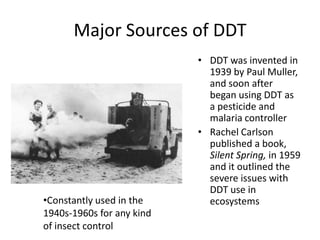
Major Sources of DDT
                           • DDT was invented in
                             1939 by Paul Muller,
                             and soon after
                             began using DDT as
                             a pesticide and
                             malaria controller
                           • Rachel Carlson
                             published a book,
                             Silent Spring, in 1959
                             and it outlined the
                             severe issues with
                             DDT use in
•Constantly used in the      ecosystems
1940s-1960s for any kind
of insect control
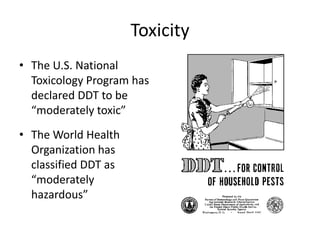
Toxicity
• The U.S. National
  Toxicology Program has
  declared DDT to be
  “moderately toxic”
• The World Health
  Organization has
  classified DDT as
  “moderately
  hazardous”
Environmental Damage
• A persistent organic pollutant
• Strongly absorbed by soil
• Does not dissolve with water and creates major
  runoff problems
• Can transport to colder regions of the earth by
  global distillation
• Bio-accumulates and biomagnifies
• Can evaporate from aquatic ecosystems
• Seaweed will reduce soil toxicisty by 80% within 6
  weeks
• Causes hormone problems in animals, especially
  reptiles
Health Risk
         For Humans:                  For Animals:

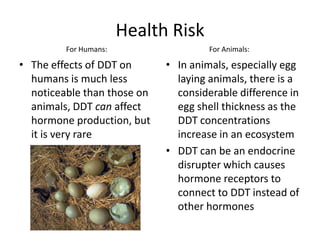
• The effects of DDT on      • In animals, especially egg
  humans is much less          laying animals, there is a
  noticeable than those on     considerable difference in
  animals, DDT can affect      egg shell thickness as the
  hormone production, but      DDT concentrations
  it is very rare              increase in an ecosystem
                             • DDT can be an endocrine
                               disrupter which causes
                               hormone receptors to
                               connect to DDT instead of
                               other hormones
Bibliography
• http://cache.gawkerassets.com/assets/images/4/
  2011/08/medium_ddt2_01.jpg
• http://www.chem.duke.edu/~jds/cruise_chem/p
  est/ddtchem.html
• http://cameochemicals.noaa.gov/chemical/3067
• http://www.mindfully.org/Pesticide/DDT-
  Household-Pests-USDA-Mar47.htm
• http://www.scienceclarified.com/Co-Di/DDT-
  dichlorodiphenyltrichloroethane.html

DDT

  • 1.
    DDT The Life and Times of dichlorodiphenyltrichloroethane
  • 2.
    The Chemical Composition •DDT’schemical formula is C14H9CL5 • For every molecule of DDT, there are 14 carbon atoms, 9 hydrogen atoms, and 5 chlorine atoms
  • 3.
    Reactivity • DDT mayreact with iron, aluminum, aluminum and iron salts, and alkalis • DDT can also react with strong oxidizing materials DDT used as a human pest remover
  • 4.
    Physical Characteristics DDT does not easily wash Water out of an environment Insoluble because it does not dissolve in water DDT will dissolve in the fat of Oil & Fat organisms and stay there Soluble until the body is saturated with DDT, this is called bioaccumulation
  • 5.
    Physical Characteristics Con’t • In it’s pure form, DDT appears as a crystalline, white powder and has little odor
  • 6.
    How DDT Entersthe Body • Because DDT DDT is sprayed into the air or onto was used so plants to control pests like mosquitoes widely from the 40s-70s as a pesticide to Humans or animals consume the DDT directly from control insects, the plants, or from water that the DDT has run into the chemical had saturated many DDT accumulates in the body and dissolves in fat, ecosystems continuing to gather until fat is saturated with DDT
  • 7.
    Major Sources ofDDT • DDT was invented in 1939 by Paul Muller, and soon after began using DDT as a pesticide and malaria controller • Rachel Carlson published a book, Silent Spring, in 1959 and it outlined the severe issues with DDT use in •Constantly used in the ecosystems 1940s-1960s for any kind of insect control
  • 8.
    Toxicity • The U.S.National Toxicology Program has declared DDT to be “moderately toxic” • The World Health Organization has classified DDT as “moderately hazardous”
  • 9.
    Environmental Damage • Apersistent organic pollutant • Strongly absorbed by soil • Does not dissolve with water and creates major runoff problems • Can transport to colder regions of the earth by global distillation • Bio-accumulates and biomagnifies • Can evaporate from aquatic ecosystems • Seaweed will reduce soil toxicisty by 80% within 6 weeks • Causes hormone problems in animals, especially reptiles
  • 10.
    Health Risk For Humans: For Animals: • The effects of DDT on • In animals, especially egg humans is much less laying animals, there is a noticeable than those on considerable difference in animals, DDT can affect egg shell thickness as the hormone production, but DDT concentrations it is very rare increase in an ecosystem • DDT can be an endocrine disrupter which causes hormone receptors to connect to DDT instead of other hormones
  • 11.
    Bibliography • http://cache.gawkerassets.com/assets/images/4/ 2011/08/medium_ddt2_01.jpg • http://www.chem.duke.edu/~jds/cruise_chem/p est/ddtchem.html • http://cameochemicals.noaa.gov/chemical/3067 • http://www.mindfully.org/Pesticide/DDT- Household-Pests-USDA-Mar47.htm • http://www.scienceclarified.com/Co-Di/DDT- dichlorodiphenyltrichloroethane.html