Dioxin exposure and health effects “ Let us watch well our beginnings, and results will manage themselves”                          Alexander Clark Maryna Kuzminska Master student in Chemistry  University of Leipzig  Leipzig, 2010
Contents What  are dioxins:  general information  2.  Behavior  of dioxins in the environment: how long dioxins remain in the environment? 3.  Sources of dioxins contamination: where are dioxins found?  how do dioxins enter the environment?  Dioxin toxicity: effects on humans; dioxin incidents How to avoid dioxins: few tips  Conclusions
1. What  are dioxins?
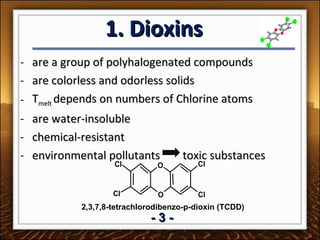
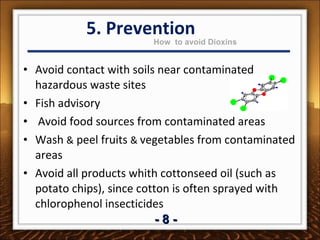
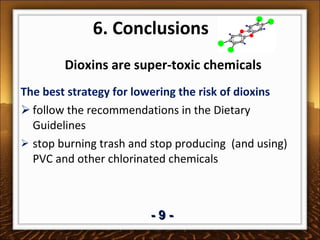
Dioxins group of polyhalogenated compounds colorless and odorless solids T melt  depends on numbers of chlorine atoms  water-insoluble environmental pollutants  toxic substances 2,3,7,8-tetrachlorodibenzo-p-dioxin (TCDD) -  toxicity is compared to TCDD (from 0 to 1)
2. Behavior  of Dioxins in the environment
Behavior  of dioxins in the environment Dioxins are absorbed by plants and by soil Landfill leakage into soil Accumulation in food chain  Emissions: can be transported long time in air  Chemical-resistant Half-decay period is more than 10 years
3. What are the major sources of dioxins?
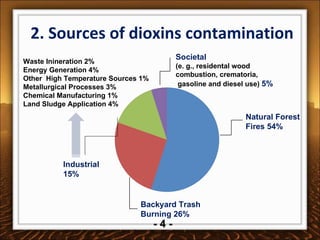
Sources of dioxins contamination Waste Incineration 2% Energy Generation 4% Other  High Temperature Sources 1% Metallurgical Processes 3% Chemical Manufacturing 1% Land Sludge Application 4% Societal 5% (e. g., residential wood combustion, crematoria, gasoline and diesel use) Industrial 15% Natural Forest Fires 54% Backyard Trash Burning 26%
4. Dioxin toxicity and human health effects
disrupting chemical binds to cell hormone receptors modifies the functioning and the genetic  mechanisms of the cell causes a wide range of effects Dioxin
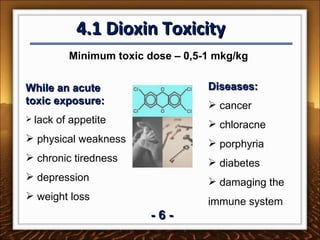
Minimum toxic dose – 0,5-1  μ g/kg Symptoms of acute  toxic exposure: lack of appetite physical weakness chronic tiredness depression weight loss Diseases: cancer chloracne porphyria diabetes damaging the immune system
5. Dioxin contamination incidents
1976, Italy Accident at a chemical factory in Seveso A cloud of toxic chemicals, including TCDD, was released into the air;  contamination - 15 km 2  inhabited by 37 000 people
1997, the USA Chickens, eggs, and catfish were contaminated with dioxins when a tainted ingredient was used in the manufacture of animal feed
1998, Brazil  High levels of dioxins in milk sold in Germany were traced to citrus pulp pellets used as animal feed exported from Brazil a ban on all citrus pulp imports to the EU from Brazil
1999, Belgium High levels of dioxins were found in poultry and eggs
Detection of increased dioxin levels in milk (traced to a clay used in  production of animal feed) 2004, the Netherlands
2006, the Netherlands Elevated dioxin levels were detected in animal feed; The source - contaminated fat used in production of feed
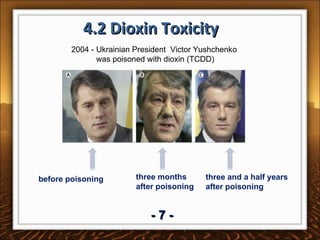
2004, Ukraine 2004 - Ukrainian President  Victor Yushchenko  was poisoned with dioxin (TCDD) three and a half years  after poisoning before poisoning three months  after poisoning
6. How to avoid dioxins? Recommendations in the Dietary Guidelines
Choose fish, lean meat, poultry, and low or fat-free dairy products  Increase consumption of fruits, vegetables and grain products
Beef or pork meet should be avoided (it has the largest concentrations of dioxin of all food sources)  Limit your intake of ocean and freshwater fish Vegetarian meat substitutes such as tofu, beans and rice have essentially no contamination!
Drink only skim milk since dioxins exist in the butterfat Avoid all full-fat dairy products: butter, cheese, ice cream Use non-fat skim-milk products or non-dairy substitutes
Wash all fruits and vegetables carefully to remove chlorophenol pesticide residue Avoid grapes and raisins unless they are clearly labeled as organic (grown without pesticides)
Use unbleached (brown) coffee filters If you smoke cigarettes (although tobacco has other cancer hazards) roll your own in unbleached paper
Avoid all organic chemicals that have "chloro" as part of their names Avoid chlorine bleach and products containing it Use unbleached paper products
Avoid household or personal products and toys made of or packaged in polyvinyl chloride - PVC (labeled V on plastic)
The way to reduce the dioxin threat is to stop burning trash and to stop producing PVC and other chlorinated chemicals!
6. Conclusions Dioxins are super-toxic chemicals Dioxins are unwanted by-products of different processes  Dioxins enter the food chain through animals Dioxin levels in environmental samples, in food have decreased over the 1970s till present Effects of dioxins on human health Proposed dietary recommendations
References: www.cdc.gov/exposurereport Gullett, B.K. and Touati, A. (2003). PCDD/F emissions from forest fire simulations, Atmospheric Environment 37, p. 803   www4.nas.edu/cp.nsf/Projects+by+PIN/BEST-K-03-08-A?OpenDocument http://www.who.int/ipcs/assessment/en/index.html
Thank you!

Dioxin Exposure And Health

  • 1.
    Dioxin exposure andhealth effects “ Let us watch well our beginnings, and results will manage themselves”                          Alexander Clark Maryna Kuzminska Master student in Chemistry University of Leipzig Leipzig, 2010
  • 2.
    Contents What are dioxins: general information 2. Behavior of dioxins in the environment: how long dioxins remain in the environment? 3. Sources of dioxins contamination: where are dioxins found? how do dioxins enter the environment? Dioxin toxicity: effects on humans; dioxin incidents How to avoid dioxins: few tips Conclusions
  • 3.
    1. What are dioxins?
  • 4.
    Dioxins group of polyhalogenatedcompounds colorless and odorless solids T melt depends on numbers of chlorine atoms water-insoluble environmental pollutants toxic substances 2,3,7,8-tetrachlorodibenzo-p-dioxin (TCDD) - toxicity is compared to TCDD (from 0 to 1)
  • 5.
    2. Behavior of Dioxins in the environment
  • 6.
    Behavior ofdioxins in the environment Dioxins are absorbed by plants and by soil Landfill leakage into soil Accumulation in food chain Emissions: can be transported long time in air Chemical-resistant Half-decay period is more than 10 years
  • 7.
    3. What arethe major sources of dioxins?
  • 8.
    Sources of dioxinscontamination Waste Incineration 2% Energy Generation 4% Other High Temperature Sources 1% Metallurgical Processes 3% Chemical Manufacturing 1% Land Sludge Application 4% Societal 5% (e. g., residential wood combustion, crematoria, gasoline and diesel use) Industrial 15% Natural Forest Fires 54% Backyard Trash Burning 26%
  • 9.
    4. Dioxin toxicityand human health effects
  • 10.
    disrupting chemical bindsto cell hormone receptors modifies the functioning and the genetic mechanisms of the cell causes a wide range of effects Dioxin
  • 11.
    Minimum toxic dose– 0,5-1 μ g/kg Symptoms of acute toxic exposure: lack of appetite physical weakness chronic tiredness depression weight loss Diseases: cancer chloracne porphyria diabetes damaging the immune system
  • 12.
  • 13.
    1976, Italy Accidentat a chemical factory in Seveso A cloud of toxic chemicals, including TCDD, was released into the air; contamination - 15 km 2 inhabited by 37 000 people
  • 14.
    1997, the USAChickens, eggs, and catfish were contaminated with dioxins when a tainted ingredient was used in the manufacture of animal feed
  • 15.
    1998, Brazil High levels of dioxins in milk sold in Germany were traced to citrus pulp pellets used as animal feed exported from Brazil a ban on all citrus pulp imports to the EU from Brazil
  • 16.
    1999, Belgium Highlevels of dioxins were found in poultry and eggs
  • 17.
    Detection of increaseddioxin levels in milk (traced to a clay used in production of animal feed) 2004, the Netherlands
  • 18.
    2006, the NetherlandsElevated dioxin levels were detected in animal feed; The source - contaminated fat used in production of feed
  • 19.
    2004, Ukraine 2004- Ukrainian President  Victor Yushchenko was poisoned with dioxin (TCDD) three and a half years after poisoning before poisoning three months after poisoning
  • 20.
    6. How toavoid dioxins? Recommendations in the Dietary Guidelines
  • 21.
    Choose fish, leanmeat, poultry, and low or fat-free dairy products Increase consumption of fruits, vegetables and grain products
  • 22.
    Beef or porkmeet should be avoided (it has the largest concentrations of dioxin of all food sources) Limit your intake of ocean and freshwater fish Vegetarian meat substitutes such as tofu, beans and rice have essentially no contamination!
  • 23.
    Drink only skimmilk since dioxins exist in the butterfat Avoid all full-fat dairy products: butter, cheese, ice cream Use non-fat skim-milk products or non-dairy substitutes
  • 24.
    Wash all fruitsand vegetables carefully to remove chlorophenol pesticide residue Avoid grapes and raisins unless they are clearly labeled as organic (grown without pesticides)
  • 25.
    Use unbleached (brown)coffee filters If you smoke cigarettes (although tobacco has other cancer hazards) roll your own in unbleached paper
  • 26.
    Avoid all organicchemicals that have "chloro" as part of their names Avoid chlorine bleach and products containing it Use unbleached paper products
  • 27.
    Avoid household orpersonal products and toys made of or packaged in polyvinyl chloride - PVC (labeled V on plastic)
  • 28.
    The way toreduce the dioxin threat is to stop burning trash and to stop producing PVC and other chlorinated chemicals!
  • 29.
    6. Conclusions Dioxinsare super-toxic chemicals Dioxins are unwanted by-products of different processes Dioxins enter the food chain through animals Dioxin levels in environmental samples, in food have decreased over the 1970s till present Effects of dioxins on human health Proposed dietary recommendations
  • 30.
    References: www.cdc.gov/exposurereport Gullett,B.K. and Touati, A. (2003). PCDD/F emissions from forest fire simulations, Atmospheric Environment 37, p. 803   www4.nas.edu/cp.nsf/Projects+by+PIN/BEST-K-03-08-A?OpenDocument http://www.who.int/ipcs/assessment/en/index.html
  • 31.