The Exposome: Assessing and
Measuring the Body Burden of
Environmental Toxins
Todd LePine, M.D.
September 25, 2013
12:00PM EST & 8:00 PM EST
© Genova Diagnostics
Christine Stubbe, ND
Medical Education Specialist - Asheville
Todd LePine, MD
Technical Issues & Clinical Questions
Please type any technical issue or
clinical question into either the
“Chat” or “Questions” boxes,
making sure to send them to
“Organizer” at any time during
the webinar.
We will be compiling your clinical
questions and answering as many
as we can the final 15 minutes of
the webinar.
DISCLAIMER: Please note that any and all emails provided may be used for
follow up correspondence and/or for further communication.
Need more resources?
Ensure you have an account!
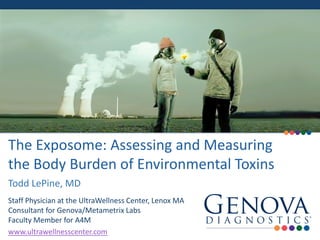
The Exposome: Assessing and Measuring
the Body Burden of Environmental Toxins
Todd LePine, MD
Staff Physician at the UltraWellness Center, Lenox MA
Consultant for Genova/Metametrix Labs
Faculty Member for A4M
www.ultrawellnesscenter.com
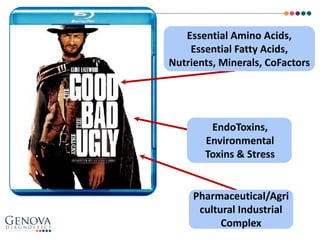
Essential Amino Acids,
Essential Fatty Acids,
Nutrients, Minerals, CoFactors
EndoToxins,
Environmental
Toxins & Stress
Pharmaceutical/Agri
cultural Industrial
Complex
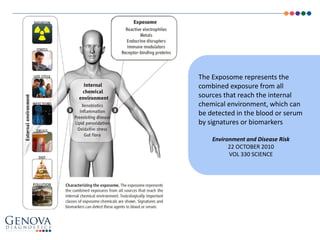
The Exposome represents the
combined exposure from all
sources that reach the internal
chemical environment, which can
be detected in the blood or serum
by signatures or biomarkers
Environment and Disease Risk
22 OCTOBER 2010
VOL 330 SCIENCE
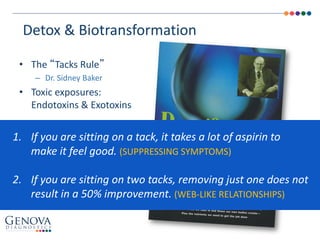
1. If you are sitting on a tack, it takes a lot of aspirin to
make it feel good. (SUPPRESSING SYMPTOMS)
2. If you are sitting on two tacks, removing just one does not
result in a 50% improvement. (WEB-LIKE RELATIONSHIPS)
• The “Tacks Rule”
– Dr. Sidney Baker
• Toxic exposures:
Endotoxins & Exotoxins
Detox & Biotransformation
10
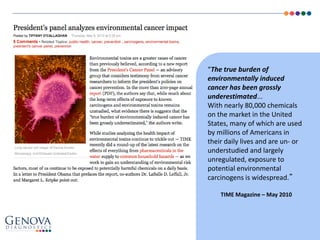
“The true burden of
environmentally induced
cancer has been grossly
underestimated...
With nearly 80,000 chemicals
on the market in the United
States, many of which are used
by millions of Americans in
their daily lives and are un- or
understudied and largely
unregulated, exposure to
potential environmental
carcinogens is widespread.”
TIME Magazine – May 2010
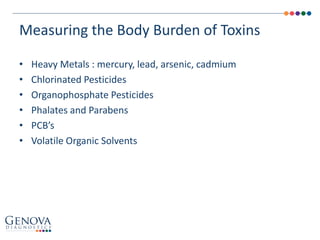
• Heavy Metals : mercury, lead, arsenic, cadmium
• Chlorinated Pesticides
• Organophosphate Pesticides
• Phalates and Parabens
• PCB’s
• Volatile Organic Solvents
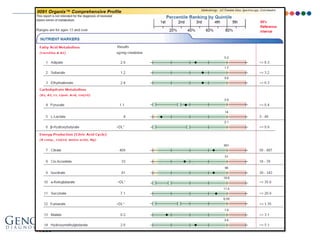
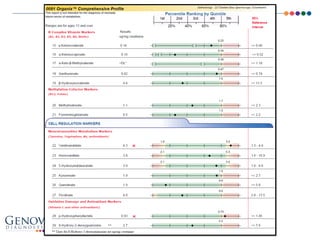
Measuring the Body Burden of Toxins
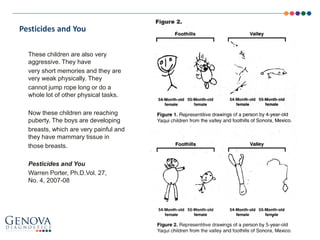
Pesticides and You
These children are also very
aggressive. They have
very short memories and they are
very weak physically. They
cannot jump rope long or do a
whole lot of other physical tasks.
Now these children are reaching
puberty. The boys are developing
breasts, which are very painful and
they have mammary tissue in
those breasts.
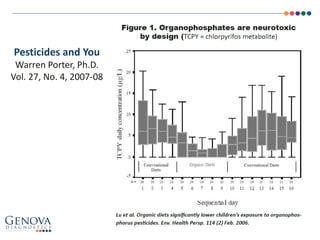
Pesticides and You
Warren Porter, Ph.D.Vol. 27,
No. 4, 2007-08
Pesticides and You
Warren Porter, Ph.D.
Vol. 27, No. 4, 2007-08
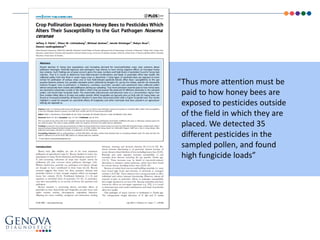
“scientists at the University
of Maryland and the US
Department of Agriculture
have identified a witch’s
brew of pesticides and
fungicides contaminating
pollen that bees collect to
feed their hives.”
SOURCE: www.qz.com
“Thus more attention must be
paid to how honey bees are
exposed to pesticides outside
of the field in which they are
placed. We detected 35
different pesticides in the
sampled pollen, and found
high fungicide loads”
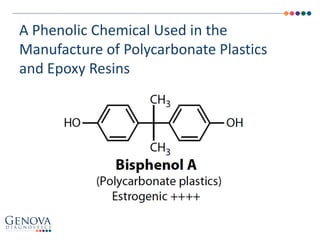
A Phenolic Chemical Used in the
Manufacture of Polycarbonate Plastics
and Epoxy Resins
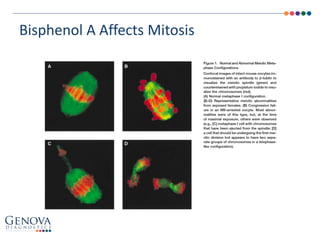
Bisphenol A Affects Mitosis
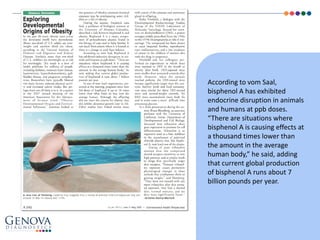
According to vom Saal,
bisphenol A has exhibited
endocrine disruption in animals
and humans at ppb doses.
“There are situations where
bisphenol A is causing effects at
a thousand times lower than
the amount in the average
human body,” he said, adding
that current global production
of bisphenol A runs about 7
billion pounds per year.
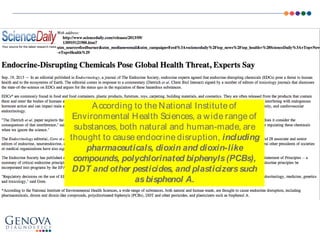
According to the National Institute of
Environmental Health Sciences, a wide range of
substances, both natural and human-made, are
thought to cause endocrine disruption, including
pharmaceuticals, dioxin and dioxin-like
compounds, polychlorinated biphenyls(PCBs),
DDT and other pesticides, and plasticizerssuch
asbisphenol A.
• Avoid polycarbonate containers that contain BPA,
which usually have a #7 or a #3 on the bottom
• Reduce your use of canned foods
• BPA can leach from plastic when there is a change
in pH or when heated.
Identifying Exposure Sources
27
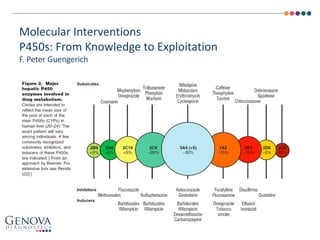
Molecular Interventions
P450s: From Knowledge to Exploitation
F. Peter Guengerich
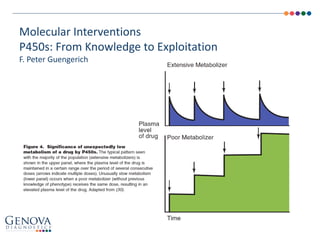
Molecular Interventions
P450s: From Knowledge to Exploitation
F. Peter Guengerich
• Contractions in head
• High blood pressure
• Prone to anxiety
Chief Complaints
72-Year-old Female
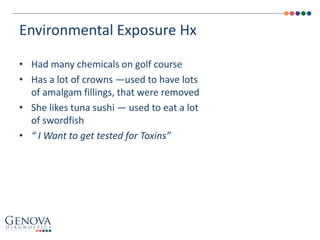
• Had many chemicals on golf course
• Has a lot of crowns —used to have lots
of amalgam fillings, that were removed
• She likes tuna sushi — used to eat a lot
of swordfish
• “ I Want to get tested for Toxins”
Environmental Exposure Hx
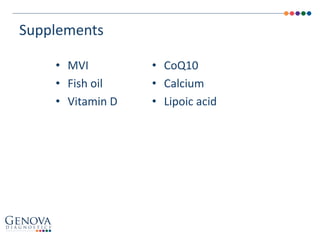
Supplements
• MVI
• Fish oil
• Vitamin D
• CoQ10
• Calcium
• Lipoic acid
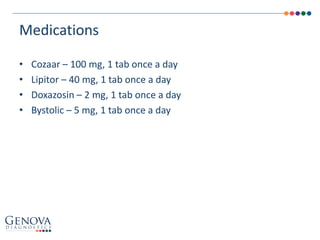
• Cozaar – 100 mg, 1 tab once a day
• Lipitor – 40 mg, 1 tab once a day
• Doxazosin – 2 mg, 1 tab once a day
• Bystolic – 5 mg, 1 tab once a day
Medications
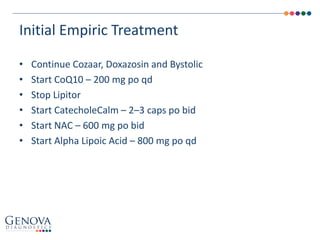
• Continue Cozaar, Doxazosin and Bystolic
• Start CoQ10 – 200 mg po qd
• Stop Lipitor
• Start CatecholeCalm – 2–3 caps po bid
• Start NAC – 600 mg po bid
• Start Alpha Lipoic Acid – 800 mg po qd
Initial Empiric Treatment
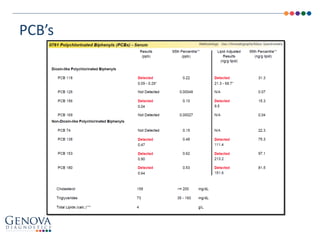
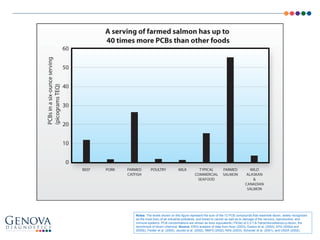
PCB’s
38
39
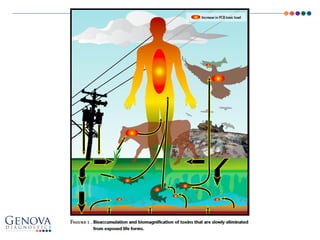
Notes: The levels shown on this figure represent the sum of the 12 PCB compounds that resemble dioxin, widely recognized
as the most toxic of all industrial pollutants, and linked to cancer as well as to damage of the nervous, reproductive, and
immune systems. PCB concentrations are shown as toxic equivalents (TEQs) of 2,3.7,8-Tetrachlorodibenzo-p-dioxin, the
benchmark of dioxin chemical. Source: EWG analysis of data from Axys (2003), Easton et al. (2002), EPA (2000a and
2000b), Fiedler et al. (2000), Jacobs et al. (2002), NMFS (2002), NAS (2003), Schecter et al. (2001), and USDA (2002).
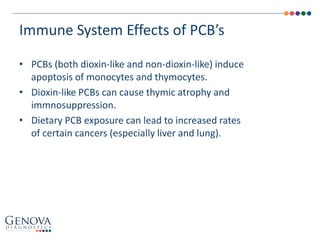
• PCBs (both dioxin-like and non-dioxin-like) induce
apoptosis of monocytes and thymocytes.
• Dioxin-like PCBs can cause thymic atrophy and
immnosuppression.
• Dietary PCB exposure can lead to increased rates
of certain cancers (especially liver and lung).
Immune System Effects of PCB’s
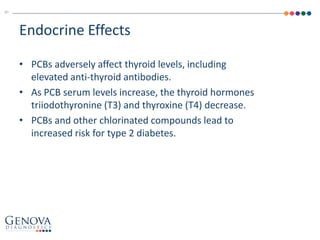
• PCBs adversely affect thyroid levels, including
elevated anti-thyroid antibodies.
• As PCB serum levels increase, the thyroid hormones
triiodothyronine (T3) and thyroxine (T4) decrease.
• PCBs and other chlorinated compounds lead to
increased risk for type 2 diabetes.
Endocrine Effects
41
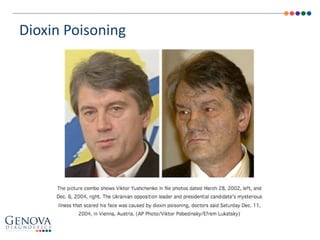
Dioxin Poisoning
• PCB 126 is associated with estrogenic and
adrenal effects and is immunotoxic.
• PCB 153 was significantly associated with
diabetes risk.
• The sum of PCBs 28, 52, 101, 118, 138, 153, and
180 was associated with low T4 and elevated
Gamma Glutamyl Transpeptidase (GGT).
Specfic PCB Effects
43
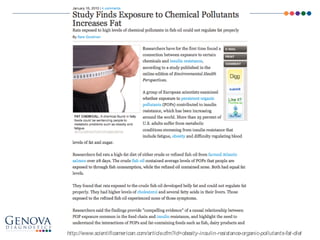
http://www.scientificamerican.com/article.cfm?id=obesity-insulin-resistance-organic-pollutants-fat-diet
About 200 pollutants were measured by either blood
or urine test in the NHANE participants. Cave's team
narrowed it down — and, he says, “ended up with a
list of 111 chemical pollutants which were
commonly found in at least 60% of NHANES
subjects.” Among the chemicals studied were lead,
mercury, and organochlorine pesticides. “And, so
from this list, we found several chemicals
associated with a dose-dependent increased risk for
abnormal liver enzymes,” he says.
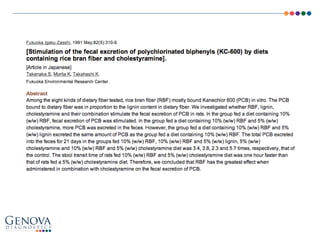
• Increase normal bowel excretion of fat
soluble toxins using Rice Bran Fiber and
Chlorophyll containing foods
Treatment Options to Lower PCB’s (POP’s)
46
47
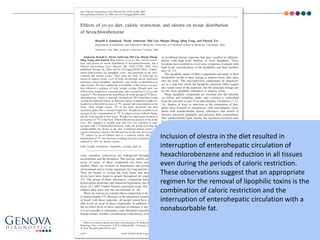
Inclusion of olestra in the diet resulted in
interruption of enterohepatic circulation of
hexachlorobenzene and reduction in all tissues
even during the periods of caloric restriction.
These observations suggest that an appropriate
regimen for the removal of lipophilic toxins is the
combination of caloric restriction and the
interruption of enterohepatic circulation with a
nonabsorbable fat.
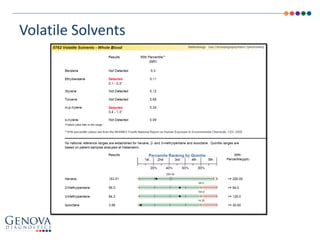
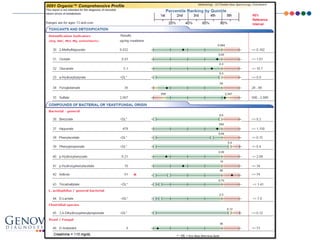
Volatile Solvents
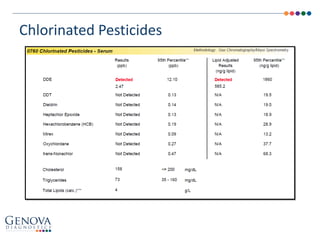
Chlorinated Pesticides
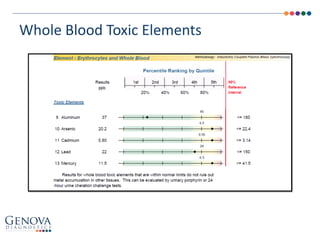
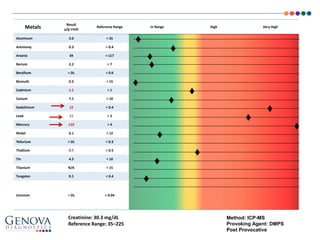
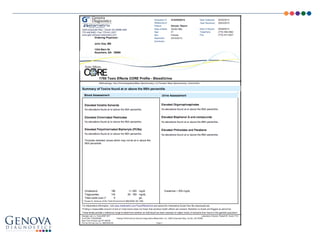
Whole Blood Toxic Elements
Metals
Result
µ/g creat
Reference Range In Range High Very High
Aluminum 3.0 < 35
Antimony 0.3 < 0.4
Arsenic 34 < 117
Barium 2.2 < 7
Beryllium < DL < 0.6
Bismuth 0.2 < 15
Cadmium 1.1 < 1
Cesium 7.1 < 10
Gadolinium 12 < 0.4
Lead 11 < 2
Mercury 110 < 4
Nickel 6.1 < 12
Tellurium < DL < 0.3
Thallium 0.7 < 0.5
Tin 4.3 < 10
Titanium N/A < 15
Tungsten 0.1 < 0.4
Uranium < DL < 0.04














Method: ICP-MS
Provoking Agent: DMPS
Post Provocative
Creatinine: 30.3 mg/dL
Reference Range: 35–225
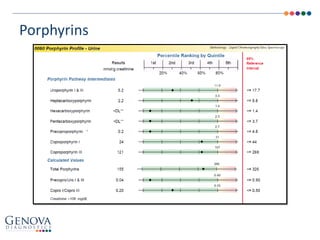
Porphyrins
58
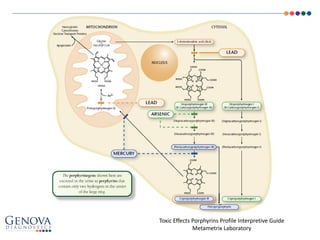
Toxic Effects Porphyrins Profile Interpretive Guide
Metametrix Laboratory
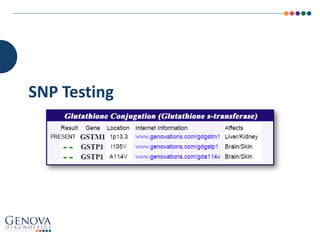
SNP Testing
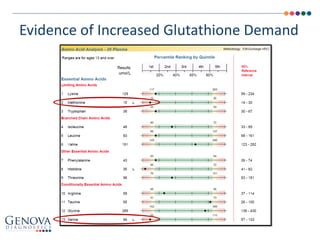
Evidence of Increased Glutathione Demand
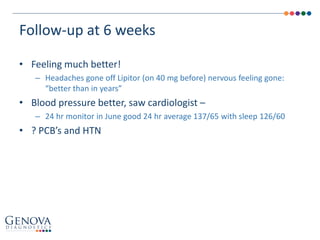
• Feeling much better!
– Headaches gone off Lipitor (on 40 mg before) nervous feeling gone:
“better than in years”
• Blood pressure better, saw cardiologist –
– 24 hr monitor in June good 24 hr average 137/65 with sleep 126/60
• ? PCB’s and HTN
Follow-up at 6 weeks
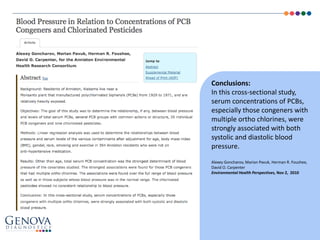
Conclusions:
In this cross-sectional study,
serum concentrations of PCBs,
especially those congeners with
multiple ortho chlorines, were
strongly associated with both
systolic and diastolic blood
pressure.
Alexey Goncharov, Marian Pavuk, Herman R. Foushee,
David O. Carpenter
Environmental Health Perspectives, Nov 2, 2010
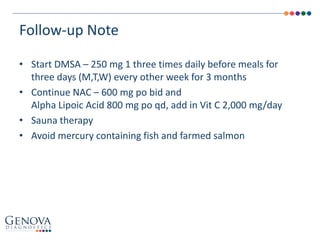
• Start DMSA – 250 mg 1 three times daily before meals for
three days (M,T,W) every other week for 3 months
• Continue NAC – 600 mg po bid and
Alpha Lipoic Acid 800 mg po qd, add in Vit C 2,000 mg/day
• Sauna therapy
• Avoid mercury containing fish and farmed salmon
Follow-up Note
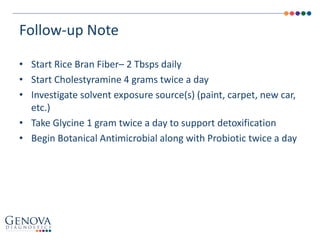
• Start Rice Bran Fiber– 2 Tbsps daily
• Start Cholestyramine 4 grams twice a day
• Investigate solvent exposure source(s) (paint, carpet, new car,
etc.)
• Take Glycine 1 gram twice a day to support detoxification
• Begin Botanical Antimicrobial along with Probiotic twice a day
Follow-up Note
Q & A Session
© Genova Diagnostics
Additional Education Materials:
www.metametrix.com
Sample Reports,
Interpretive Guides,
Kit Instructions, FAQs,
Payment Options, and
much more!
Additional Education Materials:
www.gdx.net
LiveGDX
• US Client Services: 800-522-4762
Genova Diagnostics offers Medical Education phone
appointments for more specific inquiries or questions
we did not have time to answer during the webinar
We look forward to hearing from you!
Additional Questions?
Upcoming LiveGDX Webinar Topics
Register for
upcoming LiveGDX
Webinars online at
www.gdx.net
The Exposome: Assessing and
Measuring the Body Burden of
Environmental Toxins
Todd LePine, M.D.
September 25, 2013
12:00PM EST & 8:00 PM EST
© Genova Diagnostics

The Exposome - Assessing and Measuring the Body Burden of Environmental Toxins

  • 1.
    The Exposome: Assessingand Measuring the Body Burden of Environmental Toxins Todd LePine, M.D. September 25, 2013 12:00PM EST & 8:00 PM EST © Genova Diagnostics
  • 2.
    Christine Stubbe, ND MedicalEducation Specialist - Asheville
  • 3.
  • 4.
    Technical Issues &Clinical Questions Please type any technical issue or clinical question into either the “Chat” or “Questions” boxes, making sure to send them to “Organizer” at any time during the webinar. We will be compiling your clinical questions and answering as many as we can the final 15 minutes of the webinar. DISCLAIMER: Please note that any and all emails provided may be used for follow up correspondence and/or for further communication.
  • 5.
    Need more resources? Ensureyou have an account!
  • 6.
    The Exposome: Assessingand Measuring the Body Burden of Environmental Toxins Todd LePine, MD Staff Physician at the UltraWellness Center, Lenox MA Consultant for Genova/Metametrix Labs Faculty Member for A4M www.ultrawellnesscenter.com
  • 7.
    Essential Amino Acids, EssentialFatty Acids, Nutrients, Minerals, CoFactors EndoToxins, Environmental Toxins & Stress Pharmaceutical/Agri cultural Industrial Complex
  • 8.
    The Exposome representsthe combined exposure from all sources that reach the internal chemical environment, which can be detected in the blood or serum by signatures or biomarkers Environment and Disease Risk 22 OCTOBER 2010 VOL 330 SCIENCE
  • 9.
    1. If youare sitting on a tack, it takes a lot of aspirin to make it feel good. (SUPPRESSING SYMPTOMS) 2. If you are sitting on two tacks, removing just one does not result in a 50% improvement. (WEB-LIKE RELATIONSHIPS) • The “Tacks Rule” – Dr. Sidney Baker • Toxic exposures: Endotoxins & Exotoxins Detox & Biotransformation
  • 10.
  • 11.
    “The true burdenof environmentally induced cancer has been grossly underestimated... With nearly 80,000 chemicals on the market in the United States, many of which are used by millions of Americans in their daily lives and are un- or understudied and largely unregulated, exposure to potential environmental carcinogens is widespread.” TIME Magazine – May 2010
  • 13.
    • Heavy Metals: mercury, lead, arsenic, cadmium • Chlorinated Pesticides • Organophosphate Pesticides • Phalates and Parabens • PCB’s • Volatile Organic Solvents Measuring the Body Burden of Toxins
  • 16.
    Pesticides and You Thesechildren are also very aggressive. They have very short memories and they are very weak physically. They cannot jump rope long or do a whole lot of other physical tasks. Now these children are reaching puberty. The boys are developing breasts, which are very painful and they have mammary tissue in those breasts. Pesticides and You Warren Porter, Ph.D.Vol. 27, No. 4, 2007-08
  • 17.
    Pesticides and You WarrenPorter, Ph.D. Vol. 27, No. 4, 2007-08
  • 19.
    “scientists at theUniversity of Maryland and the US Department of Agriculture have identified a witch’s brew of pesticides and fungicides contaminating pollen that bees collect to feed their hives.” SOURCE: www.qz.com
  • 20.
    “Thus more attentionmust be paid to how honey bees are exposed to pesticides outside of the field in which they are placed. We detected 35 different pesticides in the sampled pollen, and found high fungicide loads”
  • 21.
    A Phenolic ChemicalUsed in the Manufacture of Polycarbonate Plastics and Epoxy Resins
  • 22.
  • 23.
    According to vomSaal, bisphenol A has exhibited endocrine disruption in animals and humans at ppb doses. “There are situations where bisphenol A is causing effects at a thousand times lower than the amount in the average human body,” he said, adding that current global production of bisphenol A runs about 7 billion pounds per year.
  • 25.
    According to theNational Institute of Environmental Health Sciences, a wide range of substances, both natural and human-made, are thought to cause endocrine disruption, including pharmaceuticals, dioxin and dioxin-like compounds, polychlorinated biphenyls(PCBs), DDT and other pesticides, and plasticizerssuch asbisphenol A.
  • 26.
    • Avoid polycarbonatecontainers that contain BPA, which usually have a #7 or a #3 on the bottom • Reduce your use of canned foods • BPA can leach from plastic when there is a change in pH or when heated. Identifying Exposure Sources 27
  • 27.
    Molecular Interventions P450s: FromKnowledge to Exploitation F. Peter Guengerich
  • 28.
    Molecular Interventions P450s: FromKnowledge to Exploitation F. Peter Guengerich
  • 31.
    • Contractions inhead • High blood pressure • Prone to anxiety Chief Complaints 72-Year-old Female
  • 32.
    • Had manychemicals on golf course • Has a lot of crowns —used to have lots of amalgam fillings, that were removed • She likes tuna sushi — used to eat a lot of swordfish • “ I Want to get tested for Toxins” Environmental Exposure Hx
  • 33.
    Supplements • MVI • Fishoil • Vitamin D • CoQ10 • Calcium • Lipoic acid
  • 34.
    • Cozaar –100 mg, 1 tab once a day • Lipitor – 40 mg, 1 tab once a day • Doxazosin – 2 mg, 1 tab once a day • Bystolic – 5 mg, 1 tab once a day Medications
  • 35.
    • Continue Cozaar,Doxazosin and Bystolic • Start CoQ10 – 200 mg po qd • Stop Lipitor • Start CatecholeCalm – 2–3 caps po bid • Start NAC – 600 mg po bid • Start Alpha Lipoic Acid – 800 mg po qd Initial Empiric Treatment
  • 36.
  • 37.
  • 38.
    39 Notes: The levelsshown on this figure represent the sum of the 12 PCB compounds that resemble dioxin, widely recognized as the most toxic of all industrial pollutants, and linked to cancer as well as to damage of the nervous, reproductive, and immune systems. PCB concentrations are shown as toxic equivalents (TEQs) of 2,3.7,8-Tetrachlorodibenzo-p-dioxin, the benchmark of dioxin chemical. Source: EWG analysis of data from Axys (2003), Easton et al. (2002), EPA (2000a and 2000b), Fiedler et al. (2000), Jacobs et al. (2002), NMFS (2002), NAS (2003), Schecter et al. (2001), and USDA (2002).
  • 39.
    • PCBs (bothdioxin-like and non-dioxin-like) induce apoptosis of monocytes and thymocytes. • Dioxin-like PCBs can cause thymic atrophy and immnosuppression. • Dietary PCB exposure can lead to increased rates of certain cancers (especially liver and lung). Immune System Effects of PCB’s
  • 40.
    • PCBs adverselyaffect thyroid levels, including elevated anti-thyroid antibodies. • As PCB serum levels increase, the thyroid hormones triiodothyronine (T3) and thyroxine (T4) decrease. • PCBs and other chlorinated compounds lead to increased risk for type 2 diabetes. Endocrine Effects 41
  • 41.
  • 42.
    • PCB 126is associated with estrogenic and adrenal effects and is immunotoxic. • PCB 153 was significantly associated with diabetes risk. • The sum of PCBs 28, 52, 101, 118, 138, 153, and 180 was associated with low T4 and elevated Gamma Glutamyl Transpeptidase (GGT). Specfic PCB Effects 43
  • 43.
  • 44.
    About 200 pollutantswere measured by either blood or urine test in the NHANE participants. Cave's team narrowed it down — and, he says, “ended up with a list of 111 chemical pollutants which were commonly found in at least 60% of NHANES subjects.” Among the chemicals studied were lead, mercury, and organochlorine pesticides. “And, so from this list, we found several chemicals associated with a dose-dependent increased risk for abnormal liver enzymes,” he says.
  • 45.
    • Increase normalbowel excretion of fat soluble toxins using Rice Bran Fiber and Chlorophyll containing foods Treatment Options to Lower PCB’s (POP’s) 46
  • 46.
    47 Inclusion of olestrain the diet resulted in interruption of enterohepatic circulation of hexachlorobenzene and reduction in all tissues even during the periods of caloric restriction. These observations suggest that an appropriate regimen for the removal of lipophilic toxins is the combination of caloric restriction and the interruption of enterohepatic circulation with a nonabsorbable fat.
  • 48.
  • 49.
  • 53.
  • 54.
    Metals Result µ/g creat Reference RangeIn Range High Very High Aluminum 3.0 < 35 Antimony 0.3 < 0.4 Arsenic 34 < 117 Barium 2.2 < 7 Beryllium < DL < 0.6 Bismuth 0.2 < 15 Cadmium 1.1 < 1 Cesium 7.1 < 10 Gadolinium 12 < 0.4 Lead 11 < 2 Mercury 110 < 4 Nickel 6.1 < 12 Tellurium < DL < 0.3 Thallium 0.7 < 0.5 Tin 4.3 < 10 Titanium N/A < 15 Tungsten 0.1 < 0.4 Uranium < DL < 0.04               Method: ICP-MS Provoking Agent: DMPS Post Provocative Creatinine: 30.3 mg/dL Reference Range: 35–225
  • 55.
  • 56.
    58 Toxic Effects PorphyrinsProfile Interpretive Guide Metametrix Laboratory
  • 57.
  • 58.
    Evidence of IncreasedGlutathione Demand
  • 60.
    • Feeling muchbetter! – Headaches gone off Lipitor (on 40 mg before) nervous feeling gone: “better than in years” • Blood pressure better, saw cardiologist – – 24 hr monitor in June good 24 hr average 137/65 with sleep 126/60 • ? PCB’s and HTN Follow-up at 6 weeks
  • 61.
    Conclusions: In this cross-sectionalstudy, serum concentrations of PCBs, especially those congeners with multiple ortho chlorines, were strongly associated with both systolic and diastolic blood pressure. Alexey Goncharov, Marian Pavuk, Herman R. Foushee, David O. Carpenter Environmental Health Perspectives, Nov 2, 2010
  • 62.
    • Start DMSA– 250 mg 1 three times daily before meals for three days (M,T,W) every other week for 3 months • Continue NAC – 600 mg po bid and Alpha Lipoic Acid 800 mg po qd, add in Vit C 2,000 mg/day • Sauna therapy • Avoid mercury containing fish and farmed salmon Follow-up Note
  • 63.
    • Start RiceBran Fiber– 2 Tbsps daily • Start Cholestyramine 4 grams twice a day • Investigate solvent exposure source(s) (paint, carpet, new car, etc.) • Take Glycine 1 gram twice a day to support detoxification • Begin Botanical Antimicrobial along with Probiotic twice a day Follow-up Note
  • 66.
    Q & ASession © Genova Diagnostics
  • 67.
    Additional Education Materials: www.metametrix.com SampleReports, Interpretive Guides, Kit Instructions, FAQs, Payment Options, and much more!
  • 68.
  • 71.
  • 72.
    • US ClientServices: 800-522-4762 Genova Diagnostics offers Medical Education phone appointments for more specific inquiries or questions we did not have time to answer during the webinar We look forward to hearing from you! Additional Questions?
  • 73.
    Upcoming LiveGDX WebinarTopics Register for upcoming LiveGDX Webinars online at www.gdx.net
  • 74.
    The Exposome: Assessingand Measuring the Body Burden of Environmental Toxins Todd LePine, M.D. September 25, 2013 12:00PM EST & 8:00 PM EST © Genova Diagnostics