Download as PDF, PPTX



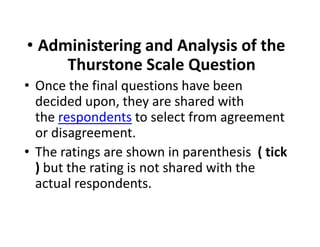
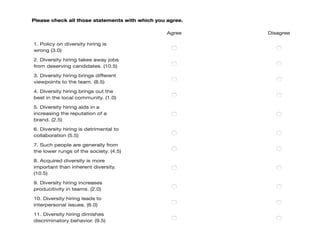
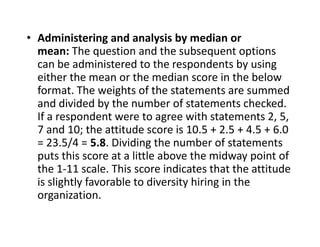
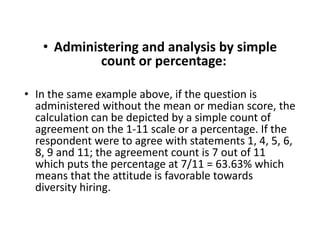


The document discusses the differential scale, also known as the Thurstone scale. It is a type of measurement scale used to assess respondents' attitudes, behaviors, or feelings toward a topic. The scale consists of statements about an issue, with each assigned a numerical value indicating level of agreement. Respondents select the statements they agree with, and their average score reflects their overall attitude. The document provides details on developing and administering differential scales, including having judges rate statements and selecting a balanced set for questionnaires. It also describes how to analyze the results by calculating mean or median scores of the statements selected by each respondent.


