PREPARED BY –
SUHEL KHAN
M.Sc. NSG. (MEDICAL
SURGICAL NURSING)
Rating means judgment of one person by another. This
is one of the oldest methods of personality
assessment.
Rating scale is provides systematic procedure for
obtaining, recording and reporting the observer’s
judgment.
Rating means measuring an attribute of objects or
persons by judgement in a continuum.
For eg:
•School marks or grades
•Performance appraisal rating of an employee in an
organization.
1. A rating scale can be defined as “a standardized method
of recording, interpretation of behavior, which is totally
based on observation, strictly in line with the
educational objectives”.
Or
2. Rating scale is a tool used for assessing the
performance of tasks, skill levels, procedures, qualities,
quantities, or end products, such as reports, drawings, and
computer programs.
Descriptive
rating scale
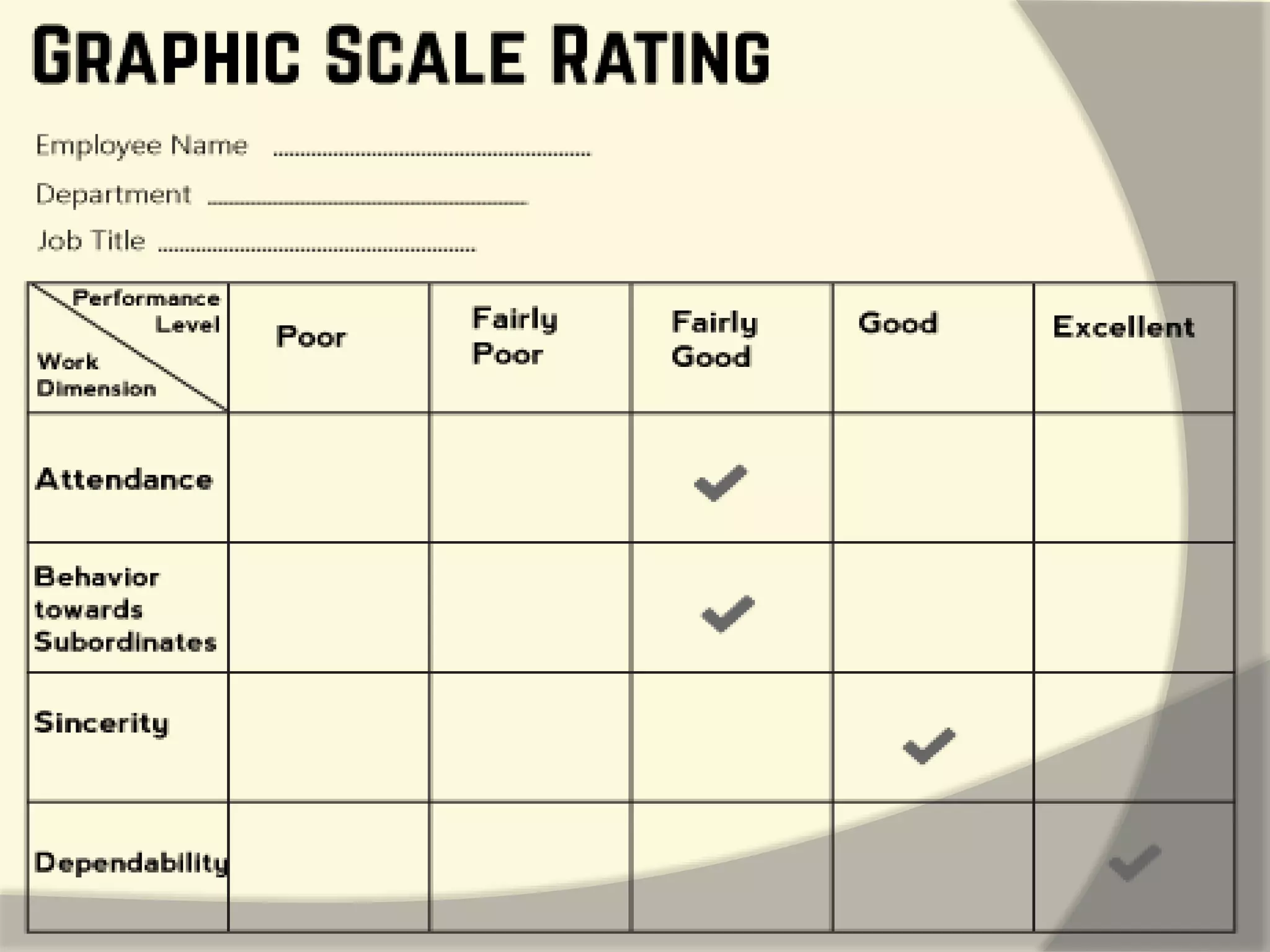
Graphical
rating scale
Comparative
rating scale
Numerical
rating scale
Provide for each trait a list of descriptive phrases from
which the rater selects the one most applicable item
being rated, selected usually by means of a check mark.
CONT....
A Numerical Rating Scale (NRS), is basically any scale which renders
a quantitative symbolization of an attribute.
The rater assigns a
code numbers and
approximate number
for each trait of the
person being rated.
Arranged in order to
the degree, level,
intensity or frequency
with which they
indicate possession of
lack of occurrence of
each trait.
The rater has a complete knowledge of the activities of
the given groups or individuals. In this the person
makes a judgement about an
attire/attitude/object…..by comparing it with similar
others.
•Behaviourally anchored rating scales
It directly relates to learning objectives.
They needs to be confined to performance areas that can be
observed.
Clearly define the specific trait or mode of behaviour.
The trait or behaviour should be readily observed in a number
of situations.
Allow some space in the rating scale card for the rater to give
supplementary remarks.
All raters should be oriented to the specific scale as well as
the process of rating in general.
Have expert and well informed raters.
Easy to administer and score.
• .
Wide range of application.
The analysis of answer received for rating scale
questions is quick and less time consuming.
Easily used for large group.
Also used for quantitative methods.
May also be used for assessment of interest, attitude
and personal characteristics.
Used to evaluate performance and skills.
Rating scales are adaptable and flexible research
instruments.
Useful for teacher.
Knowledge of progress of students.
Comparison.
Removing weakness.
Motivation.
It is difficult to fix up rating about many aspects of an
individual.
Misuse can result in decrease in objectivity.
Due to chances of subjective evaluation, scale may
become unscientific and unreliable.
Lack of uniformity with which terms are interpreted by
the evaluator.
rating scale ppt.pptx

rating scale ppt.pptx

  • 1.
    PREPARED BY – SUHELKHAN M.Sc. NSG. (MEDICAL SURGICAL NURSING)
  • 2.
    Rating means judgmentof one person by another. This is one of the oldest methods of personality assessment. Rating scale is provides systematic procedure for obtaining, recording and reporting the observer’s judgment. Rating means measuring an attribute of objects or persons by judgement in a continuum. For eg: •School marks or grades •Performance appraisal rating of an employee in an organization.
  • 3.
    1. A ratingscale can be defined as “a standardized method of recording, interpretation of behavior, which is totally based on observation, strictly in line with the educational objectives”. Or 2. Rating scale is a tool used for assessing the performance of tasks, skill levels, procedures, qualities, quantities, or end products, such as reports, drawings, and computer programs.
  • 4.
  • 6.
    Provide for eachtrait a list of descriptive phrases from which the rater selects the one most applicable item being rated, selected usually by means of a check mark. CONT....
  • 9.
    A Numerical RatingScale (NRS), is basically any scale which renders a quantitative symbolization of an attribute.
  • 10.
    The rater assignsa code numbers and approximate number for each trait of the person being rated. Arranged in order to the degree, level, intensity or frequency with which they indicate possession of lack of occurrence of each trait.
  • 11.
    The rater hasa complete knowledge of the activities of the given groups or individuals. In this the person makes a judgement about an attire/attitude/object…..by comparing it with similar others.
  • 12.
    •Behaviourally anchored ratingscales •Behaviourally anchored rating scales
  • 13.
    It directly relatesto learning objectives. They needs to be confined to performance areas that can be observed. Clearly define the specific trait or mode of behaviour. The trait or behaviour should be readily observed in a number of situations. Allow some space in the rating scale card for the rater to give supplementary remarks.
  • 14.
    All raters shouldbe oriented to the specific scale as well as the process of rating in general. Have expert and well informed raters.
  • 18.
    Easy to administerand score. • . Wide range of application. The analysis of answer received for rating scale questions is quick and less time consuming. Easily used for large group. Also used for quantitative methods.
  • 19.
    May also beused for assessment of interest, attitude and personal characteristics. Used to evaluate performance and skills. Rating scales are adaptable and flexible research instruments.
  • 20.
    Useful for teacher. Knowledgeof progress of students. Comparison. Removing weakness. Motivation.
  • 21.
    It is difficultto fix up rating about many aspects of an individual. Misuse can result in decrease in objectivity. Due to chances of subjective evaluation, scale may become unscientific and unreliable. Lack of uniformity with which terms are interpreted by the evaluator.