
Presented to Mr. Shazif Iqbal
“Any individual who purchases
goods & services from the market
for his/her end use is called
Consumer.”
2
•

Consumer Interest is nothing but the willingness
of consumer to purchase product and service as
per their taste, need & of course pocket.

•

Consumer Behavior is a branch which deals with
the various stages a consumer goes through
before purchasing products or services for the end
use.
3
4


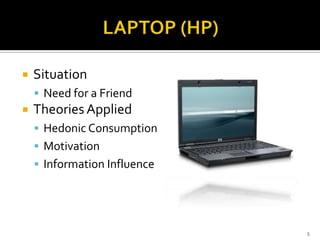
Situation
 Need for a Friend



Theories Applied
 Hedonic Consumption
 Motivation
 Information Influence

5


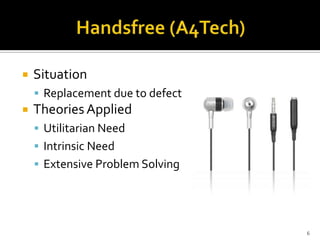
Situation
 Replacement due to defect



Theories Applied
 Utilitarian Need
 Intrinsic Need
 Extensive Problem Solving

6


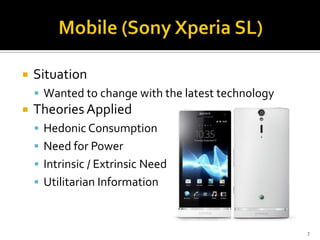
Situation
 Wanted to change with the latest technology



Theories Applied
 Hedonic Consumption
 Need for Power
 Intrinsic / Extrinsic Need
 Utilitarian Information

7


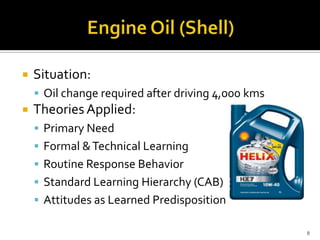
Situation:
 Oil change required after driving 4,000 kms



Theories Applied:
 Primary Need
 Formal & Technical Learning
 Routine Response Behavior
 Standard Learning Hierarchy (CAB)
 Attitudes as Learned Predisposition
8


Situation
 Addictive to coke, drink it every time we go out



Theories Applied
 Addictive Consumption
 Taste
 Low Involvement
 Invisible Hand of Culture

9


Situation
 As a student, it’s our need to have a smooth pen



Theories Applied
 Low Involvement
 Primary Need
 Instrumental Conditioning

10


Situation
 Got discount when visited the store, bought a pair

although already have one


Theories Applied
 Referent Power
 Sensory Market
 Instrumental Learning
 JND (Just Noticeable Difference)
 Tri Component
11


Situation
 Surprise party organized on 62nd birthday of

father


Theories Applied
 Taste
 Formal Learning
 Informational Influence
 Emotional View
 Tri Component
12


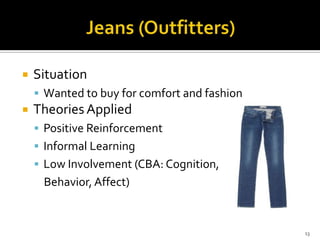
Situation
 Wanted to buy for comfort and fashion



Theories Applied
 Positive Reinforcement
 Informal Learning
 Low Involvement (CBA: Cognition,

Behavior, Affect)

13


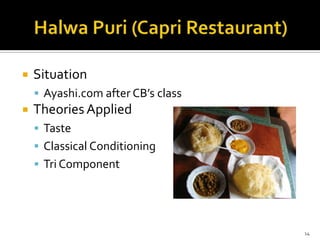
Situation
 Ayashi.com after CB’s class



Theories Applied
 Taste
 Classical Conditioning
 Tri Component

14


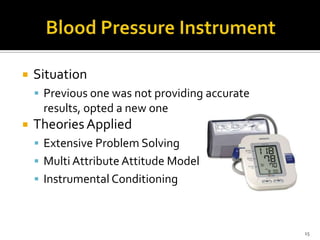
Situation
 Previous one was not providing accurate

results, opted a new one


Theories Applied
 Extensive Problem Solving
 Multi Attribute Attitude Model
 Instrumental Conditioning

15


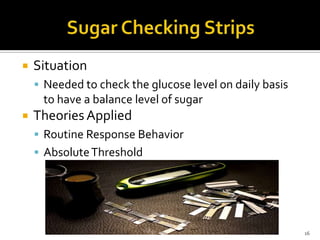
Situation
 Needed to check the glucose level on daily basis

to have a balance level of sugar


Theories Applied
 Routine Response Behavior
 Absolute Threshold

16


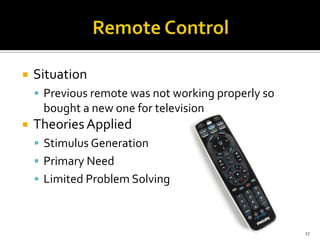
Situation
 Previous remote was not working properly so

bought a new one for television


Theories Applied
 Stimulus Generation
 Primary Need
 Limited Problem Solving

17


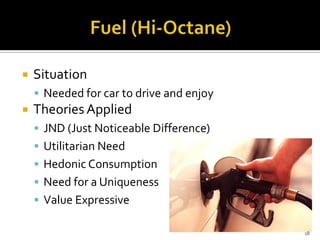
Situation
 Needed for car to drive and enjoy



Theories Applied
 JND (Just Noticeable Difference)
 Utilitarian Need
 Hedonic Consumption
 Need for a Uniqueness
 Value Expressive
18


Situation
 Paid PTCL Broadband monthly bill and

recommended to a friend to have PTCL
Broadband Internet connection


Theories Applied
 E-Word of Mouth
 Need for Affiliation
 Informational Power

19


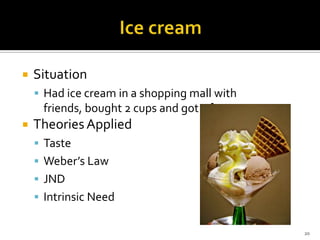
Situation
 Had ice cream in a shopping mall with

friends, bought 2 cups and got 1 free


Theories Applied
 Taste
 Weber’s Law
 JND
 Intrinsic Need
20


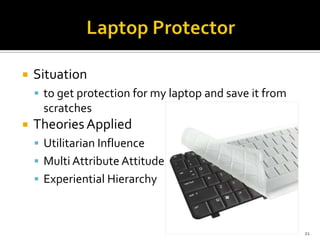
Situation
 to get protection for my laptop and save it from

scratches


Theories Applied
 Utilitarian Influence
 Multi Attribute Attitude
 Experiential Hierarchy

21
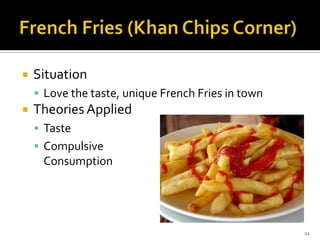


Situation
 Love the taste, unique French Fries in town



Theories Applied
 Taste
 Compulsive

Consumption

22
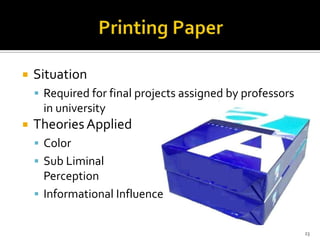


Situation
 Required for final projects assigned by professors

in university


Theories Applied
 Color
 Sub Liminal

Perception
 Informational Influence
23
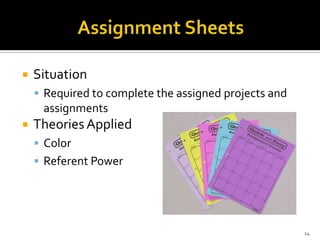


Situation
 Required to complete the assigned projects and

assignments


Theories Applied
 Color
 Referent Power

24
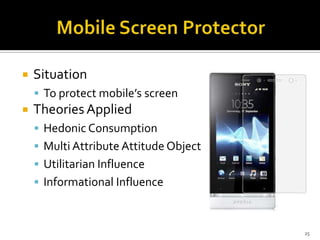


Situation
 To protect mobile’s screen



Theories Applied
 Hedonic Consumption
 Multi Attribute Attitude Object
 Utilitarian Influence
 Informational Influence

25


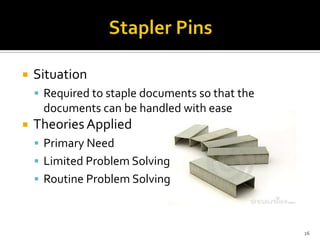
Situation
 Required to staple documents so that the

documents can be handled with ease


Theories Applied
 Primary Need
 Limited Problem Solving
 Routine Problem Solving

26


Situation
 To overcome hunger during university hours and

Lays come into minds whenever we buy coke


Theories Applied
 Low Involvement
 Symbolic View
 Experiential Hierarchy

27


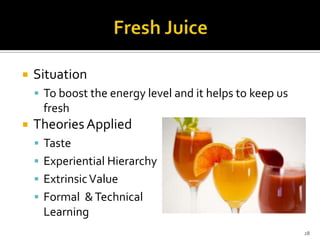
Situation
 To boost the energy level and it helps to keep us

fresh


Theories Applied
 Taste
 Experiential Hierarchy
 Extrinsic Value
 Formal & Technical

Learning
28


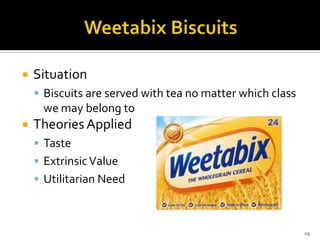
Situation
 Biscuits are served with tea no matter which class

we may belong to


Theories Applied
 Taste
 Extrinsic Value
 Utilitarian Need

29


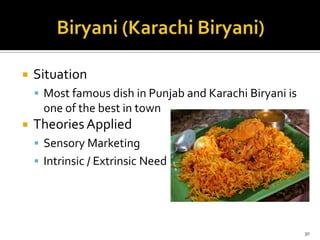
Situation
 Most famous dish in Punjab and Karachi Biryani is

one of the best in town


Theories Applied
 Sensory Marketing
 Intrinsic / Extrinsic Need

30


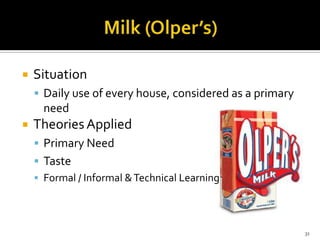
Situation
 Daily use of every house, considered as a primary

need


Theories Applied
 Primary Need
 Taste
 Formal / Informal & Technical Learning

31


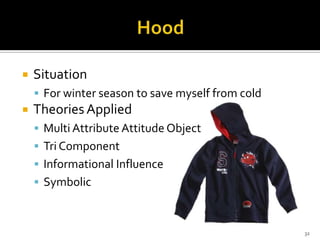
Situation
 For winter season to save myself from cold



Theories Applied
 Multi Attribute Attitude Object
 Tri Component
 Informational Influence
 Symbolic

32


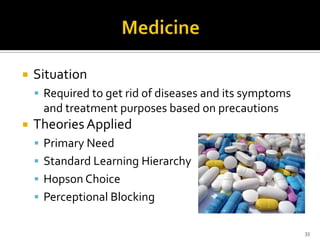
Situation
 Required to get rid of diseases and its symptoms

and treatment purposes based on precautions


Theories Applied
 Primary Need
 Standard Learning Hierarchy
 Hopson Choice
 Perceptional Blocking
33


Situation
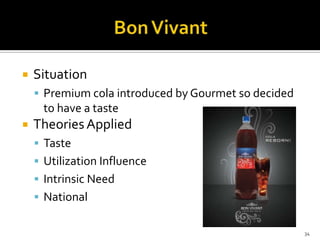
 Premium cola introduced by Gourmet so decided

to have a taste


Theories Applied
 Taste
 Utilization Influence
 Intrinsic Need
 National
34


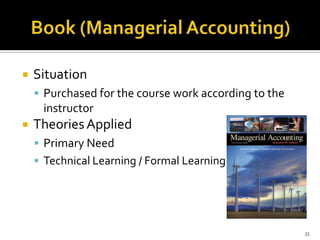
Situation
 Purchased for the course work according to the

instructor


Theories Applied
 Primary Need
 Technical Learning / Formal Learning

35


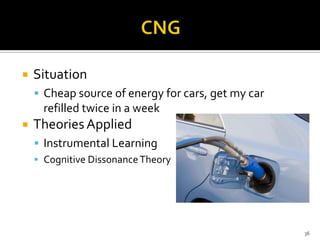
Situation
 Cheap source of energy for cars, get my car

refilled twice in a week


Theories Applied
 Instrumental Learning
 Cognitive Dissonance Theory

36
37
38

Different Consumer Behavior Theories on the Produccts

  • 1.
    Presented to Mr.Shazif Iqbal
  • 2.
    “Any individual whopurchases goods & services from the market for his/her end use is called Consumer.” 2
  • 3.
    • Consumer Interest isnothing but the willingness of consumer to purchase product and service as per their taste, need & of course pocket. • Consumer Behavior is a branch which deals with the various stages a consumer goes through before purchasing products or services for the end use. 3
  • 4.
  • 5.
     Situation  Need fora Friend  Theories Applied  Hedonic Consumption  Motivation  Information Influence 5
  • 6.
     Situation  Replacement dueto defect  Theories Applied  Utilitarian Need  Intrinsic Need  Extensive Problem Solving 6
  • 7.
     Situation  Wanted tochange with the latest technology  Theories Applied  Hedonic Consumption  Need for Power  Intrinsic / Extrinsic Need  Utilitarian Information 7
  • 8.
     Situation:  Oil changerequired after driving 4,000 kms  Theories Applied:  Primary Need  Formal & Technical Learning  Routine Response Behavior  Standard Learning Hierarchy (CAB)  Attitudes as Learned Predisposition 8
  • 9.
     Situation  Addictive tocoke, drink it every time we go out  Theories Applied  Addictive Consumption  Taste  Low Involvement  Invisible Hand of Culture 9
  • 10.
     Situation  As astudent, it’s our need to have a smooth pen  Theories Applied  Low Involvement  Primary Need  Instrumental Conditioning 10
  • 11.
     Situation  Got discountwhen visited the store, bought a pair although already have one  Theories Applied  Referent Power  Sensory Market  Instrumental Learning  JND (Just Noticeable Difference)  Tri Component 11
  • 12.
     Situation  Surprise partyorganized on 62nd birthday of father  Theories Applied  Taste  Formal Learning  Informational Influence  Emotional View  Tri Component 12
  • 13.
     Situation  Wanted tobuy for comfort and fashion  Theories Applied  Positive Reinforcement  Informal Learning  Low Involvement (CBA: Cognition, Behavior, Affect) 13
  • 14.
     Situation  Ayashi.com afterCB’s class  Theories Applied  Taste  Classical Conditioning  Tri Component 14
  • 15.
     Situation  Previous onewas not providing accurate results, opted a new one  Theories Applied  Extensive Problem Solving  Multi Attribute Attitude Model  Instrumental Conditioning 15
  • 16.
     Situation  Needed tocheck the glucose level on daily basis to have a balance level of sugar  Theories Applied  Routine Response Behavior  Absolute Threshold 16
  • 17.
     Situation  Previous remotewas not working properly so bought a new one for television  Theories Applied  Stimulus Generation  Primary Need  Limited Problem Solving 17
  • 18.
     Situation  Needed forcar to drive and enjoy  Theories Applied  JND (Just Noticeable Difference)  Utilitarian Need  Hedonic Consumption  Need for a Uniqueness  Value Expressive 18
  • 19.
     Situation  Paid PTCLBroadband monthly bill and recommended to a friend to have PTCL Broadband Internet connection  Theories Applied  E-Word of Mouth  Need for Affiliation  Informational Power 19
  • 20.
     Situation  Had icecream in a shopping mall with friends, bought 2 cups and got 1 free  Theories Applied  Taste  Weber’s Law  JND  Intrinsic Need 20
  • 21.
     Situation  to getprotection for my laptop and save it from scratches  Theories Applied  Utilitarian Influence  Multi Attribute Attitude  Experiential Hierarchy 21
  • 22.
     Situation  Love thetaste, unique French Fries in town  Theories Applied  Taste  Compulsive Consumption 22
  • 23.
     Situation  Required forfinal projects assigned by professors in university  Theories Applied  Color  Sub Liminal Perception  Informational Influence 23
  • 24.
     Situation  Required tocomplete the assigned projects and assignments  Theories Applied  Color  Referent Power 24
  • 25.
     Situation  To protectmobile’s screen  Theories Applied  Hedonic Consumption  Multi Attribute Attitude Object  Utilitarian Influence  Informational Influence 25
  • 26.
     Situation  Required tostaple documents so that the documents can be handled with ease  Theories Applied  Primary Need  Limited Problem Solving  Routine Problem Solving 26
  • 27.
     Situation  To overcomehunger during university hours and Lays come into minds whenever we buy coke  Theories Applied  Low Involvement  Symbolic View  Experiential Hierarchy 27
  • 28.
     Situation  To boostthe energy level and it helps to keep us fresh  Theories Applied  Taste  Experiential Hierarchy  Extrinsic Value  Formal & Technical Learning 28
  • 29.
     Situation  Biscuits areserved with tea no matter which class we may belong to  Theories Applied  Taste  Extrinsic Value  Utilitarian Need 29
  • 30.
     Situation  Most famousdish in Punjab and Karachi Biryani is one of the best in town  Theories Applied  Sensory Marketing  Intrinsic / Extrinsic Need 30
  • 31.
     Situation  Daily useof every house, considered as a primary need  Theories Applied  Primary Need  Taste  Formal / Informal & Technical Learning 31
  • 32.
     Situation  For winterseason to save myself from cold  Theories Applied  Multi Attribute Attitude Object  Tri Component  Informational Influence  Symbolic 32
  • 33.
     Situation  Required toget rid of diseases and its symptoms and treatment purposes based on precautions  Theories Applied  Primary Need  Standard Learning Hierarchy  Hopson Choice  Perceptional Blocking 33
  • 34.
     Situation  Premium colaintroduced by Gourmet so decided to have a taste  Theories Applied  Taste  Utilization Influence  Intrinsic Need  National 34
  • 35.
     Situation  Purchased forthe course work according to the instructor  Theories Applied  Primary Need  Technical Learning / Formal Learning 35
  • 36.
     Situation  Cheap sourceof energy for cars, get my car refilled twice in a week  Theories Applied  Instrumental Learning  Cognitive Dissonance Theory 36
  • 37.
  • 38.