Consumer Markets  and  Consumer Buyer Behavior
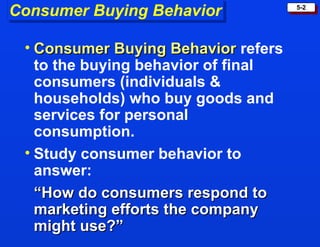
Consumer Buying Behavior Consumer Buying Behavior   refers to the buying behavior of final consumers (individuals & households) who buy goods and services for personal consumption. Study consumer behavior to answer: “ How do consumers respond to marketing efforts the company might use?”
Consumer Purchase Decision Motives Personality Needs Perception Learning Attitudes Business Culture Economic Family Social SIMPLE  MODEL FOR CONSUMER BEHAVIOUR
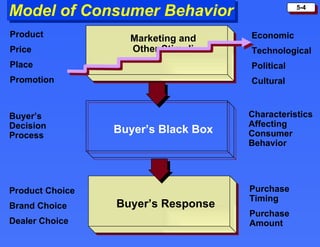
Model of Consumer Behavior Marketing and Other Stimuli Buyer’s Black Box Buyer’s Response Product Price Place Promotion Economic Technological Political Cultural Characteristics Affecting Consumer Behavior Buyer’s Decision Process Product Choice Brand Choice Dealer Choice Purchase Timing Purchase Amount
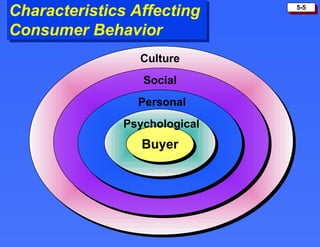
Characteristics Affecting  Consumer Behavior Buyer Psychological Personal Social Culture
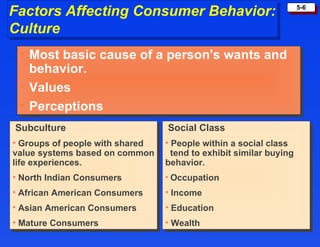
Factors Affecting Consumer Behavior: Culture Most basic cause of a person's wants and behavior. Values Perceptions Social Class People within a social class  tend to exhibit similar buying behavior. Occupation Income Education Wealth Subculture Groups of people with shared value systems based on common life experiences. North Indian Consumers African American Consumers Asian American Consumers Mature Consumers
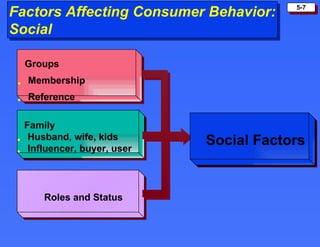
Factors Affecting Consumer Behavior: Social  Groups Membership Reference Family Husband, wife, kids Influencer, buyer, user Roles and Status Social Factors
Factors Affecting Consumer Behavior: Personal Personal Influences Age and Family Life Cycle Stage Occupation Economic Situation Lifestyle Identification Activities Opinions Interests Personality & Self-Concept
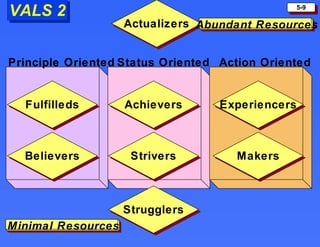
VALS 2 Principle Oriented Status Oriented Action Oriented Achievers Actualizers Strugglers Strivers Fulfilleds Believers Experiencers Makers Abundant Resources Minimal Resources
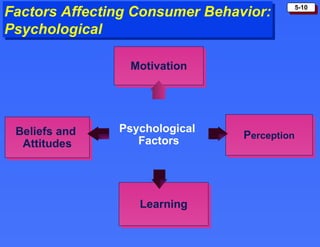
Factors Affecting Consumer Behavior: Psychological Psychological   Factors Motivation P erception Learning Beliefs and  Attitudes
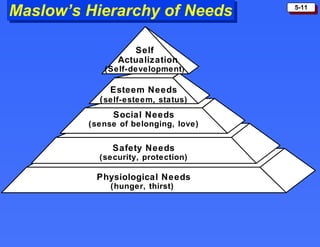
Maslow’s Hierarchy of Needs Esteem Needs ( self-esteem, status) Social Needs (sense of belonging, love) Safety Needs (security, protection) Physiological Needs (hunger, thirst)  Self Actualization (Self-development )
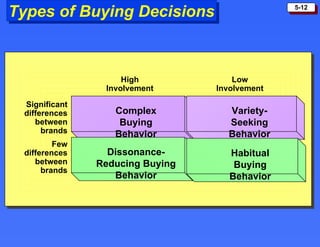
Types of Buying Decisions Complex Buying Behavior Dissonance- Reducing Buying Behavior Variety- Seeking Behavior Habitual Buying Behavior High Involvement Significant differences between brands Few differences between brands Low Involvement
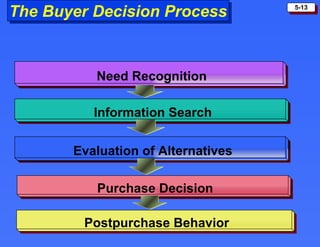
The Buyer Decision Process Need Recognition Information Search Evaluation of Alternatives Purchase Decision Postpurchase Behavior
SITUATIONS Problem Recognition Information Search Alternative Evaluation and Selection Outlet Selection and Purchases Post-purchase Processes SITUATIONS EXTERNAL INFLUENCES Culture Subculture Demographics Social Status Reference Groups Family Marketing Activities INTERNAL INFLUENCES Perception Learning Memory Motives Personality Emotions Attitudes SELF-CONCEPT and LIFESTYLE Desires Experiences and Acquisitions Experiences and Acquisitions Needs DECISION  MAKING  PROCESSES
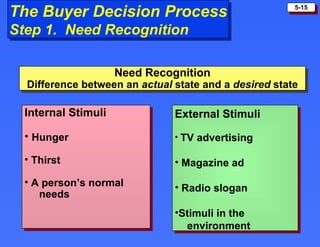
The Buyer Decision Process Step 1.  Need Recognition External Stimuli TV advertising Magazine ad Radio slogan Stimuli in the  environment Internal Stimuli Hunger Thirst A person’s normal  needs Need Recognition Difference between an  actual  state and a  desired  state
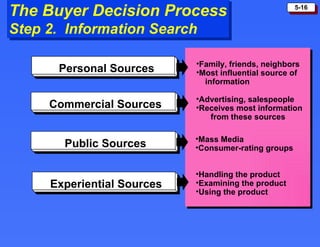
The Buyer Decision Process Step 2.  Information Search Family, friends, neighbors Most influential source of information Advertising, salespeople Receives most information  from these sources Mass Media Consumer-rating groups Handling the product Examining the product Using the product Personal Sources Commercial Sources Public Sources Experiential Sources
The Buyer Decision Process Step 3.  Evaluation of Alternatives Product Attributes Evaluation of Quality, Price, & Features  Degree of Importance Which attributes matter most to me? Brand Beliefs What do I believe about each available brand? Total Product Satisfaction Based on what I’m looking for, how satisfied would I be with each product? Evaluation Procedures Choosing a product (and brand) based on one  or more attributes.
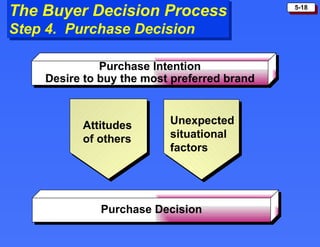
The Buyer Decision Process Step 4.  Purchase Decision Purchase Intention Desire to buy the most preferred brand Purchase Decision Attitudes of others Unexpected situational factors
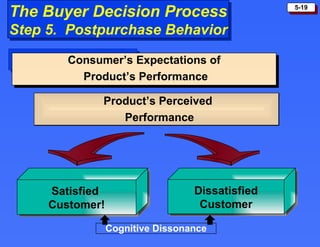
The Buyer Decision Process Step 5.  Postpurchase Behavior Consumer’s Expectations of  Product’s Performance Dissatisfied Customer Satisfied  Customer! Product’s Perceived Performance Cognitive Dissonance
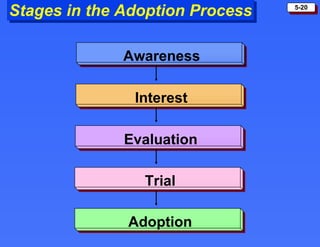
Stages in the Adoption Process Awareness Interest Evaluation Trial Adoption
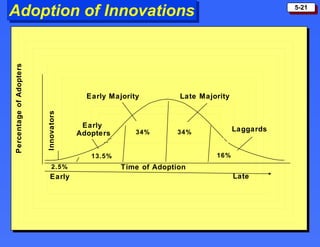
Adoption of Innovations Percentage of Adopters Time of Adoption Early Late Innovators Early  Adopters Early Majority 2.5% 13.5% 34% 34% 16% Laggards Late Majority
Influences on the Rate of Adoption of New Products Divisibility Can the innovation be used on a  trial basis? Compatibility Does the innovation  fit the values and  experience of the  target market? Complexity Is the innovation  difficult to understand or use? Relative Advantage Is the innovation superior to existing  products? Communicability  Can results be easily observed or described  to others?  Product Characteristics

Consumer Behaviour

  • 1.
    Consumer Markets and Consumer Buyer Behavior
  • 2.
    Consumer Buying BehaviorConsumer Buying Behavior refers to the buying behavior of final consumers (individuals & households) who buy goods and services for personal consumption. Study consumer behavior to answer: “ How do consumers respond to marketing efforts the company might use?”
  • 3.
    Consumer Purchase DecisionMotives Personality Needs Perception Learning Attitudes Business Culture Economic Family Social SIMPLE MODEL FOR CONSUMER BEHAVIOUR
  • 4.
    Model of ConsumerBehavior Marketing and Other Stimuli Buyer’s Black Box Buyer’s Response Product Price Place Promotion Economic Technological Political Cultural Characteristics Affecting Consumer Behavior Buyer’s Decision Process Product Choice Brand Choice Dealer Choice Purchase Timing Purchase Amount
  • 5.
    Characteristics Affecting Consumer Behavior Buyer Psychological Personal Social Culture
  • 6.
    Factors Affecting ConsumerBehavior: Culture Most basic cause of a person's wants and behavior. Values Perceptions Social Class People within a social class tend to exhibit similar buying behavior. Occupation Income Education Wealth Subculture Groups of people with shared value systems based on common life experiences. North Indian Consumers African American Consumers Asian American Consumers Mature Consumers
  • 7.
    Factors Affecting ConsumerBehavior: Social Groups Membership Reference Family Husband, wife, kids Influencer, buyer, user Roles and Status Social Factors
  • 8.
    Factors Affecting ConsumerBehavior: Personal Personal Influences Age and Family Life Cycle Stage Occupation Economic Situation Lifestyle Identification Activities Opinions Interests Personality & Self-Concept
  • 9.
    VALS 2 PrincipleOriented Status Oriented Action Oriented Achievers Actualizers Strugglers Strivers Fulfilleds Believers Experiencers Makers Abundant Resources Minimal Resources
  • 10.
    Factors Affecting ConsumerBehavior: Psychological Psychological Factors Motivation P erception Learning Beliefs and Attitudes
  • 11.
    Maslow’s Hierarchy ofNeeds Esteem Needs ( self-esteem, status) Social Needs (sense of belonging, love) Safety Needs (security, protection) Physiological Needs (hunger, thirst) Self Actualization (Self-development )
  • 12.
    Types of BuyingDecisions Complex Buying Behavior Dissonance- Reducing Buying Behavior Variety- Seeking Behavior Habitual Buying Behavior High Involvement Significant differences between brands Few differences between brands Low Involvement
  • 13.
    The Buyer DecisionProcess Need Recognition Information Search Evaluation of Alternatives Purchase Decision Postpurchase Behavior
  • 14.
    SITUATIONS Problem RecognitionInformation Search Alternative Evaluation and Selection Outlet Selection and Purchases Post-purchase Processes SITUATIONS EXTERNAL INFLUENCES Culture Subculture Demographics Social Status Reference Groups Family Marketing Activities INTERNAL INFLUENCES Perception Learning Memory Motives Personality Emotions Attitudes SELF-CONCEPT and LIFESTYLE Desires Experiences and Acquisitions Experiences and Acquisitions Needs DECISION MAKING PROCESSES
  • 15.
    The Buyer DecisionProcess Step 1. Need Recognition External Stimuli TV advertising Magazine ad Radio slogan Stimuli in the environment Internal Stimuli Hunger Thirst A person’s normal needs Need Recognition Difference between an actual state and a desired state
  • 16.
    The Buyer DecisionProcess Step 2. Information Search Family, friends, neighbors Most influential source of information Advertising, salespeople Receives most information from these sources Mass Media Consumer-rating groups Handling the product Examining the product Using the product Personal Sources Commercial Sources Public Sources Experiential Sources
  • 17.
    The Buyer DecisionProcess Step 3. Evaluation of Alternatives Product Attributes Evaluation of Quality, Price, & Features Degree of Importance Which attributes matter most to me? Brand Beliefs What do I believe about each available brand? Total Product Satisfaction Based on what I’m looking for, how satisfied would I be with each product? Evaluation Procedures Choosing a product (and brand) based on one or more attributes.
  • 18.
    The Buyer DecisionProcess Step 4. Purchase Decision Purchase Intention Desire to buy the most preferred brand Purchase Decision Attitudes of others Unexpected situational factors
  • 19.
    The Buyer DecisionProcess Step 5. Postpurchase Behavior Consumer’s Expectations of Product’s Performance Dissatisfied Customer Satisfied Customer! Product’s Perceived Performance Cognitive Dissonance
  • 20.
    Stages in theAdoption Process Awareness Interest Evaluation Trial Adoption
  • 21.
    Adoption of InnovationsPercentage of Adopters Time of Adoption Early Late Innovators Early Adopters Early Majority 2.5% 13.5% 34% 34% 16% Laggards Late Majority
  • 22.
    Influences on theRate of Adoption of New Products Divisibility Can the innovation be used on a trial basis? Compatibility Does the innovation fit the values and experience of the target market? Complexity Is the innovation difficult to understand or use? Relative Advantage Is the innovation superior to existing products? Communicability Can results be easily observed or described to others? Product Characteristics