Downloaded 542 times

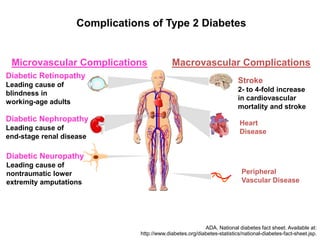
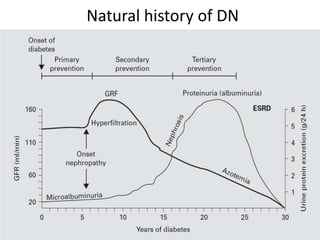


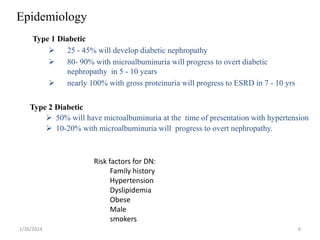
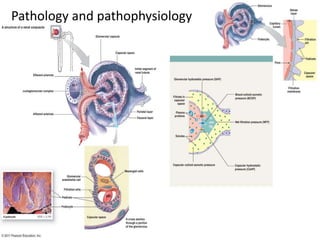

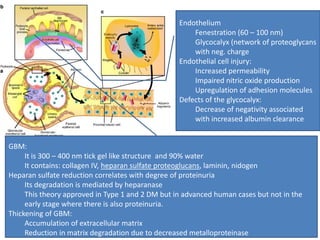
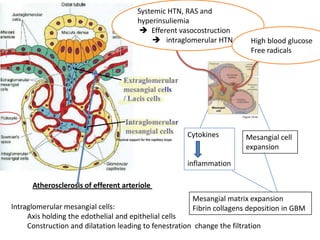


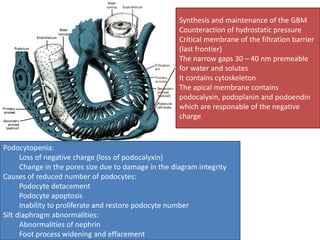
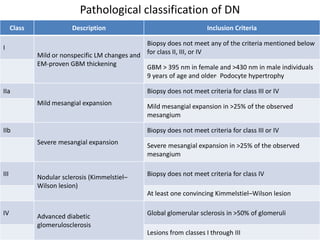
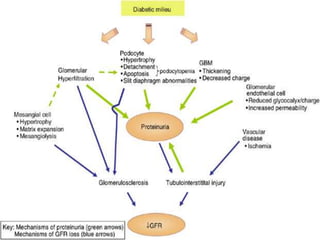


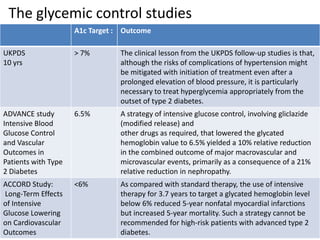
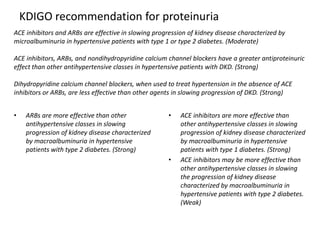

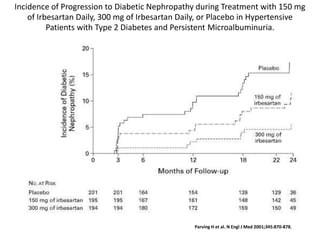








This document discusses diabetic nephropathy, which is the leading cause of end-stage renal disease. It begins with an overview of the epidemiology and risk factors for diabetic nephropathy. It then covers the pathophysiology and pathological stages, explaining the progression from increased glomerular filtration rate to decreased GFR and kidney damage. Treatment focuses on tight blood glucose and blood pressure control using ACE inhibitors, ARBs, or a combination to slow the progression of kidney disease. Clinical trials demonstrate that these drugs can reduce proteinuria and prevent worsening of renal function in patients with diabetes.


