HEMODIALYSIS:
BASICS
By
Ahmed Mohammed Abd El Wahab
Lecturer of internal medicine(Nephrology(
Dialysis
Process by which the solute composition of a
solution “A” is altered by exposing it to a
second solution “B” through a semi-permeable
membrane
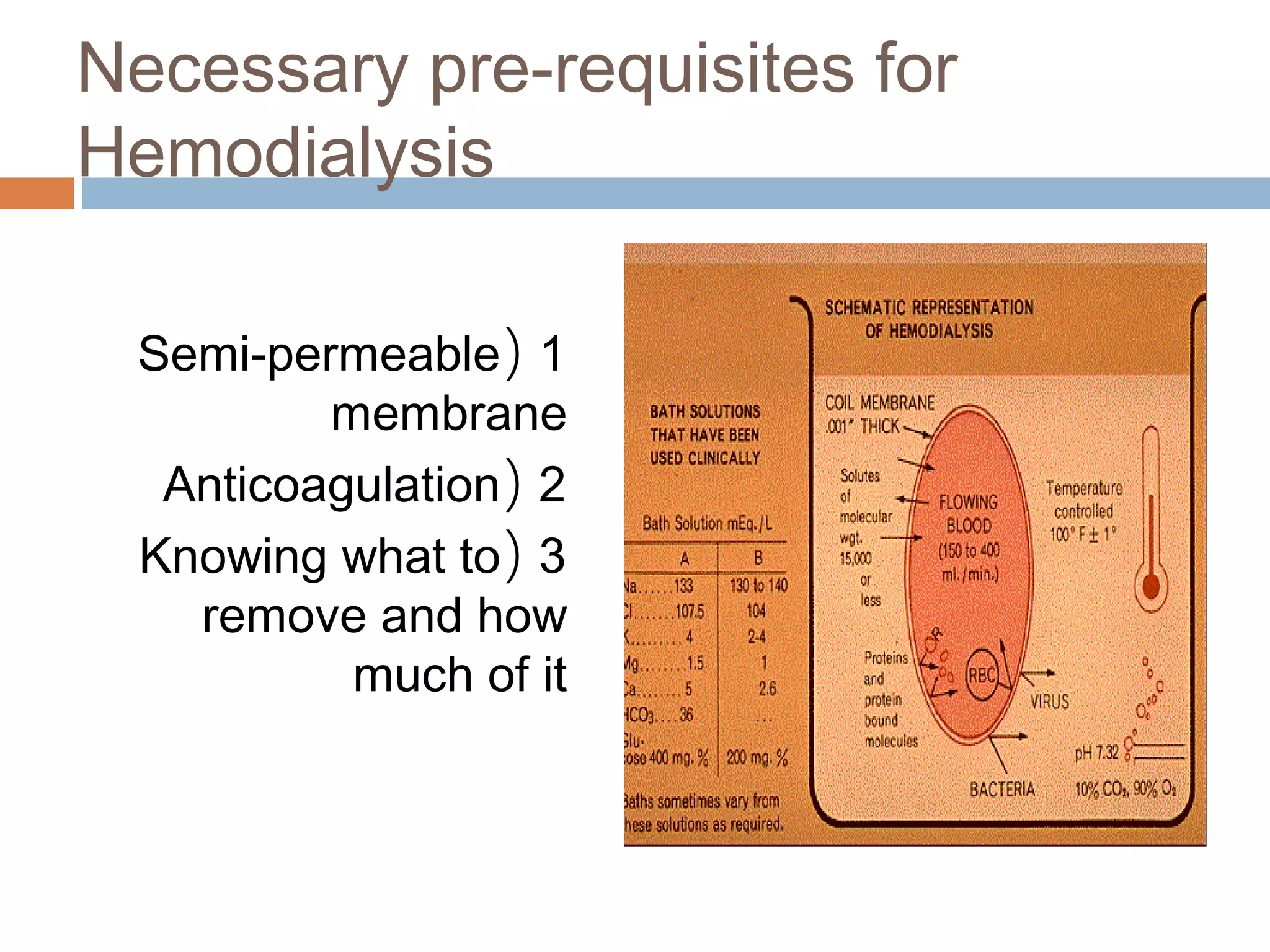
Necessary pre-requisites for
Hemodialysis
1(Semi-permeable
membrane
2(Anticoagulation
3(Knowing what to
remove and how
much of it
1773:Nurepuel isolates Urea by boiling urine in
a pan
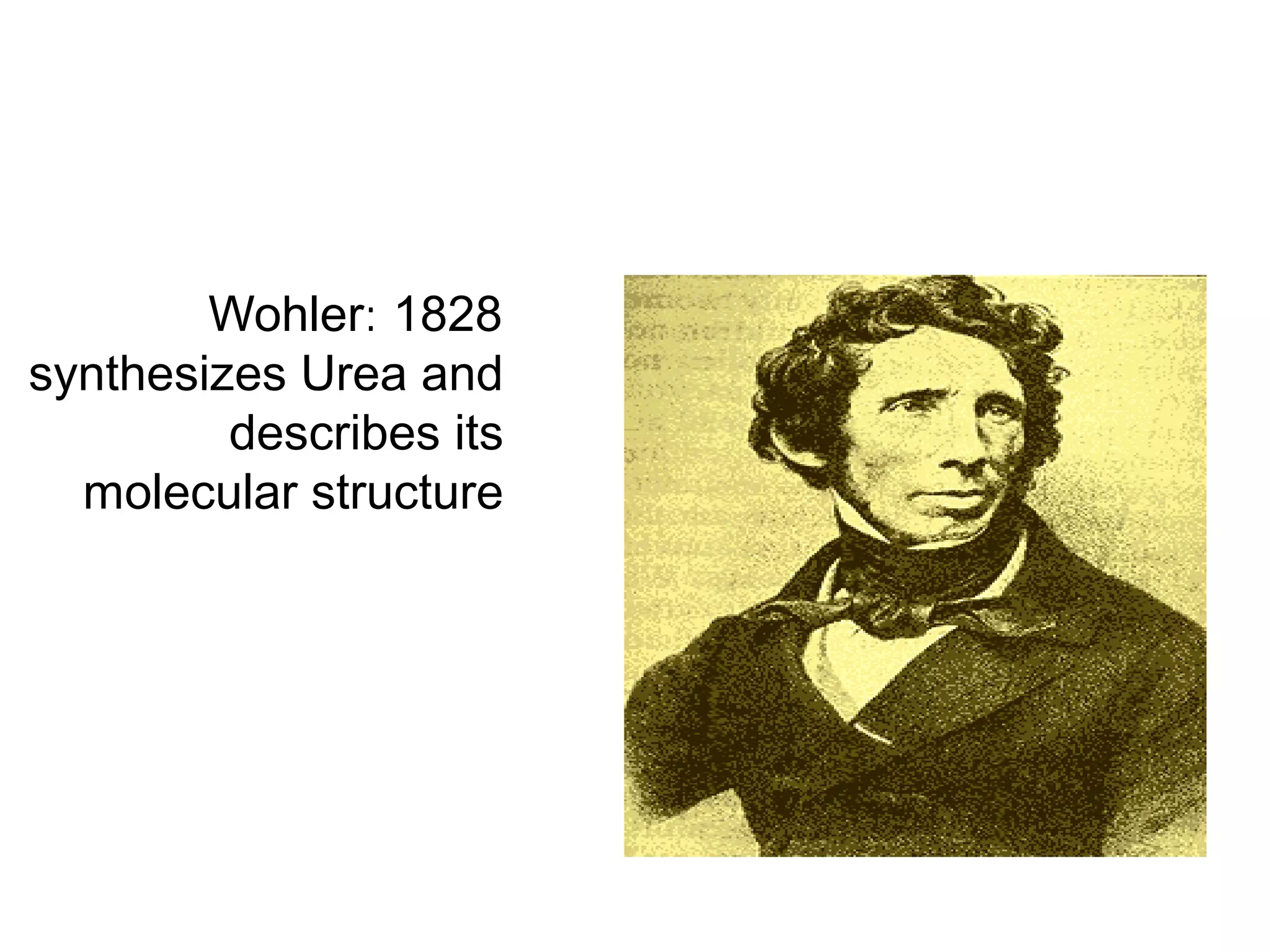
1828:Wohler
synthesizes Urea and
describes its
molecular structure
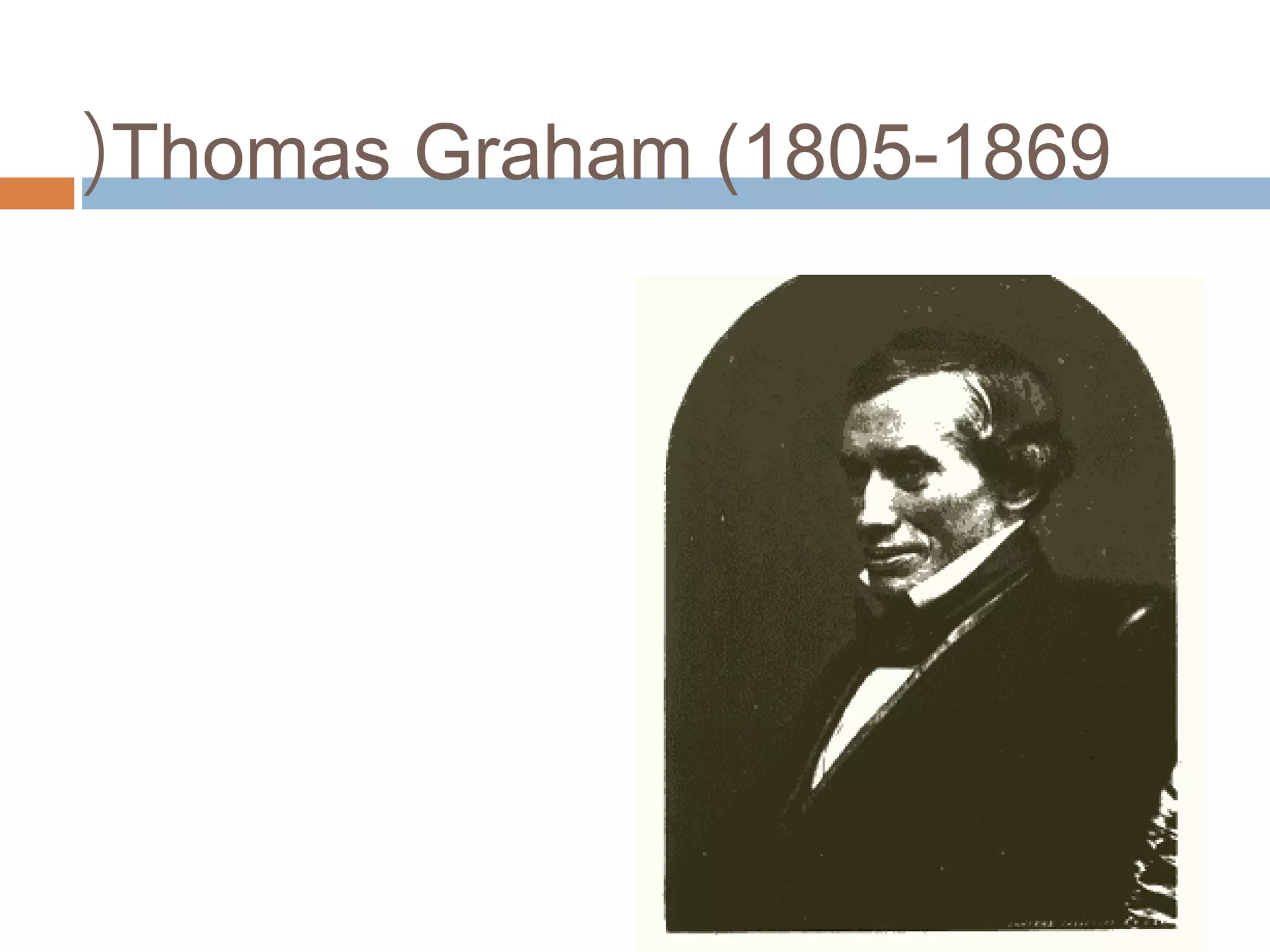
Thomas Graham (1805-1869(
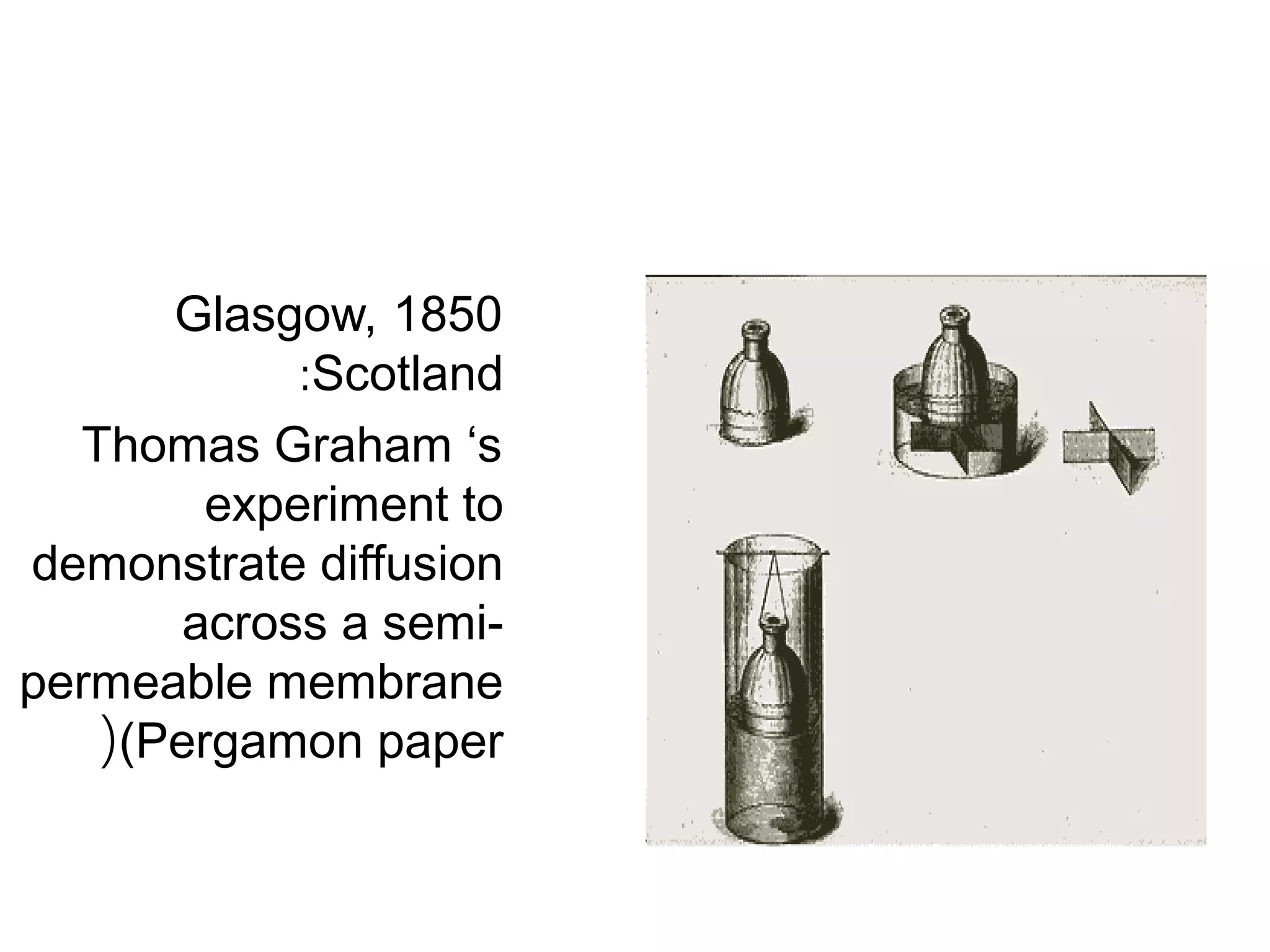
1850Glasgow,
Scotland:
Thomas Graham ‘s
experiment to
demonstrate diffusion
across a semi-
permeable membrane
(Pergamon paper(
Dialysis Membranes
 1750:Advances in the dovelopment of
smokeless gunpowder led to the synthesis of a
strong Nitrocellulose called “collodion”. It was a
combination of Nitric acid and cotton
 Addition of Camphor to this substance led to the
synthesis of stable and strong “plastics”
 1957:Helmut Staldiger polymerized “Cellulose”
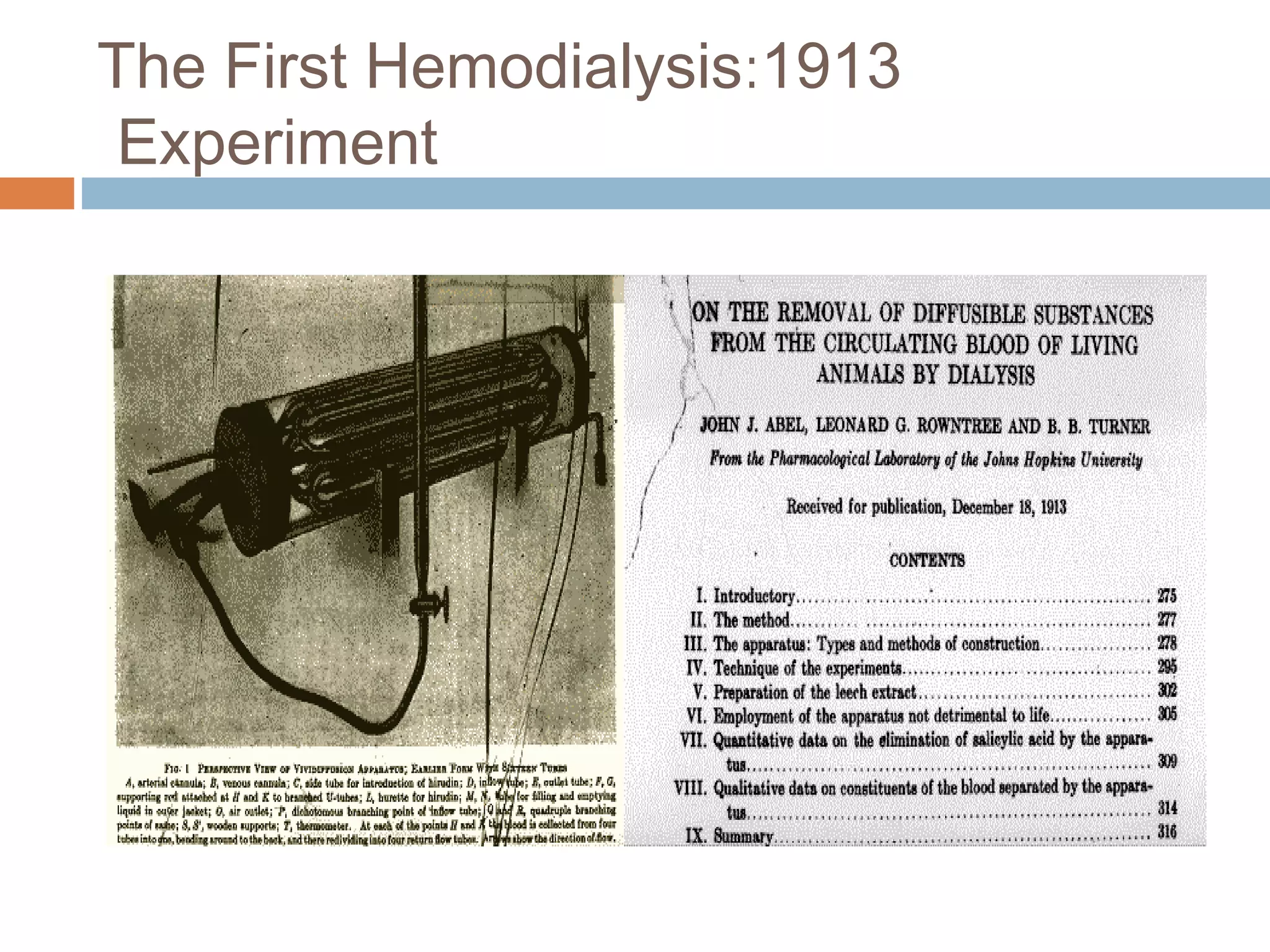
1913:The First Hemodialysis
Experiment
0
10
20
30
40
50
60
70
80
90
1st
Qtr
2nd
Qtr
3rd
Qtr
4th
Qtr
East
West
North
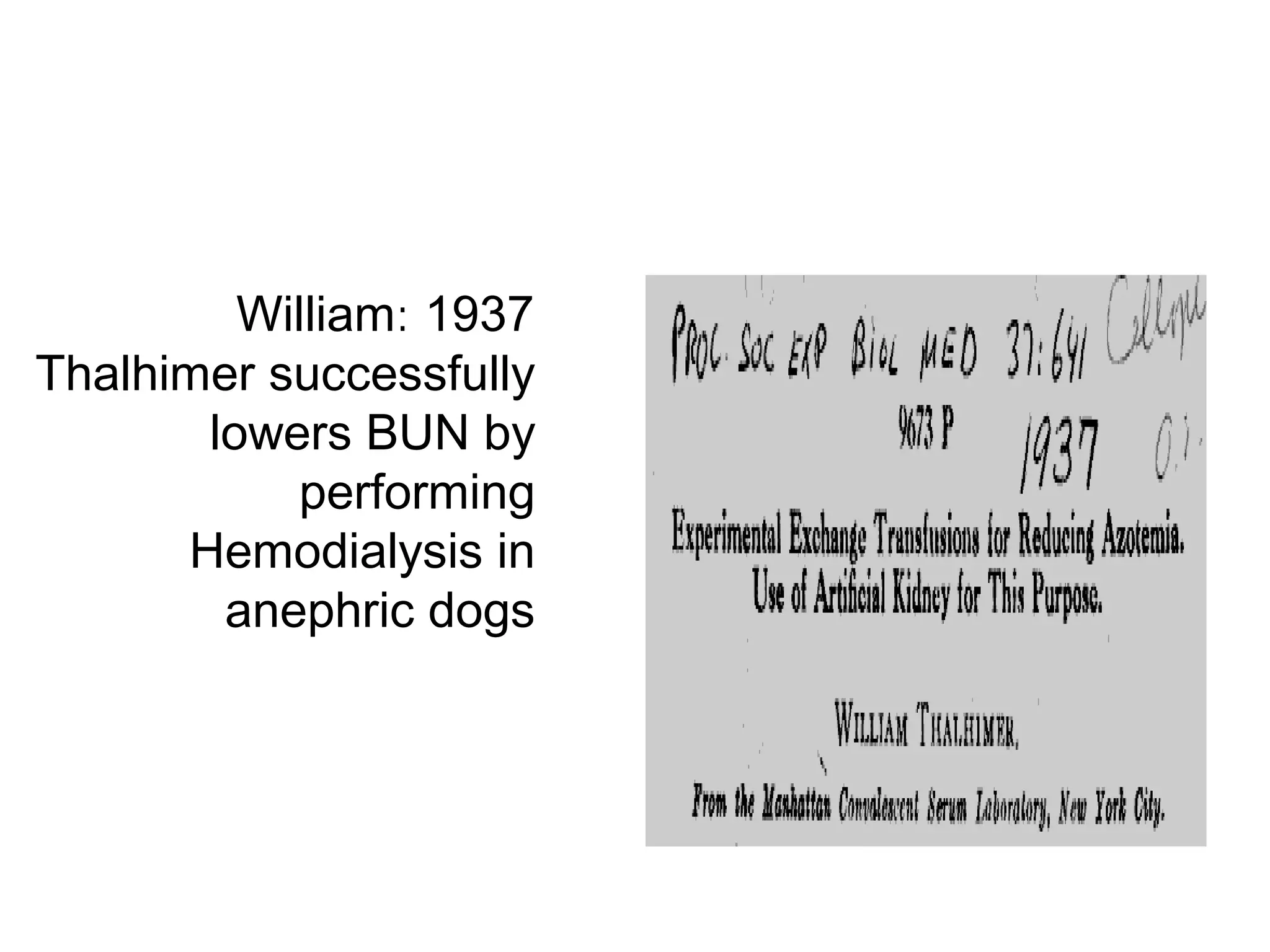
1937:William
Thalhimer successfully
lowers BUN by
performing
Hemodialysis in
anephric dogs
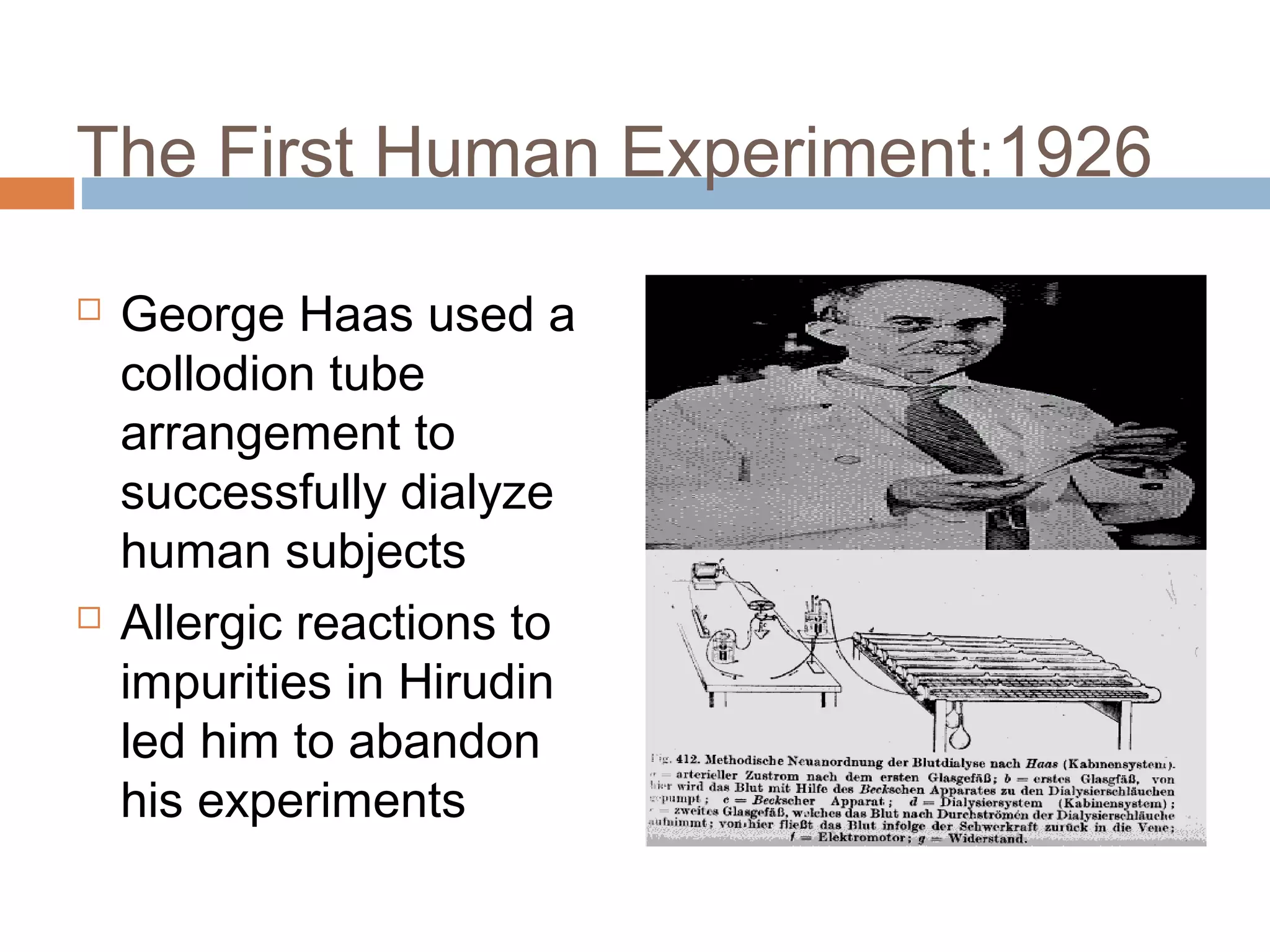
1926:The First Human Experiment
 George Haas used a
collodion tube
arrangement to
successfully dialyze
human subjects
 Allergic reactions to
impurities in Hirudin
led him to abandon
his experiments
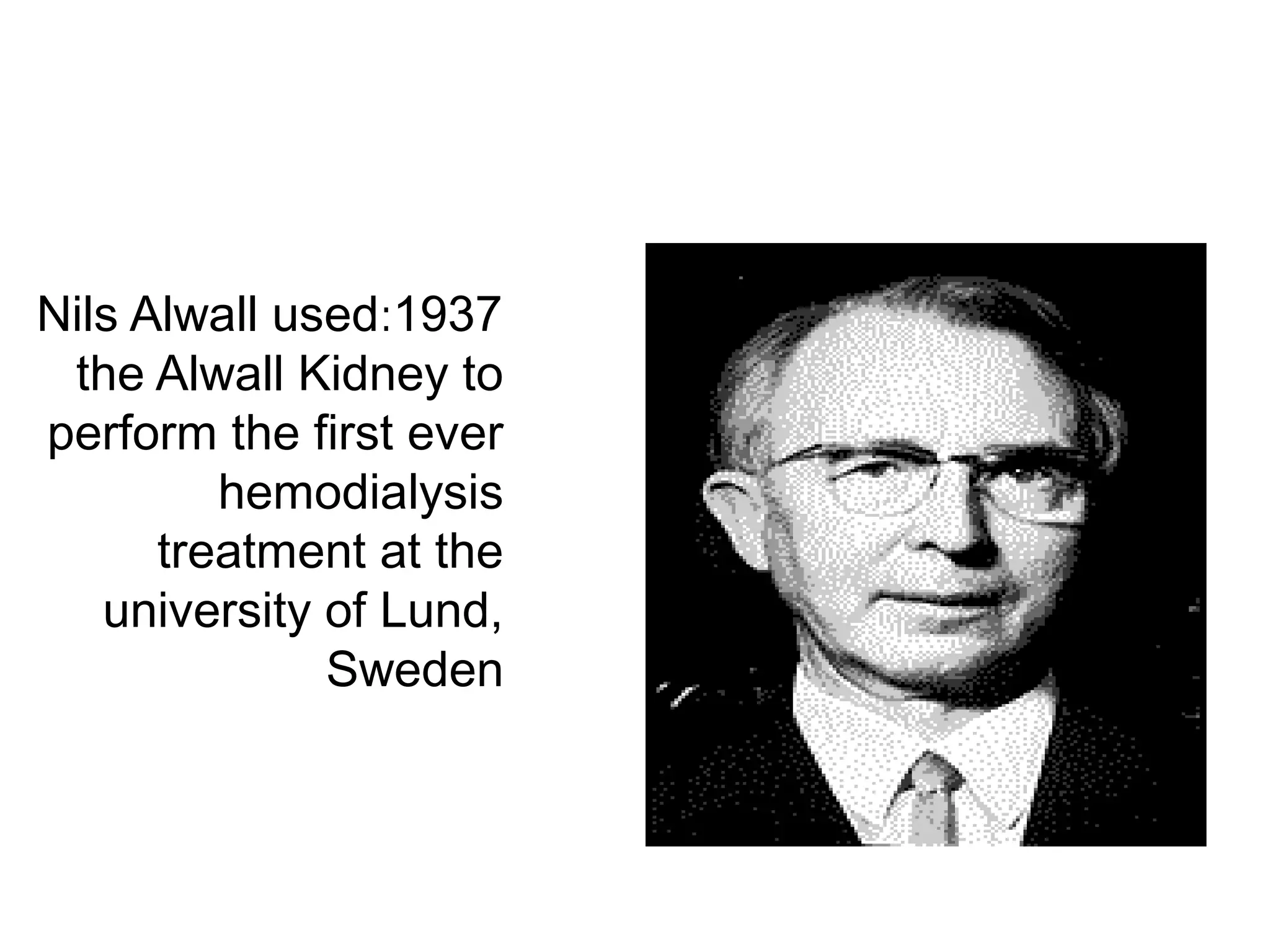
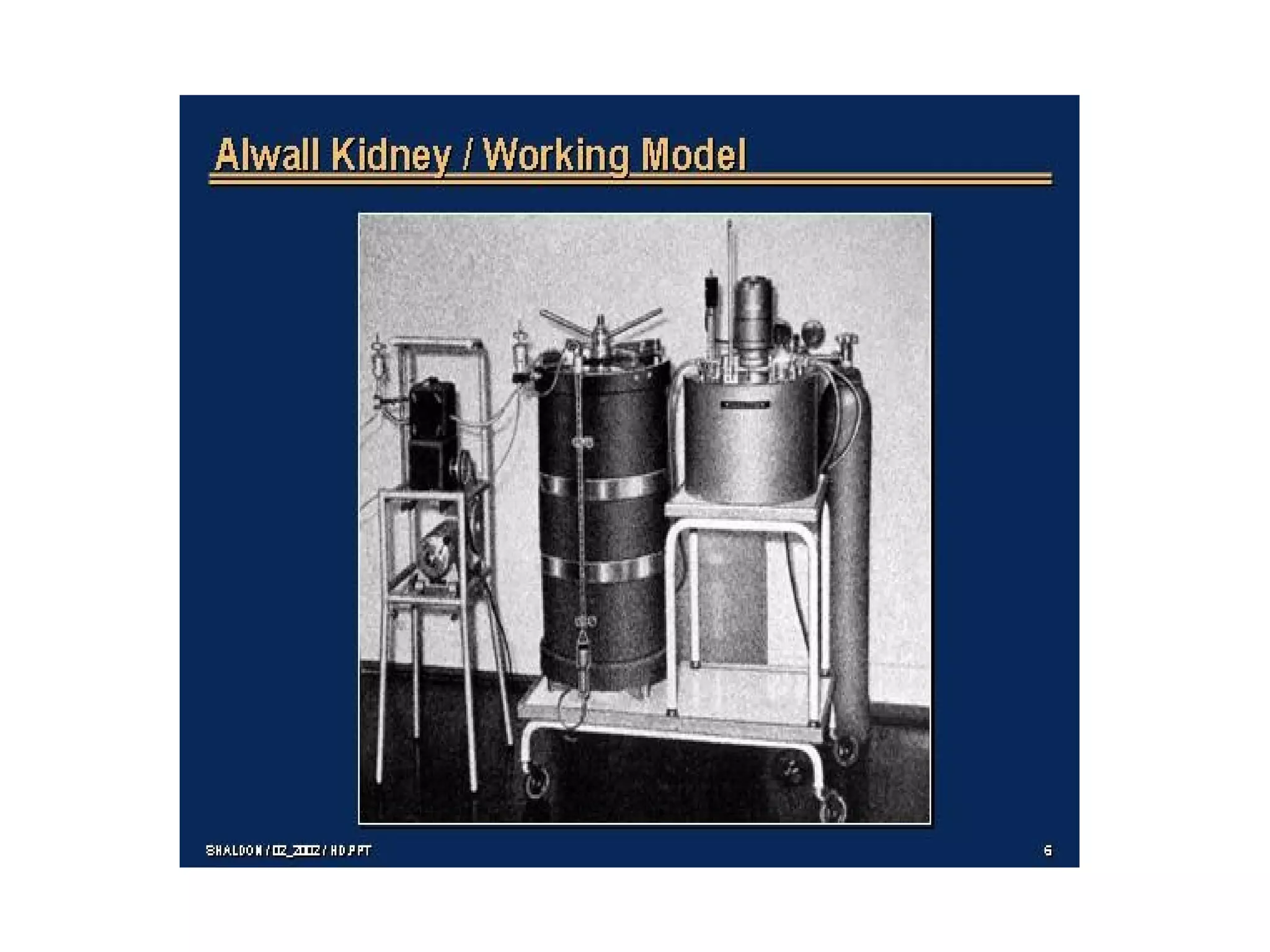
1937:Nils Alwall used
the Alwall Kidney to
perform the first ever
hemodialysis
treatment at the
university of Lund,
Sweden
“If I have seen farther it is because I have
stood on the shoulders of Giants”
Sir Isaac Newton
Hemodialysis:History and Current
Perspective
 History of Dialysis
 Principles of Hemodialysis
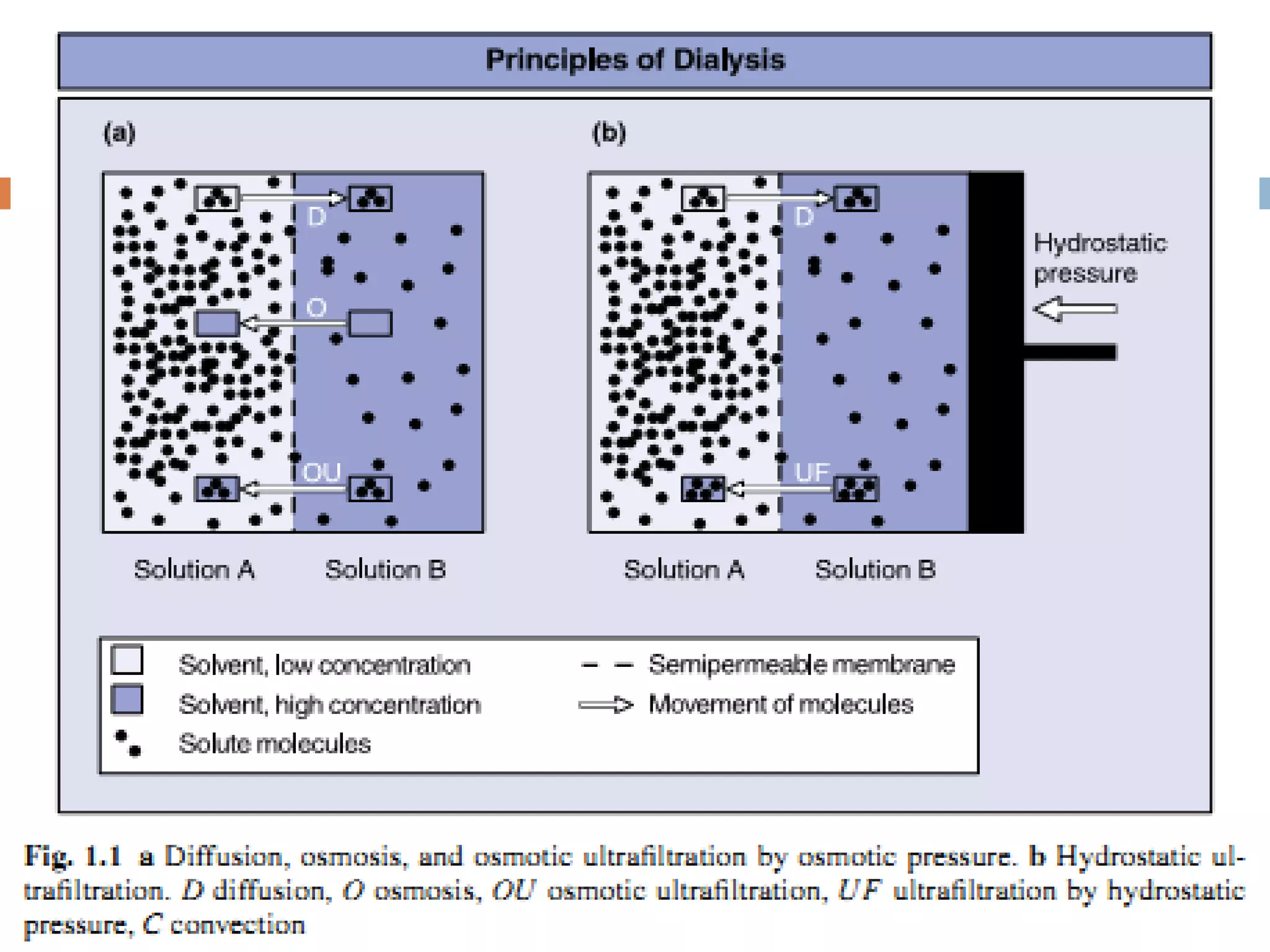
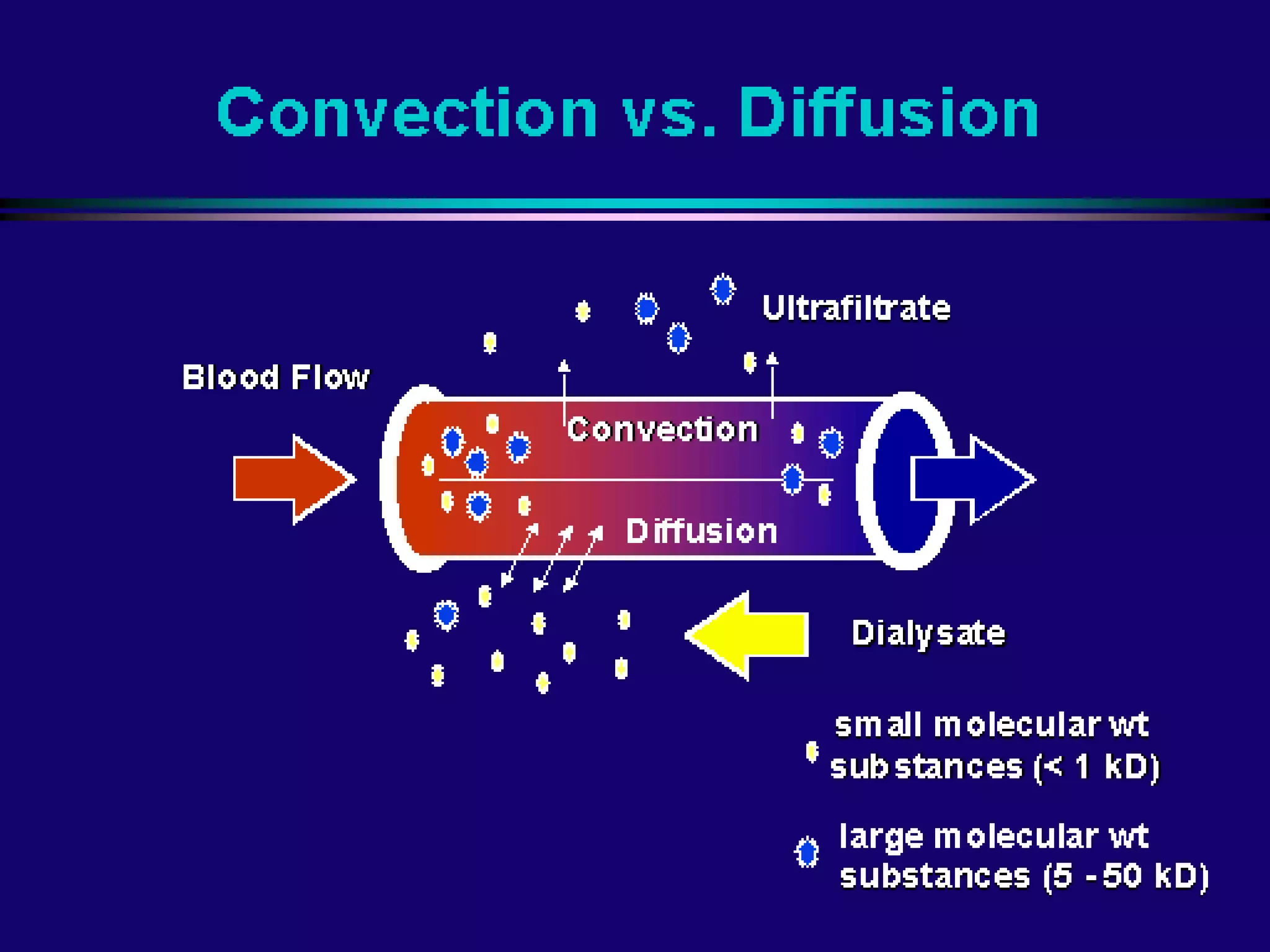
Mechanisms of Solute transfer
 Diffusion
 Convection
 Osmosis
 Ultrafilteration
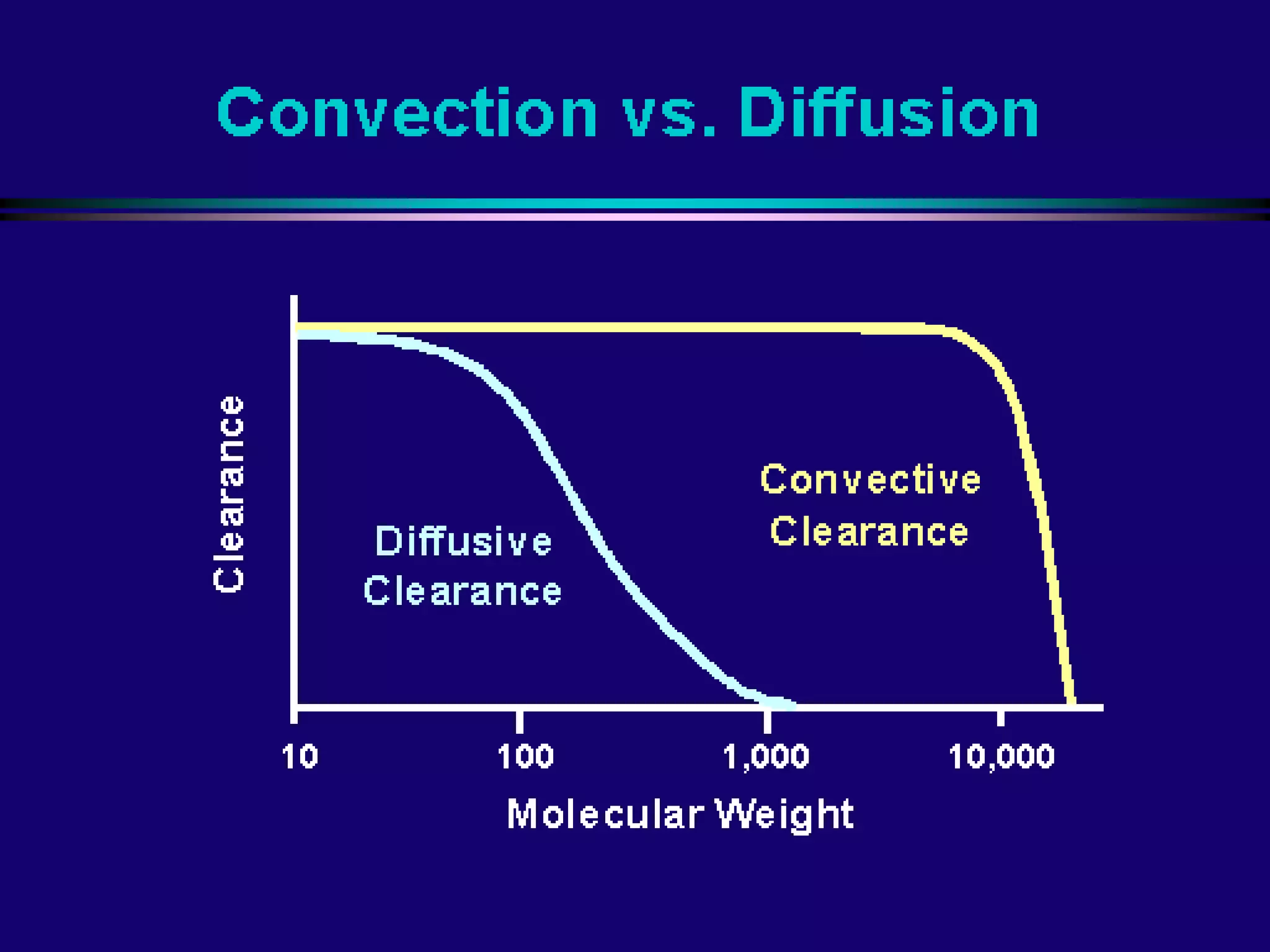
Diffusive Clearance
 A result of random molecular motion
 Influenced by concentration gradient of the
solute and its Molecular weight as well as by
the membrane permeability to the solute
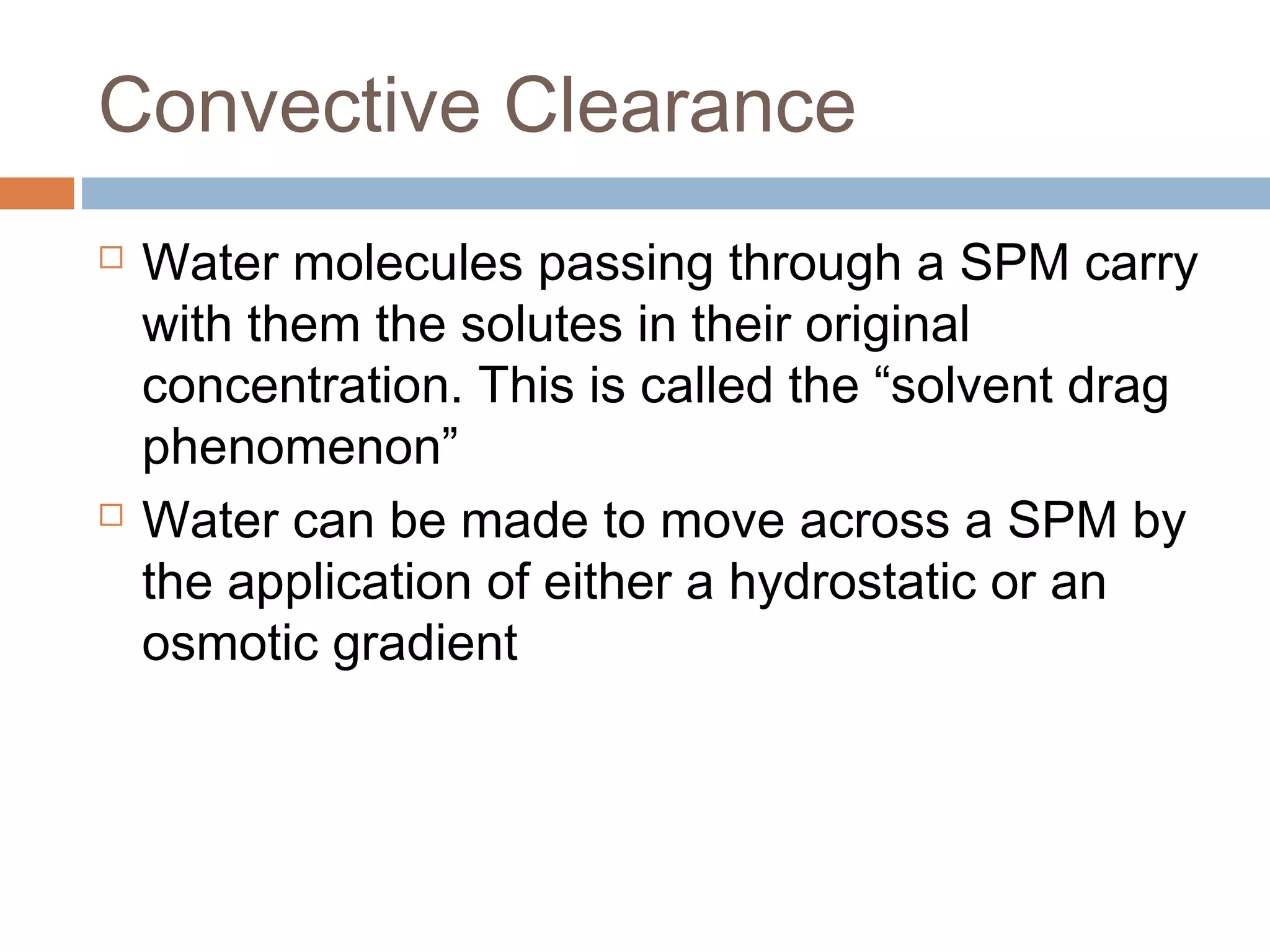
Convective Clearance
 Water molecules passing through a SPM carry
with them the solutes in their original
concentration. This is called the “solvent drag
phenomenon”
 Water can be made to move across a SPM by
the application of either a hydrostatic or an
osmotic gradient
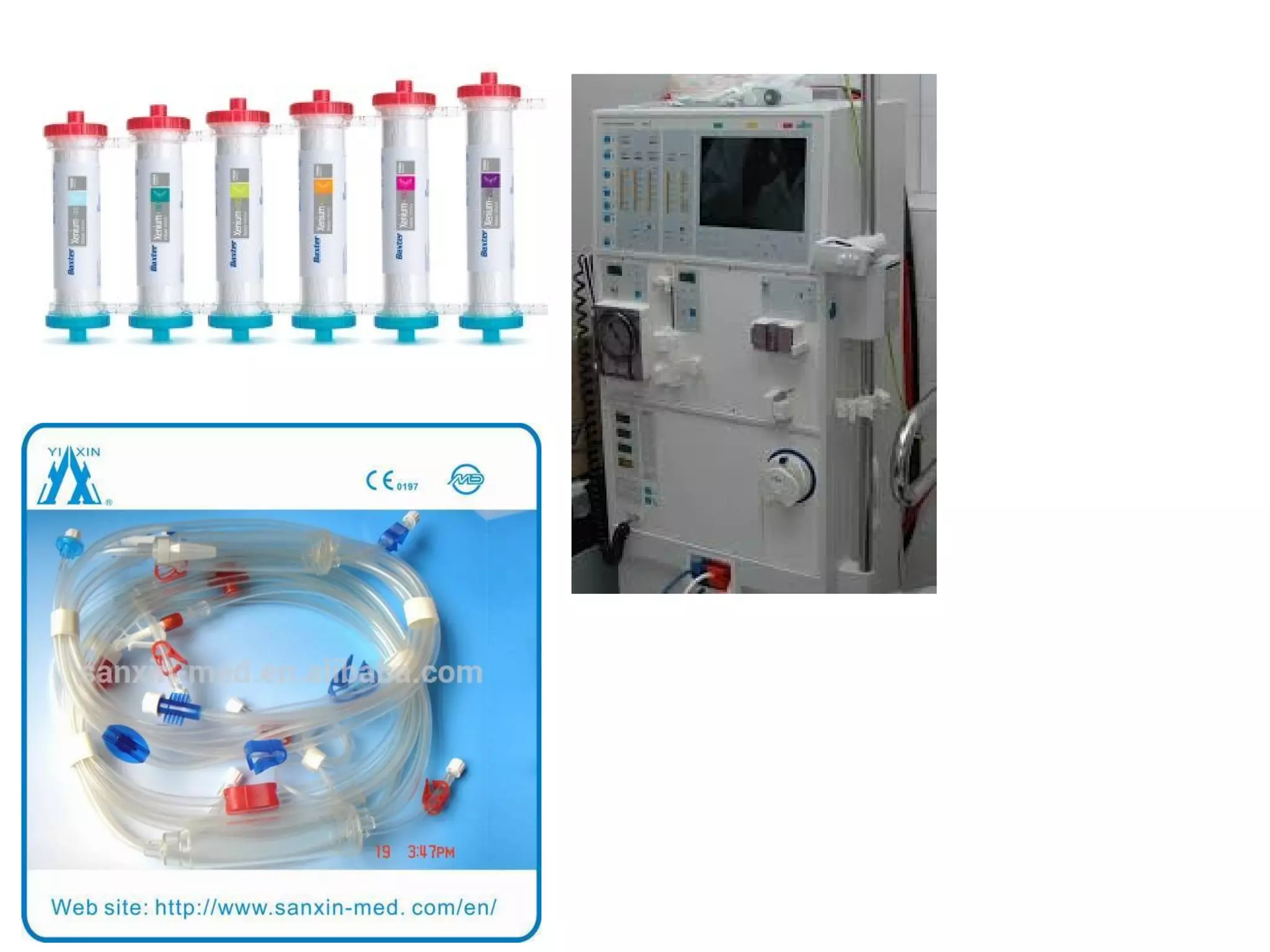
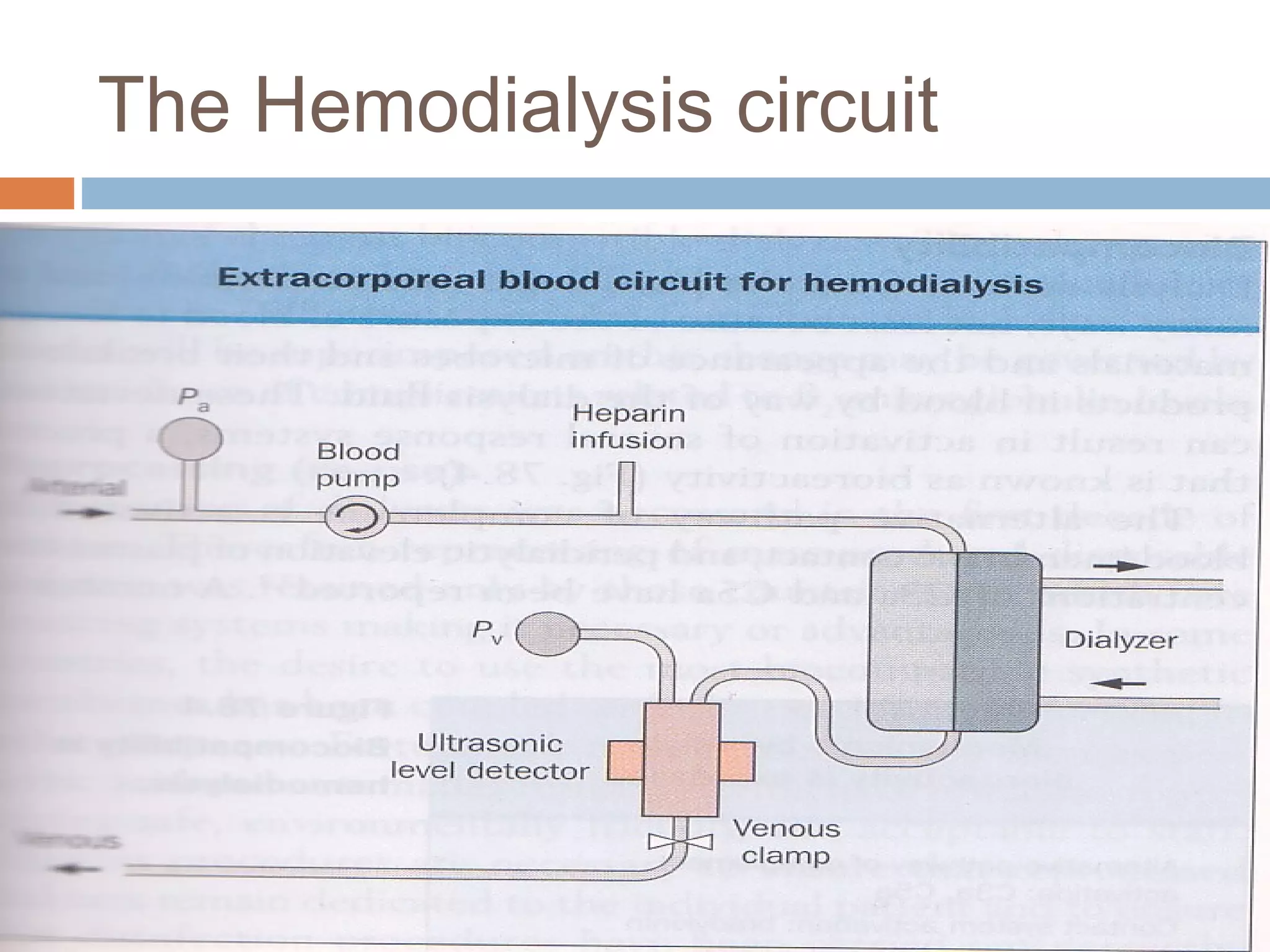
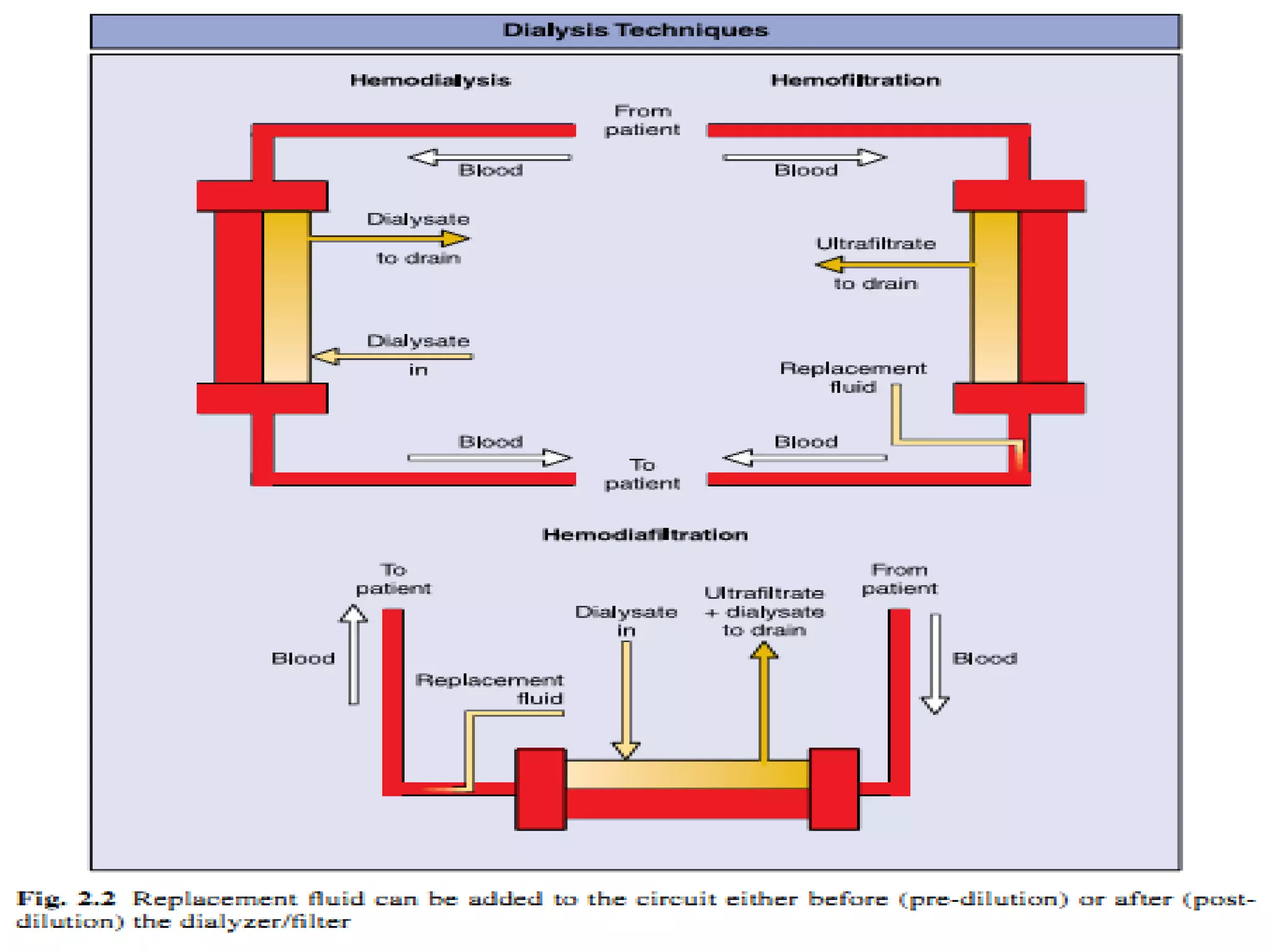
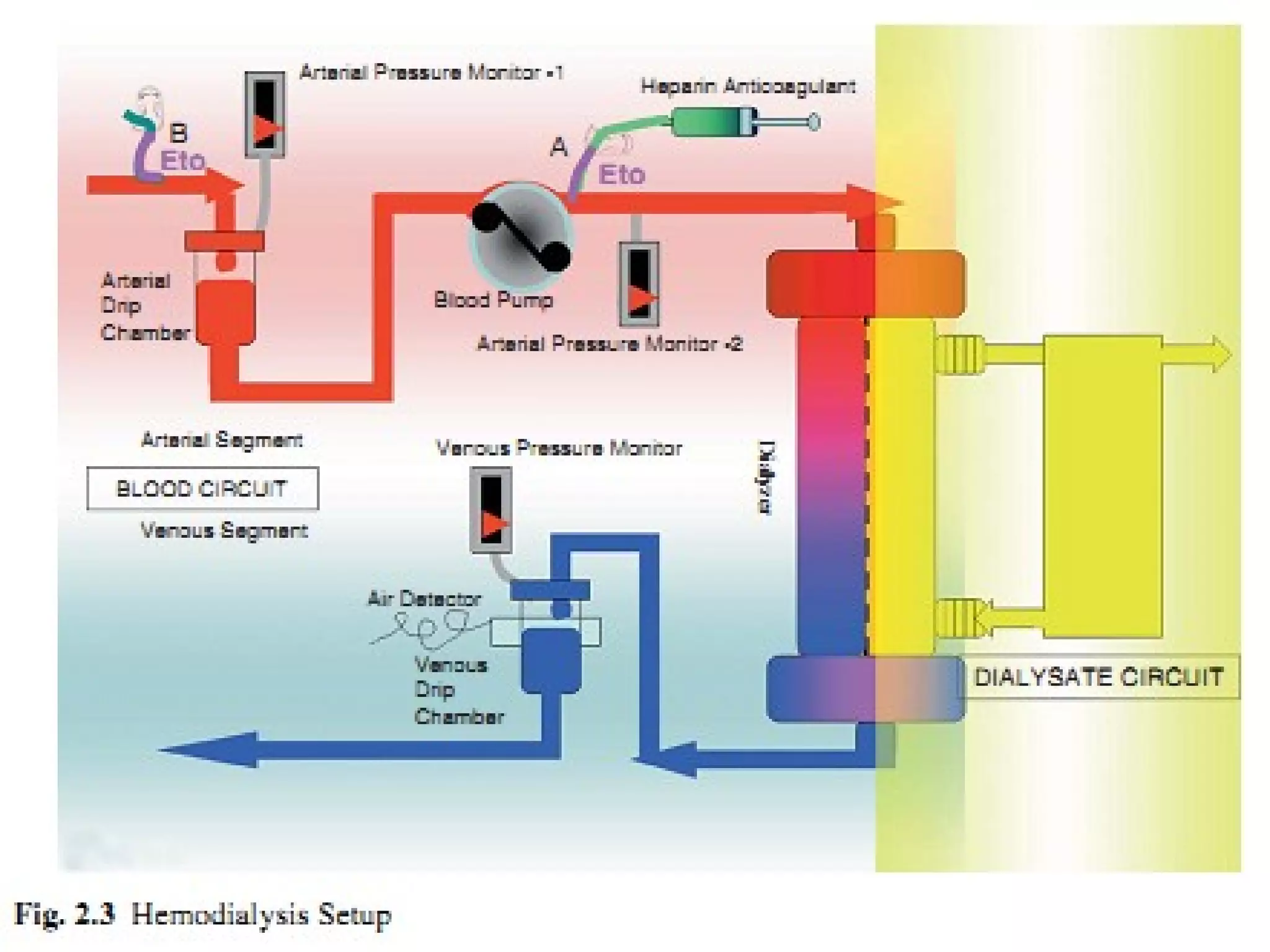
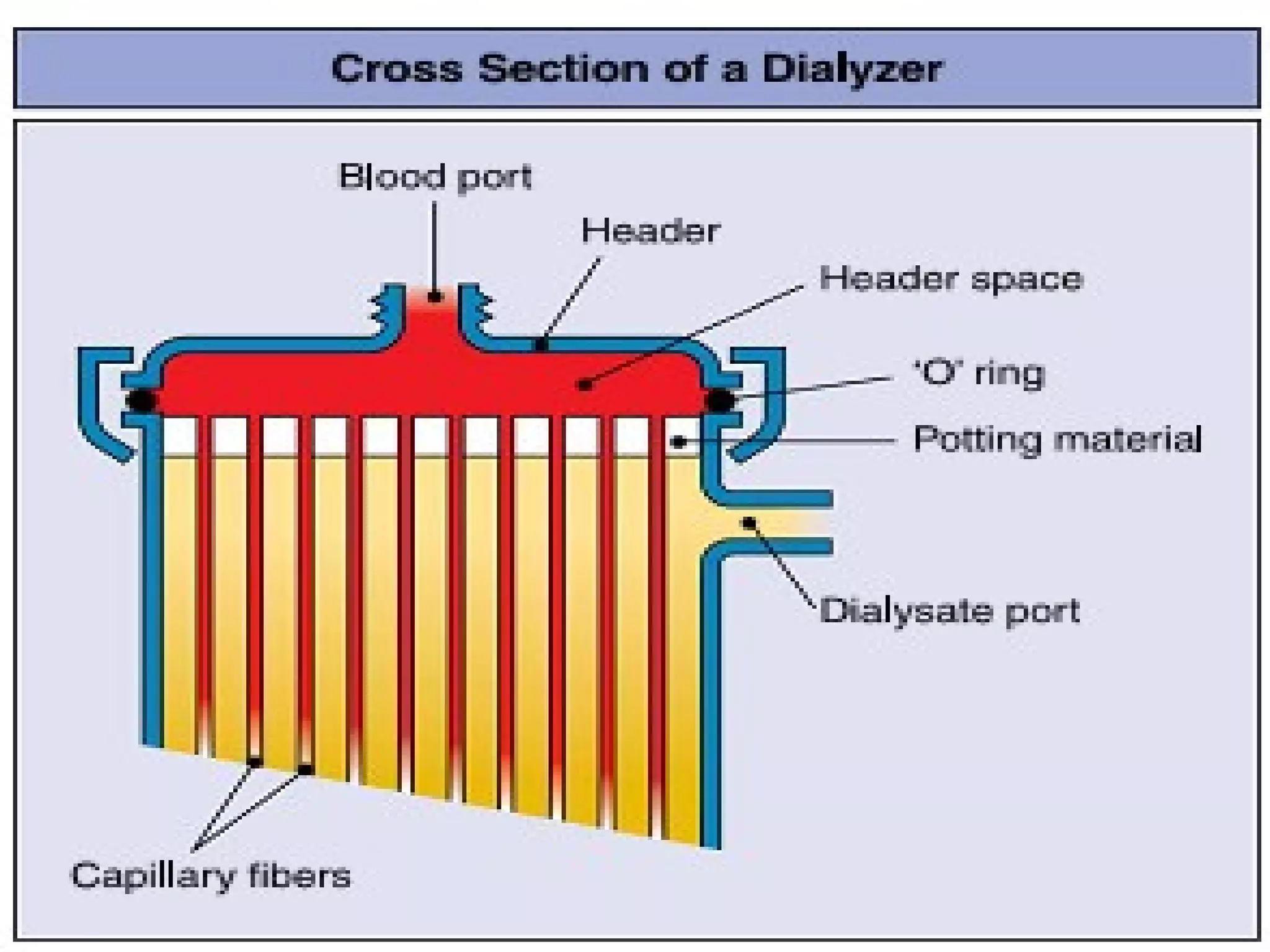
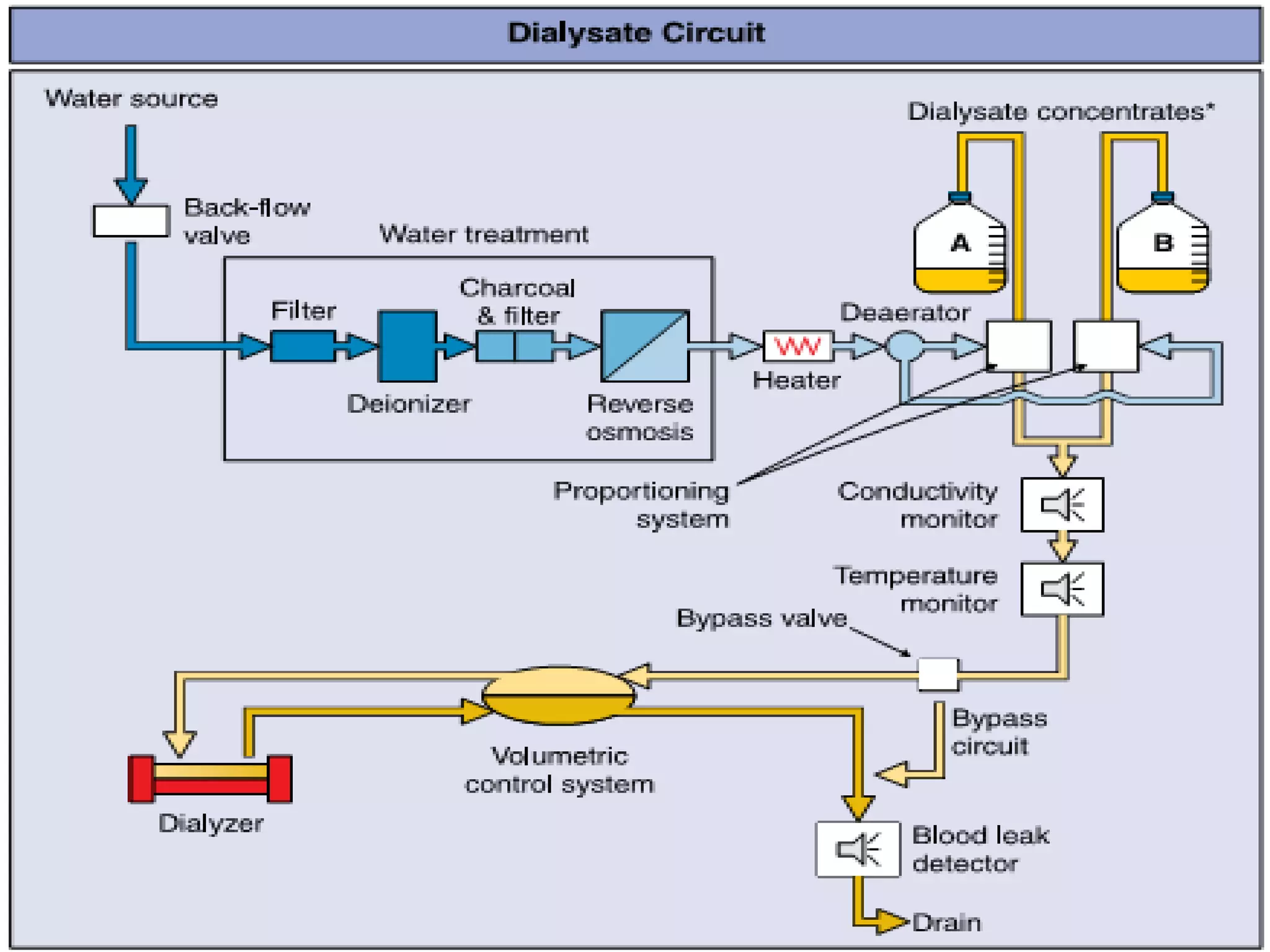
The Hemodialysis circuit
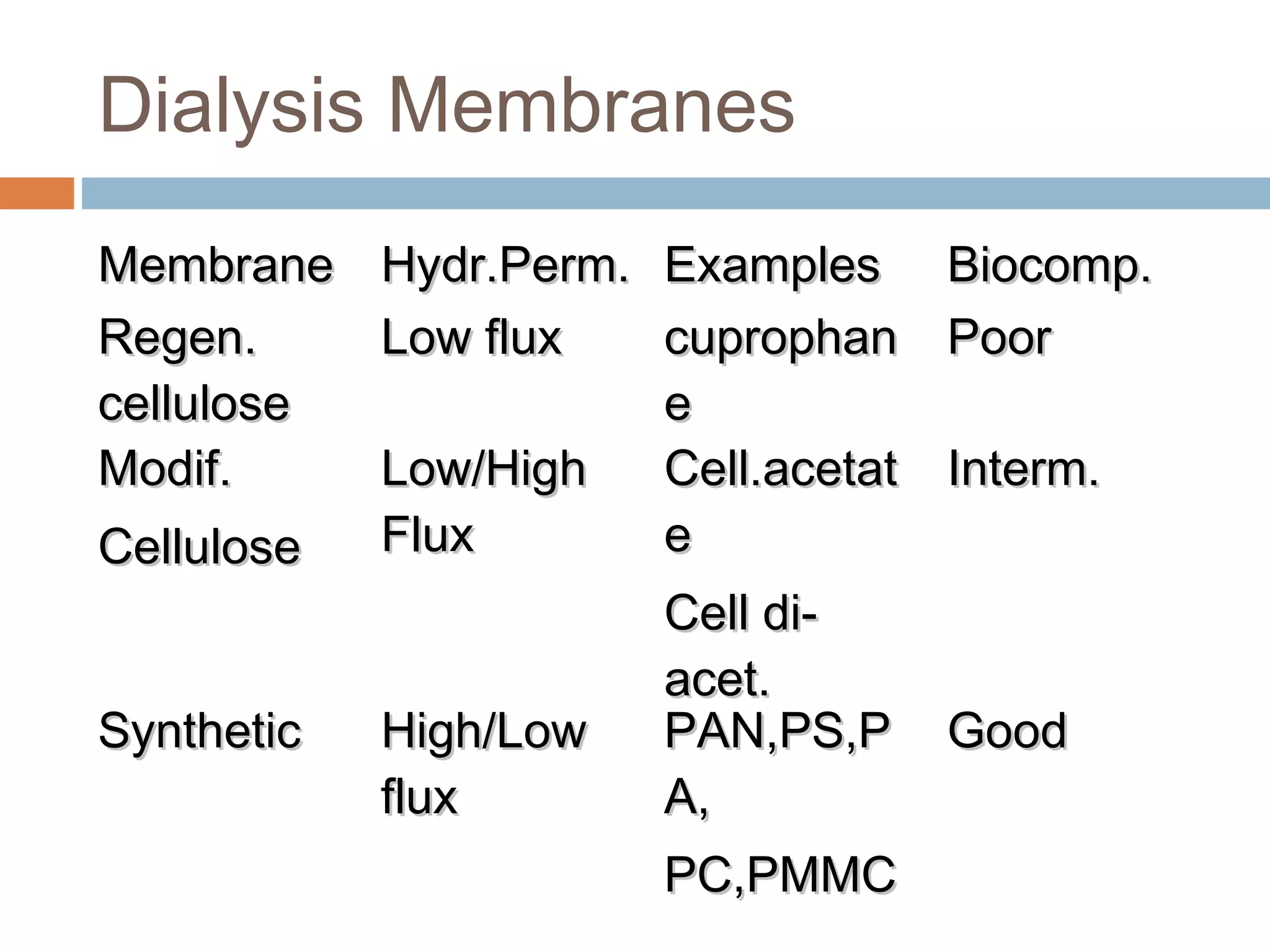
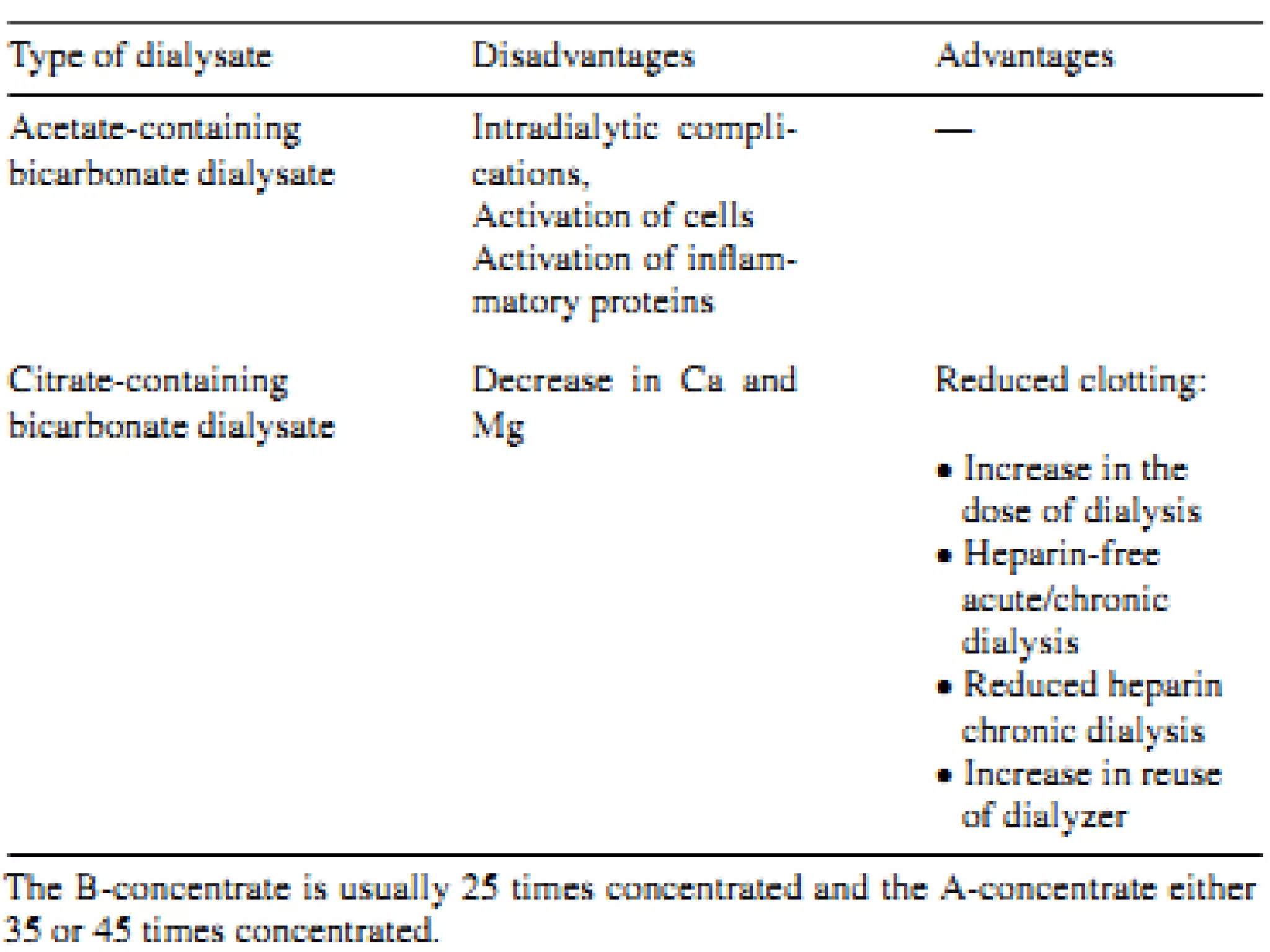
Dialysis Membranes
MembraneMembrane Hydr.Perm.Hydr.Perm. ExamplesExamples Biocomp.Biocomp.
Regen.Regen.
cellulosecellulose
Low fluxLow flux cuprophancuprophan
ee
PoorPoor
Modif.Modif.
CelluloseCellulose
Low/HighLow/High
FluxFlux
Cell.acetatCell.acetat
ee
Cell di-Cell di-
acet.acet.
Interm.Interm.
SyntheticSynthetic High/LowHigh/Low
fluxflux
PAN,PS,PPAN,PS,P
A,A,
PC,PMMCPC,PMMC
GoodGood
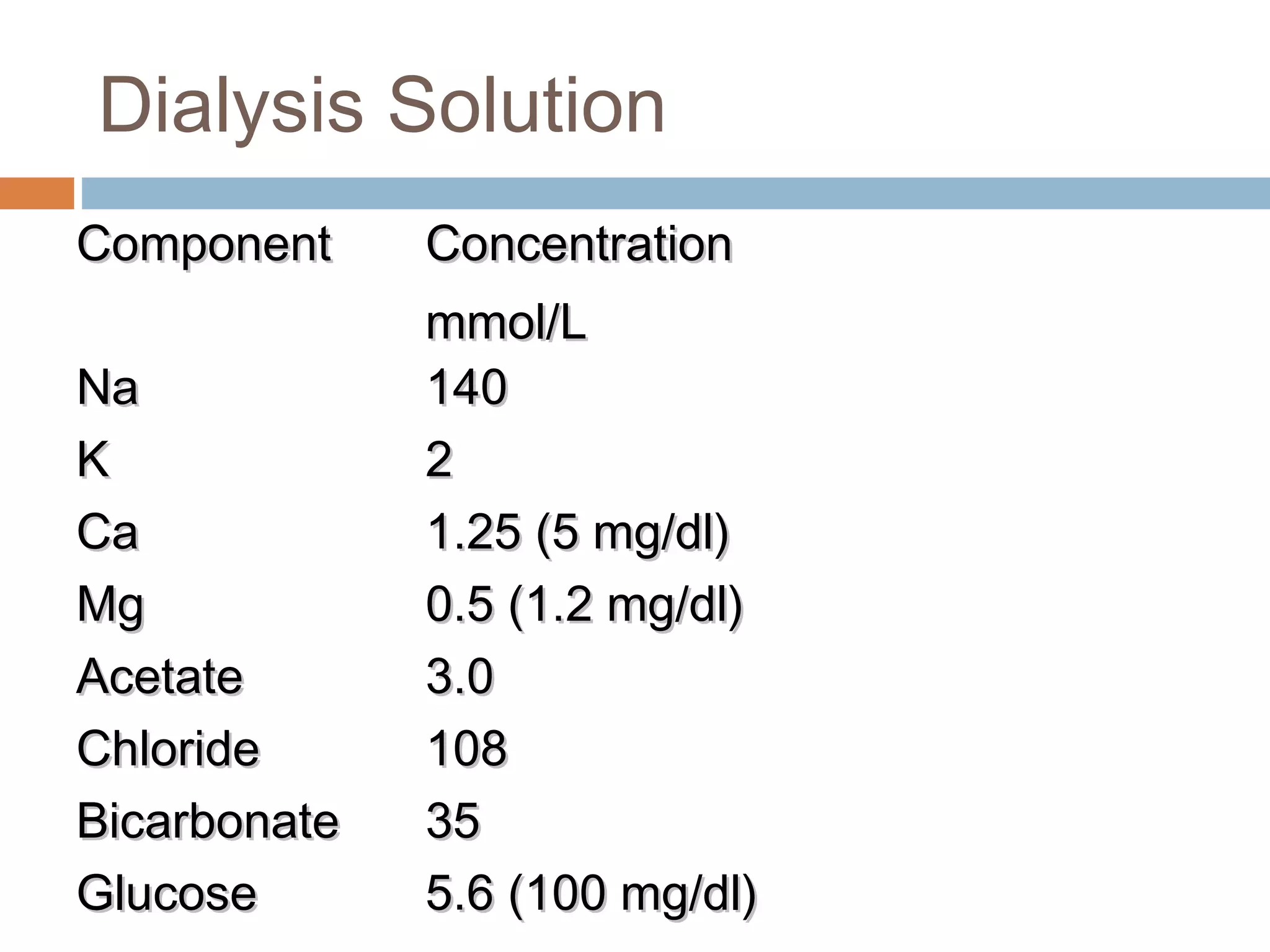
Dialysis Solution
ComponentComponent ConcentrationConcentration
mmol/Lmmol/L
NaNa 140140
KK 22
CaCa 1.25 (5 mg/dl)1.25 (5 mg/dl)
MgMg 0.5 (1.2 mg/dl)0.5 (1.2 mg/dl)
AcetateAcetate 3.03.0
ChlorideChloride 108108
BicarbonateBicarbonate 3535
GlucoseGlucose 5.6 (100 mg/dl)5.6 (100 mg/dl)
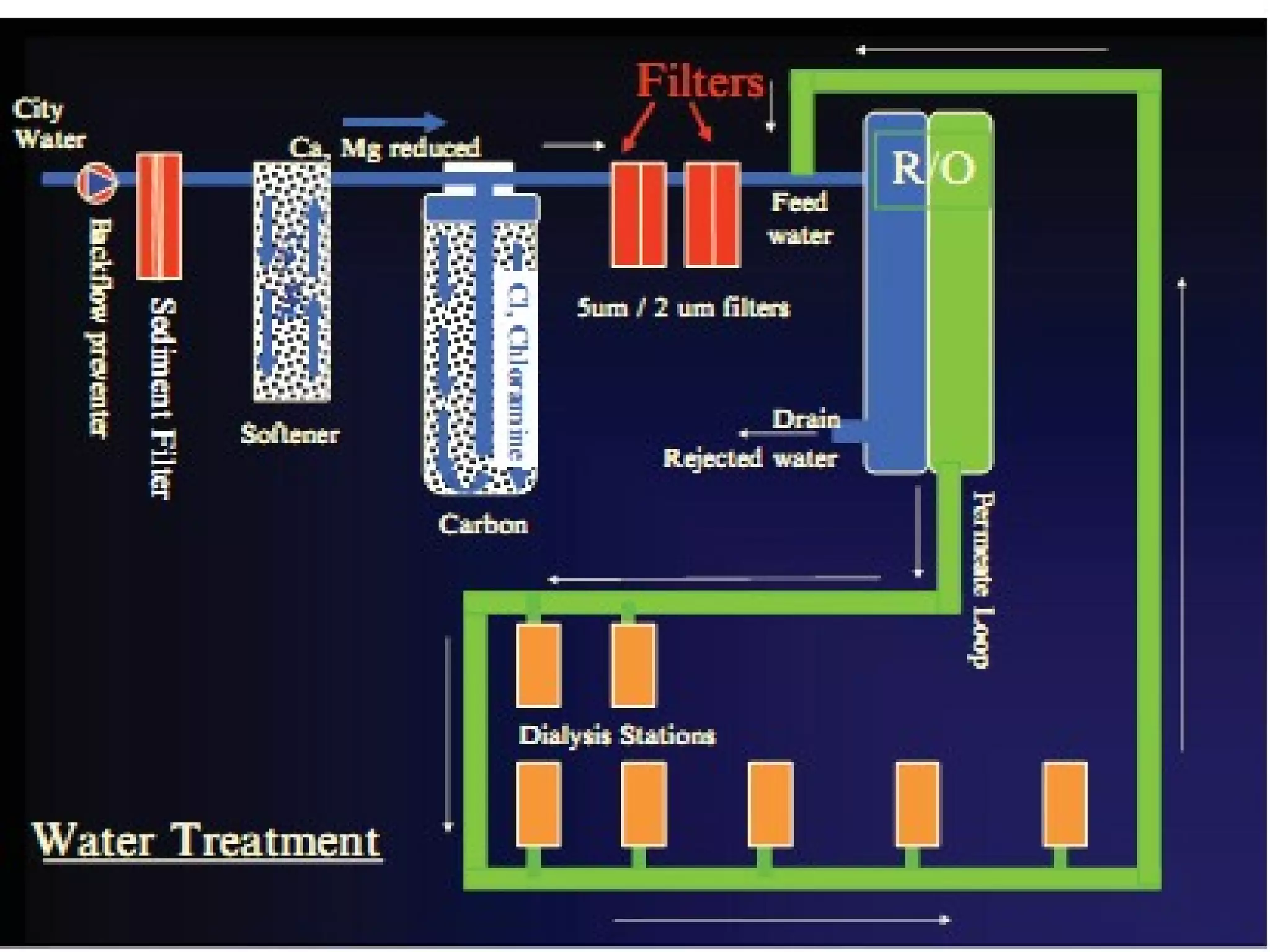
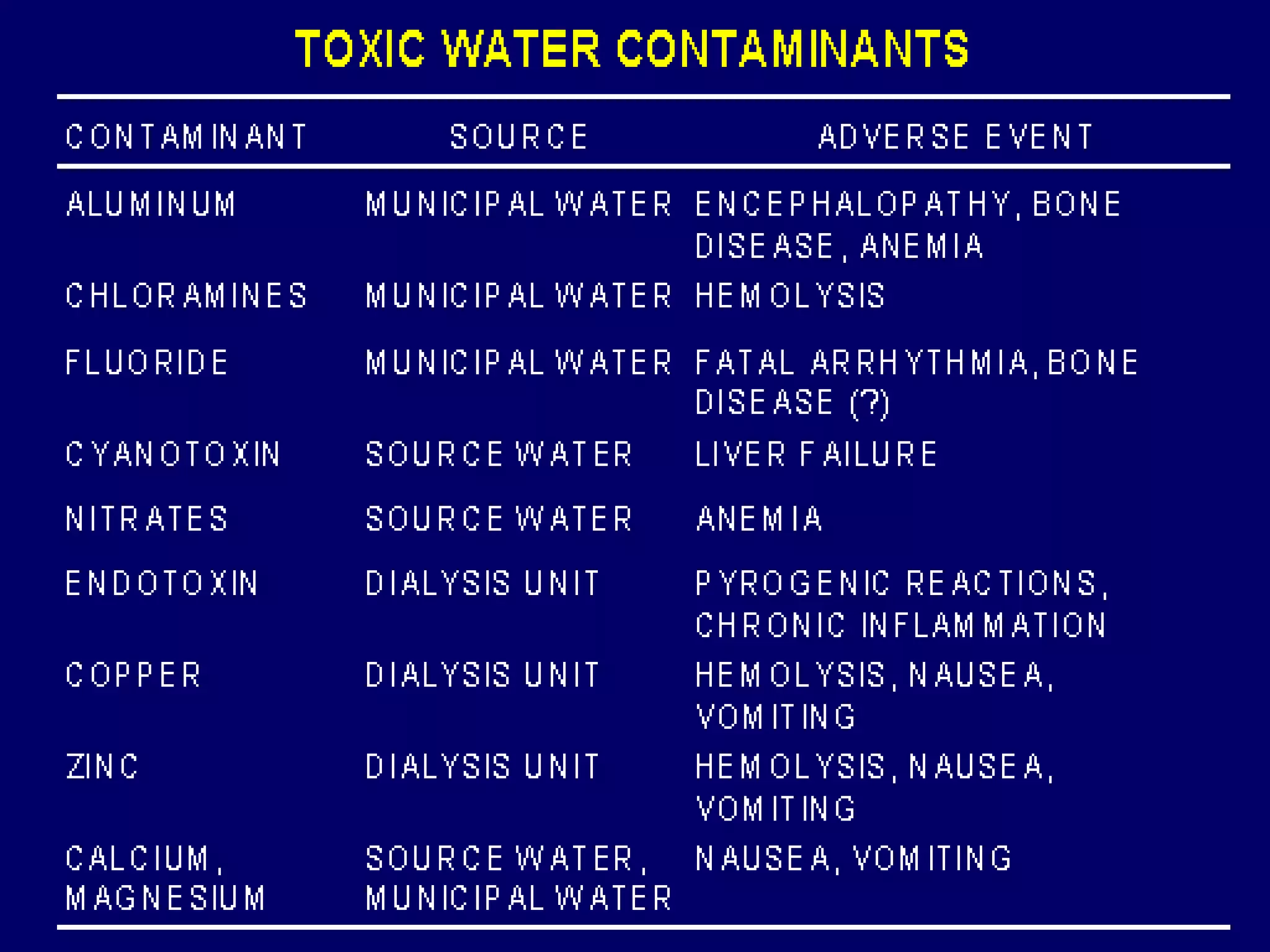
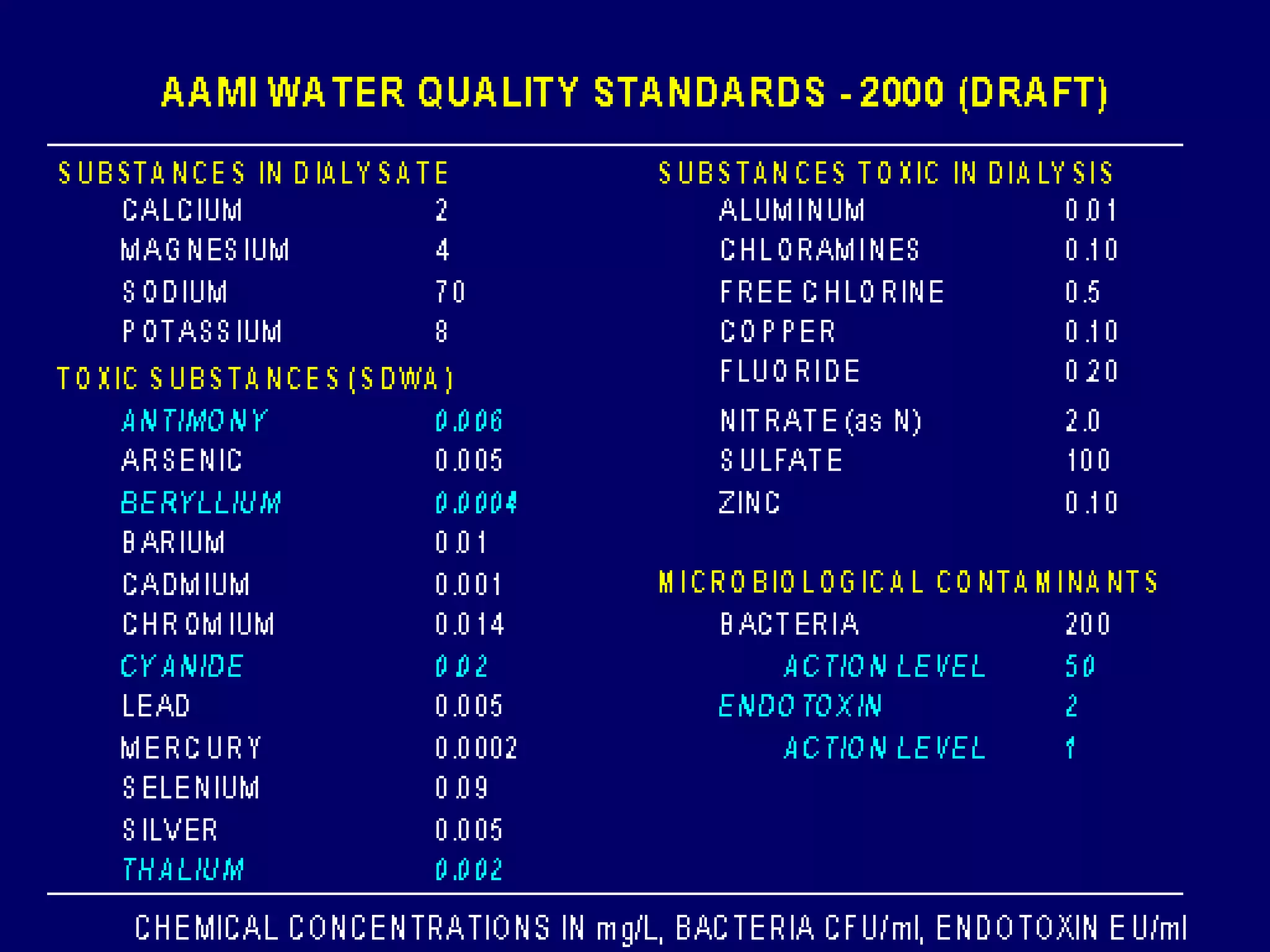
Water Purification
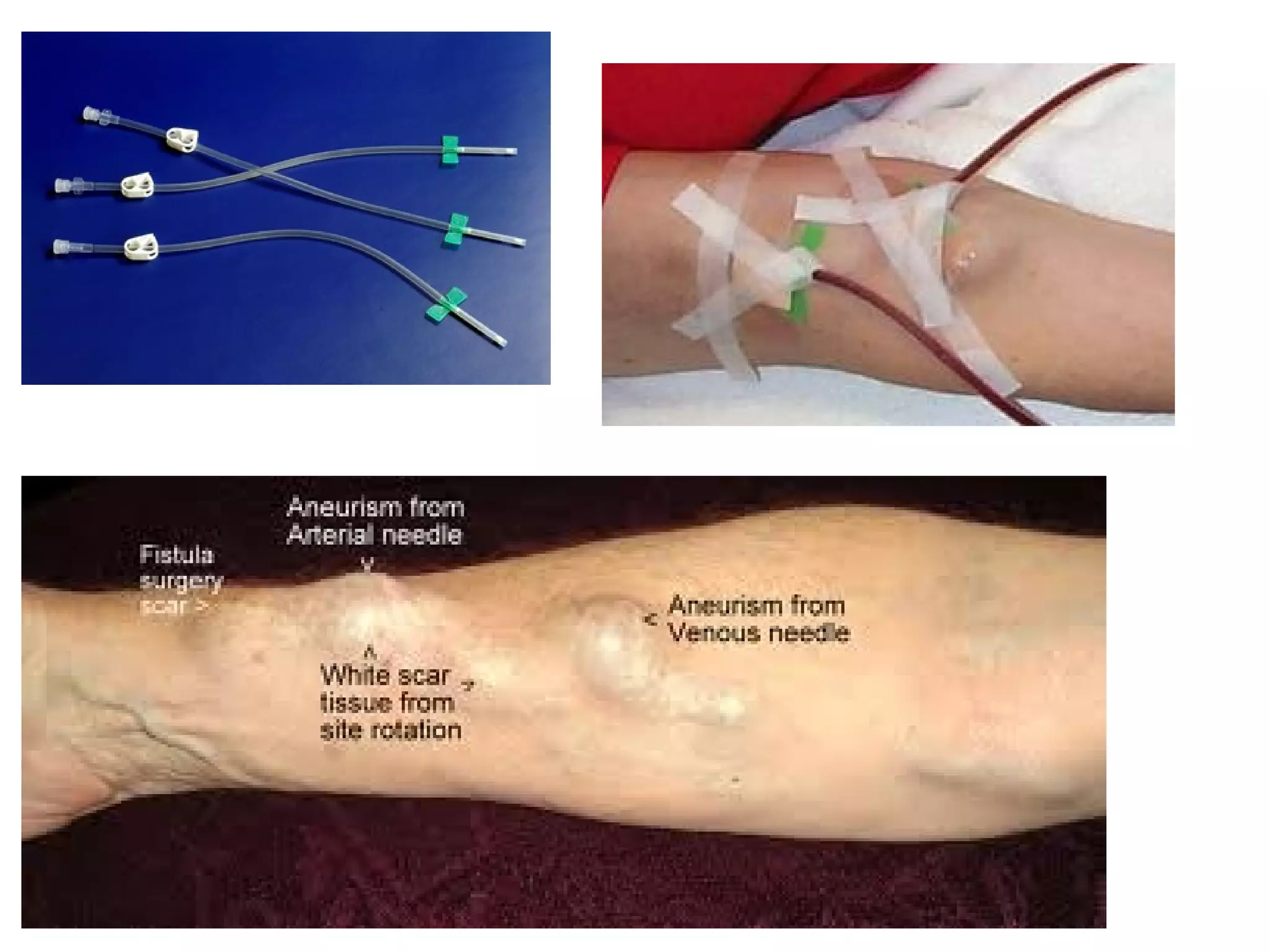
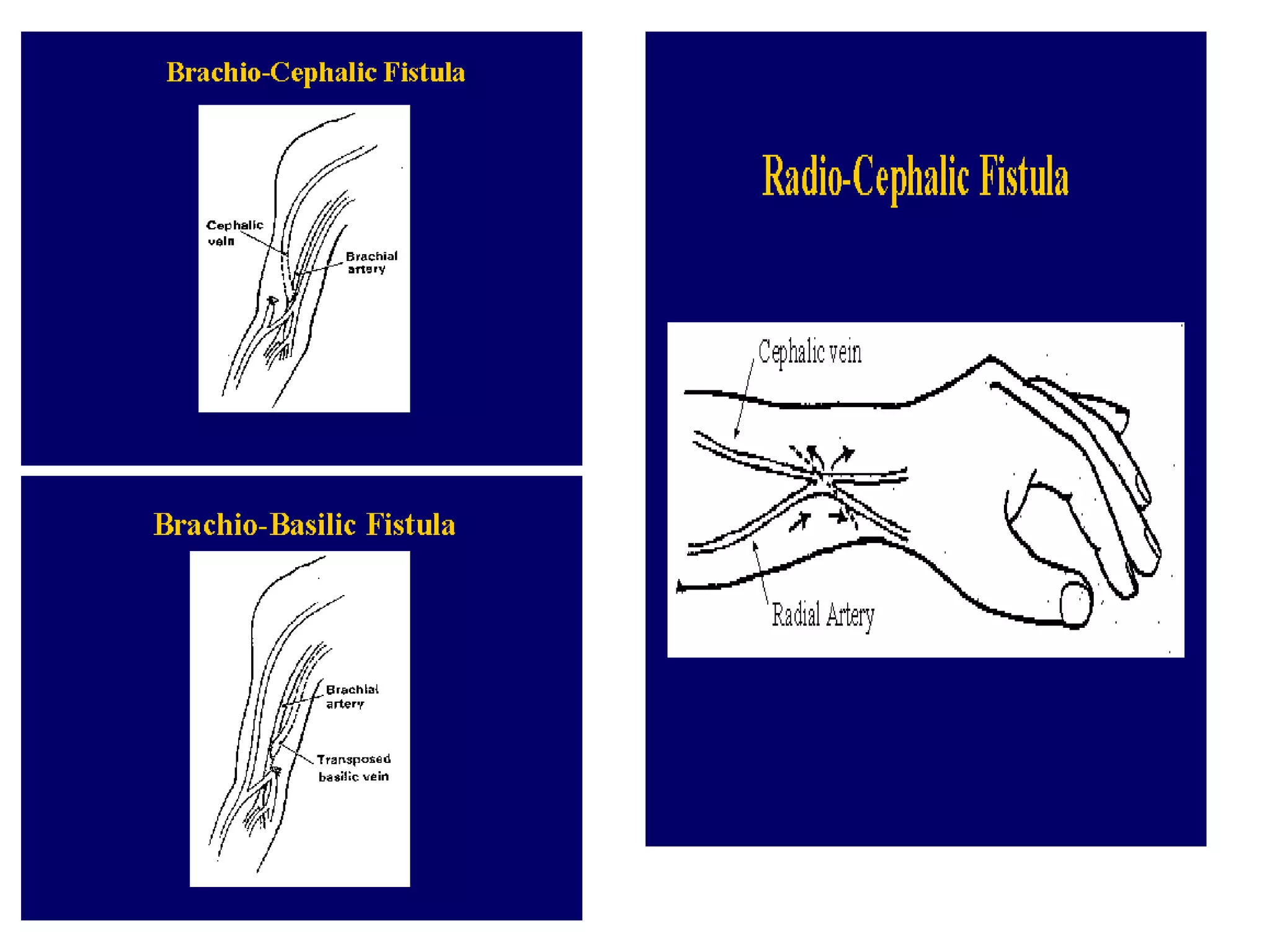
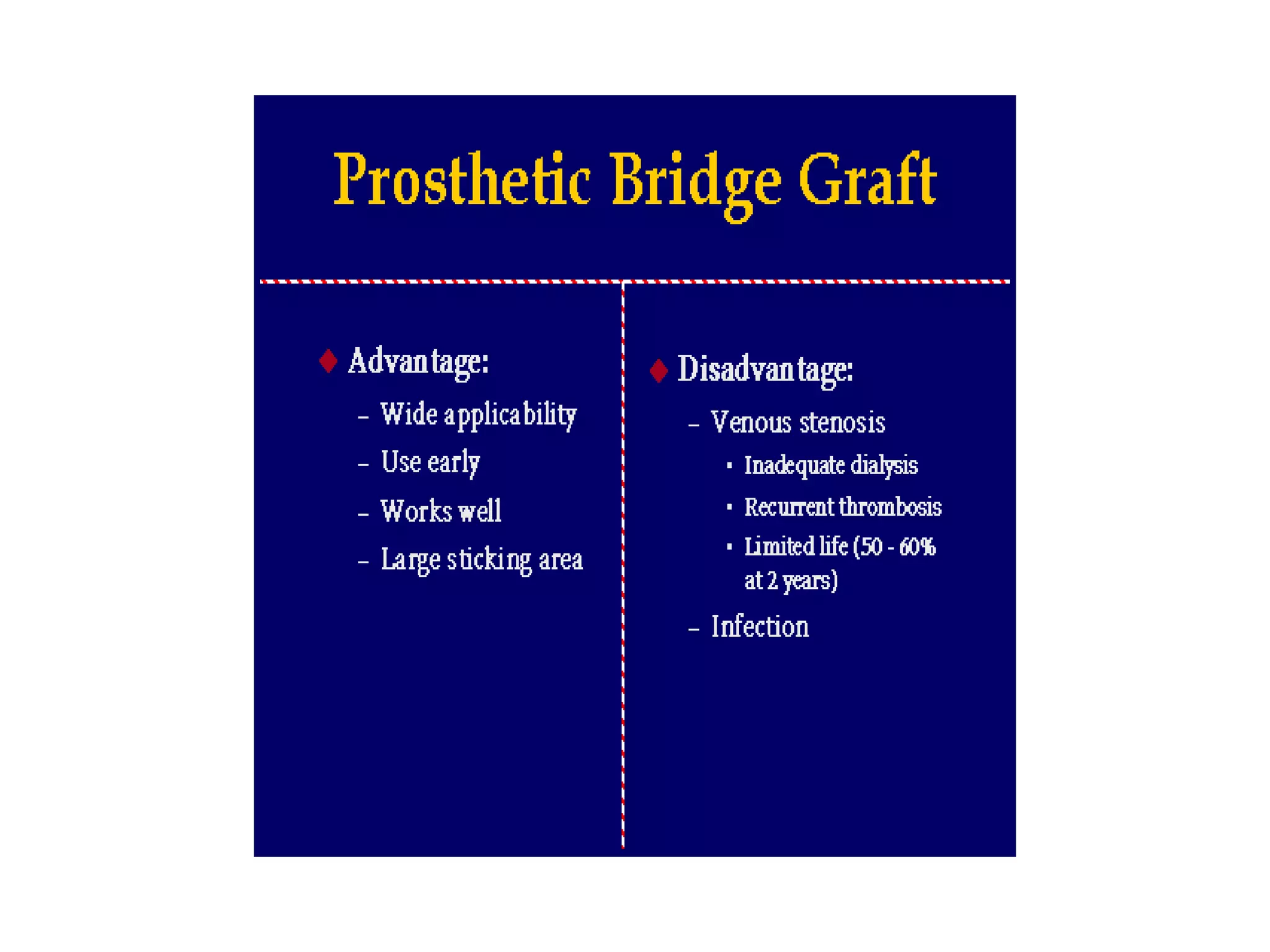
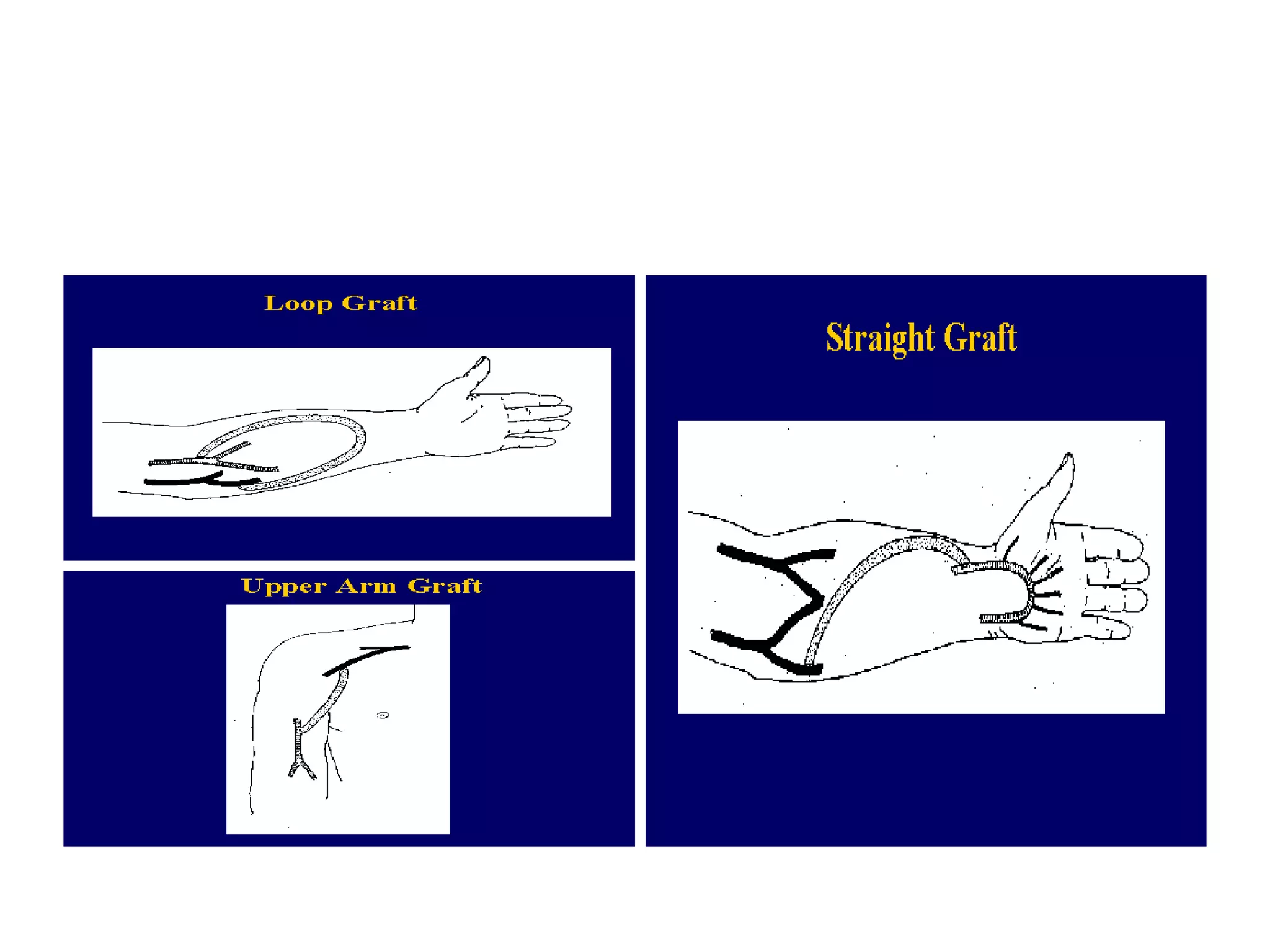
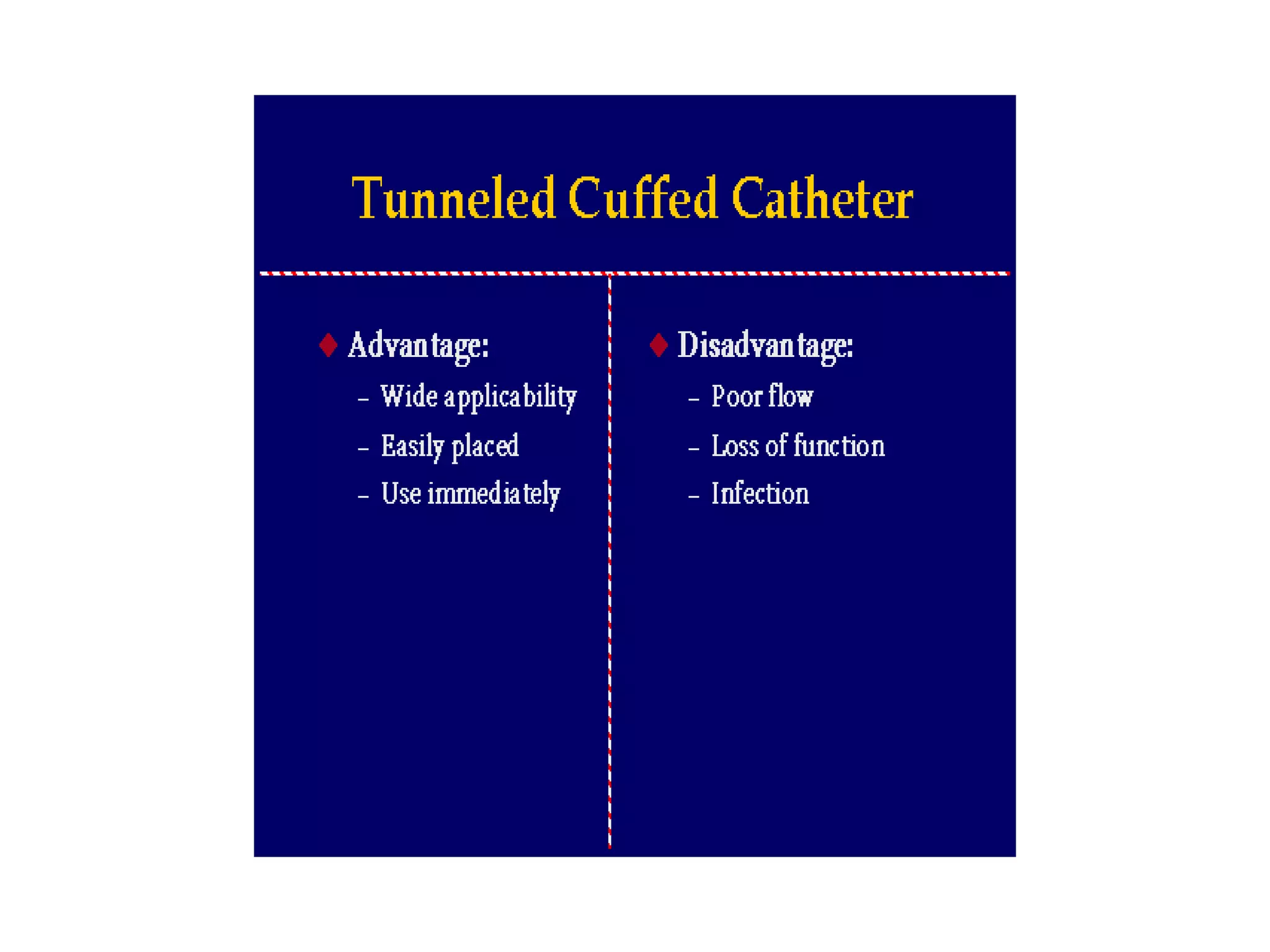
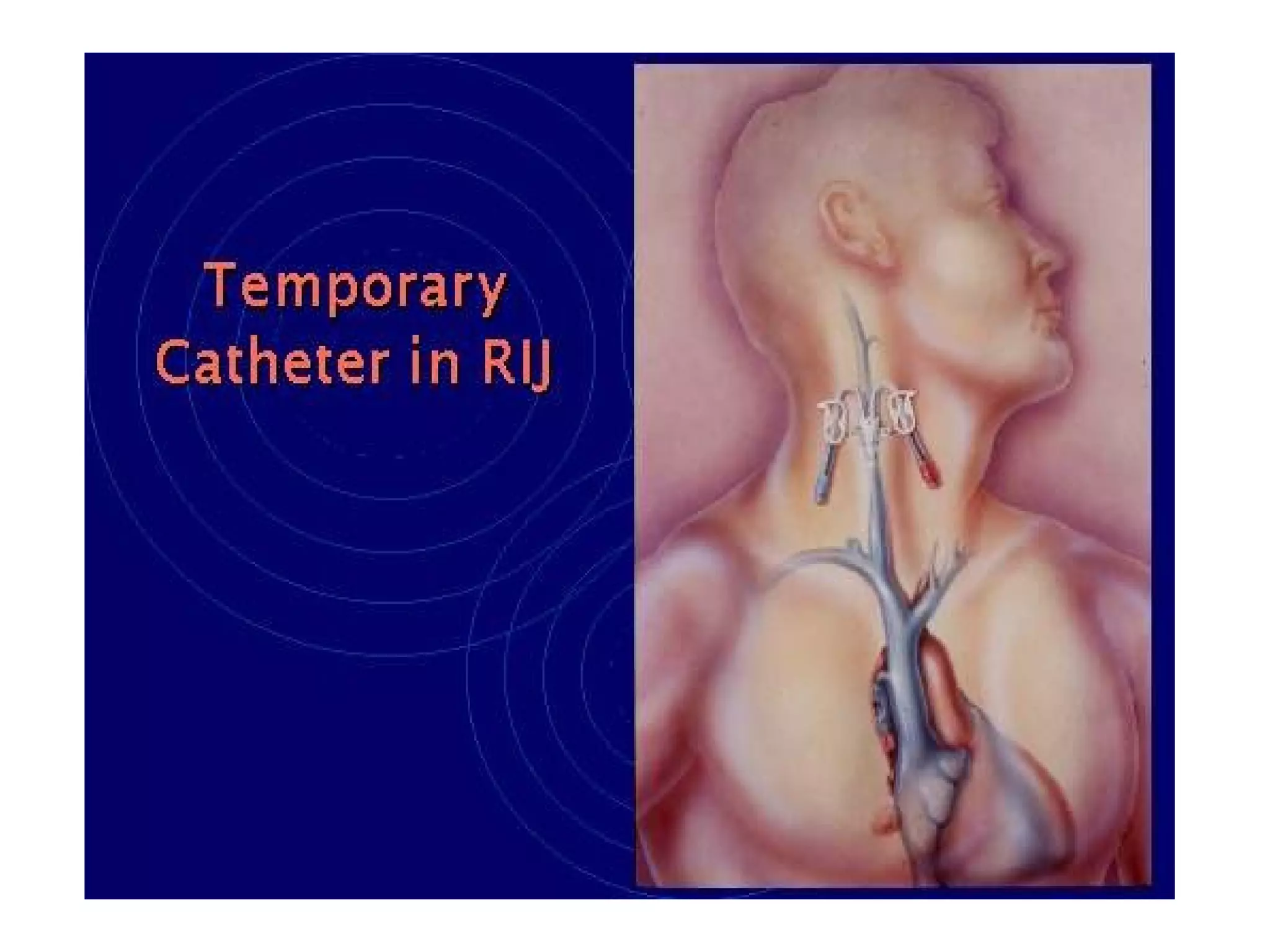
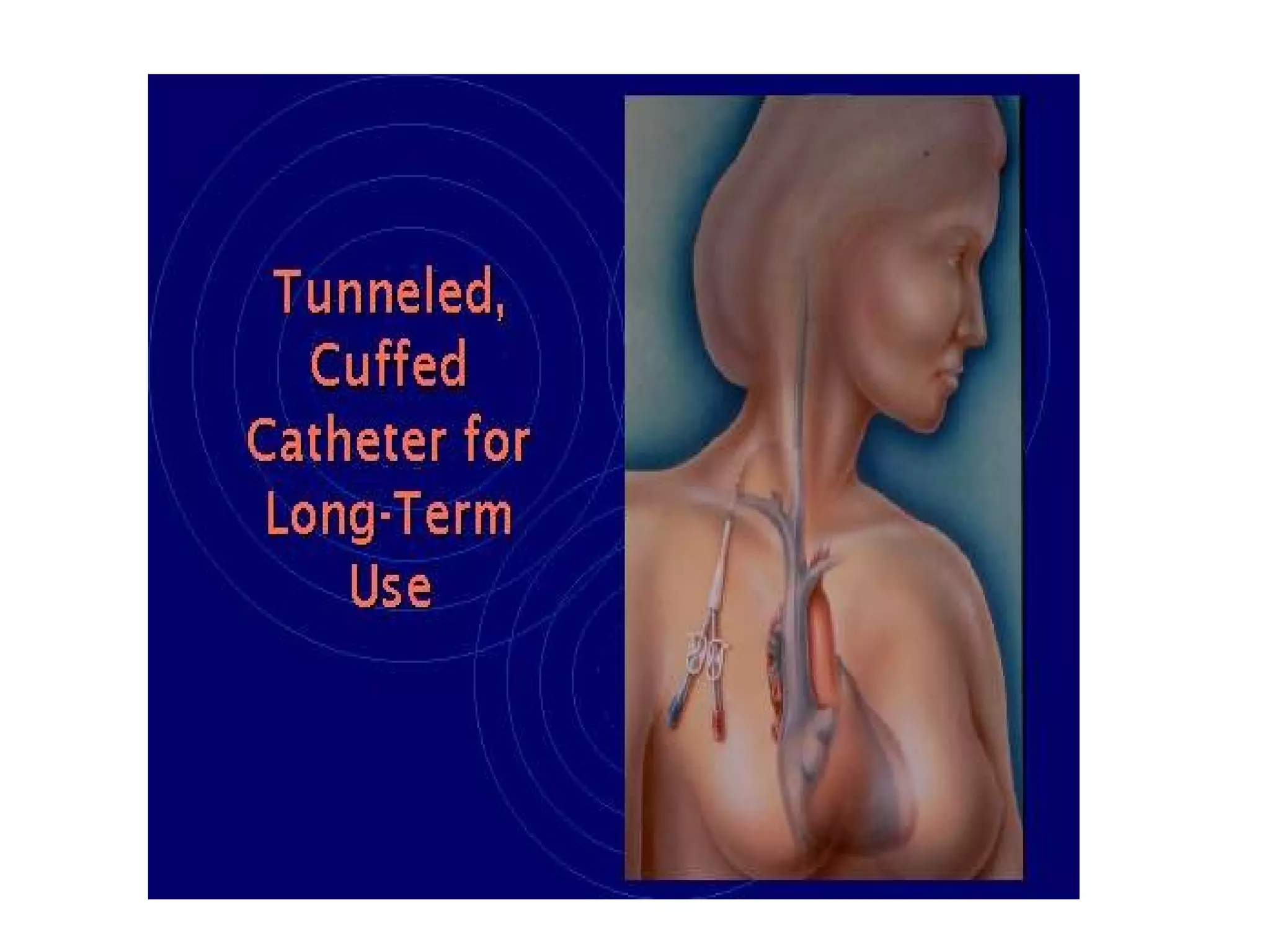
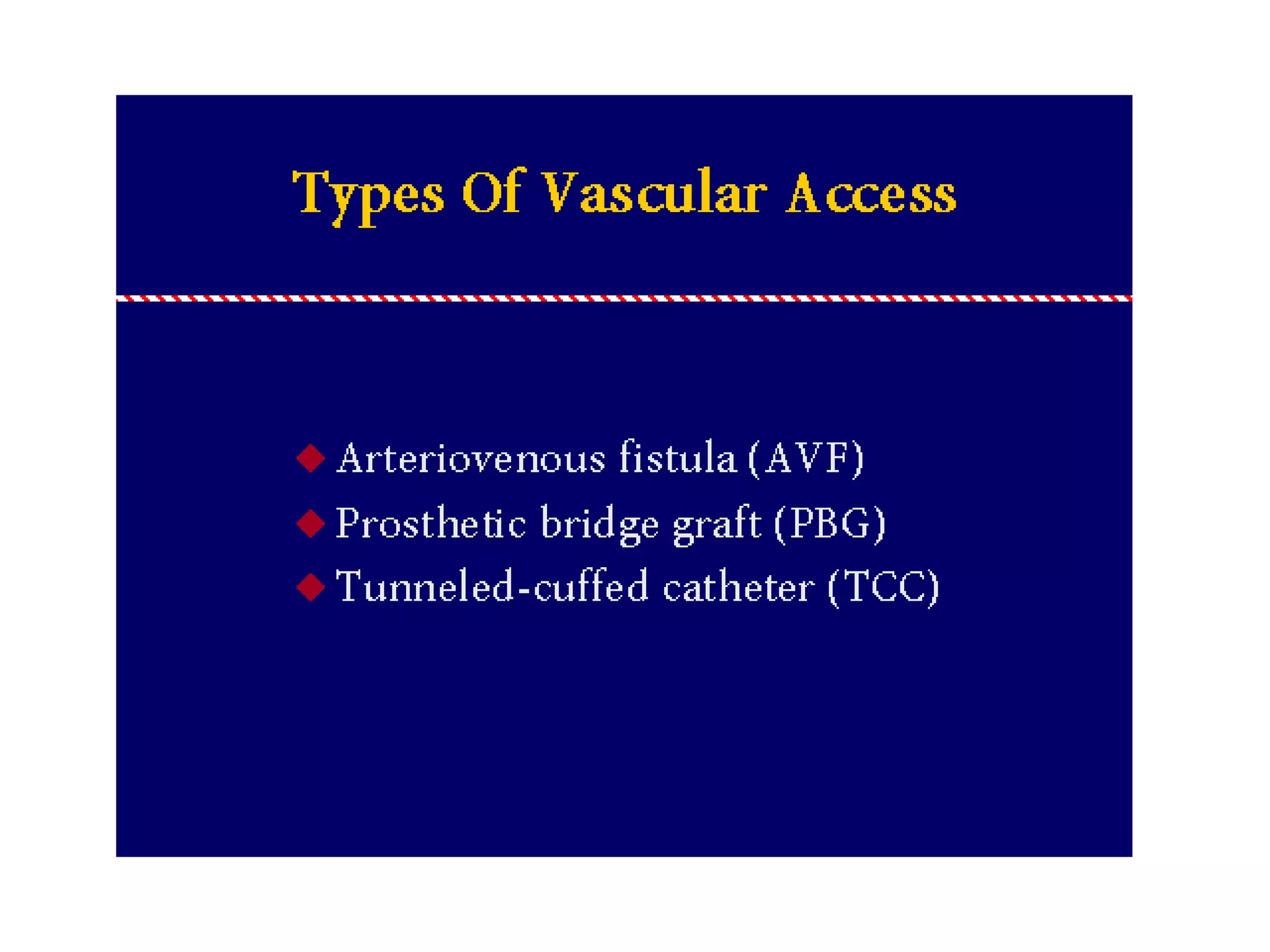
Vascular Access
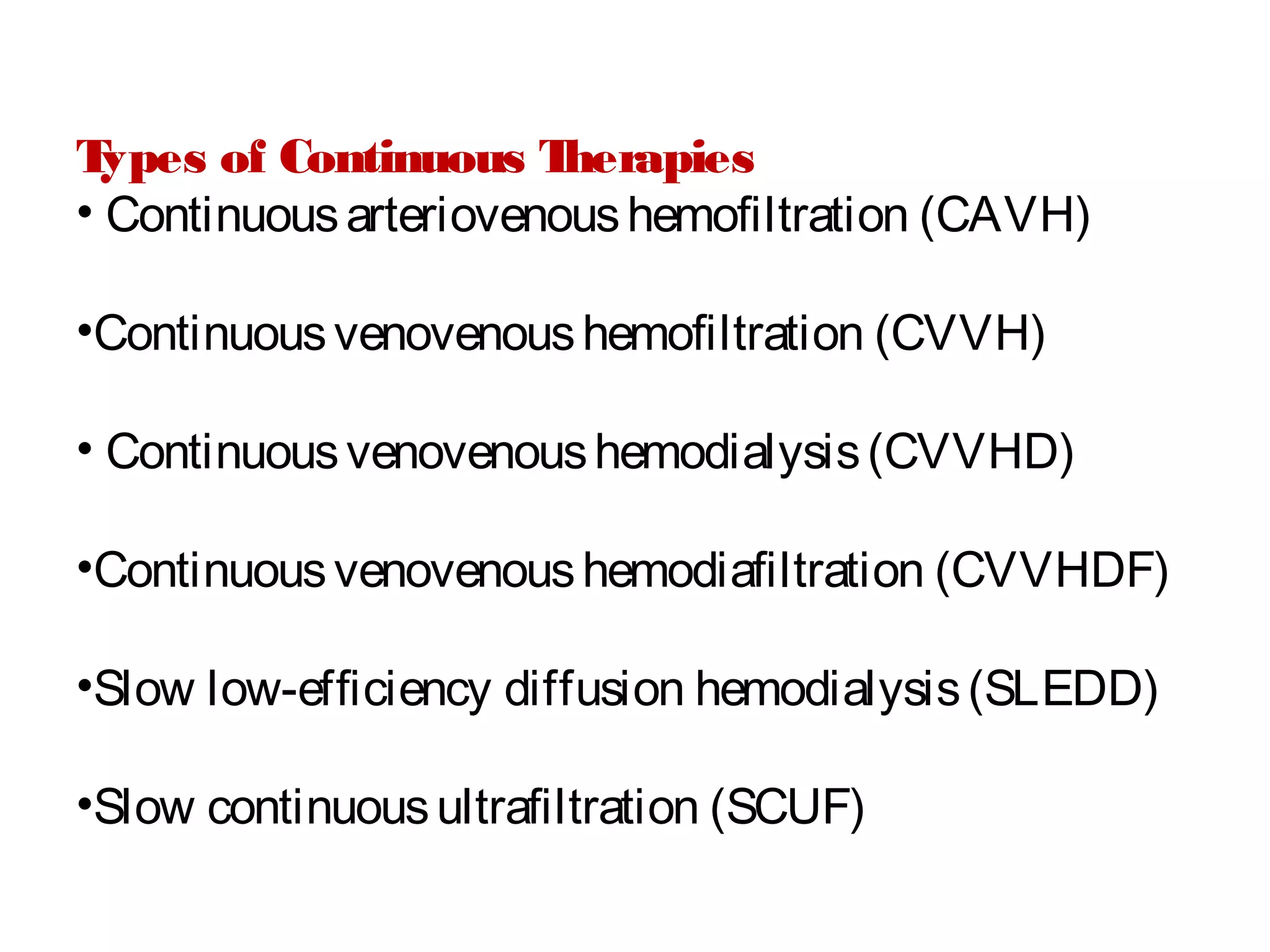
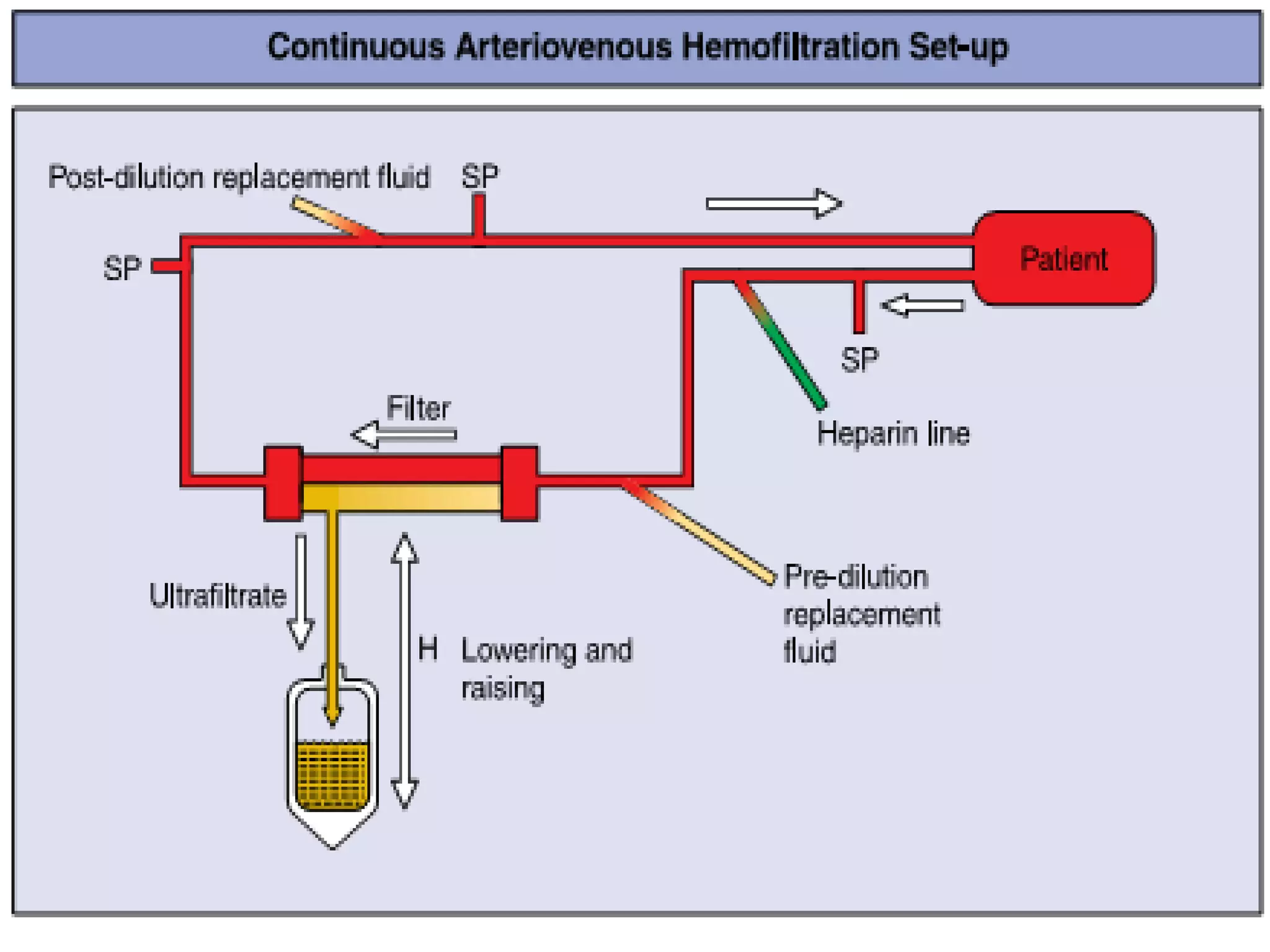
Types of Continuous Therapies
• Continuousarteriovenoushemofiltration (CAVH)
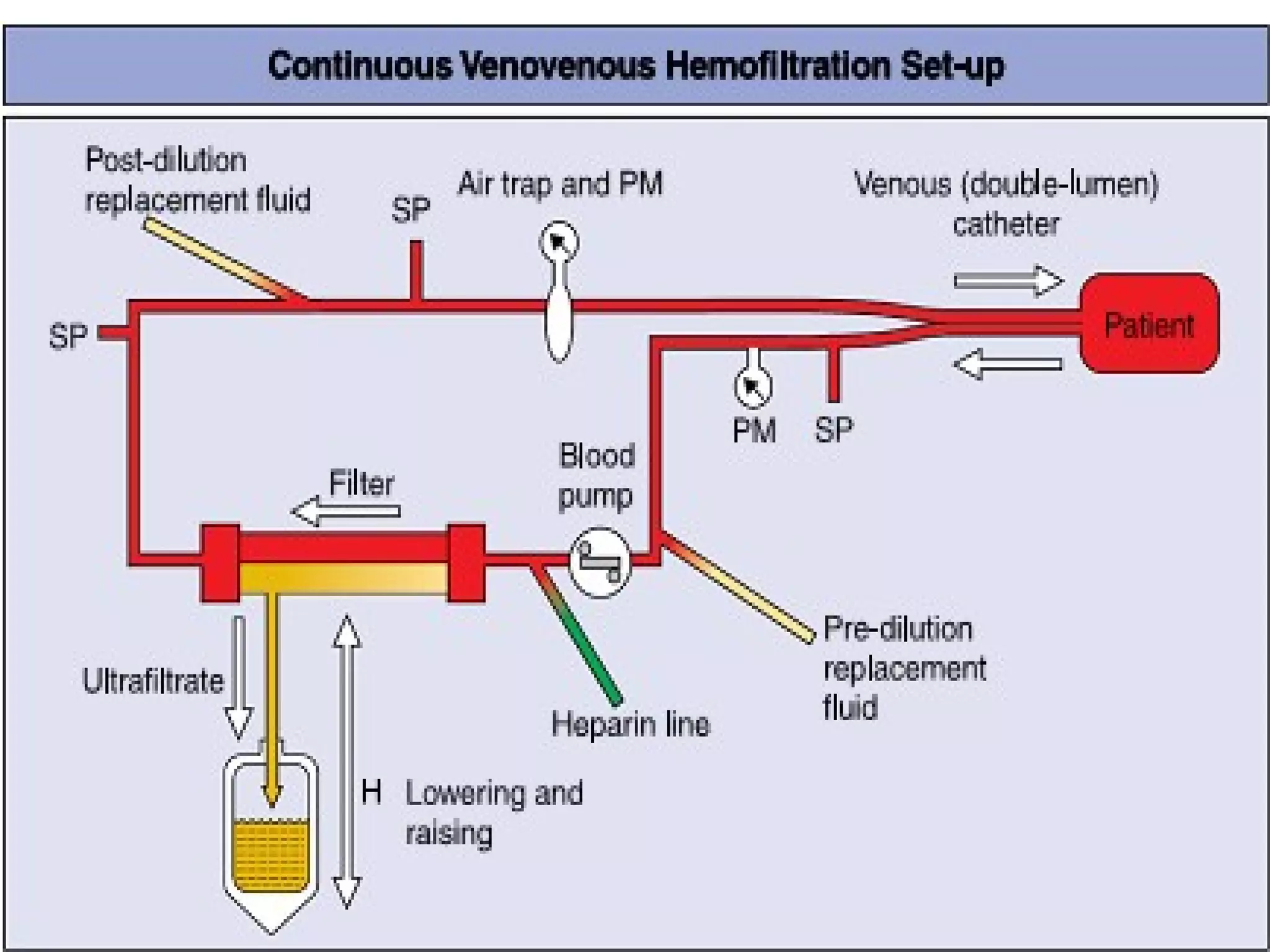
•Continuousvenovenoushemofiltration (CVVH)
• Continuousvenovenoushemodialysis(CVVHD)
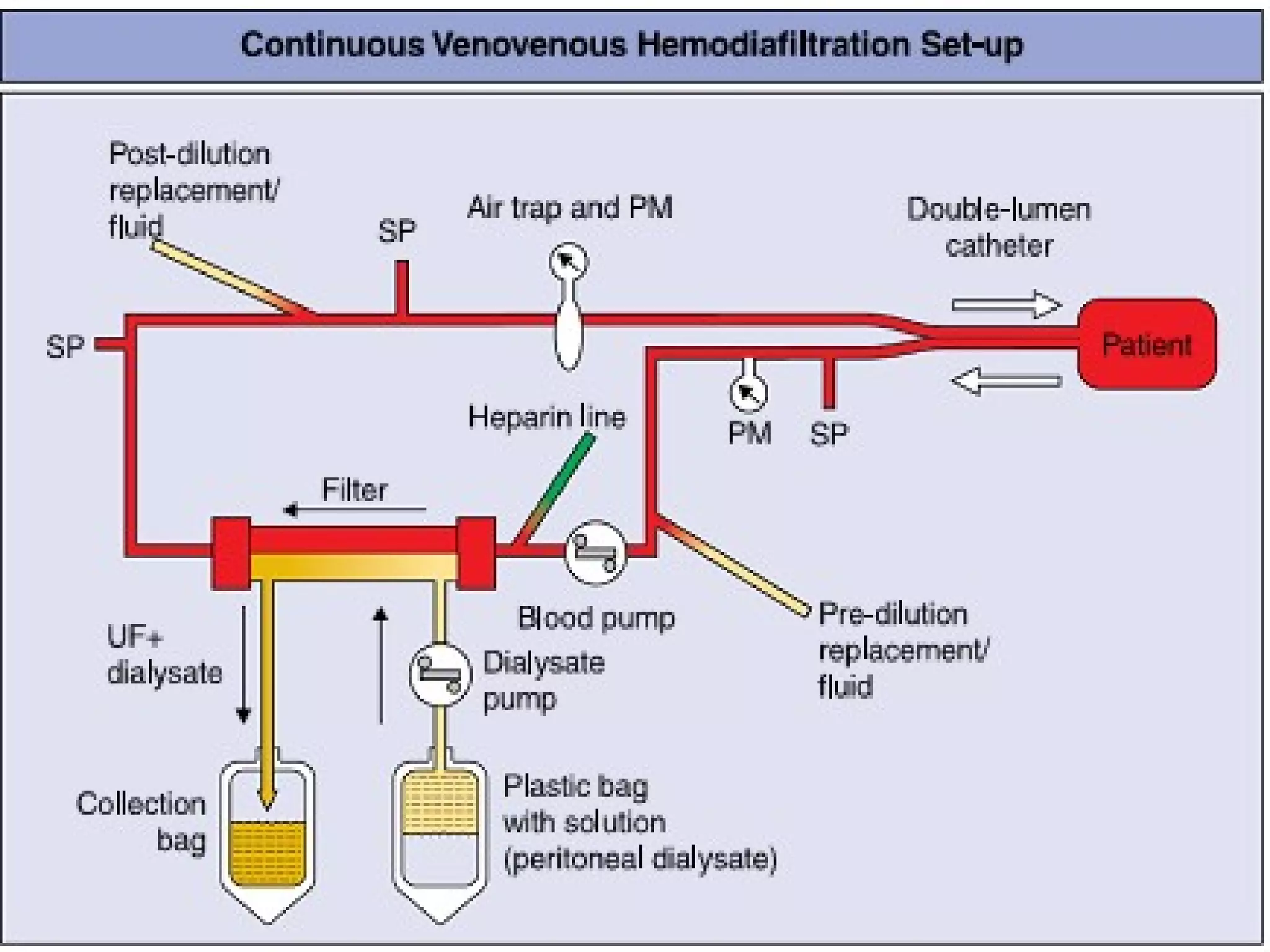
•Continuousvenovenoushemodiafiltration (CVVHDF)
•Slow low-efficiency diffusion hemodialysis(SLEDD)
•Slow continuousultrafiltration (SCUF)
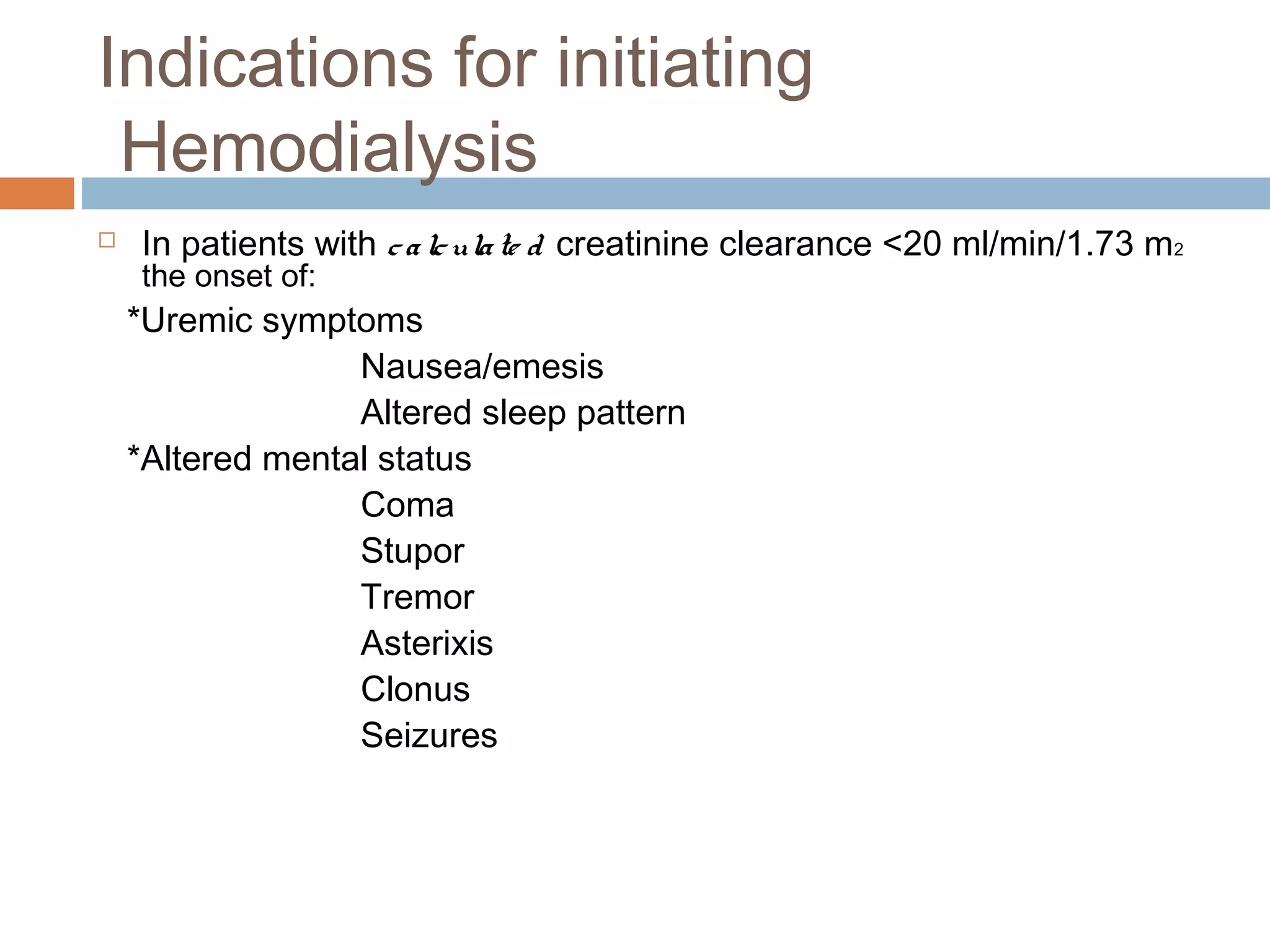
Indications for initiating
Hemodialysis
 In patients with calculate d creatinine clearance <20 ml/min/1.73 m2
the onset of:
*Uremic symptoms
Nausea/emesis
Altered sleep pattern
*Altered mental status
Coma
Stupor
Tremor
Asterixis
Clonus
Seizures
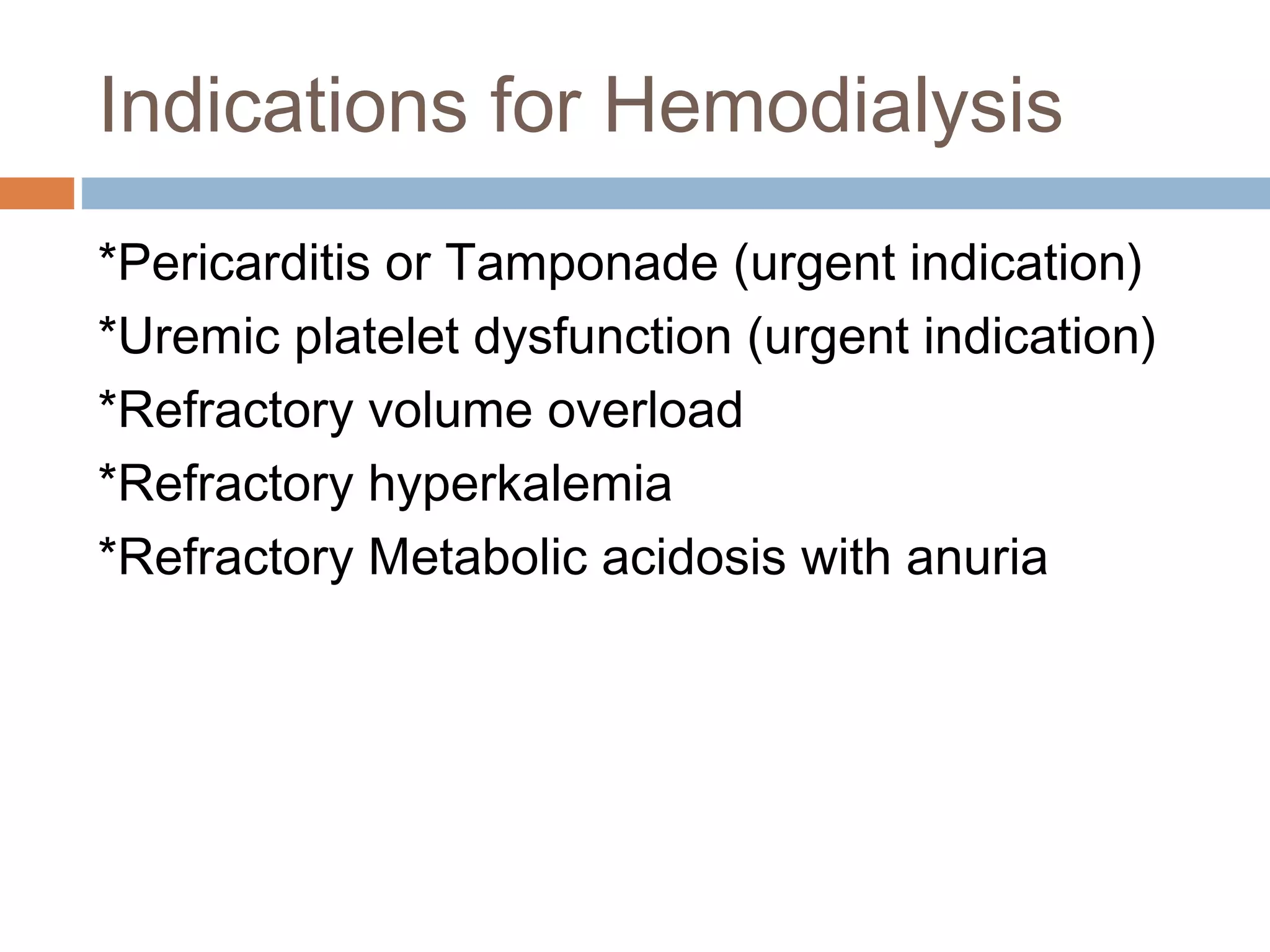
Indications for Hemodialysis
*Pericarditis or Tamponade (urgent indication)
*Uremic platelet dysfunction (urgent indication)
*Refractory volume overload
*Refractory hyperkalemia
*Refractory Metabolic acidosis with anuria
 Non renal :
1. Sepsis
2. Drug removal
3. ARDS
4. Resistant CHF
5. Tumor lysis syndrome
THANK YOU

Hemodialysis basics

Editor's Notes

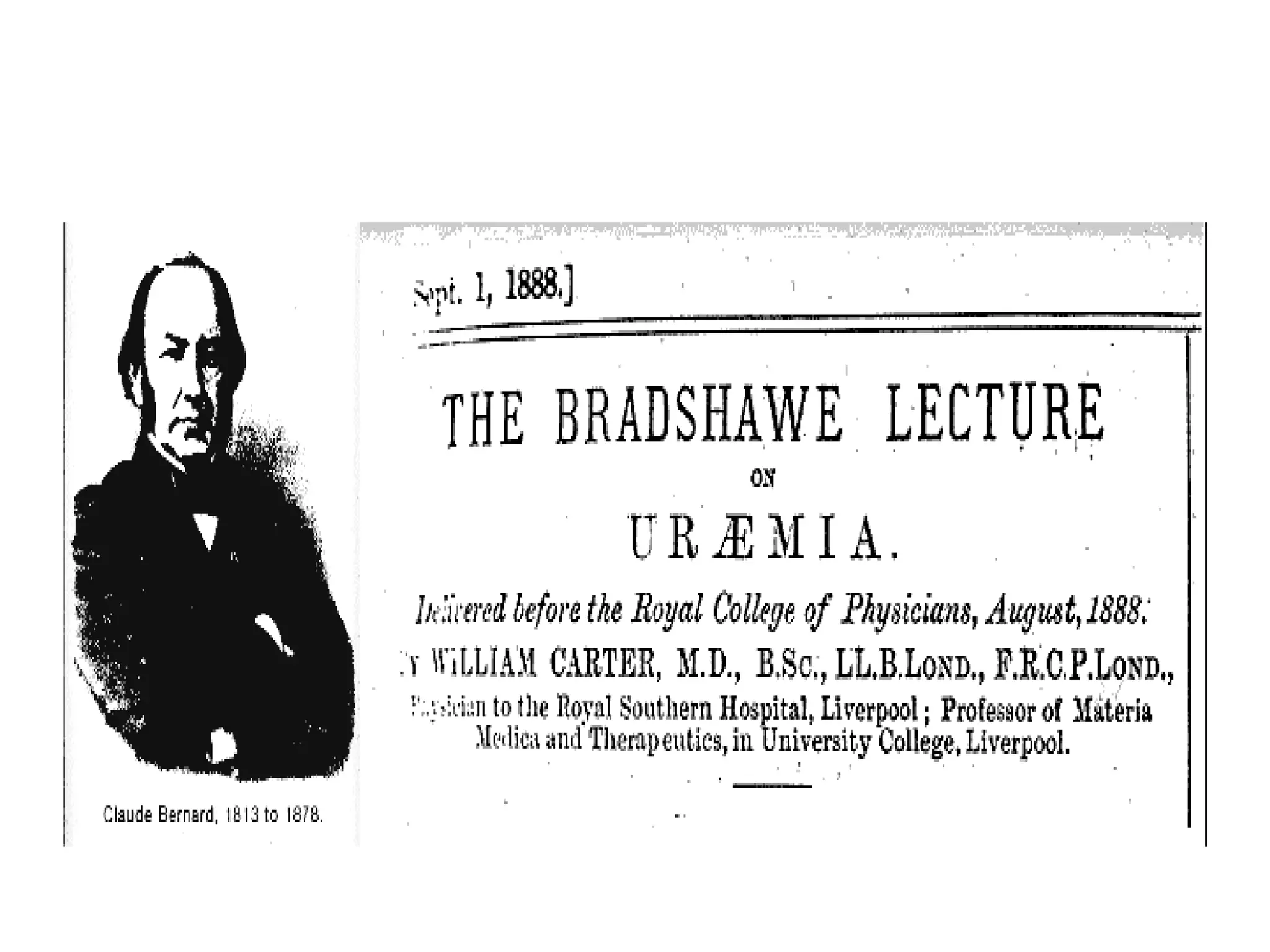
  • #9 Claude Bernard delivers the state of the art lecture explaining the role of kidneys in maintaining an internal milieu
  • #11 Abel and Roundtree used a collodion hollow fiber tube arrangement, Dialysate, and Hirudin for anticoagulation. experiments used live dogs.
  • #12 Thalhimer used Heparin anticoagulation, femoral Artery/Venous cannulation and used a Cellophane tube as a dialyzer. The tube was immersed in water to bring about a reduction in the BUN.
  • #30 PAN: Polyacrylonitrile, PS: Polysulphone, PA: Polyamide, PC: Polycarbonate, PMMC: Polymethylmethacrylate