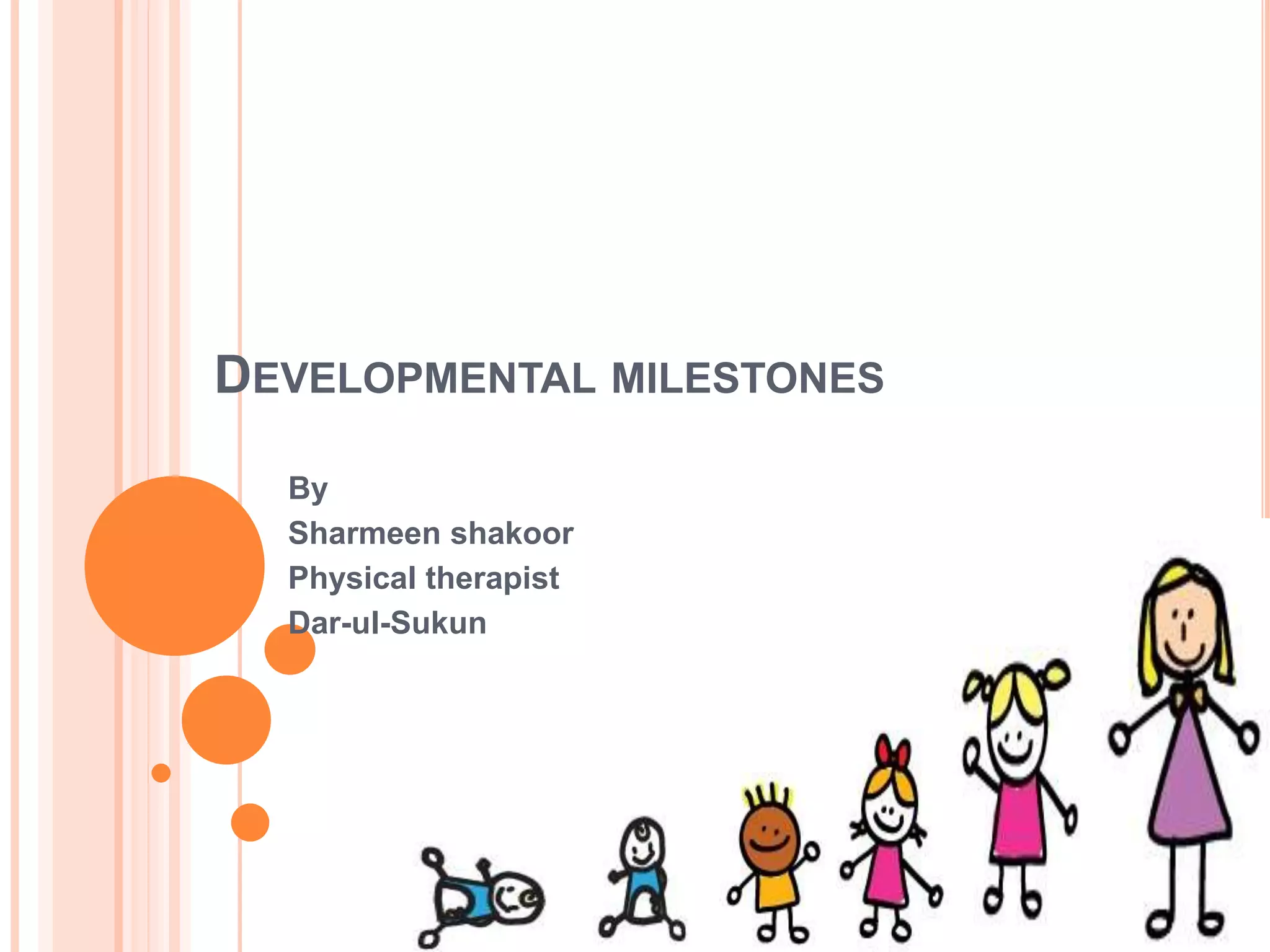
DEVELOPMENTAL MILESTONES 
By 
Sharmeen shakoor 
Physical therapist 
Dar-ul-Sukun
DEVELOPMENT 
• The term 'child development' is used to describe the skill 
and capacity of function acquired by children between 
birth and about 5 years of age 
• It is a qualitative change in the child’s functioning. 
• It can be measured through observation.
DEVELOPMENTAL MILESTONES 
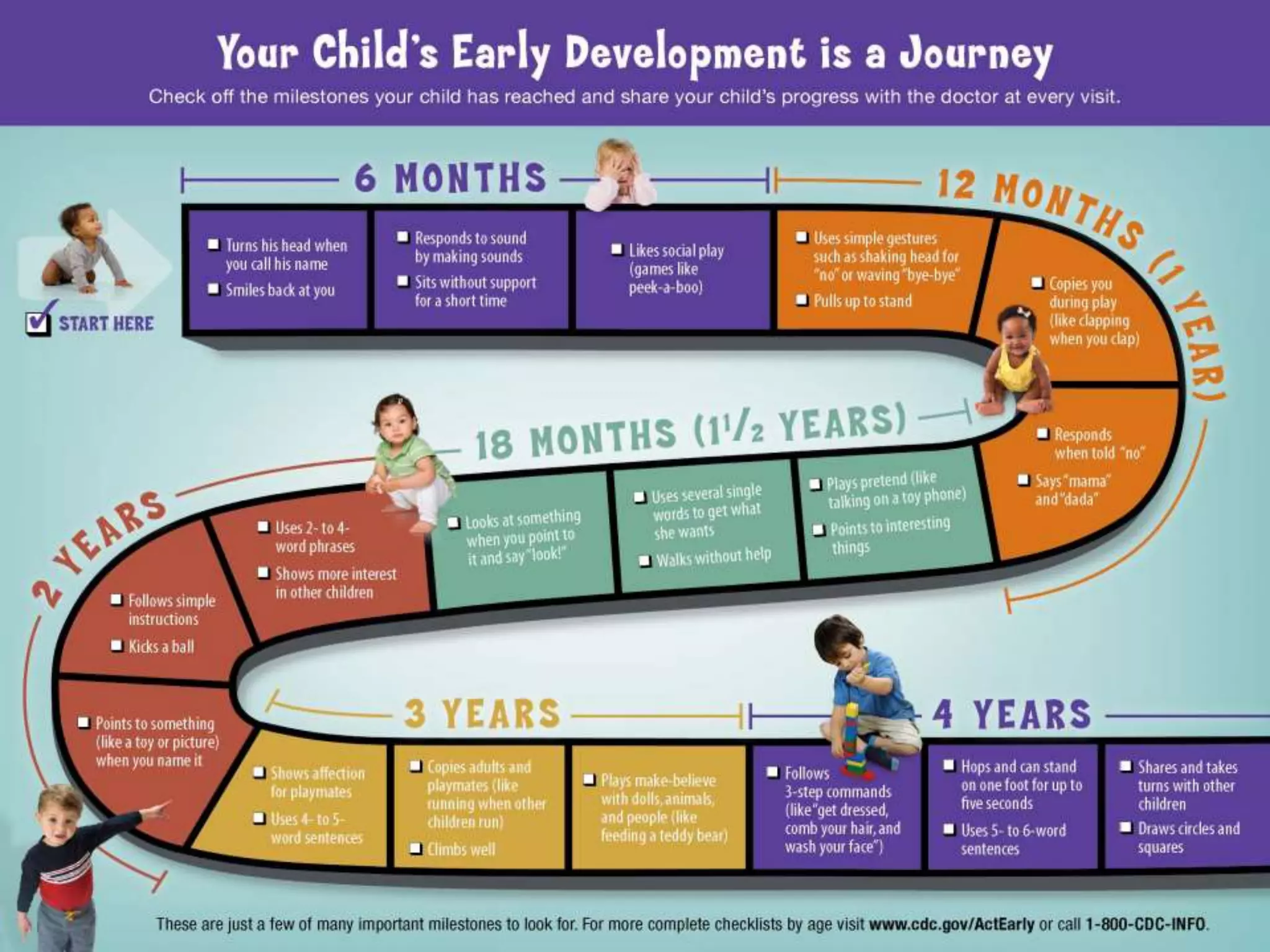
 Developmental milestones are the points in time when a 
child learns to accomplish a specific task. 
 Although children grow and develop at their own pace, 
these milestones are established to mark the average age 
moments most children learn the specific task
WHY IS IT NECESSARY 
 First sign of cerebral palsy 
 Signs may be noticed by individuals most likely to be 
aware of the child’s developmental status – parents, 
health care practitioners, or education providers.
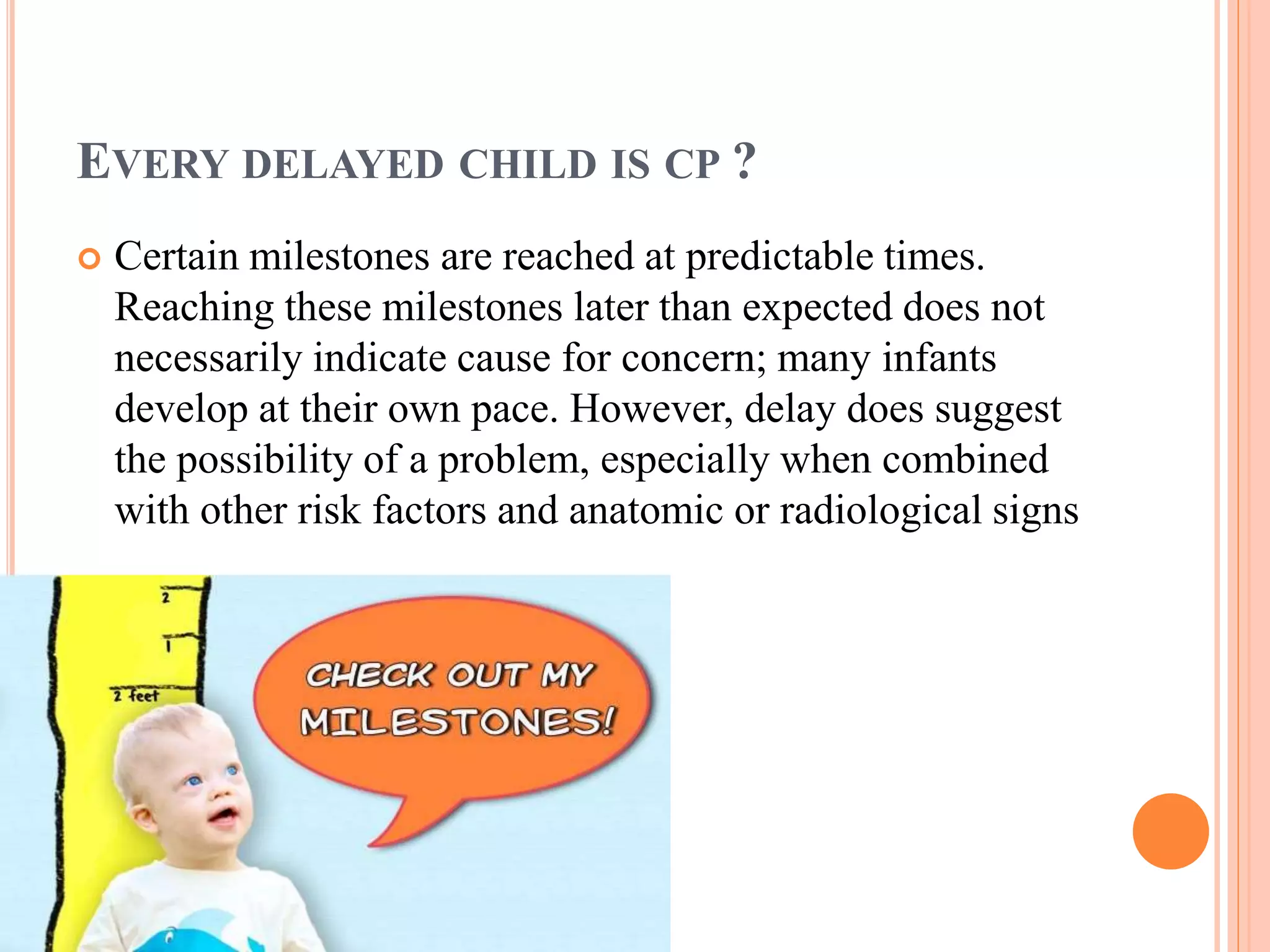
EVERY DELAYED CHILD IS CP ? 
 Certain milestones are reached at predictable times. 
Reaching these milestones later than expected does not 
necessarily indicate cause for concern; many infants 
develop at their own pace. However, delay does suggest 
the possibility of a problem, especially when combined 
with other risk factors and anatomic or radiological signs
AGE LIMIT .. 
 Limit ages are the age by which they should have been 
achieved. Limit ages are usually 2 standard deviations 
from the mean. They are more useful as a guide to 
whether a child's development is normal than the median 
ages
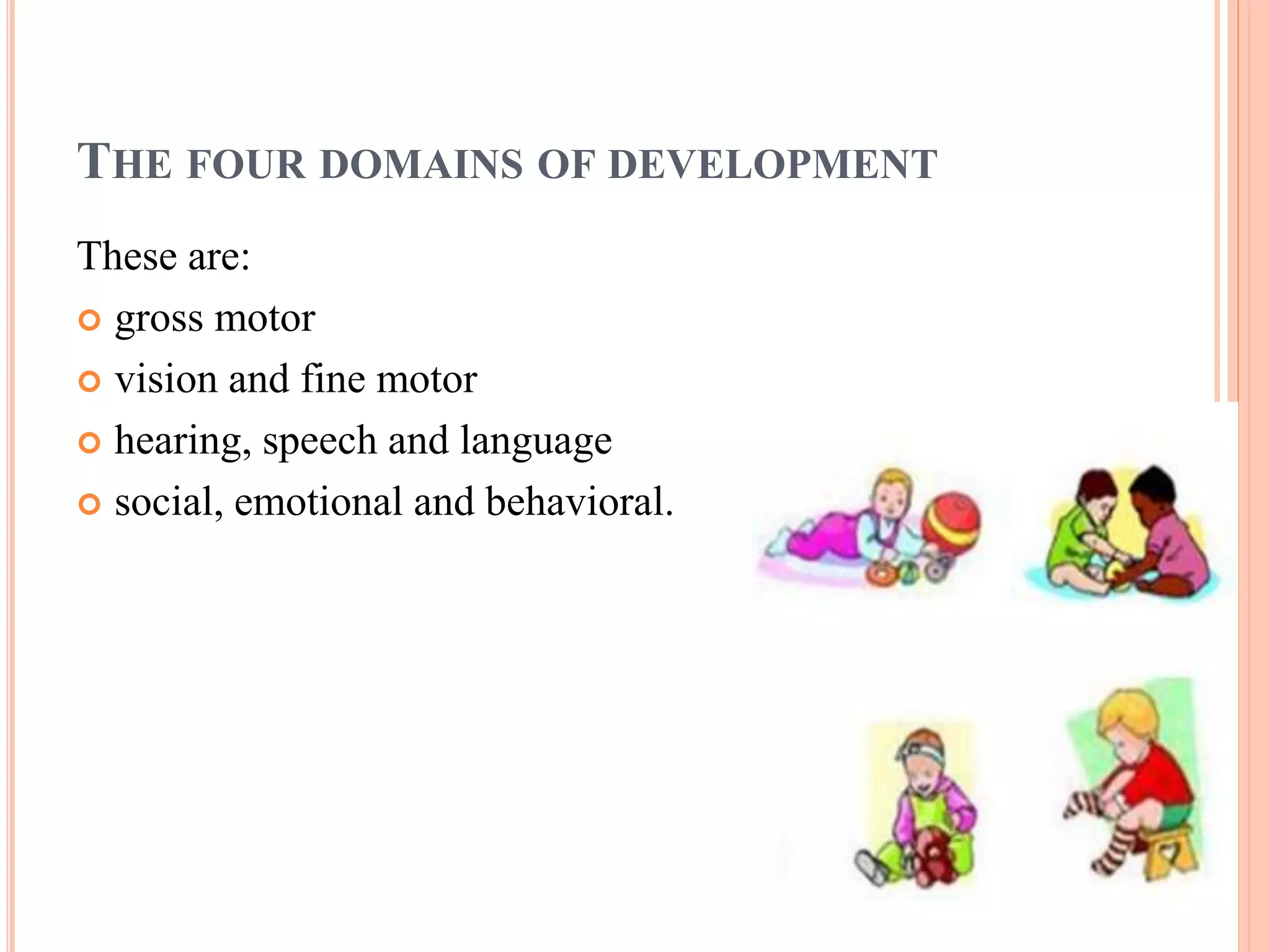
THE FOUR DOMAINS OF DEVELOPMENT 
These are: 
 gross motor 
 vision and fine motor 
 hearing, speech and language 
 social, emotional and behavioral.
GROSS MOTOR FUNCTION 
 As a child develops, signs of impaired or delayed gross motor 
function may be noticeable. The ability to make large, coordinating 
movements using multiple limbs and muscle groups is considered 
gross motor function. 
 Impaired gross motor functions – limited capability of 
accomplishing common physical skills such as walking, running, 
jumping, and maintaining balance. 
 Delayed gross motor functions – physical skills developed later than 
expected; often used in conjunction with developmental milestones 
for predictable stages of development. 
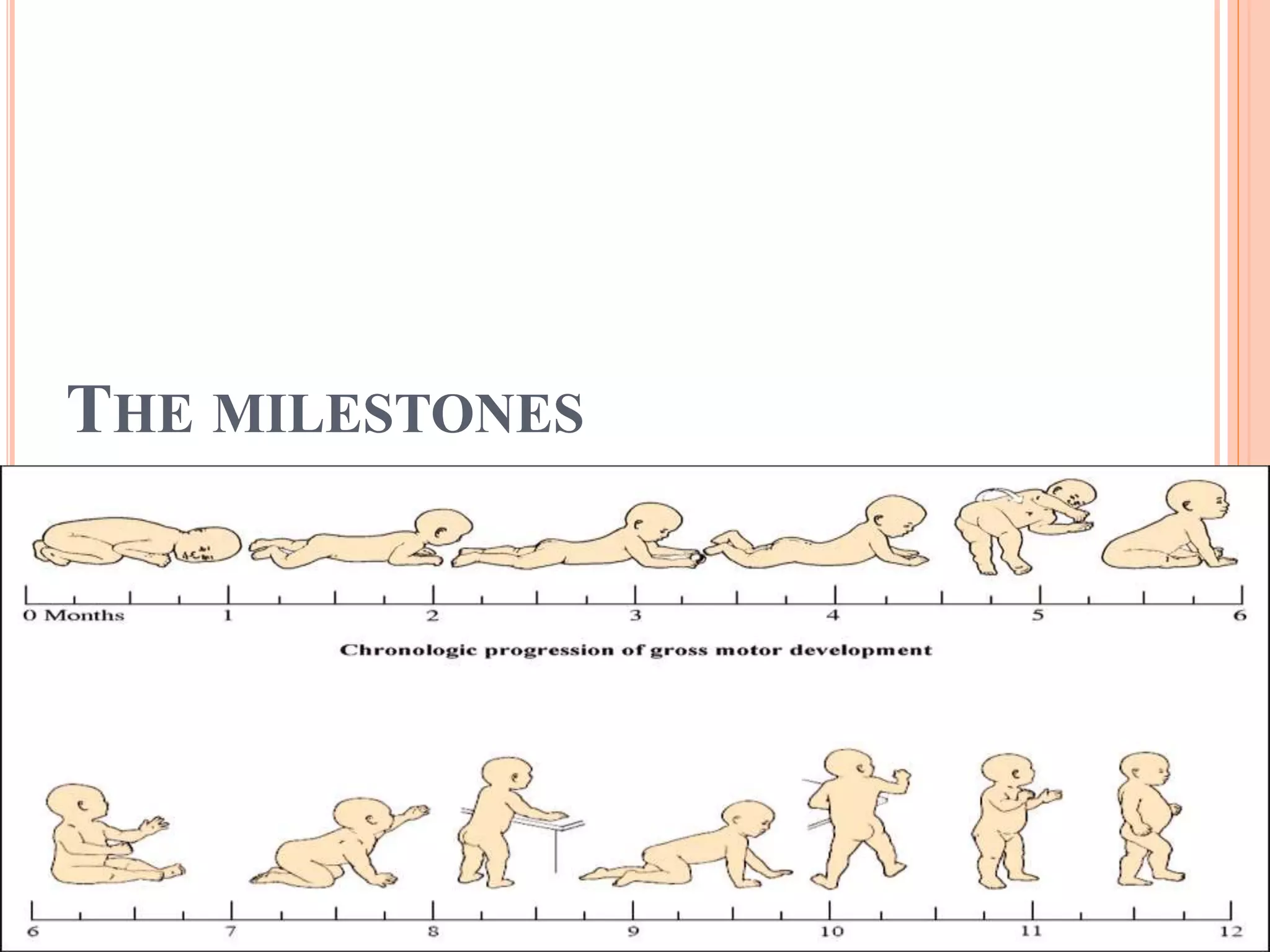
Significant milestones of gross motor function include: 
 Rolling 
 Sitting up 
 Crawling 
 Standing 
 Walking 
 Balancing
Fine Motor Function 
 Executing precise movements defines the category of fine 
motor function. Fine motor control encompasses many 
activities that are learned, and involve a combination of 
both mental (planning and reasoning) and physical 
(coordination and sensation) skills to master. vision and 
fine motor development: more evident acquisition of skills 
from 1 year onwards 
Examples: 
 Grasping small objects 
 Holding objects between thumb and forefinger 
 Setting objects down gently 
 Using crayons 
 Turning pages in a book
Hearing, speech and language: 
a big expansion of skills from 18 months 
Social, emotional and behavioral development: 
expansion in skills is most obvious from 2.5 
years. 
Social: 
The newborn infant expresses his emotion just 
through cry for hunger, pain or discomfort 
sensation.
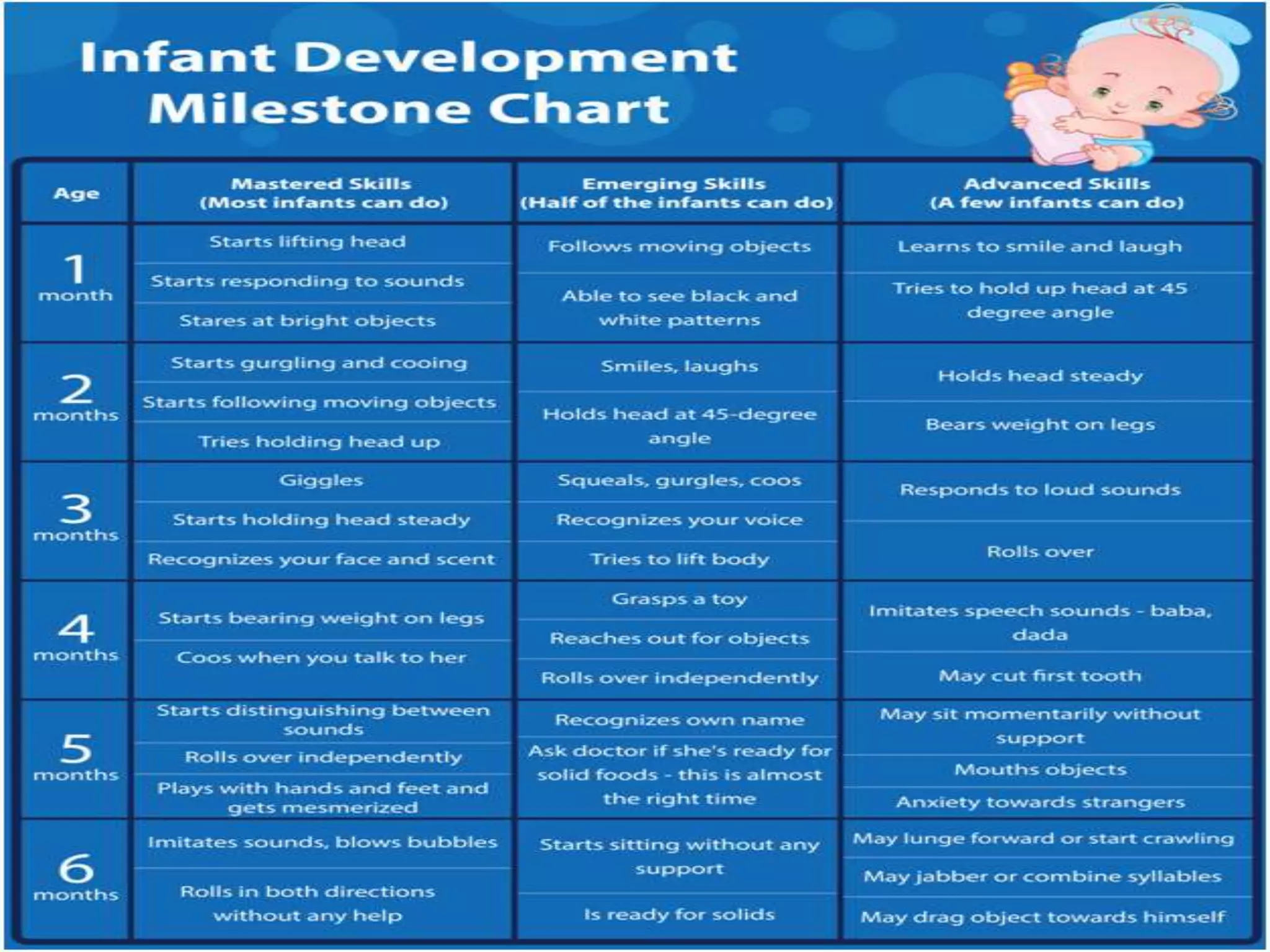
THE MILESTONES
DEVELOPMENT DELAYS 
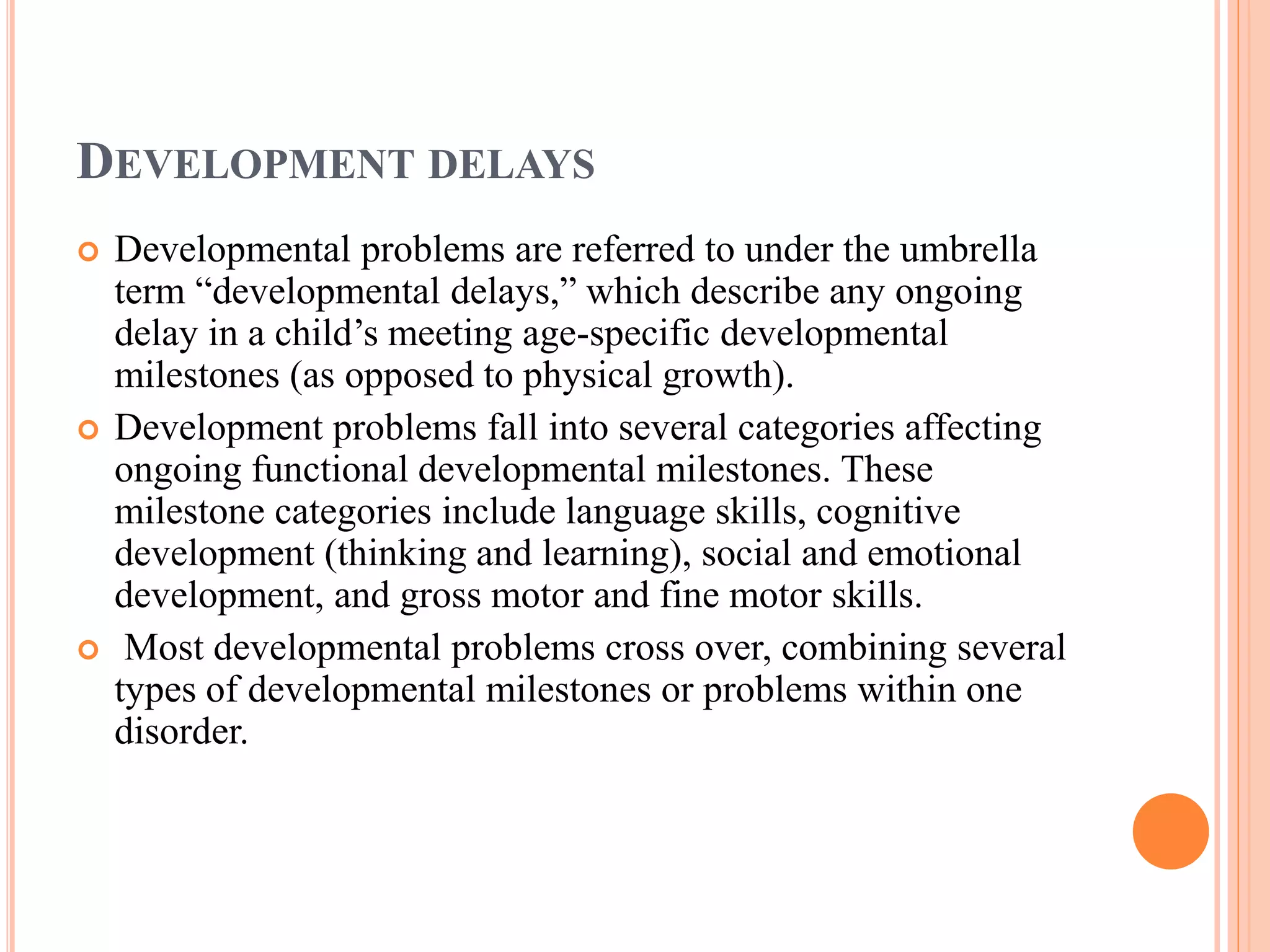
 Developmental problems are referred to under the umbrella 
term “developmental delays,” which describe any ongoing 
delay in a child’s meeting age-specific developmental 
milestones (as opposed to physical growth). 
 Development problems fall into several categories affecting 
ongoing functional developmental milestones. These 
milestone categories include language skills, cognitive 
development (thinking and learning), social and emotional 
development, and gross motor and fine motor skills. 
 Most developmental problems cross over, combining several 
types of developmental milestones or problems within one 
disorder.
CAUSES OF DEVELOPMENT DELAY 
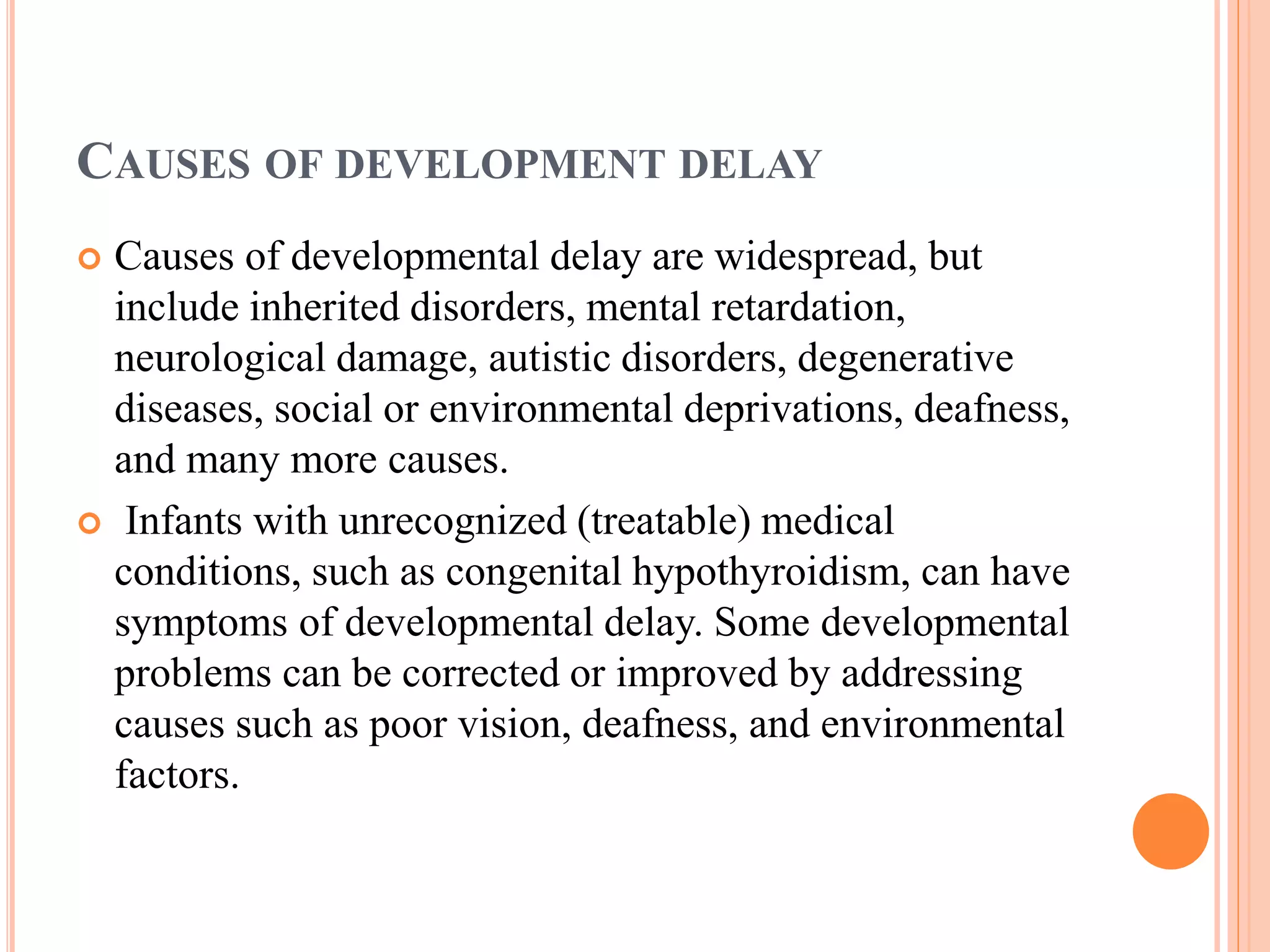
 Causes of developmental delay are widespread, but 
include inherited disorders, mental retardation, 
neurological damage, autistic disorders, degenerative 
diseases, social or environmental deprivations, deafness, 
and many more causes. 
 Infants with unrecognized (treatable) medical 
conditions, such as congenital hypothyroidism, can have 
symptoms of developmental delay. Some developmental 
problems can be corrected or improved by addressing 
causes such as poor vision, deafness, and environmental 
factors.
TREATMENT WILL BE DISCUSSED WITH 
REFLEXES
Developmental milestones

Developmental milestones

  • 1.
    DEVELOPMENTAL MILESTONES By Sharmeen shakoor Physical therapist Dar-ul-Sukun
  • 2.
    DEVELOPMENT • Theterm 'child development' is used to describe the skill and capacity of function acquired by children between birth and about 5 years of age • It is a qualitative change in the child’s functioning. • It can be measured through observation.
  • 3.
    DEVELOPMENTAL MILESTONES Developmental milestones are the points in time when a child learns to accomplish a specific task.  Although children grow and develop at their own pace, these milestones are established to mark the average age moments most children learn the specific task
  • 4.
    WHY IS ITNECESSARY  First sign of cerebral palsy  Signs may be noticed by individuals most likely to be aware of the child’s developmental status – parents, health care practitioners, or education providers.
  • 5.
    EVERY DELAYED CHILDIS CP ?  Certain milestones are reached at predictable times. Reaching these milestones later than expected does not necessarily indicate cause for concern; many infants develop at their own pace. However, delay does suggest the possibility of a problem, especially when combined with other risk factors and anatomic or radiological signs
  • 6.
    AGE LIMIT ..  Limit ages are the age by which they should have been achieved. Limit ages are usually 2 standard deviations from the mean. They are more useful as a guide to whether a child's development is normal than the median ages
  • 7.
    THE FOUR DOMAINSOF DEVELOPMENT These are:  gross motor  vision and fine motor  hearing, speech and language  social, emotional and behavioral.
  • 8.
    GROSS MOTOR FUNCTION  As a child develops, signs of impaired or delayed gross motor function may be noticeable. The ability to make large, coordinating movements using multiple limbs and muscle groups is considered gross motor function.  Impaired gross motor functions – limited capability of accomplishing common physical skills such as walking, running, jumping, and maintaining balance.  Delayed gross motor functions – physical skills developed later than expected; often used in conjunction with developmental milestones for predictable stages of development. Significant milestones of gross motor function include:  Rolling  Sitting up  Crawling  Standing  Walking  Balancing
  • 9.
    Fine Motor Function  Executing precise movements defines the category of fine motor function. Fine motor control encompasses many activities that are learned, and involve a combination of both mental (planning and reasoning) and physical (coordination and sensation) skills to master. vision and fine motor development: more evident acquisition of skills from 1 year onwards Examples:  Grasping small objects  Holding objects between thumb and forefinger  Setting objects down gently  Using crayons  Turning pages in a book
  • 10.
    Hearing, speech andlanguage: a big expansion of skills from 18 months Social, emotional and behavioral development: expansion in skills is most obvious from 2.5 years. Social: The newborn infant expresses his emotion just through cry for hunger, pain or discomfort sensation.
  • 11.
  • 14.
    DEVELOPMENT DELAYS Developmental problems are referred to under the umbrella term “developmental delays,” which describe any ongoing delay in a child’s meeting age-specific developmental milestones (as opposed to physical growth).  Development problems fall into several categories affecting ongoing functional developmental milestones. These milestone categories include language skills, cognitive development (thinking and learning), social and emotional development, and gross motor and fine motor skills.  Most developmental problems cross over, combining several types of developmental milestones or problems within one disorder.
  • 15.
    CAUSES OF DEVELOPMENTDELAY  Causes of developmental delay are widespread, but include inherited disorders, mental retardation, neurological damage, autistic disorders, degenerative diseases, social or environmental deprivations, deafness, and many more causes.  Infants with unrecognized (treatable) medical conditions, such as congenital hypothyroidism, can have symptoms of developmental delay. Some developmental problems can be corrected or improved by addressing causes such as poor vision, deafness, and environmental factors.
  • 17.
    TREATMENT WILL BEDISCUSSED WITH REFLEXES