
Contents
 Definition
 Problems in prenatal development
 Birth defects
 Causes of birth defect
 Preventions and diagnosis of birth defects
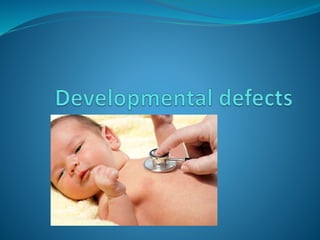
Developmental defects
 Occur when there is a disturbance in the development
of the body that results in abnormality.
 These abnormalities leads to mental or physical
disabilities.
 The developmental abnormality can be very severe and
cause spontaneous abortion or miscarriage or it can be
minor and cause few problems.
Problems in prenatal development
 Some times a pregnancy begins, but a baby doesn’t
develop normally.
 If the baby dies before the 20th week it is called a
Miscarriage.
 If the baby dies after that time ,it is called a stillbirth.
 Some times babies survive the pregnancy but are born
with serious problems called birth defects.
Birth defects
Some birth defects include:
 Club foot
 Cleft lift and palate
 Down’s syndrome
 Hydrocephalus
 Spine bifida
 And many more defects
Club foot
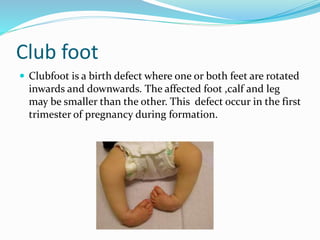
 Clubfoot is a birth defect where one or both feet are rotated
inwards and downwards. The affected foot ,calf and leg
may be smaller than the other. This defect occur in the first
trimester of pregnancy during formation.
Cleft lip and palate
 Cleft lip and palate are opening or splits in the upper lip ,
the roof of the mouth (palate) or both. Cleft lip and palate
results when facial structures that are developing in an
unborn baby don’t close completely.
 During the first trimester of pregnancy it is occur.
 A combination of genetic and environmental factors
sometimes interfere with this development.
Down’s syndrome
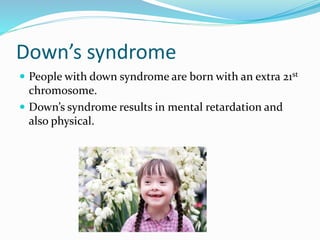
 People with down syndrome are born with an extra 21st
chromosome.
 Down’s syndrome results in mental retardation and
also physical.
Hydrocephalus
 Hydrocephalus is a condition that occurs when fluid builds
up in the skull and causes the brain to swell. The name
means “water on the brain”.
 This can leads to developmental, physical and intellectual
impairments.
 In infant, the seams of the skull have not yet fused, so the
skull gets bigger as the fluid accumulation .
 A miniature pump called a shunt is placed in the head to
remove off excess fluid.
Spina bifida
 Spina bifida is a neural tube defect.
 It occurs when the bones of the spine (vertebrae) don’t
form properly around part of the baby’s spinal cord.
 Spina bifida is determine during the first trimester of
pregnancy.
 The size of the opening varies from almost pinpoint to
several.
Causes of birth defedcts
 Some causes are environmental because it is during
the first few weeks that a baby develops all bodily
systems needed for survival
 The mother’s diet
 Any diseases or infections the mother have
 Harmful substances
 Some medicines
 Exposure to hazards such as chemicals, X-ray etc
 Some causes are hereditery
 Sometimes a child inherits a defective gene that is
dominant such as huntingtons
 Some conditions affect only one sex and usually it’s the
males
 Hemophilia
 Color blindness and more
 Errors in chromosomes
 Such as when a baby has too many or too few
chromosomes or has broken or rearranged
chromosomes
 This usually leads to down syndrome
Prevention and diagnosis of
birth defects
 All types of birth defects cannot be anticipated or
controlled, but there are several things that couples can do
to minimize the chances
 Genetic counseling for those who have a history of birth
defects in their family.
 Prenatal tests can also determine whether or not a baby will
be born with a birth defect.
 Ultrasound can help to determine problems with the baby’s
skeletal , circulatory or nervous systems.
Summary
 Developmental defects occur when there is abnormal
development.
 causes of defects
 Prevention of these defects
 These defects causes many problems in the baby after
birth
Any Question

Developmental defects

  • 3.
    Contents  Definition  Problemsin prenatal development  Birth defects  Causes of birth defect  Preventions and diagnosis of birth defects
  • 4.
    Developmental defects  Occurwhen there is a disturbance in the development of the body that results in abnormality.  These abnormalities leads to mental or physical disabilities.  The developmental abnormality can be very severe and cause spontaneous abortion or miscarriage or it can be minor and cause few problems.
  • 5.
    Problems in prenataldevelopment  Some times a pregnancy begins, but a baby doesn’t develop normally.  If the baby dies before the 20th week it is called a Miscarriage.  If the baby dies after that time ,it is called a stillbirth.  Some times babies survive the pregnancy but are born with serious problems called birth defects.
  • 6.
    Birth defects Some birthdefects include:  Club foot  Cleft lift and palate  Down’s syndrome  Hydrocephalus  Spine bifida  And many more defects
  • 7.
    Club foot  Clubfootis a birth defect where one or both feet are rotated inwards and downwards. The affected foot ,calf and leg may be smaller than the other. This defect occur in the first trimester of pregnancy during formation.
  • 9.
    Cleft lip andpalate  Cleft lip and palate are opening or splits in the upper lip , the roof of the mouth (palate) or both. Cleft lip and palate results when facial structures that are developing in an unborn baby don’t close completely.  During the first trimester of pregnancy it is occur.  A combination of genetic and environmental factors sometimes interfere with this development.
  • 11.
    Down’s syndrome  Peoplewith down syndrome are born with an extra 21st chromosome.  Down’s syndrome results in mental retardation and also physical.
  • 12.
    Hydrocephalus  Hydrocephalus isa condition that occurs when fluid builds up in the skull and causes the brain to swell. The name means “water on the brain”.  This can leads to developmental, physical and intellectual impairments.  In infant, the seams of the skull have not yet fused, so the skull gets bigger as the fluid accumulation .  A miniature pump called a shunt is placed in the head to remove off excess fluid.
  • 14.
    Spina bifida  Spinabifida is a neural tube defect.  It occurs when the bones of the spine (vertebrae) don’t form properly around part of the baby’s spinal cord.  Spina bifida is determine during the first trimester of pregnancy.  The size of the opening varies from almost pinpoint to several.
  • 16.
    Causes of birthdefedcts  Some causes are environmental because it is during the first few weeks that a baby develops all bodily systems needed for survival  The mother’s diet  Any diseases or infections the mother have  Harmful substances  Some medicines  Exposure to hazards such as chemicals, X-ray etc
  • 17.
     Some causesare hereditery  Sometimes a child inherits a defective gene that is dominant such as huntingtons  Some conditions affect only one sex and usually it’s the males  Hemophilia  Color blindness and more
  • 18.
     Errors inchromosomes  Such as when a baby has too many or too few chromosomes or has broken or rearranged chromosomes  This usually leads to down syndrome
  • 19.
    Prevention and diagnosisof birth defects  All types of birth defects cannot be anticipated or controlled, but there are several things that couples can do to minimize the chances  Genetic counseling for those who have a history of birth defects in their family.  Prenatal tests can also determine whether or not a baby will be born with a birth defect.  Ultrasound can help to determine problems with the baby’s skeletal , circulatory or nervous systems.
  • 20.
    Summary  Developmental defectsoccur when there is abnormal development.  causes of defects  Prevention of these defects  These defects causes many problems in the baby after birth
  • 22.