Development of integumentary system
By Dr Piyush
INTRODUCTION
Skin with all its derivatives compose
integumentary system.
Derivatives of skin:
Hair
Nail
Sweat gland
Sebaceous gland
Mammary gland
Development of Skin
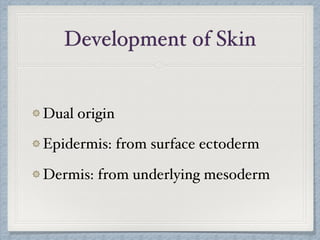
Dual origin
Epidermis: from surface ectoderm
Dermis: from underlying mesoderm
Development of epidermis
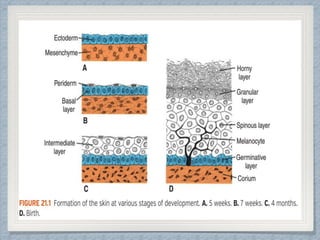
Before 2nd month embryo covered by single
layer of ectodermal cells
At begining of 2nd month it divides and
forms periderm or epitrichium
Proliferation continues
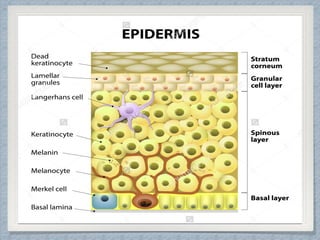
By the end of 4th month epidermis acquires
its denitive arrangement of 4 layers.
After the completion of various strata of
epidermis periderm shed off
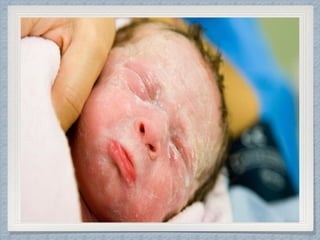
The exfoliated cells+secretion of sebaceous
gland form a pasty substance “Vernix
Caseosa”
By 3rd month melanoblasts have migrated to
basal layer of epidermis
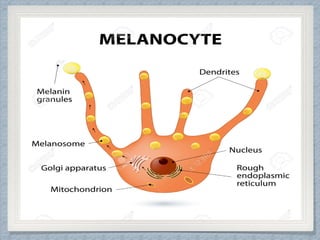
Synthesize melanin pigment in melanosomes.
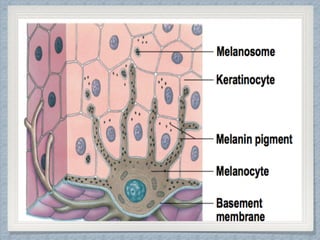
As melanosomes accumulate, they are
transported down dendritic processes of
melanocytes.
Melanosomes transferred intercellularly
to keratinocytes of the skin and hair bulb.
Pigmentation of the skin and hair is thus
acquired.
Development of dermis
Also called Corium
Origin from 3 sources
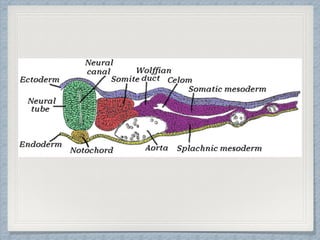
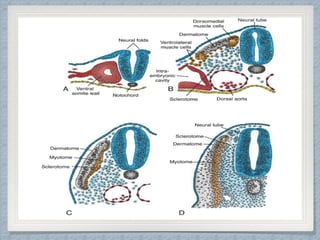
1. Lateral plate mesoderm: Dermis in the limbs
and body wall
2. Paraxial mesoderm: Dermis in the back
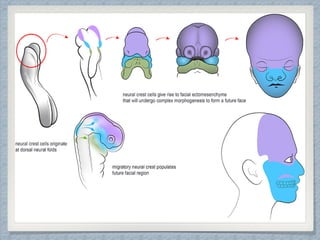
3. Neural crest: Dermis in face and neck
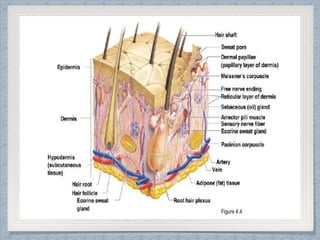
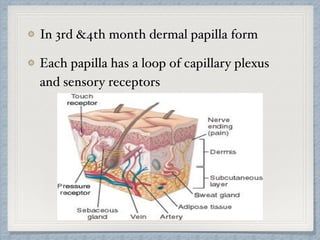
In 3rd &4th month dermal papilla form
Each papilla has a loop of capillary plexus
and sensory receptors
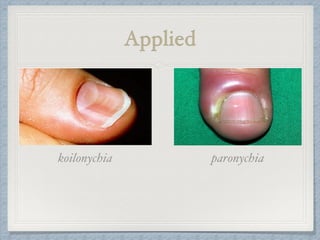
Applied
Pigmentary disorders
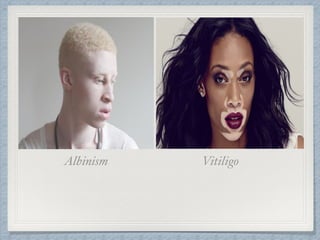
Albinism
Vitiligo
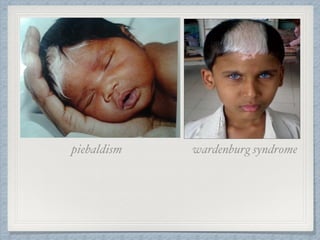
Piebaldism
Wardenburg syndrome
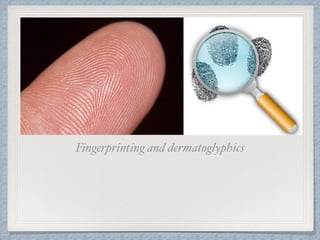
Fingerprinting
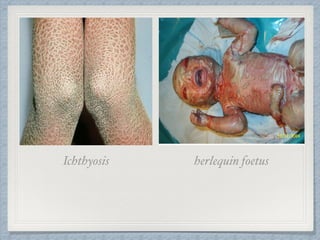
Ichthyosis and Harlequin foetus
Albinism Vitiligo
wardenburg syndromepiebaldism
Fingerprinting and dermatoglyphics
herlequin foetusIchthyosis
Development of hair
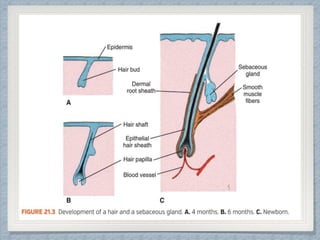
Solid epidermal proliferations from the
germinative layer penetrates the underlying
dermis.
At their terminal ends, hair buds invaginate.
The invaginations, the hair papillae, are rapidly
lled with mesoderm in which vessels and nerve
endings develop.
Central cells of the hair buds become spindle
shaped and keratinized, forming the hair shaft,
Whereas peripheral cells become cuboidal,
giving rise to the epithelial hair sheath
Dermal root sheath is formed by the
surrounding mesenchyme.
A small smooth muscle (arrector pilli), also
derived from mesenchyme, is usually attached to
the dermal root sheath.
Proliferation of epithelial cells at the base of the
shaft pushes the hair upward,
By the end of the 3rd month, the rst hairs
appear on the surface in the regiĂłn of the
eyebrow and upper lip.
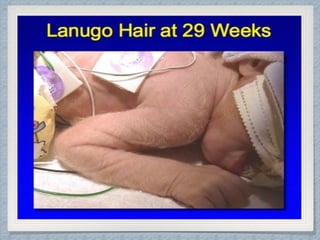
The rst hair that appears, lanugo hair, is shed
at about the time of birth and is later replaced
by coarser hairs arising from new hair follicles.
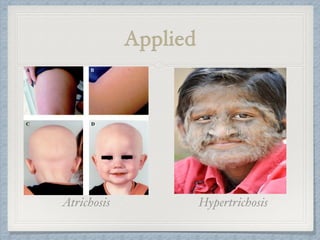
Applied
HypertrichosisAtrichosis
Development of sebaceous gland
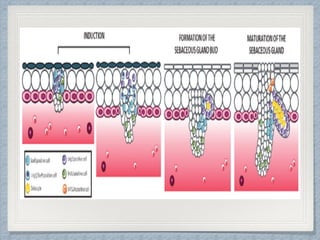
The epithelial wall of the hair follicle usually shows
a small bud penetrating the surround ing mesoderm
Cells from these buds form the sebaceous glands.
Cells from the central regiĂłn of the gland
degenerate, forming a fat-like substance (sebum)
secreted into the hair follicle, and from there, they
reach the skin.
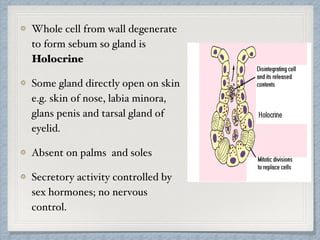
Whole cell from wall degenerate
to form sebum so gland is
Holocrine
Some gland directly open on skin
e.g. skin of nose, labia minora,
glans penis and tarsal gland of
eyelid.
Absent on palms and soles
Secretory activity controlled by
sex hormones; no nervous
control.
Applied
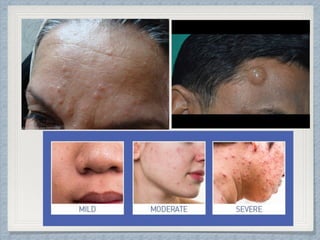
Sebaceous hyperplasia
Sebaceous cyst
Acne
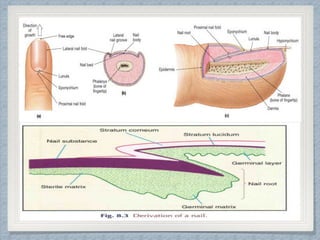
Development of nails
Epidermis thicken at tip of digit called nail eld
They migrate to dorsal side of digit
Grow proximally and form nail root
Nail elds limited by nail folds (invagination of
epidermis)
Nails grow from Proximal nail fold
Nail is basically the continuation of stratum lucidum of
proximal nail fold.
Initially nail covered by stratum corneum but it
disappears except at lunule where it is called
eponychium
Epidermal thickening below the free border of nail
called hyponychium
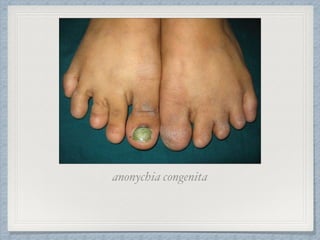
Applied
koilonychia paronychia
anonychia congenita
Development of sweat glands
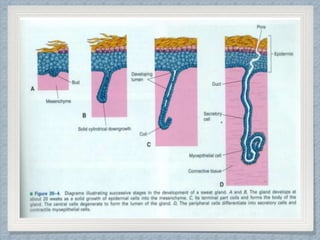
Solid ectodermal downgrowth in dermis
deeper ends coilled
Coiled solid growth now canalised to form gland
and its duct
Gland has outer flattened myoepithelial cells and
inner cuboidal cells.
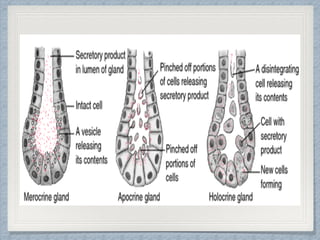
2 types
Eccrine / Merocrine: throughout body except lips ,
glans and labia minora
Primary function thermoregulatioon
Apocrine: limited distribution at hairy parts face, axillae,
and pubic regiĂłn.
Specialised apocrine gland: ceruminous gland, mammary
glands
All sweat glands innervated by post ganglionic
sympathetic neurons
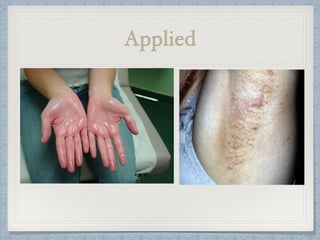
Applied
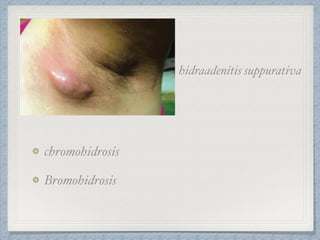
hidraadenitis suppurativa
chromohidrosis
Bromohidrosis
Development of mammary glands
Mammary glands are modied sweat glands
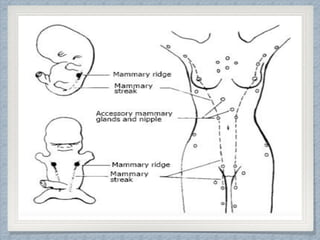
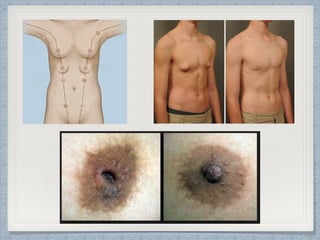
In 7 wk embryo: A bilateral bands of thickened
epidermis extends from root of forelimb to the
region of hindlimb
Major part disappear and only a small part in
thoracic region
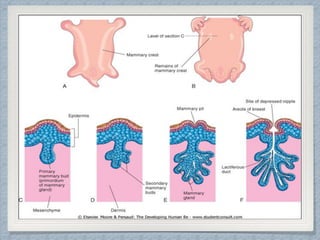
Penetrates underlying mesenchyme
forms 16 to 24 sprouts, which in turn give rise to small,
solid buds.
Epithelial sprouts are canalized and form the
lactiferous ducts
Initially, the lactiferous ducts open into a small
epithelial pit.
Shortly after birth, this pit is transformed into the
nipple by proliferation of the underlying mesenchyme.
At birth, lactiferous ducts have no alveoli
and therefore no secretory apparatus.
At puberty, increased concentrations of
estrogen and progesterone stimulate
branching from the ducts to form alveoli
and secretory cells.
Applied
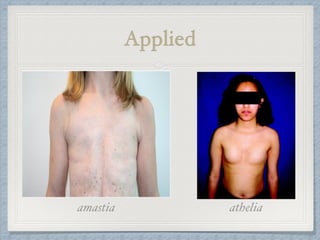
amastia athelia
Thank you

Development of integumentary system

  • 1.
    Development of integumentarysystem By Dr Piyush
  • 2.
    INTRODUCTION Skin with allits derivatives compose integumentary system. Derivatives of skin: Hair Nail Sweat gland Sebaceous gland Mammary gland
  • 4.
    Development of Skin Dualorigin Epidermis: from surface ectoderm Dermis: from underlying mesoderm
  • 5.
    Development of epidermis Before2nd month embryo covered by single layer of ectodermal cells At begining of 2nd month it divides and forms periderm or epitrichium Proliferation continues By the end of 4th month epidermis acquires its denitive arrangement of 4 layers.
  • 8.
    After the completionof various strata of epidermis periderm shed off The exfoliated cells+secretion of sebaceous gland form a pasty substance “Vernix Caseosa” By 3rd month melanoblasts have migrated to basal layer of epidermis Synthesize melanin pigment in melanosomes.
  • 10.
    As melanosomes accumulate,they are transported down dendritic processes of melanocytes. Melanosomes transferred intercellularly to keratinocytes of the skin and hair bulb. Pigmentation of the skin and hair is thus acquired.
  • 13.
    Development of dermis Alsocalled Corium Origin from 3 sources 1. Lateral plate mesoderm: Dermis in the limbs and body wall 2. Paraxial mesoderm: Dermis in the back 3. Neural crest: Dermis in face and neck
  • 17.
    In 3rd &4thmonth dermal papilla form Each papilla has a loop of capillary plexus and sensory receptors
  • 18.
  • 19.
  • 20.
  • 21.
  • 22.
  • 23.
    Development of hair Solidepidermal proliferations from the germinative layer penetrates the underlying dermis. At their terminal ends, hair buds invaginate. The invaginations, the hair papillae, are rapidly lled with mesoderm in which vessels and nerve endings develop.
  • 25.
    Central cells ofthe hair buds become spindle shaped and keratinized, forming the hair shaft, Whereas peripheral cells become cuboidal, giving rise to the epithelial hair sheath Dermal root sheath is formed by the surrounding mesenchyme. A small smooth muscle (arrector pilli), also derived from mesenchyme, is usually attached to the dermal root sheath.
  • 26.
    Proliferation of epithelialcells at the base of the shaft pushes the hair upward, By the end of the 3rd month, the rst hairs appear on the surface in the región of the eyebrow and upper lip. The rst hair that appears, lanugo hair, is shed at about the time of birth and is later replaced by coarser hairs arising from new hair follicles.
  • 28.
  • 29.
    Development of sebaceousgland The epithelial wall of the hair follicle usually shows a small bud penetrating the surround ing mesoderm Cells from these buds form the sebaceous glands. Cells from the central regiĂłn of the gland degenerate, forming a fat-like substance (sebum) secreted into the hair follicle, and from there, they reach the skin.
  • 31.
    Whole cell fromwall degenerate to form sebum so gland is Holocrine Some gland directly open on skin e.g. skin of nose, labia minora, glans penis and tarsal gland of eyelid. Absent on palms and soles Secretory activity controlled by sex hormones; no nervous control.
  • 32.
  • 34.
    Development of nails Epidermisthicken at tip of digit called nail eld They migrate to dorsal side of digit Grow proximally and form nail root Nail elds limited by nail folds (invagination of epidermis) Nails grow from Proximal nail fold
  • 36.
    Nail is basicallythe continuation of stratum lucidum of proximal nail fold. Initially nail covered by stratum corneum but it disappears except at lunule where it is called eponychium Epidermal thickening below the free border of nail called hyponychium
  • 37.
  • 38.
  • 39.
    Development of sweatglands Solid ectodermal downgrowth in dermis deeper ends coilled Coiled solid growth now canalised to form gland and its duct Gland has outer flattened myoepithelial cells and inner cuboidal cells.
  • 40.
    2 types Eccrine /Merocrine: throughout body except lips , glans and labia minora Primary function thermoregulatioon Apocrine: limited distribution at hairy parts face, axillae, and pubic regiĂłn. Specialised apocrine gland: ceruminous gland, mammary glands All sweat glands innervated by post ganglionic sympathetic neurons
  • 43.
  • 44.
  • 45.
    Development of mammaryglands Mammary glands are modied sweat glands In 7 wk embryo: A bilateral bands of thickened epidermis extends from root of forelimb to the region of hindlimb Major part disappear and only a small part in thoracic region
  • 47.
    Penetrates underlying mesenchyme forms16 to 24 sprouts, which in turn give rise to small, solid buds. Epithelial sprouts are canalized and form the lactiferous ducts Initially, the lactiferous ducts open into a small epithelial pit. Shortly after birth, this pit is transformed into the nipple by proliferation of the underlying mesenchyme.
  • 49.
    At birth, lactiferousducts have no alveoli and therefore no secretory apparatus. At puberty, increased concentrations of estrogen and progesterone stimulate branching from the ducts to form alveoli and secretory cells.
  • 50.
  • 52.