The Integumentary System
Dr Asma Lashari
University of Health Sciences
Lahore Pakistan
Anatomy of skin
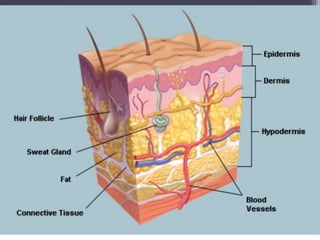
1. Human skin is divided into two layers
a. Epidermis (outermost)
b. Dermis ( innermost)
2. Separated by basement membrane (bm)
3. A layer of loose connective tissue beneath the dermis called
hypodermis, or subcutis
Layers Of The Skin
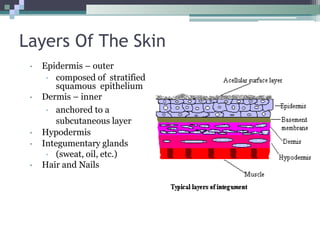
• Epidermis – outer
• composed of stratified
squamous epithelium
• Dermis – inner
• anchored to a
subcutaneous layer
• Hypodermis
• Integumentary glands
• (sweat, oil, etc.)
• Hair and Nails
Epidermis
• Outer layer of skin.
• Avascular as it has no blood supply of its own
• Oxygen and nutrients diffuse from the underlying dermis
• The epidermis is a keratinized stratified squamous
epithelium.
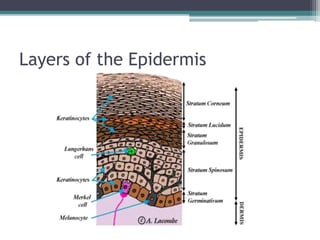
• Five structurally different layers can be identified:
Layers of the Epidermis
Cells of Epidermis
• Keratinocytes (90%)- waterproofs & protects skin,
nails, hair, stratum corneum Melanocytes (8%)-
produce melanin
• Merkel Cells- slow mechanoreceptors
• Langerhans’ Cells- immunological defense
Dermis or Corium
• Inner layer of skin
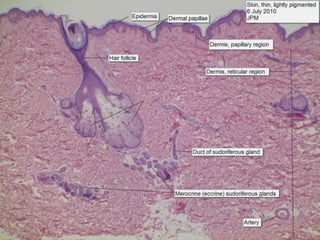
• The dermis, or corium, consists of dense fibrous
connective tissue with numerous collagenous and
elastic fibers.
• The dermis is much thicker than the epidermis. In
thick skin, dermal papillae create a very irregular
border between epidermis and dermis.
1. Hair
2. Skin glands
3. Nails
Accessory Organs of the Skin
Hair
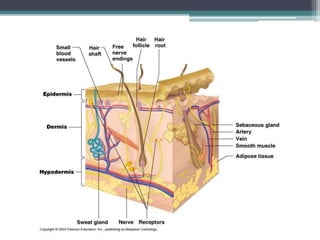
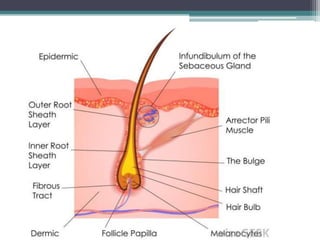
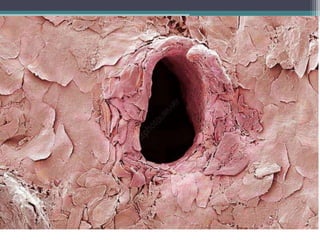
• The free part of each hair is called the shaft.
• The root of each hair is anchored in a tubular invagination of the
epidermis, the hair follicle, which extends down into the dermis
and, usually, a short distance into the hypodermis.
• The hair that you groom daily is actually dead keratinized cells.
• Each hair follicle has an associated bundle of smooth muscle, the
arrector pili muscle. This muscle inserts with one end to the
papillary layer of the dermis and with the other end to the dermal
sheath of the hair follicle. This makes your hair stand up on its
end.
Accessory Structures of the Skin
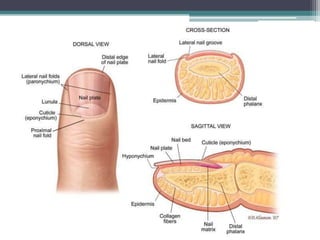
Nails
 Plates of stratified squamous epithelial cells
with hard keratin
 Protect distal ends of phalanges
 Cuticle is a fold of stratum corneum on the
proximal end of nail
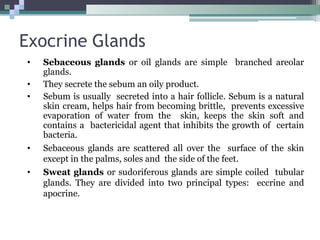
Exocrine Glands
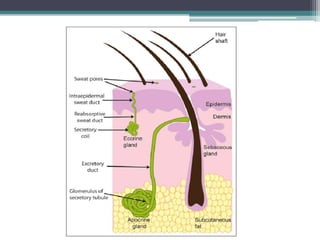
• Sebaceous glands or oil glands are simple branched areolar
glands.
• They secrete the sebum an oily product.
• Sebum is usually secreted into a hair follicle. Sebum is a natural
skin cream, helps hair from becoming brittle, prevents excessive
evaporation of water from the skin, keeps the skin soft and
contains a bactericidal agent that inhibits the growth of certain
bacteria.
• Sebaceous glands are scattered all over the surface of the skin
except in the palms, soles and the side of the feet.
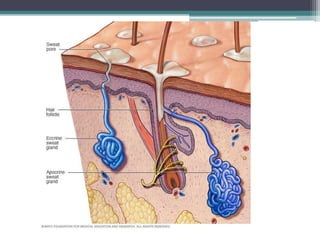
• Sweat glands or sudoriferous glands are simple coiled tubular
glands. They are divided into two principal types: eccrine and
apocrine.
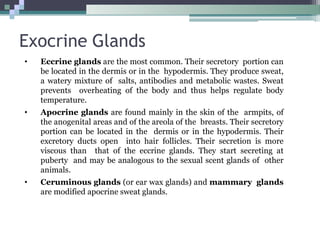
Exocrine Glands
• Eccrine glands are the most common. Their secretory portion can
be located in the dermis or in the hypodermis. They produce sweat,
a watery mixture of salts, antibodies and metabolic wastes. Sweat
prevents overheating of the body and thus helps regulate body
temperature.
• Apocrine glands are found mainly in the skin of the armpits, of
the anogenital areas and of the areola of the breasts. Their secretory
portion can be located in the dermis or in the hypodermis. Their
excretory ducts open into hair follicles. Their secretion is more
viscous than that of the eccrine glands. They start secreting at
puberty and may be analogous to the sexual scent glands of other
animals.
• Ceruminous glands (or ear wax glands) and mammary glands
are modified apocrine sweat glands.
THANK YOU
THANKS

Integumentary System

  • 1.
    The Integumentary System DrAsma Lashari University of Health Sciences Lahore Pakistan
  • 3.
    Anatomy of skin 1.Human skin is divided into two layers a. Epidermis (outermost) b. Dermis ( innermost) 2. Separated by basement membrane (bm) 3. A layer of loose connective tissue beneath the dermis called hypodermis, or subcutis
  • 4.
    Layers Of TheSkin • Epidermis – outer • composed of stratified squamous epithelium • Dermis – inner • anchored to a subcutaneous layer • Hypodermis • Integumentary glands • (sweat, oil, etc.) • Hair and Nails
  • 5.
    Epidermis • Outer layerof skin. • Avascular as it has no blood supply of its own • Oxygen and nutrients diffuse from the underlying dermis • The epidermis is a keratinized stratified squamous epithelium. • Five structurally different layers can be identified:
  • 6.
    Layers of theEpidermis
  • 7.
    Cells of Epidermis •Keratinocytes (90%)- waterproofs & protects skin, nails, hair, stratum corneum Melanocytes (8%)- produce melanin • Merkel Cells- slow mechanoreceptors • Langerhans’ Cells- immunological defense
  • 8.
    Dermis or Corium •Inner layer of skin • The dermis, or corium, consists of dense fibrous connective tissue with numerous collagenous and elastic fibers. • The dermis is much thicker than the epidermis. In thick skin, dermal papillae create a very irregular border between epidermis and dermis.
  • 9.
    1. Hair 2. Skinglands 3. Nails Accessory Organs of the Skin
  • 10.
    Hair • The freepart of each hair is called the shaft. • The root of each hair is anchored in a tubular invagination of the epidermis, the hair follicle, which extends down into the dermis and, usually, a short distance into the hypodermis. • The hair that you groom daily is actually dead keratinized cells. • Each hair follicle has an associated bundle of smooth muscle, the arrector pili muscle. This muscle inserts with one end to the papillary layer of the dermis and with the other end to the dermal sheath of the hair follicle. This makes your hair stand up on its end.
  • 12.
    Accessory Structures ofthe Skin Nails  Plates of stratified squamous epithelial cells with hard keratin  Protect distal ends of phalanges  Cuticle is a fold of stratum corneum on the proximal end of nail
  • 14.
    Exocrine Glands • Sebaceousglands or oil glands are simple branched areolar glands. • They secrete the sebum an oily product. • Sebum is usually secreted into a hair follicle. Sebum is a natural skin cream, helps hair from becoming brittle, prevents excessive evaporation of water from the skin, keeps the skin soft and contains a bactericidal agent that inhibits the growth of certain bacteria. • Sebaceous glands are scattered all over the surface of the skin except in the palms, soles and the side of the feet. • Sweat glands or sudoriferous glands are simple coiled tubular glands. They are divided into two principal types: eccrine and apocrine.
  • 15.
    Exocrine Glands • Eccrineglands are the most common. Their secretory portion can be located in the dermis or in the hypodermis. They produce sweat, a watery mixture of salts, antibodies and metabolic wastes. Sweat prevents overheating of the body and thus helps regulate body temperature. • Apocrine glands are found mainly in the skin of the armpits, of the anogenital areas and of the areola of the breasts. Their secretory portion can be located in the dermis or in the hypodermis. Their excretory ducts open into hair follicles. Their secretion is more viscous than that of the eccrine glands. They start secreting at puberty and may be analogous to the sexual scent glands of other animals. • Ceruminous glands (or ear wax glands) and mammary glands are modified apocrine sweat glands.
  • 21.
  • 22.