DETERMINATION OF PROGNOSIS AND TREATMENT PLAN
DETERMINATION OF PROGNOSIS
DEFINITION The prognosis is a prediction of the course, duration and outcome of a disease based on the pathogenesis of the disease and the presence of risk factors for the disease  It is established after the diagnosis is made and before the treatment plan is established
TYPES OF PROGNOSIS EXCELLENT PROGNOSIS No bone loss, excellent gingival condition, good patient cooperation, no systemic environmental factors. GOOD PROGNOSIS One or more of the following: adequate remaining bone support, adequate possibilities to control etiologic factors and establish a maintainable dentition, adequate patient cooperation, no systemic environmental factors or well controlled systemic factors
FAIR PROGNOSIS One or more of the following: less-than-adequate remaining bone support, some tooth mobility, grade I furcation involvement, adequate maintenance possible, acceptable patient cooperation, presence of limited systemic/environmental factors   POOR PROGNOSIS One or more of the following: moderate-to-advanced bone loss, tooth mobility grade I and II Furcation involvements, difficult-to-maintain areas and/or doubtful patient cooperation, presence of systemic/environmental factors
QUESTIONABLE PROGNOSIS One or more of the following: advanced bone loss, grade II and III furcation involvements, tooth mobility, inaccessible areas, presence of systemic/environmental factors. The provisional prognosis allows the clinician to initiate treatment of teeth that have a doubtful outlook in the hope that a favorable response may tip the balance and allow teeth to be retained
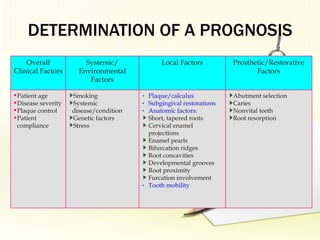
OVERALL VERSUS INDIVIDUAL TOOTH PROGNOSIS OVERALL PROGNOSIS The overall . Factors that may influence the overall prognosis include patient age, current severity of disease, systemic factors, smoking, the presence of plaque, calculus and other local factors, patient compliance, and prosthetic possibilities. INDIVIDUAL TOOTH PROGNOSIS The prognosis for individual teeth is determined after the overall prognosis and is affected by it. In a patient with a poor overall prognosis, the dentist likely would not attempt to retain a tooth that has a questionable prognosis because of local
DETERMINATION OF A PROGNOSIS Prosthetic/Restorative Factors Local Factors Systemic/ Environmental Factors Overall Clinical Factors Abutment selection Caries Nonvital teeth Root resorption Plaque/calculus Subgingival restorations Anatomic factors: Short, tapered roots Cervical enamel projections Enamel pearls Bifurcation ridges Root concavities Developmental grooves Root proximity Furcation involvement Tooth mobility Smoking Systemic disease/condition Genetic factors Stress Patient age Disease severity Plaque control Patient compliance
OVERALL CLINICAL FACTORS
PATIENT’S AGE For two patients with comparable levels of remaining connective tissue attachment and alveolar bone, the prognosis is generally better in the older of the two.  For the younger patient, the prognosis is not as good because shorter time frame in which the periodontal destruction has occurred because the younger patient suffers from an aggressive type of periodontitis or disease progression may have increased due to systemic disease or smoking.  The younger patient would be expected to have a greater reparative capacity, the occurrence of much destruction in a short period exceed any naturally occurring periodontal repair.
DISEASE SEVERITY The determination of the level of clinical attachment reveals the approximate extent of root surface that is devoid of periodontal ligament; the radiographic examination shows the amount of root surface still invested in bone. Pocket depth is less important than level of attachment because it is not necessarily related to bone loss. In general, a tooth with deep pockets and little attachment and bone loss has a better prognosis than one with shallow pockets and severe attachment and bone loss.  The prognosis also can be related to the height of remaining bone.
The type of defect also must be determined. The prognosis for horizontal bone loss depends on the height of the existing bone. In the case of angular, intrabony defects, if the contour of the existing bone and the number of osseous walls are favorable, there is an excellent chance that therapy could regenerate bone to approximately the level of the alveolar crest. When greater bone loss has occurred on one surface of a tooth, the bone height on the less involved surfaces should be taken into consideration when determining the prognosis.
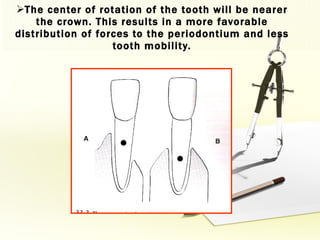
The center of rotation of the tooth will be nearer the crown. This results in a more favorable distribution of forces to the periodontium and less tooth mobility.
PLAQUE CONTROL Bacterial plaque is the primary etiologic factor associated with periodontal disease.  Therefore effective removal of plaque on a daily basis by the patient is critical to the success of periodontal therapy and to the prognosis.
PATIENT COMPLIANCE AND COOPERATION The prognosis for patients with gingival and periodontal disease is dependent on the patient's attitude, desire to retain the natural teeth, and willingness and ability to maintain good oral hygiene. Without these, treatment cannot succeed. The dentist can  refuse to accept the patient for treatment extract teeth that have a hopeless or poor prognosis and perform scaling and root planning on the remaining teeth.
SYSTEMIC AND ENVIROMENTAL FACTORS
SMOKING Patients should be informed that smoking affects not only the severity of periodontal destruction but also the healing potential of the periodontal tissues.  As a result, patients who smoke do not respond as well to conventional periodontal therapy never smoked. Therefore the prognosis in patients who smoke and have  slight-to-moderate  periodontitis is generally fair to poor. In patients with severe periodontitis, the prognosis may be  poor to hopeless . However, smoking cessation can affect the treatment outcome and therefore the prognosis. Patients with slight to moderate periodontitis who stop smoking can upgraded to a  good  prognosis, whereas those with severe periodontitis who stop smoking may be upgraded to a  fair  prognosis.
SYSTEMIC DISEASE OR CONDITION The patient's systemic background affects overall prognosis in several ways. For example, the prevalence and severity of periodontitis is significantly higher in patients with type I and type II diabetes than in those without diabetes and that the level of control of the diabetes is an important variable in this relationship.  Well-controlled diabetics with slight-to-moderate periodontitis who comply with their recommended periodontal treatment should have a good prognosis. Conditions that limit the patient's performance of oral procedures  (e.g., Parkinson's disease)  also adversely affect the prognosis. Newer automated oral hygiene devices such as electric toothbrushes may be helpful for these pa­tients and improve their prognosis.
GENETIC FACTORS Periodontal diseases represent a complex interaction between a microbial challenge and the host's response to that challenge, both of which may be influenced by environmental factors such as smoking. Genetic factors may play an important role in determining the nature of the host response.  Genetic polymor­phisms in the interleukin-1 (IL-1) genes, resulting in increased production of IL-1   have been associated with a significant increase in risk for severe, generalized, chronic periodontitis. Genctic factors also appear to influence serum IgG2 antibody titers and the expression of Fc-  RII receptors on the neutrophil, both of which may be significant in aggressive periodontitis.
LOCAL FACTORS
PLAQUE AND CALCULUS The microbial challenge presented by bacterial plaque and calculus is the most important local factor in periodontal diseases.
SUBGINGIVAL RESTORATIONS Subgingival margins may contribute to increased plaque accumulation, increased inflammation and increased bone when compared with supragingival margins. Furthermore, discrepancies in these margins (e.g., overhangs) can negatively impact the periodontium.  subgingival margins has a poorer prognosis than a tooth with well-contoured, supragingival margins.
ANATOMIC FACTORS Anatomic factors that may pre­dispose the periodontium to disease, and therefore affect the prognosis, include short, tapered roots with large crowns, cervical enamel projections (CEPs) and enamel pearls, intermediate bifurcation ridges, root concavities, and developmental grooves. Prognosis is poor for teeth with  short tapered roots  and large crowns. Disproportionate crown-to-root ratio and the reduced root surface available for periodontal support, the periodontium may be more susceptible to injury by occlusal forces.
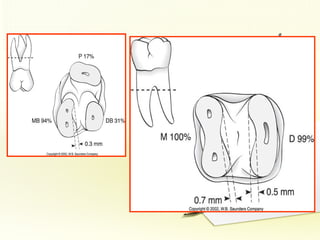
Cervical enamel projections (CEPs) , ectopic extensions of enamel that extend beyond the normal contours of the cementoenamel junction. Extend into the furcation. Found on buccal surfaces of maxillary.  Enamel pearls  are larger, round deposits of enamel that can be located in furcations or other areas on the root surface.  An intermediate  bifurcation ridge  is described in 73% of mandibular first molars, crossing from the mesial to the distal root at the midpoint of the furcation. Interferes with the attachment apparatus and may prevent regenerative procedures from achieving their maximum potential.  Scaling with root planing is a fundamental procedure in periodontal therapy. Anatomic factors that decrease the efficiency of this procedure can have a negative im­pact on the prognosis.
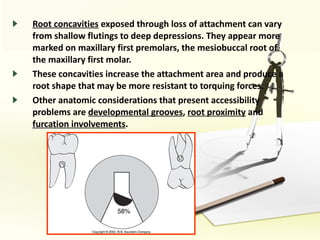
Root concavities  exposed through loss of attachment can vary from shallow flutings to deep depressions. They appear more marked on maxillary first premolars, the mesiobuccal root of the maxillary first molar. These concavities increase the attachment area and produce a root shape that may be more resistant to torquing forces. Other anatomic considerations that present accessibility problems are  developmental grooves ,  root proximity  and  furcation involvements .
 
TOOTH MOBILITY The principal causes of tooth mo­bility are loss of alveolar bone, inflammatory changes in the periodontal ligament, and trauma from occlusion.  Tooth mobility caused by inflammation and trauma from occlusion may be correctable. However tooth mobility resulting from loss of alveolar bone is not likely to be corrected.
PROSTHETICS AND RESTORATIVE FACTORS
The overall prognosis requires a general consideration of bone levels  (evaluated radiographically)  and attachment levels  (determined clinically)  to establish whether enough teeth can be saved either to provide a functional and aesthetic dentition or to serve as abutments for a useful prosthetic replacement of the missing teeth.
RELATIONSHIP BETWEEN PROGNOSIS AND DIAGNOSIS Factors such as patient age, severity of disease, genetic susceptibility and presence of systemic disease are important criteria in the diagnosis of the condition and in developing a prognosis.
PROGNOSIS FOR PATIENTS WITH GINGIVAL DISEASE DENTAL PLAQUE INDUCED GINGIVAL DISORDER
GINGIVITIS ASSOCIATED WITH DENTAL PLAQUE ONLY   Plaque-induced gingivitis is a reversible disease that occurs when bacterial plaque accumulates at the gingival margin.  PLAQUE-INDUCED GINGIVAL DISEASES MODIFIED BY SYSTEMIC FACTORS. The inflammatory response to bacterial plaque at the gingival margin can be influenced by  systemic factors  such as endocrine-related changes associated with puberty, menstruation, pregnancy, and diabetes and the presence of blood dyscrasias.  Therefore the long-term prognosis for these patients depends not only on control of bacterial plaque, but also on control or correction of the systemic factor(s).
PLAQUE-INDUCED GINGIVAL DISEASES MODIFIED BY MEDICATIONS . Gingival diseases associated with medications include drug-influenced gingival enlargement, often seen with phenytoin, cyclosporin, nifedipine, and oral contraceptive-associated gingivitis.  In  drug-influenced gingival enlargement , plaque control alone does not prevent development of the lesions, and surgical intervention is usually necessary to correct the alterations in gingival contour.
GINGIVAL DISEASES MODIFIED BY MALNUTRITION.   Exception is  severe vitamin C deficiency . In early experimental vitamin C deficiency,
NON-PLAQUE–INDUCED GINGIVAL LESIONS Prognosis is dependent on elimination of the source of the infectious agent.  Dermatologic disorders such as lichen planus, pemphigoid, pemphigus vulgaris, erythema multiforme, and lupus erythematosus also can manifest in the oral cavity as   atypical gingivitis .
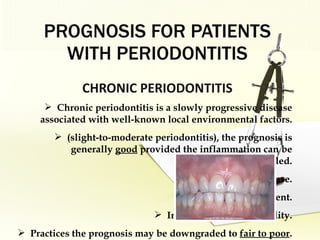
PROGNOSIS FOR PATIENTS WITH PERIODONTITIS CHRONIC PERIODONTITIS Chronic periodontitis is a slowly progressive disease associated with well-known local environmental factors. (slight-to-moderate periodontitis), the prognosis is generally  good  provided the inflammation can be controlled. More severe disease. Furcation involvement. Increasing clinical mobility. Practices the prognosis may be downgraded to  fair to poor .
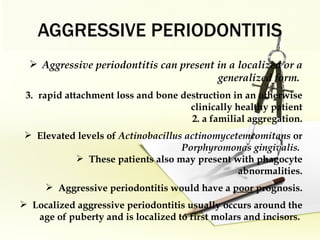
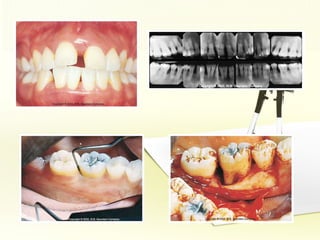
AGGRESSIVE PERIODONTITIS Aggressive periodontitis can present in a localized or a generalized form.  rapid attachment loss and bone destruction in an otherwise clinically healthy patient 2. a familial aggregation. Elevated levels of  Actinobacillus actinomycetemcomitans  or  Porphyromonas gingivalis.  These patients also may present with phagocyte abnormalities. Aggressive periodontitis would have a  poor  prognosis. Localized aggressive periodontitis usually occurs around the age of puberty and is localized to first molars and incisors.
 
PERIODONTITIS AS A MANIFESTATION OF SYS­TEMIC DISEASES .   Periodontitis as a manifestation of systemic diseases can be divided into two categories. those associated with hematologic disorders such as leukemia and acquired neutropenias. those associated with genetic disorders such as familial and cyclic neutropenia, Down syndrome, Papillon-Lefevre syndrome, and hypophosphastasia.  Although the primary etiologic factor in periodontal diseases is bacterial plaque. these patients present with a  fair-to-poor prognosis .
PERIODONTITIS AS A MANIFESTATION OF SYSTEMIC DISEASES .   Include  hypophosphatasia , where patients have decreased levels of circulating alkaline phosphatase, severe alveolar bone loss, premature loss of deciduous and permanent teeth and the connective tissue disorder. The prognosis will be  fair to poor .
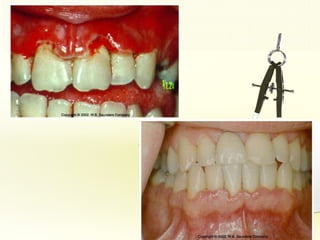
Necrotizing Periodontal Diseases.   (Necrotizing ulcerative gingivitis, NUG)  alveolar bone  (necrotizing ulcerative periodontitis, NUP).   In NUG, the primary predisposing factor is bacterial plaque. Such as acute psychologic stress, tobacco smoking, and poor nutrition, all of which can contribute to immunosuppression. The prognosis for a patient with NUG is  good .  The tissue destruction in these cases is not reversible and poor control of the secondary factors may make these patients susceptible to recurrence of the disease. With repeated episodes of NUG, the prognosis may be downgraded to  fair.
 
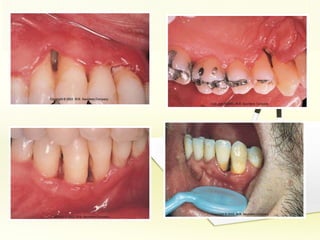
The clinical presentation of NUP is similar to that of NUG, except the necrosis extends from the gingiva into the periodontal ligament and alveolar bone. Many patients presenting with NUP are immunocompromised through   systemic conditions , such as HIV infection. In these cases, the prognosis is dependent on not only reducing local and secondary factors, but also on dealing with the systemic problem.
 
THE TREATMENT PLAN After the diagnosis and prognosis have been established, the treatment is planned. Treatment plan  is the blueprint for case management.it includes all procedures required for the establishment and maintainence of oral health.
Treatment plan involves the following decisions:- Teeth to be remained or extracted Pocket therapy techniques, surgical or non surgical, that will be used Occlusal correction, before, during, after pocket therapy The use of implant therapy The need for temporary restoration Final restoration that will be needed after therapy, and which teeth will be abutments if a fixed prosthesis Is used. The need for orthodontic consultation Endodontic therapy Decisions regarding esthetic considerations in periodontal therapy Sequence of therapy
MASTER PLAN FOR TOTAL TREATMENT The primary goal is elimination of gingival inflammation and correction of the conditions that cause and perpetuate it. This includes not only elimination of root irritants but also pocket eradication and reduction, establishment of gingival contours and mucogingival relationships conductive to preservation of periodontal health, restoration of carious areas and correction of existing restorations.
EXTRACTING OR PRESERVING A TOOTH Treatment is directed to establishing and maintaining the health of the periodontium throughout the mouth rather than to spectacular efforts to tighten loose teeth. Removal, retention, or temporary interim) retention of one or more teeth is a very important part of overall treatment plan
A tooth should be extracted when any of the following occurs It is so mobile that function becomes painful It can cause acute abscesses during therapy There is no use for it in the overall treatment plan
A tooth can be retained temporarily, postponing the decision to extract it until after treatment, when any of the following occurs It maintains posterior stops;the tooth can be removed after treatment when it can be replaced by a prosthesis It maintains posterior stops and may be functional after implant placement in adjacent areas.when the implant is exposed, these teeth can be extracted In anterior esthetics areas, a tooth can be retained during periodontal therapy and removed when treatment is completed, and a permanent restorative procedure can be performed Removal of hopeless teeth can also be performed during periodontal surgery of neighboring teeth. this approach reduces appointments for surgery in same area.
In complex cases, interdisciplinary consultation with other specialty areas is necessary before a final plan. the opinion of orthodontist and prosthodontist Is especially important. Considerations of occlusal relationships  may be in order and may necessitate occlusal adjustments; restorative, prosthetic, and orthodontic procedure; splinting and correction of bruxism and clamping and clenching habits Systemic conditions  should be carefully evaluated as they require special precautions Supportive periodontal care  it consists of instructions in oral hygiene and checkups at regular intervals.
PHASES OF PERIODONTAL THERAPY PRELIMINARY PHASE NON SURGICAL PHASE(PHASE 1 THERAPY) SURGICAL PHASE(PHASE 2 THERAPY) RESTORATIVE PHASE(PHASE 3 THERAPY) MAINTENANCE PHASE (PHASE 4 THERAPY)
PRELIMINARY PHASE TREATMENT OF EMERGENCIES Dental or periapical Periodontal Other Extraction of hopeless teeth and provisional replacement if needed (may be postponed to a more convenient time)
NON SURGICAL PHASE(PHASE 1) PLAQUE CONTROL AND PATIENT EDUCATION Diet control (in patients with rampant caries) Removal of calculus and root planing Correction of restorative and prosthetic irritational factors Excavation of caries and restoration Antimicrobial therapy ( local or systematic) Occlusal therapy Minor orthodontic movement Provisional splinting and prosthesis
Evaluation of response to non surgical phase rechecking Pocket depth and gingival inflammation Plaque and calculus, caries
Surgical phase(phase 2) Periodontal therapy including replacement of implants Endodontic therapy
RESTORATIVE PHASE(PHASE 3) Final restoration Fixed and removable prosthodontic appliances Evaluation of response to restorative procedures Periodontal examination
Maintenance phase (phase 4) Periodic rechecking Plaque and calculus Gingival condition (pockets and inflammation) Occlusion, tooth mobility Other pathological changes
EXPLAINING TREATMENT PLAN TO PATIENT Be specific.   Tell your patient ,“you have gingivitis” or “you have periodontitis” then explain what exactly what these conditions are,how they are treated, and prognosis for patient after treatment.avoid vague statements Begin your discussion on a positive note.   Talk about the teeth that can be retained and long-term service they can be expected to render. do not begin with statement like “the following teeth has to be extracted." emphasize the important purpose of treatment is to prevent the other teeth from becoming as severely diseased as the loose teeth
Present the entire treatment plan as a unit. Avoid creating impression that treatment consists of seprate procedures, some or all of which may be selected by the patient. Make it clear that dental restorations and prosthesis contribute as much as to health of the gums as elimination of inflammation and periodontal pockets
Explaining that doing nothing or holding onto hopelessly diseased teeth as long as possible is inadvisable for the following reasons Periodontal disease is a microbial infection, and can be important risk factor for severe life threatening disease such as stroke, cardiovascular disease, pulmonary disease, and diabetes as well as premature low-birth-weight babies in women of child bearing age It is not feasible to place restoration or bridges on teeth with untreated periodontal disease Failure to eleminate periodontal disease not only results in the loss of teeth already involved, but also shortens life span of other teeths
 
THANK YOU

Determination of prognosis

  • 1.
    DETERMINATION OF PROGNOSISAND TREATMENT PLAN
  • 2.
  • 3.
    DEFINITION The prognosisis a prediction of the course, duration and outcome of a disease based on the pathogenesis of the disease and the presence of risk factors for the disease It is established after the diagnosis is made and before the treatment plan is established
  • 4.
    TYPES OF PROGNOSISEXCELLENT PROGNOSIS No bone loss, excellent gingival condition, good patient cooperation, no systemic environmental factors. GOOD PROGNOSIS One or more of the following: adequate remaining bone support, adequate possibilities to control etiologic factors and establish a maintainable dentition, adequate patient cooperation, no systemic environmental factors or well controlled systemic factors
  • 5.
    FAIR PROGNOSIS Oneor more of the following: less-than-adequate remaining bone support, some tooth mobility, grade I furcation involvement, adequate maintenance possible, acceptable patient cooperation, presence of limited systemic/environmental factors POOR PROGNOSIS One or more of the following: moderate-to-advanced bone loss, tooth mobility grade I and II Furcation involvements, difficult-to-maintain areas and/or doubtful patient cooperation, presence of systemic/environmental factors
  • 6.
    QUESTIONABLE PROGNOSIS Oneor more of the following: advanced bone loss, grade II and III furcation involvements, tooth mobility, inaccessible areas, presence of systemic/environmental factors. The provisional prognosis allows the clinician to initiate treatment of teeth that have a doubtful outlook in the hope that a favorable response may tip the balance and allow teeth to be retained
  • 7.
    OVERALL VERSUS INDIVIDUALTOOTH PROGNOSIS OVERALL PROGNOSIS The overall . Factors that may influence the overall prognosis include patient age, current severity of disease, systemic factors, smoking, the presence of plaque, calculus and other local factors, patient compliance, and prosthetic possibilities. INDIVIDUAL TOOTH PROGNOSIS The prognosis for individual teeth is determined after the overall prognosis and is affected by it. In a patient with a poor overall prognosis, the dentist likely would not attempt to retain a tooth that has a questionable prognosis because of local
  • 8.
    DETERMINATION OF APROGNOSIS Prosthetic/Restorative Factors Local Factors Systemic/ Environmental Factors Overall Clinical Factors Abutment selection Caries Nonvital teeth Root resorption Plaque/calculus Subgingival restorations Anatomic factors: Short, tapered roots Cervical enamel projections Enamel pearls Bifurcation ridges Root concavities Developmental grooves Root proximity Furcation involvement Tooth mobility Smoking Systemic disease/condition Genetic factors Stress Patient age Disease severity Plaque control Patient compliance
  • 9.
  • 10.
    PATIENT’S AGE Fortwo patients with comparable levels of remaining connective tissue attachment and alveolar bone, the prognosis is generally better in the older of the two. For the younger patient, the prognosis is not as good because shorter time frame in which the periodontal destruction has occurred because the younger patient suffers from an aggressive type of periodontitis or disease progression may have increased due to systemic disease or smoking. The younger patient would be expected to have a greater reparative capacity, the occurrence of much destruction in a short period exceed any naturally occurring periodontal repair.
  • 11.
    DISEASE SEVERITY Thedetermination of the level of clinical attachment reveals the approximate extent of root surface that is devoid of periodontal ligament; the radiographic examination shows the amount of root surface still invested in bone. Pocket depth is less important than level of attachment because it is not necessarily related to bone loss. In general, a tooth with deep pockets and little attachment and bone loss has a better prognosis than one with shallow pockets and severe attachment and bone loss. The prognosis also can be related to the height of remaining bone.
  • 12.
    The type ofdefect also must be determined. The prognosis for horizontal bone loss depends on the height of the existing bone. In the case of angular, intrabony defects, if the contour of the existing bone and the number of osseous walls are favorable, there is an excellent chance that therapy could regenerate bone to approximately the level of the alveolar crest. When greater bone loss has occurred on one surface of a tooth, the bone height on the less involved surfaces should be taken into consideration when determining the prognosis.
  • 13.
    The center ofrotation of the tooth will be nearer the crown. This results in a more favorable distribution of forces to the periodontium and less tooth mobility.
  • 14.
    PLAQUE CONTROL Bacterialplaque is the primary etiologic factor associated with periodontal disease. Therefore effective removal of plaque on a daily basis by the patient is critical to the success of periodontal therapy and to the prognosis.
  • 15.
    PATIENT COMPLIANCE ANDCOOPERATION The prognosis for patients with gingival and periodontal disease is dependent on the patient's attitude, desire to retain the natural teeth, and willingness and ability to maintain good oral hygiene. Without these, treatment cannot succeed. The dentist can refuse to accept the patient for treatment extract teeth that have a hopeless or poor prognosis and perform scaling and root planning on the remaining teeth.
  • 16.
  • 17.
    SMOKING Patients shouldbe informed that smoking affects not only the severity of periodontal destruction but also the healing potential of the periodontal tissues. As a result, patients who smoke do not respond as well to conventional periodontal therapy never smoked. Therefore the prognosis in patients who smoke and have slight-to-moderate periodontitis is generally fair to poor. In patients with severe periodontitis, the prognosis may be poor to hopeless . However, smoking cessation can affect the treatment outcome and therefore the prognosis. Patients with slight to moderate periodontitis who stop smoking can upgraded to a good prognosis, whereas those with severe periodontitis who stop smoking may be upgraded to a fair prognosis.
  • 18.
    SYSTEMIC DISEASE ORCONDITION The patient's systemic background affects overall prognosis in several ways. For example, the prevalence and severity of periodontitis is significantly higher in patients with type I and type II diabetes than in those without diabetes and that the level of control of the diabetes is an important variable in this relationship. Well-controlled diabetics with slight-to-moderate periodontitis who comply with their recommended periodontal treatment should have a good prognosis. Conditions that limit the patient's performance of oral procedures (e.g., Parkinson's disease) also adversely affect the prognosis. Newer automated oral hygiene devices such as electric toothbrushes may be helpful for these pa­tients and improve their prognosis.
  • 19.
    GENETIC FACTORS Periodontaldiseases represent a complex interaction between a microbial challenge and the host's response to that challenge, both of which may be influenced by environmental factors such as smoking. Genetic factors may play an important role in determining the nature of the host response. Genetic polymor­phisms in the interleukin-1 (IL-1) genes, resulting in increased production of IL-1  have been associated with a significant increase in risk for severe, generalized, chronic periodontitis. Genctic factors also appear to influence serum IgG2 antibody titers and the expression of Fc-  RII receptors on the neutrophil, both of which may be significant in aggressive periodontitis.
  • 20.
  • 21.
    PLAQUE AND CALCULUSThe microbial challenge presented by bacterial plaque and calculus is the most important local factor in periodontal diseases.
  • 22.
    SUBGINGIVAL RESTORATIONS Subgingivalmargins may contribute to increased plaque accumulation, increased inflammation and increased bone when compared with supragingival margins. Furthermore, discrepancies in these margins (e.g., overhangs) can negatively impact the periodontium. subgingival margins has a poorer prognosis than a tooth with well-contoured, supragingival margins.
  • 23.
    ANATOMIC FACTORS Anatomicfactors that may pre­dispose the periodontium to disease, and therefore affect the prognosis, include short, tapered roots with large crowns, cervical enamel projections (CEPs) and enamel pearls, intermediate bifurcation ridges, root concavities, and developmental grooves. Prognosis is poor for teeth with short tapered roots and large crowns. Disproportionate crown-to-root ratio and the reduced root surface available for periodontal support, the periodontium may be more susceptible to injury by occlusal forces.
  • 24.
    Cervical enamel projections(CEPs) , ectopic extensions of enamel that extend beyond the normal contours of the cementoenamel junction. Extend into the furcation. Found on buccal surfaces of maxillary. Enamel pearls are larger, round deposits of enamel that can be located in furcations or other areas on the root surface. An intermediate bifurcation ridge is described in 73% of mandibular first molars, crossing from the mesial to the distal root at the midpoint of the furcation. Interferes with the attachment apparatus and may prevent regenerative procedures from achieving their maximum potential. Scaling with root planing is a fundamental procedure in periodontal therapy. Anatomic factors that decrease the efficiency of this procedure can have a negative im­pact on the prognosis.
  • 25.
    Root concavities exposed through loss of attachment can vary from shallow flutings to deep depressions. They appear more marked on maxillary first premolars, the mesiobuccal root of the maxillary first molar. These concavities increase the attachment area and produce a root shape that may be more resistant to torquing forces. Other anatomic considerations that present accessibility problems are developmental grooves , root proximity and furcation involvements .
  • 26.
  • 27.
    TOOTH MOBILITY Theprincipal causes of tooth mo­bility are loss of alveolar bone, inflammatory changes in the periodontal ligament, and trauma from occlusion. Tooth mobility caused by inflammation and trauma from occlusion may be correctable. However tooth mobility resulting from loss of alveolar bone is not likely to be corrected.
  • 28.
  • 29.
    The overall prognosisrequires a general consideration of bone levels (evaluated radiographically) and attachment levels (determined clinically) to establish whether enough teeth can be saved either to provide a functional and aesthetic dentition or to serve as abutments for a useful prosthetic replacement of the missing teeth.
  • 30.
    RELATIONSHIP BETWEEN PROGNOSISAND DIAGNOSIS Factors such as patient age, severity of disease, genetic susceptibility and presence of systemic disease are important criteria in the diagnosis of the condition and in developing a prognosis.
  • 31.
    PROGNOSIS FOR PATIENTSWITH GINGIVAL DISEASE DENTAL PLAQUE INDUCED GINGIVAL DISORDER
  • 32.
    GINGIVITIS ASSOCIATED WITHDENTAL PLAQUE ONLY Plaque-induced gingivitis is a reversible disease that occurs when bacterial plaque accumulates at the gingival margin. PLAQUE-INDUCED GINGIVAL DISEASES MODIFIED BY SYSTEMIC FACTORS. The inflammatory response to bacterial plaque at the gingival margin can be influenced by systemic factors such as endocrine-related changes associated with puberty, menstruation, pregnancy, and diabetes and the presence of blood dyscrasias. Therefore the long-term prognosis for these patients depends not only on control of bacterial plaque, but also on control or correction of the systemic factor(s).
  • 33.
    PLAQUE-INDUCED GINGIVAL DISEASESMODIFIED BY MEDICATIONS . Gingival diseases associated with medications include drug-influenced gingival enlargement, often seen with phenytoin, cyclosporin, nifedipine, and oral contraceptive-associated gingivitis. In drug-influenced gingival enlargement , plaque control alone does not prevent development of the lesions, and surgical intervention is usually necessary to correct the alterations in gingival contour.
  • 34.
    GINGIVAL DISEASES MODIFIEDBY MALNUTRITION. Exception is severe vitamin C deficiency . In early experimental vitamin C deficiency,
  • 35.
    NON-PLAQUE–INDUCED GINGIVAL LESIONSPrognosis is dependent on elimination of the source of the infectious agent. Dermatologic disorders such as lichen planus, pemphigoid, pemphigus vulgaris, erythema multiforme, and lupus erythematosus also can manifest in the oral cavity as atypical gingivitis .
  • 36.
    PROGNOSIS FOR PATIENTSWITH PERIODONTITIS CHRONIC PERIODONTITIS Chronic periodontitis is a slowly progressive disease associated with well-known local environmental factors. (slight-to-moderate periodontitis), the prognosis is generally good provided the inflammation can be controlled. More severe disease. Furcation involvement. Increasing clinical mobility. Practices the prognosis may be downgraded to fair to poor .
  • 37.
    AGGRESSIVE PERIODONTITIS Aggressiveperiodontitis can present in a localized or a generalized form. rapid attachment loss and bone destruction in an otherwise clinically healthy patient 2. a familial aggregation. Elevated levels of Actinobacillus actinomycetemcomitans or Porphyromonas gingivalis. These patients also may present with phagocyte abnormalities. Aggressive periodontitis would have a poor prognosis. Localized aggressive periodontitis usually occurs around the age of puberty and is localized to first molars and incisors.
  • 38.
  • 39.
    PERIODONTITIS AS AMANIFESTATION OF SYS­TEMIC DISEASES . Periodontitis as a manifestation of systemic diseases can be divided into two categories. those associated with hematologic disorders such as leukemia and acquired neutropenias. those associated with genetic disorders such as familial and cyclic neutropenia, Down syndrome, Papillon-Lefevre syndrome, and hypophosphastasia. Although the primary etiologic factor in periodontal diseases is bacterial plaque. these patients present with a fair-to-poor prognosis .
  • 40.
    PERIODONTITIS AS AMANIFESTATION OF SYSTEMIC DISEASES . Include hypophosphatasia , where patients have decreased levels of circulating alkaline phosphatase, severe alveolar bone loss, premature loss of deciduous and permanent teeth and the connective tissue disorder. The prognosis will be fair to poor .
  • 41.
    Necrotizing Periodontal Diseases. (Necrotizing ulcerative gingivitis, NUG) alveolar bone (necrotizing ulcerative periodontitis, NUP). In NUG, the primary predisposing factor is bacterial plaque. Such as acute psychologic stress, tobacco smoking, and poor nutrition, all of which can contribute to immunosuppression. The prognosis for a patient with NUG is good . The tissue destruction in these cases is not reversible and poor control of the secondary factors may make these patients susceptible to recurrence of the disease. With repeated episodes of NUG, the prognosis may be downgraded to fair.
  • 42.
  • 43.
    The clinical presentationof NUP is similar to that of NUG, except the necrosis extends from the gingiva into the periodontal ligament and alveolar bone. Many patients presenting with NUP are immunocompromised through systemic conditions , such as HIV infection. In these cases, the prognosis is dependent on not only reducing local and secondary factors, but also on dealing with the systemic problem.
  • 44.
  • 45.
    THE TREATMENT PLANAfter the diagnosis and prognosis have been established, the treatment is planned. Treatment plan is the blueprint for case management.it includes all procedures required for the establishment and maintainence of oral health.
  • 46.
    Treatment plan involvesthe following decisions:- Teeth to be remained or extracted Pocket therapy techniques, surgical or non surgical, that will be used Occlusal correction, before, during, after pocket therapy The use of implant therapy The need for temporary restoration Final restoration that will be needed after therapy, and which teeth will be abutments if a fixed prosthesis Is used. The need for orthodontic consultation Endodontic therapy Decisions regarding esthetic considerations in periodontal therapy Sequence of therapy
  • 47.
    MASTER PLAN FORTOTAL TREATMENT The primary goal is elimination of gingival inflammation and correction of the conditions that cause and perpetuate it. This includes not only elimination of root irritants but also pocket eradication and reduction, establishment of gingival contours and mucogingival relationships conductive to preservation of periodontal health, restoration of carious areas and correction of existing restorations.
  • 48.
    EXTRACTING OR PRESERVINGA TOOTH Treatment is directed to establishing and maintaining the health of the periodontium throughout the mouth rather than to spectacular efforts to tighten loose teeth. Removal, retention, or temporary interim) retention of one or more teeth is a very important part of overall treatment plan
  • 49.
    A tooth shouldbe extracted when any of the following occurs It is so mobile that function becomes painful It can cause acute abscesses during therapy There is no use for it in the overall treatment plan
  • 50.
    A tooth canbe retained temporarily, postponing the decision to extract it until after treatment, when any of the following occurs It maintains posterior stops;the tooth can be removed after treatment when it can be replaced by a prosthesis It maintains posterior stops and may be functional after implant placement in adjacent areas.when the implant is exposed, these teeth can be extracted In anterior esthetics areas, a tooth can be retained during periodontal therapy and removed when treatment is completed, and a permanent restorative procedure can be performed Removal of hopeless teeth can also be performed during periodontal surgery of neighboring teeth. this approach reduces appointments for surgery in same area.
  • 51.
    In complex cases,interdisciplinary consultation with other specialty areas is necessary before a final plan. the opinion of orthodontist and prosthodontist Is especially important. Considerations of occlusal relationships may be in order and may necessitate occlusal adjustments; restorative, prosthetic, and orthodontic procedure; splinting and correction of bruxism and clamping and clenching habits Systemic conditions should be carefully evaluated as they require special precautions Supportive periodontal care it consists of instructions in oral hygiene and checkups at regular intervals.
  • 52.
    PHASES OF PERIODONTALTHERAPY PRELIMINARY PHASE NON SURGICAL PHASE(PHASE 1 THERAPY) SURGICAL PHASE(PHASE 2 THERAPY) RESTORATIVE PHASE(PHASE 3 THERAPY) MAINTENANCE PHASE (PHASE 4 THERAPY)
  • 53.
    PRELIMINARY PHASE TREATMENTOF EMERGENCIES Dental or periapical Periodontal Other Extraction of hopeless teeth and provisional replacement if needed (may be postponed to a more convenient time)
  • 54.
    NON SURGICAL PHASE(PHASE1) PLAQUE CONTROL AND PATIENT EDUCATION Diet control (in patients with rampant caries) Removal of calculus and root planing Correction of restorative and prosthetic irritational factors Excavation of caries and restoration Antimicrobial therapy ( local or systematic) Occlusal therapy Minor orthodontic movement Provisional splinting and prosthesis
  • 55.
    Evaluation of responseto non surgical phase rechecking Pocket depth and gingival inflammation Plaque and calculus, caries
  • 56.
    Surgical phase(phase 2)Periodontal therapy including replacement of implants Endodontic therapy
  • 57.
    RESTORATIVE PHASE(PHASE 3)Final restoration Fixed and removable prosthodontic appliances Evaluation of response to restorative procedures Periodontal examination
  • 58.
    Maintenance phase (phase4) Periodic rechecking Plaque and calculus Gingival condition (pockets and inflammation) Occlusion, tooth mobility Other pathological changes
  • 59.
    EXPLAINING TREATMENT PLANTO PATIENT Be specific. Tell your patient ,“you have gingivitis” or “you have periodontitis” then explain what exactly what these conditions are,how they are treated, and prognosis for patient after treatment.avoid vague statements Begin your discussion on a positive note. Talk about the teeth that can be retained and long-term service they can be expected to render. do not begin with statement like “the following teeth has to be extracted." emphasize the important purpose of treatment is to prevent the other teeth from becoming as severely diseased as the loose teeth
  • 60.
    Present the entiretreatment plan as a unit. Avoid creating impression that treatment consists of seprate procedures, some or all of which may be selected by the patient. Make it clear that dental restorations and prosthesis contribute as much as to health of the gums as elimination of inflammation and periodontal pockets
  • 61.
    Explaining that doingnothing or holding onto hopelessly diseased teeth as long as possible is inadvisable for the following reasons Periodontal disease is a microbial infection, and can be important risk factor for severe life threatening disease such as stroke, cardiovascular disease, pulmonary disease, and diabetes as well as premature low-birth-weight babies in women of child bearing age It is not feasible to place restoration or bridges on teeth with untreated periodontal disease Failure to eleminate periodontal disease not only results in the loss of teeth already involved, but also shortens life span of other teeths
  • 62.
  • 63.