Alpine Forest
Marina Bibi: 2016-KIU-1066
Zakia Ashraf: 2016-KIU-1067
BS VI
Introduction
• Forests are main source of paper, fuel, wood,
latex, lumber, medicine, food and resins etc
• Also provides ecotourism and wildlife
conservation
• Forests cover 4.8% land of Pakistan
Cont…
• Arctic and alpine covers 16% of the earth.
• Alpine derives from Latin word ‘’Alp’’ meaning
high mountain.
• It has well defined vegetation and
characterized by absence of trees or dwarf
trees.
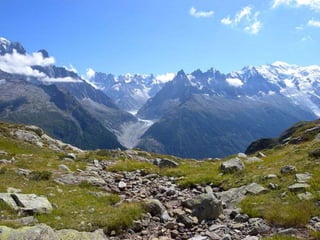
Ecology of Alpine
• Forests of alpine zone occurs near mountain
tops
• In Pakistan found in the mountainous regions
of Himalaya, Karakoram and Hindukush.
• alpine biome lies between an altitude of
10,000 feet (3000m) above sea level and place
where snowline begins
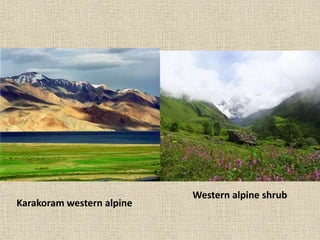
Western alpine shrub
Karakoram western alpine
Alpine Climate
• Climate is very cold, icy, snowy and windy.
• Average precipitation is 30cm per year
• Due to extreme low temperature trees can’t grow
• Growing season for plants is about 180days
Cont…
• During summer temperature reaches around
-12 C⁰
– Summer last from june to september
• During winter temperature below freezing
point and with higher altitude get much
colder.
– Winter last from october to may
Alpine Plants
• Plants that grow in an alpine climate which
occurs at high elevation and above the tree
line.
• Alpine plants are not a single taxon Rather,
many different plant species live in the alpine
environment.
• These include:
– perennial grasses, sedges, forbs, cushion
plants, mosses, and lichens.
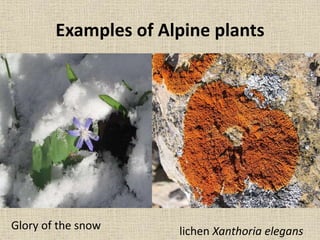
Examples of Alpine plants
• hgh
Glory of the snow lichen Xanthoria elegans
Cont..
• Many plants are used economically, in
Himalayas many species traded for medicinal
and aromatic use.
• Annual trade of these plants amount to
million US dollar.
• Many household in Nepal and India rely on
medicinal plants as a source of income.
Cont…
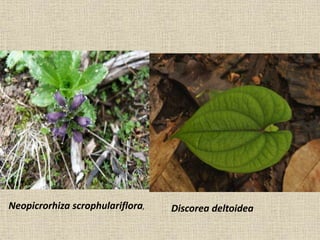
• Some of the plant species in Nepal include:
– Neopicrorhiza scrophulariflora, Discorea
deltoidea, Rheum austrade
• Indian species include:
– Aconitum heterophyllum, Dichoriza kurrooa
Discorea deltoideaNeopicrorhiza scrophulariflora,
Alpine animals
• Alpine animals face 2 problems
– Cold temperature
– Ultraviolet wavelengths (UV)
• There are only warm blooded animals and some
insects
• adapted by shorter limbs ( legs, ears and tails)
help to reduce heat loss and larger lung
capacities, more blood cells and hemoglobin.
• These animals hibernate and migrate to
warmer areas of the mountain
• Some insulate their bodies with extra fats and
fur.
• There are about 30,000 animal species in
alpine zone
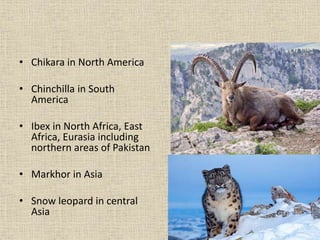
• Chikara in North America
• Chinchilla in South
America
• Ibex in North Africa, East
Africa, Eurasia including
northern areas of Pakistan
• Markhor in Asia
• Snow leopard in central
Asia
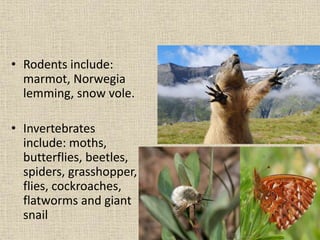
• Rodents include:
marmot, Norwegia
lemming, snow vole.
• Invertebrates
include: moths,
butterflies, beetles,
spiders, grasshopper,
flies, cockroaches,
flatworms and giant
snail
Threats to alpine forests
Alpine forests are subject to many threats and
suffer many damages, main causes include
• Urbanization: continual expansion of cities,
town, villages
• Transportation: noise and air pollution,
excess NO₂ results in acid rain.
• Tourism: major driver of urbanization and
traffic, leisure activities by tourists as winter
ski tourism, adventure sports harm landscape.
• Hydroelectricity supply: most cities rely on
alpine water for drinking and electricity
supply, human pressure and global warming
put alpine water at risk.
• Agriculture: massive use of fertilizers, grading
and drainage.
• Climate change: global warming diminish
glaciers, glacier recession led to upward
migration of alpine plants and extinction of
lowland plants
– Cause Exotic species and pathogen inavsion
Importance of Alpine forests
• 22% of the world people on mountain directly
benefit from alpine forests and lowland
people also dependant on Alps for many
goods as
– Water supply
– Energy
– Timber and wood
• Biodiversity maintenance
• Recreation and spiritual renewal

Alpine forest

  • 1.
    Alpine Forest Marina Bibi:2016-KIU-1066 Zakia Ashraf: 2016-KIU-1067 BS VI
  • 3.
    Introduction • Forests aremain source of paper, fuel, wood, latex, lumber, medicine, food and resins etc • Also provides ecotourism and wildlife conservation • Forests cover 4.8% land of Pakistan
  • 4.
    Cont… • Arctic andalpine covers 16% of the earth. • Alpine derives from Latin word ‘’Alp’’ meaning high mountain. • It has well defined vegetation and characterized by absence of trees or dwarf trees.
  • 5.
    Ecology of Alpine •Forests of alpine zone occurs near mountain tops • In Pakistan found in the mountainous regions of Himalaya, Karakoram and Hindukush. • alpine biome lies between an altitude of 10,000 feet (3000m) above sea level and place where snowline begins
  • 6.
  • 7.
    Alpine Climate • Climateis very cold, icy, snowy and windy. • Average precipitation is 30cm per year • Due to extreme low temperature trees can’t grow • Growing season for plants is about 180days
  • 8.
    Cont… • During summertemperature reaches around -12 C⁰ – Summer last from june to september • During winter temperature below freezing point and with higher altitude get much colder. – Winter last from october to may
  • 9.
    Alpine Plants • Plantsthat grow in an alpine climate which occurs at high elevation and above the tree line. • Alpine plants are not a single taxon Rather, many different plant species live in the alpine environment. • These include: – perennial grasses, sedges, forbs, cushion plants, mosses, and lichens.
  • 10.
    Examples of Alpineplants • hgh Glory of the snow lichen Xanthoria elegans
  • 11.
    Cont.. • Many plantsare used economically, in Himalayas many species traded for medicinal and aromatic use. • Annual trade of these plants amount to million US dollar. • Many household in Nepal and India rely on medicinal plants as a source of income.
  • 12.
    Cont… • Some ofthe plant species in Nepal include: – Neopicrorhiza scrophulariflora, Discorea deltoidea, Rheum austrade • Indian species include: – Aconitum heterophyllum, Dichoriza kurrooa
  • 13.
  • 14.
    Alpine animals • Alpineanimals face 2 problems – Cold temperature – Ultraviolet wavelengths (UV) • There are only warm blooded animals and some insects • adapted by shorter limbs ( legs, ears and tails) help to reduce heat loss and larger lung capacities, more blood cells and hemoglobin.
  • 15.
    • These animalshibernate and migrate to warmer areas of the mountain • Some insulate their bodies with extra fats and fur. • There are about 30,000 animal species in alpine zone
  • 16.
    • Chikara inNorth America • Chinchilla in South America • Ibex in North Africa, East Africa, Eurasia including northern areas of Pakistan • Markhor in Asia • Snow leopard in central Asia
  • 17.
    • Rodents include: marmot,Norwegia lemming, snow vole. • Invertebrates include: moths, butterflies, beetles, spiders, grasshopper, flies, cockroaches, flatworms and giant snail
  • 18.
    Threats to alpineforests Alpine forests are subject to many threats and suffer many damages, main causes include • Urbanization: continual expansion of cities, town, villages • Transportation: noise and air pollution, excess NO₂ results in acid rain.
  • 19.
    • Tourism: majordriver of urbanization and traffic, leisure activities by tourists as winter ski tourism, adventure sports harm landscape. • Hydroelectricity supply: most cities rely on alpine water for drinking and electricity supply, human pressure and global warming put alpine water at risk.
  • 20.
    • Agriculture: massiveuse of fertilizers, grading and drainage. • Climate change: global warming diminish glaciers, glacier recession led to upward migration of alpine plants and extinction of lowland plants – Cause Exotic species and pathogen inavsion
  • 21.
    Importance of Alpineforests • 22% of the world people on mountain directly benefit from alpine forests and lowland people also dependant on Alps for many goods as – Water supply – Energy – Timber and wood • Biodiversity maintenance • Recreation and spiritual renewal