AQUATIC ECOSYSTEM
• PRESENTED BY:- GOSWAMI
KHUSHBOOBEN.B
• PAPER:-CBO-405
• ROLL NO:-204
• M.SC (BOTANY) SEM:- 2
• DEPARTMENT OF LIFE
SCIENCES,PATAN
CONTENTS
• INTRODUCTION
• AQUATIC ECOSYSTEM
• MARINE ECOSYSTEM
• FRESH WATER ECOSYSTEM
• ESTUARINE ECOSYSTEM
• FUNCTION
• REFERENCE
INTRODUTION
• The term ‘ecosystem’ was proposed by a
british ecology A.G.Tansley in the year 1953.
• “The ecosystem represents the basic
functional unit of ecology which comprises of
the biotic communities mutually related with
their noliving or abiotic environment.”
• An ecosystem is a biological environment
consisting of all the organisms living in a
particular area, as well as all the non-living
(abiotic), physical components of the
enviroment, such as air,soil,water and
sunlight.
AQUATIC ECOSYSTEM
• An aquatic ecosystem is an ecosystem in
a body of water.
• Communities of organism that are
dependent on each other and on their
enviroment live in aquatic ecosystem.
• The three main type of aquatic
ecosystem are marine ecosystem,fresh
water ecosystem and estuarine.
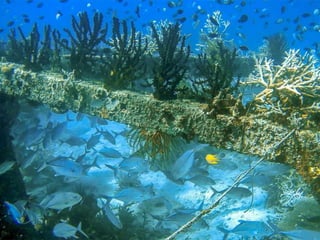
(1) MARINE ECOSYSTEM
• Marine water ecosystem in which, like
other ecosystem,there are main
comonents.
• A. Biotic components:-
i) primary producers.
ii) secondary consumers.
iii) decomposers and transformers.
i) PRIMARY PRODUCERS:-
• These are diatoms, dinoflagellates, few
microscopic and unicellular algae, weeds
and brown and red algae.
• These form the basic of all other life
found in sea.
ii) SECONDARY CONSUMERS:-
• Also known as the primary consumers of
the sea these are certain large sized fish.
E.G:- marckerel, herring, shark, etc..
• Certain fish feed primary upon smaller
members of their own class and the
growth of shark represent a food chain
of five or more links.
iii)DECOMPOSERS AND TRANSFORMERS:-
• The decomposers of sea are marine
bacteria.
• The soluble and decomposed material is
now attached by other type of bacteria,
the transformers, and converted to
forms to be reused by the green plants.
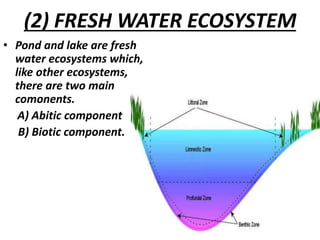
(2) FRESH WATER ECOSYSTEM
• Pond and lake are fresh
water ecosystems which,
like other ecosystems,
there are two main
comonents.
A) Abitic component
B) Biotic component.
A) ABIOTIC COMPONENT:-
• Abiotic component of pond consists of water,
dissolved minerals, oxygen and carbon
dioxide.
• Solar radiation are the main source of energy.
B) BIOTIC COMPONENT:-
i) producers.
ii) consumers.
iii) Decomposers and transformers.
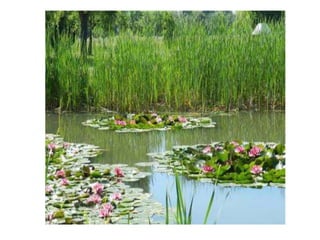
i) PRODUCERS:-
• The main produceurs in pond or lake
ecosystem are algae and other aquatic plants.
• E.G :- such as azolla, hydrilla,
lemna,nymphaea,etc..
• These are either floating or rooted at the
bottom.
• The green plants convers the radiant energy
into chemical energy throgh photosynthetisis.
• The chemical energy stored in the form of
food.
ii) CONSUMERS:-
• In a pond ecosystem the primary consumers
are tadpole, larvae of frogs, fishes and other
and other aquatic animals which consumer
green plant and algae as their food.
• E.G:- frogs, big fishes, water snakes, etc..
• In the pond, besides the secondary
consumers of highest order, such as water
birds etc...
iii) DECOMPOSERS AND TRANSFORMERS:-
• When aquatic plant and animals die, large
numbers of bacteria and fungi attach their
dead bodies and convert the complex arganic
substance into simple inorganic compounds
and elements.
• These micro organism are called
decomposers.
• E.G:- saprophytic bacteria and fungi.
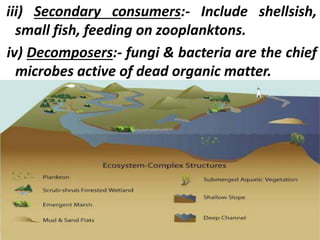
(3) ESTUARINE ECOSYSTEM
• There are two main components.
A) Abiotic components:- such as phosphorus
and nitrogen, temperature, light,pH.
B) Biotic components:-
i) producers:- these micro-organism
manufacture food by photosynthesis and
absorb nutrients.
ii) primary consumers:- zooplanktons that feed
on phytoplankton, besides them some small
micro-organisms that feed on producers.
iii) Secondary consumers:- Include shellsish,
small fish, feeding on zooplanktons.
iv) Decomposers:- fungi & bacteria are the chief
microbes active of dead organic matter.
FUNCTION:-
• Aquatic ecosystem perform many
important enviromental function.
• They recycle nutrients, purify water,
recharge ground water and provide
habitats for wildlife.
• Aquatic ecosystem are also used for
human recreation, and are very
important to the tourism industry.
• A stress on an aquatic ecosystem can be a
result of physical, chemical or biological
alterations of the environment.
• Biological organism found in aquatic
ecosystem are either autotropic or
heterotropic.
• Physical alterations include changes in
water temperature, water flow.
• Abiotic enviromental factors of aquatic
ecosystem include temperature, salinity
and flow.
REFERENCE
• P.D SHARMA ecology and
environment.
• M.P. FINGH & S.G.ABBAX effential of
plant taxonomy and ecology.
THANK YOU

Aquatic ecosystem

  • 1.
    AQUATIC ECOSYSTEM • PRESENTEDBY:- GOSWAMI KHUSHBOOBEN.B • PAPER:-CBO-405 • ROLL NO:-204 • M.SC (BOTANY) SEM:- 2 • DEPARTMENT OF LIFE SCIENCES,PATAN
  • 2.
    CONTENTS • INTRODUCTION • AQUATICECOSYSTEM • MARINE ECOSYSTEM • FRESH WATER ECOSYSTEM • ESTUARINE ECOSYSTEM • FUNCTION • REFERENCE
  • 3.
    INTRODUTION • The term‘ecosystem’ was proposed by a british ecology A.G.Tansley in the year 1953. • “The ecosystem represents the basic functional unit of ecology which comprises of the biotic communities mutually related with their noliving or abiotic environment.” • An ecosystem is a biological environment consisting of all the organisms living in a particular area, as well as all the non-living (abiotic), physical components of the enviroment, such as air,soil,water and sunlight.
  • 4.
    AQUATIC ECOSYSTEM • Anaquatic ecosystem is an ecosystem in a body of water. • Communities of organism that are dependent on each other and on their enviroment live in aquatic ecosystem. • The three main type of aquatic ecosystem are marine ecosystem,fresh water ecosystem and estuarine.
  • 5.
    (1) MARINE ECOSYSTEM •Marine water ecosystem in which, like other ecosystem,there are main comonents. • A. Biotic components:- i) primary producers. ii) secondary consumers. iii) decomposers and transformers.
  • 6.
    i) PRIMARY PRODUCERS:- •These are diatoms, dinoflagellates, few microscopic and unicellular algae, weeds and brown and red algae. • These form the basic of all other life found in sea.
  • 7.
    ii) SECONDARY CONSUMERS:- •Also known as the primary consumers of the sea these are certain large sized fish. E.G:- marckerel, herring, shark, etc.. • Certain fish feed primary upon smaller members of their own class and the growth of shark represent a food chain of five or more links.
  • 8.
    iii)DECOMPOSERS AND TRANSFORMERS:- •The decomposers of sea are marine bacteria. • The soluble and decomposed material is now attached by other type of bacteria, the transformers, and converted to forms to be reused by the green plants.
  • 10.
    (2) FRESH WATERECOSYSTEM • Pond and lake are fresh water ecosystems which, like other ecosystems, there are two main comonents. A) Abitic component B) Biotic component.
  • 11.
    A) ABIOTIC COMPONENT:- •Abiotic component of pond consists of water, dissolved minerals, oxygen and carbon dioxide. • Solar radiation are the main source of energy. B) BIOTIC COMPONENT:- i) producers. ii) consumers. iii) Decomposers and transformers.
  • 12.
    i) PRODUCERS:- • Themain produceurs in pond or lake ecosystem are algae and other aquatic plants. • E.G :- such as azolla, hydrilla, lemna,nymphaea,etc.. • These are either floating or rooted at the bottom. • The green plants convers the radiant energy into chemical energy throgh photosynthetisis. • The chemical energy stored in the form of food.
  • 13.
    ii) CONSUMERS:- • Ina pond ecosystem the primary consumers are tadpole, larvae of frogs, fishes and other and other aquatic animals which consumer green plant and algae as their food. • E.G:- frogs, big fishes, water snakes, etc.. • In the pond, besides the secondary consumers of highest order, such as water birds etc...
  • 14.
    iii) DECOMPOSERS ANDTRANSFORMERS:- • When aquatic plant and animals die, large numbers of bacteria and fungi attach their dead bodies and convert the complex arganic substance into simple inorganic compounds and elements. • These micro organism are called decomposers. • E.G:- saprophytic bacteria and fungi.
  • 16.
    (3) ESTUARINE ECOSYSTEM •There are two main components. A) Abiotic components:- such as phosphorus and nitrogen, temperature, light,pH. B) Biotic components:- i) producers:- these micro-organism manufacture food by photosynthesis and absorb nutrients. ii) primary consumers:- zooplanktons that feed on phytoplankton, besides them some small micro-organisms that feed on producers.
  • 17.
    iii) Secondary consumers:-Include shellsish, small fish, feeding on zooplanktons. iv) Decomposers:- fungi & bacteria are the chief microbes active of dead organic matter.
  • 18.
    FUNCTION:- • Aquatic ecosystemperform many important enviromental function. • They recycle nutrients, purify water, recharge ground water and provide habitats for wildlife. • Aquatic ecosystem are also used for human recreation, and are very important to the tourism industry.
  • 19.
    • A stresson an aquatic ecosystem can be a result of physical, chemical or biological alterations of the environment. • Biological organism found in aquatic ecosystem are either autotropic or heterotropic. • Physical alterations include changes in water temperature, water flow. • Abiotic enviromental factors of aquatic ecosystem include temperature, salinity and flow.
  • 20.
    REFERENCE • P.D SHARMAecology and environment. • M.P. FINGH & S.G.ABBAX effential of plant taxonomy and ecology.
  • 21.