Farming Systems
Approaches for Sustainable
Intensification
Science and Policy Implications
Dennis Garrity
16 July 2013, AASW6, Accra, Ghana
Approach: why a farming systems lens?
• Low productivity and rural food insecurity and poverty
persist after many years of interventions
• Strong diversity and complexity of farming systems and
farm-households’ potentials and needs
• Understanding farm household decision-making is
essential for fostering innovation and accelerating
adoption
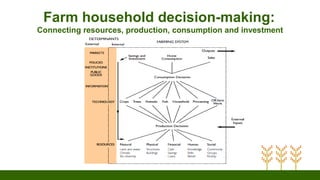
Farm household decision-making:
Connecting resources, production, consumption and investment
Three scales of knowledge
that can help decision-makers
• 1st, the larger trends and drivers that are in motion at the
continental level, providing a backdrop at the macro level.
• 2nd
, the level of the farming system and subsystems,
where the drivers play out in unique ways in the local context. And
• 3rd
, the household level, and how it responds to internal and
external forces, including policy interventions.
The drivers of farming systems change
• population, hunger and poverty
• natural resources degradation and climate change
• markets and trade
• technology and science
• energy
• information and human capital
• institutions and policies
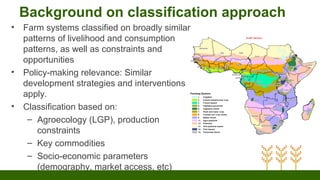
Background on classification approach
• Farm systems classified on broadly similar
patterns of livelihood and consumption
patterns, as well as constraints and
opportunities
• Policy-making relevance: Similar
development strategies and interventions
apply.
• Classification based on:
– Agroecology (LGP), production
constraints
– Key commodities
– Socio-economic parameters
(demography, market access, etc)
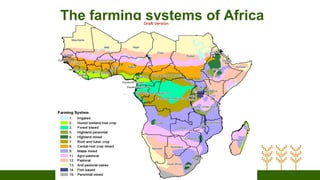
The farming systems of Africa
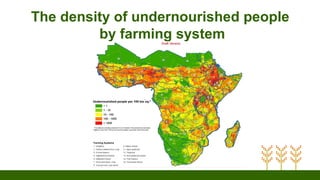
The density of undernourished people
by farming system
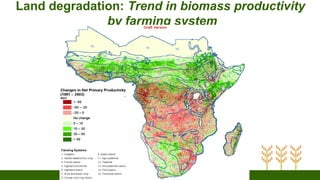
Land degradation: Trend in biomass productivity
by farming system
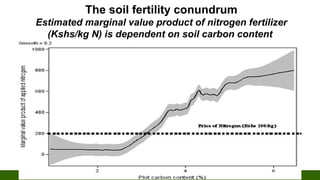
The soil fertility conundrum
Estimated marginal value product of nitrogen fertilizer
(Kshs/kg N) is dependent on soil carbon content
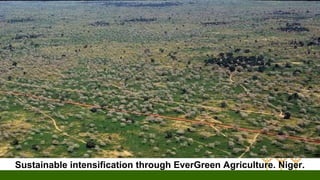
Sustainable intensification through EverGreen Agriculture. Niger.
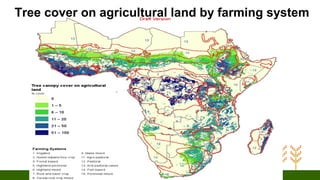
Tree cover on agricultural land by farming system
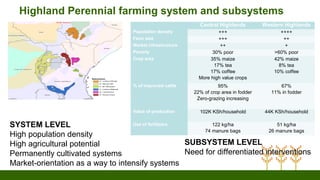
Highland Perennial farming system and subsystems
Central Highlands Western Highlands
Population density +++ ++++
Farm size +++ ++
Market infrastructure ++ +
Poverty 30% poor >60% poor
Crop area 35% maize
17% tea
17% coffee
More high value crops
42% maize
8% tea
10% coffee
% of improved cattle 95%
22% of crop area in fodder
Zero-grazing increasing
67%
11% in fodder
Value of production 102K KSh/household 44K KSh/household
Use of fertilizers 122 kg/ha
74 manure bags
51 kg/ha
26 manure bags
SYSTEM LEVEL
High population density
High agricultural potential
Permanently cultivated systems
Market-orientation as a way to intensify systems
SUBSYSTEM LEVEL
Need for differentiated interventions
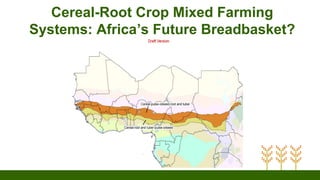
Cereal-Root Crop Mixed Farming
Systems: Africa’s Future Breadbasket?
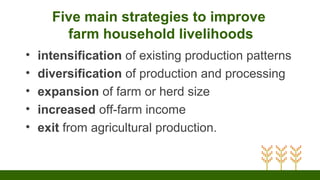
Five main strategies to improve
farm household livelihoods
• intensification of existing production patterns
• diversification of production and processing
• expansion of farm or herd size
• increased off-farm income
• exit from agricultural production.
Conclusions & Policy Implications
1. Rural populations have now reached critical levels
• Highland perennial systems: Strong rural-urban labour
market integration occurring in some subsystems. This can be
accelerated through education, business development, and
education
• Agropastoral systems have strong labour migration, which
can be strengthened by improving labour market information
and education.
Conclusions & Policy Implications
2. Tackling the decline in soil fertility
Governments can pursue a number of paths to support land
regeneration:
• Maize-mixed systems: In high-population subsystems target
fertilizer subsidies transitioning to tree biofertilisers; in low
population density subsystems expand area farmed through more
efficient tillage and conservation agriculture on smallholdings.
• Agropastoral: Continue regreening with massive upscaling of
farmer-managed natural regeneration along with fertilizer
microdosing and more efficient fertilizer input markets.
Conclusions & Policy Implications
3. Agricultural trade and markets
The key growth potential in lies at home, in the expanding
domestic and regional markets within Africa, where demand in
some areas already far exceeds supply. Enhancing these
markets, improving infrastructure, removing barriers and reducing
transactions costs.
Market development is important in all systems, but a priority
in systems with strong agricultural potential but poor market
access (e.g. Cereal root and tuber systems).
“The work on the Farming Systems of Africa provides
concrete substance that can be streamlined into the
CAADP work.
“The Dublin process can pick up and use the Farming
Systems work in a continuing process.
“The work can start by developing guidelines to use
the FS materials. CAADP can collaborate in
developing and implementing an action plan in that
area.”
-- Martin Bwalya
NEPAD Coordinating & Planning Agency
Way Forward
• Institutionalization of the farming systems knowledge and
approach into regional and national policy making and
planning
• Building of systems research capacity in research,
extension and policy making to complement existing
disciplinary expertise
• National efforts to apply farming systems analysis through
the CAADP process
• Reinvigorate education and training in farming systems
approaches throughout Africa

Farming Systems Approaches for Sustainable Intensification:Science and Policy Implications

  • 1.
    Farming Systems Approaches forSustainable Intensification Science and Policy Implications Dennis Garrity 16 July 2013, AASW6, Accra, Ghana
  • 2.
    Approach: why afarming systems lens? • Low productivity and rural food insecurity and poverty persist after many years of interventions • Strong diversity and complexity of farming systems and farm-households’ potentials and needs • Understanding farm household decision-making is essential for fostering innovation and accelerating adoption
  • 3.
    Farm household decision-making: Connectingresources, production, consumption and investment
  • 4.
    Three scales ofknowledge that can help decision-makers • 1st, the larger trends and drivers that are in motion at the continental level, providing a backdrop at the macro level. • 2nd , the level of the farming system and subsystems, where the drivers play out in unique ways in the local context. And • 3rd , the household level, and how it responds to internal and external forces, including policy interventions.
  • 5.
    The drivers offarming systems change • population, hunger and poverty • natural resources degradation and climate change • markets and trade • technology and science • energy • information and human capital • institutions and policies
  • 6.
    Background on classificationapproach • Farm systems classified on broadly similar patterns of livelihood and consumption patterns, as well as constraints and opportunities • Policy-making relevance: Similar development strategies and interventions apply. • Classification based on: – Agroecology (LGP), production constraints – Key commodities – Socio-economic parameters (demography, market access, etc)
  • 7.
  • 8.
    The density ofundernourished people by farming system
  • 9.
    Land degradation: Trendin biomass productivity by farming system
  • 10.
    The soil fertilityconundrum Estimated marginal value product of nitrogen fertilizer (Kshs/kg N) is dependent on soil carbon content
  • 11.
    Sustainable intensification throughEverGreen Agriculture. Niger.
  • 12.
    Tree cover onagricultural land by farming system
  • 13.
    Highland Perennial farmingsystem and subsystems Central Highlands Western Highlands Population density +++ ++++ Farm size +++ ++ Market infrastructure ++ + Poverty 30% poor >60% poor Crop area 35% maize 17% tea 17% coffee More high value crops 42% maize 8% tea 10% coffee % of improved cattle 95% 22% of crop area in fodder Zero-grazing increasing 67% 11% in fodder Value of production 102K KSh/household 44K KSh/household Use of fertilizers 122 kg/ha 74 manure bags 51 kg/ha 26 manure bags SYSTEM LEVEL High population density High agricultural potential Permanently cultivated systems Market-orientation as a way to intensify systems SUBSYSTEM LEVEL Need for differentiated interventions
  • 14.
    Cereal-Root Crop MixedFarming Systems: Africa’s Future Breadbasket?
  • 15.
    Five main strategiesto improve farm household livelihoods • intensification of existing production patterns • diversification of production and processing • expansion of farm or herd size • increased off-farm income • exit from agricultural production.
  • 16.
    Conclusions & PolicyImplications 1. Rural populations have now reached critical levels • Highland perennial systems: Strong rural-urban labour market integration occurring in some subsystems. This can be accelerated through education, business development, and education • Agropastoral systems have strong labour migration, which can be strengthened by improving labour market information and education.
  • 17.
    Conclusions & PolicyImplications 2. Tackling the decline in soil fertility Governments can pursue a number of paths to support land regeneration: • Maize-mixed systems: In high-population subsystems target fertilizer subsidies transitioning to tree biofertilisers; in low population density subsystems expand area farmed through more efficient tillage and conservation agriculture on smallholdings. • Agropastoral: Continue regreening with massive upscaling of farmer-managed natural regeneration along with fertilizer microdosing and more efficient fertilizer input markets.
  • 18.
    Conclusions & PolicyImplications 3. Agricultural trade and markets The key growth potential in lies at home, in the expanding domestic and regional markets within Africa, where demand in some areas already far exceeds supply. Enhancing these markets, improving infrastructure, removing barriers and reducing transactions costs. Market development is important in all systems, but a priority in systems with strong agricultural potential but poor market access (e.g. Cereal root and tuber systems).
  • 19.
    “The work onthe Farming Systems of Africa provides concrete substance that can be streamlined into the CAADP work. “The Dublin process can pick up and use the Farming Systems work in a continuing process. “The work can start by developing guidelines to use the FS materials. CAADP can collaborate in developing and implementing an action plan in that area.” -- Martin Bwalya NEPAD Coordinating & Planning Agency
  • 20.
    Way Forward • Institutionalizationof the farming systems knowledge and approach into regional and national policy making and planning • Building of systems research capacity in research, extension and policy making to complement existing disciplinary expertise • National efforts to apply farming systems analysis through the CAADP process • Reinvigorate education and training in farming systems approaches throughout Africa