
Conference on New Directions for Smallholder Agriculture Rudy Rabbinge  Increasing small farm technology and sustainable resource management 24 January 2011
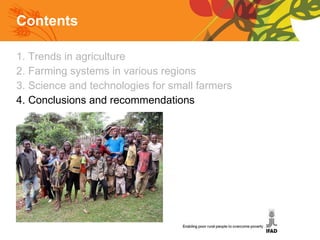
1. Trends in agriculture 2. Farming systems in various regions 3. Science and technologies for small farmers 4. Conclusions and recommendations Contents
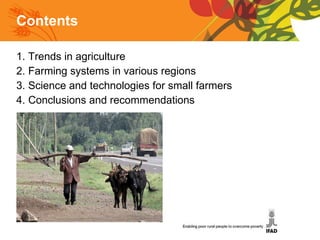
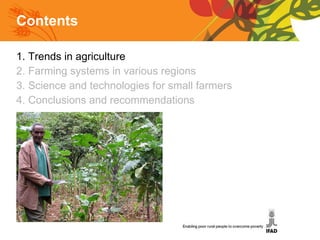
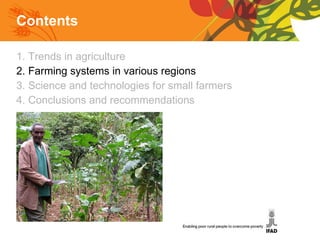
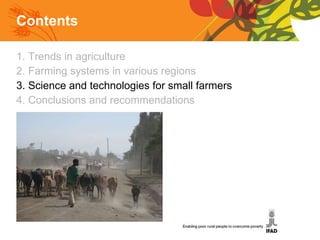
Contents 1. Trends in agriculture 2. Farming systems in various regions 3. Science and technologies for small farmers 4. Conclusions and recommendations
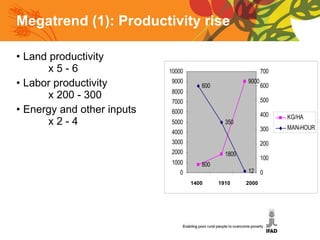
Megatrend (1):  Productivity rise  Land productivity  x 5 - 6 Labor productivity  x 200 - 300 Energy and other inputs x 2 - 4 1400 1910 2000 Grain production in NL between 1400 and 2000
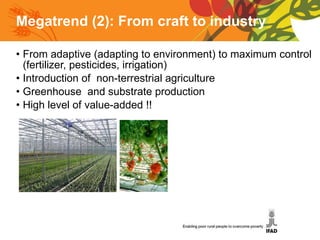
Megatrend (2): From  craft to industry From adaptive (adapting to environment) to maximum control (fertilizer, pesticides, irrigation) Introduction of  non-terrestrial agriculture Greenhouse  and substrate production High level of value-added !!
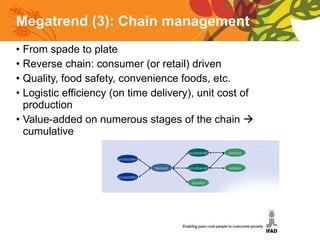
Megatrend (3):  Chain management From spade to plate Reverse chain: consumer (or retail) driven Quality, food safety, convenience foods, etc. Logistic efficiency (on time delivery), unit cost of production Value-added on numerous stages of the chain    cumulative
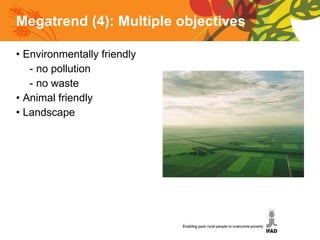
Megatrend (4):  Multiple objectives Environmentally friendly  no pollution no waste  Animal friendly Landscape
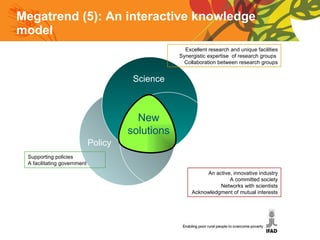
Megatrend (5): An interactive knowledge model Excellent research and unique facilities Synergistic expertise  of research groups  Collaboration between research groups An active, innovative industry A committed society Networks with scientists Acknowledgment of mutual interests Supporting policies A facilitating government Policy Science Industry society New solutions
Contents 1. Trends in agriculture 2. Farming systems in various regions 3. Science and technologies for small farmers 4. Conclusions and recommendations
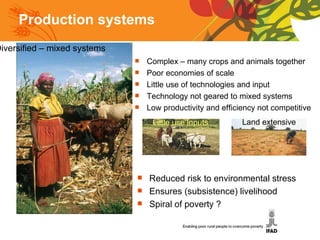
Production systems Diversified – mixed systems Complex – many crops and animals together Poor economies of scale Little use of technologies and input Technology not geared to mixed systems Low productivity and efficiency not competitive Reduced risk to environmental stress Ensures (subsistence) livelihood Spiral of poverty ? Land extensive  Little use inputs
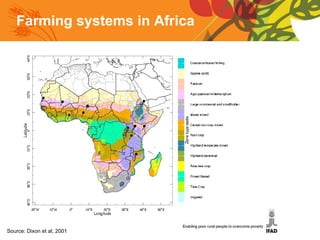
Farming systems in Africa Source: Dixon et al, 2001
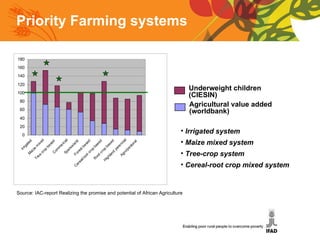
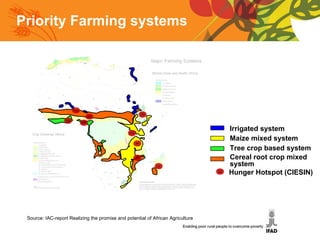
Priority Farming systems Agricultural value added (worldbank) Underweight children (CIESIN) Irrigated system Maize mixed system Tree-crop system Cereal-root crop mixed system Source: IAC-report Realizing the promise and potential of African Agriculture
Priority Farming systems Source: IAC-report Realizing the promise and potential of African Agriculture Irrigated system Maize mixed system Tree crop based system Cereal root crop mixed system Hunger Hotspot (CIESIN)
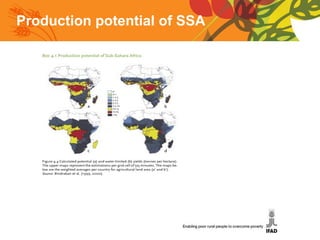
Production potential of SSA
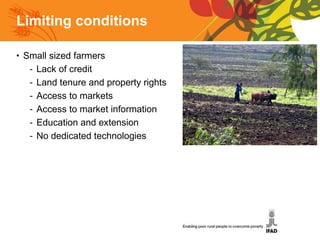
Limiting conditions Small sized farmers Lack of credit Land tenure and property rights Access to markets Access to market information Education and extension No dedicated technologies
Contents 1. Trends in agriculture 2. Farming systems in various regions 3. Science and technologies for small farmers 4. Conclusions and recommendations
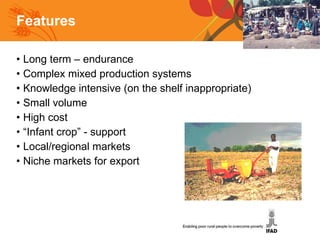
Features Long term – endurance Complex mixed production systems Knowledge intensive (on the shelf inappropriate) Small volume High cost “ Infant crop” - support Local/regional markets Niche markets for export
Science and technologies for smallholders An urgent need for technologies tailored for smallholders More attention for orphan crops More attention for low cost technologies More attention for farming systems approach Precision agriculture Leap frogging technologies to high productive systems Ecological literacy at all levels
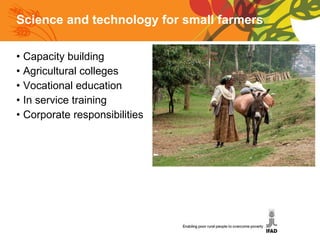
Science and technology for small farmers Capacity building Agricultural colleges Vocational education In service training Corporate responsibilities
Role of private sector and public sector Private sector - More investment in primary production - Lead the supply chains and focus on        smallholders - Strengthen the capacity building Public sector - Investment in knowledge infrastructure - Strengthen cooperatives and competitive power - Develop appropriate land use and voluntary      guidelines
Contents 1. Trends in agriculture 2. Farming systems in various regions 3. Science and technologies for small farmers 4. Conclusions and recommendations
Recommendations Increase investments in agriculture and agricultural research Create functioning institutions Create and retain a new generation of scientists Initiatives of IFAD very welcome Strengthen entrepreneurship at all levels Promote best ecological means and ecological literacy
Thank you for your attention

Increasing small farm technology and sustainable resource management

  • 1.
    Conference on NewDirections for Smallholder Agriculture Rudy Rabbinge Increasing small farm technology and sustainable resource management 24 January 2011
  • 2.
    1. Trends inagriculture 2. Farming systems in various regions 3. Science and technologies for small farmers 4. Conclusions and recommendations Contents
  • 3.
    Contents 1. Trendsin agriculture 2. Farming systems in various regions 3. Science and technologies for small farmers 4. Conclusions and recommendations
  • 4.
    Megatrend (1): Productivity rise Land productivity x 5 - 6 Labor productivity x 200 - 300 Energy and other inputs x 2 - 4 1400 1910 2000 Grain production in NL between 1400 and 2000
  • 5.
    Megatrend (2): From craft to industry From adaptive (adapting to environment) to maximum control (fertilizer, pesticides, irrigation) Introduction of non-terrestrial agriculture Greenhouse and substrate production High level of value-added !!
  • 6.
    Megatrend (3): Chain management From spade to plate Reverse chain: consumer (or retail) driven Quality, food safety, convenience foods, etc. Logistic efficiency (on time delivery), unit cost of production Value-added on numerous stages of the chain  cumulative
  • 7.
    Megatrend (4): Multiple objectives Environmentally friendly no pollution no waste Animal friendly Landscape
  • 8.
    Megatrend (5): Aninteractive knowledge model Excellent research and unique facilities Synergistic expertise of research groups Collaboration between research groups An active, innovative industry A committed society Networks with scientists Acknowledgment of mutual interests Supporting policies A facilitating government Policy Science Industry society New solutions
  • 9.
    Contents 1. Trendsin agriculture 2. Farming systems in various regions 3. Science and technologies for small farmers 4. Conclusions and recommendations
  • 10.
    Production systems Diversified– mixed systems Complex – many crops and animals together Poor economies of scale Little use of technologies and input Technology not geared to mixed systems Low productivity and efficiency not competitive Reduced risk to environmental stress Ensures (subsistence) livelihood Spiral of poverty ? Land extensive Little use inputs
  • 11.
    Farming systems inAfrica Source: Dixon et al, 2001
  • 12.
    Priority Farming systemsAgricultural value added (worldbank) Underweight children (CIESIN) Irrigated system Maize mixed system Tree-crop system Cereal-root crop mixed system Source: IAC-report Realizing the promise and potential of African Agriculture
  • 13.
    Priority Farming systemsSource: IAC-report Realizing the promise and potential of African Agriculture Irrigated system Maize mixed system Tree crop based system Cereal root crop mixed system Hunger Hotspot (CIESIN)
  • 14.
  • 15.
    Limiting conditions Smallsized farmers Lack of credit Land tenure and property rights Access to markets Access to market information Education and extension No dedicated technologies
  • 16.
    Contents 1. Trendsin agriculture 2. Farming systems in various regions 3. Science and technologies for small farmers 4. Conclusions and recommendations
  • 17.
    Features Long term– endurance Complex mixed production systems Knowledge intensive (on the shelf inappropriate) Small volume High cost “ Infant crop” - support Local/regional markets Niche markets for export
  • 18.
    Science and technologiesfor smallholders An urgent need for technologies tailored for smallholders More attention for orphan crops More attention for low cost technologies More attention for farming systems approach Precision agriculture Leap frogging technologies to high productive systems Ecological literacy at all levels
  • 19.
    Science and technologyfor small farmers Capacity building Agricultural colleges Vocational education In service training Corporate responsibilities
  • 20.
    Role of privatesector and public sector Private sector - More investment in primary production - Lead the supply chains and focus on smallholders - Strengthen the capacity building Public sector - Investment in knowledge infrastructure - Strengthen cooperatives and competitive power - Develop appropriate land use and voluntary guidelines
  • 21.
    Contents 1. Trendsin agriculture 2. Farming systems in various regions 3. Science and technologies for small farmers 4. Conclusions and recommendations
  • 22.
    Recommendations Increase investmentsin agriculture and agricultural research Create functioning institutions Create and retain a new generation of scientists Initiatives of IFAD very welcome Strengthen entrepreneurship at all levels Promote best ecological means and ecological literacy
  • 23.
    Thank you foryour attention

Editor's Notes