TOPIC :MICROBIAL DEGRADATION-
RECALCITRANT COMPOUNDS
By
Tejaswini Petkar
CONTENTS
• INTRODUCTION
• HAZARDS FROM RECALCITRANT XENOBIOTIC COMPOUNDS.
• TYPES OF RECALCITRANT XENOBIOTICS
• USE OF MICROBES TO BIODEGRADE RECALCITRANT COMPOUNDS
• PRACTICAL APPLICATION OF MICROBES FOR XENOBIOTIC DEGRADATION
• GENERAL FEATURES OF BIODEGRADATION OF XENOBIOTICS
• CONCLUSION
• REFERENCES
INTRODUCTION
• Compounds which as a rule are highly persistent against
biodegradation and belong. as "recalcitrant" chemicals, to the class of
so-called xenobiotics.
• Microbial degradation of such compounds is usually very slow, making
them highly persistent in nature as these chemical substances have no
or limited structural analogy to natural compounds for which
degradation pathways have evolved over billions of years.
• If the environmental recalcitrance of a compound is due to the lack or
scarcity of microbes capable of its degradation, inoculation of such
organisms could enhance remediation.
HAZARDS FROM RECALCITRANT
XENOBIOTIC COMPOUNDS
(i) Toxicity:
 Many xenobiotics like halogenated and aromatic hycrocarbons are toxic to
bacteria, lower eukaryotes and even humans. At low concentrations they may
cause various skin problems and reduce reproductive potential.
(ii) Carcinogenicity:
 Certain halogenated hydrocarbons have been shown to be carcinogenic.
(iii)Many xenobiotics are recalcitrant and persist in the environment so that there
is a build up in their concentration with time.
(iv) Many xenobiotics including DDT and PCB’s are recalcitrant and lipophilic; as a
consequence they show bioaccumulation or bio-magnification often by a
factor of 104 – 106.
(v) They are produced and used in large quantities which favours their
accumulation in nature.
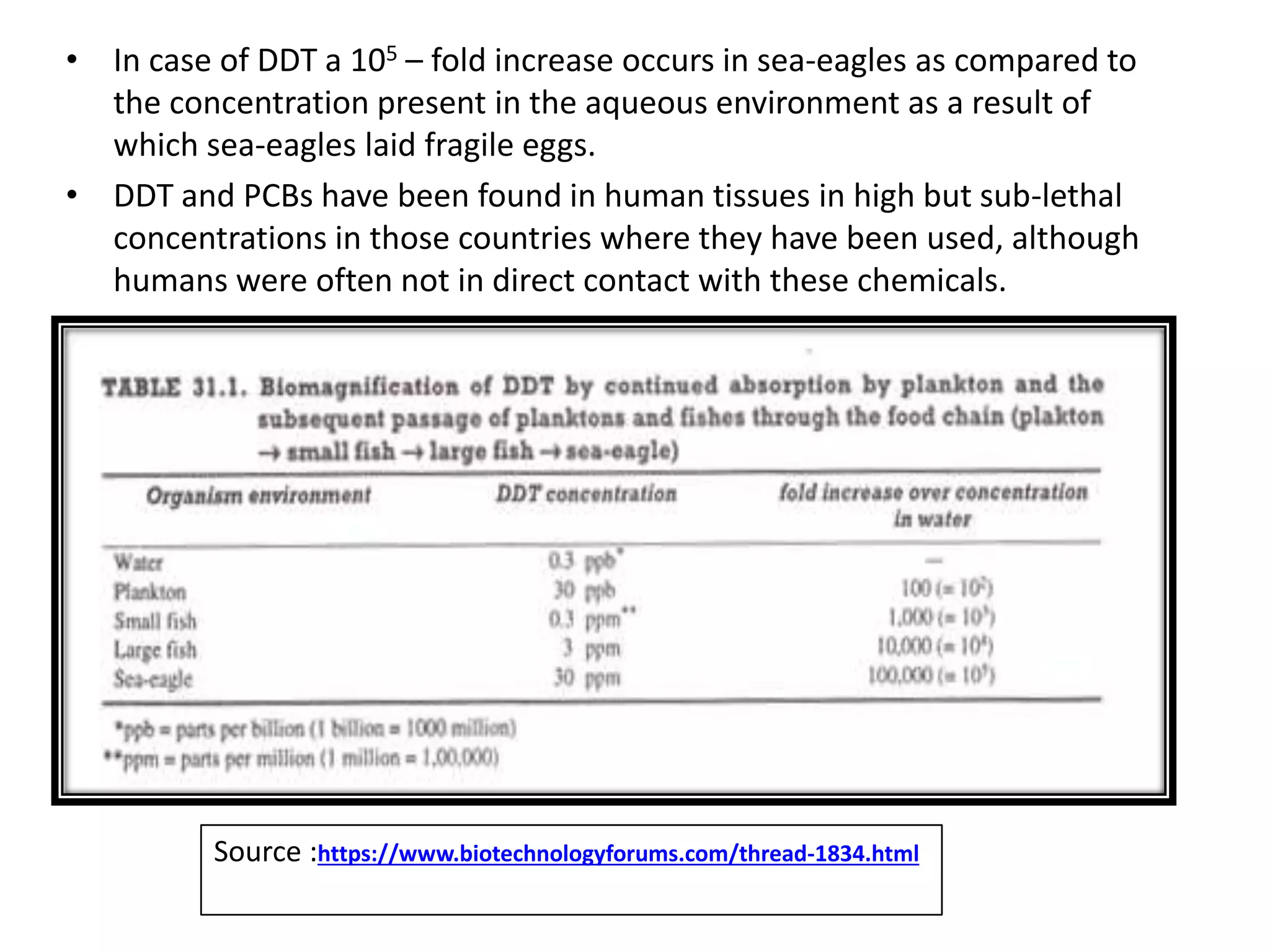
• In case of DDT a 105 – fold increase occurs in sea-eagles as compared to
the concentration present in the aqueous environment as a result of
which sea-eagles laid fragile eggs.
• DDT and PCBs have been found in human tissues in high but sub-lethal
concentrations in those countries where they have been used, although
humans were often not in direct contact with these chemicals.
Source :https://www.biotechnologyforums.com/thread-1834.html
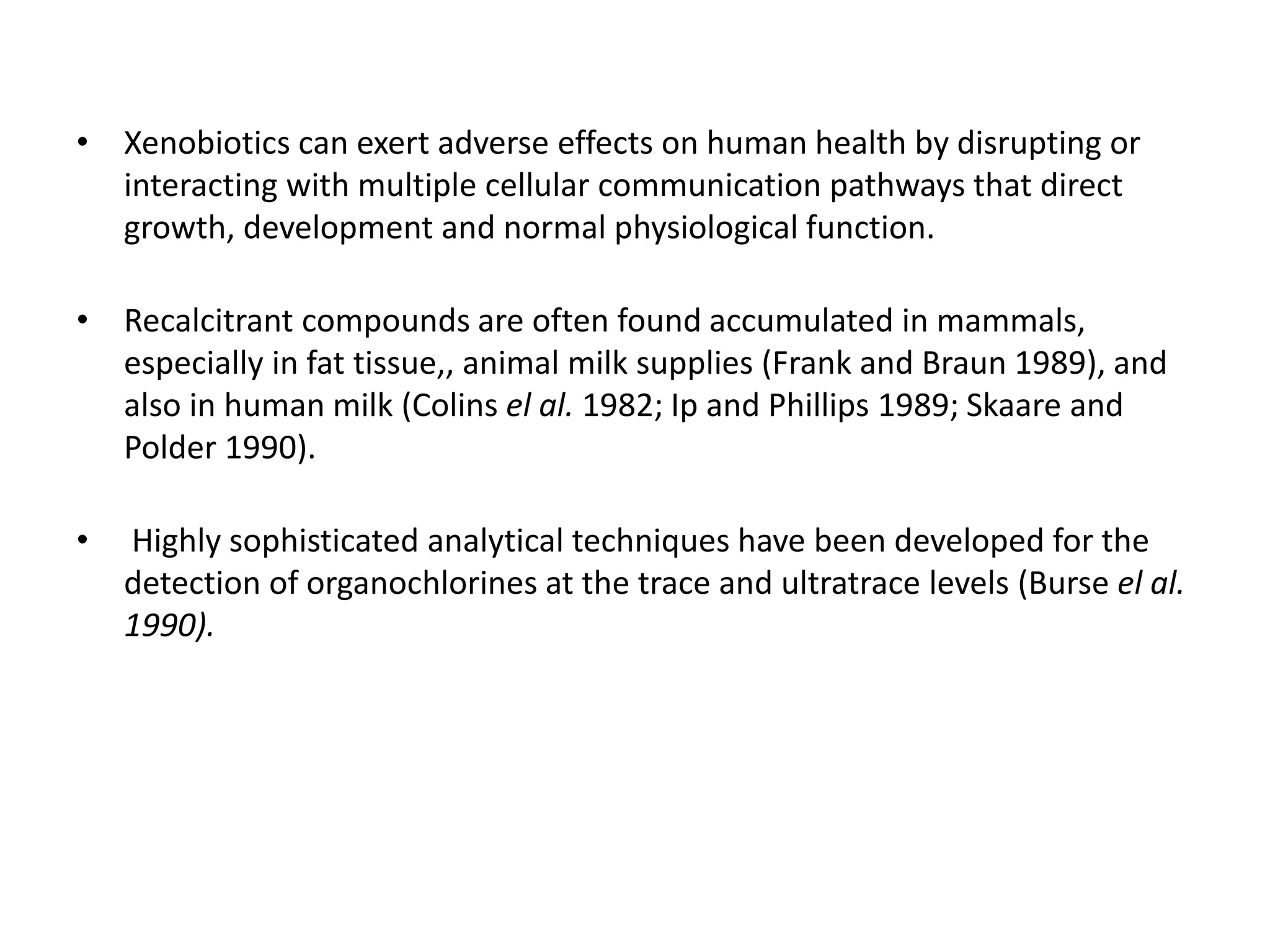
• Xenobiotics can exert adverse effects on human health by disrupting or
interacting with multiple cellular communication pathways that direct
growth, development and normal physiological function.
• Recalcitrant compounds are often found accumulated in mammals,
especially in fat tissue,, animal milk supplies (Frank and Braun 1989), and
also in human milk (Colins el al. 1982; Ip and Phillips 1989; Skaare and
Polder 1990).
• Highly sophisticated analytical techniques have been developed for the
detection of organochlorines at the trace and ultratrace levels (Burse el al.
1990).
TYPES OF RECALCITRANT XENOBIOTICS
The recalcitrant xenobiotic compounds can be grouped into the
following 6 types:
(i) Halocarbons,
(ii) Polychlorinated biphenyls,
(iii) Synthetic polymers,
(iv) Alkylbenzylsulphonates,
(v) Oil mixture and
(vi) Others.
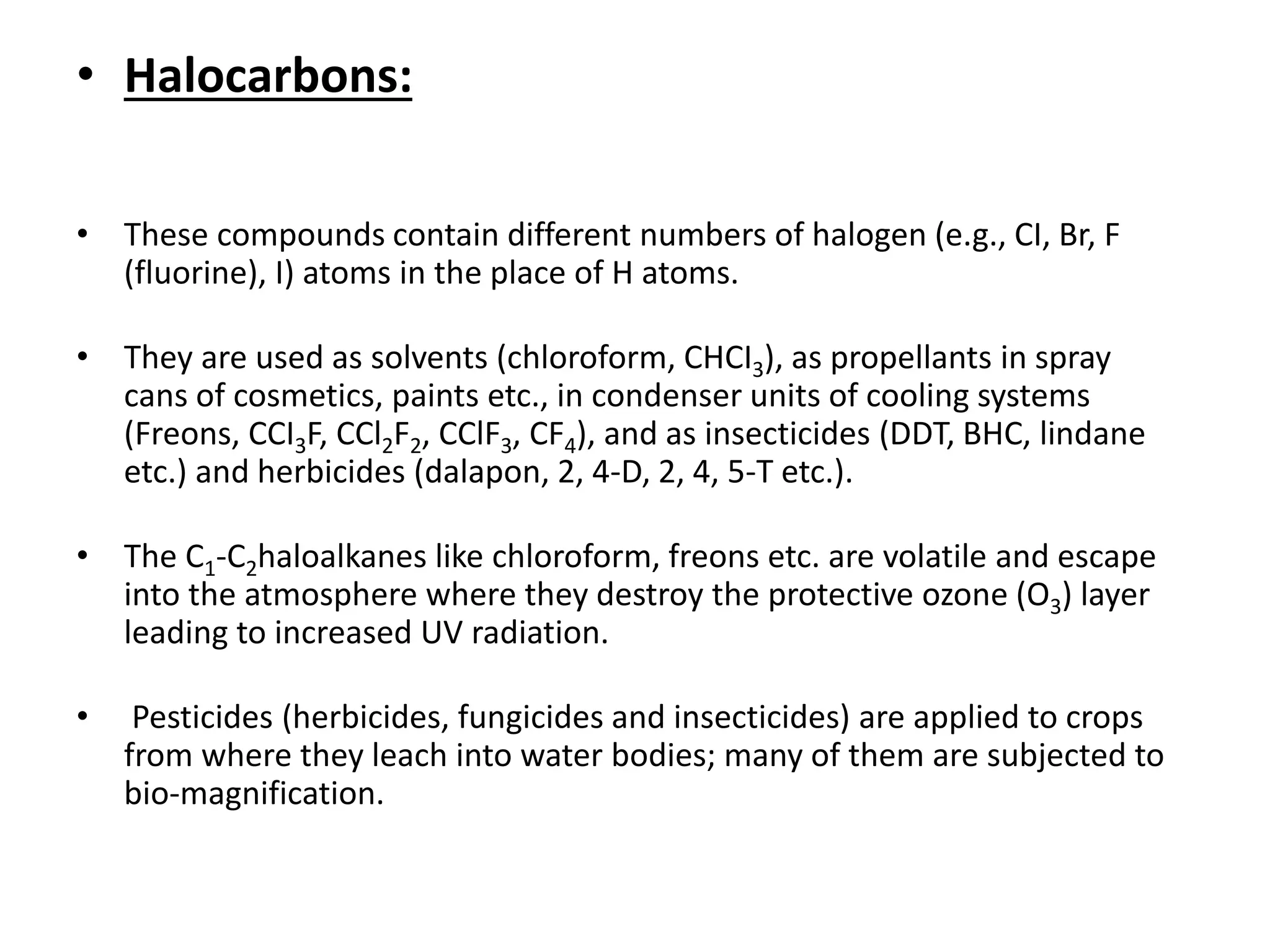
• Halocarbons:
• These compounds contain different numbers of halogen (e.g., CI, Br, F
(fluorine), I) atoms in the place of H atoms.
• They are used as solvents (chloroform, CHCI3), as propellants in spray
cans of cosmetics, paints etc., in condenser units of cooling systems
(Freons, CCI3F, CCl2F2, CClF3, CF4), and as insecticides (DDT, BHC, lindane
etc.) and herbicides (dalapon, 2, 4-D, 2, 4, 5-T etc.).
• The C1-C2haloalkanes like chloroform, freons etc. are volatile and escape
into the atmosphere where they destroy the protective ozone (O3) layer
leading to increased UV radiation.
• Pesticides (herbicides, fungicides and insecticides) are applied to crops
from where they leach into water bodies; many of them are subjected to
bio-magnification.
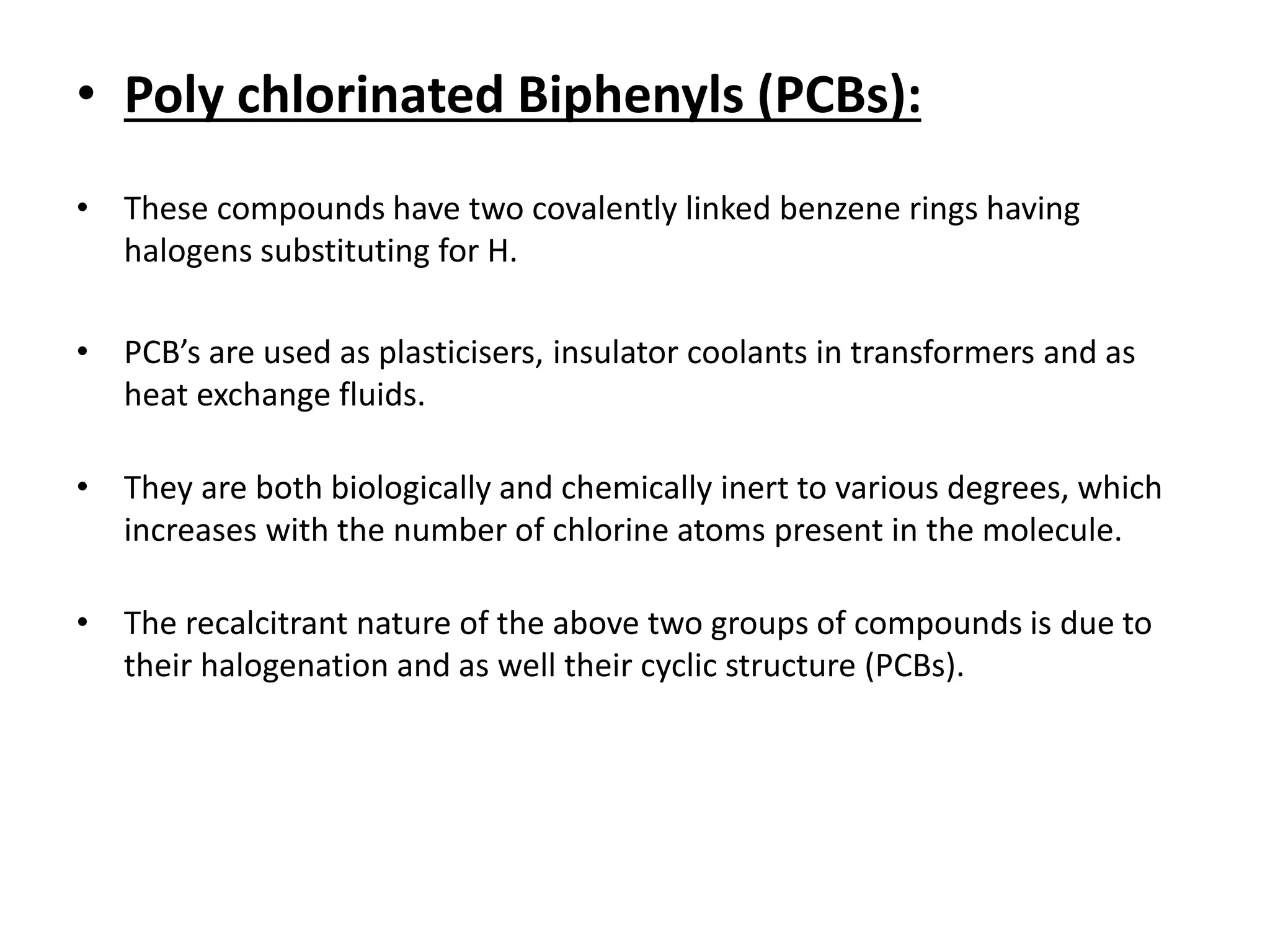
• Poly chlorinated Biphenyls (PCBs):
• These compounds have two covalently linked benzene rings having
halogens substituting for H.
• PCB’s are used as plasticisers, insulator coolants in transformers and as
heat exchange fluids.
• They are both biologically and chemically inert to various degrees, which
increases with the number of chlorine atoms present in the molecule.
• The recalcitrant nature of the above two groups of compounds is due to
their halogenation and as well their cyclic structure (PCBs).
• (iii) Synthetic Polymers:
• These compounds are produced as plastics, e.g., polyethylene,
polystyrene, polyvinyl chloride etc., and nylons.
• These are in turn used as garments, wrapping materials etc.
• They are recalcitrant mainly due to their insolubility in water and
molecular size.
• (iv) AlkylbenzylSulfonates:
• These are surface-active detergents superior to soaps.
• The sulphonate (— SO3
–) group present at one end resists microbial
degradation, while the other end (non-polar alkyl end) becomes
recalcitrant if its is branched, (resistance increases with the degree of
branching).
• At present, alkylbenzylsulphonates having non-branched alkyl ends are
used; these are biodegraded by β-oxidation from their alkyl ends.
• (v) Oil Mixtures:
• Oil is a natural product, has many components and is biodegradable-the different
components being degraded at different rates.
• Biodegradation is able to handle small oil seepages. When large spills occur the
problem of pollution becomes acute.
• Oil is recalcitrant mainly because of its insolubility in water and due to the
toxicity of some of its components.
• (vi) Other Xenobiotic Compounds:
• A number of pesticides are based on aliphatic, cyclic ring structures containing
substitution of nitro-, sulphonate, methoxy-, amino- and carbonyl groups; in
addition, they also contain halogens.
• These substitutions make them recalcitrant.
USE OF MICROBES TO BIODEGRADE
RECALCITRANT COMPOUNDS
• The use of microorganisms is now preferred for degradation of recalcitrant
compounds.
• They are cost effective and do not pose toxic effects.
• They degrade much complex compounds into simpler molecules that do
not harm the environment.
• The enzymes produced by them are even advantageous and are efficient
degraders.
• Anaerobic bacteria seem to have much degrading ability than aerobic ones.
Recently it has been seen from various researches that the use of fungi is
also a potential tool for recalcitrant compounds.
• White rot fungi have been extensively studied by many researchers for
degradation of many recalcitrant compounds.
• Mycelium of Lentinula elodes immobilized with polyurethane has resulted
in an overall abatement of phenolic and aromatic compounds as well as
in extensive decolourization and in an apparent depolymerization of the
high molecular weight fraction (Alessaro, et al., 1998).
• Pediococcus pentosaceus with its anaerobic and rapid growth and high pH
tolerance represents an interesting ecological method for recalcitrant
phenolic compounds removal in treated olive mill wastewater and other
vegetable industry wastes (Ben Othman, et al., 2008).
• Laccase from a strain of Trametes trogii decolourized a variety of
synthetic dyes, including azoic, indigoid, triphenylmethane in the absence
of redox mediators (Emanuel Grassi, et al. 2011).
• Trametes species are by far the most studied organism for laccase
production, especially Trametes versicolor is taken as a model organism .
PRACTICAL APPLICATION OF MICROBES
FOR XENOBIOTIC DEGRADATION
• Practical application of microbes for xenobiotic degradation is facilitated
by:
• (i) Supply of sufficient nutrients or co-metabolites,
• (ii) Maintenance of the xenobiotic compounds to non-toxic levels and
• (iii) Provision of microbial population or inoculum.
• Nutrients and Co-metabolites
• All the nutrients required for growth and metabolism of microbial
cells must be available in the solution containing the xenobiotic
compound.
• In general, nitrogen,- phosphorus and, sometimes, sulphur may have
to be added to the solution.
• Where necessary, adequate 02supply should be ensured by aeration
of the medium since xenobiotic compounds are degraded
aerobically.
• In addition, some compounds may be required as co-metabolites to
induce the necessary enzymes and to provide the energy and the
reducing equivalents for xenobiotic degradation.
• Xenobiotic Concentration:
• In case the xenobiotic concentration is high, it should be reduced by
appropriate dilution with, usually, water.
• In continuous treatment system, e.g., for effluents, the amount of
xenobiotic entering the system should not exceed the amount
being degraded by the system.
• At the same time, xenobiotic should always to present in the
effluent in order to maintain the necessary microbial population.
• However, when the concentration of the xenobiotic compound is
relatively low, a higher density of the degradative microbes will be
needed for degradation of the compound.
• Microbial Inoculum:
• In a treatment system natural evolution of the microbial population will take time.
Therefore, it is customary to inoculate the system with a suitable population of
microbes having the necessary degradative capabilities; this is called bio-
augmentation.
• A number of inoculants designed to degrade various xenobiotic compounds are
commercially available.
• The commercial inoculum is prepared by selecting the strains needed for
degradation of the specified xenobiotic compounds, and then matching and
blending them; bulking agents, dispersant chemicals, wetting agents and nutrients
are also added.
• The inoculants are usually available as dry powders which are easy to store,
transport and reconstitute at site (by simply adding water).
• These inoculants consist of naturally occurring microbial species which have been
isolated, purified and characterised for various features, including their xenobiotic
degradation capabilities.
• The stocks of various isolates are preserved by air-drying or freeze-drying
techniques.
GENERAL FEATURES OF
BIODEGRADATION OF XENOBIOTICS
• Academia and scientists have worked in deep and came out with
the following interventions which have made the degradation of
these recalcitrant compounds possible. The deeper insights are,
 Understanding of how recalcitrant chemicals are degraded and
what structural factors make them recalcitrant
 Discovery of co-metabolism
 Realization of role of microbial communities
 Realization of anaerobic degradation
 Discovery of white rot fungi’s degrading efficiency.
The structural features that make these compounds resistant to
microbial degradation include the following:
(i) Presence of halogens in the place of hydrogen in the molecule; the carbon-
halogen bond is highly stable and its cleavage requires considerable energy,
(ii) Substitution of H by other groups like nitro-, sulphonate, methoxy-, amino-
and carbonyl groups,
(iii) Cyclic structures, aromatic compounds, cycloalkanes and heterocyclic
compounds are more recalcitrant than linear chain or aliphatic compounds,
(iv) Branched linear chains resist biodegradation etc.
 In general, the more complex is the structure of a xenobiotic compound, the
more resistant it is to biodegradation.
 Many other xenobiotics resist biodegradation due to their large molecular
size and insolubility in water.
DEGRADATION OF ALKANES AND AROMATIC
HYDROCARBONS
• An oxygenase first introduces a hydroxyl group to make the
compound reactive.
• The hydroxyl group is then oxidised to a carboxyl group.
• The ring structure is opened up (in case of cyclic compounds).
• The linear molecule is degraded by β-oxidation to yield acetyl CoA
which is metabolised in the usual manner.
• For example, an n-alkane is oxidised as follows:
Similarly, an alicyclic hydrocarbon, e.g., cyclohexane, is oxidised as follows:
• First an oxygenase adds an —OH group in the ring.
• Then another oxygenase forms an ester in the form of a lactone.
• This is then hydrolysed to open the ring structure to yield a linear molecule.
• In both these oxidations mono-oxygenases are involved which add oxygen to
a single position in the molecule.
• In contrast, oxidation of benzene ring may involve a di-oxygenase which
adds oxygen at two positions in the molecule in a single step.
• Both mono- and di-oxygenases are of a variety of types: some react best
with short chain alkanes, while others act on cyclic alkanes.
• However these enzymes are not very specific and each enzyme oxidise a
limited range of compounds.
• Thus xenobiotics are degraded by a wide variety of microorganisms, each
of which degrades a small range of compounds.
HYDROCARBON DEGRADATION
• (i) Halomethanes:
• Halomethanes are transferred into methanol by the enzyme methane
mono-oxygenase which uses them as substrate.
• This enzyme occurs in a number of methylotrophs.
• Alternatively, a glutathione-dependent hydrolase catalyses oxidative
dechlorination of halomethanes into methanol. This reaction is anaerobic
and uses oxygen derived from water.
• Methanol is oxidised to CO2 + H2O via formaldehyde and formic acid.
• (ii) Cyanide:
• Cyanide(HCN) is toxic to biological systems and even microorganisms
capable of degrading cyanide cannot withstand a high concentration of
HCN.
• Some of the cyanides, e.g., HCN and CH3CN, are volatile.
• Therefore, disposal of cyanide is strictly controlled.
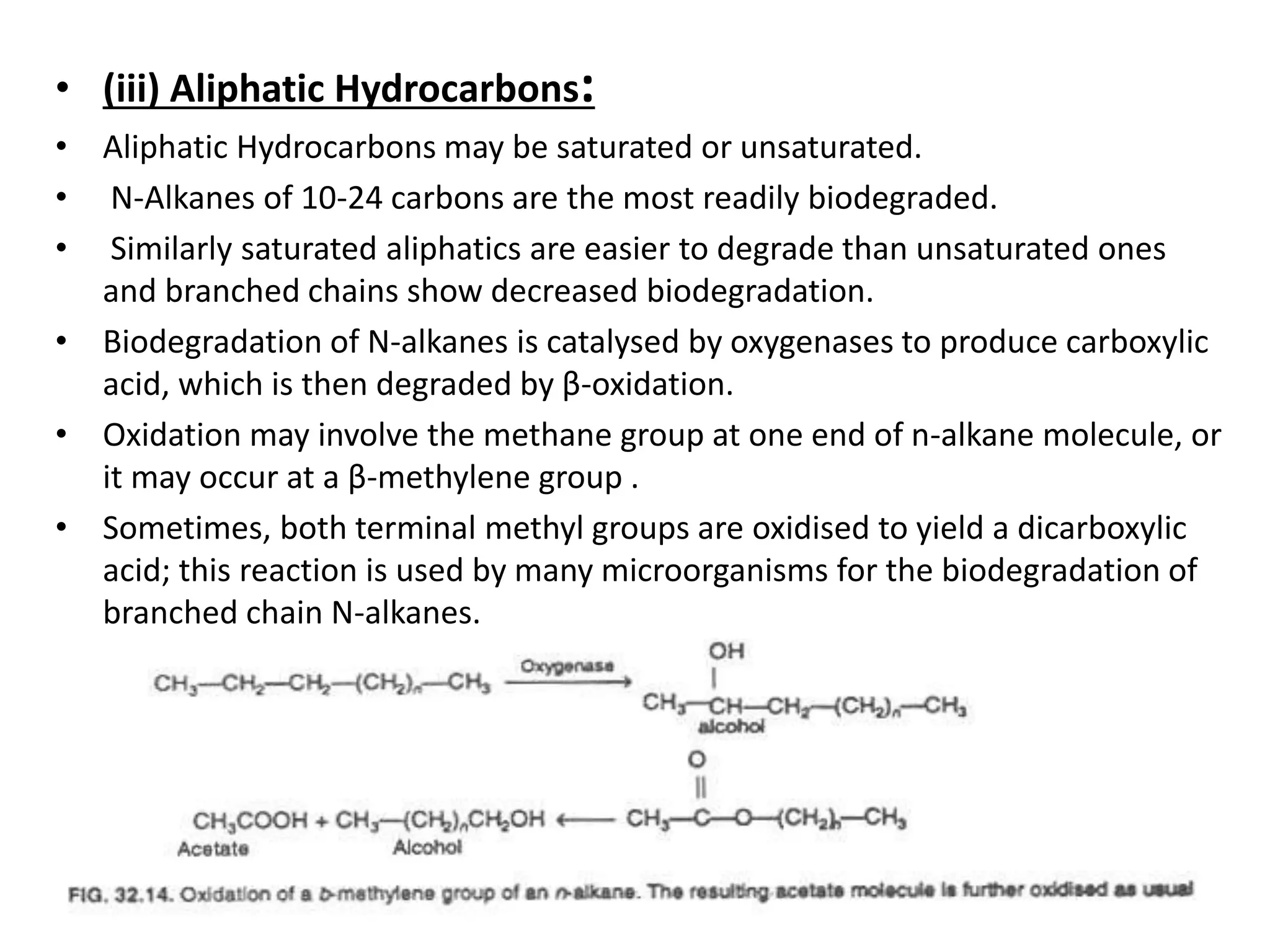
• (iii) Aliphatic Hydrocarbons:
• Aliphatic Hydrocarbons may be saturated or unsaturated.
• N-Alkanes of 10-24 carbons are the most readily biodegraded.
• Similarly saturated aliphatics are easier to degrade than unsaturated ones
and branched chains show decreased biodegradation.
• Biodegradation of N-alkanes is catalysed by oxygenases to produce carboxylic
acid, which is then degraded by β-oxidation.
• Oxidation may involve the methane group at one end of n-alkane molecule, or
it may occur at a β-methylene group .
• Sometimes, both terminal methyl groups are oxidised to yield a dicarboxylic
acid; this reaction is used by many microorganisms for the biodegradation of
branched chain N-alkanes.
• (iv) Alicyclic Hydrocarbons:
• Alicyclic hydrocarbons are present naturally in waxes from plants, crude oil,
microbial lipids etc.
• They are represented by xenobiotics used as pesticides and also in petroleum
products.
• Un-substituted cyclohexane rings are oxidised as shown in prior slide.
• (v) Aromatic Hydrocarbons:
• Aromatic hydrocarbons are rather stable.
• These are oxidised by di-oxygenases (slide 22) to catechol which is further
metabolised by two separate pathways:
• In case of ortho-ring cleavage
pathway, a 1, 2- dioxygenase cleaves
the ring between the two adjacent
hydroxyl groups and sequential
catabolism of the product cis, cis-
muconate yields succinate + acetyl
CoA.
 Alternatively, the enzyme 2, 3-di-
oxygenase cleaves the ring between
the carbon atom having an OH group
and an adjacent carbon lacking an OH
group (meta-cleavage).
 The products at the end of reaction
sequence are acetaldehyde and
pyruvate.
 Both ortho and meta pathways arc
involved in degradation of aromatic
hydrocarbons.
 Benzene is degraded by the meta
pathway.
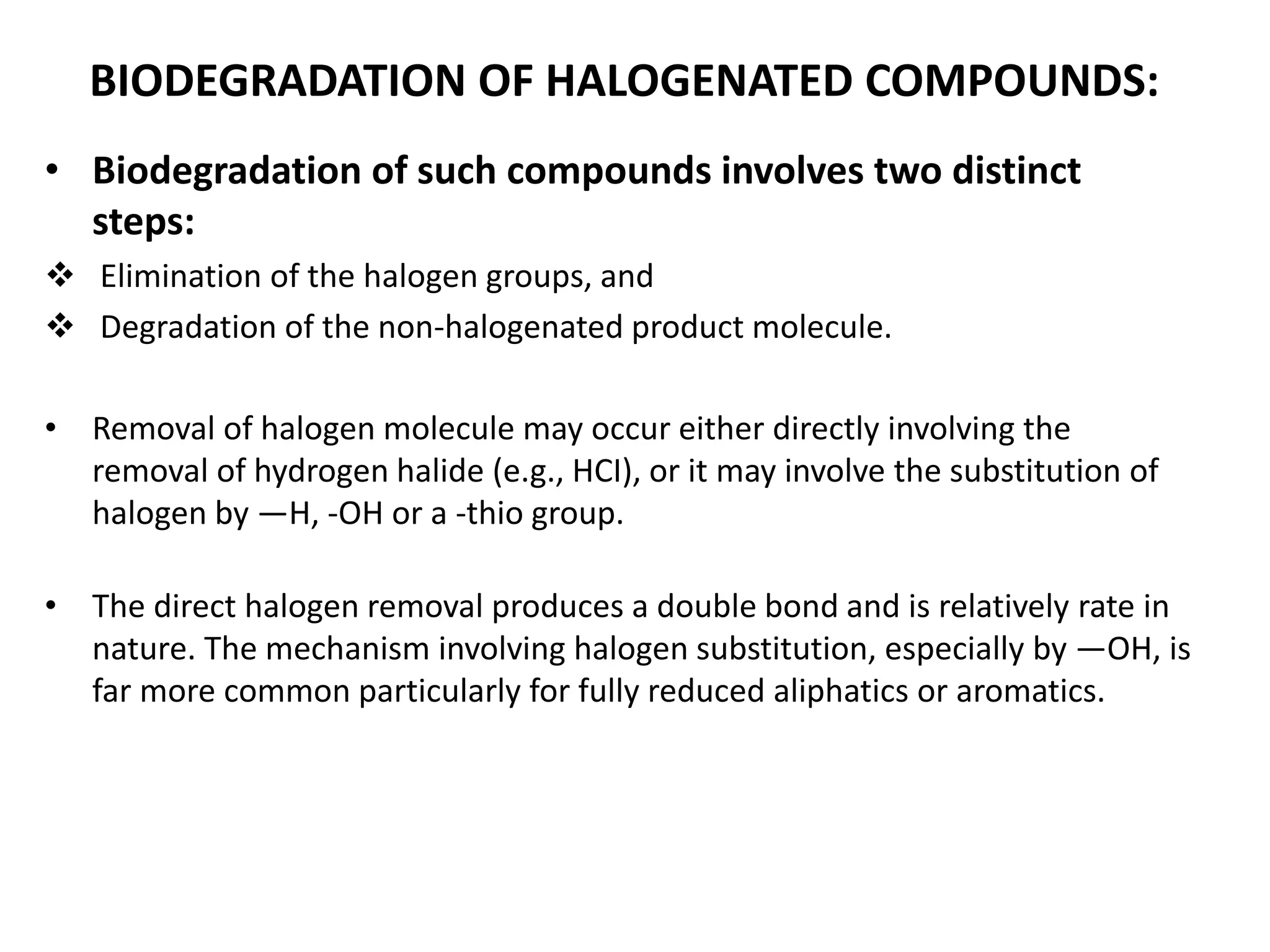
• (vi) Polycyclic Hydrocarbons:
• Polycyclic hydrocarbons contain two or more rings.
• Generally, one of the terminal rings is attacked by a di-oxygenase, leading
to ring cleavage and degradation so that in the end a single ring remains
which is catabolised in a manner similar to that described previously.
• Degradation of complex molecules containing
aliphatic, aromatic, alicyclic or heterocyclic
components is difficult to generalise but the
following features are observed:
• (i) Amide-, ester- or ether bonds are first attacked and
further degradation of the products so generated
takes place;
• (ii) If these bonds are absent or inaccessible; aliphatic
chains are degraded;
• (iii) If aliphatic chains are branched, the aromatic
component of complex molecules may be attacked,
• (iv) The site and mode of attack depends on the
molecular structure, the microorganism involved and
the environmental conditions,
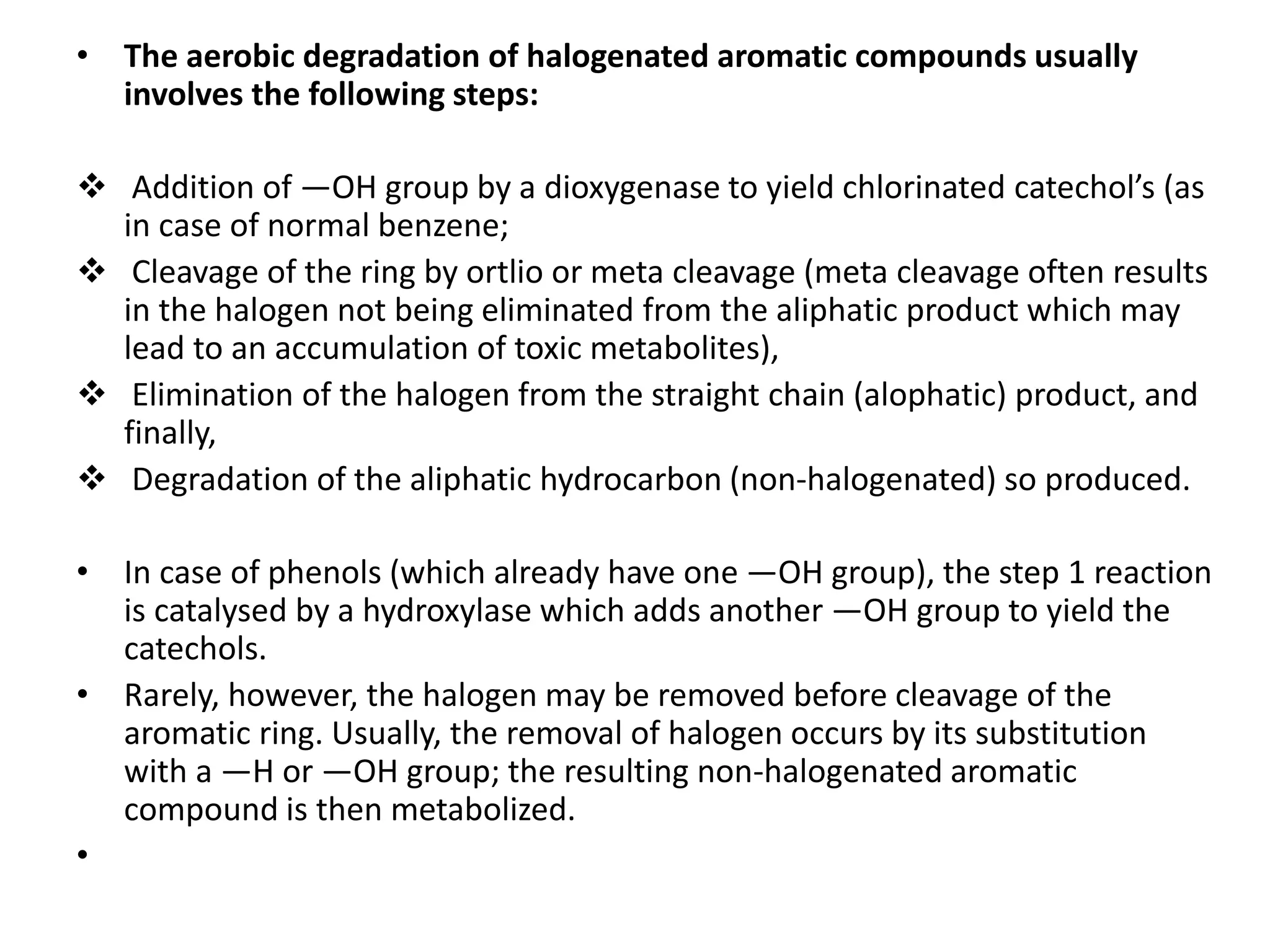
• (v) In general, recalcitrance of various benzene
derivatives increases with the substituent groups (at
meta position) as follows: COOH = OH < -NH2< -O—
CH3< -SO3
–< -NO2
–.
• Further, the greater the number of substituent groups
on the benzene ring, the higher the degree of
recalcitrance.
• The position of substitution also affects recalcitrance
as meta>ortho>para in recalcitrance.
BIODEGRADATION OF HALOGENATED COMPOUNDS:
• Biodegradation of such compounds involves two distinct
steps:
 Elimination of the halogen groups, and
 Degradation of the non-halogenated product molecule.
• Removal of halogen molecule may occur either directly involving the
removal of hydrogen halide (e.g., HCI), or it may involve the substitution of
halogen by —H, -OH or a -thio group.
• The direct halogen removal produces a double bond and is relatively rate in
nature. The mechanism involving halogen substitution, especially by —OH, is
far more common particularly for fully reduced aliphatics or aromatics.
• The aerobic degradation of halogenated aromatic compounds usually
involves the following steps:
 Addition of —OH group by a dioxygenase to yield chlorinated catechol’s (as
in case of normal benzene;
 Cleavage of the ring by ortlio or meta cleavage (meta cleavage often results
in the halogen not being eliminated from the aliphatic product which may
lead to an accumulation of toxic metabolites),
 Elimination of the halogen from the straight chain (alophatic) product, and
finally,
 Degradation of the aliphatic hydrocarbon (non-halogenated) so produced.
• In case of phenols (which already have one —OH group), the step 1 reaction
is catalysed by a hydroxylase which adds another —OH group to yield the
catechols.
• Rarely, however, the halogen may be removed before cleavage of the
aromatic ring. Usually, the removal of halogen occurs by its substitution
with a —H or —OH group; the resulting non-halogenated aromatic
compound is then metabolized.
•
CONCLUSION
• Compounds which are highly persistent against biodegradation belong as
recalcitrant chemicals of xenobiotics.
• Microbial degradation is usually very slow making them highly persistent.
• Microbes exhibit capacity to degrade such compounds by their metabolic
pathways implying cost efficiency and non toxic effects.
• These chemicals have no to limited structural analogy to natural
compounds for which evolution have evolved over billions of years.
• The compounds have been classified to - Halocarbons, Polychlorinated
biphenyls, Synthetic polymers, Alkyl benzyl sulphonates, Oil mixture and )
Others.
REFERENCES
• https://www.researchgate.net/publication/247158751
• Nikki Agrawal* and Ashwini Kumar Dixit., 2015 ; An Environmental Cleanup
Strategy - Microbial Transformation of Xenobiotic Compounds;
int.J.Curr.Microbiol.App.Sci (2015) 4(4): 429-461
• www.wikipedia.com
• https://www.biotechnologyforums.com/thread-1834.html
• Max M. H~iggblom., 1992 ; Microbial breakdown of halogenated aromatic
pesticides and related compounds; FEMS Microbiology Reviews 103 (1992)
29-72
• Jai Godheja., 2016 ; Xenobiotic Compounds Present in Soil and Water: A
Review on Remediation Strategies ; Environ Anal Toxicol 2016, 6:5
• Degradation of Haloaromatic Compounds by K. H. Engesser and P. Fischer
(PDF)

Environmental Microbiology: Microbial degradation of recalcitrant compounds

  • 1.
    TOPIC :MICROBIAL DEGRADATION- RECALCITRANTCOMPOUNDS By Tejaswini Petkar
  • 2.
    CONTENTS • INTRODUCTION • HAZARDSFROM RECALCITRANT XENOBIOTIC COMPOUNDS. • TYPES OF RECALCITRANT XENOBIOTICS • USE OF MICROBES TO BIODEGRADE RECALCITRANT COMPOUNDS • PRACTICAL APPLICATION OF MICROBES FOR XENOBIOTIC DEGRADATION • GENERAL FEATURES OF BIODEGRADATION OF XENOBIOTICS • CONCLUSION • REFERENCES
  • 3.
    INTRODUCTION • Compounds whichas a rule are highly persistent against biodegradation and belong. as "recalcitrant" chemicals, to the class of so-called xenobiotics. • Microbial degradation of such compounds is usually very slow, making them highly persistent in nature as these chemical substances have no or limited structural analogy to natural compounds for which degradation pathways have evolved over billions of years. • If the environmental recalcitrance of a compound is due to the lack or scarcity of microbes capable of its degradation, inoculation of such organisms could enhance remediation.
  • 4.
    HAZARDS FROM RECALCITRANT XENOBIOTICCOMPOUNDS (i) Toxicity:  Many xenobiotics like halogenated and aromatic hycrocarbons are toxic to bacteria, lower eukaryotes and even humans. At low concentrations they may cause various skin problems and reduce reproductive potential. (ii) Carcinogenicity:  Certain halogenated hydrocarbons have been shown to be carcinogenic. (iii)Many xenobiotics are recalcitrant and persist in the environment so that there is a build up in their concentration with time. (iv) Many xenobiotics including DDT and PCB’s are recalcitrant and lipophilic; as a consequence they show bioaccumulation or bio-magnification often by a factor of 104 – 106. (v) They are produced and used in large quantities which favours their accumulation in nature.
  • 5.
    • In caseof DDT a 105 – fold increase occurs in sea-eagles as compared to the concentration present in the aqueous environment as a result of which sea-eagles laid fragile eggs. • DDT and PCBs have been found in human tissues in high but sub-lethal concentrations in those countries where they have been used, although humans were often not in direct contact with these chemicals. Source :https://www.biotechnologyforums.com/thread-1834.html
  • 6.
    • Xenobiotics canexert adverse effects on human health by disrupting or interacting with multiple cellular communication pathways that direct growth, development and normal physiological function. • Recalcitrant compounds are often found accumulated in mammals, especially in fat tissue,, animal milk supplies (Frank and Braun 1989), and also in human milk (Colins el al. 1982; Ip and Phillips 1989; Skaare and Polder 1990). • Highly sophisticated analytical techniques have been developed for the detection of organochlorines at the trace and ultratrace levels (Burse el al. 1990).
  • 7.
    TYPES OF RECALCITRANTXENOBIOTICS The recalcitrant xenobiotic compounds can be grouped into the following 6 types: (i) Halocarbons, (ii) Polychlorinated biphenyls, (iii) Synthetic polymers, (iv) Alkylbenzylsulphonates, (v) Oil mixture and (vi) Others.
  • 8.
    • Halocarbons: • Thesecompounds contain different numbers of halogen (e.g., CI, Br, F (fluorine), I) atoms in the place of H atoms. • They are used as solvents (chloroform, CHCI3), as propellants in spray cans of cosmetics, paints etc., in condenser units of cooling systems (Freons, CCI3F, CCl2F2, CClF3, CF4), and as insecticides (DDT, BHC, lindane etc.) and herbicides (dalapon, 2, 4-D, 2, 4, 5-T etc.). • The C1-C2haloalkanes like chloroform, freons etc. are volatile and escape into the atmosphere where they destroy the protective ozone (O3) layer leading to increased UV radiation. • Pesticides (herbicides, fungicides and insecticides) are applied to crops from where they leach into water bodies; many of them are subjected to bio-magnification.
  • 9.
    • Poly chlorinatedBiphenyls (PCBs): • These compounds have two covalently linked benzene rings having halogens substituting for H. • PCB’s are used as plasticisers, insulator coolants in transformers and as heat exchange fluids. • They are both biologically and chemically inert to various degrees, which increases with the number of chlorine atoms present in the molecule. • The recalcitrant nature of the above two groups of compounds is due to their halogenation and as well their cyclic structure (PCBs).
  • 10.
    • (iii) SyntheticPolymers: • These compounds are produced as plastics, e.g., polyethylene, polystyrene, polyvinyl chloride etc., and nylons. • These are in turn used as garments, wrapping materials etc. • They are recalcitrant mainly due to their insolubility in water and molecular size. • (iv) AlkylbenzylSulfonates: • These are surface-active detergents superior to soaps. • The sulphonate (— SO3 –) group present at one end resists microbial degradation, while the other end (non-polar alkyl end) becomes recalcitrant if its is branched, (resistance increases with the degree of branching). • At present, alkylbenzylsulphonates having non-branched alkyl ends are used; these are biodegraded by β-oxidation from their alkyl ends.
  • 11.
    • (v) OilMixtures: • Oil is a natural product, has many components and is biodegradable-the different components being degraded at different rates. • Biodegradation is able to handle small oil seepages. When large spills occur the problem of pollution becomes acute. • Oil is recalcitrant mainly because of its insolubility in water and due to the toxicity of some of its components. • (vi) Other Xenobiotic Compounds: • A number of pesticides are based on aliphatic, cyclic ring structures containing substitution of nitro-, sulphonate, methoxy-, amino- and carbonyl groups; in addition, they also contain halogens. • These substitutions make them recalcitrant.
  • 12.
    USE OF MICROBESTO BIODEGRADE RECALCITRANT COMPOUNDS • The use of microorganisms is now preferred for degradation of recalcitrant compounds. • They are cost effective and do not pose toxic effects. • They degrade much complex compounds into simpler molecules that do not harm the environment. • The enzymes produced by them are even advantageous and are efficient degraders. • Anaerobic bacteria seem to have much degrading ability than aerobic ones. Recently it has been seen from various researches that the use of fungi is also a potential tool for recalcitrant compounds. • White rot fungi have been extensively studied by many researchers for degradation of many recalcitrant compounds.
  • 13.
    • Mycelium ofLentinula elodes immobilized with polyurethane has resulted in an overall abatement of phenolic and aromatic compounds as well as in extensive decolourization and in an apparent depolymerization of the high molecular weight fraction (Alessaro, et al., 1998). • Pediococcus pentosaceus with its anaerobic and rapid growth and high pH tolerance represents an interesting ecological method for recalcitrant phenolic compounds removal in treated olive mill wastewater and other vegetable industry wastes (Ben Othman, et al., 2008). • Laccase from a strain of Trametes trogii decolourized a variety of synthetic dyes, including azoic, indigoid, triphenylmethane in the absence of redox mediators (Emanuel Grassi, et al. 2011). • Trametes species are by far the most studied organism for laccase production, especially Trametes versicolor is taken as a model organism .
  • 14.
    PRACTICAL APPLICATION OFMICROBES FOR XENOBIOTIC DEGRADATION • Practical application of microbes for xenobiotic degradation is facilitated by: • (i) Supply of sufficient nutrients or co-metabolites, • (ii) Maintenance of the xenobiotic compounds to non-toxic levels and • (iii) Provision of microbial population or inoculum.
  • 15.
    • Nutrients andCo-metabolites • All the nutrients required for growth and metabolism of microbial cells must be available in the solution containing the xenobiotic compound. • In general, nitrogen,- phosphorus and, sometimes, sulphur may have to be added to the solution. • Where necessary, adequate 02supply should be ensured by aeration of the medium since xenobiotic compounds are degraded aerobically. • In addition, some compounds may be required as co-metabolites to induce the necessary enzymes and to provide the energy and the reducing equivalents for xenobiotic degradation.
  • 16.
    • Xenobiotic Concentration: •In case the xenobiotic concentration is high, it should be reduced by appropriate dilution with, usually, water. • In continuous treatment system, e.g., for effluents, the amount of xenobiotic entering the system should not exceed the amount being degraded by the system. • At the same time, xenobiotic should always to present in the effluent in order to maintain the necessary microbial population. • However, when the concentration of the xenobiotic compound is relatively low, a higher density of the degradative microbes will be needed for degradation of the compound.
  • 17.
    • Microbial Inoculum: •In a treatment system natural evolution of the microbial population will take time. Therefore, it is customary to inoculate the system with a suitable population of microbes having the necessary degradative capabilities; this is called bio- augmentation. • A number of inoculants designed to degrade various xenobiotic compounds are commercially available. • The commercial inoculum is prepared by selecting the strains needed for degradation of the specified xenobiotic compounds, and then matching and blending them; bulking agents, dispersant chemicals, wetting agents and nutrients are also added. • The inoculants are usually available as dry powders which are easy to store, transport and reconstitute at site (by simply adding water). • These inoculants consist of naturally occurring microbial species which have been isolated, purified and characterised for various features, including their xenobiotic degradation capabilities. • The stocks of various isolates are preserved by air-drying or freeze-drying techniques.
  • 18.
    GENERAL FEATURES OF BIODEGRADATIONOF XENOBIOTICS • Academia and scientists have worked in deep and came out with the following interventions which have made the degradation of these recalcitrant compounds possible. The deeper insights are,  Understanding of how recalcitrant chemicals are degraded and what structural factors make them recalcitrant  Discovery of co-metabolism  Realization of role of microbial communities  Realization of anaerobic degradation  Discovery of white rot fungi’s degrading efficiency.
  • 19.
    The structural featuresthat make these compounds resistant to microbial degradation include the following: (i) Presence of halogens in the place of hydrogen in the molecule; the carbon- halogen bond is highly stable and its cleavage requires considerable energy, (ii) Substitution of H by other groups like nitro-, sulphonate, methoxy-, amino- and carbonyl groups, (iii) Cyclic structures, aromatic compounds, cycloalkanes and heterocyclic compounds are more recalcitrant than linear chain or aliphatic compounds, (iv) Branched linear chains resist biodegradation etc.  In general, the more complex is the structure of a xenobiotic compound, the more resistant it is to biodegradation.  Many other xenobiotics resist biodegradation due to their large molecular size and insolubility in water.
  • 20.
    DEGRADATION OF ALKANESAND AROMATIC HYDROCARBONS • An oxygenase first introduces a hydroxyl group to make the compound reactive. • The hydroxyl group is then oxidised to a carboxyl group. • The ring structure is opened up (in case of cyclic compounds). • The linear molecule is degraded by β-oxidation to yield acetyl CoA which is metabolised in the usual manner. • For example, an n-alkane is oxidised as follows:
  • 21.
    Similarly, an alicyclichydrocarbon, e.g., cyclohexane, is oxidised as follows: • First an oxygenase adds an —OH group in the ring. • Then another oxygenase forms an ester in the form of a lactone. • This is then hydrolysed to open the ring structure to yield a linear molecule. • In both these oxidations mono-oxygenases are involved which add oxygen to a single position in the molecule. • In contrast, oxidation of benzene ring may involve a di-oxygenase which adds oxygen at two positions in the molecule in a single step.
  • 22.
    • Both mono-and di-oxygenases are of a variety of types: some react best with short chain alkanes, while others act on cyclic alkanes. • However these enzymes are not very specific and each enzyme oxidise a limited range of compounds. • Thus xenobiotics are degraded by a wide variety of microorganisms, each of which degrades a small range of compounds.
  • 23.
    HYDROCARBON DEGRADATION • (i)Halomethanes: • Halomethanes are transferred into methanol by the enzyme methane mono-oxygenase which uses them as substrate. • This enzyme occurs in a number of methylotrophs. • Alternatively, a glutathione-dependent hydrolase catalyses oxidative dechlorination of halomethanes into methanol. This reaction is anaerobic and uses oxygen derived from water. • Methanol is oxidised to CO2 + H2O via formaldehyde and formic acid.
  • 24.
    • (ii) Cyanide: •Cyanide(HCN) is toxic to biological systems and even microorganisms capable of degrading cyanide cannot withstand a high concentration of HCN. • Some of the cyanides, e.g., HCN and CH3CN, are volatile. • Therefore, disposal of cyanide is strictly controlled.
  • 25.
    • (iii) AliphaticHydrocarbons: • Aliphatic Hydrocarbons may be saturated or unsaturated. • N-Alkanes of 10-24 carbons are the most readily biodegraded. • Similarly saturated aliphatics are easier to degrade than unsaturated ones and branched chains show decreased biodegradation. • Biodegradation of N-alkanes is catalysed by oxygenases to produce carboxylic acid, which is then degraded by β-oxidation. • Oxidation may involve the methane group at one end of n-alkane molecule, or it may occur at a β-methylene group . • Sometimes, both terminal methyl groups are oxidised to yield a dicarboxylic acid; this reaction is used by many microorganisms for the biodegradation of branched chain N-alkanes.
  • 26.
    • (iv) AlicyclicHydrocarbons: • Alicyclic hydrocarbons are present naturally in waxes from plants, crude oil, microbial lipids etc. • They are represented by xenobiotics used as pesticides and also in petroleum products. • Un-substituted cyclohexane rings are oxidised as shown in prior slide. • (v) Aromatic Hydrocarbons: • Aromatic hydrocarbons are rather stable. • These are oxidised by di-oxygenases (slide 22) to catechol which is further metabolised by two separate pathways:
  • 27.
    • In caseof ortho-ring cleavage pathway, a 1, 2- dioxygenase cleaves the ring between the two adjacent hydroxyl groups and sequential catabolism of the product cis, cis- muconate yields succinate + acetyl CoA.  Alternatively, the enzyme 2, 3-di- oxygenase cleaves the ring between the carbon atom having an OH group and an adjacent carbon lacking an OH group (meta-cleavage).  The products at the end of reaction sequence are acetaldehyde and pyruvate.  Both ortho and meta pathways arc involved in degradation of aromatic hydrocarbons.  Benzene is degraded by the meta pathway.
  • 28.
    • (vi) PolycyclicHydrocarbons: • Polycyclic hydrocarbons contain two or more rings. • Generally, one of the terminal rings is attacked by a di-oxygenase, leading to ring cleavage and degradation so that in the end a single ring remains which is catabolised in a manner similar to that described previously.
  • 29.
    • Degradation ofcomplex molecules containing aliphatic, aromatic, alicyclic or heterocyclic components is difficult to generalise but the following features are observed: • (i) Amide-, ester- or ether bonds are first attacked and further degradation of the products so generated takes place; • (ii) If these bonds are absent or inaccessible; aliphatic chains are degraded; • (iii) If aliphatic chains are branched, the aromatic component of complex molecules may be attacked, • (iv) The site and mode of attack depends on the molecular structure, the microorganism involved and the environmental conditions, • (v) In general, recalcitrance of various benzene derivatives increases with the substituent groups (at meta position) as follows: COOH = OH < -NH2< -O— CH3< -SO3 –< -NO2 –. • Further, the greater the number of substituent groups on the benzene ring, the higher the degree of recalcitrance. • The position of substitution also affects recalcitrance as meta>ortho>para in recalcitrance.
  • 30.
    BIODEGRADATION OF HALOGENATEDCOMPOUNDS: • Biodegradation of such compounds involves two distinct steps:  Elimination of the halogen groups, and  Degradation of the non-halogenated product molecule. • Removal of halogen molecule may occur either directly involving the removal of hydrogen halide (e.g., HCI), or it may involve the substitution of halogen by —H, -OH or a -thio group. • The direct halogen removal produces a double bond and is relatively rate in nature. The mechanism involving halogen substitution, especially by —OH, is far more common particularly for fully reduced aliphatics or aromatics.
  • 32.
    • The aerobicdegradation of halogenated aromatic compounds usually involves the following steps:  Addition of —OH group by a dioxygenase to yield chlorinated catechol’s (as in case of normal benzene;  Cleavage of the ring by ortlio or meta cleavage (meta cleavage often results in the halogen not being eliminated from the aliphatic product which may lead to an accumulation of toxic metabolites),  Elimination of the halogen from the straight chain (alophatic) product, and finally,  Degradation of the aliphatic hydrocarbon (non-halogenated) so produced. • In case of phenols (which already have one —OH group), the step 1 reaction is catalysed by a hydroxylase which adds another —OH group to yield the catechols. • Rarely, however, the halogen may be removed before cleavage of the aromatic ring. Usually, the removal of halogen occurs by its substitution with a —H or —OH group; the resulting non-halogenated aromatic compound is then metabolized. •
  • 33.
    CONCLUSION • Compounds whichare highly persistent against biodegradation belong as recalcitrant chemicals of xenobiotics. • Microbial degradation is usually very slow making them highly persistent. • Microbes exhibit capacity to degrade such compounds by their metabolic pathways implying cost efficiency and non toxic effects. • These chemicals have no to limited structural analogy to natural compounds for which evolution have evolved over billions of years. • The compounds have been classified to - Halocarbons, Polychlorinated biphenyls, Synthetic polymers, Alkyl benzyl sulphonates, Oil mixture and ) Others.
  • 34.
    REFERENCES • https://www.researchgate.net/publication/247158751 • NikkiAgrawal* and Ashwini Kumar Dixit., 2015 ; An Environmental Cleanup Strategy - Microbial Transformation of Xenobiotic Compounds; int.J.Curr.Microbiol.App.Sci (2015) 4(4): 429-461 • www.wikipedia.com • https://www.biotechnologyforums.com/thread-1834.html • Max M. H~iggblom., 1992 ; Microbial breakdown of halogenated aromatic pesticides and related compounds; FEMS Microbiology Reviews 103 (1992) 29-72 • Jai Godheja., 2016 ; Xenobiotic Compounds Present in Soil and Water: A Review on Remediation Strategies ; Environ Anal Toxicol 2016, 6:5 • Degradation of Haloaromatic Compounds by K. H. Engesser and P. Fischer (PDF)