Jimma University
College of Agriculture and Veterinary Medicine
Department of Animal Science
PhD in Animal Nutrition
Title
Composition and degradation of lignin
By: Ashenafi M.
January, 2020
Jimma , Ethiopia
1
Composition anddegradation of lignin
Introduction
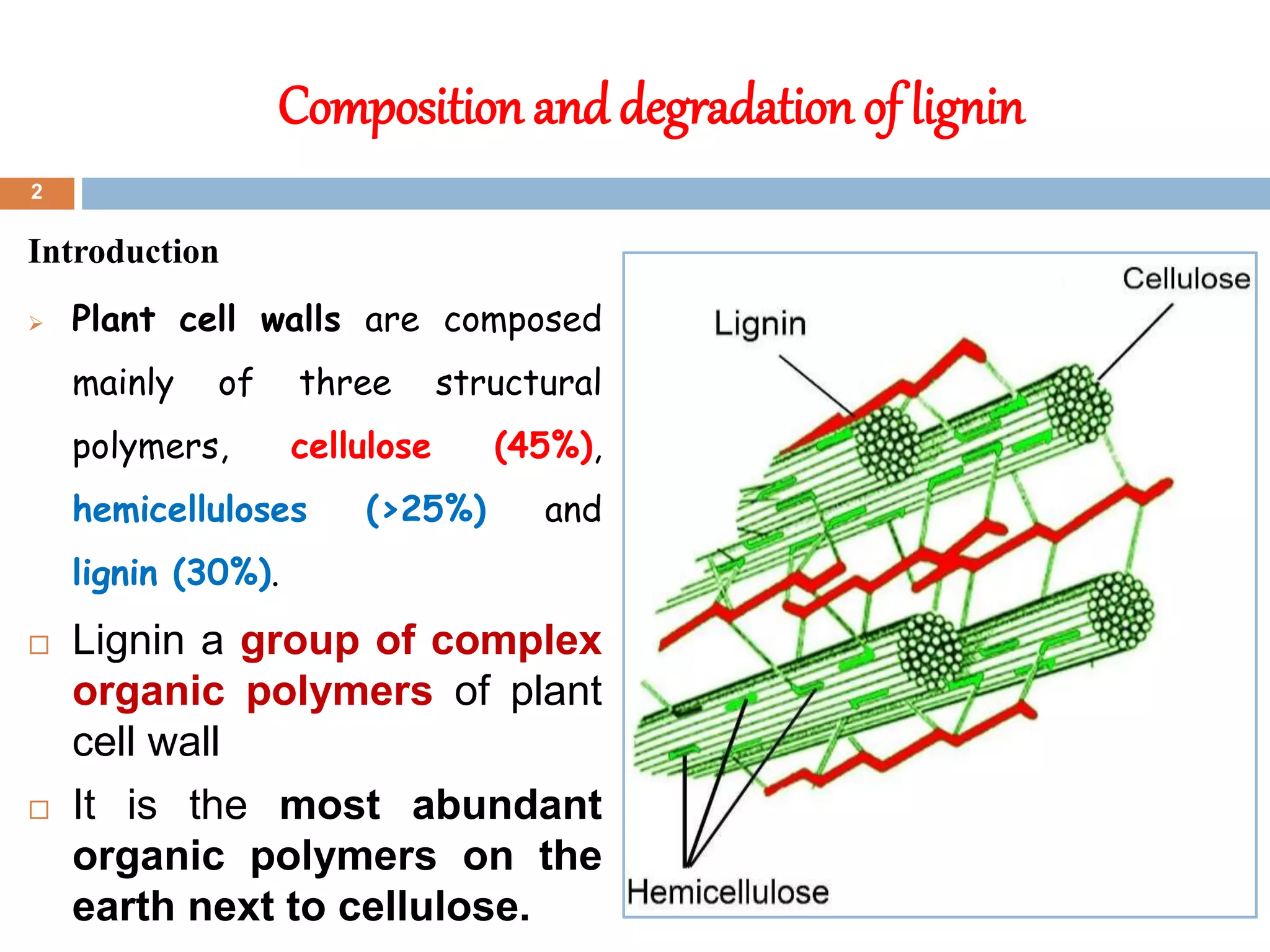
 Plant cell walls are composed
mainly of three structural
polymers, cellulose (45%),
hemicelluloses (>25%) and
lignin (30%).
 Lignin a group of complex
organic polymers of plant
cell wall
 It is the most abundant
organic polymers on the
earth next to cellulose.
2
Function of lipids
 Mechanical support (e.g. sclerenchyma)
 Protection and defense (e.g. periderm)
 Regulate the transport of liquid
 Enables trees to grow taller
 Important in the formation of cell walls,
especially in wood and bark, because they
lend rigidity and do not rot easily.
3
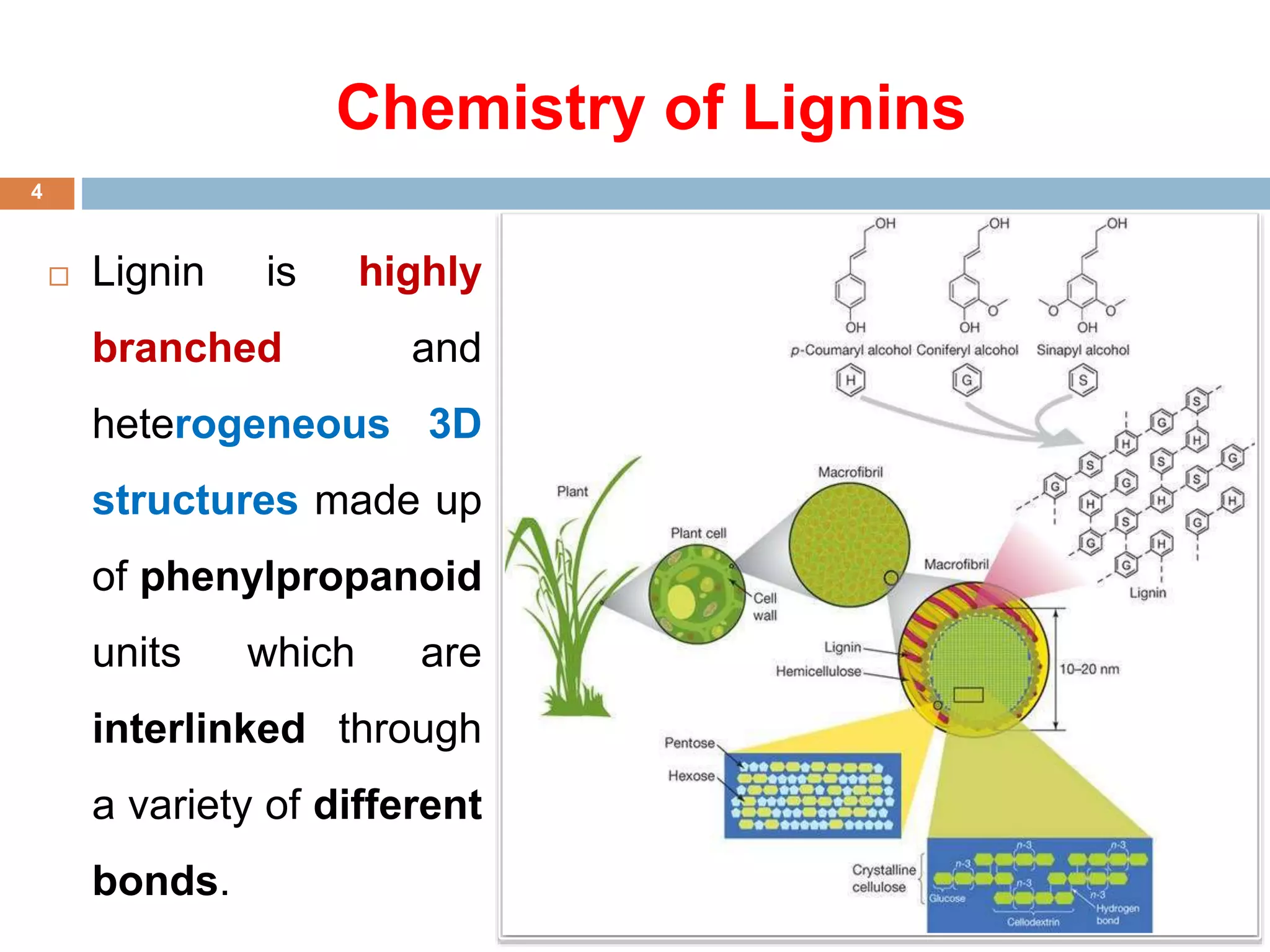
Chemistry of Lignins
 Lignin is highly
branched and
heterogeneous 3D
structures made up
of phenylpropanoid
units which are
interlinked through
a variety of different
bonds.
4
Cont’d…
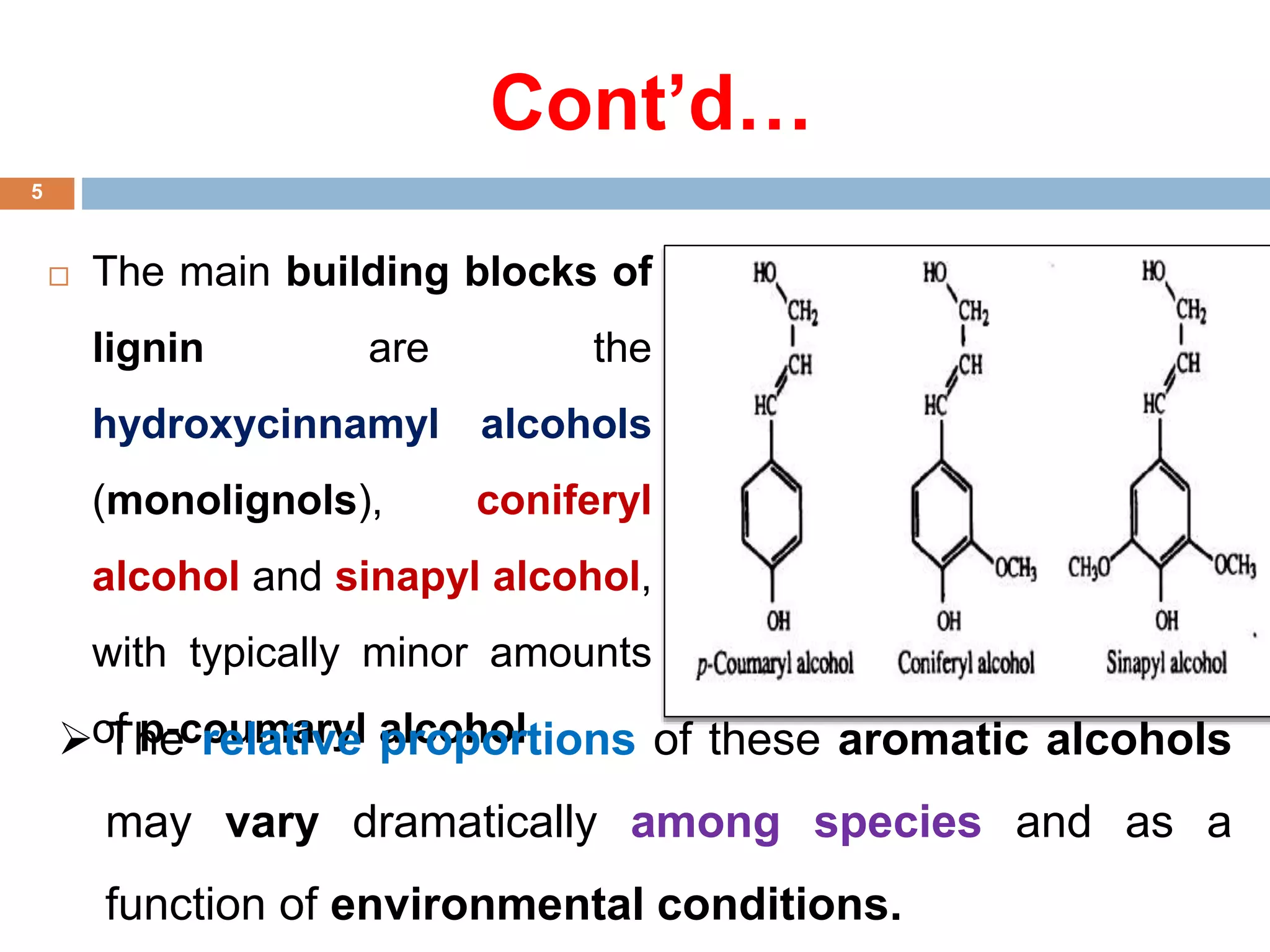
 The main building blocks of
lignin are the
hydroxycinnamyl alcohols
(monolignols), coniferyl
alcohol and sinapyl alcohol,
with typically minor amounts
of p-coumaryl alcohol
5
 The relative proportions of these aromatic alcohols
may vary dramatically among species and as a
function of environmental conditions.
6
Cont’d…
 In nature it is very resistant to degradation, being
held together with strong chemical bonds; it also
appears to have a lot of internal H bonds, covalent C-C
and C-O bonds. .
 The deposition of hydrophobic polymer into the cell
wall resist biodegradation of lignin.
 Phenolic cpd present in woody spps, which has the
highest molecular weight of the class and limits the
availability of cell wall CHO to digested by ruminal
7
Biosynthesis of lignin
 Lignin biosynthesis begins in the cytosol with the
synthesis of glycosylated monolignols from the
amino acid phenylalanine.
8
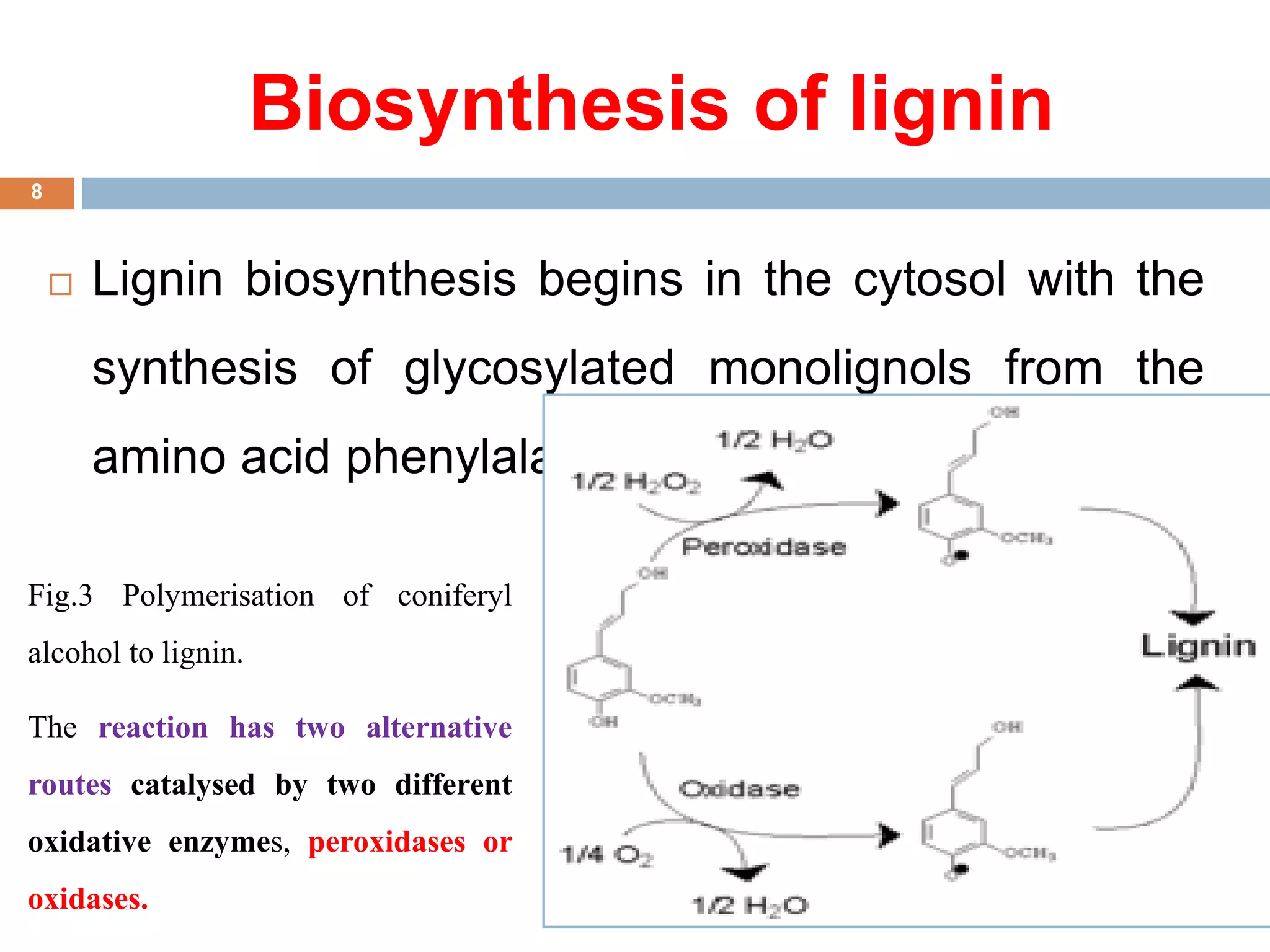
Fig.3 Polymerisation of coniferyl
alcohol to lignin.
The reaction has two alternative
routes catalysed by two different
oxidative enzymes, peroxidases or
oxidases.
Cont’d…
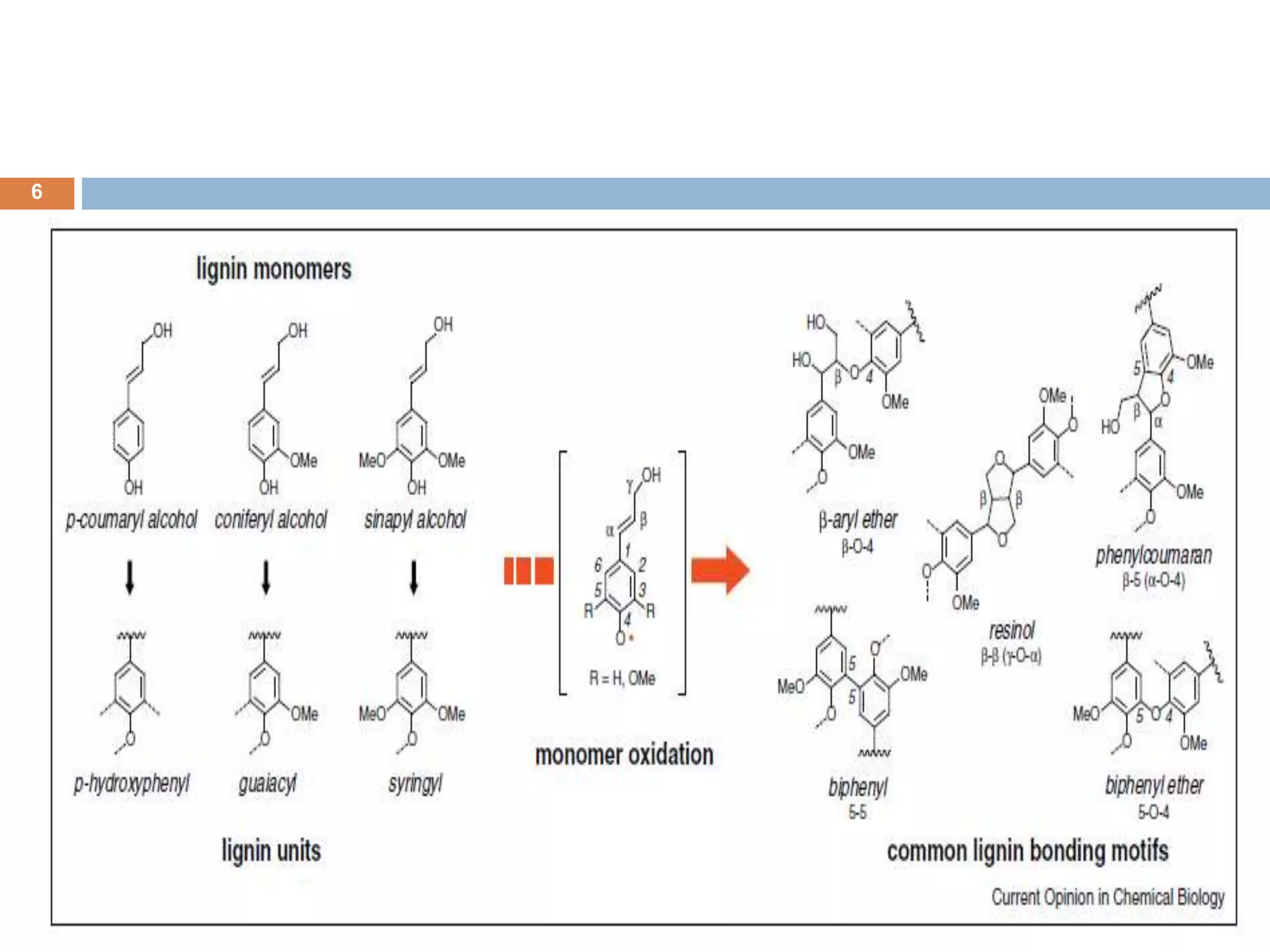
 The three precursor of are incorporated into lignin in the
form of the phenylpropanoids p-hydroxyphenyl (H),
guaiacyl (G), and syringyl (S), respectively.
 Gymnosperms have a lignin that consists almost
entirely of G with small quantities of H.
 That of dicotyledonous angiosperms is more often than
not a mixture of G and S (with very little H),
and monocotyledonous lignin is a mixture of all three.
 Many grasses have mostly G, while some palms have
9
Composition of lignin
 The composition of lignin varies from species to
species.
 An example of composition from an aspen sample is 63.4%
carbon, 5.9% hydrogen, 0.7% ash (mineral components),
and 30% oxygen (by difference), corresponding
approximately to the formula (C31H34O11)n (King et al.,
1983).
 As a biopolymer, lignin is unusual because of its
heterogeneity and lack of a defined primary structure.
10
Cont’d…
11
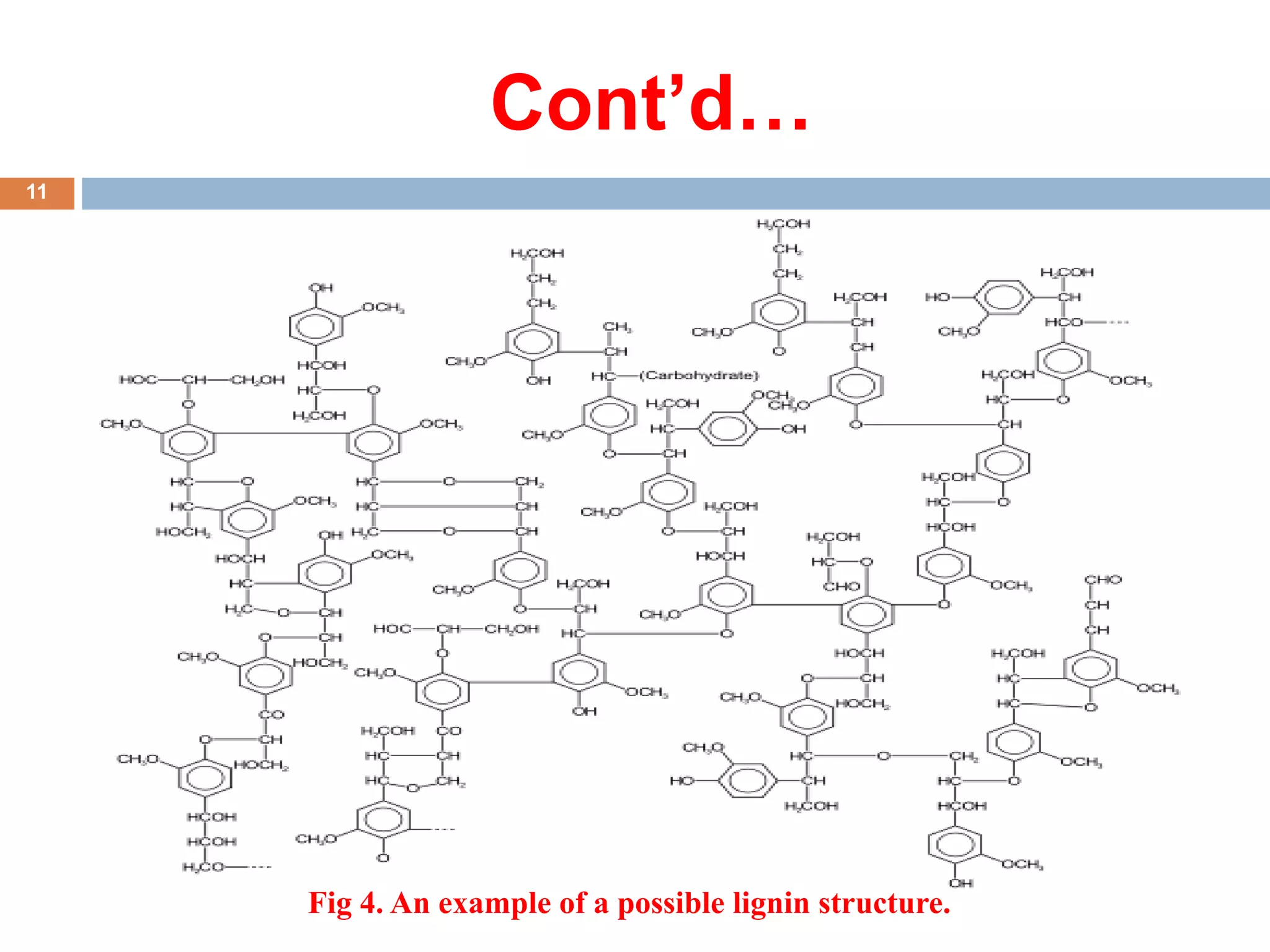
Fig 4. An example of a possible lignin structure.
Biodegradation of Lignin
 Lignin biodegradation is largely an oxidative
process.
 In aerobic environments, lignin peroxidase
break the lignin polymer into products which
finally can be converted to CO2.
 Lignin destruction is possible by the use of lignin
destroying fungi or bacteria.
12
Cont’d…
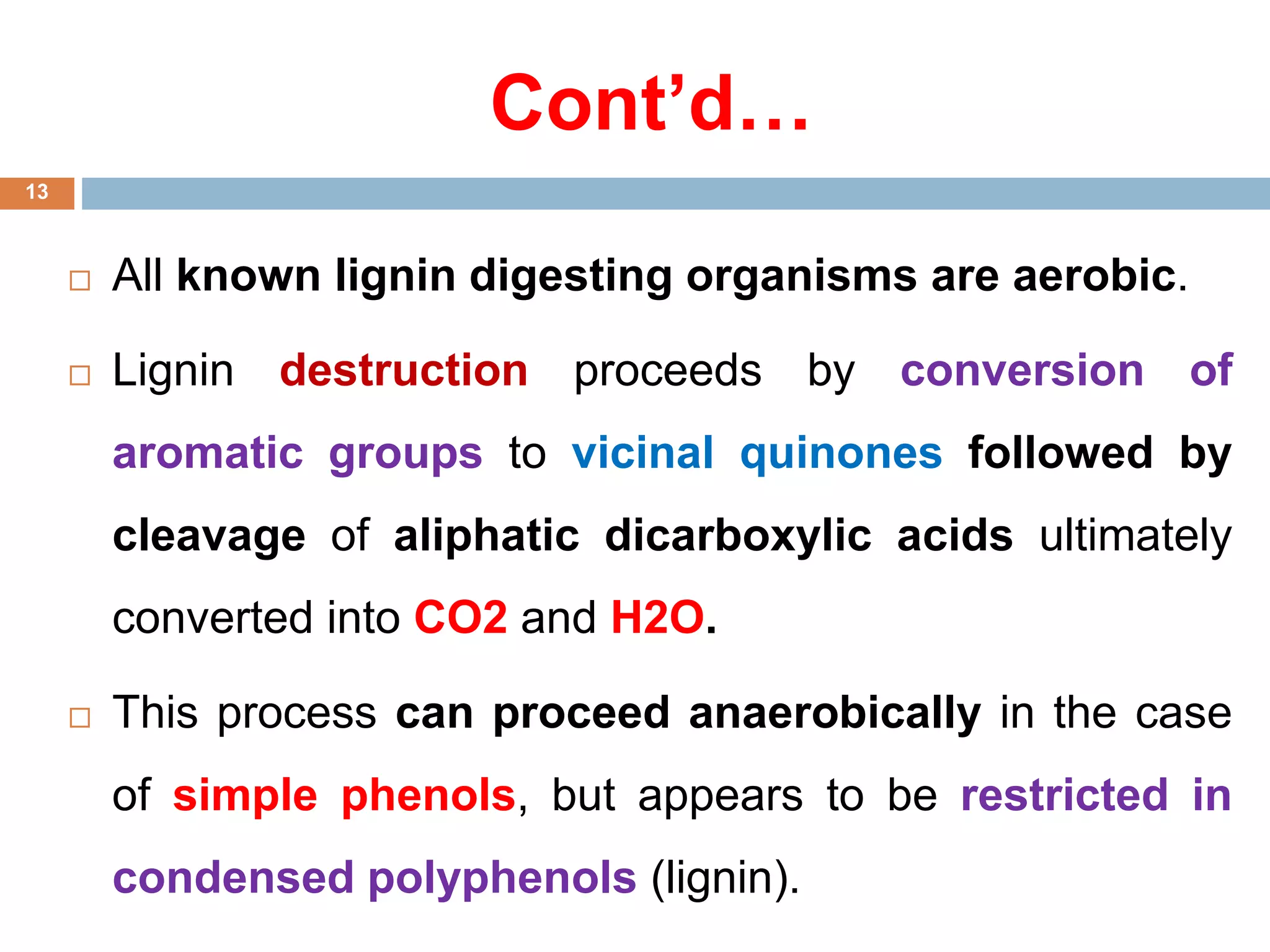
 All known lignin digesting organisms are aerobic.
 Lignin destruction proceeds by conversion of
aromatic groups to vicinal quinones followed by
cleavage of aliphatic dicarboxylic acids ultimately
converted into CO2 and H2O.
 This process can proceed anaerobically in the case
of simple phenols, but appears to be restricted in
condensed polyphenols (lignin).
13
Cont’d…
 Because lignin is the most recalcitrant component
of the plant cell wall, the higher proportion of
lignin lowers the bioavailability of the substrate.
 The effect of lignin on the bioavailability of other
cell wall components is thought to be largely a
physical restriction, with lignin molecules
reducing the surface area available to enzymatic
penetration and activity.
14
Cont’d…
 Lignin cross-linked with the other cell wall components,
lignin minimizes the accessibility of cellulose and
hemicellulose to microbial enzymes, leading to a
reduced digestibility of biomass
 Lignin peroxidase (LiP) was the first lignolytic enzyme to
be isolated from Phanerochaete chrysosporium and was
found to contain a heme cofactor that I competent to
oxidize unusually high potential sites, such as aromatic
rings
15
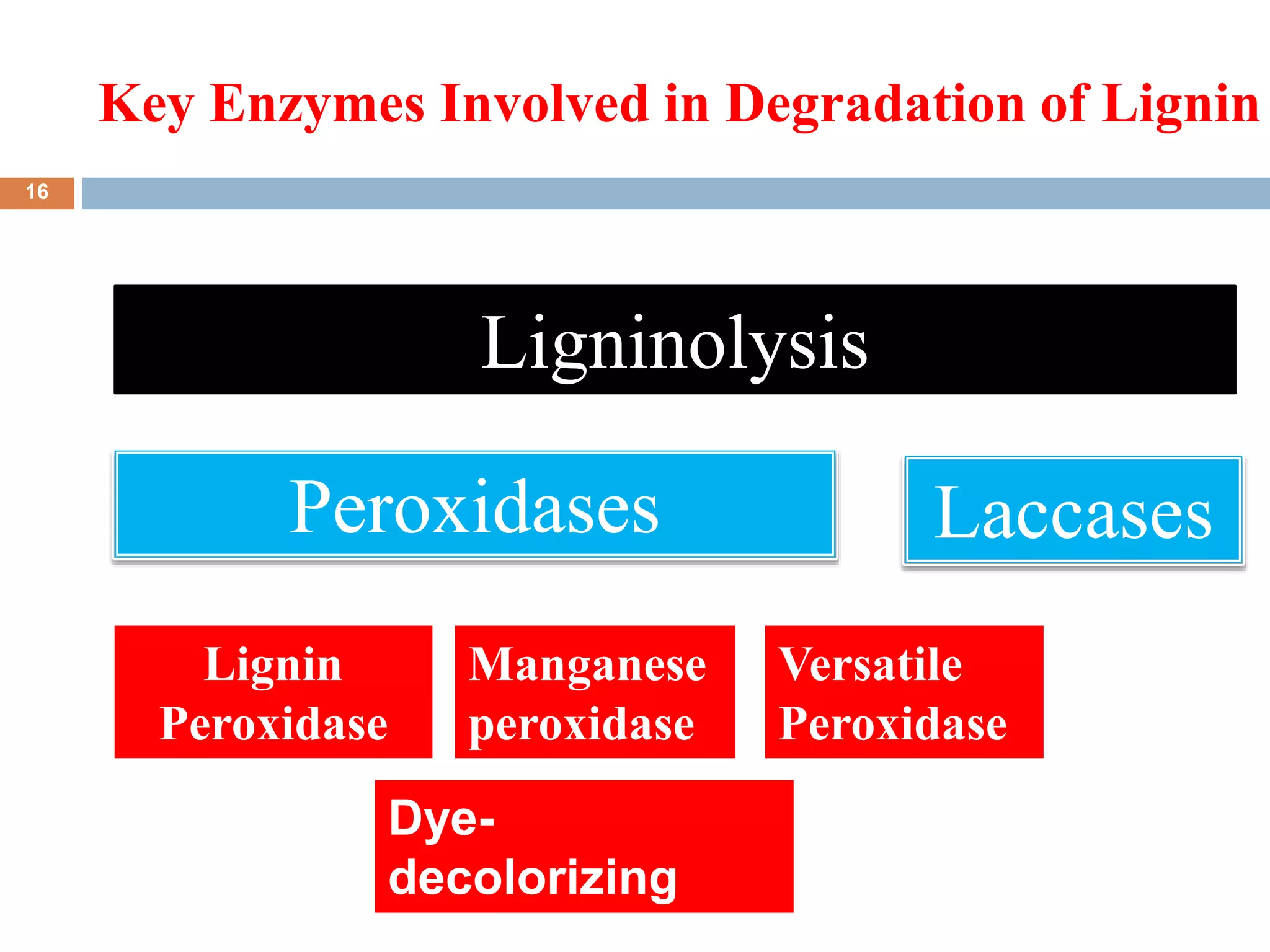
Key Enzymes Involved in Degradation of Lignin
16
Ligninolysis
Peroxidases Laccases
Lignin
Peroxidase
Manganese
peroxidase
Versatile
Peroxidase
Dye-
decolorizing
Cont’d…
 Lignin peroxidases oxidize non-phenolic lignin,
whereas manganese peroxidases only oxidize the
phenolic structures.
 Dye-decolorizing peroxidases, or DyPs, exhibit
catalytic activity on a wide range of lignin model
compounds.
 In general, laccases oxidize phenolic substrates but
some fungal laccases have been shown to oxidize
non-phenolic substrates in the presence of synthetic
17
Cont’d…
 Lignin peroxidase is an H2O2 dependent lignin
degrading enzyme which catalyses the oxidation of
various lignin model compounds.
 When lignin- peroxidase enzymes are added to active
fungal cultures the degradation of lignin is enhanced.
 This means that the fungus has a mechanism to
change the tendency for spontaneous polymerization
to degradation.
18
Cont’d…
 Lignin is a three dimensional phenylpropanoid
polymer linked by several different carbon-to-carbon
and ether linkages between monomeric
phenylpropane units most of which are not readily
hydrolyzable.
 Thus, lignin is considerably resistant to microbial
degradation in comparison with polysaccharides and
other natural biopolymers.
19
Microbes involved in bio-degradation of
lignin
 White-rot fungi, particularly Phanerochaete
chrysosporium are capable of degrading wood-lignin
with appreciable efficiency.
 Aspergillus, Myceliophora thermophila, and Chaemotium
thermophilum have been used to isolate many ligninolytic
enzymes.
 Actinobacteria and Streptomyces genus has also been
reported to carry out degradation of lignin using
ligninolytic enzymes
20
Lignin degradation by fungi
 There are three types of fungi apart from some yeasts
and bacteria living on dead wood, which actually
degrade one or more wood components that is soft rot
fungi, brown rot fungi and white rot fungi.
 They are known to metabolize lignin, cellulose and
other fibrous components.
 White rot fungi, are able to completely decompose lignin
into Co2 and H2O by extracellular ligninolytic enzymes,
which include an array of heme peroxidases and
21
Cont’d…
 Some whit rot fungi, such as
Phanerochaete chrysosporium,
Pleurotus ostreatus, Coriolus
versicolor, Cyathus stercoreus,
and Ceriporiopsis subvermispora
can degrade the lignin in
lignocellulose, but others lack this
ability.
22
Cont’d…
 Most fungal lignin degradation involves secreted
peroxidases.
 Many fungal laccases are also secreted, which facilitate
degradation of phenolic lignin-derived compounds,
although several intracellular fungal laccases have also
been described.
 An important aspect of fungal lignin degradation is the
activity of accessory enzymes to produce the H2O2
required for the function of lignin peroxidase and other
23
Cont’d…
 Firstly, the greatest challenge is to select white rot fungi
species, by screening and careful selection, which
selectively degrades lignin only.
 Secondly, we need to select those strains which can be
grown in unsterilised conditions.
 And thirdly, care should be taken to choose those strains
which do not produce toxins.
24
Lignin degradation by bacteria
 Lignin-degrading bacteria have long been
overlooked.
 Bacteria do not express any of the plant-type
peroxidases (lignin peroxidase, Mn peroxidase, or
versatile peroxidases), but three of the four classes of
Dye-decolorizing peroxidases (DyP) are only found in
bacteria.
 Two major classes of bacterial lignin-modifying
enzymes are DyP-type peroxidases and laccases.
25
Cont’d…
 DyPs represent a newly discovered family of heme-
containing peroxidases, which has recently received
attention due their ability to degrade lignin and other
compounds.
 The bacterial laccases also seem to be suited for large
scale recombinant enzyme production.
 various bacterial laccases can be produced in E. coli
26
Cont’d…
27
Carbon dioxide
Oxygen
Methods to Improve Degradation of
Lignin
 Since lignin inhibits the digestibility of the SC of
roughages animals markedly, it is necessary to remove
it or at least to break the barrier between the
microbial enzymes and the substrate.
 Various methods for improvement of availability of
carbohydrate are:
 A. Physical Treatments: These methods probably
increases the intake of animals due to reducing the
strength of the bonds.
28
Cont’d…
 Physical treatment like:
 Grinding and Ball Milling
 Steam Treatment
 Irradiation -X-ray or gamma rays
29
B. Chemical Methods
 Chemical methods for improvement of straw
quality alkali like NaOH and ammonia (urea)
compounds
Role of Glycosides in Lignin
Degradation
 Kondo and Imamura(1987) first reported that when
vanilyl alcohol or veratryl alcohol were included in
glucose or cellobiose containing media that had been
inoculated with wood-rotting fungi, lignin glucosides
were formed in the cellulose medium during the
early phases of cultivation.
 Such glucosides could also be formed using a
commercial glucosidase in place of the culture broth.
30
How Lignin Depresses
Carbohydrate Digestibility of
Roughages?
 As a plant matures, its crude fiber content also
increases and it remains rich in cellulose,
hemicellulose, pectin and lignin.
 The oldest theory is that of physical incrustation and
entrapment of nutrients by lignin.
 Thus as the plant accumulates lignin, the
accessibility of carbohydrates mostly of
hemicelluloses and celluloses to the rumen
microorganisms decreases.
31
Cont’d…
 An alternative mechanism has been
suggested as due to covalent bonds between
hemicellulose and lignin which are very
strong and hence lignin is tightly bound to
plant polysaccharides at various points, which
prevent swelling of plant fiber and thereby
resist microbial fermentation.
32

Composition and degradation of lignin

  • 1.
    Jimma University College ofAgriculture and Veterinary Medicine Department of Animal Science PhD in Animal Nutrition Title Composition and degradation of lignin By: Ashenafi M. January, 2020 Jimma , Ethiopia 1
  • 2.
    Composition anddegradation oflignin Introduction  Plant cell walls are composed mainly of three structural polymers, cellulose (45%), hemicelluloses (>25%) and lignin (30%).  Lignin a group of complex organic polymers of plant cell wall  It is the most abundant organic polymers on the earth next to cellulose. 2
  • 3.
    Function of lipids Mechanical support (e.g. sclerenchyma)  Protection and defense (e.g. periderm)  Regulate the transport of liquid  Enables trees to grow taller  Important in the formation of cell walls, especially in wood and bark, because they lend rigidity and do not rot easily. 3
  • 4.
    Chemistry of Lignins Lignin is highly branched and heterogeneous 3D structures made up of phenylpropanoid units which are interlinked through a variety of different bonds. 4
  • 5.
    Cont’d…  The mainbuilding blocks of lignin are the hydroxycinnamyl alcohols (monolignols), coniferyl alcohol and sinapyl alcohol, with typically minor amounts of p-coumaryl alcohol 5  The relative proportions of these aromatic alcohols may vary dramatically among species and as a function of environmental conditions.
  • 6.
  • 7.
    Cont’d…  In natureit is very resistant to degradation, being held together with strong chemical bonds; it also appears to have a lot of internal H bonds, covalent C-C and C-O bonds. .  The deposition of hydrophobic polymer into the cell wall resist biodegradation of lignin.  Phenolic cpd present in woody spps, which has the highest molecular weight of the class and limits the availability of cell wall CHO to digested by ruminal 7
  • 8.
    Biosynthesis of lignin Lignin biosynthesis begins in the cytosol with the synthesis of glycosylated monolignols from the amino acid phenylalanine. 8 Fig.3 Polymerisation of coniferyl alcohol to lignin. The reaction has two alternative routes catalysed by two different oxidative enzymes, peroxidases or oxidases.
  • 9.
    Cont’d…  The threeprecursor of are incorporated into lignin in the form of the phenylpropanoids p-hydroxyphenyl (H), guaiacyl (G), and syringyl (S), respectively.  Gymnosperms have a lignin that consists almost entirely of G with small quantities of H.  That of dicotyledonous angiosperms is more often than not a mixture of G and S (with very little H), and monocotyledonous lignin is a mixture of all three.  Many grasses have mostly G, while some palms have 9
  • 10.
    Composition of lignin The composition of lignin varies from species to species.  An example of composition from an aspen sample is 63.4% carbon, 5.9% hydrogen, 0.7% ash (mineral components), and 30% oxygen (by difference), corresponding approximately to the formula (C31H34O11)n (King et al., 1983).  As a biopolymer, lignin is unusual because of its heterogeneity and lack of a defined primary structure. 10
  • 11.
    Cont’d… 11 Fig 4. Anexample of a possible lignin structure.
  • 12.
    Biodegradation of Lignin Lignin biodegradation is largely an oxidative process.  In aerobic environments, lignin peroxidase break the lignin polymer into products which finally can be converted to CO2.  Lignin destruction is possible by the use of lignin destroying fungi or bacteria. 12
  • 13.
    Cont’d…  All knownlignin digesting organisms are aerobic.  Lignin destruction proceeds by conversion of aromatic groups to vicinal quinones followed by cleavage of aliphatic dicarboxylic acids ultimately converted into CO2 and H2O.  This process can proceed anaerobically in the case of simple phenols, but appears to be restricted in condensed polyphenols (lignin). 13
  • 14.
    Cont’d…  Because ligninis the most recalcitrant component of the plant cell wall, the higher proportion of lignin lowers the bioavailability of the substrate.  The effect of lignin on the bioavailability of other cell wall components is thought to be largely a physical restriction, with lignin molecules reducing the surface area available to enzymatic penetration and activity. 14
  • 15.
    Cont’d…  Lignin cross-linkedwith the other cell wall components, lignin minimizes the accessibility of cellulose and hemicellulose to microbial enzymes, leading to a reduced digestibility of biomass  Lignin peroxidase (LiP) was the first lignolytic enzyme to be isolated from Phanerochaete chrysosporium and was found to contain a heme cofactor that I competent to oxidize unusually high potential sites, such as aromatic rings 15
  • 16.
    Key Enzymes Involvedin Degradation of Lignin 16 Ligninolysis Peroxidases Laccases Lignin Peroxidase Manganese peroxidase Versatile Peroxidase Dye- decolorizing
  • 17.
    Cont’d…  Lignin peroxidasesoxidize non-phenolic lignin, whereas manganese peroxidases only oxidize the phenolic structures.  Dye-decolorizing peroxidases, or DyPs, exhibit catalytic activity on a wide range of lignin model compounds.  In general, laccases oxidize phenolic substrates but some fungal laccases have been shown to oxidize non-phenolic substrates in the presence of synthetic 17
  • 18.
    Cont’d…  Lignin peroxidaseis an H2O2 dependent lignin degrading enzyme which catalyses the oxidation of various lignin model compounds.  When lignin- peroxidase enzymes are added to active fungal cultures the degradation of lignin is enhanced.  This means that the fungus has a mechanism to change the tendency for spontaneous polymerization to degradation. 18
  • 19.
    Cont’d…  Lignin isa three dimensional phenylpropanoid polymer linked by several different carbon-to-carbon and ether linkages between monomeric phenylpropane units most of which are not readily hydrolyzable.  Thus, lignin is considerably resistant to microbial degradation in comparison with polysaccharides and other natural biopolymers. 19
  • 20.
    Microbes involved inbio-degradation of lignin  White-rot fungi, particularly Phanerochaete chrysosporium are capable of degrading wood-lignin with appreciable efficiency.  Aspergillus, Myceliophora thermophila, and Chaemotium thermophilum have been used to isolate many ligninolytic enzymes.  Actinobacteria and Streptomyces genus has also been reported to carry out degradation of lignin using ligninolytic enzymes 20
  • 21.
    Lignin degradation byfungi  There are three types of fungi apart from some yeasts and bacteria living on dead wood, which actually degrade one or more wood components that is soft rot fungi, brown rot fungi and white rot fungi.  They are known to metabolize lignin, cellulose and other fibrous components.  White rot fungi, are able to completely decompose lignin into Co2 and H2O by extracellular ligninolytic enzymes, which include an array of heme peroxidases and 21
  • 22.
    Cont’d…  Some whitrot fungi, such as Phanerochaete chrysosporium, Pleurotus ostreatus, Coriolus versicolor, Cyathus stercoreus, and Ceriporiopsis subvermispora can degrade the lignin in lignocellulose, but others lack this ability. 22
  • 23.
    Cont’d…  Most fungallignin degradation involves secreted peroxidases.  Many fungal laccases are also secreted, which facilitate degradation of phenolic lignin-derived compounds, although several intracellular fungal laccases have also been described.  An important aspect of fungal lignin degradation is the activity of accessory enzymes to produce the H2O2 required for the function of lignin peroxidase and other 23
  • 24.
    Cont’d…  Firstly, thegreatest challenge is to select white rot fungi species, by screening and careful selection, which selectively degrades lignin only.  Secondly, we need to select those strains which can be grown in unsterilised conditions.  And thirdly, care should be taken to choose those strains which do not produce toxins. 24
  • 25.
    Lignin degradation bybacteria  Lignin-degrading bacteria have long been overlooked.  Bacteria do not express any of the plant-type peroxidases (lignin peroxidase, Mn peroxidase, or versatile peroxidases), but three of the four classes of Dye-decolorizing peroxidases (DyP) are only found in bacteria.  Two major classes of bacterial lignin-modifying enzymes are DyP-type peroxidases and laccases. 25
  • 26.
    Cont’d…  DyPs representa newly discovered family of heme- containing peroxidases, which has recently received attention due their ability to degrade lignin and other compounds.  The bacterial laccases also seem to be suited for large scale recombinant enzyme production.  various bacterial laccases can be produced in E. coli 26
  • 27.
  • 28.
    Methods to ImproveDegradation of Lignin  Since lignin inhibits the digestibility of the SC of roughages animals markedly, it is necessary to remove it or at least to break the barrier between the microbial enzymes and the substrate.  Various methods for improvement of availability of carbohydrate are:  A. Physical Treatments: These methods probably increases the intake of animals due to reducing the strength of the bonds. 28
  • 29.
    Cont’d…  Physical treatmentlike:  Grinding and Ball Milling  Steam Treatment  Irradiation -X-ray or gamma rays 29 B. Chemical Methods  Chemical methods for improvement of straw quality alkali like NaOH and ammonia (urea) compounds
  • 30.
    Role of Glycosidesin Lignin Degradation  Kondo and Imamura(1987) first reported that when vanilyl alcohol or veratryl alcohol were included in glucose or cellobiose containing media that had been inoculated with wood-rotting fungi, lignin glucosides were formed in the cellulose medium during the early phases of cultivation.  Such glucosides could also be formed using a commercial glucosidase in place of the culture broth. 30
  • 31.
    How Lignin Depresses CarbohydrateDigestibility of Roughages?  As a plant matures, its crude fiber content also increases and it remains rich in cellulose, hemicellulose, pectin and lignin.  The oldest theory is that of physical incrustation and entrapment of nutrients by lignin.  Thus as the plant accumulates lignin, the accessibility of carbohydrates mostly of hemicelluloses and celluloses to the rumen microorganisms decreases. 31
  • 32.
    Cont’d…  An alternativemechanism has been suggested as due to covalent bonds between hemicellulose and lignin which are very strong and hence lignin is tightly bound to plant polysaccharides at various points, which prevent swelling of plant fiber and thereby resist microbial fermentation. 32

Editor's Notes

  • #7 Lignin structure. Lignin is constructed from three major hydroxycinnamyl alcohol monomer units which are crosslinked to form the corresponding units in lignin (left). Lignification involves oxidation of the monomer to the phenoxyl radical, followed by various radical-radical coupling reactions with the growing polymer, resulting in a broad range of lignin crosslinks (right). These structures are among the major structural units characterized to date (adapted from [6]).
  • #12 The portion shown here (not counting the side chain denoted "Carbohydrate") has 28 monomers (mostly coniferyl alcohol), 278 carbon atoms, 407 hydrogen atoms, and 94 oxygen atoms (64% carbon, 8% hydrogen, and 29% oxygen by weight) which seems to be too high in hydrogen.
  • #13 and only higher fungi are capable of degrading the polymer via an oxidative process.
  • #26 Dye-decolorizing peroxidase (DyP) is a member of the novel heme peroxidase family (DyP-type peroxidase superfamily), showing no homology to classic fungal heme peroxidases including MnP, VP, and LiP