DECISION MAKING Is the selection of course of action from two or more alternatives, the decision making process is a sequence of steps leading to that selection
NATURE It is a goal – oriented process, continuous,  systematic process It is a intellectual process and situational It involves commitment of resources.
RATIONALITY IN DECISION MAKING Models of decision making Economic man model Administrative man model
Economic man model Adam smith Fully rational or logical when making work related decisions Full idea of problem Formulates his goals consciously Scientific thinking Knowledgeable and analyses  information intelligently An OPTIMAL DECISION which maximizes return / minimize cost
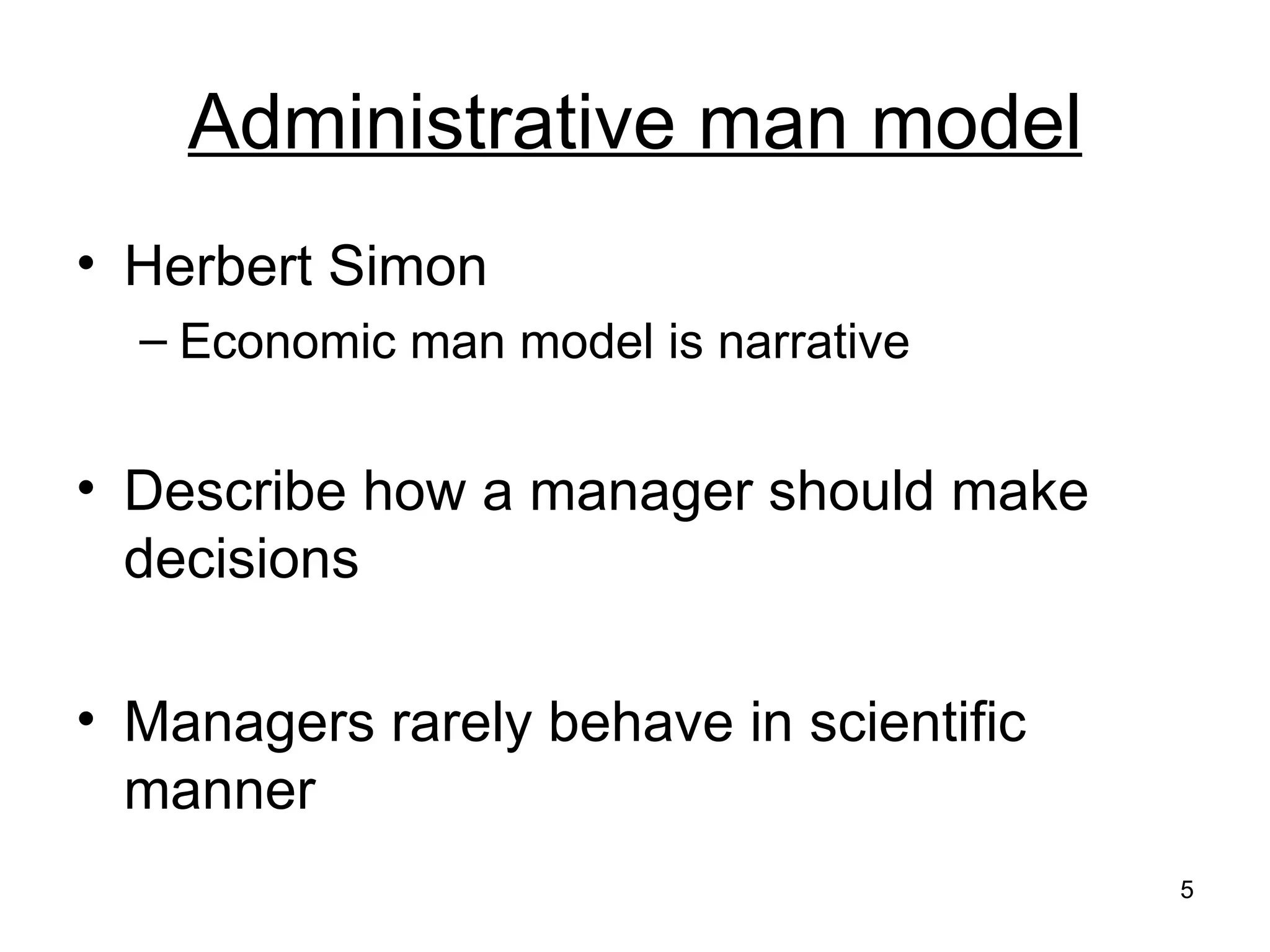
Administrative man model Herbert Simon Economic man model is narrative Describe how a manager should make decisions Managers rarely behave in scientific manner
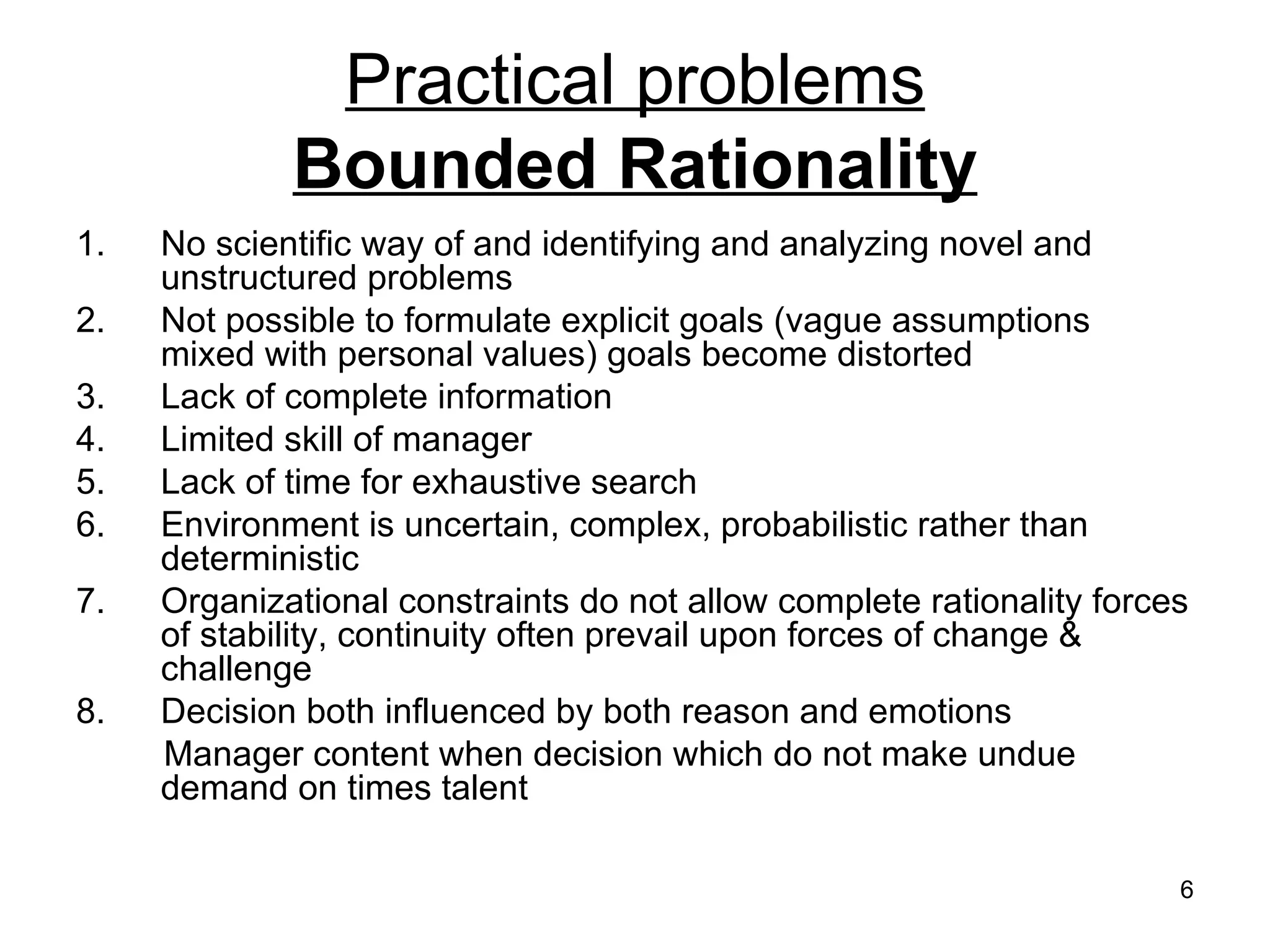
Practical problems Bounded Rationality No scientific way of and identifying and analyzing novel and unstructured problems Not possible to formulate explicit goals (vague assumptions mixed with personal values) goals become distorted Lack of complete information Limited skill of manager Lack of time for exhaustive search Environment is uncertain, complex, probabilistic rather than deterministic Organizational constraints do not allow complete rationality forces of stability, continuity often prevail upon forces of change & challenge Decision both influenced by both reason and emotions Manager content when decision which do not make undue demand on times talent
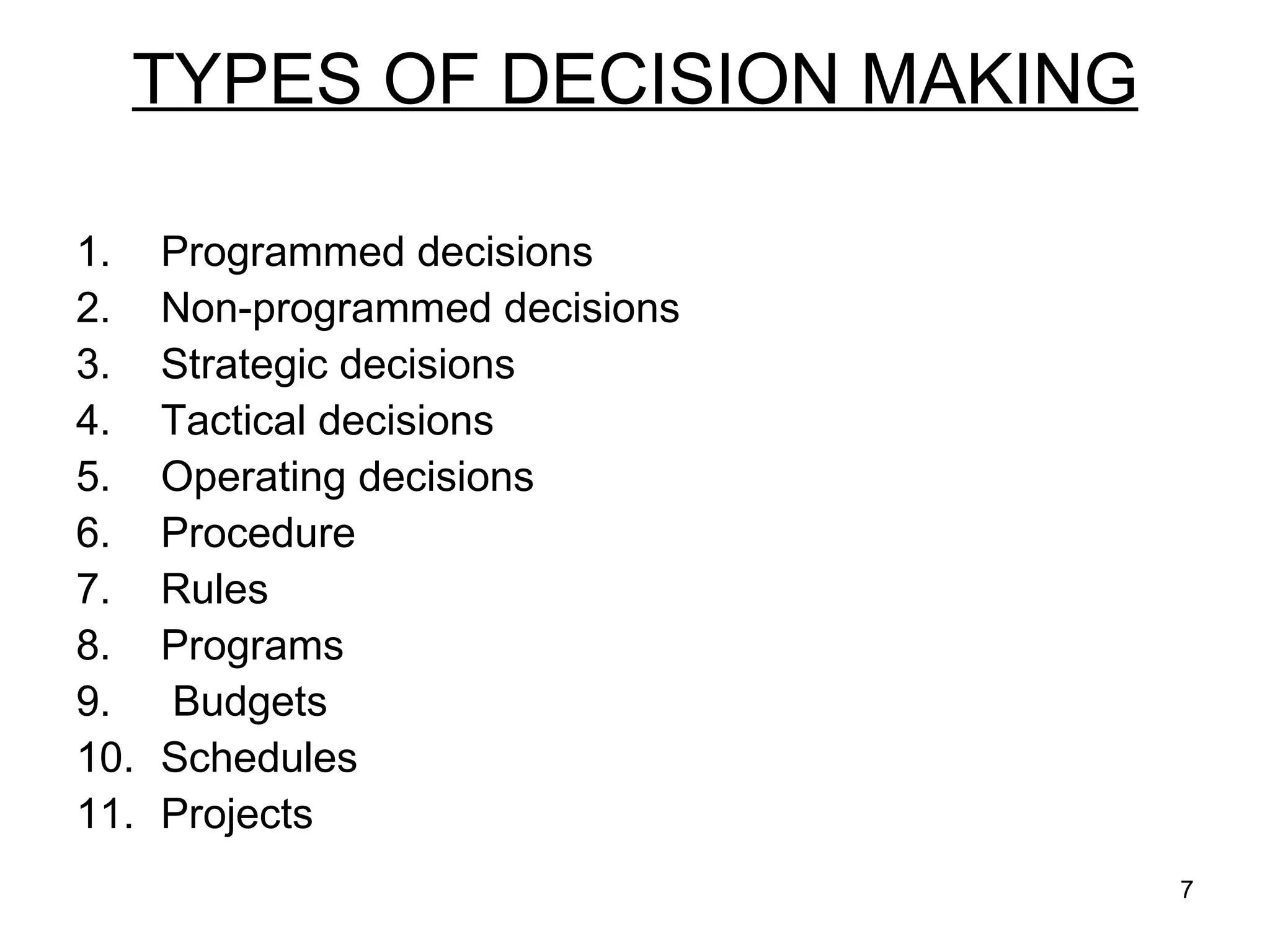
TYPES OF DECISION MAKING Programmed decisions Non-programmed decisions Strategic decisions Tactical decisions Operating decisions Procedure Rules Programs Budgets Schedules Projects
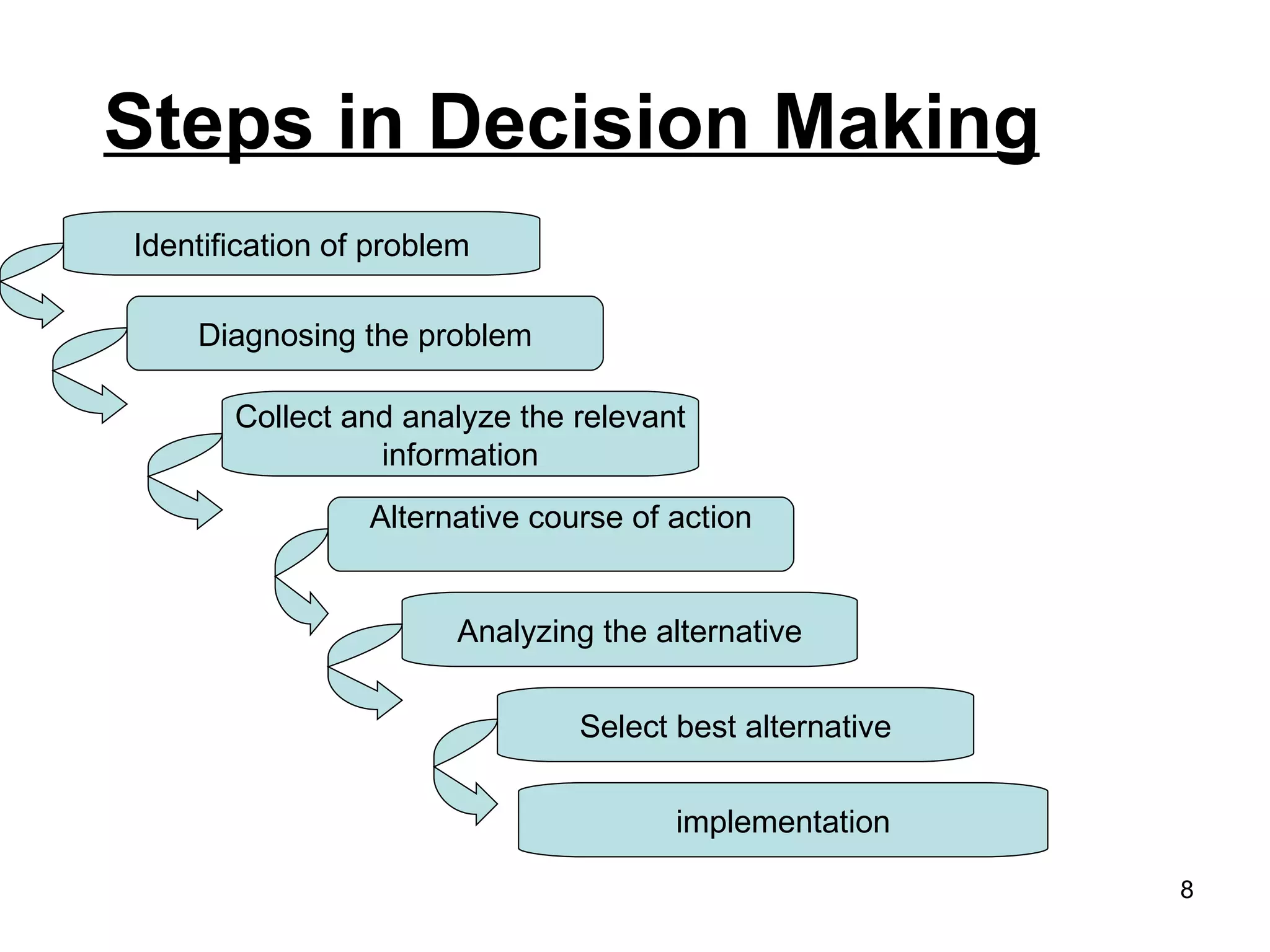
Steps in Decision Making Identification of problem Diagnosing the problem Collect and analyze the relevant information Alternative course of action Analyzing the alternative Select best alternative implementation

Decision making

  • 1.
    DECISION MAKING Isthe selection of course of action from two or more alternatives, the decision making process is a sequence of steps leading to that selection
  • 2.
    NATURE It isa goal – oriented process, continuous, systematic process It is a intellectual process and situational It involves commitment of resources.
  • 3.
    RATIONALITY IN DECISIONMAKING Models of decision making Economic man model Administrative man model
  • 4.
    Economic man modelAdam smith Fully rational or logical when making work related decisions Full idea of problem Formulates his goals consciously Scientific thinking Knowledgeable and analyses information intelligently An OPTIMAL DECISION which maximizes return / minimize cost
  • 5.
    Administrative man modelHerbert Simon Economic man model is narrative Describe how a manager should make decisions Managers rarely behave in scientific manner
  • 6.
    Practical problems BoundedRationality No scientific way of and identifying and analyzing novel and unstructured problems Not possible to formulate explicit goals (vague assumptions mixed with personal values) goals become distorted Lack of complete information Limited skill of manager Lack of time for exhaustive search Environment is uncertain, complex, probabilistic rather than deterministic Organizational constraints do not allow complete rationality forces of stability, continuity often prevail upon forces of change & challenge Decision both influenced by both reason and emotions Manager content when decision which do not make undue demand on times talent
  • 7.
    TYPES OF DECISIONMAKING Programmed decisions Non-programmed decisions Strategic decisions Tactical decisions Operating decisions Procedure Rules Programs Budgets Schedules Projects
  • 8.
    Steps in DecisionMaking Identification of problem Diagnosing the problem Collect and analyze the relevant information Alternative course of action Analyzing the alternative Select best alternative implementation