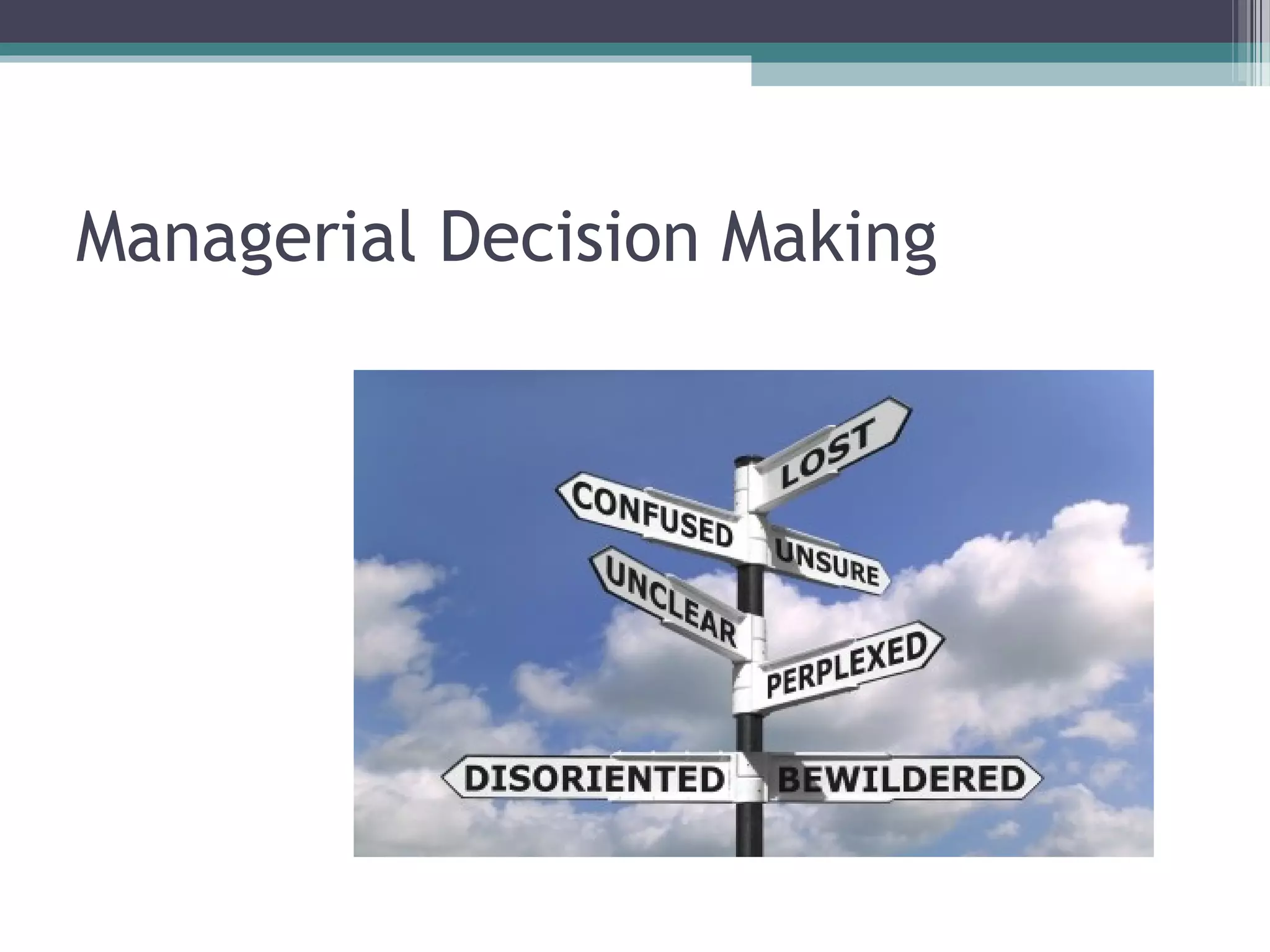
Managerial Decision Making
Managerial decision making
• Decision-making is the process by which a
course of action is selected as the way to deal
with a specific problem.
• Managers are usually evaluated and rewarded on
the basis of the importance and results of their
decisions
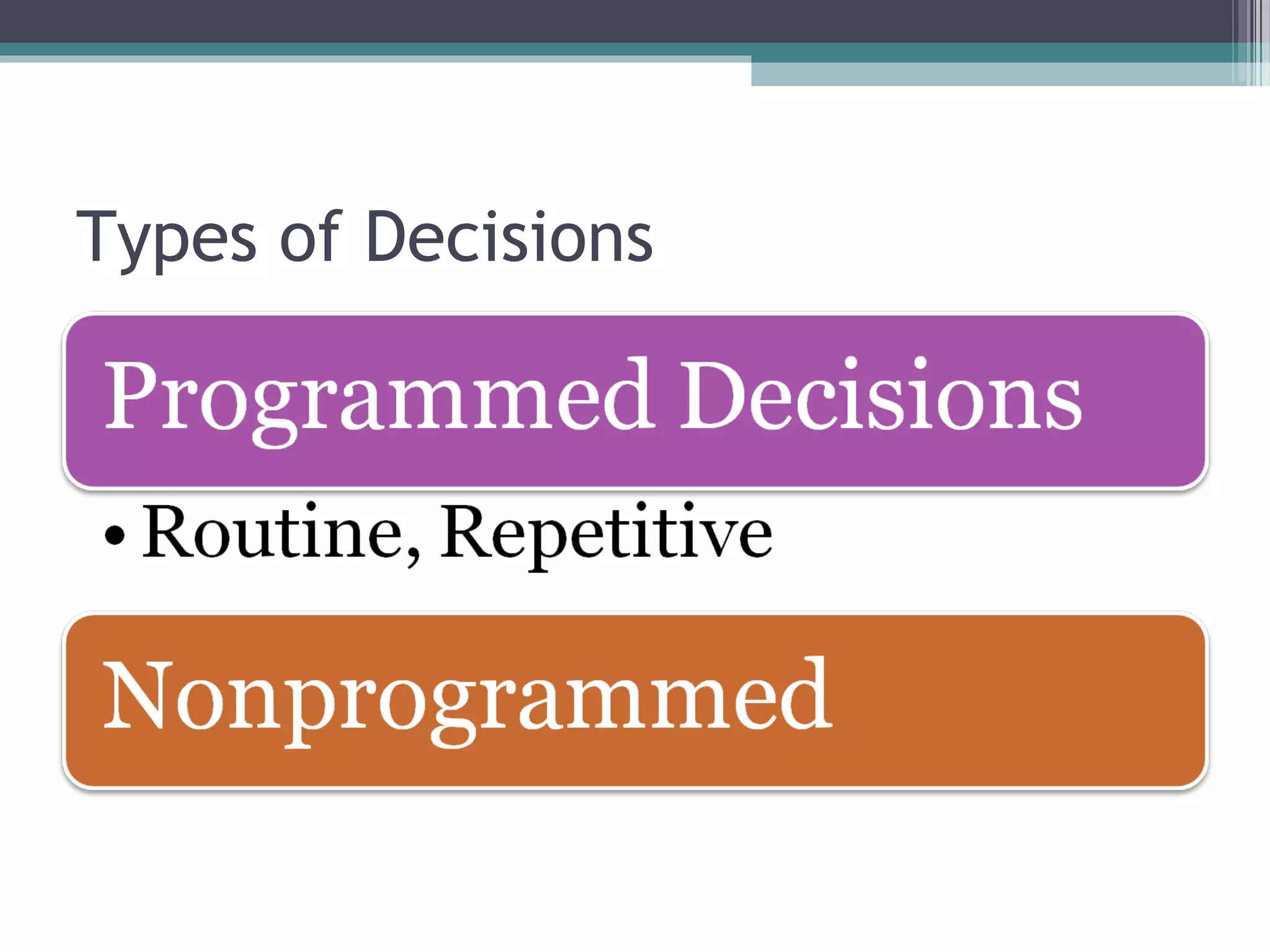
Types of Decisions
Significance and limitations of rational
decision-making
• The process of rational decision-making is very
similar to the process of strategic planning.
Significance of rational decision-
making
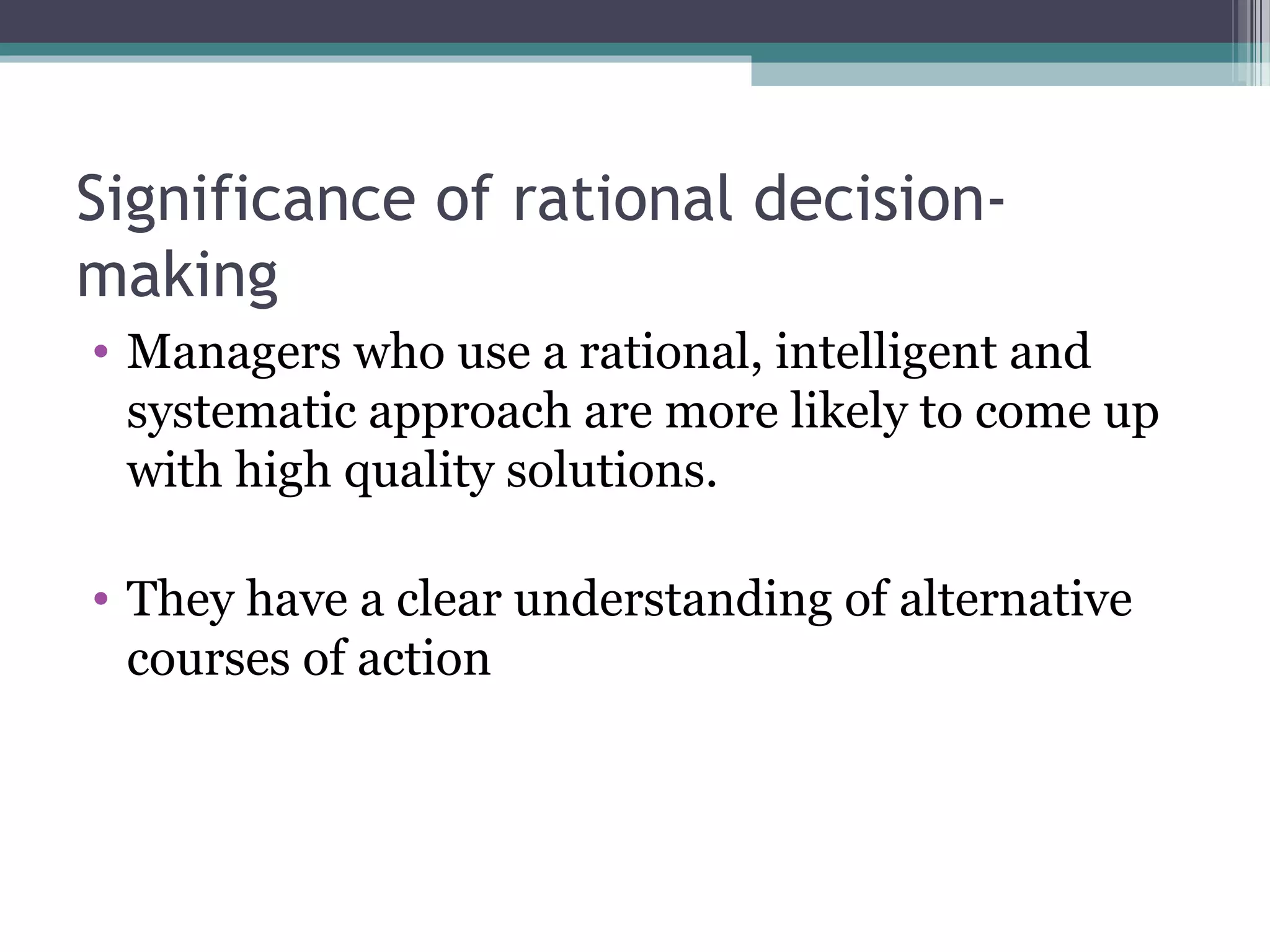
• Managers who use a rational, intelligent and
systematic approach are more likely to come up
with high quality solutions.
• They have a clear understanding of alternative
courses of action
Significance of rational decision-
making
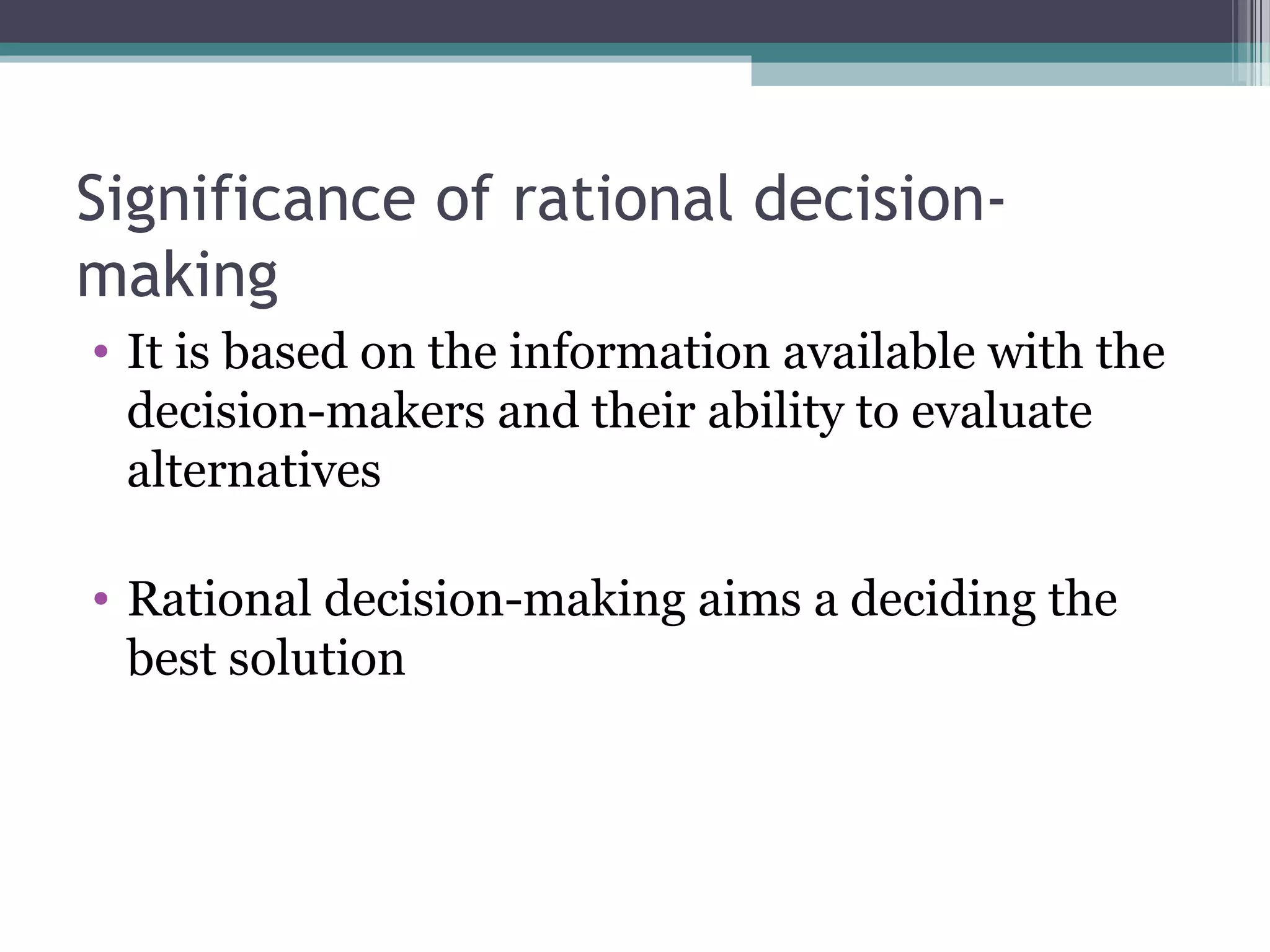
• It is based on the information available with the
decision-makers and their ability to evaluate
alternatives
• Rational decision-making aims a deciding the
best solution
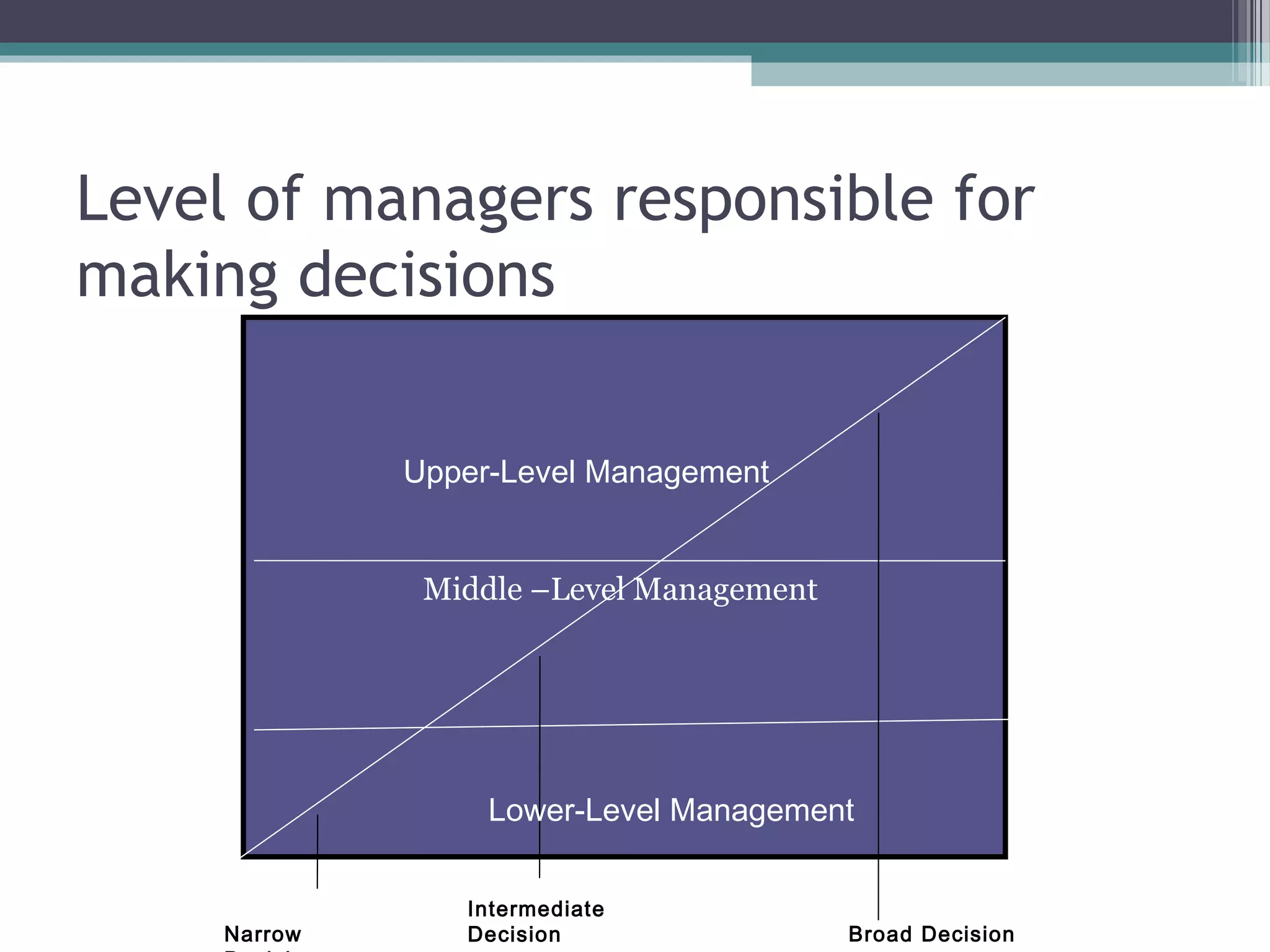
Level of managers responsible for
making decisions
Middle –Level Management
Lower-Level Management
Upper-Level Management
Narrow
Intermediate
Decision Broad Decision
Limitations of rational decision-making
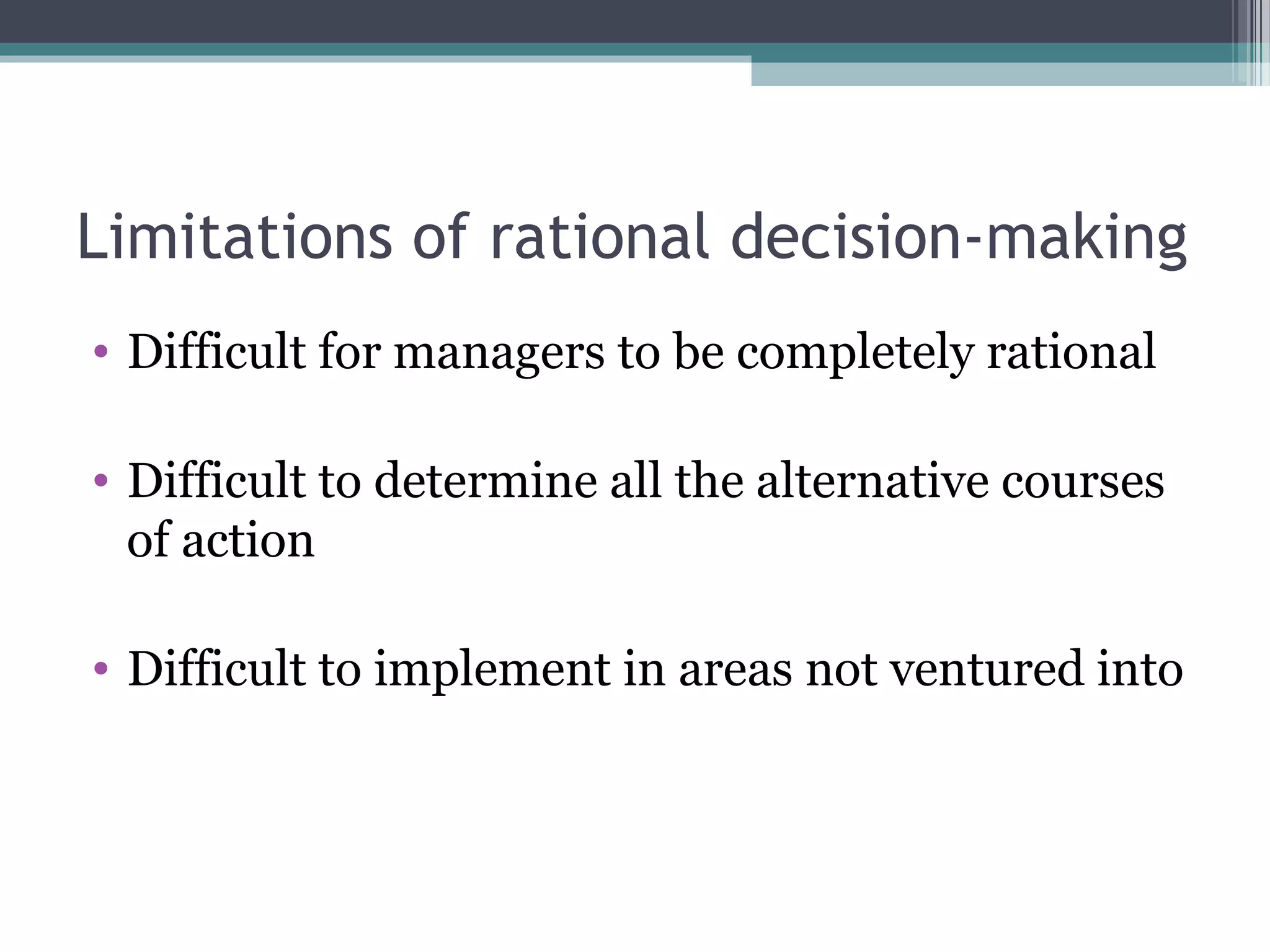
• Difficult for managers to be completely rational
• Difficult to determine all the alternative courses
of action
• Difficult to implement in areas not ventured into
Limitations of rational decision-making
• All possible alternatives cannot be thoroughly
analyzed
• Limitation of information, time and certainty
curb rationality
• Risk avoiding tendency disrupts their rational
decision-making process
Decision-making process
• Identify the problem
• Scanning stage
• Categorization stage
• Diagnosis stage
• Identify resources
• Generate alternative solutions
• Brainstorm
Decision-making process
• Evaluate alternatives
• Implement the decision
• Monitor the decision
How to make a business plan
• The following steps are followed in the process
of making a business plan:
• 1. Understanding your business - Situation
Analysis
• 2. What do “you” want? – Forming Personal
Objectives
• 4. Forming the right business objectives
How to make a business plan
• 5. Forming Strategies And Tactics
•
6. Written Document
• 7. Review & Control and back to Step 1

Decision Making : Management Function

  • 1.
  • 2.
    Managerial decision making •Decision-making is the process by which a course of action is selected as the way to deal with a specific problem. • Managers are usually evaluated and rewarded on the basis of the importance and results of their decisions
  • 3.
  • 4.
    Significance and limitationsof rational decision-making • The process of rational decision-making is very similar to the process of strategic planning.
  • 5.
    Significance of rationaldecision- making • Managers who use a rational, intelligent and systematic approach are more likely to come up with high quality solutions. • They have a clear understanding of alternative courses of action
  • 6.
    Significance of rationaldecision- making • It is based on the information available with the decision-makers and their ability to evaluate alternatives • Rational decision-making aims a deciding the best solution
  • 7.
    Level of managersresponsible for making decisions Middle –Level Management Lower-Level Management Upper-Level Management Narrow Intermediate Decision Broad Decision
  • 8.
    Limitations of rationaldecision-making • Difficult for managers to be completely rational • Difficult to determine all the alternative courses of action • Difficult to implement in areas not ventured into
  • 9.
    Limitations of rationaldecision-making • All possible alternatives cannot be thoroughly analyzed • Limitation of information, time and certainty curb rationality • Risk avoiding tendency disrupts their rational decision-making process
  • 10.
    Decision-making process • Identifythe problem • Scanning stage • Categorization stage • Diagnosis stage • Identify resources • Generate alternative solutions • Brainstorm
  • 11.
    Decision-making process • Evaluatealternatives • Implement the decision • Monitor the decision
  • 12.
    How to makea business plan • The following steps are followed in the process of making a business plan: • 1. Understanding your business - Situation Analysis • 2. What do “you” want? – Forming Personal Objectives • 4. Forming the right business objectives
  • 13.
    How to makea business plan • 5. Forming Strategies And Tactics • 6. Written Document • 7. Review & Control and back to Step 1