An Appropriate Technological Solution for Sewage
Treatment -

Decentralized STPs

Workshop cum Training program on Promoting water
use efficiency across urban water sector
Bangalore
13th Dec 2013
WATER : What is the issue?
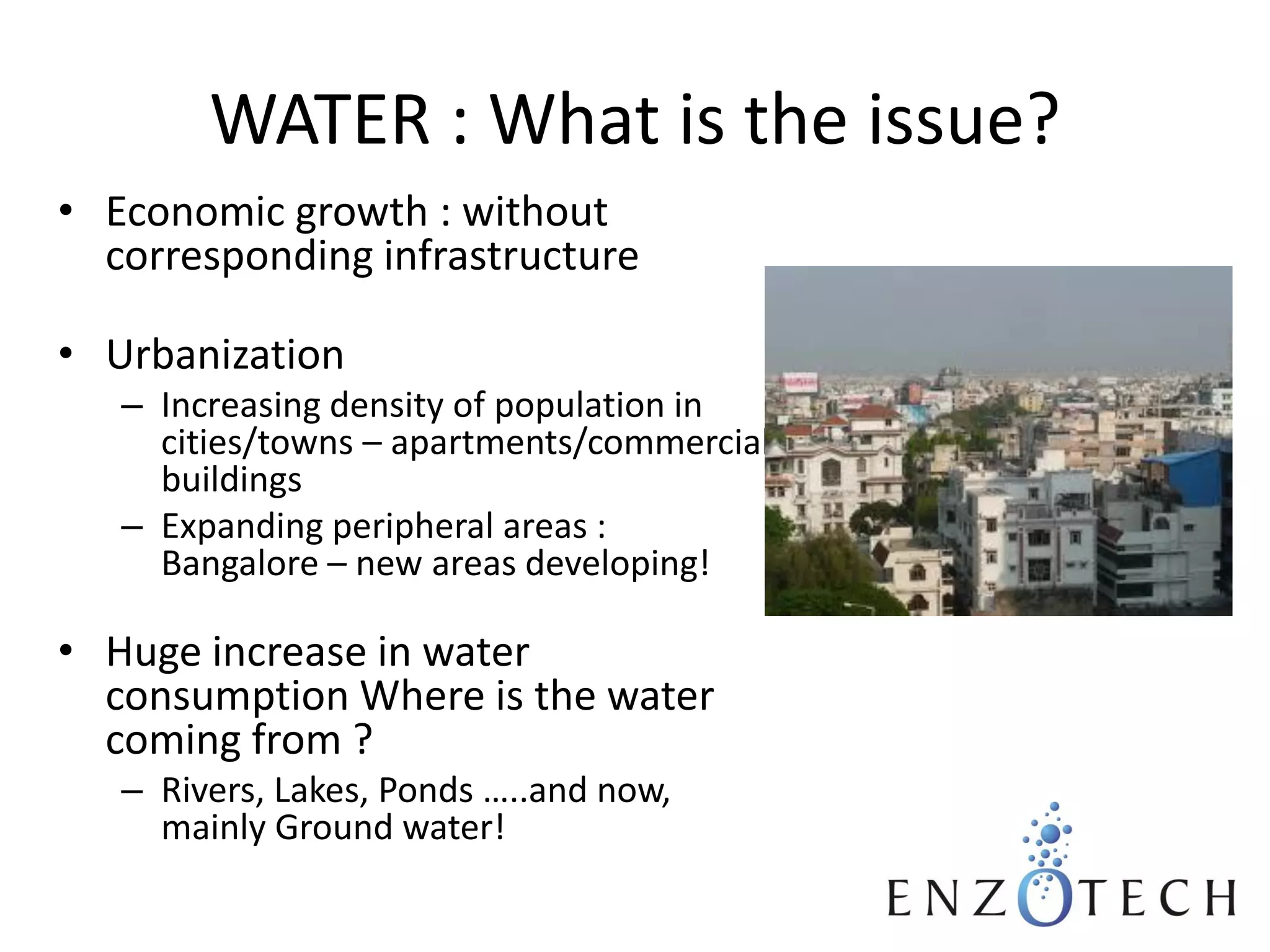
• Economic growth : without
corresponding infrastructure

• Urbanization
– Increasing density of population in
cities/towns – apartments/commercial
buildings
– Expanding peripheral areas :
Bangalore – new areas developing!

• Huge increase in water
consumption Where is the water
coming from ?
– Rivers, Lakes, Ponds …..and now,
mainly Ground water!
WATER : Next issue!
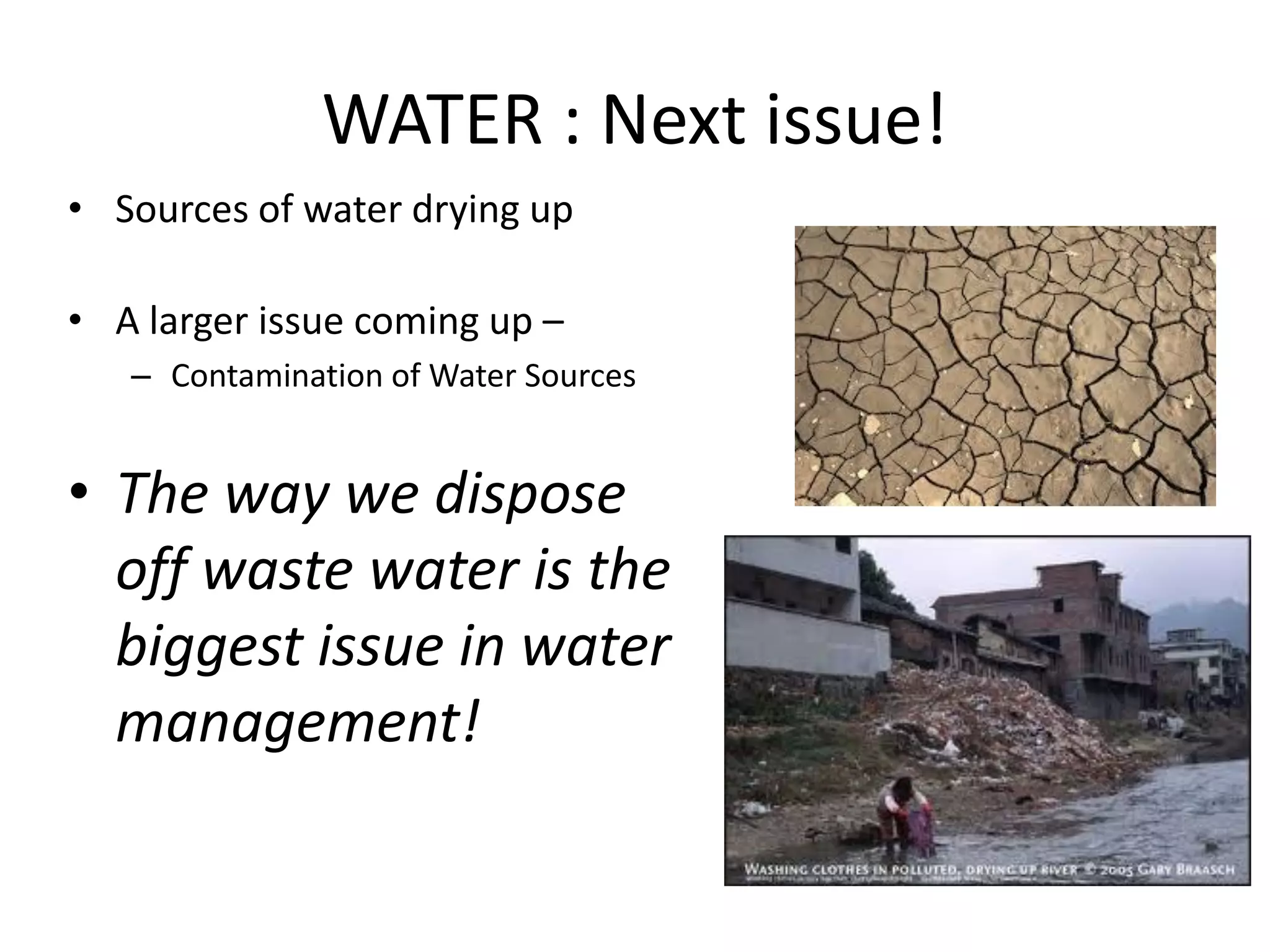
• Sources of water drying up
• A larger issue coming up –
– Contamination of Water Sources

• The way we dispose
off waste water is the
biggest issue in water
management!
Report Summary
• Citizens’ Seventh Report on the State of India’s Environment,
“Excreta Matters: How urban India is soaking up water,
polluting rivers and drowning in its own excreta”
– by Centre for Science and Environment, New Delhi
• Report released in May 2012 – covering 71 cities of India,
research over 3 ½ years
• The report spells out a six-fold strategy for managing water
and waste in its last chapter
“The agenda for water to water”.
Source : http://www.indiawaterportal.org/post/26422

and http://cseindia.org/userfiles/excreta-matter.pdf
How big is the waste water problem?
• Total sewage water in Class I and II Cities India
– 38254 MLD
– Only 11787 MLD (35%) Capacity to treat
– Actual treated – only around 8250 MLD (22 %)

• Current Scenario
–
–
–
–
–

Increase in demand and cost of water
Stringent waste water disposal norms
Increased contaminants from industries
Urbanization leading to large Sewage generation
Untreated sewage leading to severe water pollution
- severely impacting ground water availability & quality.
What is “Decentralized” sewage treatment?
• Current system : sewage is the
responsibility of the Government
/ public authorities

• But – how can public authorities
manage :
– Cost : widely spread out
“development”, apart from
untenable economics
– Pipe connections
– Land availability – for “centralized”
treatment plants

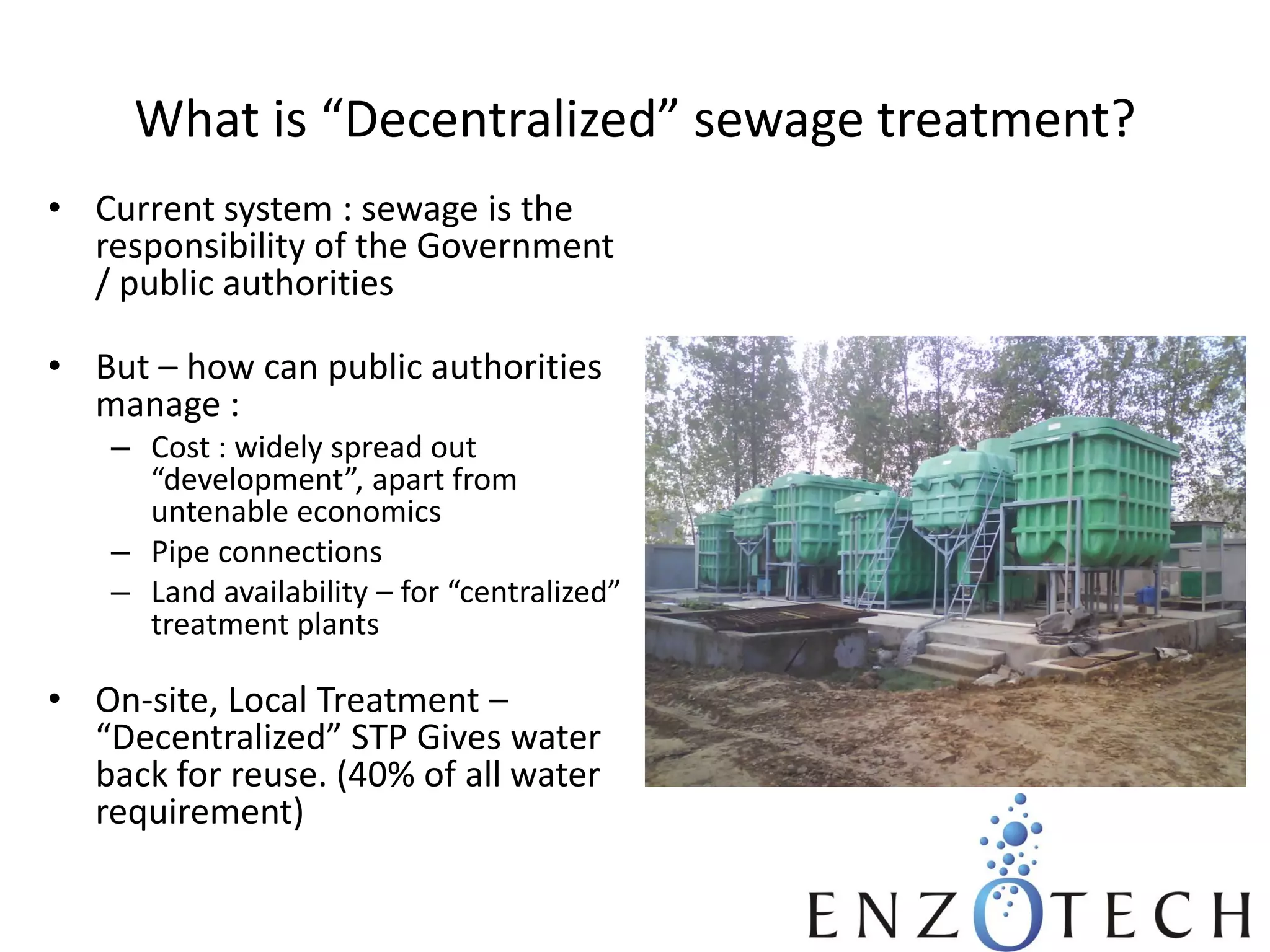
• On-site, Local Treatment –
“Decentralized” STP Gives water
back for reuse. (40% of all water
requirement)
Recognize and manage Sewage
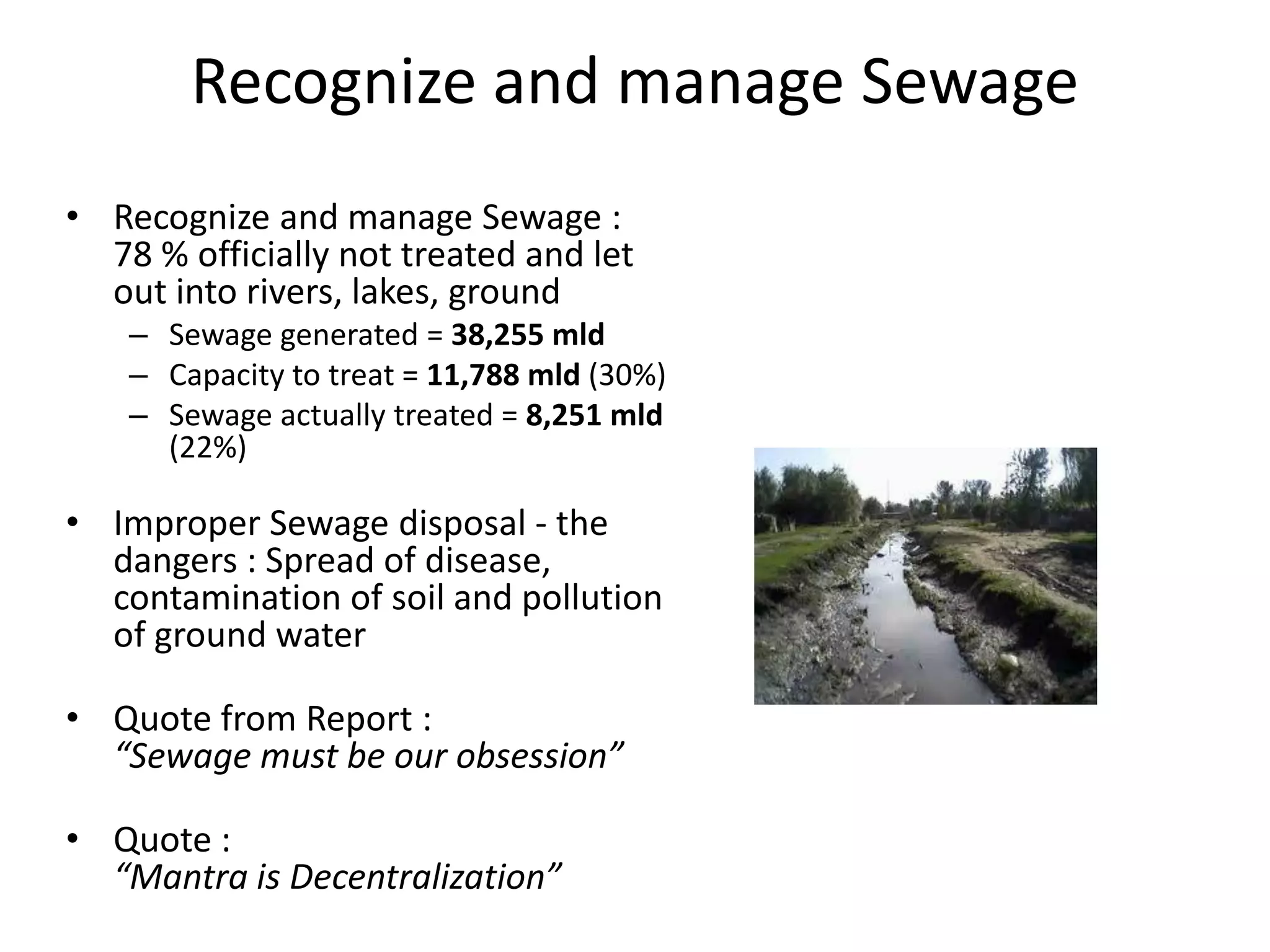
• Recognize and manage Sewage :
78 % officially not treated and let
out into rivers, lakes, ground
– Sewage generated = 38,255 mld
– Capacity to treat = 11,788 mld (30%)
– Sewage actually treated = 8,251 mld
(22%)

• Improper Sewage disposal - the
dangers : Spread of disease,
contamination of soil and pollution
of ground water
• Quote from Report :
“Sewage must be our obsession”
• Quote :
“Mantra is Decentralization”
Why Decentralized ? Local benefits!
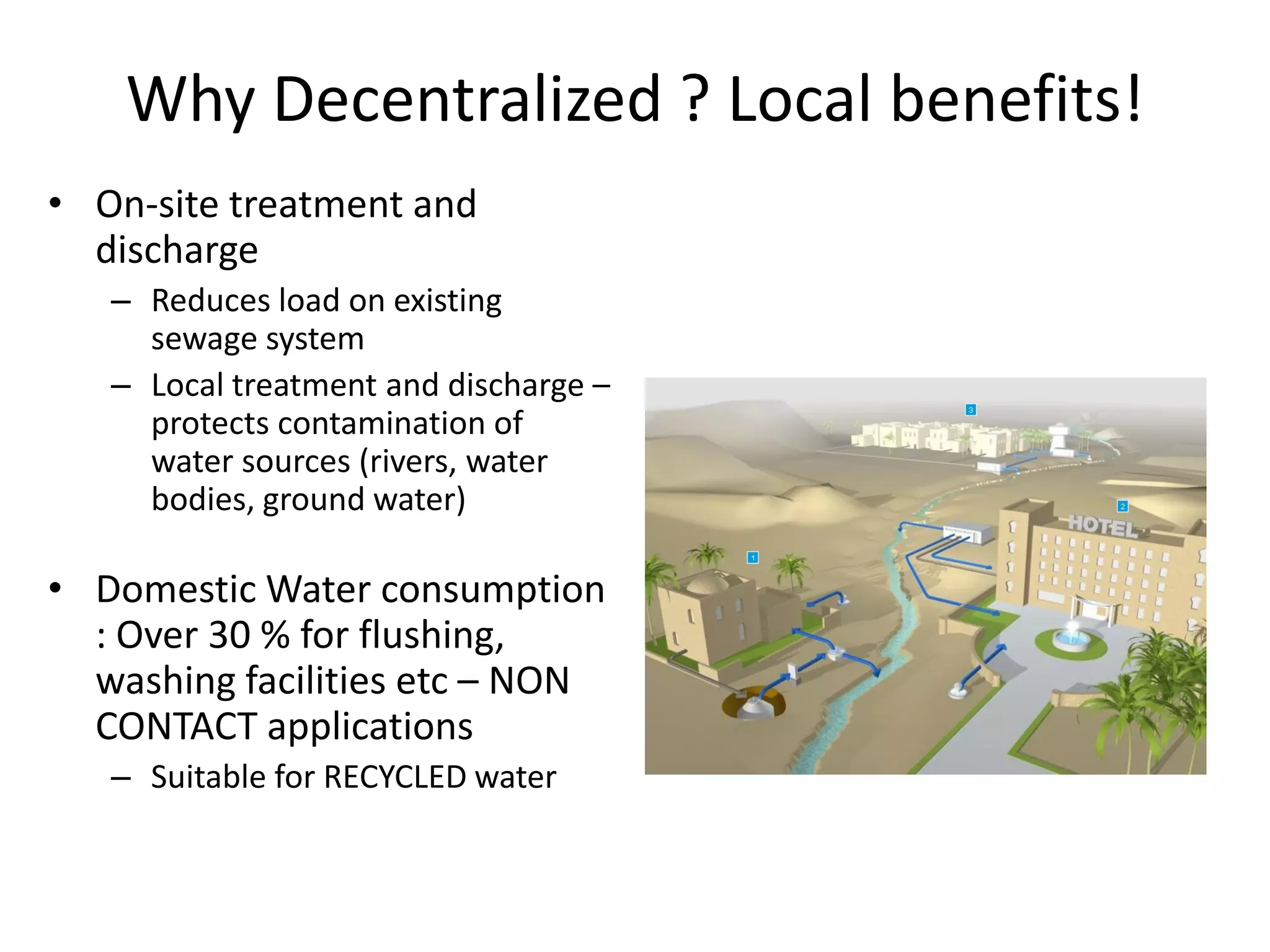
• On-site treatment and
discharge
– Reduces load on existing
sewage system
– Local treatment and discharge –
protects contamination of
water sources (rivers, water
bodies, ground water)

• Domestic Water consumption
: Over 30 % for flushing,
washing facilities etc – NON
CONTACT applications
– Suitable for RECYCLED water
Urban reuse of water
• Current cycle :
– Ground water -> Usage -> Sewer system
-> Water bodies/environment disposal
UNSUSTAINABLE !

• Required cycle :
– Less ground water -> Less usage -> TREATMENT-> Recycle for
non-potable applications
-> Recharge of ground water / safe disposal in water bodies
or environment

• Rain water harvesting – good start.
However -> Sustainable water management :
only thru Recycling of waste water
Average water consumption Per person
Drinking
Cooking
Total

5
5
10

7%

Bathing
Washing Clothes
Utensils washing
Total

55
20
10
85

63%

General washing
Toilet Flushing
Total

10
30
40

30%

Grand Total

135

Recyclable – about
40 % (including
Gardening etc)
ONE IMMEDIATE SOLUTION
RECYCLE WATER
At least 40 % of Water usage in urban areas – flushing /
landscape maintenance / facilities washing
This 40 %+ water can be reclaimed and reused!
Leave behind good water
for the generations to come
Enzotech Solutions : Credentials
• Started in 2006
• ISO 9001:2008 certified company

• Strong client roster – testimony to efficacy of Patented
technology.
• Over 150 Installations all over India. (A few in Africa)

• Starting Aug ’11, taken over by a team of seasoned
management professionals
• Full fledged operations : Design and R & D – Manufacturing
– After sales support
An illustrative Case Study –
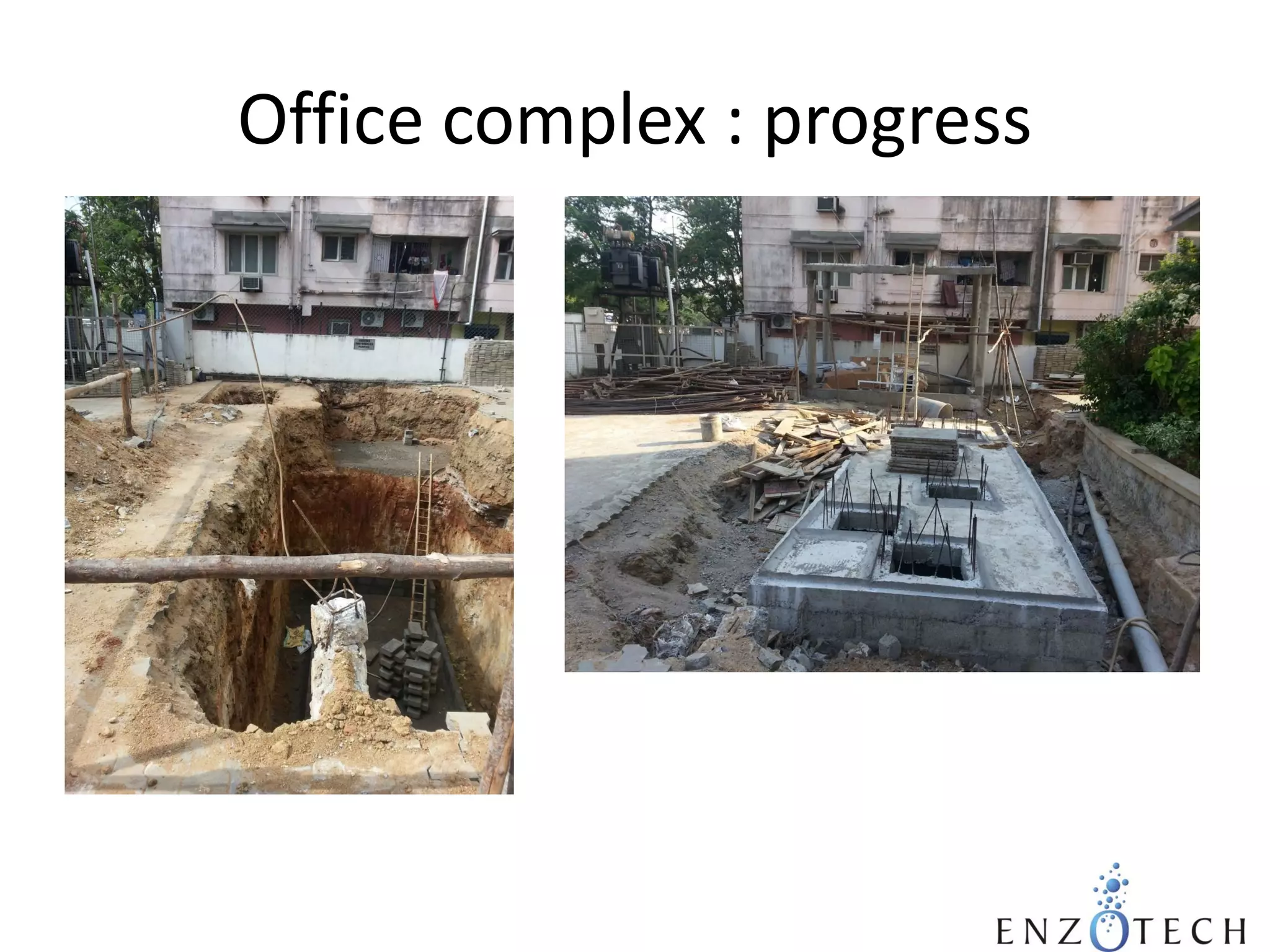
Office complex, Chennai
Office complex – reuse for flushing
• Office on Velachery Road
• Around 300 people – daily consumption of around
12,000 Litres
• Used primarily for flushing toilets, washing hands
etc.
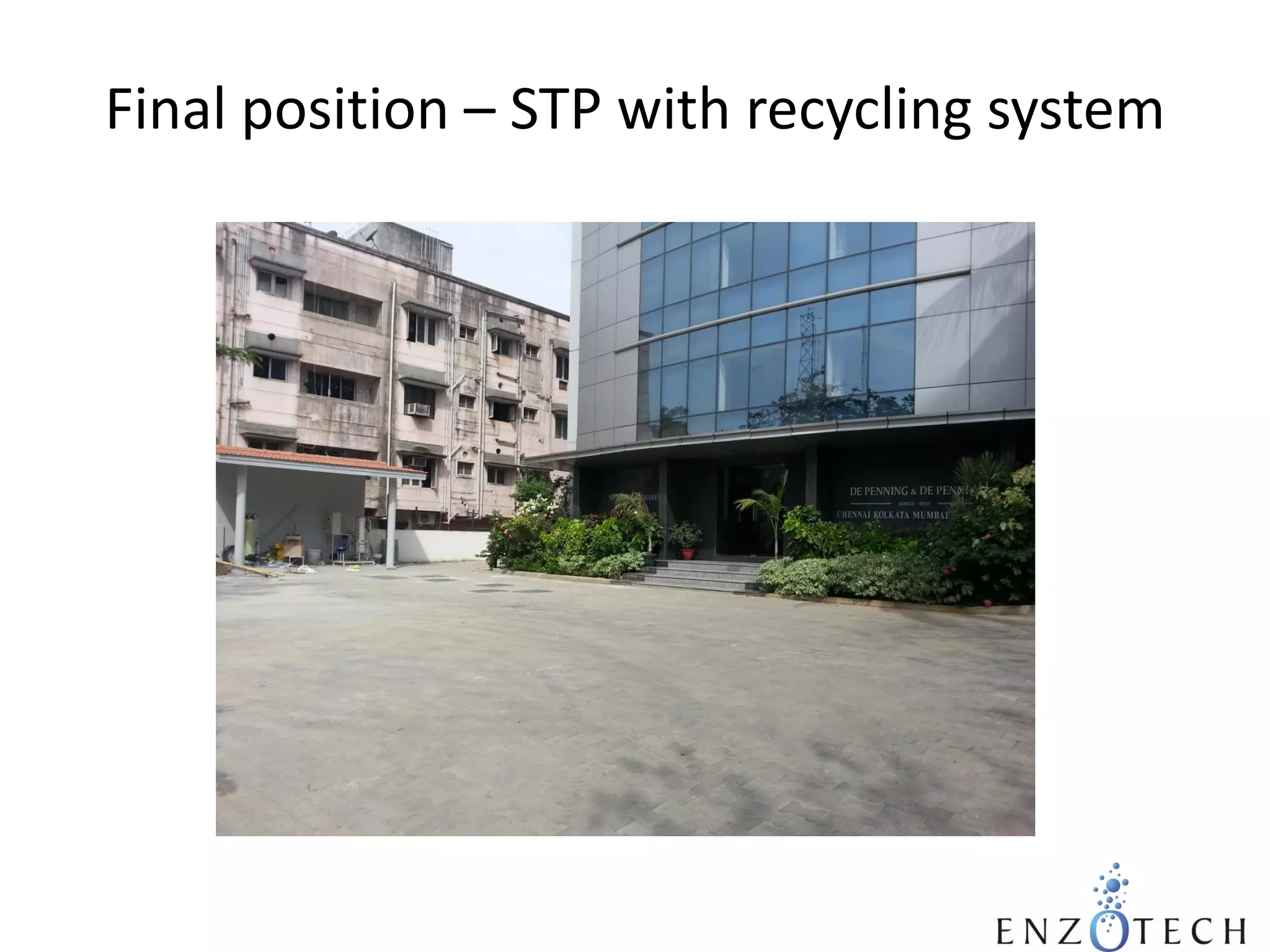
• Entire water is now treated and reused for flushing
Office complex : progress
Final position – STP with recycling system
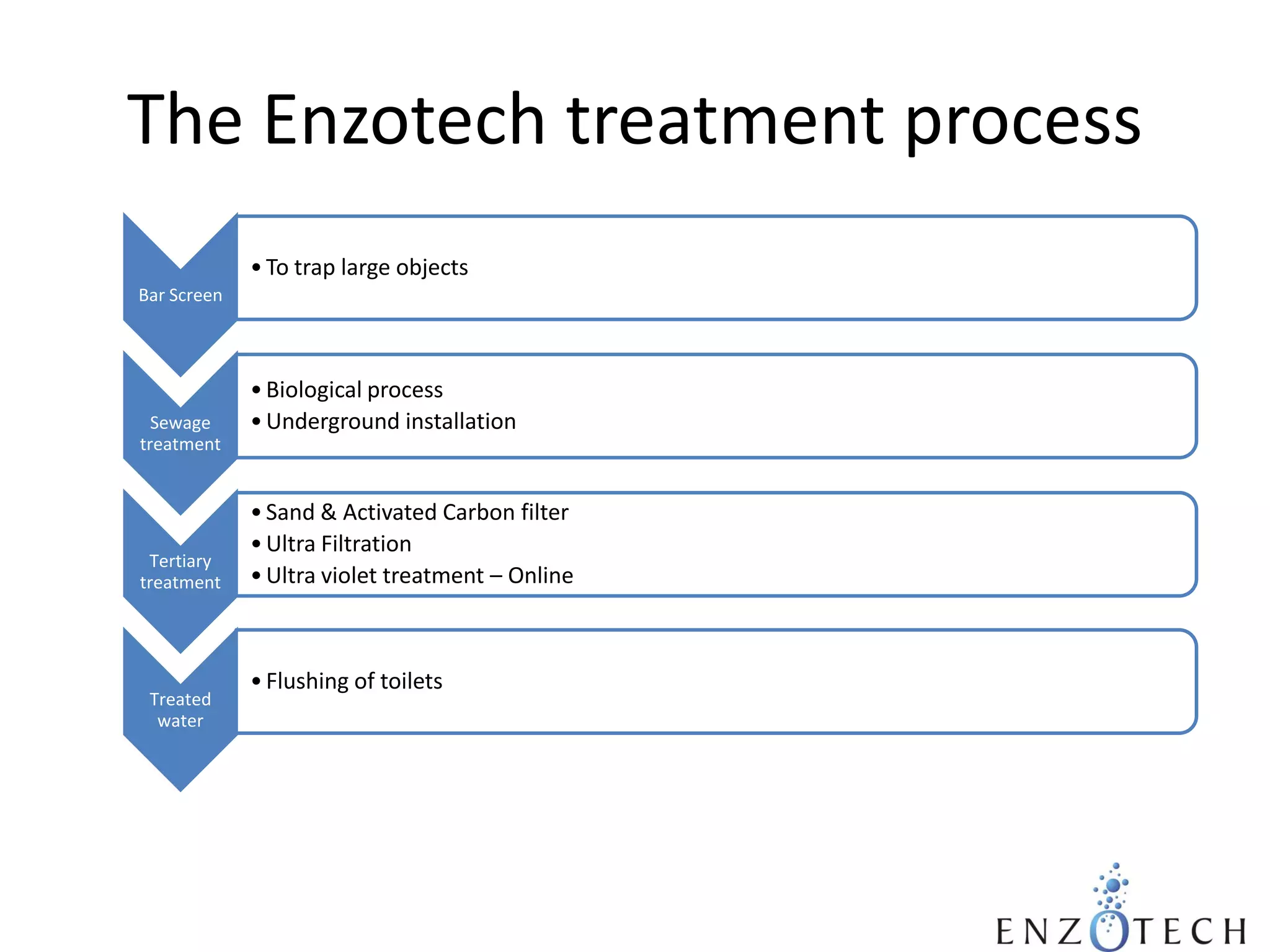
The Enzotech treatment process
• To trap large objects
Bar Screen

Sewage
treatment

Tertiary
treatment

Treated
water

• Biological process
• Underground installation

• Sand & Activated Carbon filter
• Ultra Filtration
• Ultra violet treatment – Online

• Flushing of toilets
Water treatment and recycling in a
hospital
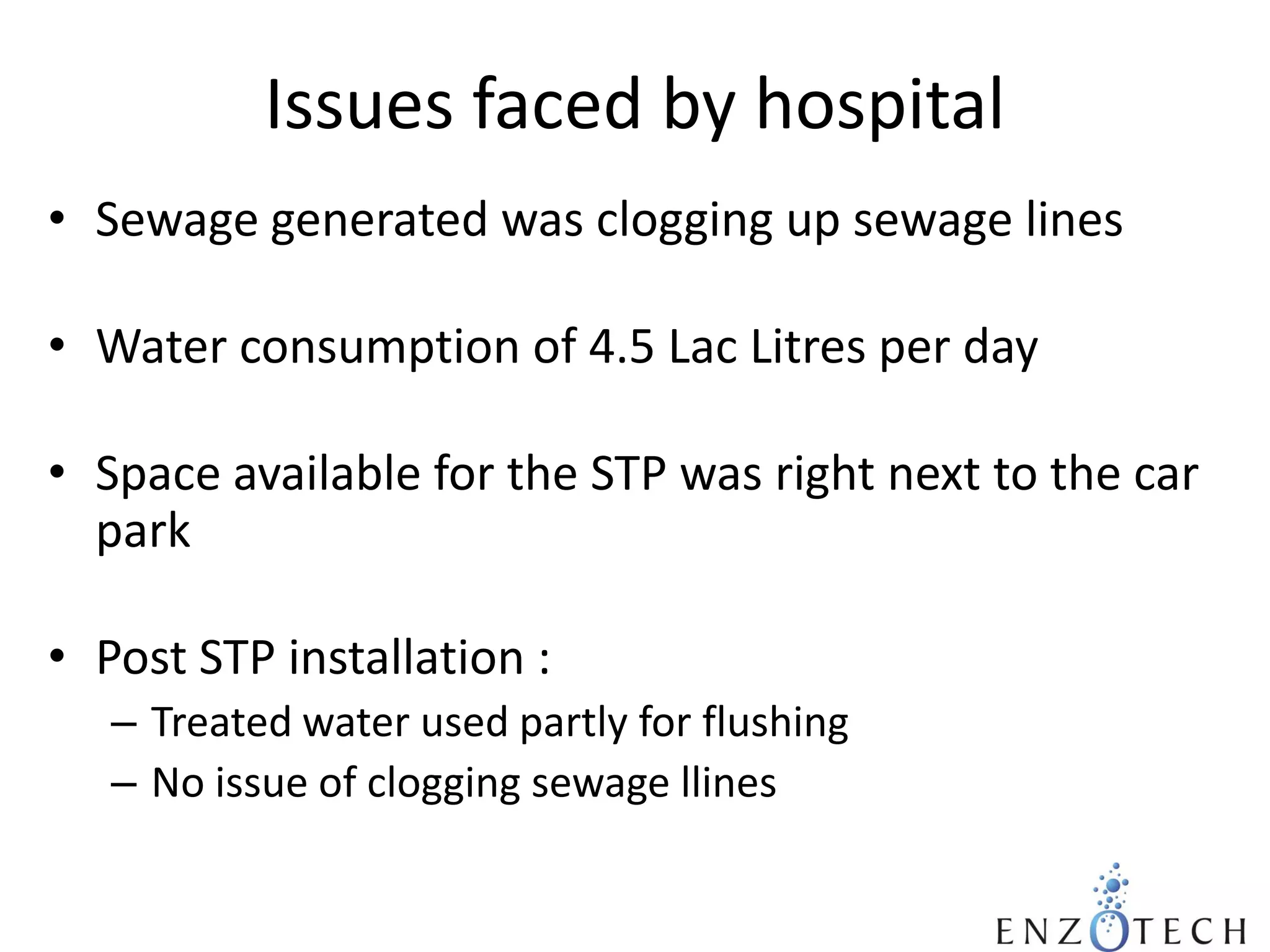
Issues faced by hospital
• Sewage generated was clogging up sewage lines
• Water consumption of 4.5 Lac Litres per day
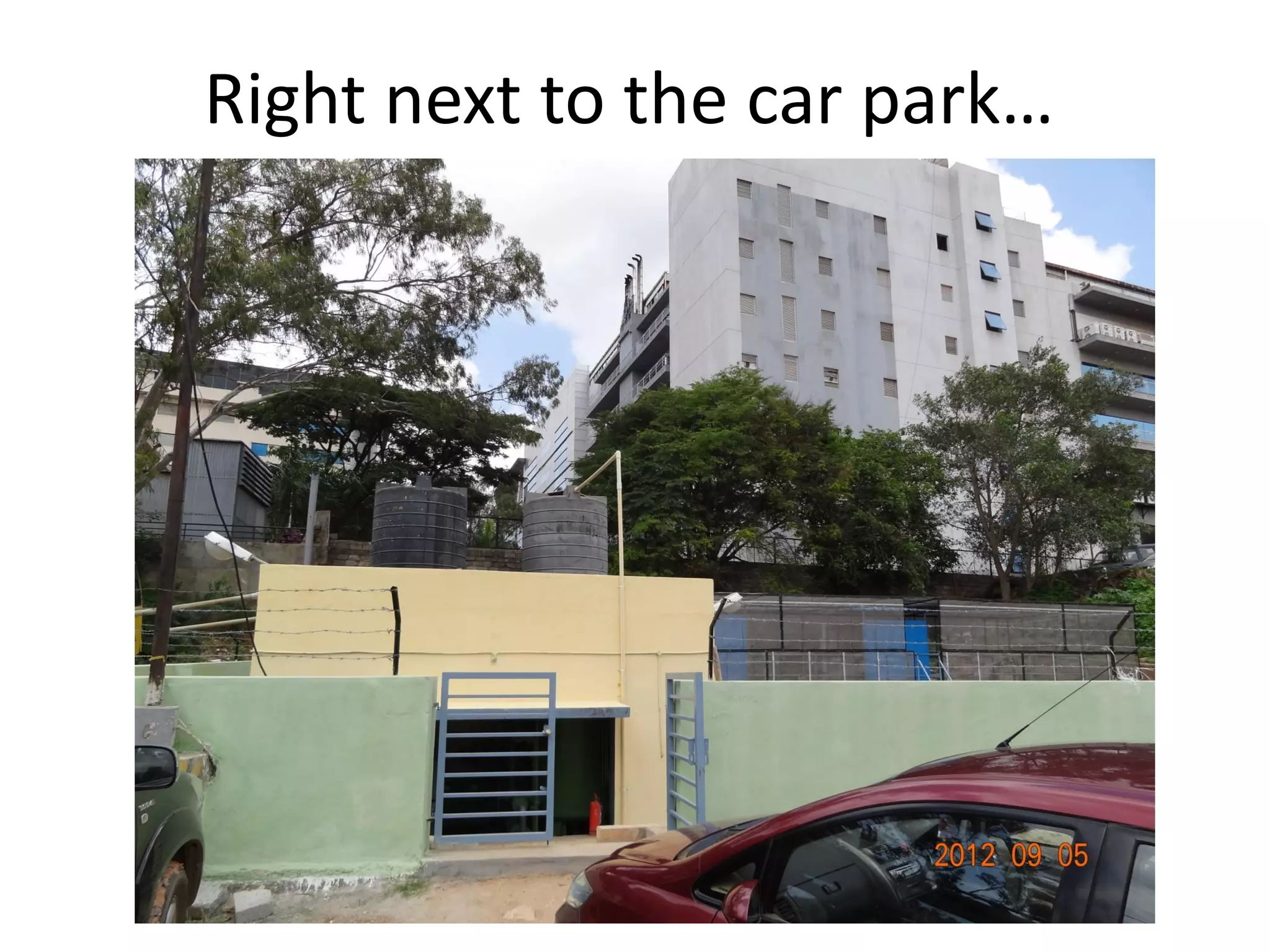
• Space available for the STP was right next to the car
park
• Post STP installation :
– Treated water used partly for flushing
– No issue of clogging sewage llines
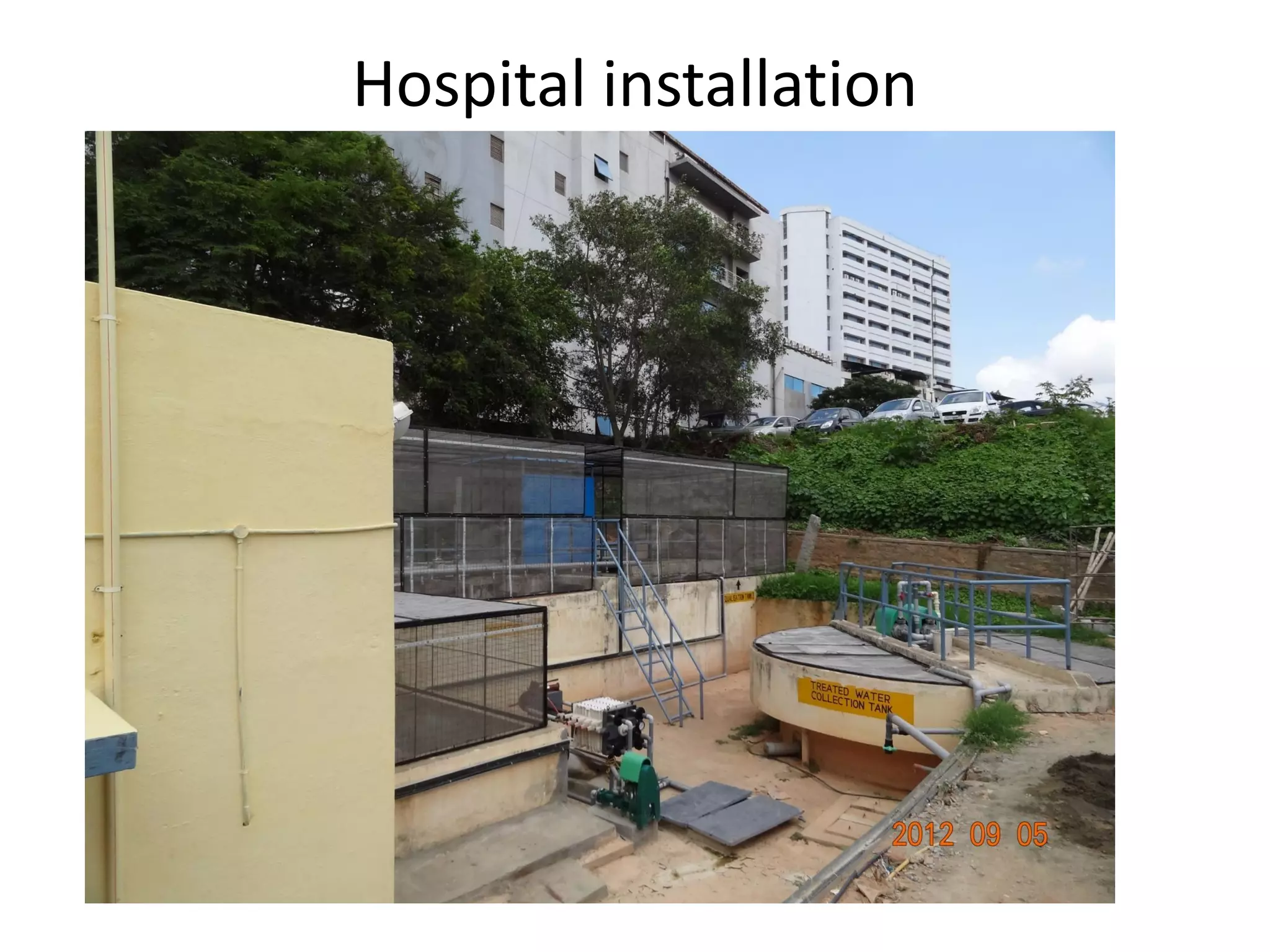
Hospital installation
Right next to the car park…
EnzoMBBR system
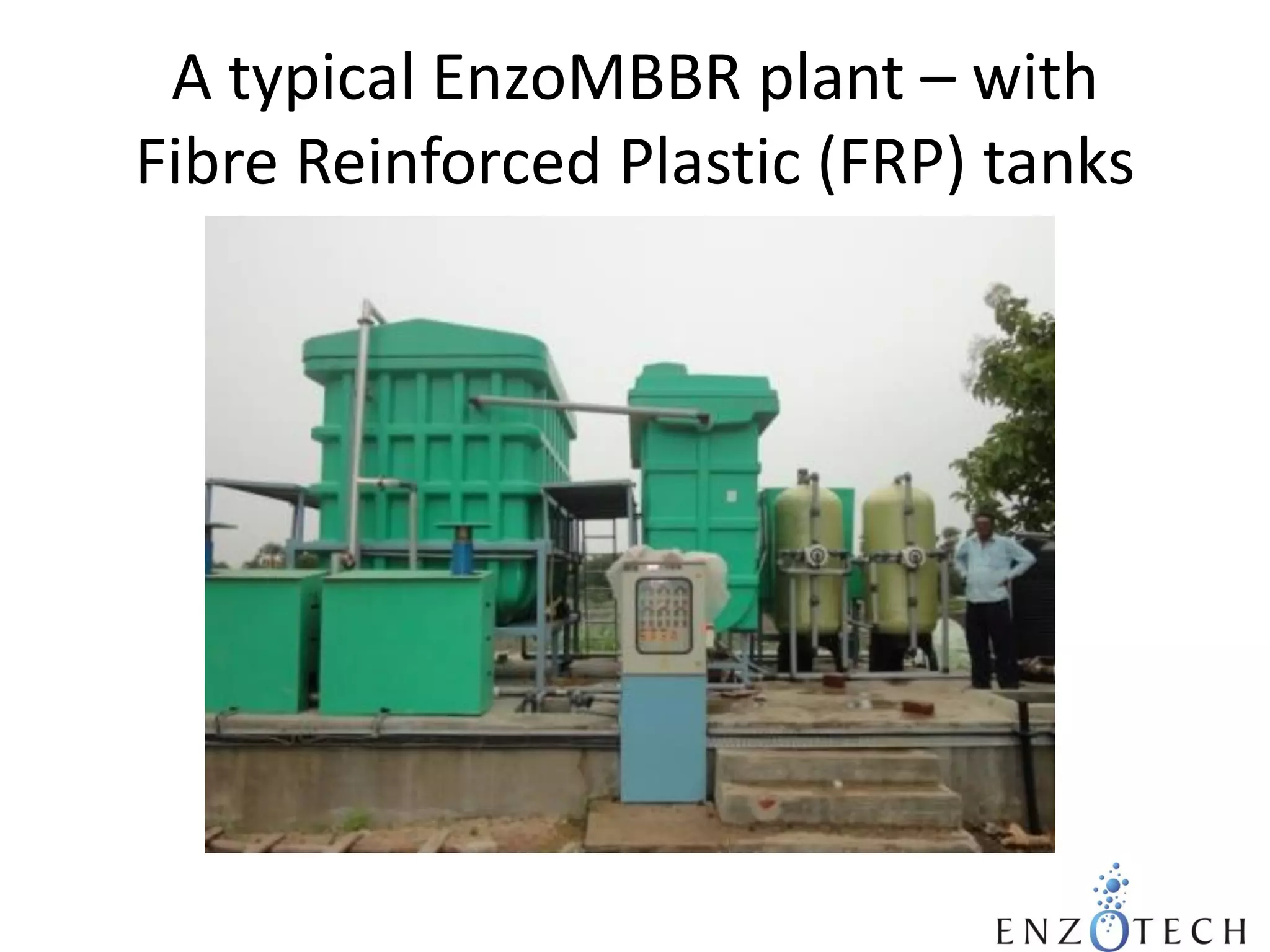
A typical EnzoMBBR plant – with
Fibre Reinforced Plastic (FRP) tanks
Thank you

Decentralised STPs_ Ramprasad_2013

  • 1.
    An Appropriate TechnologicalSolution for Sewage Treatment - Decentralized STPs Workshop cum Training program on Promoting water use efficiency across urban water sector Bangalore 13th Dec 2013
  • 2.
    WATER : Whatis the issue? • Economic growth : without corresponding infrastructure • Urbanization – Increasing density of population in cities/towns – apartments/commercial buildings – Expanding peripheral areas : Bangalore – new areas developing! • Huge increase in water consumption Where is the water coming from ? – Rivers, Lakes, Ponds …..and now, mainly Ground water!
  • 3.
    WATER : Nextissue! • Sources of water drying up • A larger issue coming up – – Contamination of Water Sources • The way we dispose off waste water is the biggest issue in water management!
  • 4.
    Report Summary • Citizens’Seventh Report on the State of India’s Environment, “Excreta Matters: How urban India is soaking up water, polluting rivers and drowning in its own excreta” – by Centre for Science and Environment, New Delhi • Report released in May 2012 – covering 71 cities of India, research over 3 ½ years • The report spells out a six-fold strategy for managing water and waste in its last chapter “The agenda for water to water”. Source : http://www.indiawaterportal.org/post/26422 and http://cseindia.org/userfiles/excreta-matter.pdf
  • 5.
    How big isthe waste water problem? • Total sewage water in Class I and II Cities India – 38254 MLD – Only 11787 MLD (35%) Capacity to treat – Actual treated – only around 8250 MLD (22 %) • Current Scenario – – – – – Increase in demand and cost of water Stringent waste water disposal norms Increased contaminants from industries Urbanization leading to large Sewage generation Untreated sewage leading to severe water pollution - severely impacting ground water availability & quality.
  • 6.
    What is “Decentralized”sewage treatment? • Current system : sewage is the responsibility of the Government / public authorities • But – how can public authorities manage : – Cost : widely spread out “development”, apart from untenable economics – Pipe connections – Land availability – for “centralized” treatment plants • On-site, Local Treatment – “Decentralized” STP Gives water back for reuse. (40% of all water requirement)
  • 7.
    Recognize and manageSewage • Recognize and manage Sewage : 78 % officially not treated and let out into rivers, lakes, ground – Sewage generated = 38,255 mld – Capacity to treat = 11,788 mld (30%) – Sewage actually treated = 8,251 mld (22%) • Improper Sewage disposal - the dangers : Spread of disease, contamination of soil and pollution of ground water • Quote from Report : “Sewage must be our obsession” • Quote : “Mantra is Decentralization”
  • 8.
    Why Decentralized ?Local benefits! • On-site treatment and discharge – Reduces load on existing sewage system – Local treatment and discharge – protects contamination of water sources (rivers, water bodies, ground water) • Domestic Water consumption : Over 30 % for flushing, washing facilities etc – NON CONTACT applications – Suitable for RECYCLED water
  • 9.
    Urban reuse ofwater • Current cycle : – Ground water -> Usage -> Sewer system -> Water bodies/environment disposal UNSUSTAINABLE ! • Required cycle : – Less ground water -> Less usage -> TREATMENT-> Recycle for non-potable applications -> Recharge of ground water / safe disposal in water bodies or environment • Rain water harvesting – good start. However -> Sustainable water management : only thru Recycling of waste water
  • 10.
    Average water consumptionPer person Drinking Cooking Total 5 5 10 7% Bathing Washing Clothes Utensils washing Total 55 20 10 85 63% General washing Toilet Flushing Total 10 30 40 30% Grand Total 135 Recyclable – about 40 % (including Gardening etc)
  • 11.
    ONE IMMEDIATE SOLUTION RECYCLEWATER At least 40 % of Water usage in urban areas – flushing / landscape maintenance / facilities washing This 40 %+ water can be reclaimed and reused! Leave behind good water for the generations to come
  • 12.
    Enzotech Solutions :Credentials • Started in 2006 • ISO 9001:2008 certified company • Strong client roster – testimony to efficacy of Patented technology. • Over 150 Installations all over India. (A few in Africa) • Starting Aug ’11, taken over by a team of seasoned management professionals • Full fledged operations : Design and R & D – Manufacturing – After sales support
  • 13.
    An illustrative CaseStudy – Office complex, Chennai
  • 14.
    Office complex –reuse for flushing • Office on Velachery Road • Around 300 people – daily consumption of around 12,000 Litres • Used primarily for flushing toilets, washing hands etc. • Entire water is now treated and reused for flushing
  • 15.
  • 16.
    Final position –STP with recycling system
  • 17.
    The Enzotech treatmentprocess • To trap large objects Bar Screen Sewage treatment Tertiary treatment Treated water • Biological process • Underground installation • Sand & Activated Carbon filter • Ultra Filtration • Ultra violet treatment – Online • Flushing of toilets
  • 18.
    Water treatment andrecycling in a hospital
  • 19.
    Issues faced byhospital • Sewage generated was clogging up sewage lines • Water consumption of 4.5 Lac Litres per day • Space available for the STP was right next to the car park • Post STP installation : – Treated water used partly for flushing – No issue of clogging sewage llines
  • 20.
  • 21.
    Right next tothe car park…
  • 22.
  • 23.
    A typical EnzoMBBRplant – with Fibre Reinforced Plastic (FRP) tanks
  • 24.