CYTOLOGY
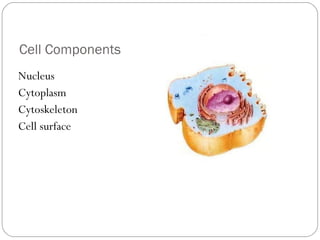
Cell Components
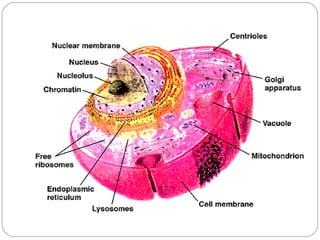
Nucleus
Cytoplasm
Cytoskeleton
Cell surface
Plasma Membrane
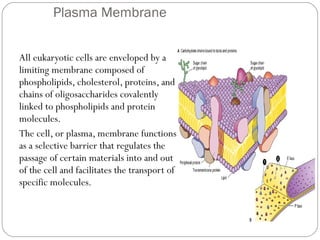
All eukaryotic cells are enveloped by a
limiting membrane composed of
phospholipids, cholesterol, proteins, and
chains of oligosaccharides covalently
linked to phospholipids and protein
molecules.
The cell, or plasma, membrane functions
as a selective barrier that regulates the
passage of certain materials into and out
of the cell and facilitates the transport of
specific molecules.
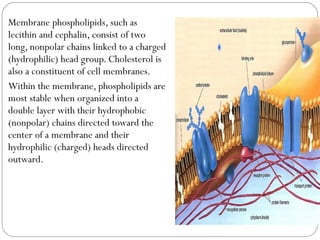
Membrane phospholipids, such as
lecithin and cephalin, consist of two
long, nonpolar chains linked to a charged
(hydrophilic) head group. Cholesterol is
also a constituent of cell membranes.
Within the membrane, phospholipids are
most stable when organized into a
double layer with their hydrophobic
(nonpolar) chains directed toward the
center of a membrane and their
hydrophilic (charged) heads directed
outward.
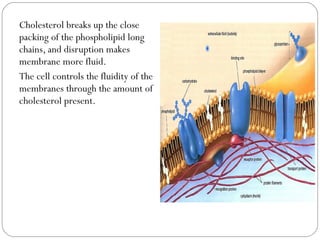
Cholesterol breaks up the close
packing of the phospholipid long
chains, and disruption makes
membrane more fluid.
The cell controls the fluidity of the
membranes through the amount of
cholesterol present.
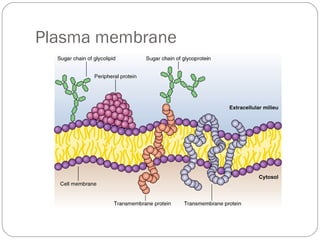
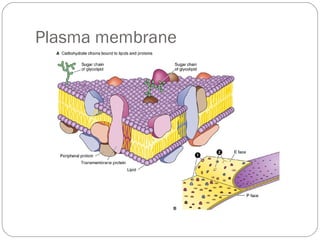
Plasma membrane
The fluid mosaic model of membrane structure

Main components;
1. Phospholipids
2. Cholesterol
3. Proteins
4. Chains of oligosaccharides
Plasma membrane
Plasma membrane
Phospholipids
-phosphatidylcholine(lecithin)
-phosphatidylethanolamine(cephalin)
Structure: 2 nonpolar (hydrophobic) hydrocarbon chains
linked to one charged(hydrophilic) head group
Cholesterol
-breaks up the close packing of the phospholipid long
chains,and as a consequence plasma membranes become
more fluid
Proteins
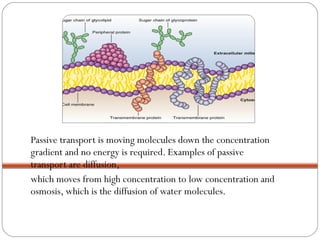
1. Integral proteins
-directly incorporated within the lipid bilayer
2. Peripheral proteins
-exhibit a looser association with membrane surfaces.They can
be easily removed from the cell membranes with salt
solutions
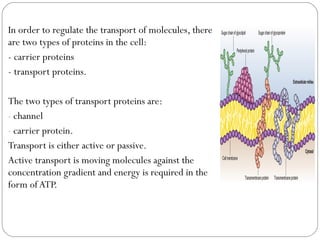
In order to regulate the transport of molecules, there
are two types of proteins in the cell:
- carrier proteins
- transport proteins.
The two types of transport proteins are:
- channel
- carrier protein.
Transport is either active or passive.
Active transport is moving molecules against the
concentration gradient and energy is required in the
form of ATP.
Glycocalyx
-a fuzzy carbohydrate-rich region on the external surface of the
cell
-composed of carbohydrate chains linked to a membrane
proteins and lipids and of cell-secreted glycoproteins and
proteoglycans
Plasma membrane
Plasma membrane-transport
The plasma membrane is the site at which materials are
exchanged between the cell and its environment
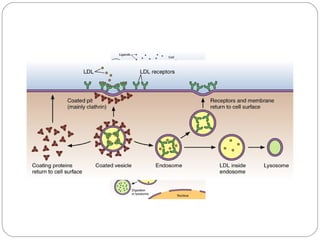
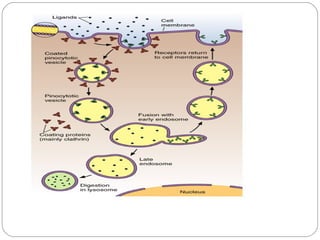
Endocytosis-bulk uptake of material through the plasma
membrane
Passive transport is moving molecules down the concentration
gradient and no energy is required. Examples of passive
transport are diffusion,
which moves from high concentration to low concentration and
osmosis, which is the diffusion of water molecules.
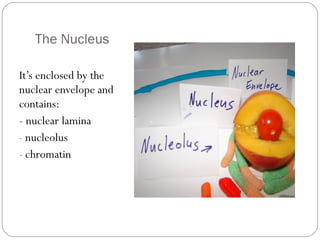
The Nucleus
It’s enclosed by the
nuclear envelope and
contains:
- nuclear lamina
- nucleolus
- chromatin
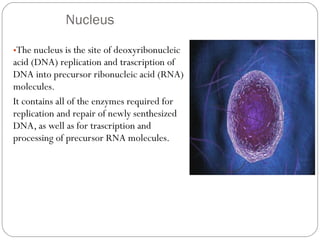
Nucleus
•The nucleus is the site of deoxyribonucleic

acid (DNA) replication and trascription of
DNA into precursor ribonucleic acid (RNA)
molecules.
It contains all of the enzymes required for
replication and repair of newly senthesized
DNA, as well as for trascription and
processing of precursor RNA molecules.
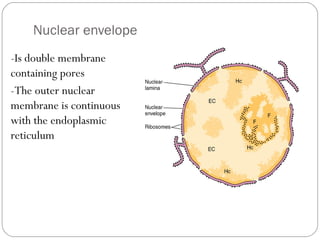
Nuclear envelope
-Is double membrane
containing pores
-The outer nuclear
membrane is continuous
with the endoplasmic
reticulum
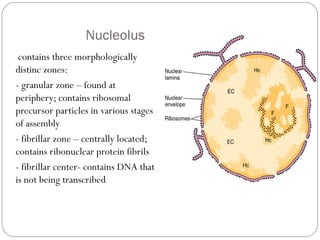
Nucleolus
contains three morphologically
distinc zones:
- granular zone – found at
periphery; contains ribosomal
precursor particles in various stages
of assembly
- fibrillar zone – centrally located;
contains ribonuclear protein fibrils
- fibrillar center- contains DNA that
is not being transcribed
Chromatin
Is a complex of:
DNA
histone proteins
and nonhistone proteins
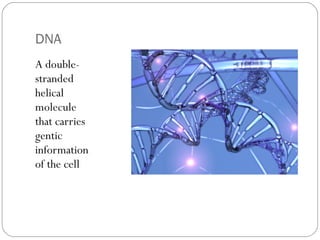
DNA
A doublestranded
helical
molecule
that carries
gentic
information
of the cell
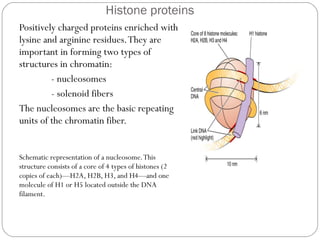
Histone proteins
Positively charged proteins enriched with
lysine and arginine residues. They are
important in forming two types of
structures in chromatin:
- nucleosomes
- solenoid fibers
The nucleosomes are the basic repeating
units of the chromatin fiber.
Schematic representation of a nucleosome. This
structure consists of a core of 4 types of histones (2
copies of each)—H2A, H2B, H3, and H4—and one
molecule of H1 or H5 located outside the DNA
filament.
Nonhistone proteins
Include enzymes involved in nuclear functions such as:

- replication
- transcription
- DNA repair
- regulation of chromatin function
They are acidic of neutral proteins.
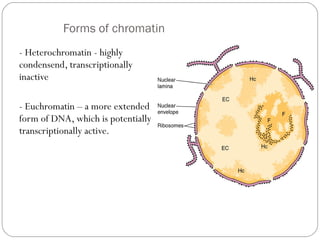
Forms of chromatin
- Heterochromatin - highly
condensend, transcriptionally
inactive
- Euchromatin – a more extended
form of DNA, which is potentially
transcriptionally active.
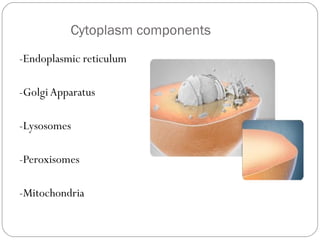
Cytoplasm components
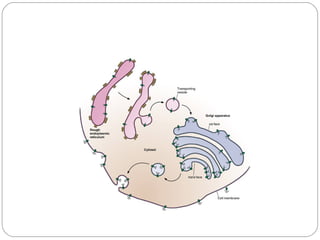
-Endoplasmic reticulum
-Golgi Apparatus
-Lysosomes
-Peroxisomes
-Mitochondria
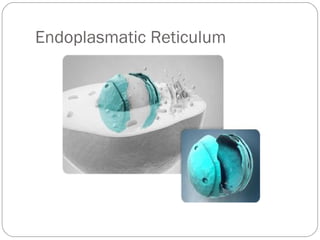
Endoplasmatic Reticulum
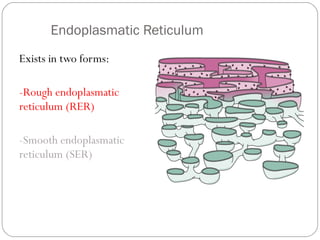
Exists in two forms:
-Rough endoplasmatic
reticulum (RER)
-Smooth endoplasmatic
reticulum (SER)
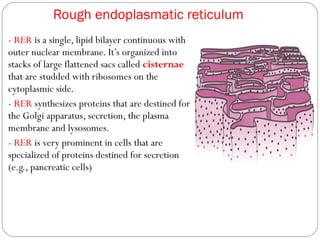
Rough endoplasmatic reticulum
- RER is a single, lipid bilayer continuous with
outer nuclear membrane. It’s organized into
stacks of large flattened sacs called cisternae
that are studded with ribosomes on the
cytoplasmic side.
- RER synthesizes proteins that are destined for
the Golgi apparatus, secretion, the plasma
membrane and lysosomes.
- RER is very prominent in cells that are
specialized of proteins destined for secretion
(e.g., pancreatic cells)
Smooth endoplasmic reticulum
SER is a network of membranous sacs, vesicles, and

tubules continuous with the RER, but lacking
ribosomes.
SER contains enzymes involved in the biosynthesis of
phospholipids, triglycerides, and sterols.
Functions of SER
1.Detoxification Reactions / hepatocytes /
These are reactions that make compounds soluble so that
they can be excreted.
Two types of reactions that increase solubility are:
- Hydroxylation reactions
- conjugation reactions
Functions of SER
2.Glycogen Degradation and Gluconeogenesis
3.Steroid synthesis / Leydig cells in testis and adrenal
gland cells /
Functions of SER
4.Reactions in Lipid Metabolism
Lipolysis begins in the SER with the release fatty acid
from triglyceride.
The SER is also the site where lipoprotein particles are
assembled
Functions of SER
5.Sequesration and Release of Calcium Ions
In striated muscle the SER is known as sarcoplasmic
reticulum (SR).
The sequestration and release of calcium ions takes place
in the SR.
Golgi Apparatus
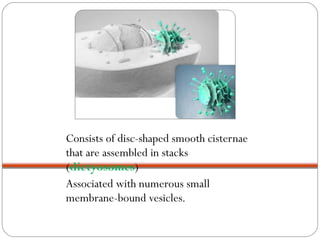
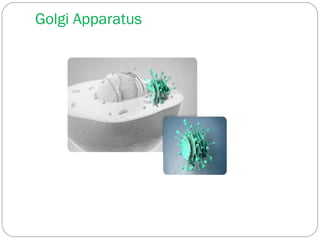
Consists of disc-shaped smooth cisternae
that are assembled in stacks
(dictyosomes)
Associated with numerous small
membrane-bound vesicles.
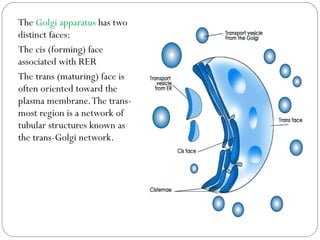
The Golgi apparatus has two
distinct faces:
The cis (forming) face
associated with RER
The trans (maturing) face is
often oriented toward the
plasma membrane. The transmost region is a network of
tubular structures known as
the trans-Golgi network.
Functions of Golgi apparatus
Proteins and Lipids

AG is the site of posttranslational modification and sorting
of newly synthesized proteins and lipids.
Glycoproteins
Further modification of the carbohydrate moiety of
glycoproteins produces complex and hybrid oligosaccharide
chains. This determines which proteins remain in the Golgi
apparatus or leave the Golgi apparatus to become secretory
proteins, lysosomal proteins, or part of the plasma
membrane.
Mitochondria
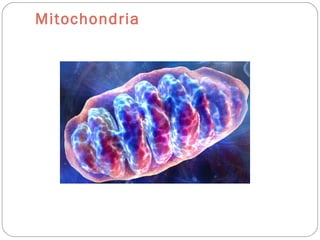
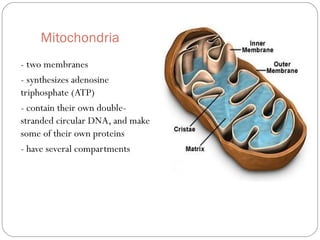
Mitochondria
- two membranes
- synthesizes adenosine
triphosphate (ATP)
- contain their own doublestranded circular DNA, and make
some of their own proteins
- have several compartments
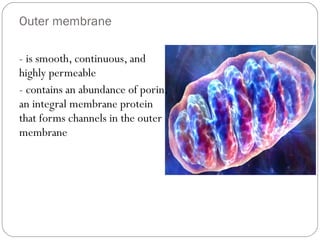
Outer membrane
- is smooth, continuous, and
highly permeable
- contains an abundance of porin,
an integral membrane protein
that forms channels in the outer
membrane
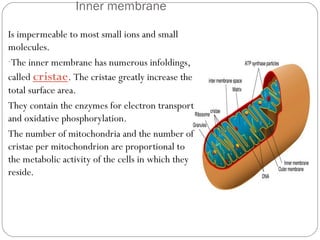
Inner membrane
Is impermeable to most small ions and small
molecules.
-The inner membrane has numerous infoldings,
called cristae. The cristae greatly increase the
total surface area.
They contain the enzymes for electron transport
and oxidative phosphorylation.
The number of mitochondria and the number of
cristae per mitochondrion are proportional to
the metabolic activity of the cells in which they
reside.
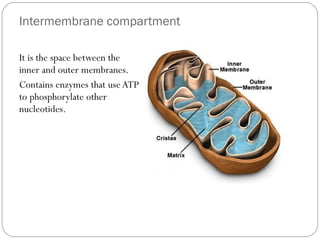
Intermembrane compartment
It is the space between the
inner and outer membranes.
Contains enzymes that use ATP
to phosphorylate other
nucleotides.
Matrix
Is enclosed by the inner membrane and contains:
-dehydrogenases- oxidize many of the substrates in the cell
, generating reduced NADH (nicotinamide adenine dinucleotid)
and reduced FADH2 (adenine dinucleotide) for use by the
electron transport chain and energy generation.
-a double-stranded circular DNA genome- encodes a few
of the mitochondrial DNA is always inherited from the
mother, resulting in the maternal transmission of diseases
of energy metabolism.
-RNA, proteins, and ribosomes- although there is some
protein synthesis, most mitochondrial proteins are
synthesized in the cytoplasm and are transferred into the
mitochondria.
Ribosomes
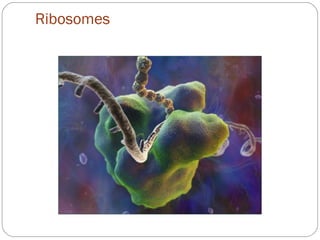
Ribosomes
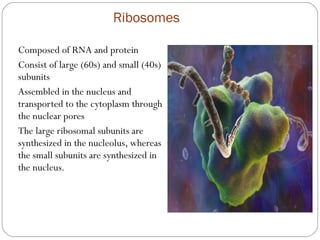
Composed of RNA and protein
Consist of large (60s) and small (40s)
subunits
Assembled in the nucleus and
transported to the cytoplasm through
the nuclear pores
The large ribosomal subunits are
synthesized in the nucleolus, whereas
the small subunits are synthesized in
the nucleus.
Polysomes
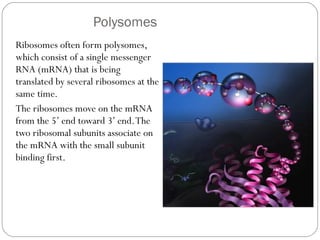
Ribosomes often form polysomes,
which consist of a single messenger
RNA (mRNA) that is being
translated by several ribosomes at the
same time.
The ribosomes move on the mRNA
from the 5’ end toward 3’ end. The
two ribosomal subunits associate on
the mRNA with the small subunit
binding first.
Forms of ribosomes

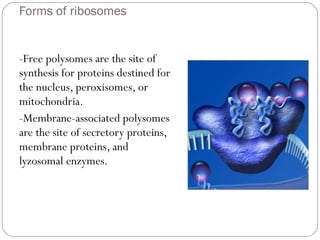
-Free polysomes are the site of
synthesis for proteins destined for
the nucleus, peroxisomes, or
mitochondria.
-Membrane-associated polysomes
are the site of secretory proteins,
membrane proteins, and
lyzosomal enzymes.
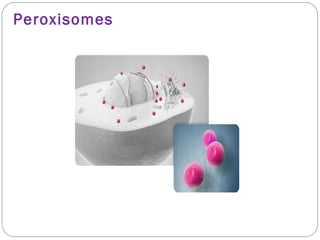
Peroxisomes
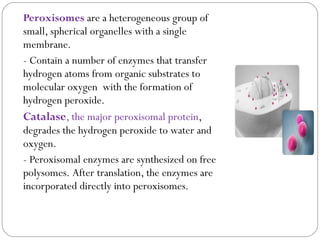
Peroxisomes are a heterogeneous group of
small, spherical organelles with a single
membrane.
- Contain a number of enzymes that transfer
hydrogen atoms from organic substrates to
molecular oxygen with the formation of
hydrogen peroxide.
Catalase, the major peroxisomal protein,
degrades the hydrogen peroxide to water and
oxygen.
- Peroxisomal enzymes are synthesized on free
polysomes. After translation, the enzymes are
incorporated directly into peroxisomes.
Peroxisomes functions
1. synthesis and degradation of hydrogen peroxide
2. β-oxidation of very long chain fatty acids (>C24) starts in
the peroxisomes and proceeds until the carbon chain has
been reduced to length of approximately 10 carbons.
Oxidation of the residual 10 carbons is completed in the
mitochondria.
3. Phospholipid exchange- peroxisomes contain enzymes that
convert phosphatidylserine and phosphatidylethanolamine
4. Bile acid synthesis
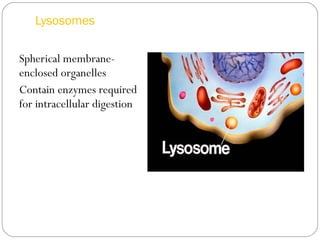
Lysosomes
Spherical membraneenclosed organelles
Contain enzymes required
for intracellular digestion
Lysosomes forms
Primary lysosomes have not yet acquired the

materials to be digested. They are formed by budding
from the trans side of the Golgi apparatus.
Secondary lysosomes are formed by the fusion of the
primary lysosome with the substrate to be degraded and
have contents that are in various stages of degradation.
Lysosomes contain approximately 60 hydrolytic enzymes.

These include nulceases for degrading DNA and RNA,
lipases for degrading lipids, glycosidases for degrading
glycoconjugates , proteases and peptidases for degrading
proteins, and a variety of phosphatases
all lysosomal enzymes are acid hydrolases, with optimal
activity at pH of approximately 5.0
the synthesis of the lysosomal hydrolases occurs in the RER;
the hydrolases are transffered to the Golgi apparatus, where
they are modified and packaged into lysosomes.
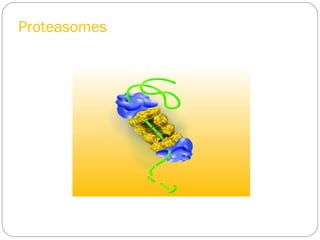
Proteasomes
Proteasomes
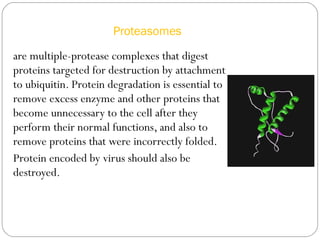
are multiple-protease complexes that digest
proteins targeted for destruction by attachment
to ubiquitin. Protein degradation is essential to
remove excess enzyme and other proteins that
become unnecessary to the cell after they
perform their normal functions, and also to
remove proteins that were incorrectly folded.
Protein encoded by virus should also be
destroyed.
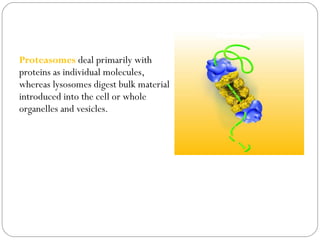
Proteasomes deal primarily with
proteins as individual molecules,
whereas lysosomes digest bulk material
introduced into the cell or whole
organelles and vesicles.
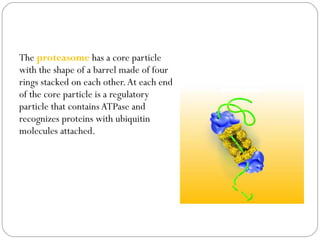
The proteasome has a core particle
with the shape of a barrel made of four
rings stacked on each other. At each end
of the core particle is a regulatory
particle that contains ATPase and
recognizes proteins with ubiquitin
molecules attached.
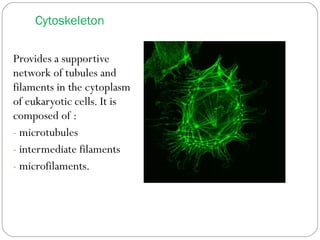
Cytoskeleton
Provides a supportive
network of tubules and
filaments in the cytoplasm
of eukaryotic cells. It is
composed of :
- microtubules
- intermediate filaments
- microfilaments.
The cytoskeleton
Microtubules- 25 nm
Microfilaments (actin filaments)-6 nm
Intermediate filaments- 10 nm
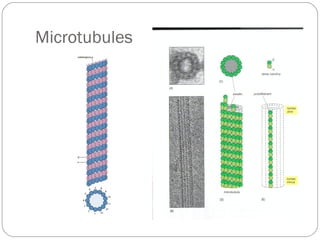
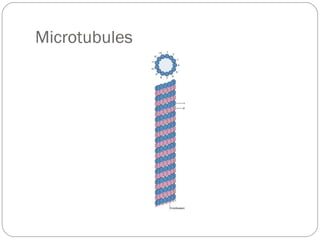
Microtubules
Tubular structures
Variable in length
Composed of subunits-heterodimers
Each heterodimer is composed of alfa and beta tubulin

molecules
Alfa-tubulin
Beta-tubulin

protofilaments

microtubules
Microtubules
Microtubules
The main functions of microtubules

-play role in the development and maintenance of cell shape
-participate in the the intracellular transport of organelles and
vesicles
-provide the basis for cytoplasmic components ;centrioles,basal
bodies, cilia,flagella
Microtubules-function
chromosomal movement during meiosis and mitosis.

Microtubule assembly is an important event in spindle
formation
intracellular vesicle and organelle transport
ciliary and flagellar movement
Microtubules
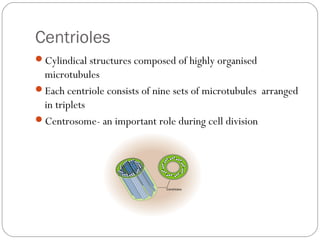
Centrioles
Cylindical structures composed of highly organised

microtubules
Each centriole consists of nine sets of microtubules arranged
in triplets
Centrosome- an important role during cell division
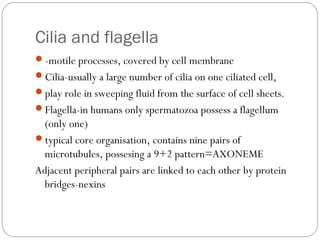
Cilia and flagella
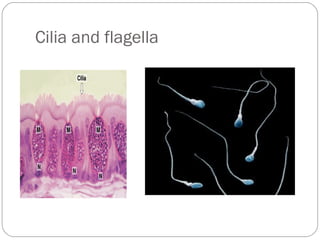
-motile processes, covered by cell membrane
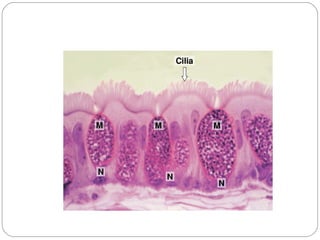
Cilia-usually a large number of cilia on one ciliated cell,
play role in sweeping fluid from the surface of cell sheets.
Flagella-in humans only spermatozoa possess a flagellum

(only one)
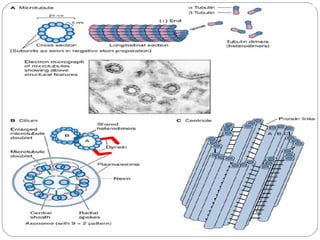
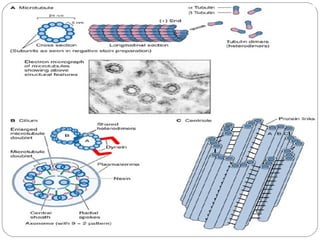
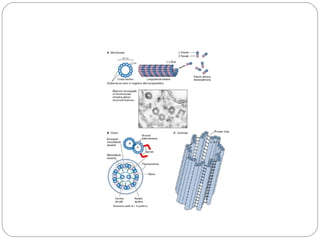
typical core organisation, contains nine pairs of
microtubules, possesing a 9+2 pattern=AXONEME
Adjacent peripheral pairs are linked to each other by protein
bridges-nexins
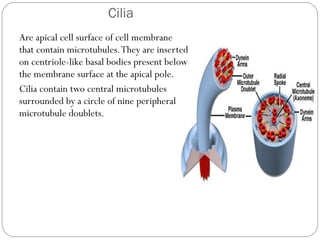
Cilia
Are apical cell surface of cell membrane
that contain microtubules. They are inserted
on centriole-like basal bodies present below
the membrane surface at the apical pole.
Cilia contain two central microtubules
surrounded by a circle of nine peripheral
microtubule doublets.
Cilia and flagella
Movement of Cilia
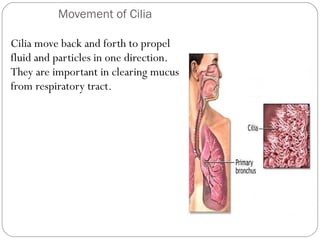
Cilia move back and forth to propel
fluid and particles in one direction.
They are important in clearing mucus
from respiratory tract.
Immotile cilia syndrome
Cause; mutations in the proteins of cilia and flagella

Immotile spermatozoa- male infertility
Lack of the cleansing action of cilia in the respiratory tractrespiratory infections
Basal body
-at the base of each cillium and flagellum
-Structure; similar to a centriole
-Function; controls the assembly of the axoneme
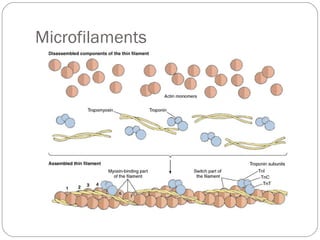
Microfilaments
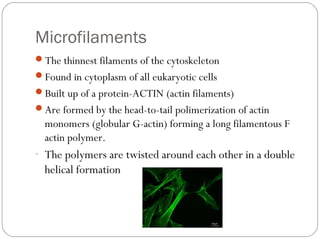
The thinnest filaments of the cytoskeleton
Found in cytoplasm of all eukaryotic cells
Built up of a protein-ACTIN (actin filaments)
Are formed by the head-to-tail polimerization of actin

monomers (globular G-actin) forming a long filamentous F
actin polymer.
- The polymers are twisted around each other in a double

helical formation
Microfilaments
Microfilaments
In skeletal muscle they interract with myosin filaments which

is an essential process in the mechanism of contraction.
In most cells actin filaments form a thin sheath just beneath
the plasmalemma, called the cell cortex-associated with
membrane activities like endocytosis,exocytosis and cell
migratory activity
A role in moving and shifting cytoplasmic components
Microfilaments
-are

composed of
actin.
Each actin
filament (Factin) consists
of two strands
of actin
twisted into
helical pattern
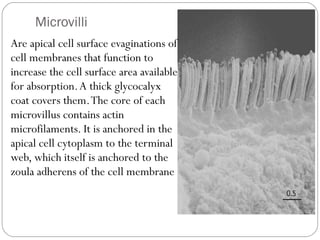
Microvilli
Are apical cell surface evaginations of
cell membranes that function to
increase the cell surface area available
for absorption. A thick glycocalyx
coat covers them. The core of each
microvillus contains actin
microfilaments. It is anchored in the
apical cell cytoplasm to the terminal
web, which itself is anchored to the
zoula adherens of the cell membrane
Intermediate filaments
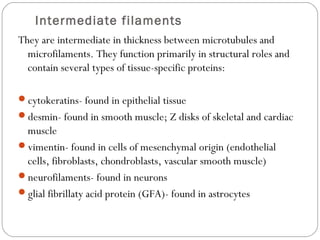
They are intermediate in thickness between microtubules and
microfilaments. They function primarily in structural roles and
contain several types of tissue-specific proteins:
cytokeratins- found in epithelial tissue
desmin- found in smooth muscle; Z disks of skeletal and cardiac

muscle
vimentin- found in cells of mesenchymal origin (endothelial
cells, fibroblasts, chondroblasts, vascular smooth muscle)
neurofilaments- found in neurons
glial fibrillaty acid protein (GFA)- found in astrocytes
Intermediate filaments
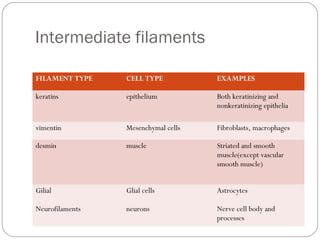
FILAMENT TYPE

CELL TYPE

EXAMPLES

keratins

epithelium

Both keratinizing and
nonkeratinizing epithelia

vimentin

Mesenchymal cells

Fibroblasts, macrophages

desmin

muscle

Striated and smooth
muscle(except vascular
smooth muscle)

Gilial

Glial cells

Astrocytes

Neurofilaments

neurons

Nerve cell body and
processes
cytology
cytology

cytology

  • 1.
  • 3.
  • 4.
    Plasma Membrane All eukaryoticcells are enveloped by a limiting membrane composed of phospholipids, cholesterol, proteins, and chains of oligosaccharides covalently linked to phospholipids and protein molecules. The cell, or plasma, membrane functions as a selective barrier that regulates the passage of certain materials into and out of the cell and facilitates the transport of specific molecules.
  • 5.
    Membrane phospholipids, suchas lecithin and cephalin, consist of two long, nonpolar chains linked to a charged (hydrophilic) head group. Cholesterol is also a constituent of cell membranes. Within the membrane, phospholipids are most stable when organized into a double layer with their hydrophobic (nonpolar) chains directed toward the center of a membrane and their hydrophilic (charged) heads directed outward.
  • 6.
    Cholesterol breaks upthe close packing of the phospholipid long chains, and disruption makes membrane more fluid. The cell controls the fluidity of the membranes through the amount of cholesterol present.
  • 7.
    Plasma membrane The fluidmosaic model of membrane structure Main components; 1. Phospholipids 2. Cholesterol 3. Proteins 4. Chains of oligosaccharides
  • 8.
  • 9.
    Plasma membrane Phospholipids -phosphatidylcholine(lecithin) -phosphatidylethanolamine(cephalin) Structure: 2nonpolar (hydrophobic) hydrocarbon chains linked to one charged(hydrophilic) head group
  • 10.
    Cholesterol -breaks up theclose packing of the phospholipid long chains,and as a consequence plasma membranes become more fluid
  • 11.
    Proteins 1. Integral proteins -directlyincorporated within the lipid bilayer 2. Peripheral proteins -exhibit a looser association with membrane surfaces.They can be easily removed from the cell membranes with salt solutions
  • 12.
    In order toregulate the transport of molecules, there are two types of proteins in the cell: - carrier proteins - transport proteins. The two types of transport proteins are: - channel - carrier protein. Transport is either active or passive. Active transport is moving molecules against the concentration gradient and energy is required in the form of ATP.
  • 13.
    Glycocalyx -a fuzzy carbohydrate-richregion on the external surface of the cell -composed of carbohydrate chains linked to a membrane proteins and lipids and of cell-secreted glycoproteins and proteoglycans
  • 14.
  • 15.
    Plasma membrane-transport The plasmamembrane is the site at which materials are exchanged between the cell and its environment Endocytosis-bulk uptake of material through the plasma membrane
  • 19.
    Passive transport ismoving molecules down the concentration gradient and no energy is required. Examples of passive transport are diffusion, which moves from high concentration to low concentration and osmosis, which is the diffusion of water molecules.
  • 20.
    The Nucleus It’s enclosedby the nuclear envelope and contains: - nuclear lamina - nucleolus - chromatin
  • 21.
    Nucleus •The nucleus isthe site of deoxyribonucleic acid (DNA) replication and trascription of DNA into precursor ribonucleic acid (RNA) molecules. It contains all of the enzymes required for replication and repair of newly senthesized DNA, as well as for trascription and processing of precursor RNA molecules.
  • 22.
    Nuclear envelope -Is doublemembrane containing pores -The outer nuclear membrane is continuous with the endoplasmic reticulum
  • 23.
    Nucleolus contains three morphologically distinczones: - granular zone – found at periphery; contains ribosomal precursor particles in various stages of assembly - fibrillar zone – centrally located; contains ribonuclear protein fibrils - fibrillar center- contains DNA that is not being transcribed
  • 24.
    Chromatin Is a complexof: DNA histone proteins and nonhistone proteins
  • 25.
  • 26.
    Histone proteins Positively chargedproteins enriched with lysine and arginine residues. They are important in forming two types of structures in chromatin: - nucleosomes - solenoid fibers The nucleosomes are the basic repeating units of the chromatin fiber. Schematic representation of a nucleosome. This structure consists of a core of 4 types of histones (2 copies of each)—H2A, H2B, H3, and H4—and one molecule of H1 or H5 located outside the DNA filament.
  • 27.
    Nonhistone proteins Include enzymesinvolved in nuclear functions such as: - replication - transcription - DNA repair - regulation of chromatin function They are acidic of neutral proteins.
  • 28.
    Forms of chromatin -Heterochromatin - highly condensend, transcriptionally inactive - Euchromatin – a more extended form of DNA, which is potentially transcriptionally active.
  • 29.
    Cytoplasm components -Endoplasmic reticulum -GolgiApparatus -Lysosomes -Peroxisomes -Mitochondria
  • 30.
  • 31.
    Endoplasmatic Reticulum Exists intwo forms: -Rough endoplasmatic reticulum (RER) -Smooth endoplasmatic reticulum (SER)
  • 32.
    Rough endoplasmatic reticulum -RER is a single, lipid bilayer continuous with outer nuclear membrane. It’s organized into stacks of large flattened sacs called cisternae that are studded with ribosomes on the cytoplasmic side. - RER synthesizes proteins that are destined for the Golgi apparatus, secretion, the plasma membrane and lysosomes. - RER is very prominent in cells that are specialized of proteins destined for secretion (e.g., pancreatic cells)
  • 33.
    Smooth endoplasmic reticulum SERis a network of membranous sacs, vesicles, and tubules continuous with the RER, but lacking ribosomes. SER contains enzymes involved in the biosynthesis of phospholipids, triglycerides, and sterols.
  • 34.
    Functions of SER 1.DetoxificationReactions / hepatocytes / These are reactions that make compounds soluble so that they can be excreted. Two types of reactions that increase solubility are: - Hydroxylation reactions - conjugation reactions
  • 35.
    Functions of SER 2.GlycogenDegradation and Gluconeogenesis 3.Steroid synthesis / Leydig cells in testis and adrenal gland cells /
  • 36.
    Functions of SER 4.Reactionsin Lipid Metabolism Lipolysis begins in the SER with the release fatty acid from triglyceride. The SER is also the site where lipoprotein particles are assembled
  • 37.
    Functions of SER 5.Sequesrationand Release of Calcium Ions In striated muscle the SER is known as sarcoplasmic reticulum (SR). The sequestration and release of calcium ions takes place in the SR.
  • 38.
  • 39.
    Consists of disc-shapedsmooth cisternae that are assembled in stacks (dictyosomes) Associated with numerous small membrane-bound vesicles.
  • 40.
    The Golgi apparatushas two distinct faces: The cis (forming) face associated with RER The trans (maturing) face is often oriented toward the plasma membrane. The transmost region is a network of tubular structures known as the trans-Golgi network.
  • 41.
    Functions of Golgiapparatus Proteins and Lipids AG is the site of posttranslational modification and sorting of newly synthesized proteins and lipids. Glycoproteins Further modification of the carbohydrate moiety of glycoproteins produces complex and hybrid oligosaccharide chains. This determines which proteins remain in the Golgi apparatus or leave the Golgi apparatus to become secretory proteins, lysosomal proteins, or part of the plasma membrane.
  • 42.
  • 43.
    Mitochondria - two membranes -synthesizes adenosine triphosphate (ATP) - contain their own doublestranded circular DNA, and make some of their own proteins - have several compartments
  • 44.
    Outer membrane - issmooth, continuous, and highly permeable - contains an abundance of porin, an integral membrane protein that forms channels in the outer membrane
  • 45.
    Inner membrane Is impermeableto most small ions and small molecules. -The inner membrane has numerous infoldings, called cristae. The cristae greatly increase the total surface area. They contain the enzymes for electron transport and oxidative phosphorylation. The number of mitochondria and the number of cristae per mitochondrion are proportional to the metabolic activity of the cells in which they reside.
  • 46.
    Intermembrane compartment It isthe space between the inner and outer membranes. Contains enzymes that use ATP to phosphorylate other nucleotides.
  • 47.
    Matrix Is enclosed bythe inner membrane and contains: -dehydrogenases- oxidize many of the substrates in the cell , generating reduced NADH (nicotinamide adenine dinucleotid) and reduced FADH2 (adenine dinucleotide) for use by the electron transport chain and energy generation. -a double-stranded circular DNA genome- encodes a few of the mitochondrial DNA is always inherited from the mother, resulting in the maternal transmission of diseases of energy metabolism. -RNA, proteins, and ribosomes- although there is some protein synthesis, most mitochondrial proteins are synthesized in the cytoplasm and are transferred into the mitochondria.
  • 48.
  • 49.
    Ribosomes Composed of RNAand protein Consist of large (60s) and small (40s) subunits Assembled in the nucleus and transported to the cytoplasm through the nuclear pores The large ribosomal subunits are synthesized in the nucleolus, whereas the small subunits are synthesized in the nucleus.
  • 50.
    Polysomes Ribosomes often formpolysomes, which consist of a single messenger RNA (mRNA) that is being translated by several ribosomes at the same time. The ribosomes move on the mRNA from the 5’ end toward 3’ end. The two ribosomal subunits associate on the mRNA with the small subunit binding first.
  • 51.
    Forms of ribosomes -Freepolysomes are the site of synthesis for proteins destined for the nucleus, peroxisomes, or mitochondria. -Membrane-associated polysomes are the site of secretory proteins, membrane proteins, and lyzosomal enzymes.
  • 52.
  • 53.
    Peroxisomes are aheterogeneous group of small, spherical organelles with a single membrane. - Contain a number of enzymes that transfer hydrogen atoms from organic substrates to molecular oxygen with the formation of hydrogen peroxide. Catalase, the major peroxisomal protein, degrades the hydrogen peroxide to water and oxygen. - Peroxisomal enzymes are synthesized on free polysomes. After translation, the enzymes are incorporated directly into peroxisomes.
  • 54.
    Peroxisomes functions 1. synthesisand degradation of hydrogen peroxide 2. β-oxidation of very long chain fatty acids (>C24) starts in the peroxisomes and proceeds until the carbon chain has been reduced to length of approximately 10 carbons. Oxidation of the residual 10 carbons is completed in the mitochondria. 3. Phospholipid exchange- peroxisomes contain enzymes that convert phosphatidylserine and phosphatidylethanolamine 4. Bile acid synthesis
  • 55.
    Lysosomes Spherical membraneenclosed organelles Containenzymes required for intracellular digestion
  • 56.
    Lysosomes forms Primary lysosomeshave not yet acquired the materials to be digested. They are formed by budding from the trans side of the Golgi apparatus. Secondary lysosomes are formed by the fusion of the primary lysosome with the substrate to be degraded and have contents that are in various stages of degradation.
  • 57.
    Lysosomes contain approximately60 hydrolytic enzymes. These include nulceases for degrading DNA and RNA, lipases for degrading lipids, glycosidases for degrading glycoconjugates , proteases and peptidases for degrading proteins, and a variety of phosphatases all lysosomal enzymes are acid hydrolases, with optimal activity at pH of approximately 5.0 the synthesis of the lysosomal hydrolases occurs in the RER; the hydrolases are transffered to the Golgi apparatus, where they are modified and packaged into lysosomes.
  • 58.
  • 59.
    Proteasomes are multiple-protease complexesthat digest proteins targeted for destruction by attachment to ubiquitin. Protein degradation is essential to remove excess enzyme and other proteins that become unnecessary to the cell after they perform their normal functions, and also to remove proteins that were incorrectly folded. Protein encoded by virus should also be destroyed.
  • 60.
    Proteasomes deal primarilywith proteins as individual molecules, whereas lysosomes digest bulk material introduced into the cell or whole organelles and vesicles.
  • 61.
    The proteasome hasa core particle with the shape of a barrel made of four rings stacked on each other. At each end of the core particle is a regulatory particle that contains ATPase and recognizes proteins with ubiquitin molecules attached.
  • 62.
    Cytoskeleton Provides a supportive networkof tubules and filaments in the cytoplasm of eukaryotic cells. It is composed of : - microtubules - intermediate filaments - microfilaments.
  • 63.
    The cytoskeleton Microtubules- 25nm Microfilaments (actin filaments)-6 nm Intermediate filaments- 10 nm
  • 64.
    Microtubules Tubular structures Variable inlength Composed of subunits-heterodimers Each heterodimer is composed of alfa and beta tubulin molecules Alfa-tubulin Beta-tubulin protofilaments microtubules
  • 65.
  • 66.
    Microtubules The main functionsof microtubules -play role in the development and maintenance of cell shape -participate in the the intracellular transport of organelles and vesicles -provide the basis for cytoplasmic components ;centrioles,basal bodies, cilia,flagella
  • 67.
    Microtubules-function chromosomal movement duringmeiosis and mitosis. Microtubule assembly is an important event in spindle formation intracellular vesicle and organelle transport ciliary and flagellar movement
  • 68.
  • 69.
    Centrioles Cylindical structures composedof highly organised microtubules Each centriole consists of nine sets of microtubules arranged in triplets Centrosome- an important role during cell division
  • 71.
    Cilia and flagella -motileprocesses, covered by cell membrane Cilia-usually a large number of cilia on one ciliated cell, play role in sweeping fluid from the surface of cell sheets. Flagella-in humans only spermatozoa possess a flagellum (only one) typical core organisation, contains nine pairs of microtubules, possesing a 9+2 pattern=AXONEME Adjacent peripheral pairs are linked to each other by protein bridges-nexins
  • 72.
    Cilia Are apical cellsurface of cell membrane that contain microtubules. They are inserted on centriole-like basal bodies present below the membrane surface at the apical pole. Cilia contain two central microtubules surrounded by a circle of nine peripheral microtubule doublets.
  • 74.
  • 75.
    Movement of Cilia Ciliamove back and forth to propel fluid and particles in one direction. They are important in clearing mucus from respiratory tract.
  • 76.
    Immotile cilia syndrome Cause;mutations in the proteins of cilia and flagella Immotile spermatozoa- male infertility Lack of the cleansing action of cilia in the respiratory tractrespiratory infections
  • 77.
    Basal body -at thebase of each cillium and flagellum -Structure; similar to a centriole -Function; controls the assembly of the axoneme
  • 78.
    Microfilaments The thinnest filamentsof the cytoskeleton Found in cytoplasm of all eukaryotic cells Built up of a protein-ACTIN (actin filaments) Are formed by the head-to-tail polimerization of actin monomers (globular G-actin) forming a long filamentous F actin polymer. - The polymers are twisted around each other in a double helical formation
  • 79.
  • 80.
    Microfilaments In skeletal musclethey interract with myosin filaments which is an essential process in the mechanism of contraction. In most cells actin filaments form a thin sheath just beneath the plasmalemma, called the cell cortex-associated with membrane activities like endocytosis,exocytosis and cell migratory activity A role in moving and shifting cytoplasmic components
  • 81.
    Microfilaments -are composed of actin. Each actin filament(Factin) consists of two strands of actin twisted into helical pattern
  • 82.
    Microvilli Are apical cellsurface evaginations of cell membranes that function to increase the cell surface area available for absorption. A thick glycocalyx coat covers them. The core of each microvillus contains actin microfilaments. It is anchored in the apical cell cytoplasm to the terminal web, which itself is anchored to the zoula adherens of the cell membrane
  • 83.
    Intermediate filaments They areintermediate in thickness between microtubules and microfilaments. They function primarily in structural roles and contain several types of tissue-specific proteins: cytokeratins- found in epithelial tissue desmin- found in smooth muscle; Z disks of skeletal and cardiac muscle vimentin- found in cells of mesenchymal origin (endothelial cells, fibroblasts, chondroblasts, vascular smooth muscle) neurofilaments- found in neurons glial fibrillaty acid protein (GFA)- found in astrocytes
  • 84.
    Intermediate filaments FILAMENT TYPE CELLTYPE EXAMPLES keratins epithelium Both keratinizing and nonkeratinizing epithelia vimentin Mesenchymal cells Fibroblasts, macrophages desmin muscle Striated and smooth muscle(except vascular smooth muscle) Gilial Glial cells Astrocytes Neurofilaments neurons Nerve cell body and processes