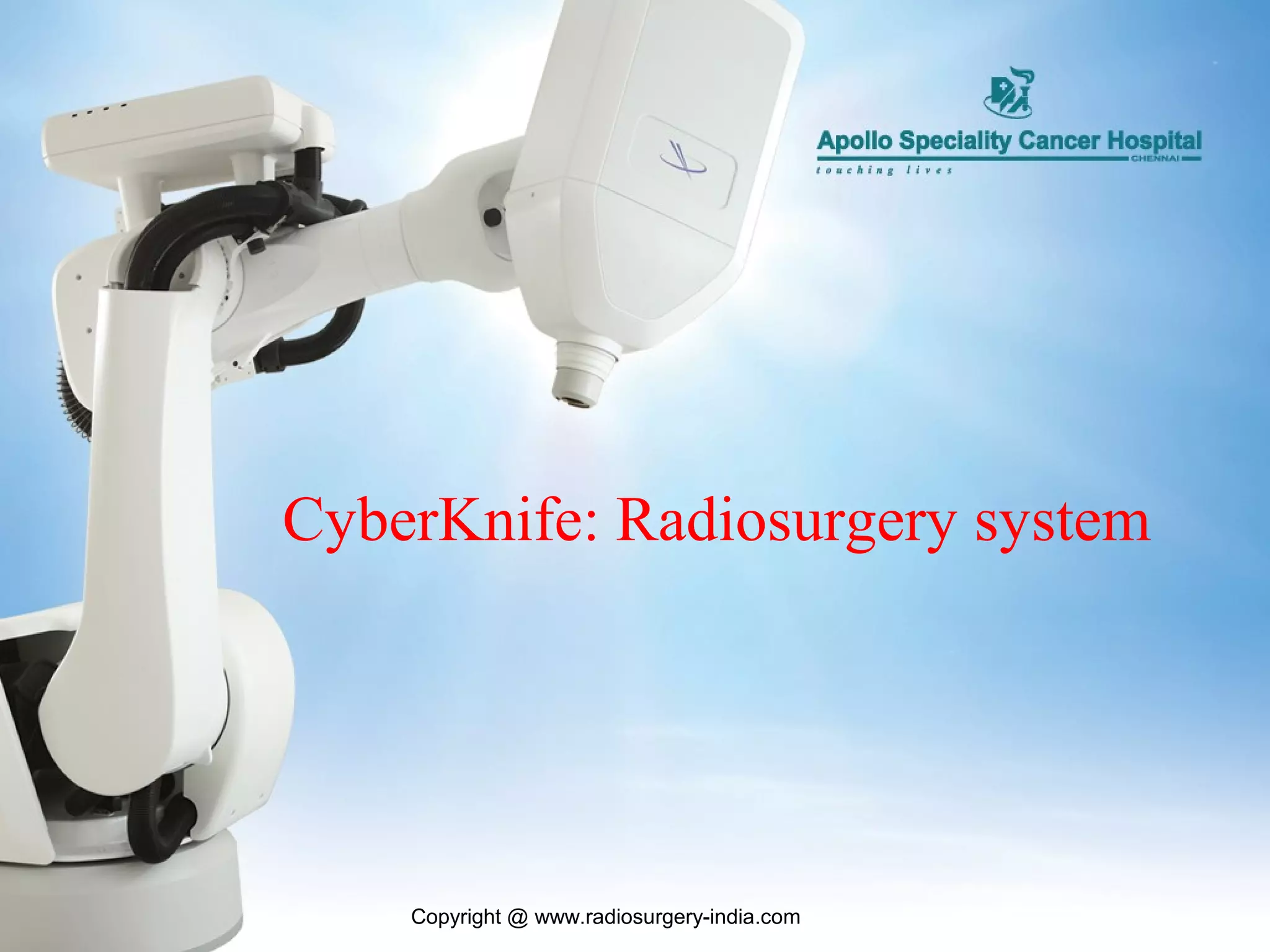
CyberKnife: Radiosurgery system
Copyright @ www.radiosurgery-india.com
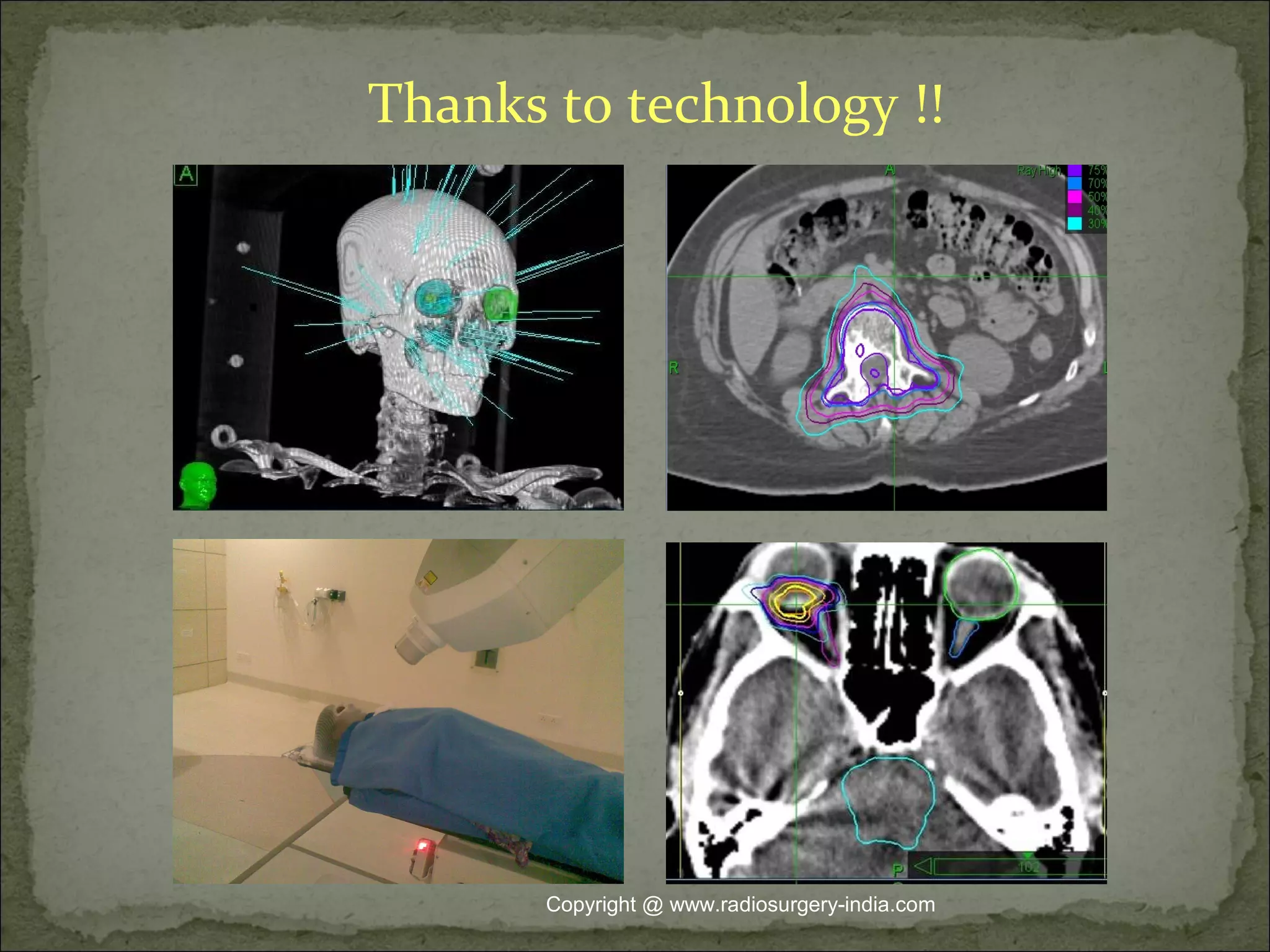
Thanks to technology !!
Copyright @ www.radiosurgery-india.com
Radiosurgery: IndicationsRadiosurgery: Indications
Intra-cranial:Intra-cranial:
1.1.Brain metsBrain mets
2.2.MeningiomaMeningioma
3.3.Acaustic schwannomaAcaustic schwannoma
4.4.AVMsAVMs
5.5.TNTN
Extra-cranial:Extra-cranial:
1.1.Lung: Primary & metsLung: Primary & mets
2.2.Liver: HCC & metsLiver: HCC & mets
3.3.Inoperable pancreasInoperable pancreas
4.4.ProstateProstate
5.5.Bone metastasisBone metastasis
Copyright @ www.radiosurgery-india.com
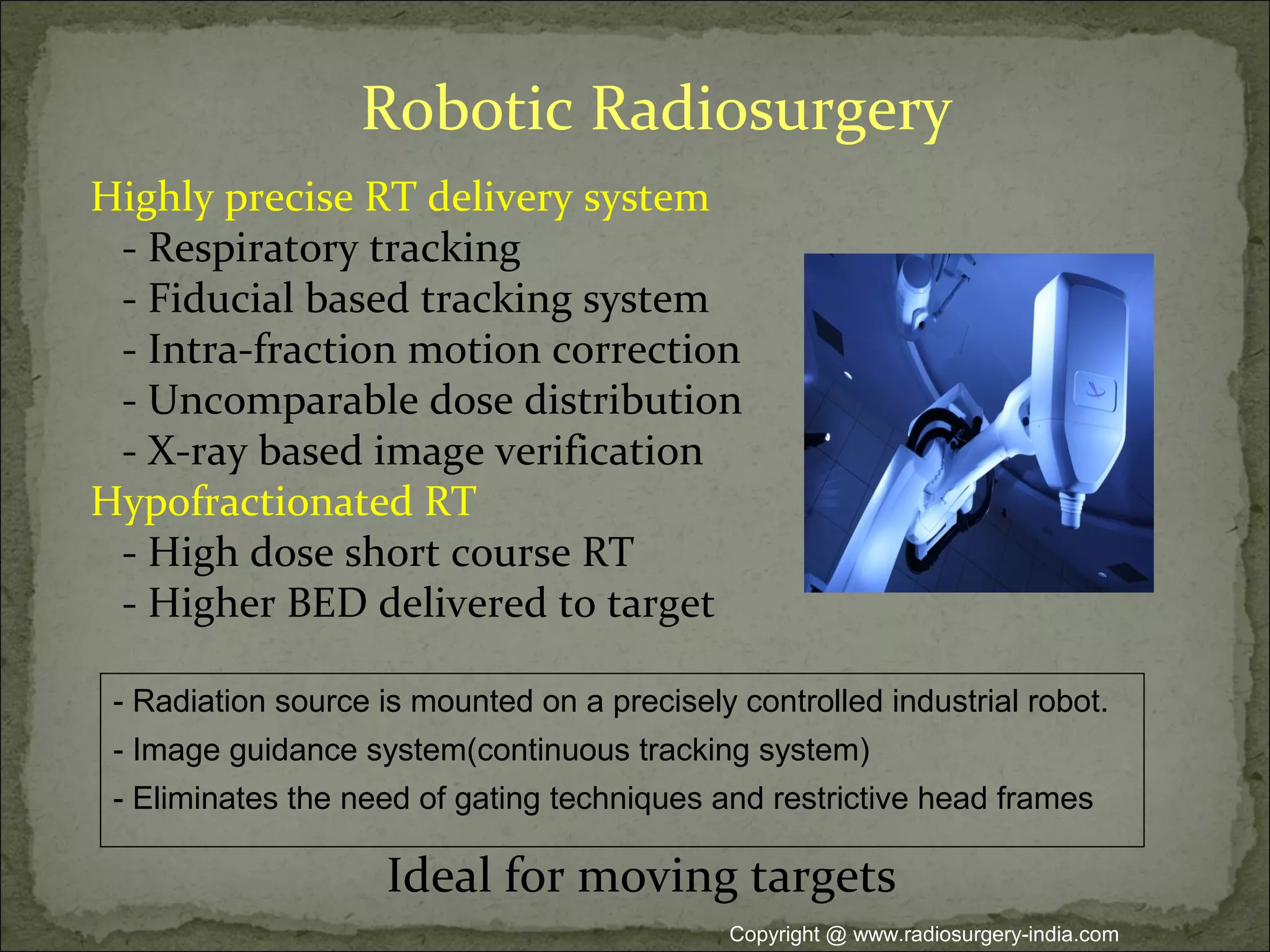
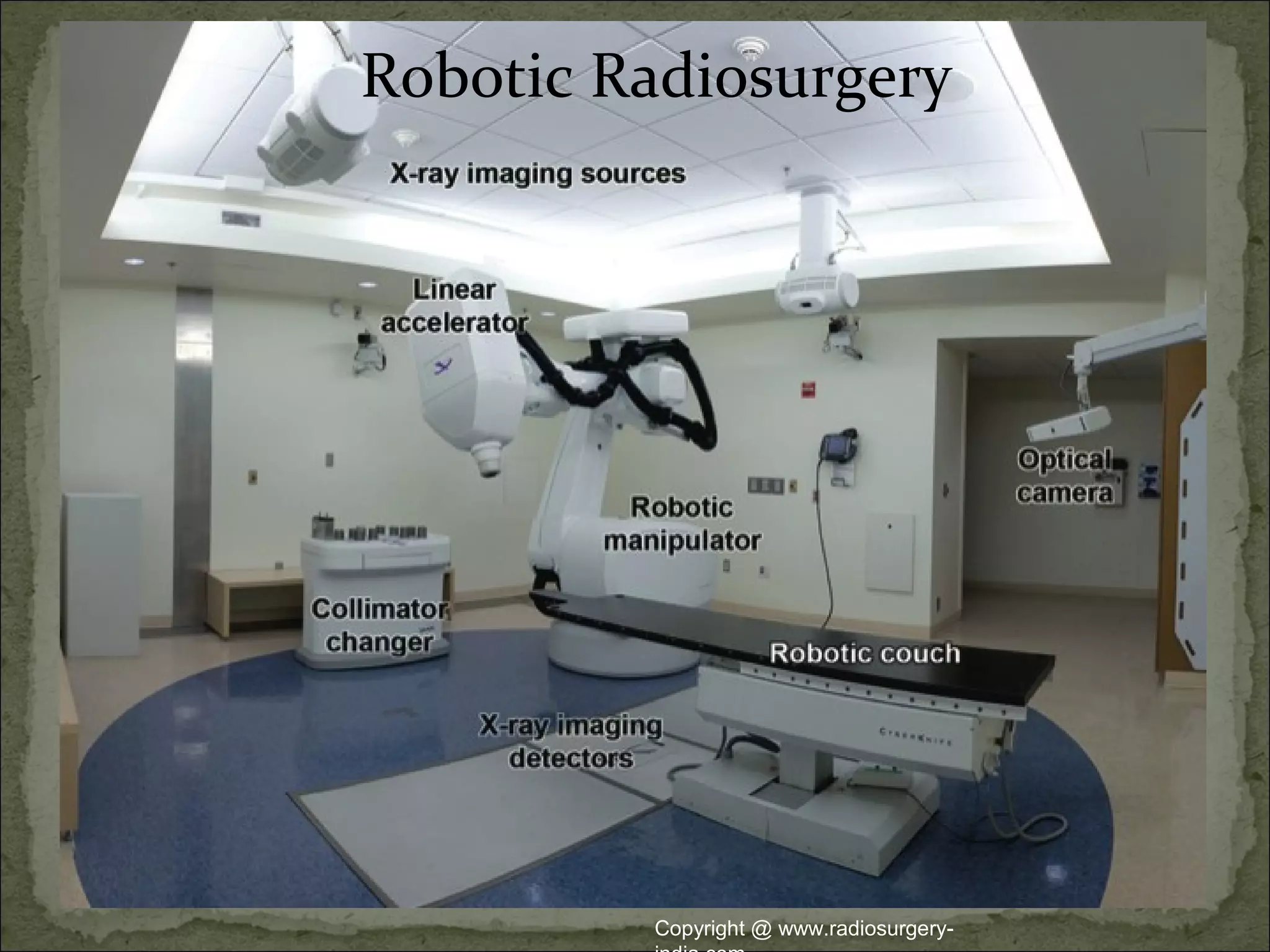
Robotic Radiosurgery
Highly precise RT delivery system
- Respiratory tracking
- Fiducial based tracking system
- Intra-fraction motion correction
- Uncomparable dose distribution
- X-ray based image verification
Hypofractionated RT
- High dose short course RT
- Higher BED delivered to target
Ideal for moving targets
- Radiation source is mounted on a precisely controlled industrial robot.
- Image guidance system(continuous tracking system)
- Eliminates the need of gating techniques and restrictive head frames
Copyright @ www.radiosurgery-india.com
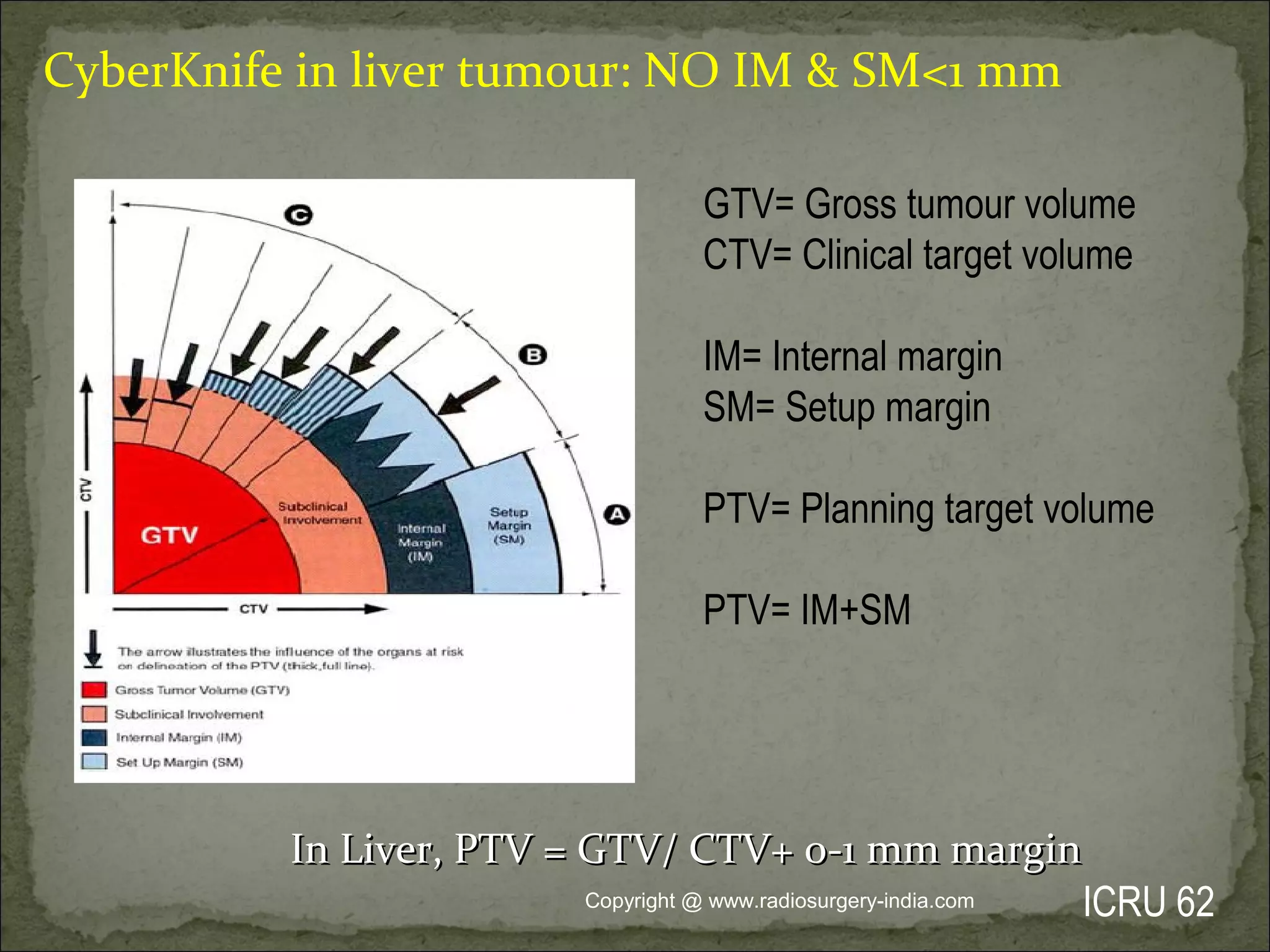
GTV= Gross tumour volume
CTV= Clinical target volume
IM= Internal margin
SM= Setup margin
PTV= Planning target volume
PTV= IM+SM
ICRU 62
CyberKnife in liver tumour: NO IM & SM<1 mm
In Liver, PTV = GTV/ CTV+ 0-1 mm marginIn Liver, PTV = GTV/ CTV+ 0-1 mm margin
Copyright @ www.radiosurgery-india.com
Robotic Radiosurgery
Copyright @ www.radiosurgery-
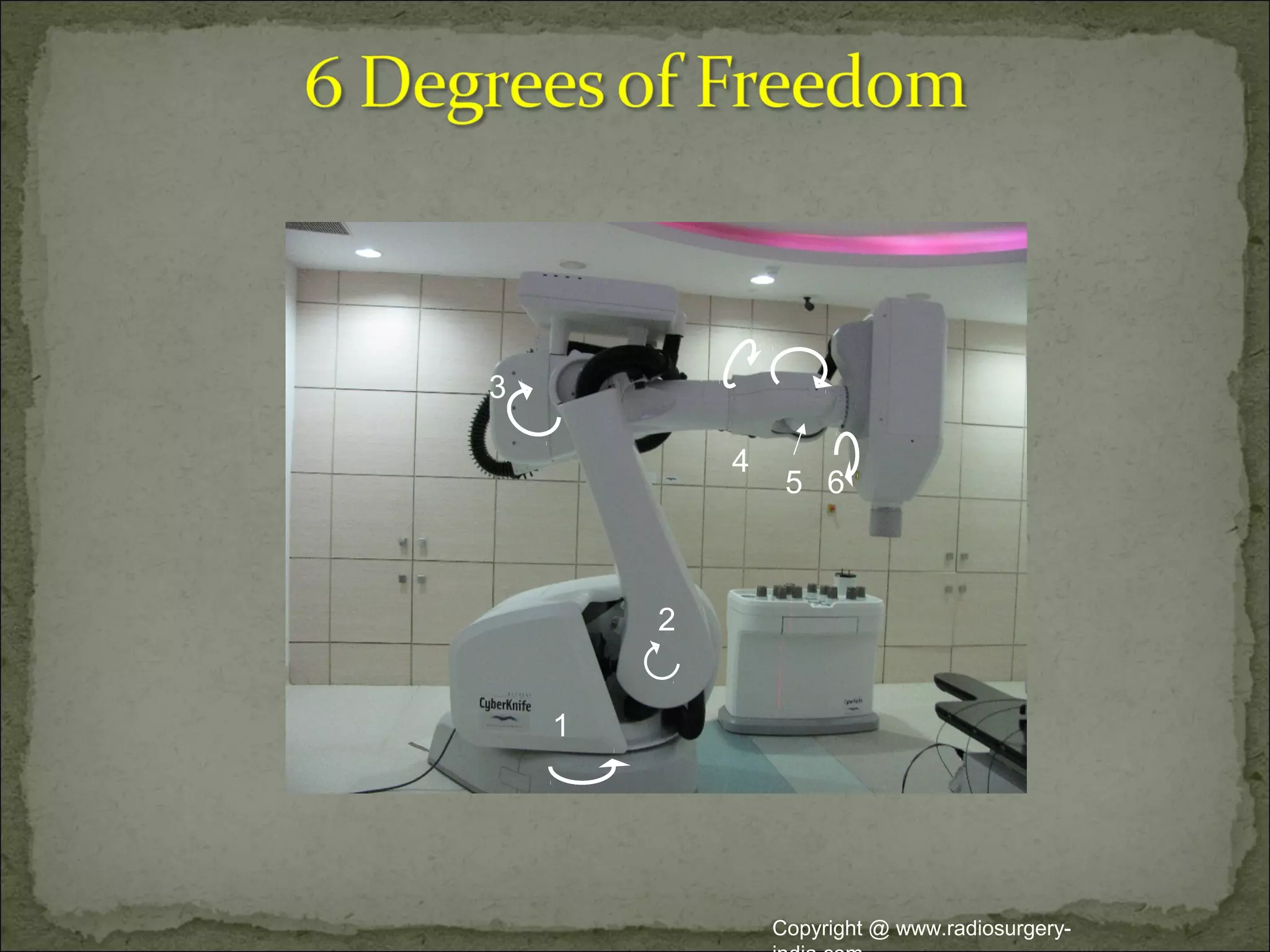
5
1
2
3
4
65
Copyright @ www.radiosurgery-
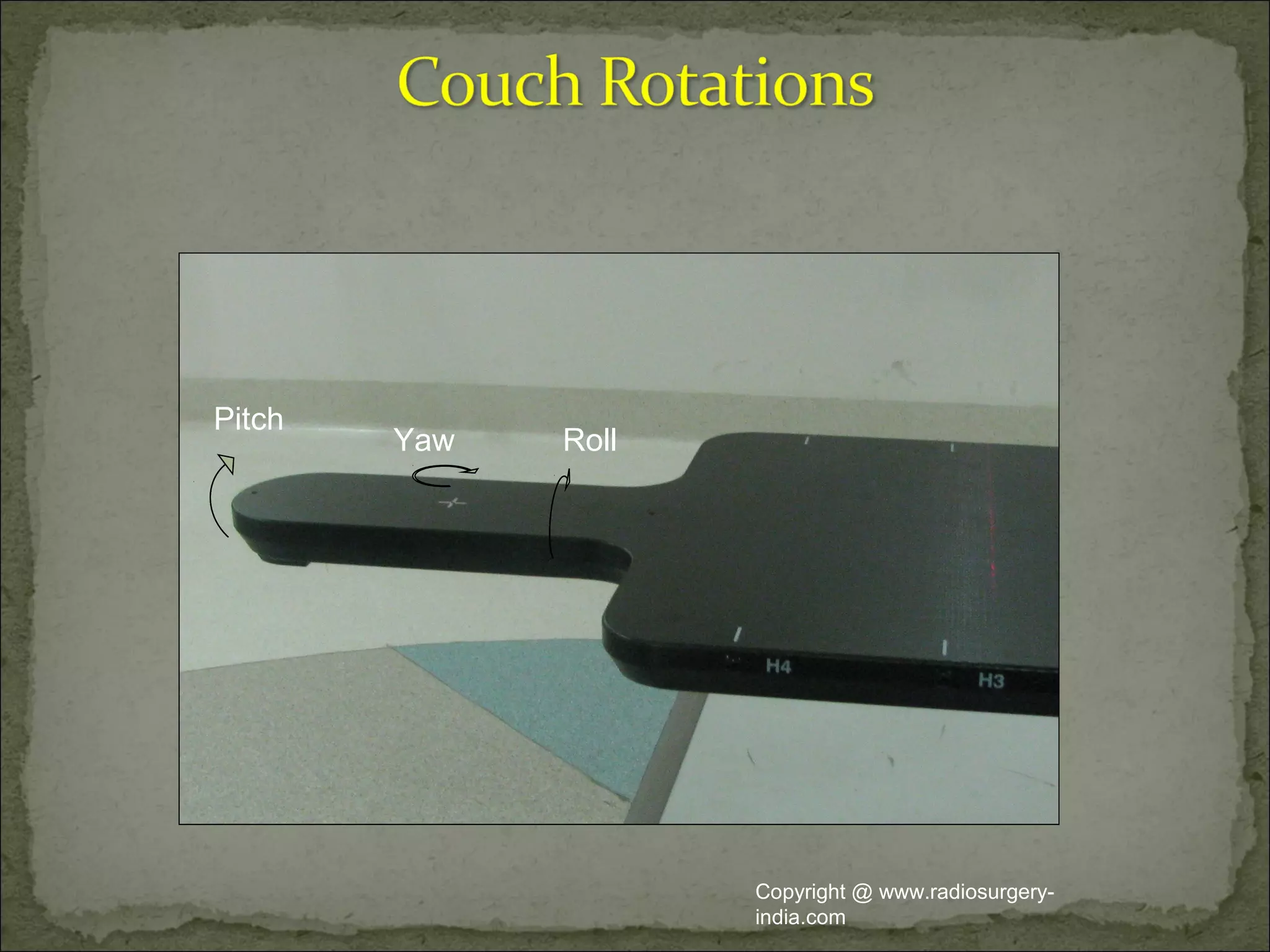
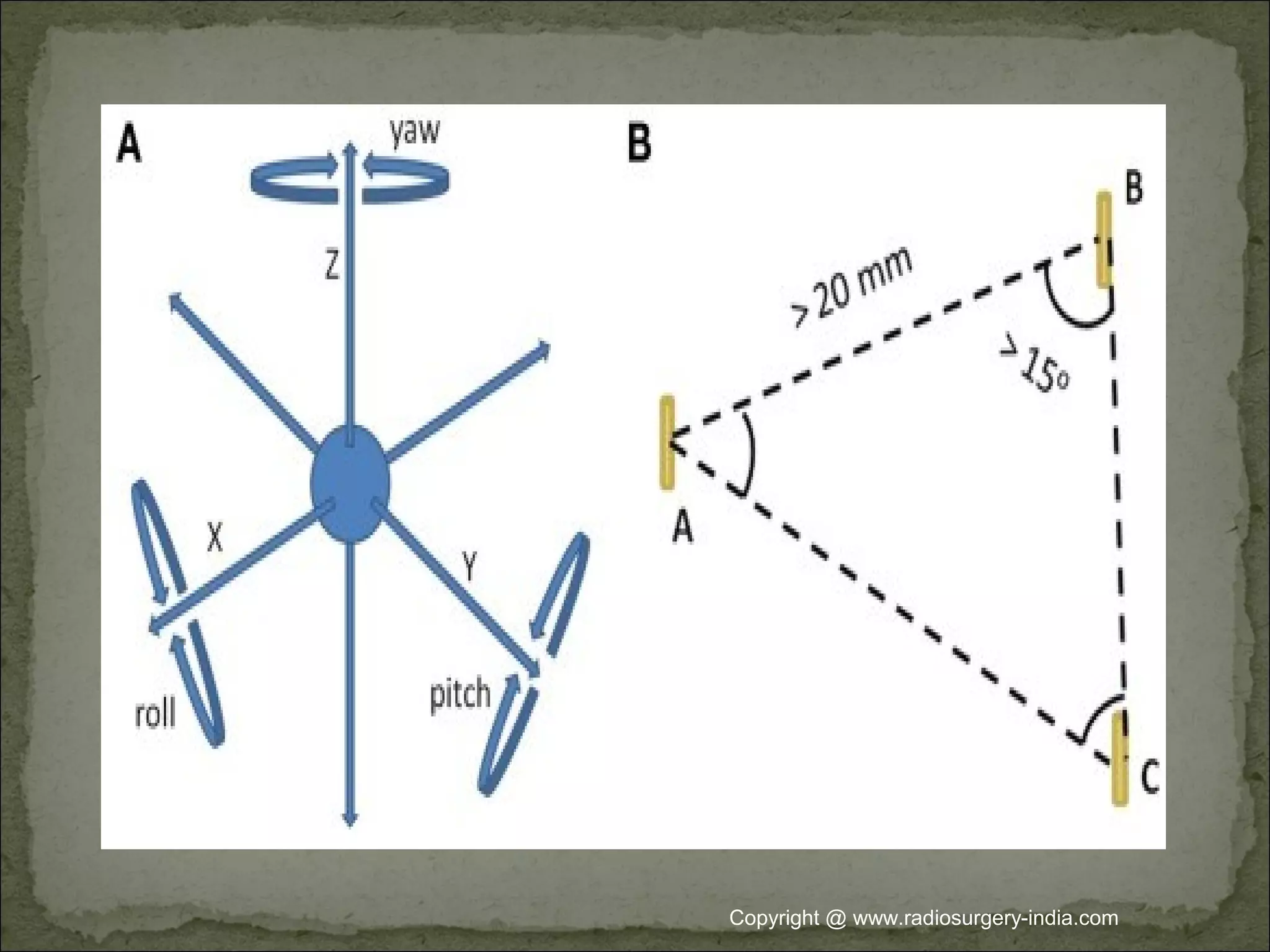
Pitch
RollYaw
Copyright @ www.radiosurgery-
india.com
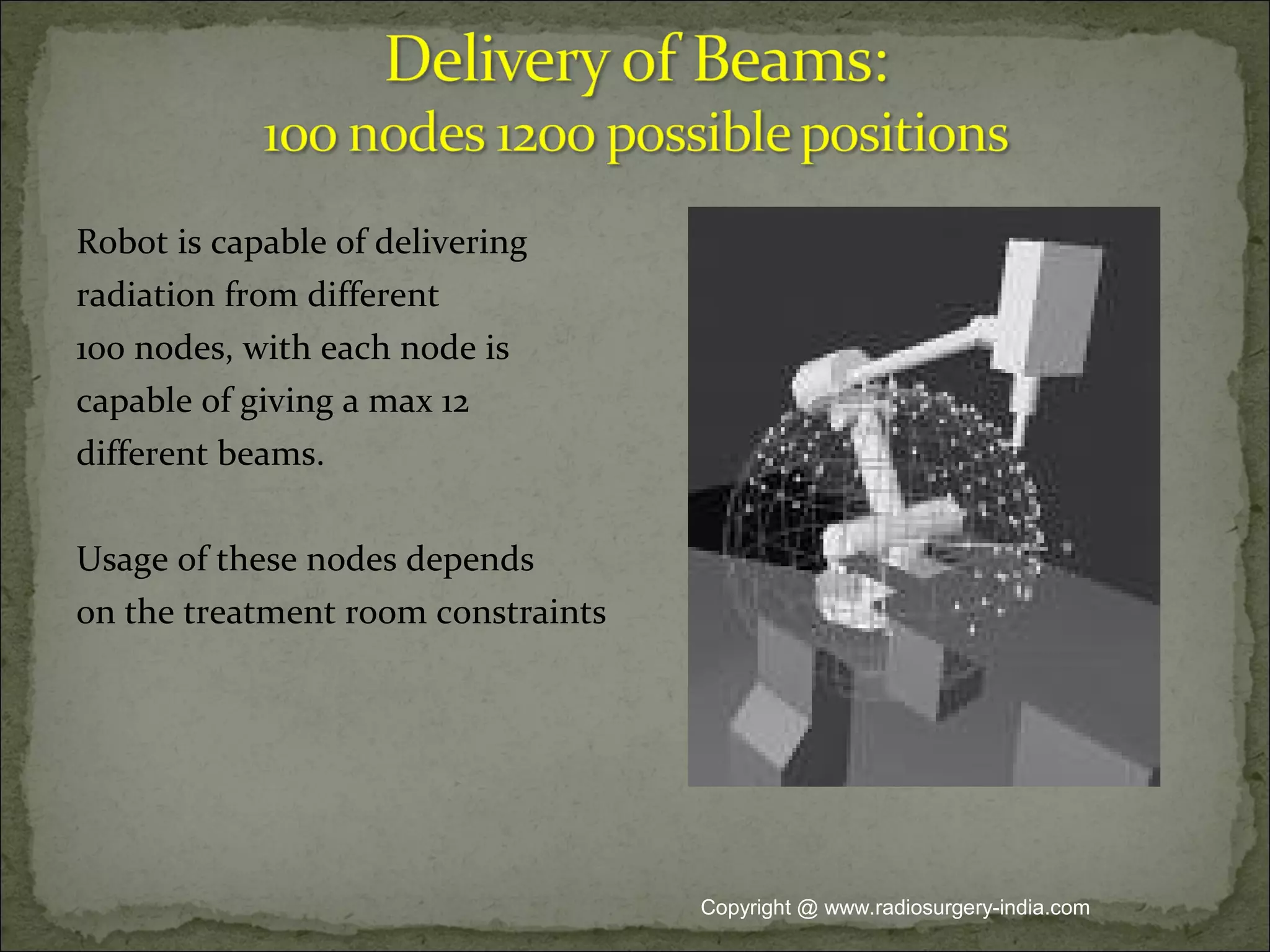
Robot is capable of delivering
radiation from different
100 nodes, with each node is
capable of giving a max 12
different beams.
Usage of these nodes depends
on the treatment room constraints
Copyright @ www.radiosurgery-india.com
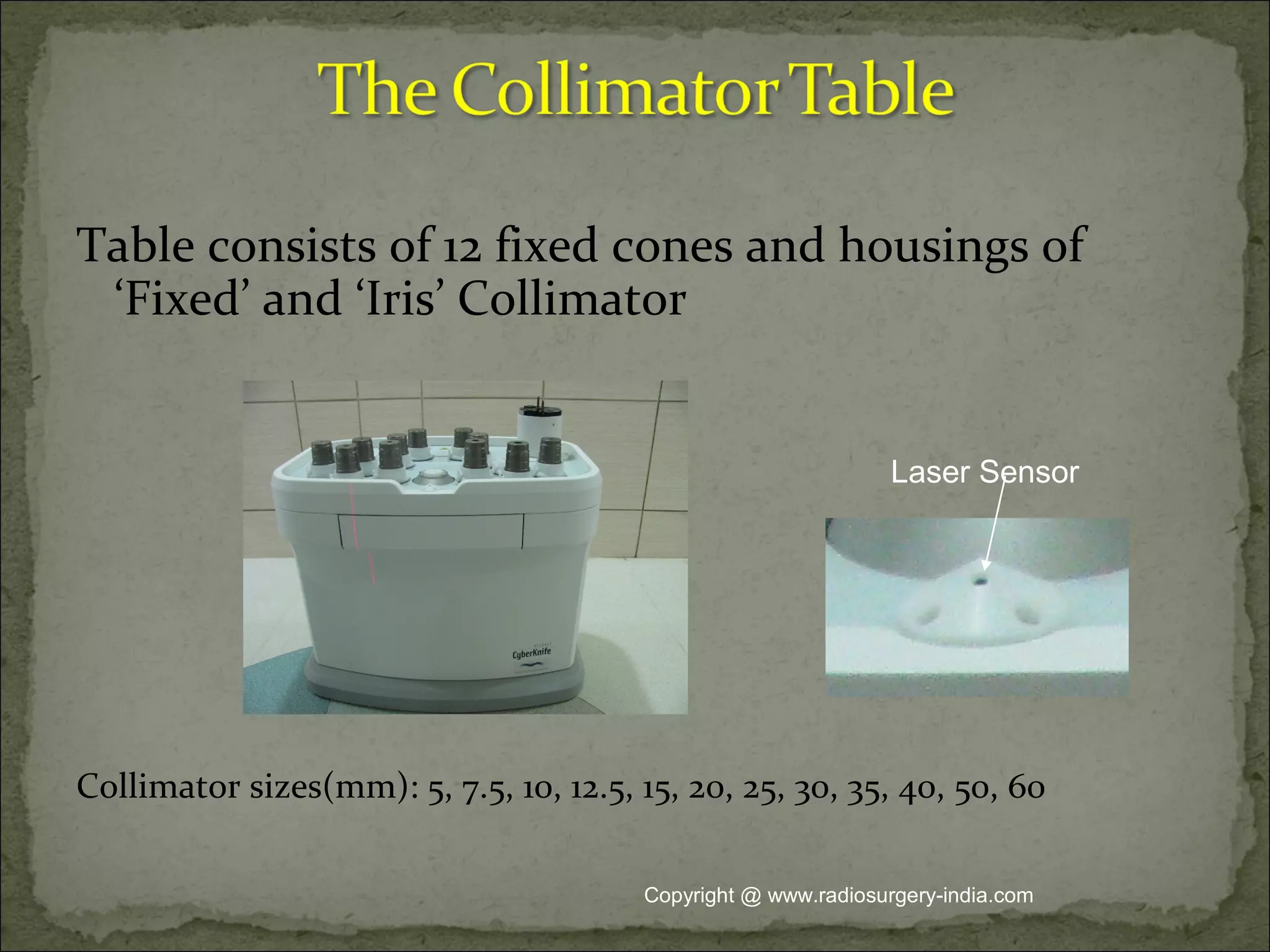
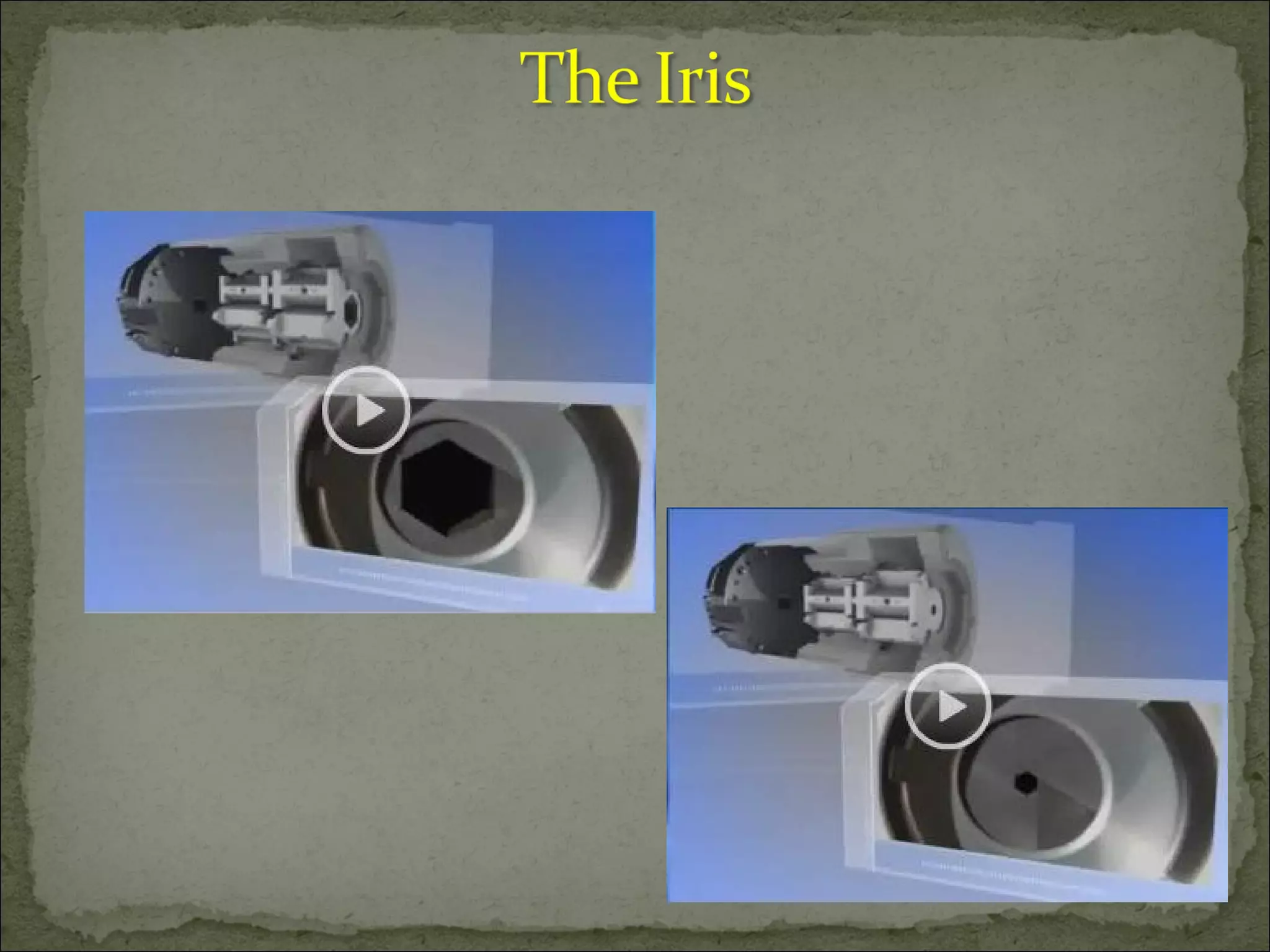
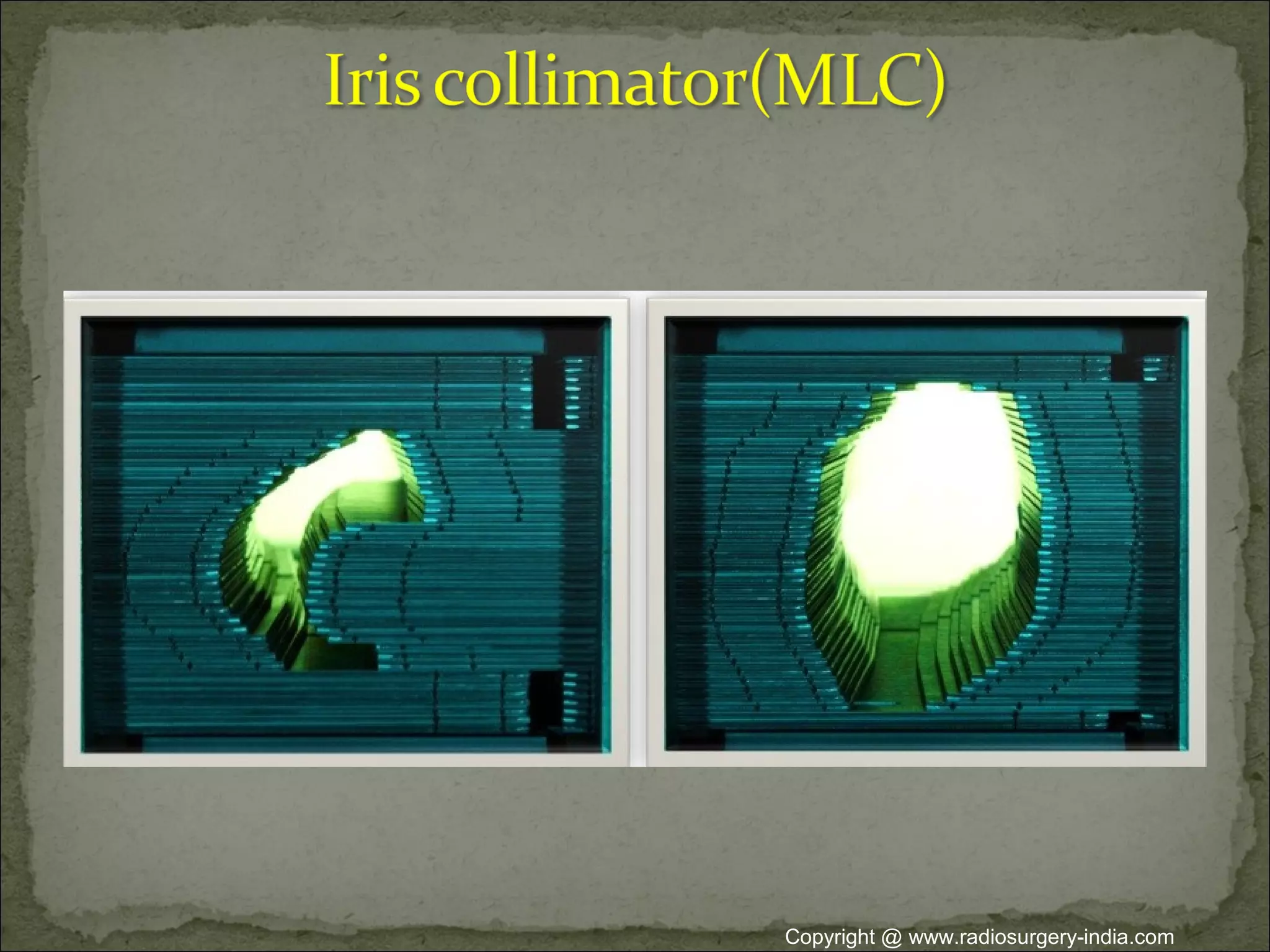
Table consists of 12 fixed cones and housings of
‘Fixed’ and ‘Iris’ Collimator
Collimator sizes(mm): 5, 7.5, 10, 12.5, 15, 20, 25, 30, 35, 40, 50, 60
Laser Sensor
Copyright @ www.radiosurgery-india.com
Cyberknife treatment delivery is based on the following
tracking systems
 6D_ Skull tracking system
 Fiducials tracking system
 Synchrony tracking system
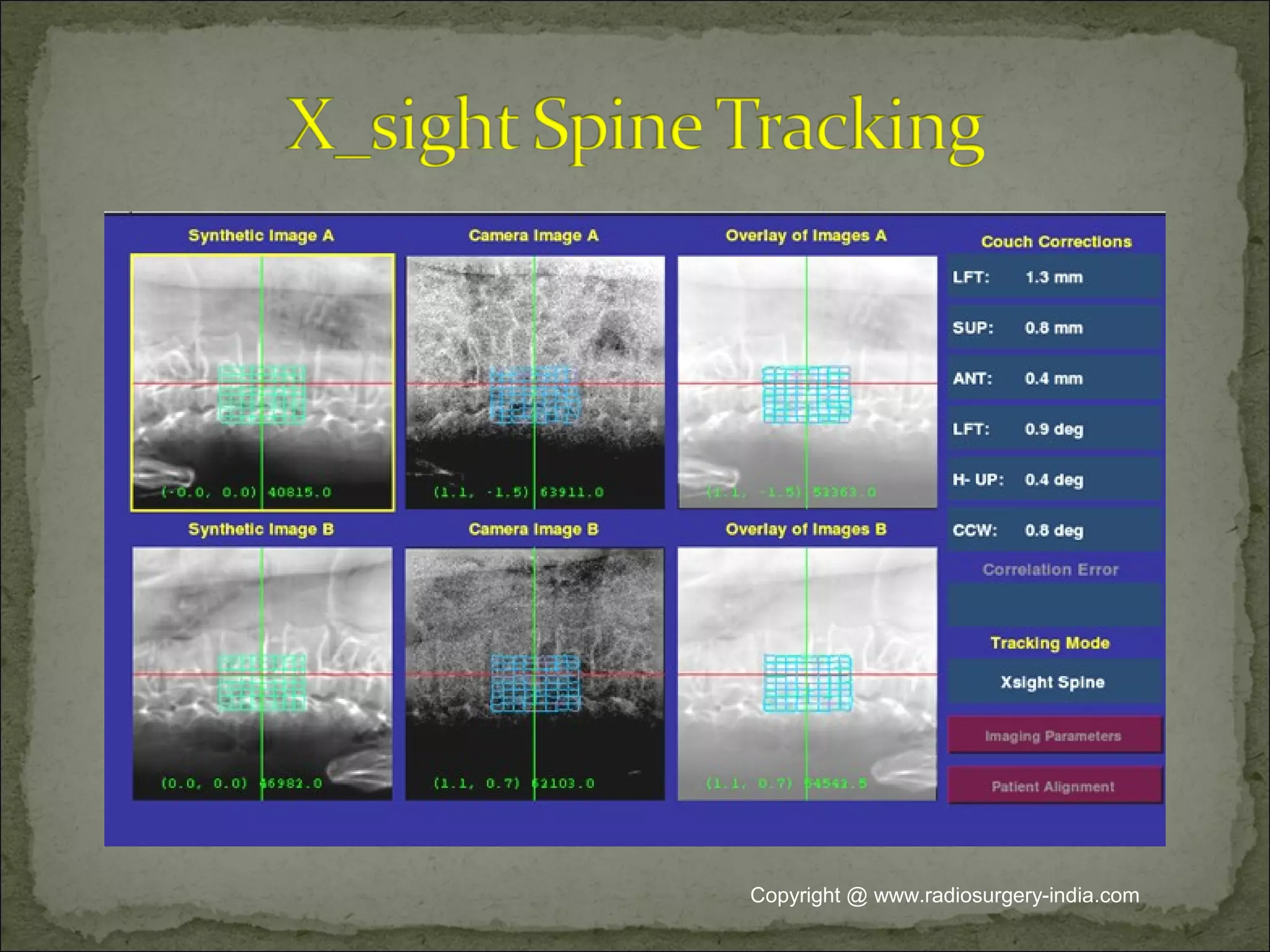
 X_sight Spine tracking system
 X_sight Lung tracking system
Copyright @ www.radiosurgery-india.com
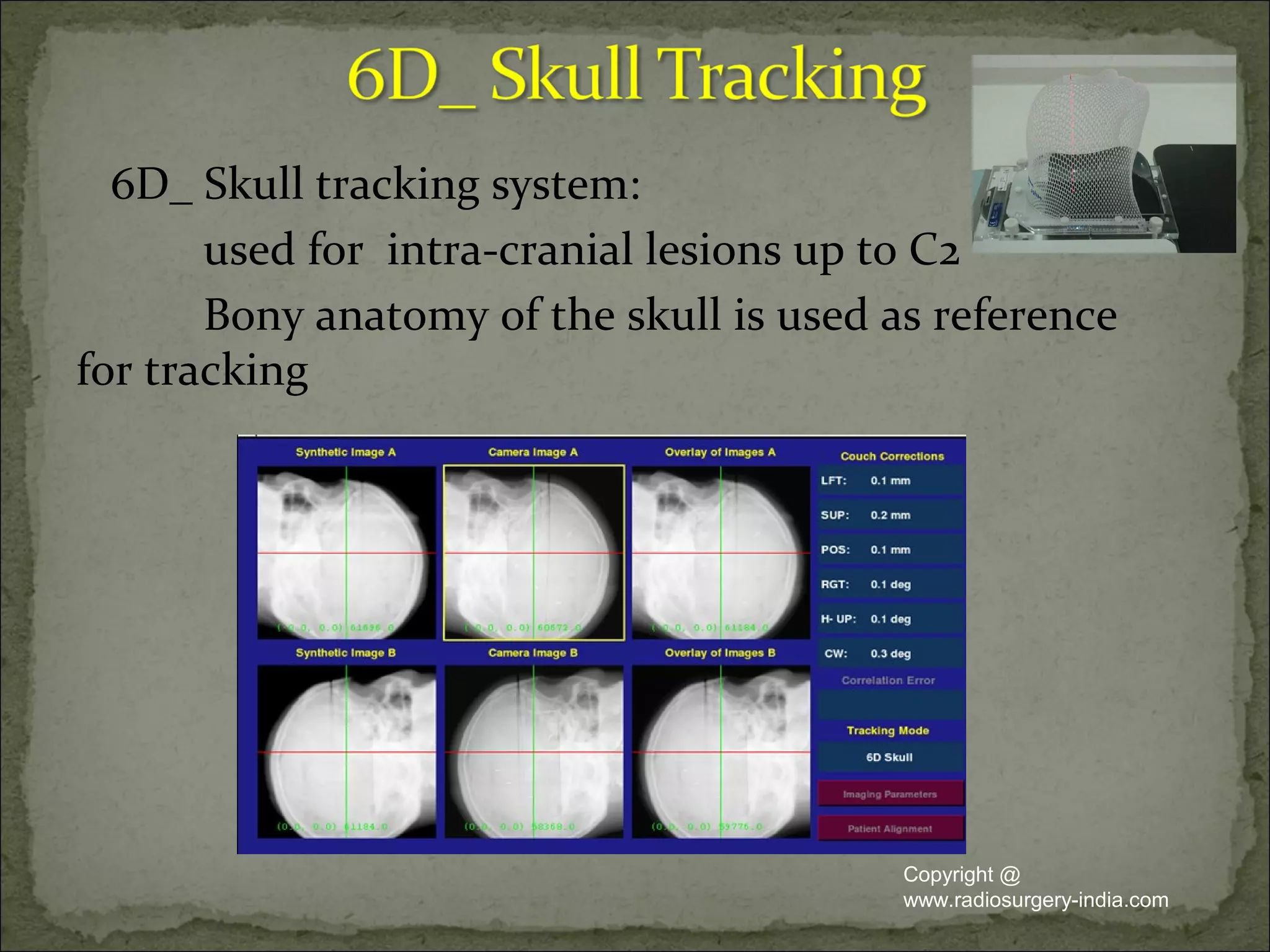
6D_ Skull tracking system:
used for intra-cranial lesions up to C2
Bony anatomy of the skull is used as reference
for tracking
Copyright @
www.radiosurgery-india.com
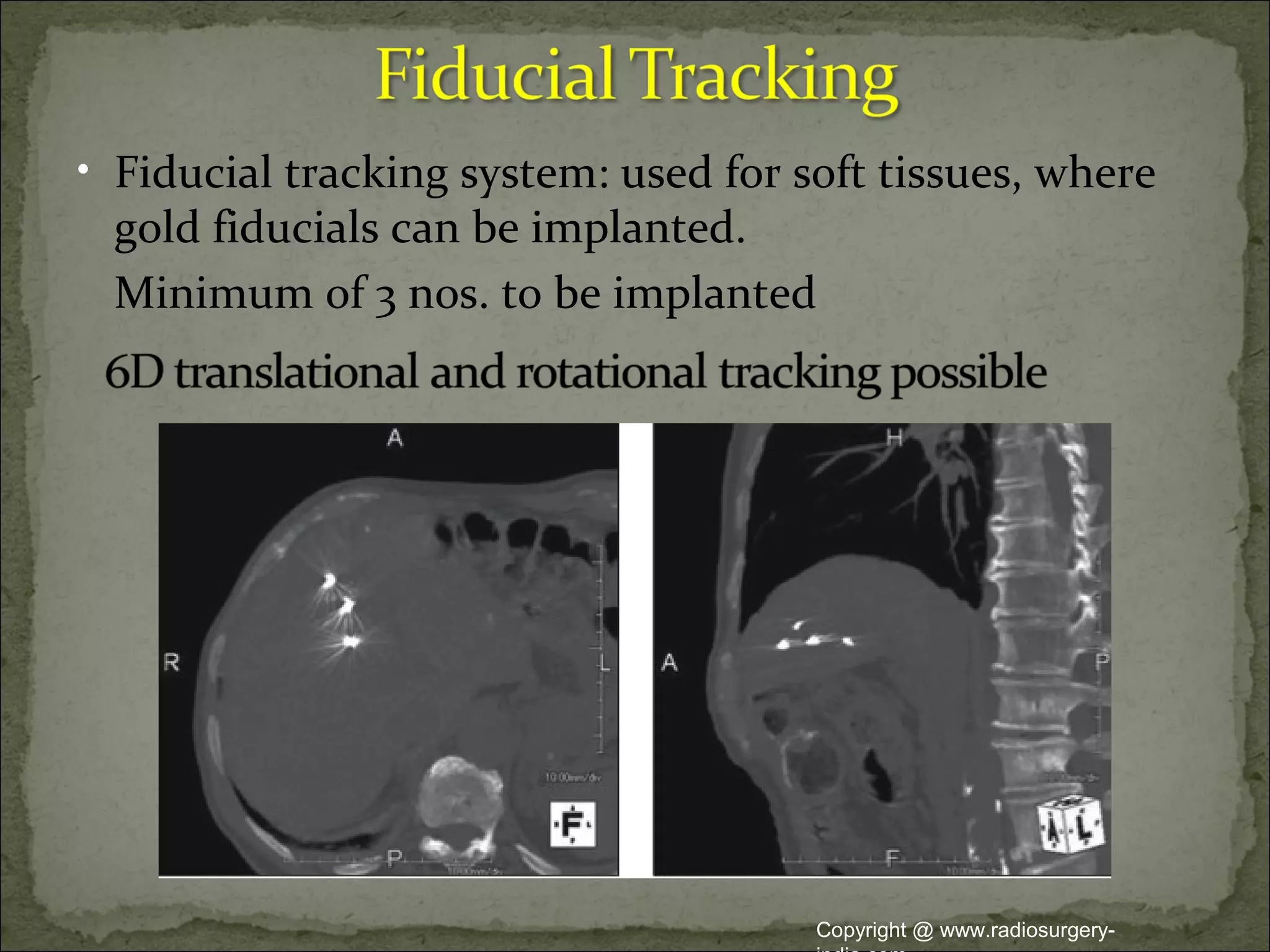
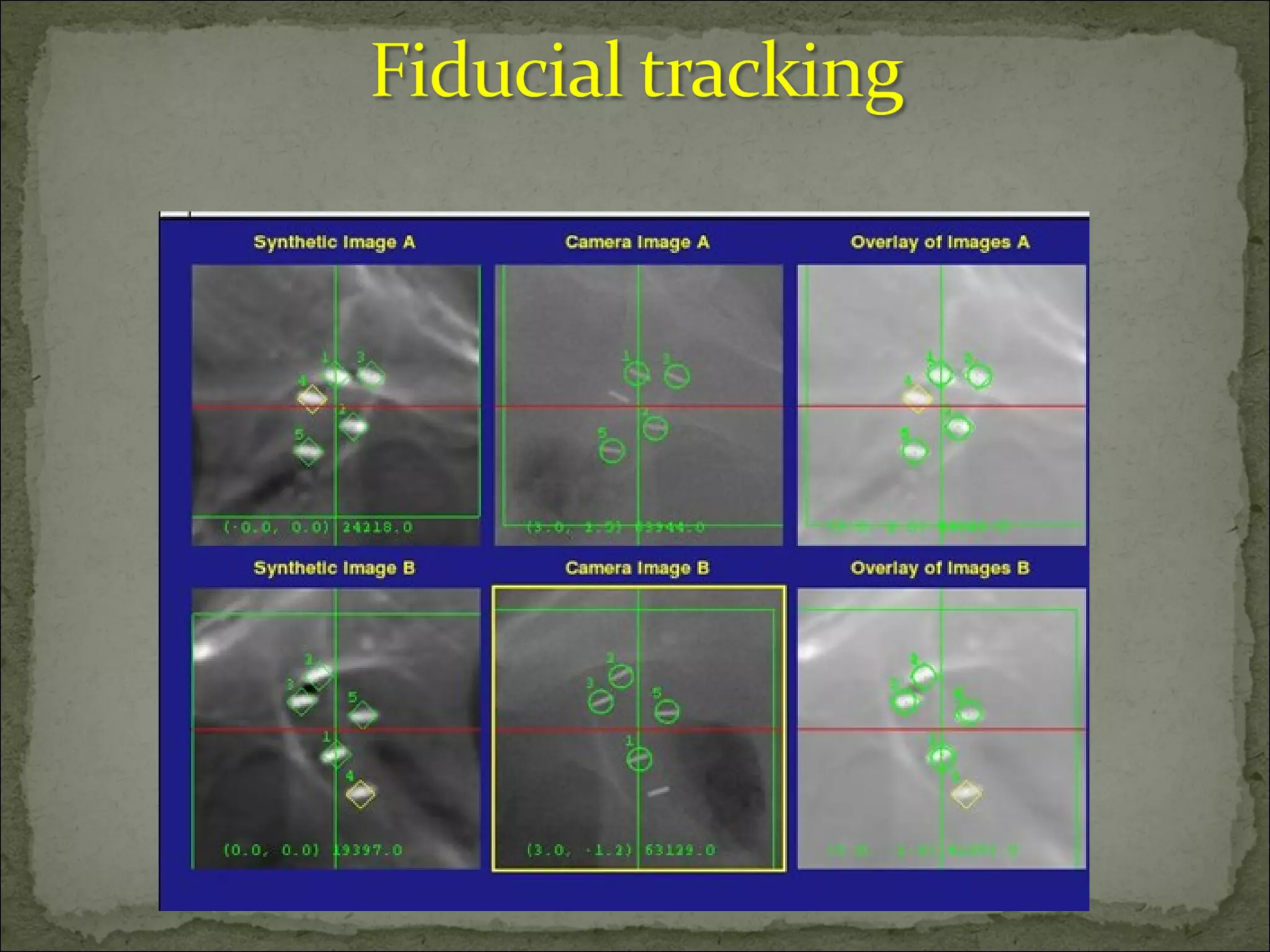
• Fiducial tracking system: used for soft tissues, where
gold fiducials can be implanted.
Minimum of 3 nos. to be implanted
Copyright @ www.radiosurgery-
Copyright @ www.radiosurgery-india.com
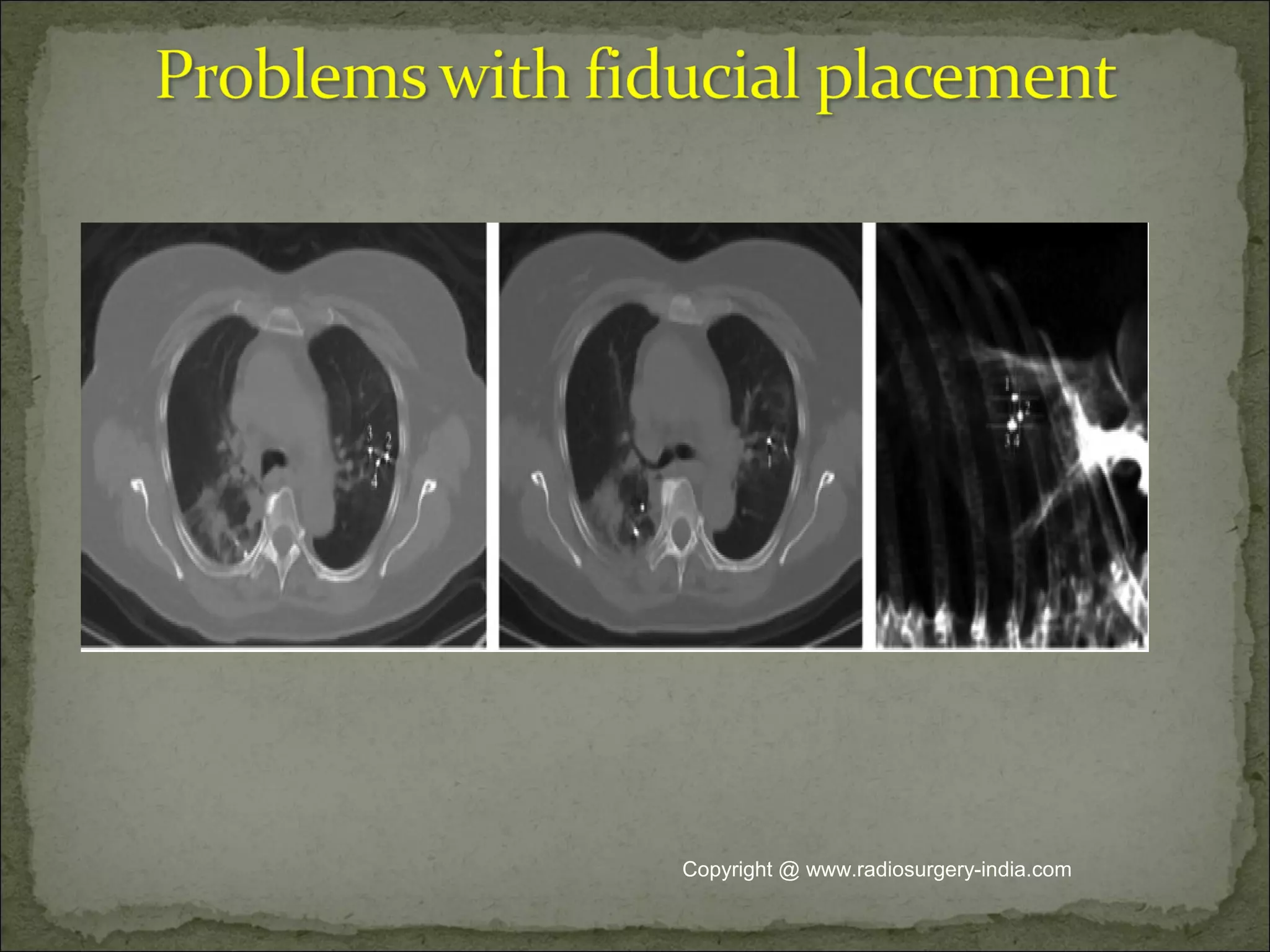
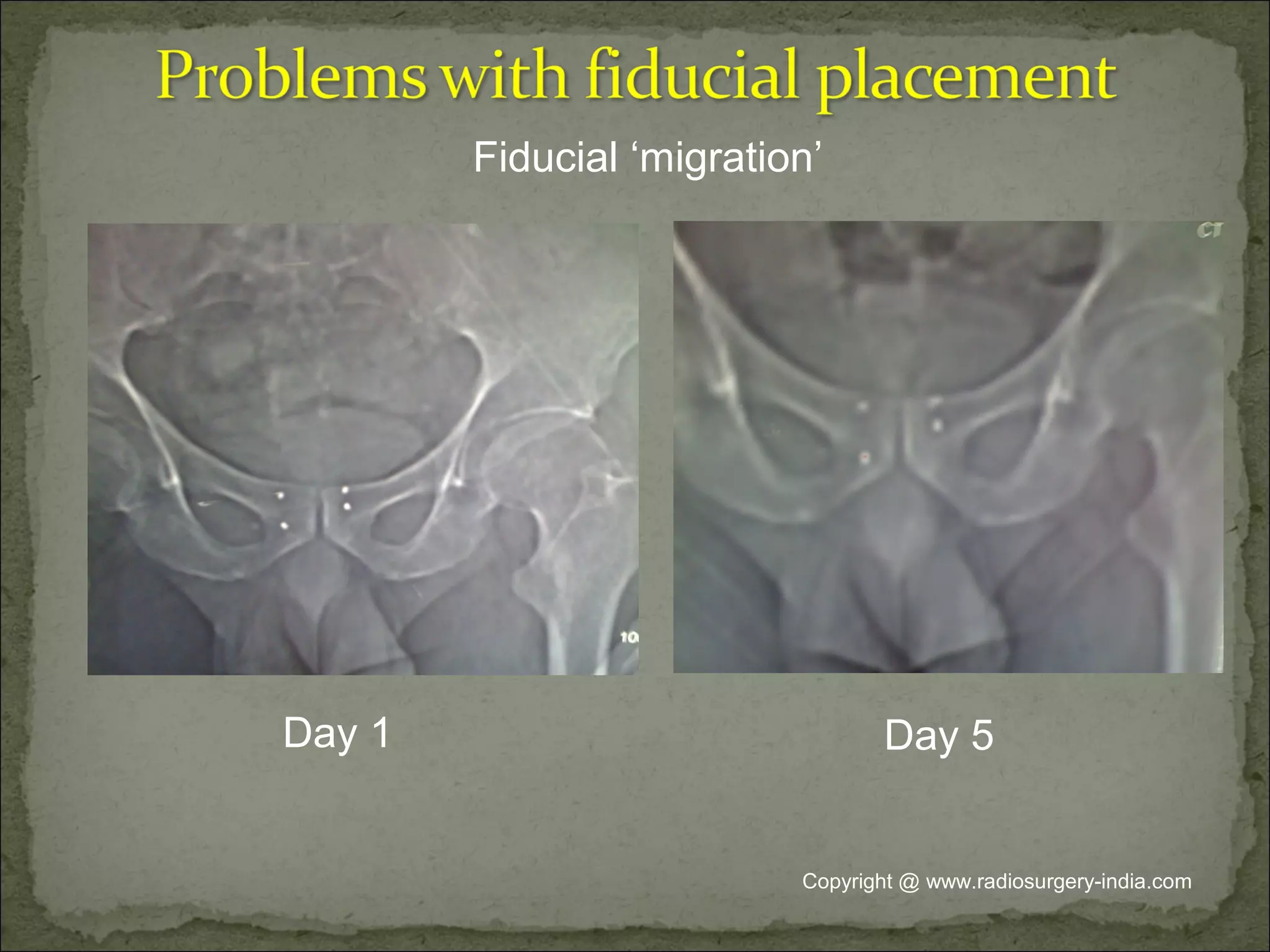
Day 1 Day 5
Fiducial ‘migration’
Copyright @ www.radiosurgery-india.com
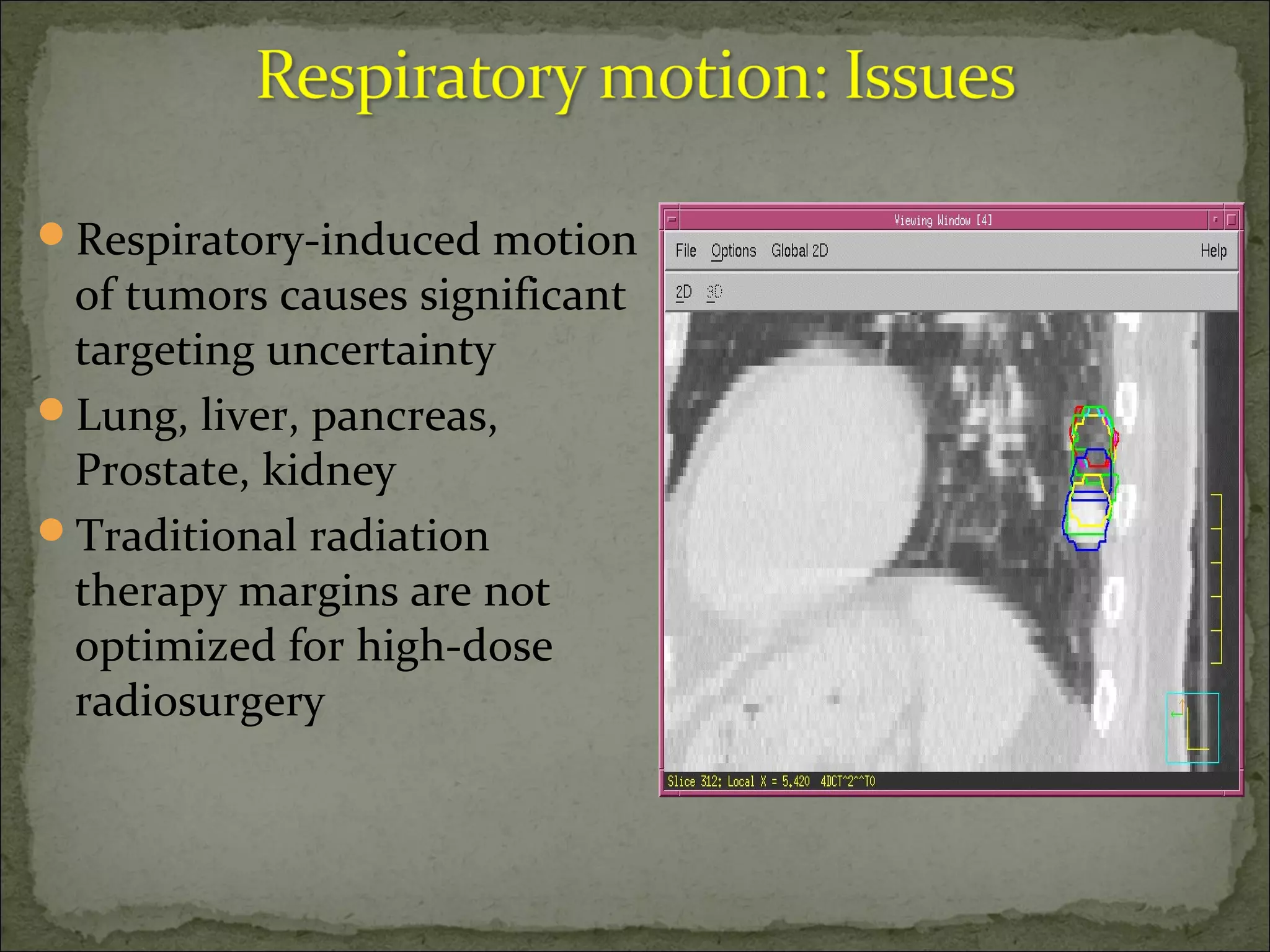
Respiratory-induced motion
of tumors causes significant
targeting uncertainty
Lung, liver, pancreas,
Prostate, kidney
Traditional radiation
therapy margins are not
optimized for high-dose
radiosurgery
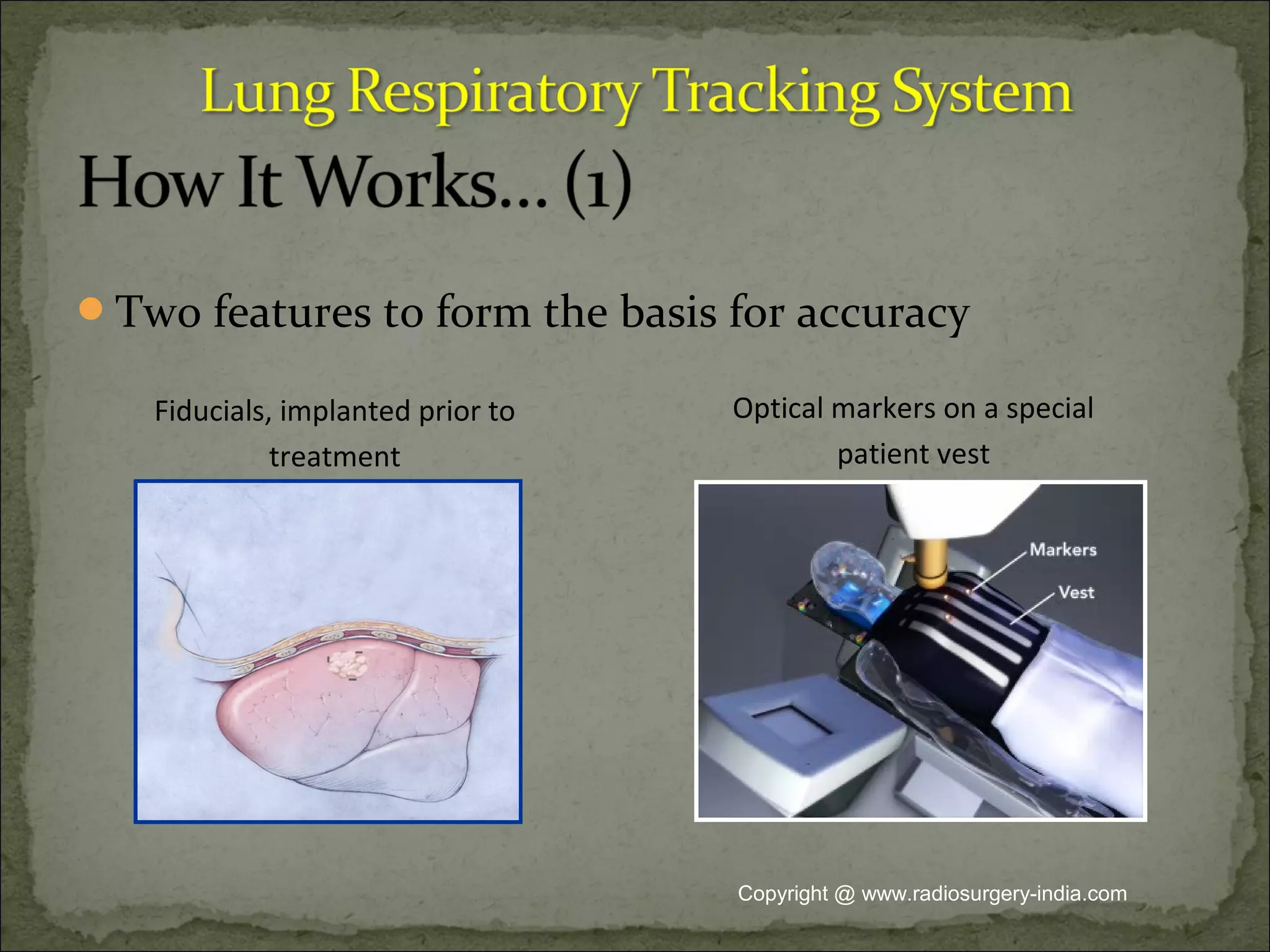
Two features to form the basis for accuracy
Fiducials, implanted prior to
treatment
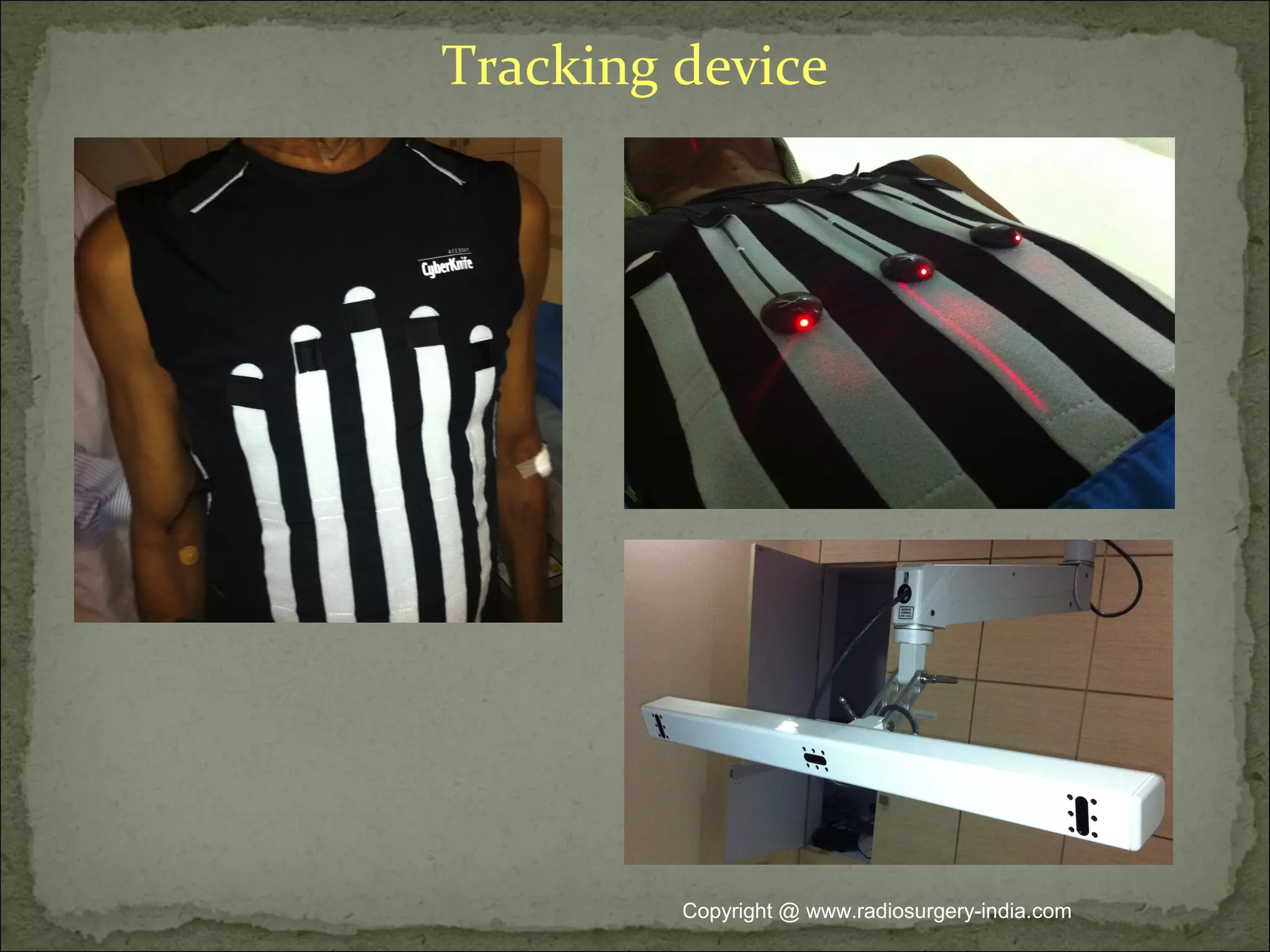
Optical markers on a special
patient vest
Copyright @ www.radiosurgery-india.com
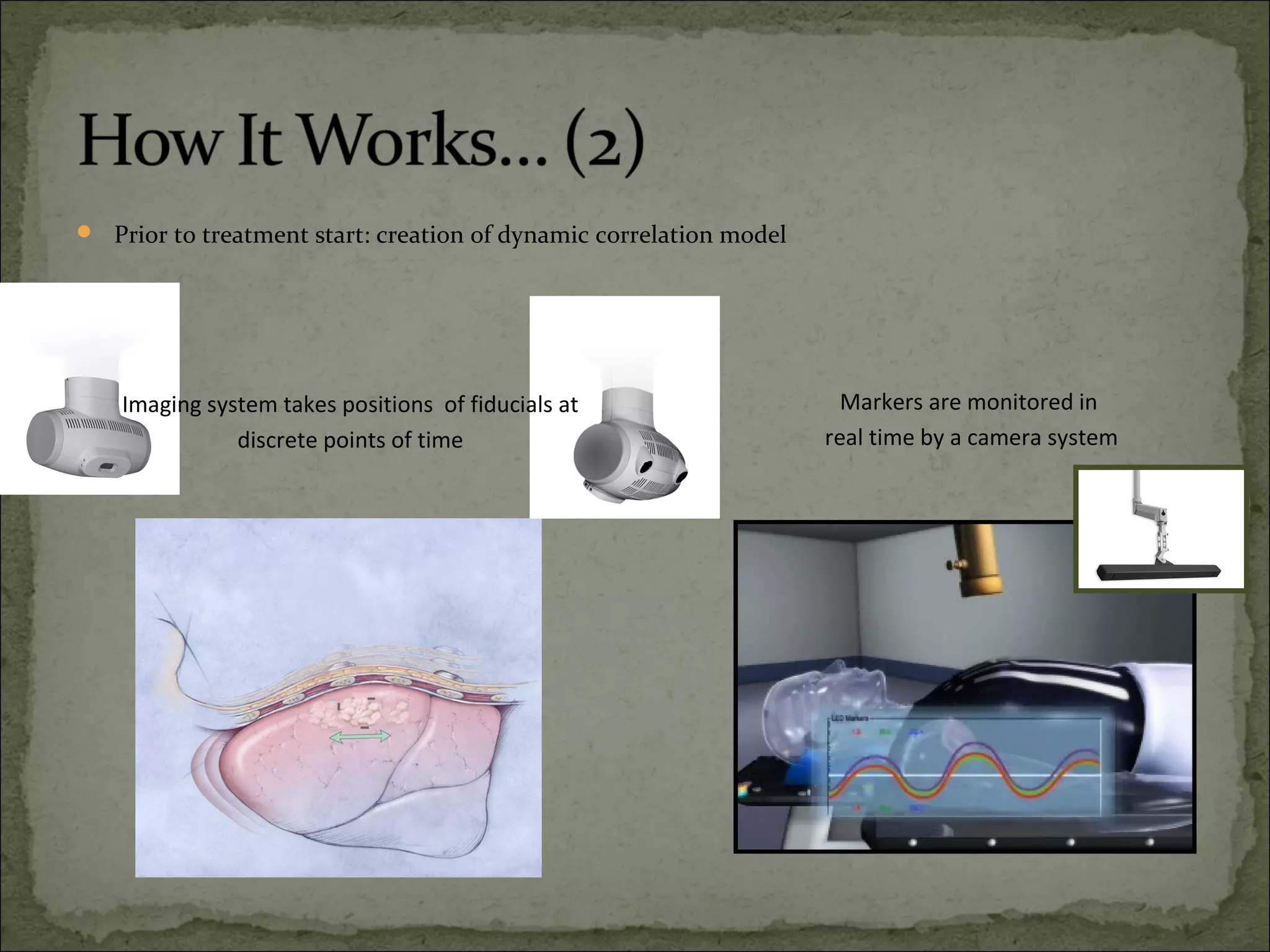
 Prior to treatment start: creation of dynamic correlation model
Markers are monitored in
real time by a camera system
Imaging system takes positions of fiducials at
discrete points of time
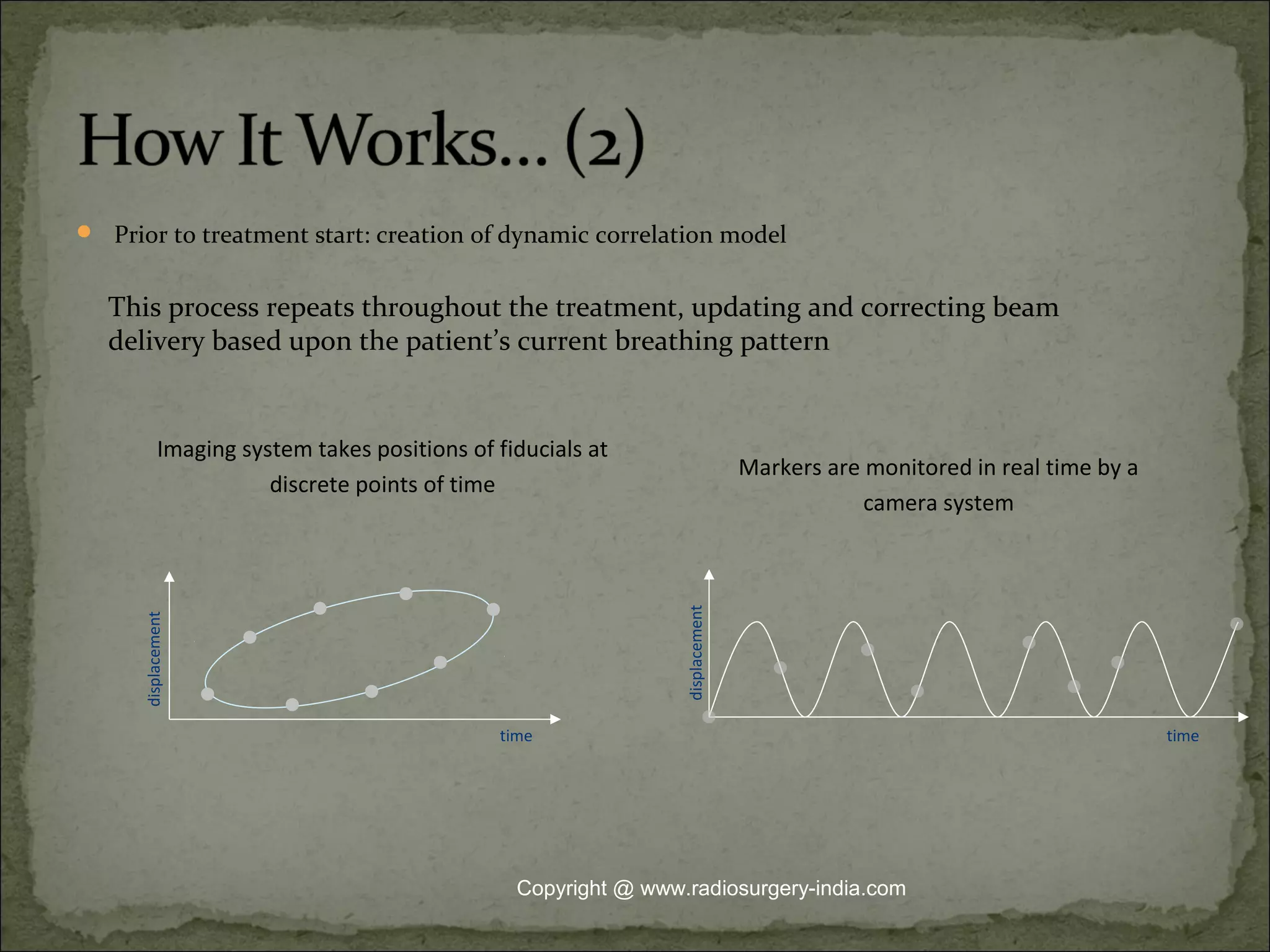
 Prior to treatment start: creation of dynamic correlation model
Markers are monitored in real time by a
camera system
Imaging system takes positions of fiducials at
discrete points of time
time
displacement
displacement
time
This process repeats throughout the treatment, updating and correcting beam
delivery based upon the patient’s current breathing pattern
Copyright @ www.radiosurgery-india.com
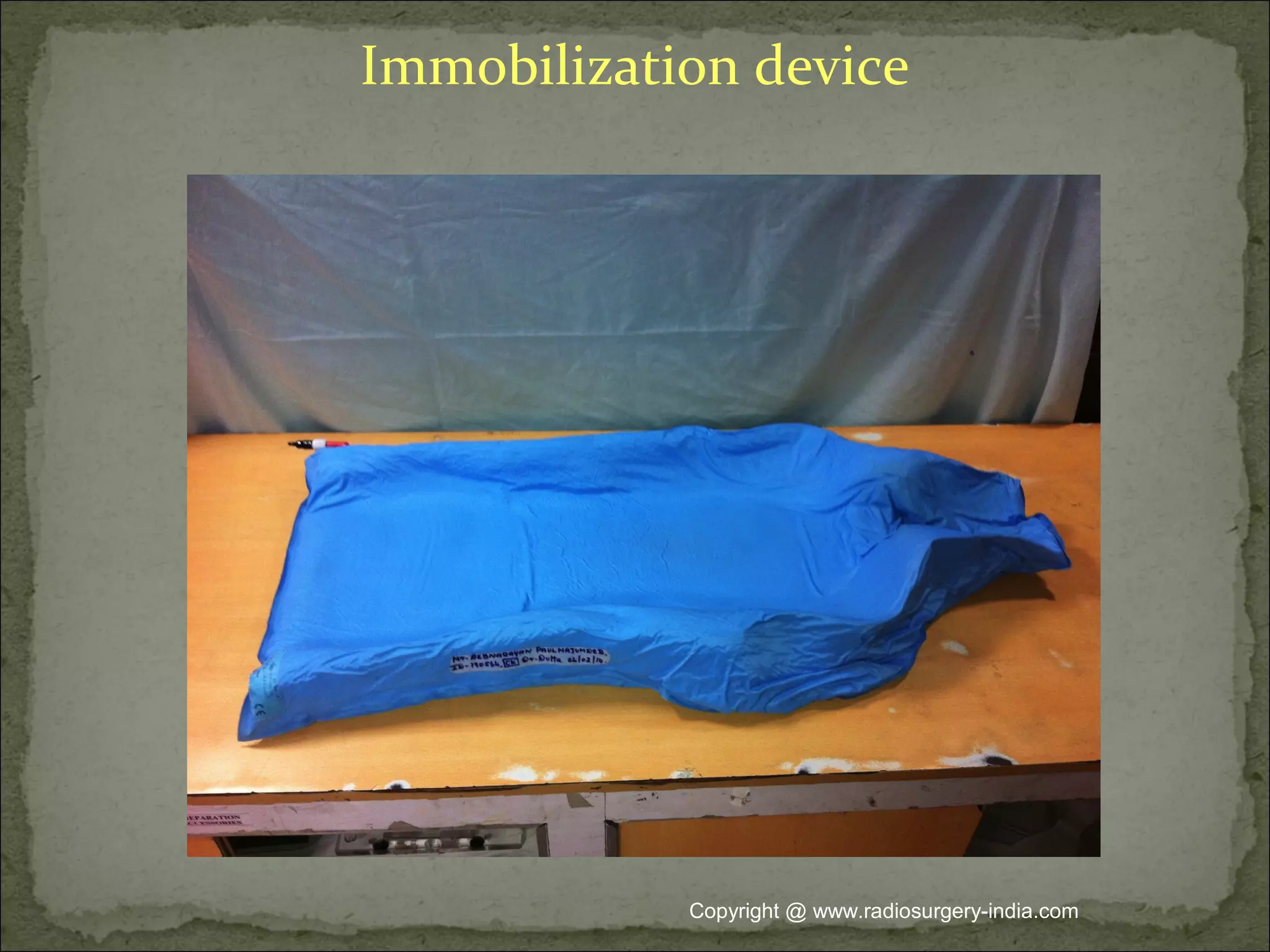
Immobilization device
Copyright @ www.radiosurgery-india.com
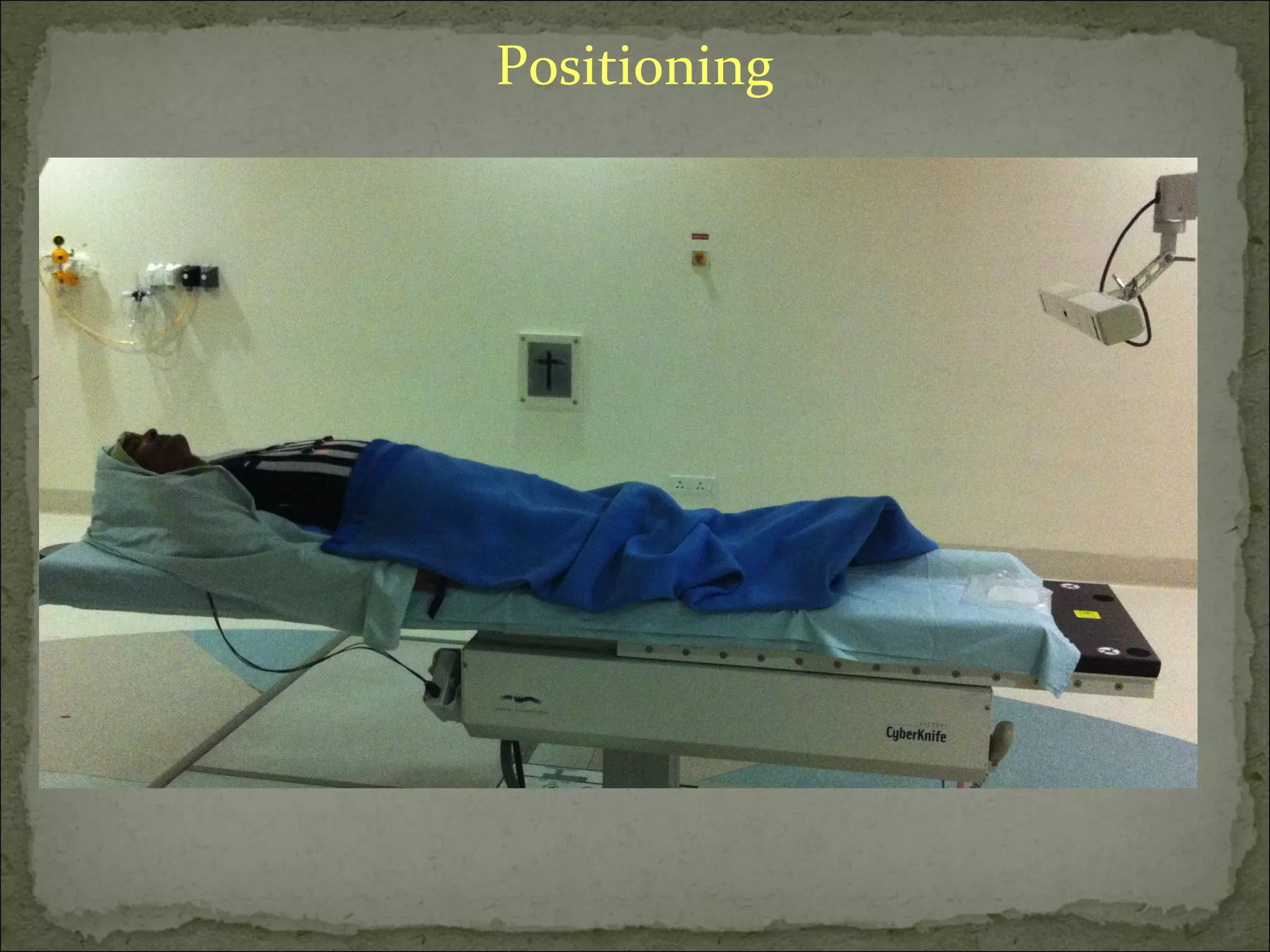
Positioning
Tracking device
Copyright @ www.radiosurgery-india.com
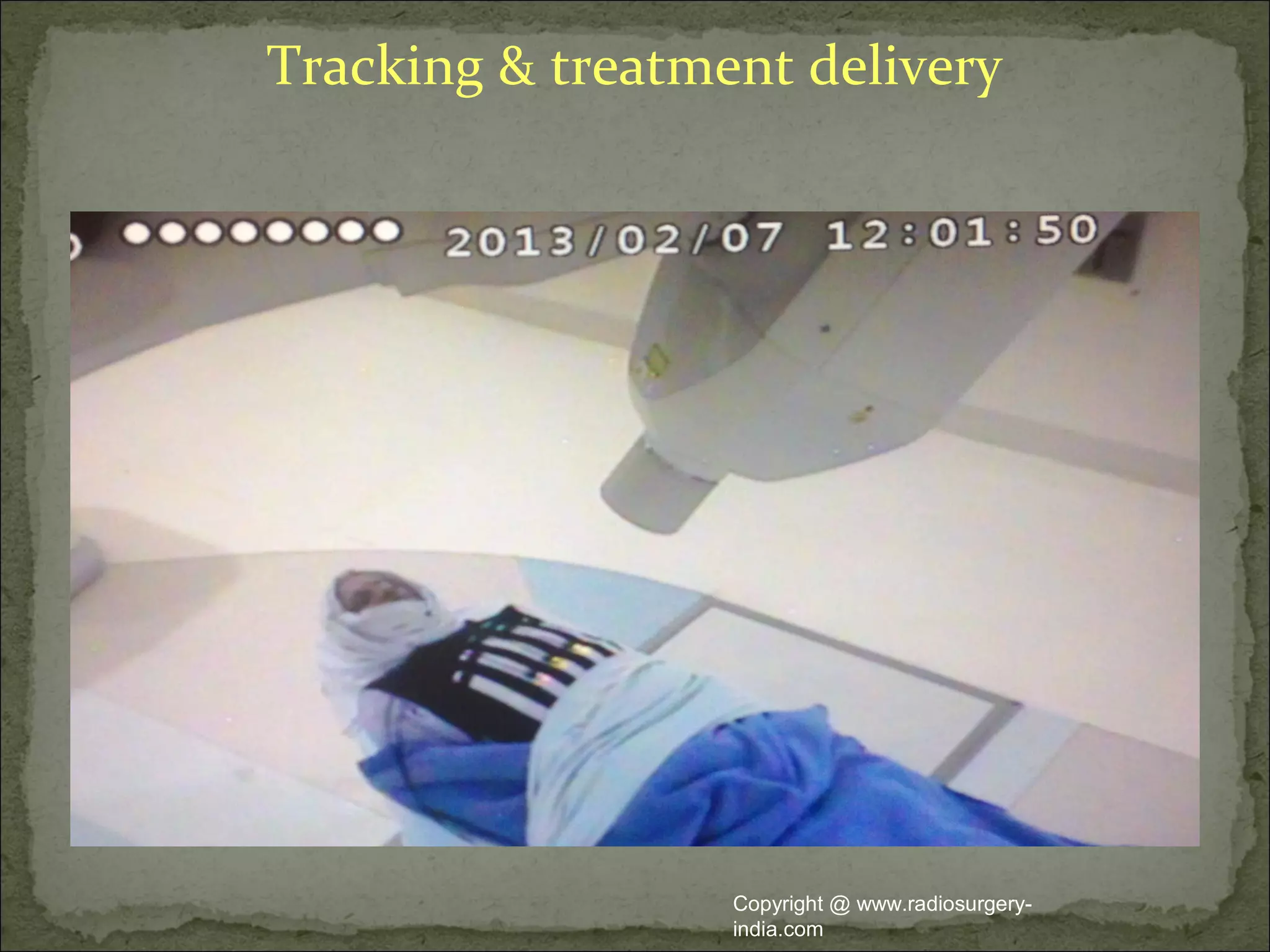
Tracking & treatment delivery
Copyright @ www.radiosurgery-
india.com
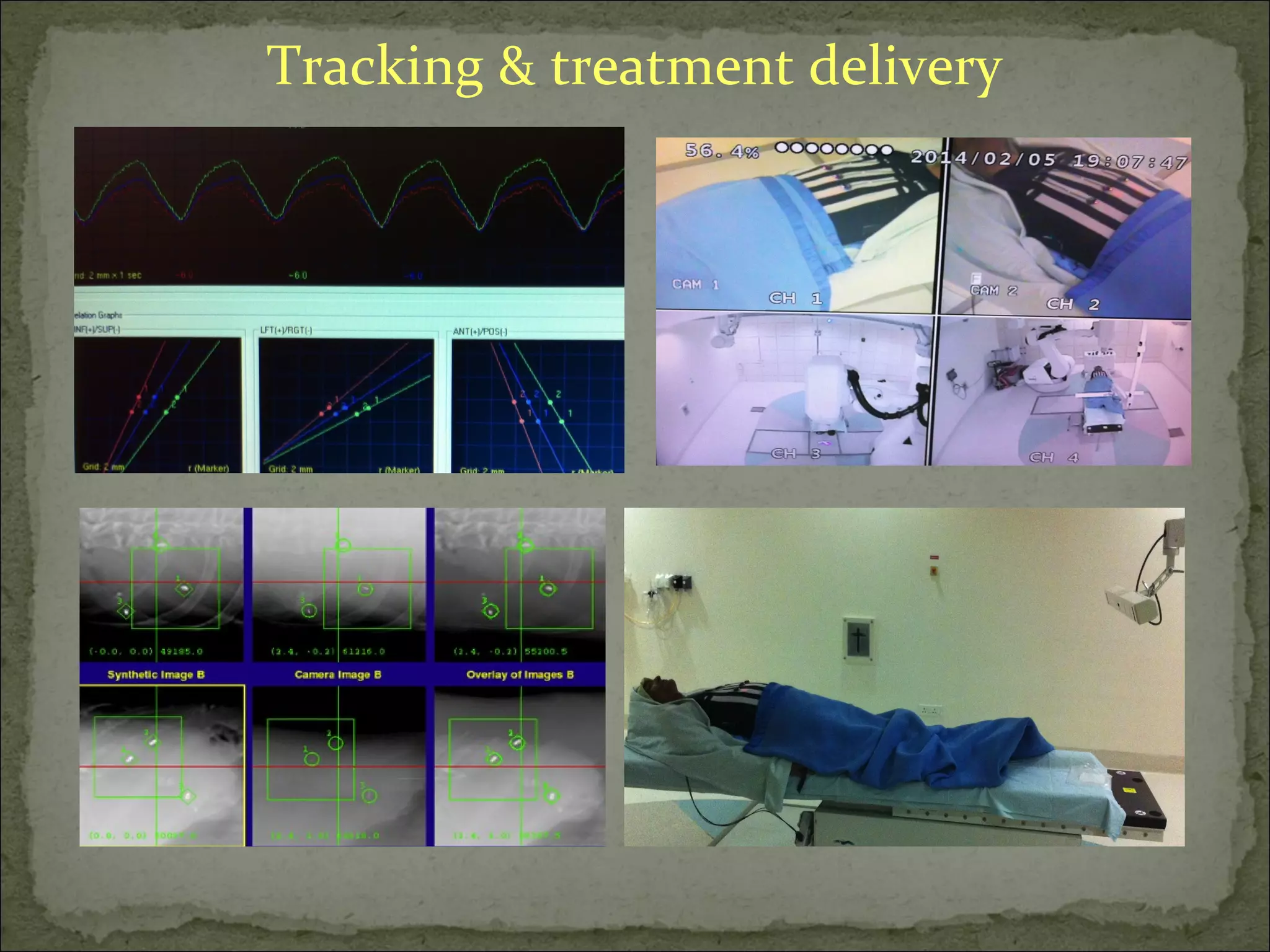
Tracking & treatment delivery
Copyright @ www.radiosurgery-india.com
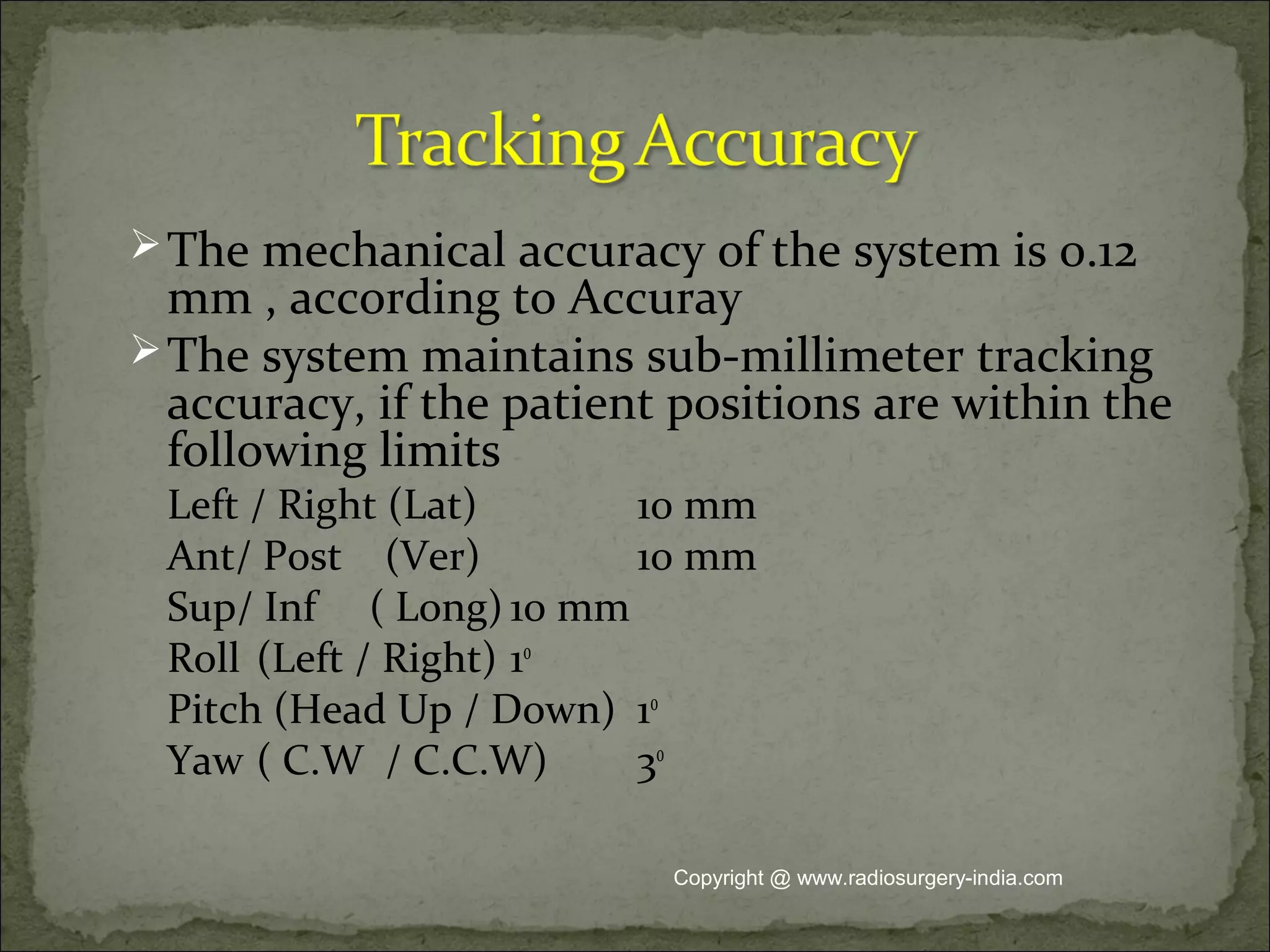
The mechanical accuracy of the system is 0.12
mm , according to Accuray
The system maintains sub-millimeter tracking
accuracy, if the patient positions are within the
following limits
Left / Right (Lat) 10 mm
Ant/ Post (Ver) 10 mm
Sup/ Inf ( Long) 10 mm
Roll (Left / Right) 10
Pitch (Head Up / Down) 10
Yaw ( C.W / C.C.W) 30
Copyright @ www.radiosurgery-india.com
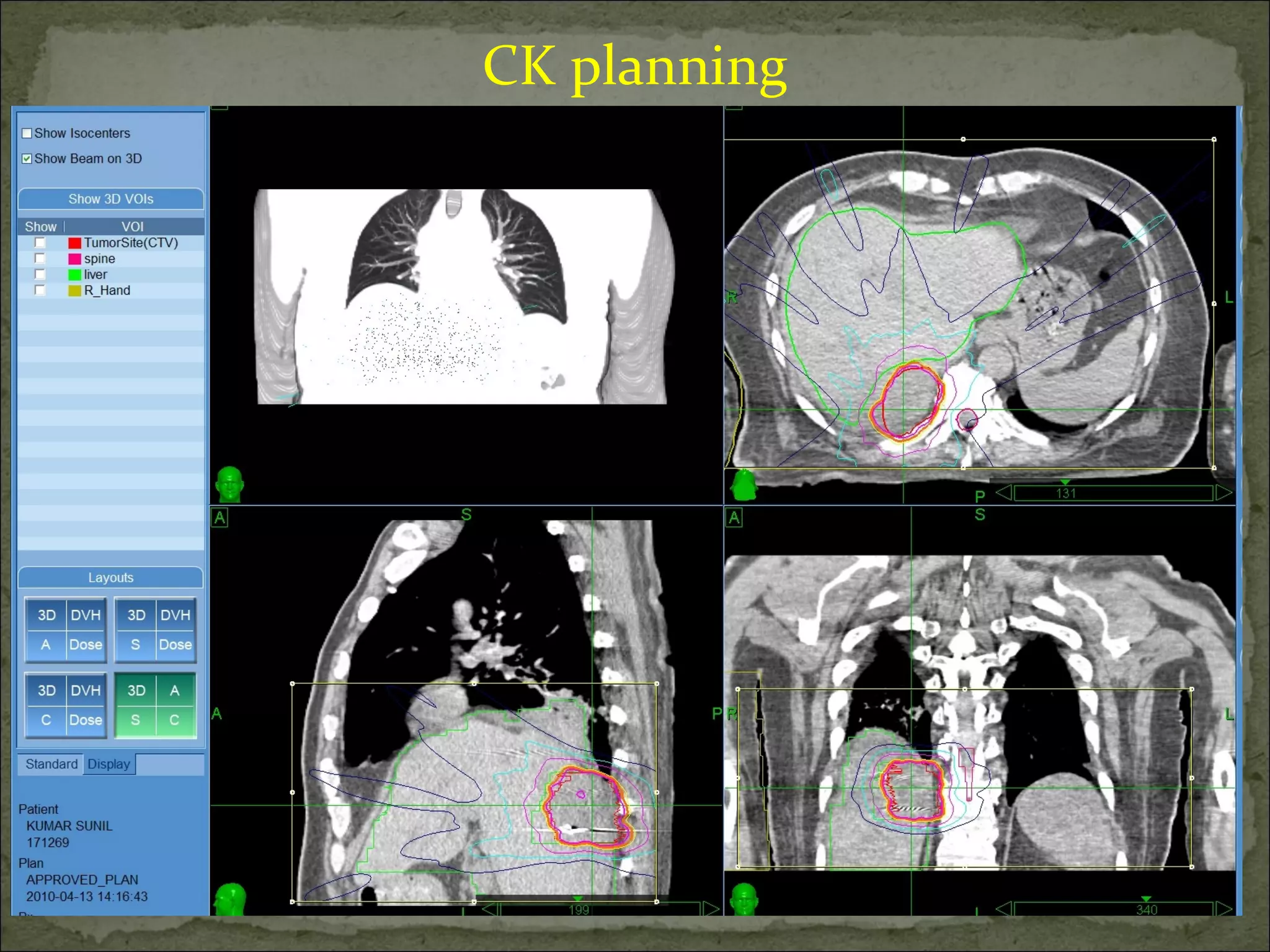
CK planning
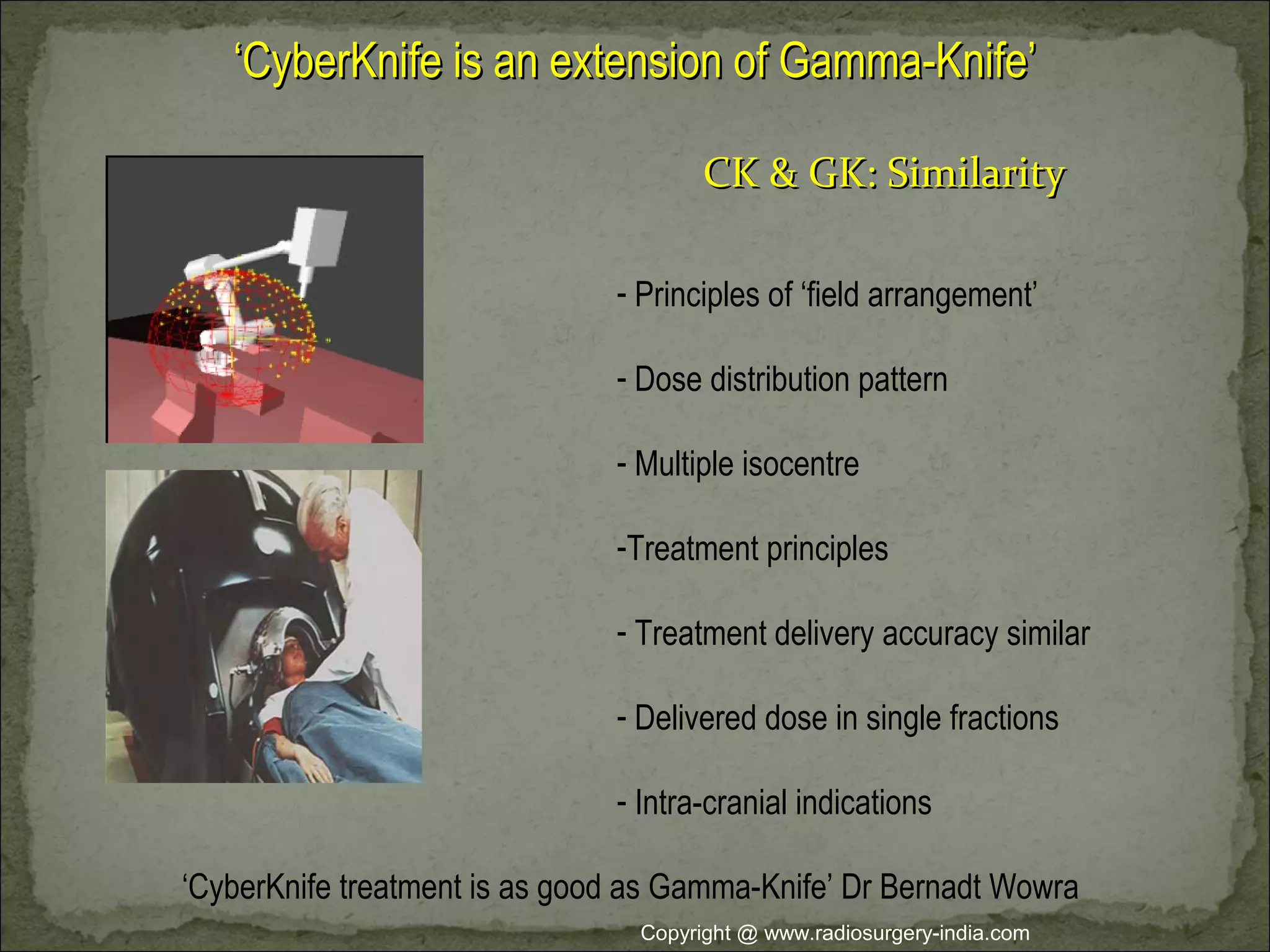
‘‘CyberKnife is an extension of Gamma-Knife’CyberKnife is an extension of Gamma-Knife’
- Principles of ‘field arrangement’
- Dose distribution pattern
- Multiple isocentre
-Treatment principles
- Treatment delivery accuracy similar
- Delivered dose in single fractions
- Intra-cranial indications
CK & GK: SimilarityCK & GK: Similarity
‘CyberKnife treatment is as good as Gamma-Knife’ Dr Bernadt Wowra
Copyright @ www.radiosurgery-india.com
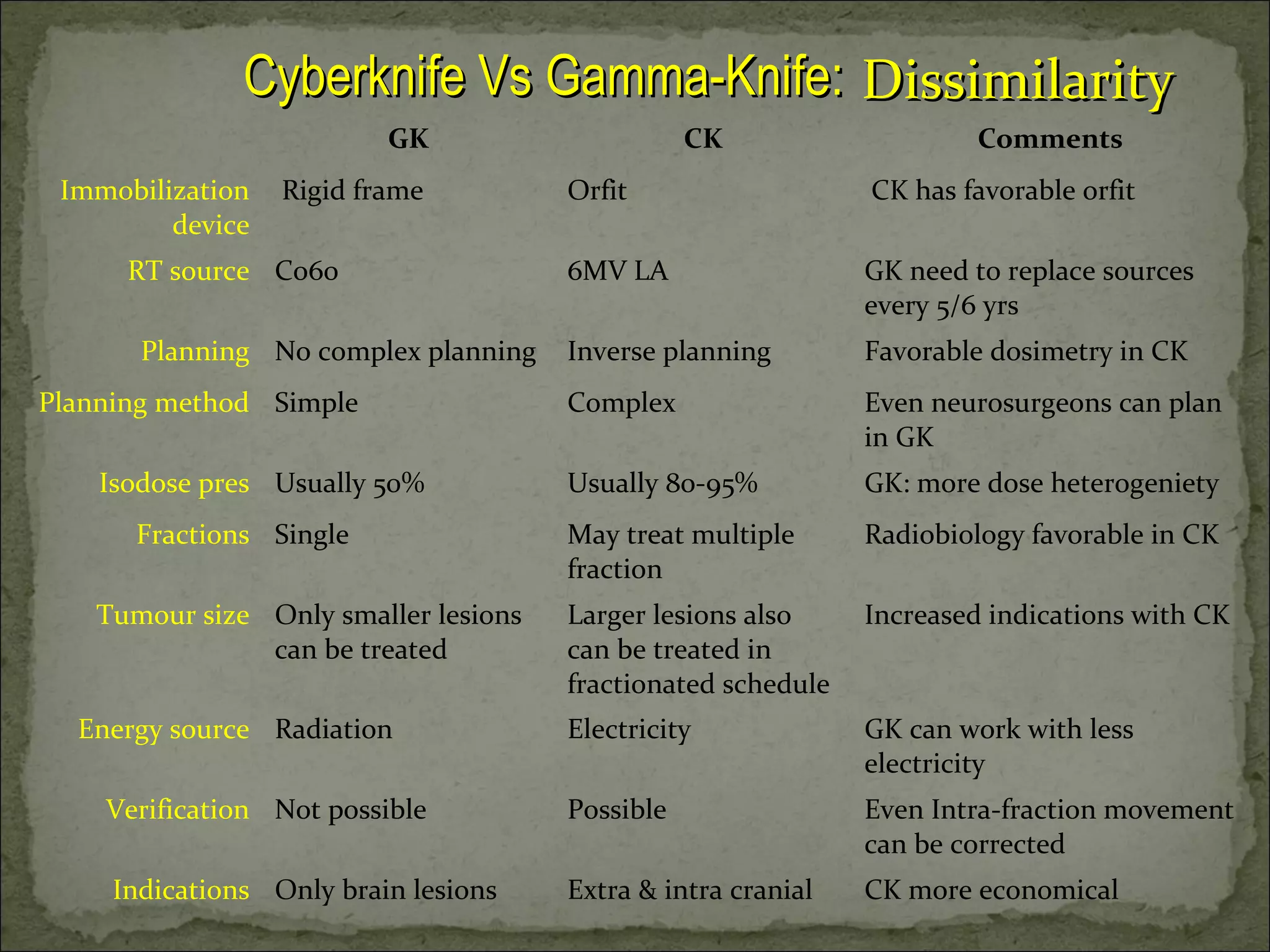
Cyberknife Vs Gamma-Knife:Cyberknife Vs Gamma-Knife: DissimilarityDissimilarity
GK CK Comments
Immobilization
device
Rigid frame Orfit CK has favorable orfit
RT source Co60 6MV LA GK need to replace sources
every 5/6 yrs
Planning No complex planning Inverse planning Favorable dosimetry in CK
Planning method Simple Complex Even neurosurgeons can plan
in GK
Isodose pres Usually 50% Usually 80-95% GK: more dose heterogeniety
Fractions Single May treat multiple
fraction
Radiobiology favorable in CK
Tumour size Only smaller lesions
can be treated
Larger lesions also
can be treated in
fractionated schedule
Increased indications with CK
Energy source Radiation Electricity GK can work with less
electricity
Verification Not possible Possible Even Intra-fraction movement
can be corrected
Indications Only brain lesions Extra & intra cranial CK more economical
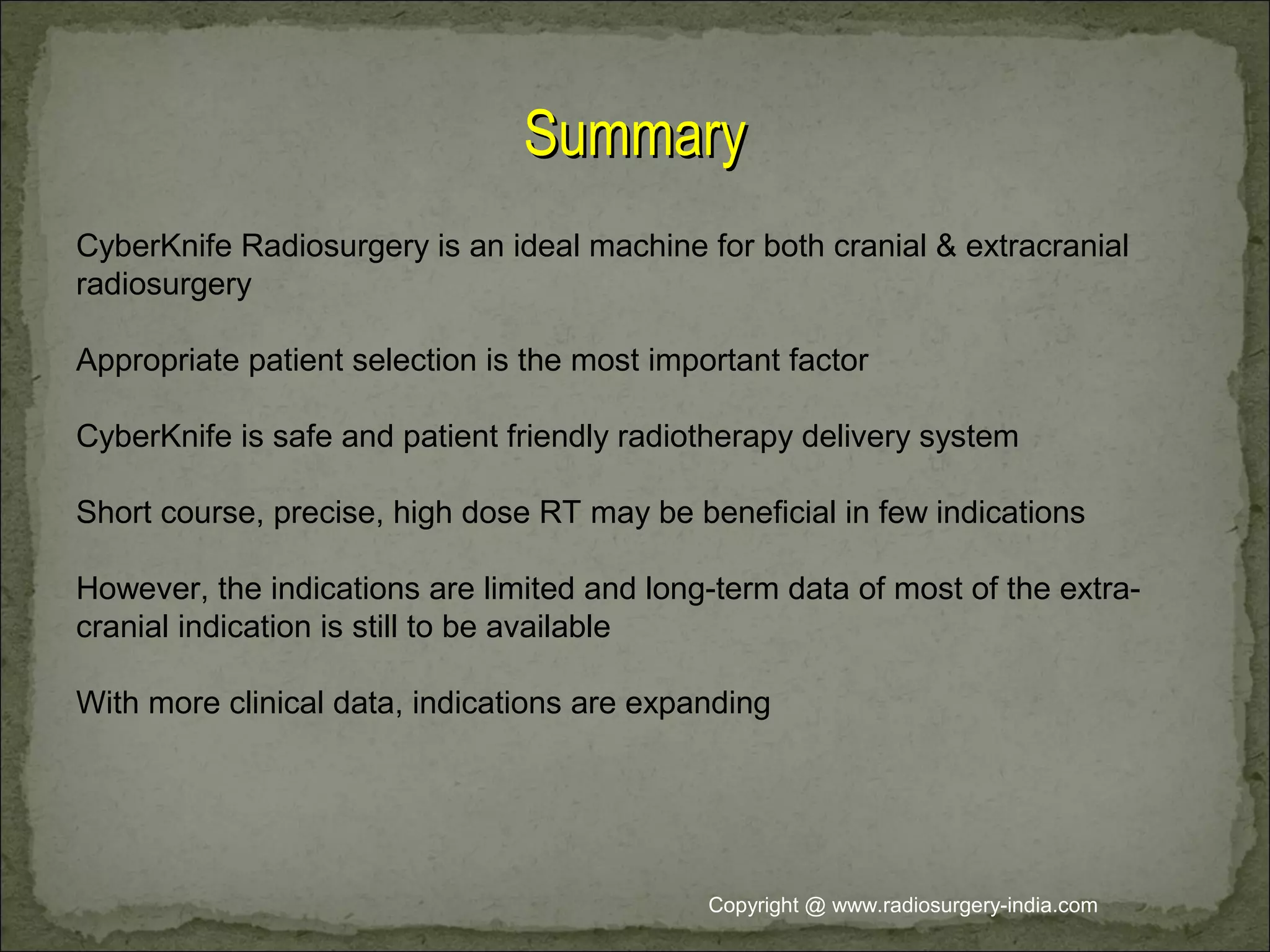
SummarySummary
CyberKnife Radiosurgery is an ideal machine for both cranial & extracranial
radiosurgery
Appropriate patient selection is the most important factor
CyberKnife is safe and patient friendly radiotherapy delivery system
Short course, precise, high dose RT may be beneficial in few indications
However, the indications are limited and long-term data of most of the extra-
cranial indication is still to be available
With more clinical data, indications are expanding
Copyright @ www.radiosurgery-india.com

CyberKnife: Radiosurgery System Introduction

  • 1.
    CyberKnife: Radiosurgery system Copyright@ www.radiosurgery-india.com
  • 2.
    Thanks to technology!! Copyright @ www.radiosurgery-india.com
  • 3.
    Radiosurgery: IndicationsRadiosurgery: Indications Intra-cranial:Intra-cranial: 1.1.BrainmetsBrain mets 2.2.MeningiomaMeningioma 3.3.Acaustic schwannomaAcaustic schwannoma 4.4.AVMsAVMs 5.5.TNTN Extra-cranial:Extra-cranial: 1.1.Lung: Primary & metsLung: Primary & mets 2.2.Liver: HCC & metsLiver: HCC & mets 3.3.Inoperable pancreasInoperable pancreas 4.4.ProstateProstate 5.5.Bone metastasisBone metastasis Copyright @ www.radiosurgery-india.com
  • 4.
    Robotic Radiosurgery Highly preciseRT delivery system - Respiratory tracking - Fiducial based tracking system - Intra-fraction motion correction - Uncomparable dose distribution - X-ray based image verification Hypofractionated RT - High dose short course RT - Higher BED delivered to target Ideal for moving targets - Radiation source is mounted on a precisely controlled industrial robot. - Image guidance system(continuous tracking system) - Eliminates the need of gating techniques and restrictive head frames Copyright @ www.radiosurgery-india.com
  • 5.
    GTV= Gross tumourvolume CTV= Clinical target volume IM= Internal margin SM= Setup margin PTV= Planning target volume PTV= IM+SM ICRU 62 CyberKnife in liver tumour: NO IM & SM<1 mm In Liver, PTV = GTV/ CTV+ 0-1 mm marginIn Liver, PTV = GTV/ CTV+ 0-1 mm margin Copyright @ www.radiosurgery-india.com
  • 6.
  • 7.
  • 8.
  • 9.
    Robot is capableof delivering radiation from different 100 nodes, with each node is capable of giving a max 12 different beams. Usage of these nodes depends on the treatment room constraints Copyright @ www.radiosurgery-india.com
  • 10.
    Table consists of12 fixed cones and housings of ‘Fixed’ and ‘Iris’ Collimator Collimator sizes(mm): 5, 7.5, 10, 12.5, 15, 20, 25, 30, 35, 40, 50, 60 Laser Sensor Copyright @ www.radiosurgery-india.com
  • 12.
  • 13.
    Cyberknife treatment deliveryis based on the following tracking systems  6D_ Skull tracking system  Fiducials tracking system  Synchrony tracking system  X_sight Spine tracking system  X_sight Lung tracking system Copyright @ www.radiosurgery-india.com
  • 14.
    6D_ Skull trackingsystem: used for intra-cranial lesions up to C2 Bony anatomy of the skull is used as reference for tracking Copyright @ www.radiosurgery-india.com
  • 15.
    • Fiducial trackingsystem: used for soft tissues, where gold fiducials can be implanted. Minimum of 3 nos. to be implanted Copyright @ www.radiosurgery-
  • 16.
  • 17.
    Day 1 Day5 Fiducial ‘migration’ Copyright @ www.radiosurgery-india.com
  • 19.
  • 20.
    Respiratory-induced motion of tumorscauses significant targeting uncertainty Lung, liver, pancreas, Prostate, kidney Traditional radiation therapy margins are not optimized for high-dose radiosurgery
  • 21.
    Two features toform the basis for accuracy Fiducials, implanted prior to treatment Optical markers on a special patient vest Copyright @ www.radiosurgery-india.com
  • 22.
     Prior totreatment start: creation of dynamic correlation model Markers are monitored in real time by a camera system Imaging system takes positions of fiducials at discrete points of time
  • 23.
     Prior totreatment start: creation of dynamic correlation model Markers are monitored in real time by a camera system Imaging system takes positions of fiducials at discrete points of time time displacement displacement time This process repeats throughout the treatment, updating and correcting beam delivery based upon the patient’s current breathing pattern Copyright @ www.radiosurgery-india.com
  • 24.
    Immobilization device Copyright @www.radiosurgery-india.com
  • 25.
  • 26.
    Tracking device Copyright @www.radiosurgery-india.com
  • 27.
    Tracking & treatmentdelivery Copyright @ www.radiosurgery- india.com
  • 28.
  • 29.
  • 30.
    The mechanical accuracyof the system is 0.12 mm , according to Accuray The system maintains sub-millimeter tracking accuracy, if the patient positions are within the following limits Left / Right (Lat) 10 mm Ant/ Post (Ver) 10 mm Sup/ Inf ( Long) 10 mm Roll (Left / Right) 10 Pitch (Head Up / Down) 10 Yaw ( C.W / C.C.W) 30 Copyright @ www.radiosurgery-india.com
  • 31.
  • 32.
    ‘‘CyberKnife is anextension of Gamma-Knife’CyberKnife is an extension of Gamma-Knife’ - Principles of ‘field arrangement’ - Dose distribution pattern - Multiple isocentre -Treatment principles - Treatment delivery accuracy similar - Delivered dose in single fractions - Intra-cranial indications CK & GK: SimilarityCK & GK: Similarity ‘CyberKnife treatment is as good as Gamma-Knife’ Dr Bernadt Wowra Copyright @ www.radiosurgery-india.com
  • 33.
    Cyberknife Vs Gamma-Knife:CyberknifeVs Gamma-Knife: DissimilarityDissimilarity GK CK Comments Immobilization device Rigid frame Orfit CK has favorable orfit RT source Co60 6MV LA GK need to replace sources every 5/6 yrs Planning No complex planning Inverse planning Favorable dosimetry in CK Planning method Simple Complex Even neurosurgeons can plan in GK Isodose pres Usually 50% Usually 80-95% GK: more dose heterogeniety Fractions Single May treat multiple fraction Radiobiology favorable in CK Tumour size Only smaller lesions can be treated Larger lesions also can be treated in fractionated schedule Increased indications with CK Energy source Radiation Electricity GK can work with less electricity Verification Not possible Possible Even Intra-fraction movement can be corrected Indications Only brain lesions Extra & intra cranial CK more economical
  • 34.
    SummarySummary CyberKnife Radiosurgery isan ideal machine for both cranial & extracranial radiosurgery Appropriate patient selection is the most important factor CyberKnife is safe and patient friendly radiotherapy delivery system Short course, precise, high dose RT may be beneficial in few indications However, the indications are limited and long-term data of most of the extra- cranial indication is still to be available With more clinical data, indications are expanding Copyright @ www.radiosurgery-india.com