Fredrik Björk, Malmö University
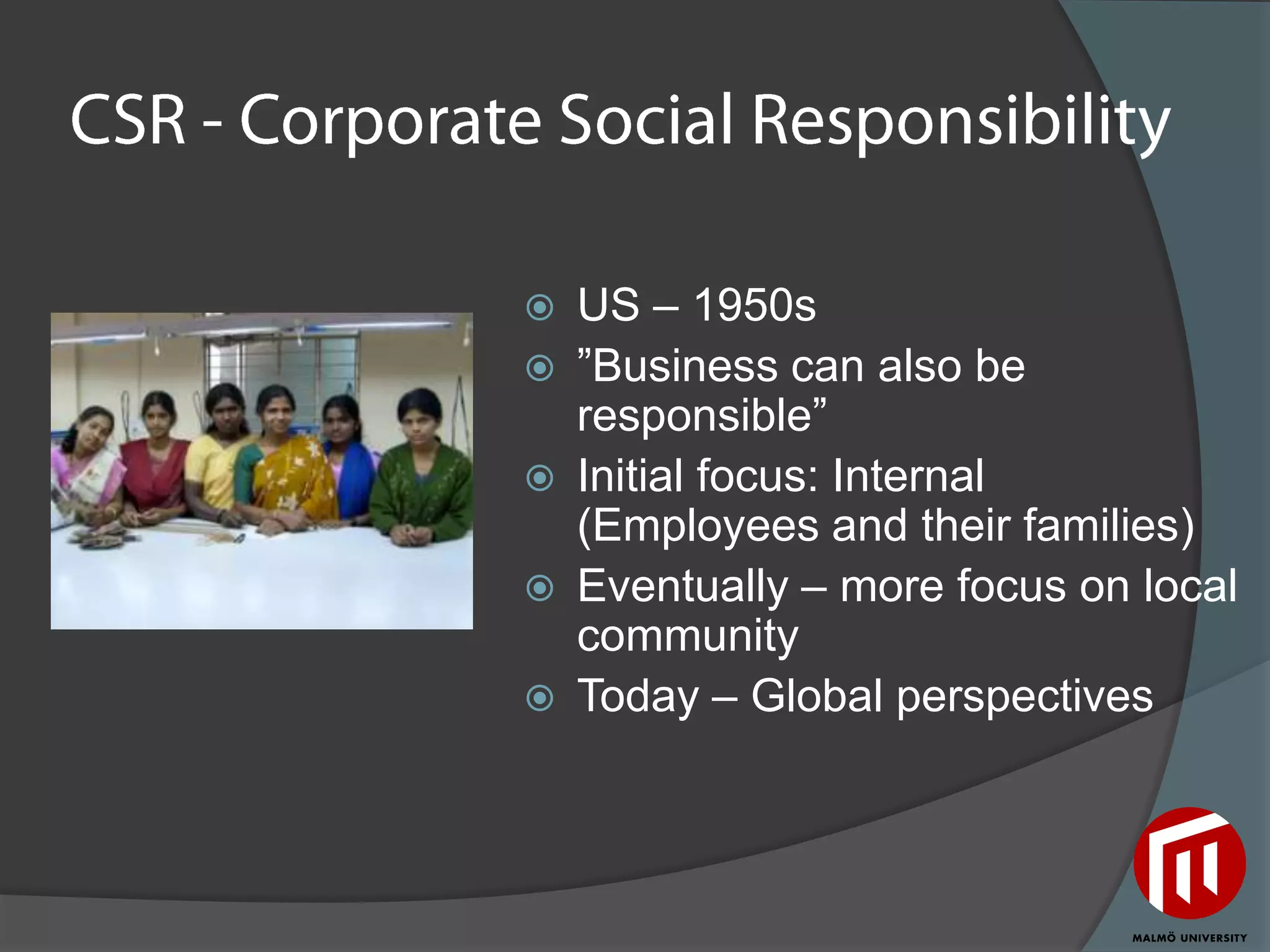
   US – 1950s
   ”Business can also be
    responsible”
   Initial focus: Internal
    (Employees and their families)
   Eventually – more focus on local
    community
   Today – Global perspectives
 Social responsibility – or responsibility
  towards society?
 What do we mean by ”social”?
 Environment and sustainability
  becoming more important issues
 Corporate responsibility (CR)
 Ethics: Code of Conduct, product
  liability
 Social: Diversity in the workplace,
  equality, employee participation,
  community involvement
 Environment: Sustainable resource
  use, healthy products, "pure" product
  chain
 The sustainability megatrends: climate
  change, resource shortages and
  demographic changes present both
  opportunities and risks for business
 Climate change and water shortage are
  the two most pressing long-term trends that
  require global solutions.
 People are starting to realize the
  economic repercussions. The financial
  market is beginning to see the risks but
  also the emerging opportunities.
 On a corporate level: Who will gain and
  who will lose from these trends? How is
  it possible to differentiate between
  companies that are ready and the ones
  that are not?
 New approaches to analyzing and
  investing in companies
 New approaches to auditing and
  consulting
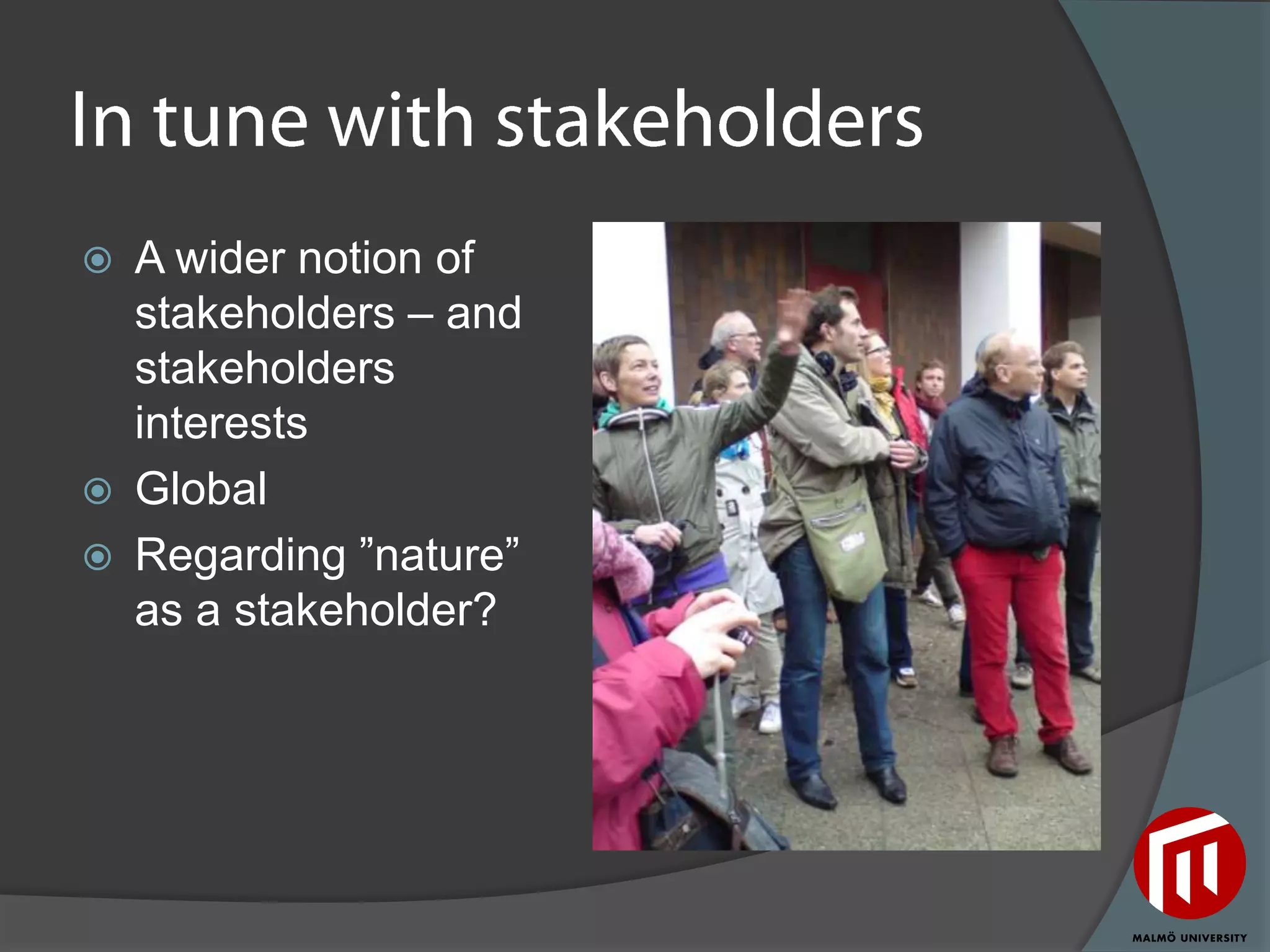
   A wider notion of
    stakeholders – and
    stakeholders
    interests
   Global
   Regarding ”nature”
    as a stakeholder?
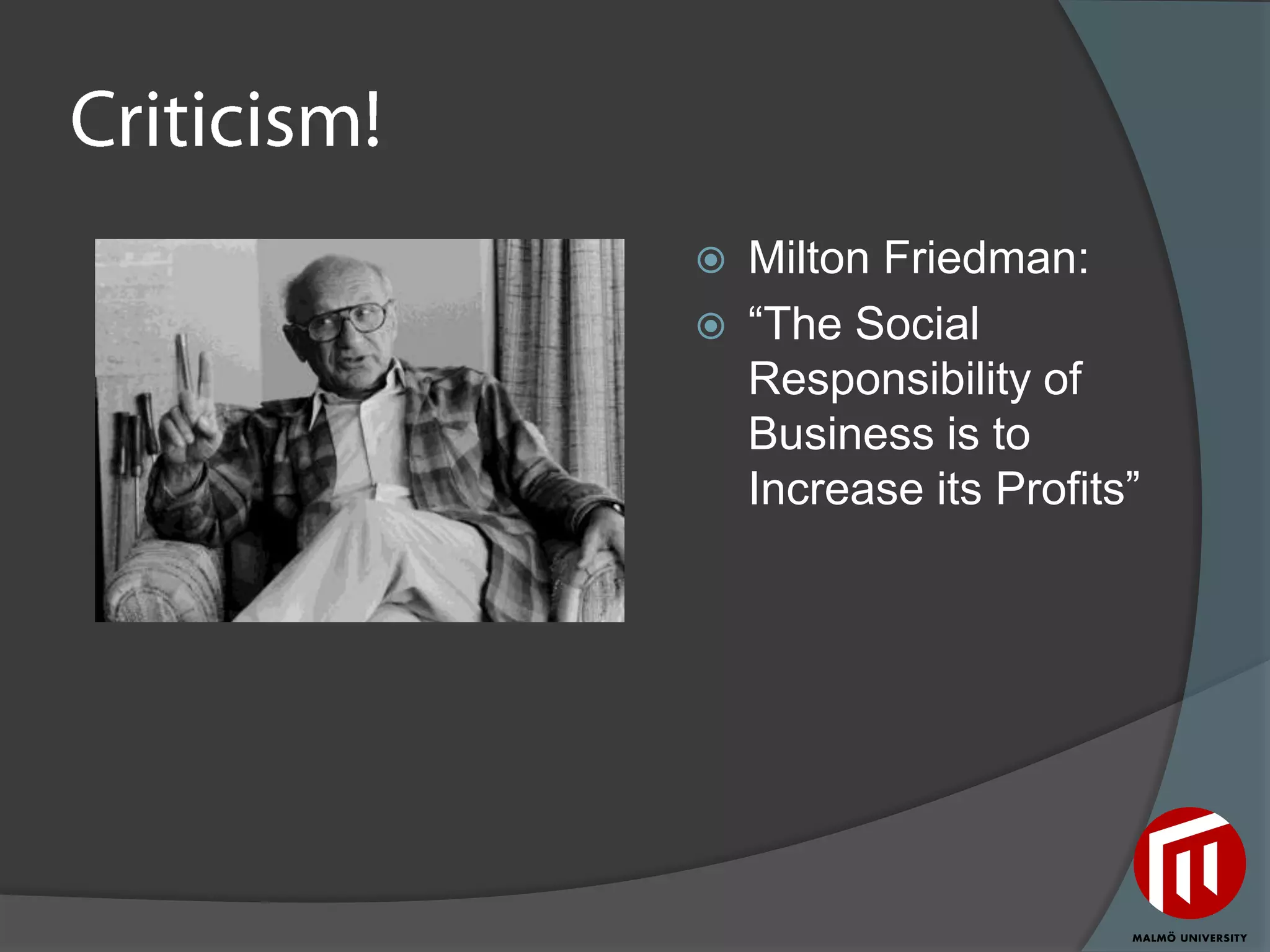
   Milton Friedman:
   “The Social
    Responsibility of
    Business is to
    Increase its Profits”
 Public relations - marketing
 Seen as an ”extra” - no commitment
 Foggy definitions
 ”Green washing”/”White washing”
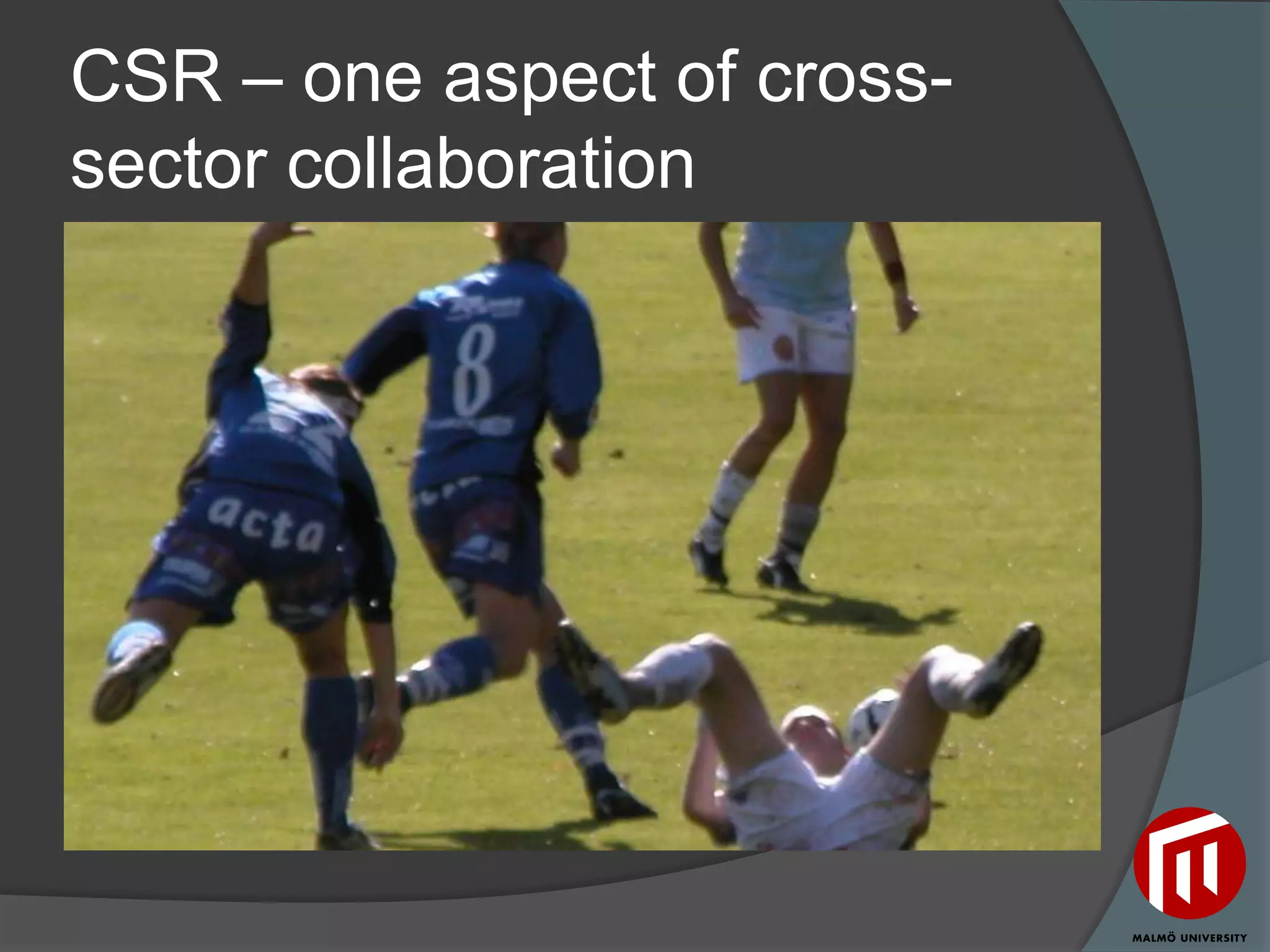
CSR – one aspect of cross-
sector collaboration
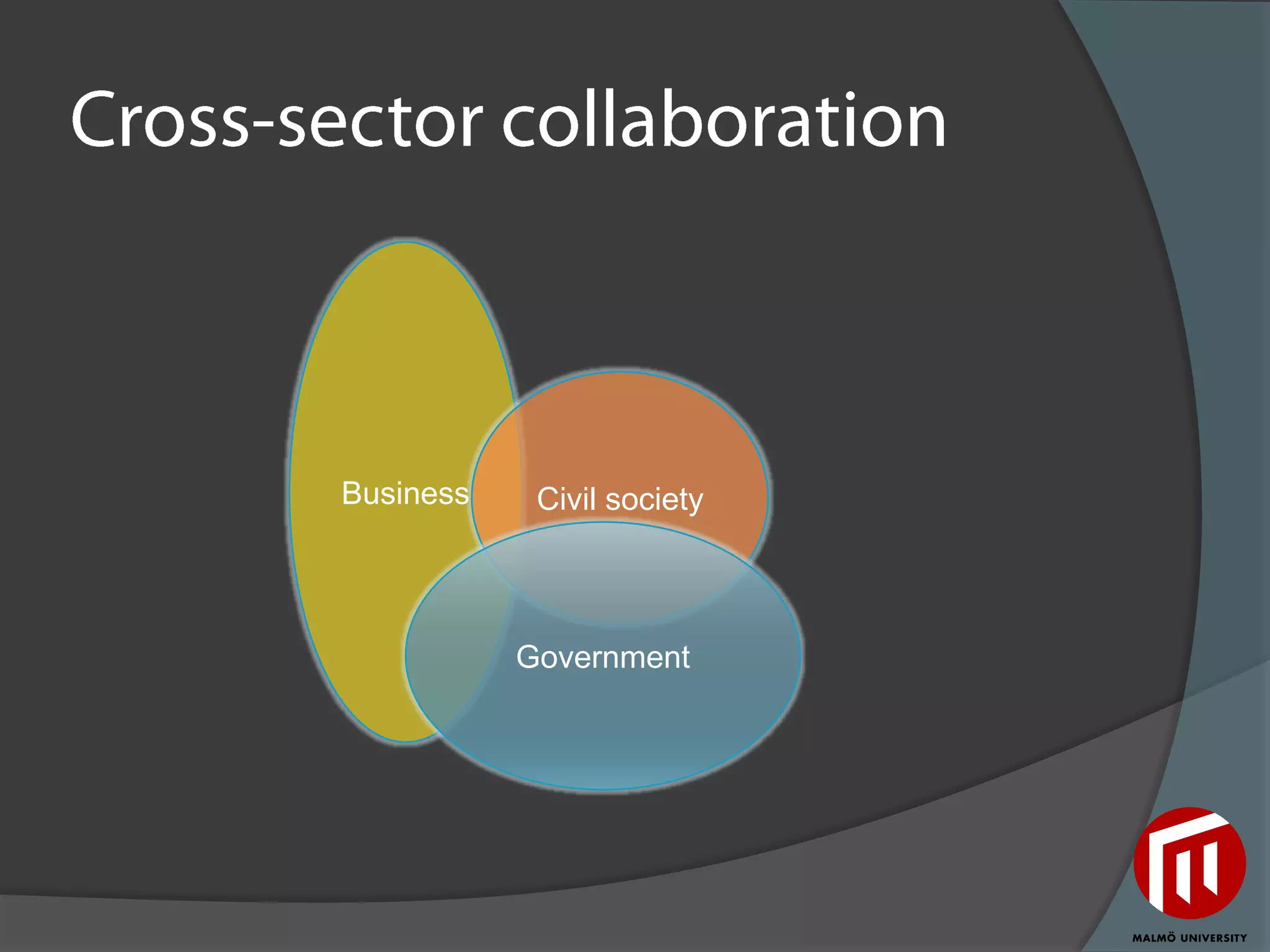
Business    Civil society


           Government
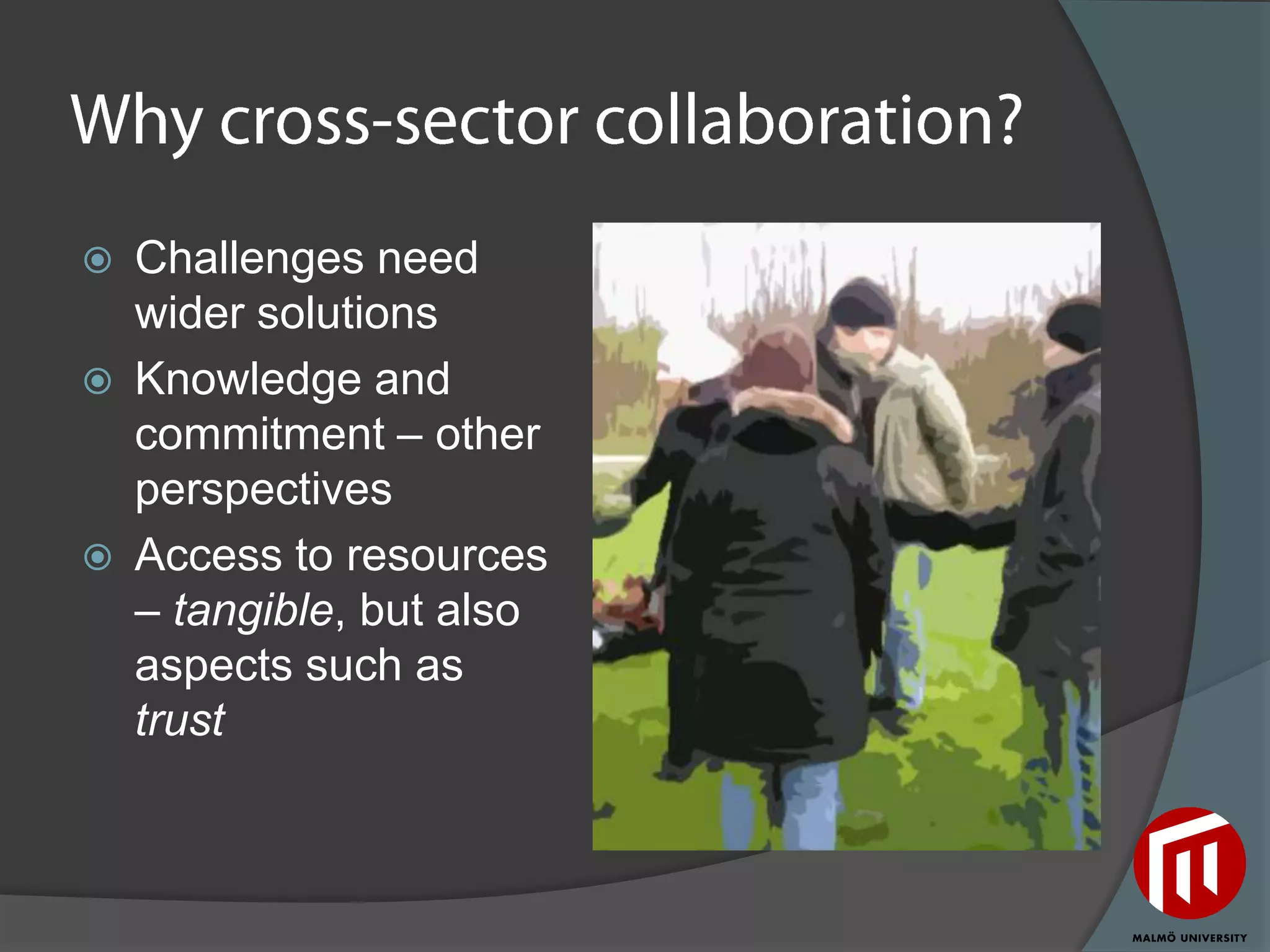
   Challenges need
    wider solutions
   Knowledge and
    commitment – other
    perspectives
   Access to resources
    – tangible, but also
    aspects such as
    trust
How do we do it?
 six principles for developing collaboration -
 partnership
 1. recognising and accepting the need for
     partnership;
 2. clarity and realism of purpose;
 3. commitment and ownership;
 4. developing and maintaining trust;
 5. creating clear and robust structure
 6. monitoring, measuring and learning
One step further
 Social capital – important in creating
  informal accountability mechanisms
 Leadership and organisational culture –
  negotiations and dislogue
 ‘Implementation’ is an important element
  of collaboration - associated with different
  organisational logics:
  How will the outcomes be sustained?
 ”People, Planet, Profits. In that order!”
 Accountability
 How to communicate what you are
  doing?
 Social return on investment
 Ecosystem services
Social Return on Investment
(SROI)

    Measuring the social and economic
     value created by an activity
    Stakeholder perspective
    Monetary value on things that do not
     have market value.
    Giving the beneficiaries a voice in
     decisions on resource allocation.
Ecosystem services

    Resources and processes provided by
     natural ecosystems are called
     ecosystem services
    They are essential to the earth's life
     support system
    Contribute to human well-being
    Ex. The climate system; pollination etc.
Ecosystem services
 in general not ascribed any value or
  adequately quantified in terms comparable
  with economic services
 Often considered as “commons”
 The paradox: Without these seemingly
  „worthless‟ services, the socio-economic
  systems of the earth would grind to a halt
 so in a sense their total value to society
  and economy is infinite.
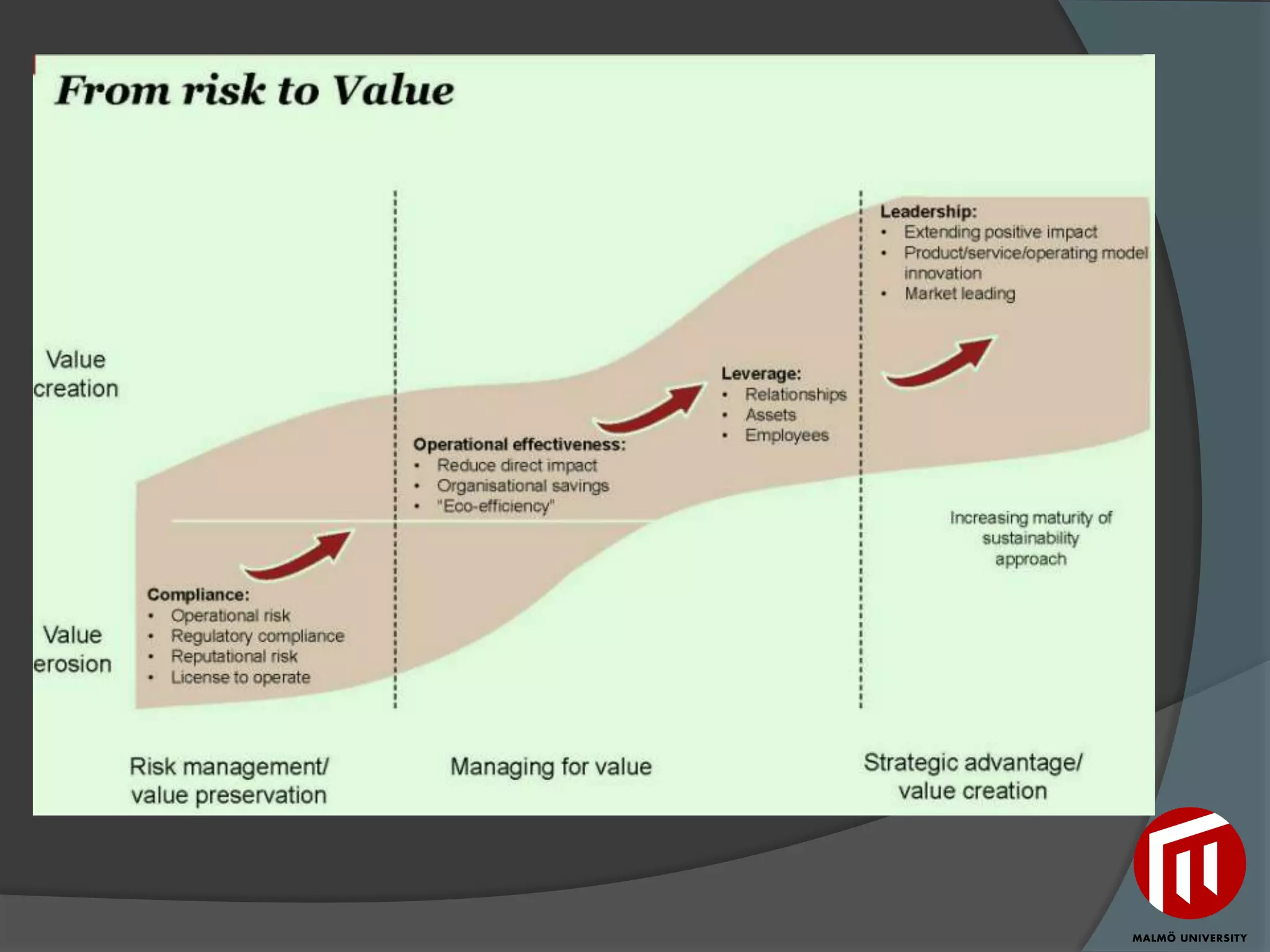
   CR – creating value
    for business
   Cross-sector
    collaboration creates
    oppurtunities
   Collaboration makes
    it easier to meet the
    triple bottom line!

CSR, triple-bottom line and cross sector collaboration

  • 1.
  • 2.
    US – 1950s  ”Business can also be responsible”  Initial focus: Internal (Employees and their families)  Eventually – more focus on local community  Today – Global perspectives
  • 3.
     Social responsibility– or responsibility towards society?  What do we mean by ”social”?  Environment and sustainability becoming more important issues  Corporate responsibility (CR)
  • 4.
     Ethics: Codeof Conduct, product liability  Social: Diversity in the workplace, equality, employee participation, community involvement  Environment: Sustainable resource use, healthy products, "pure" product chain
  • 5.
     The sustainabilitymegatrends: climate change, resource shortages and demographic changes present both opportunities and risks for business  Climate change and water shortage are the two most pressing long-term trends that require global solutions.  People are starting to realize the economic repercussions. The financial market is beginning to see the risks but also the emerging opportunities.
  • 6.
     On acorporate level: Who will gain and who will lose from these trends? How is it possible to differentiate between companies that are ready and the ones that are not?  New approaches to analyzing and investing in companies  New approaches to auditing and consulting
  • 7.
    A wider notion of stakeholders – and stakeholders interests  Global  Regarding ”nature” as a stakeholder?
  • 9.
    Milton Friedman:  “The Social Responsibility of Business is to Increase its Profits”
  • 10.
     Public relations- marketing  Seen as an ”extra” - no commitment  Foggy definitions  ”Green washing”/”White washing”
  • 11.
    CSR – oneaspect of cross- sector collaboration
  • 12.
    Business Civil society Government
  • 13.
    Challenges need wider solutions  Knowledge and commitment – other perspectives  Access to resources – tangible, but also aspects such as trust
  • 14.
    How do wedo it? six principles for developing collaboration - partnership 1. recognising and accepting the need for partnership; 2. clarity and realism of purpose; 3. commitment and ownership; 4. developing and maintaining trust; 5. creating clear and robust structure 6. monitoring, measuring and learning
  • 15.
    One step further Social capital – important in creating informal accountability mechanisms  Leadership and organisational culture – negotiations and dislogue  ‘Implementation’ is an important element of collaboration - associated with different organisational logics: How will the outcomes be sustained?
  • 16.
     ”People, Planet,Profits. In that order!”  Accountability  How to communicate what you are doing?  Social return on investment  Ecosystem services
  • 17.
    Social Return onInvestment (SROI)  Measuring the social and economic value created by an activity  Stakeholder perspective  Monetary value on things that do not have market value.  Giving the beneficiaries a voice in decisions on resource allocation.
  • 18.
    Ecosystem services  Resources and processes provided by natural ecosystems are called ecosystem services  They are essential to the earth's life support system  Contribute to human well-being  Ex. The climate system; pollination etc.
  • 19.
    Ecosystem services  ingeneral not ascribed any value or adequately quantified in terms comparable with economic services  Often considered as “commons”  The paradox: Without these seemingly „worthless‟ services, the socio-economic systems of the earth would grind to a halt  so in a sense their total value to society and economy is infinite.
  • 20.
    CR – creating value for business  Cross-sector collaboration creates oppurtunities  Collaboration makes it easier to meet the triple bottom line!