Crucial Conversations: 
Effective Communication When It Matters Most 
NANCY FRY, PHD 
NOVEMBER 19, 2014
Agenda 
1. What are Crucial Conversations 
2. What are common “de-railers” 
3. Framework for having an effective Crucial 
Conversation
Crucial “Factors” 
 Diverse opinions 
 It’s important to you! 
 Strong emotions – yours (and theirs!) 
 Often spontaneous discussions 
 Fight, flight, freeze 
 Unconscious, automatic response
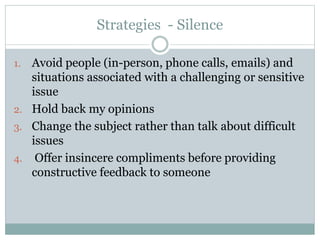
Strategies - Silence 
1. Avoid people (in-person, phone calls, emails) and 
situations associated with a challenging or sensitive 
issue 
2. Hold back my opinions 
3. Change the subject rather than talk about difficult 
issues 
4. Offer insincere compliments before providing 
constructive feedback to someone
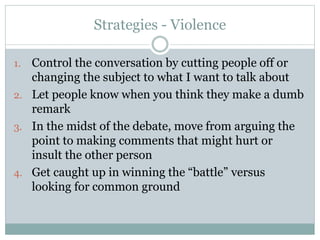
Strategies - Violence 
1. Control the conversation by cutting people off or 
changing the subject to what I want to talk about 
2. Let people know when you think they make a dumb 
remark 
3. In the midst of the debate, move from arguing the 
point to making comments that might hurt or 
insult the other person 
4. Get caught up in winning the “battle” versus 
looking for common ground
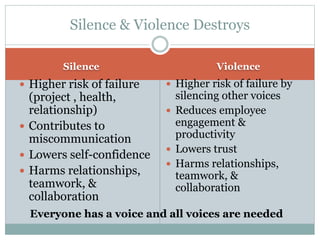
Silence & Violence Destroys 
Silence Violence 
 Higher risk of failure 
(project , health, 
relationship) 
 Contributes to 
miscommunication 
 Lowers self-confidence 
 Harms relationships, 
teamwork, & 
collaboration 
 Higher risk of failure by 
silencing other voices 
 Reduces employee 
engagement & 
productivity 
 Lowers trust 
 Harms relationships, 
teamwork, & 
collaboration 
Everyone has a voice and all voices are needed
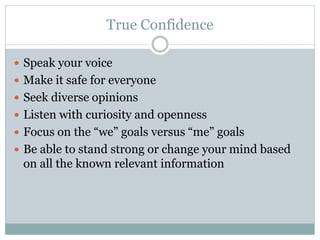
True Confidence 
 Speak your voice 
 Make it safe for everyone 
 Seek diverse opinions 
 Listen with curiosity and openness 
 Focus on the “we” goals versus “me” goals 
 Be able to stand strong or change your mind based 
on all the known relevant information
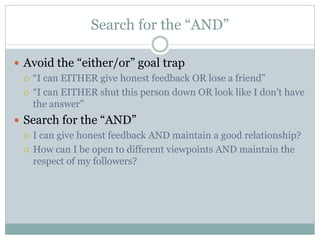
Search for the “AND” 
 Avoid the “either/or” goal trap 
 “I can EITHER give honest feedback OR lose a friend” 
 “I can EITHER shut this person down OR look like I don’t have 
the answer” 
 Search for the “AND” 
 I can give honest feedback AND maintain a good relationship? 
 How can I be open to different viewpoints AND maintain the 
respect of my followers?
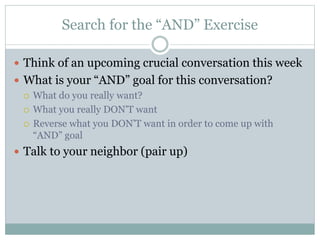
Search for the “AND” Exercise 
 Think of an upcoming crucial conversation this week 
 What is your “AND” goal for this conversation? 
 What do you really want? 
 What you really DON’T want 
 Reverse what you DON’T want in order to come up with 
“AND” goal 
 Talk to your neighbor (pair up)
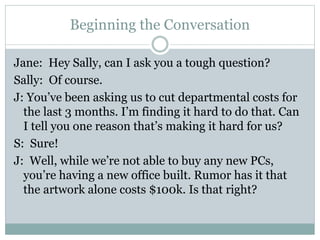
Beginning the Conversation 
Jane: Hey Sally, can I ask you a tough question? 
Sally: Of course. 
J: You’ve been asking us to cut departmental costs for 
the last 3 months. I’m finding it hard to do that. Can 
I tell you one reason that’s making it hard for us? 
S: Sure! 
J: Well, while we’re not able to buy any new PCs, 
you’re having a new office built. Rumor has it that 
the artwork alone costs $100k. Is that right?
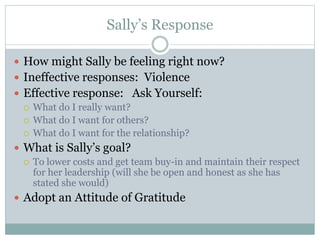
Sally’s Response 
 How might Sally be feeling right now? 
 Ineffective responses: Violence 
 Effective response: Ask Yourself: 
 What do I really want? 
 What do I want for others? 
 What do I want for the relationship? 
 What is Sally’s goal? 
 To lower costs and get team buy-in and maintain their respect 
for her leadership (will she be open and honest as she has 
stated she would) 
 Adopt an Attitude of Gratitude
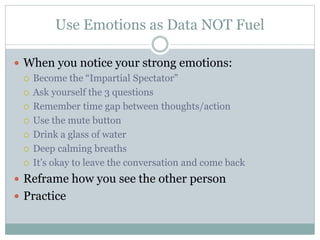
Use Emotions as Data NOT Fuel 
 When you notice your strong emotions: 
 Become the “Impartial Spectator” 
 Ask yourself the 3 questions 
 Remember time gap between thoughts/action 
 Use the mute button 
 Drink a glass of water 
 Deep calming breaths 
 It’s okay to leave the conversation and come back 
 Reframe how you see the other person 
 Practice
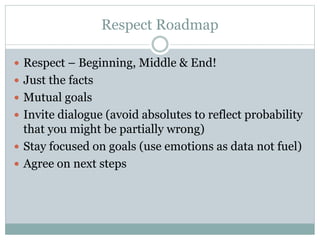
Respect Roadmap 
 Respect – Beginning, Middle & End! 
 Just the facts 
 Mutual goals 
 Invite dialogue (avoid absolutes to reflect probability 
that you might be partially wrong) 
 Stay focused on goals (use emotions as data not fuel) 
 Agree on next steps
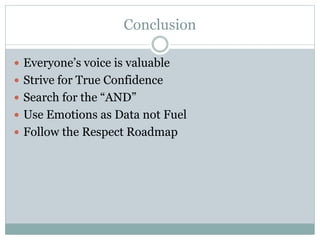
Conclusion 
 Everyone’s voice is valuable 
 Strive for True Confidence 
 Search for the “AND” 
 Use Emotions as Data not Fuel 
 Follow the Respect Roadmap
Contact Info: 
Nancy Fry, PhD 
913-735-0226 
drnancy@nancyfry.com 
www.nancyfry.com 
References: Crucial Conversations by Patterson, Grenny, McMillan, & Switzler

Crucial Conversations: Effective Communication When It Matters Most

  • 1.
    Crucial Conversations: EffectiveCommunication When It Matters Most NANCY FRY, PHD NOVEMBER 19, 2014
  • 2.
    Agenda 1. Whatare Crucial Conversations 2. What are common “de-railers” 3. Framework for having an effective Crucial Conversation
  • 3.
    Crucial “Factors” Diverse opinions  It’s important to you!  Strong emotions – yours (and theirs!)  Often spontaneous discussions  Fight, flight, freeze  Unconscious, automatic response
  • 4.
    Strategies - Silence 1. Avoid people (in-person, phone calls, emails) and situations associated with a challenging or sensitive issue 2. Hold back my opinions 3. Change the subject rather than talk about difficult issues 4. Offer insincere compliments before providing constructive feedback to someone
  • 5.
    Strategies - Violence 1. Control the conversation by cutting people off or changing the subject to what I want to talk about 2. Let people know when you think they make a dumb remark 3. In the midst of the debate, move from arguing the point to making comments that might hurt or insult the other person 4. Get caught up in winning the “battle” versus looking for common ground
  • 6.
    Silence & ViolenceDestroys Silence Violence  Higher risk of failure (project , health, relationship)  Contributes to miscommunication  Lowers self-confidence  Harms relationships, teamwork, & collaboration  Higher risk of failure by silencing other voices  Reduces employee engagement & productivity  Lowers trust  Harms relationships, teamwork, & collaboration Everyone has a voice and all voices are needed
  • 7.
    True Confidence Speak your voice  Make it safe for everyone  Seek diverse opinions  Listen with curiosity and openness  Focus on the “we” goals versus “me” goals  Be able to stand strong or change your mind based on all the known relevant information
  • 8.
    Search for the“AND”  Avoid the “either/or” goal trap  “I can EITHER give honest feedback OR lose a friend”  “I can EITHER shut this person down OR look like I don’t have the answer”  Search for the “AND”  I can give honest feedback AND maintain a good relationship?  How can I be open to different viewpoints AND maintain the respect of my followers?
  • 9.
    Search for the“AND” Exercise  Think of an upcoming crucial conversation this week  What is your “AND” goal for this conversation?  What do you really want?  What you really DON’T want  Reverse what you DON’T want in order to come up with “AND” goal  Talk to your neighbor (pair up)
  • 10.
    Beginning the Conversation Jane: Hey Sally, can I ask you a tough question? Sally: Of course. J: You’ve been asking us to cut departmental costs for the last 3 months. I’m finding it hard to do that. Can I tell you one reason that’s making it hard for us? S: Sure! J: Well, while we’re not able to buy any new PCs, you’re having a new office built. Rumor has it that the artwork alone costs $100k. Is that right?
  • 11.
    Sally’s Response How might Sally be feeling right now?  Ineffective responses: Violence  Effective response: Ask Yourself:  What do I really want?  What do I want for others?  What do I want for the relationship?  What is Sally’s goal?  To lower costs and get team buy-in and maintain their respect for her leadership (will she be open and honest as she has stated she would)  Adopt an Attitude of Gratitude
  • 12.
    Use Emotions asData NOT Fuel  When you notice your strong emotions:  Become the “Impartial Spectator”  Ask yourself the 3 questions  Remember time gap between thoughts/action  Use the mute button  Drink a glass of water  Deep calming breaths  It’s okay to leave the conversation and come back  Reframe how you see the other person  Practice
  • 13.
    Respect Roadmap Respect – Beginning, Middle & End!  Just the facts  Mutual goals  Invite dialogue (avoid absolutes to reflect probability that you might be partially wrong)  Stay focused on goals (use emotions as data not fuel)  Agree on next steps
  • 14.
    Conclusion  Everyone’svoice is valuable  Strive for True Confidence  Search for the “AND”  Use Emotions as Data not Fuel  Follow the Respect Roadmap
  • 15.
    Contact Info: NancyFry, PhD 913-735-0226 drnancy@nancyfry.com www.nancyfry.com References: Crucial Conversations by Patterson, Grenny, McMillan, & Switzler